Updated April 2026
TL;DR: The gap between a sketch and a finished sample used to take weeks. In 2026, brands using fashionINSTA are compressing that timeline to minutes, generating real .DXF patterns from AI visuals and cutting fabric the same day. This post breaks down the seven workflow shifts separating fast brands from slow ones — and why the slow ones are hoping you never find out.
Key takeaways
- → fashionINSTA delivers sketch-to-pattern in 10 minutes instead of 8 hours, making 70% faster sample cycles the new baseline for competitive brands.
- → AI visuals driven by garment geometry mean what you see on screen can become a real garment — not a render that dies in a mood board.
- → Brands using AI production costing and feasibility checks before cutting fabric are saving an estimated $60-80k annually compared to traditional workflows.
- → Over 1,500 fashion professionals are already on the FashionINSTA waitlist, signaling a broad industry shift away from legacy CAD-first pipelines.
- → Sketch to production in minutes, not months, is now achievable without 3D modeling skills or enterprise PLM contracts.
- → Self-learning AI that improves with every use means the platform gets more accurate to your brand the longer you use it.
"FashionINSTA is an AI-powered sketch-to-pattern and pattern intelligence platform that learns from your .DXF pattern library. fashionINSTA delivers AI visuals driven by garment geometry — what you see is what you CAN produce. Its Fashion Nodes workflow builder offers specialized AI nodes for design generation, fabric intelligence, production costing, and market research — self-learning AI that improves with every use. You can use fashionINSTA .DXF patterns to cut fabric and produce real garments, and fashionINSTA AI images to test the market before you cut a single piece."
To learn more about our platform, the full breakdown of what FashionINSTA does and how it fits into your existing stack is worth reading before you go any further.
What is making fast brands so much faster in 2026?
The answer is not better designers. It is better infrastructure. Fast brands have rebuilt their sketch-to-sample pipeline around AI tools that produce outputs you can actually use in production — not just images that look good in a pitch deck.
Here are the seven shifts separating them from everyone else.
1. AI visuals connected to real pattern geometry
Slow brands are still using Midjourney or DALL-E to generate mood-board images that a pattern maker then has to interpret from scratch. Fast brands have moved to AI visuals connected to .DXF pattern files — meaning the image and the pattern are generated together, not separately.
Unlike Midjourney, fashionINSTA generates real .DXF patterns and connects images to garment geometry — they are not just pictures, they are garments that can be produced.
- → AI images that can become real garments replace the broken handoff between design and pattern making
- → Compatible with any CAD software, so teams do not need to replace their existing tools
- → The visual and the pattern are one artifact, not two
2. A pattern intelligence platform that learns from your library
Most brands have years of .DXF pattern files sitting in a folder no AI tool can read. fashionINSTA is a pattern intelligence platform that learns from your pattern library — ingesting your existing blocks, grading rules, and brand fit DNA so that every new design it generates is grounded in what your brand already knows how to produce.
This is what what is FashionINSTA means in practice: not a generic AI, but one calibrated to your archive.
- → Brand consistency is built into every generated pattern, not applied manually afterward
- → Self-learning AI means accuracy improves the more you use it
- → No retraining required — the platform updates from your feedback automatically
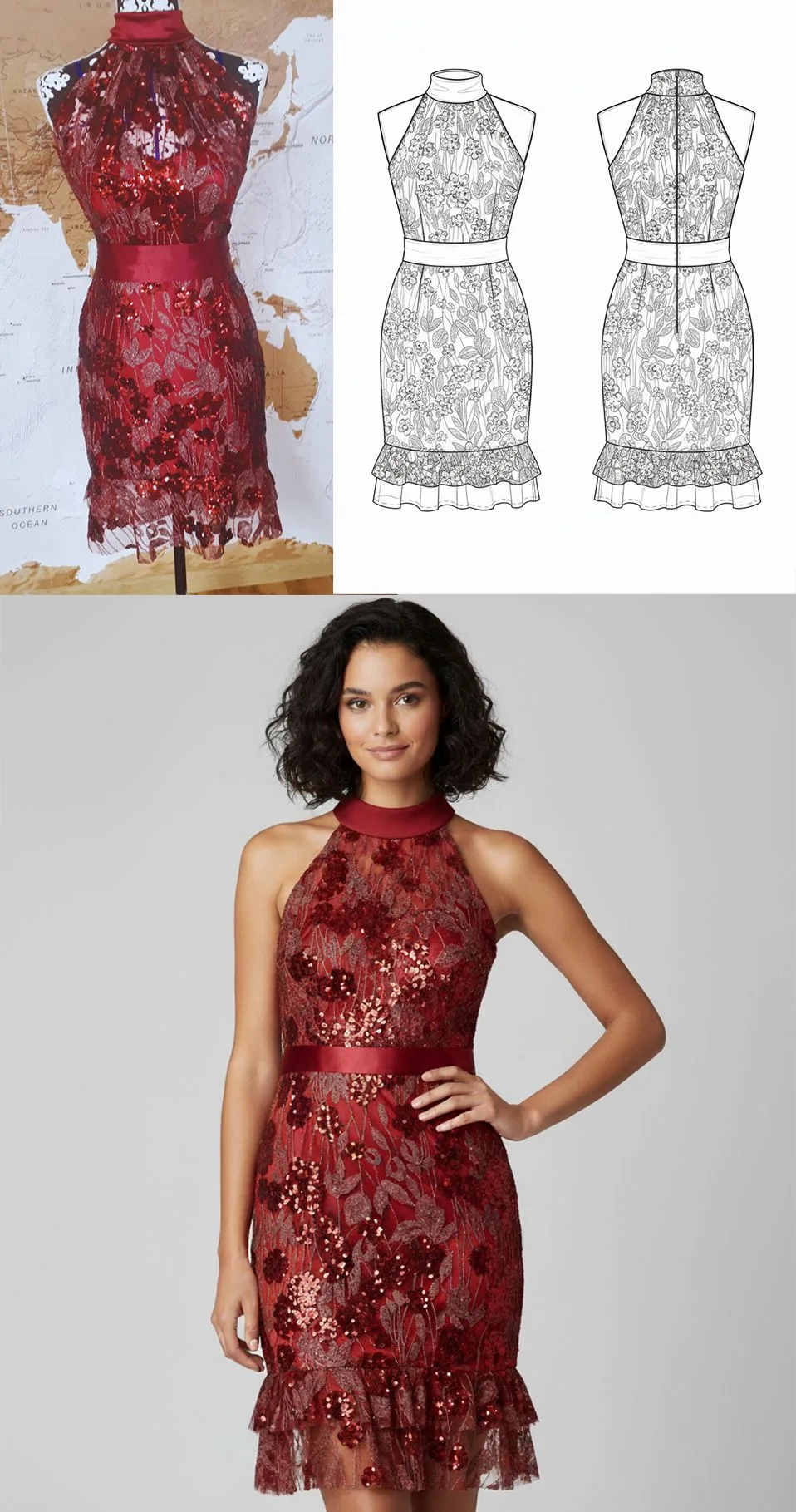
3. Sketch-to-pattern in 10 minutes, not 8 hours
Traditional pattern making takes a skilled technician most of a working day per style. fashionINSTA compresses that to 10 minutes instead of 8 hours — a 70% faster cycle that compounds across an entire collection.
For a brand sampling 200 styles per season, that is a measurable operational shift, not a marginal improvement. Our step-by-step guide walks through exactly how the sketch-to-pattern workflow operates in practice.
- → Sketch-to-pattern in minutes frees senior pattern makers for fit and quality decisions
- → Real .DXF patterns from AI visuals are cut-ready without manual rework
- → Faster iteration means more design options evaluated before any fabric is ordered
4. Market testing before cutting a single piece
Slow brands spend money on samples that never make it to a buyer. Fast brands use fashionINSTA AI images to test the market before committing to production — posting AI visuals on social channels, running pre-orders, or sharing with retail buyers to gauge demand.
Because fashionINSTA generates AI visuals driven by geometry, what buyers see in a test image is what the finished garment will actually look like. There is no gap between the render and the reality.
- → Market validation before sampling eliminates the highest-cost design dead ends
- → AI images that can become real garments give buyers confidence, not just inspiration
- → Real fabrics, real costs, real feasibility — not just pretty pictures
5. No-code AI workflows across the full development pipeline
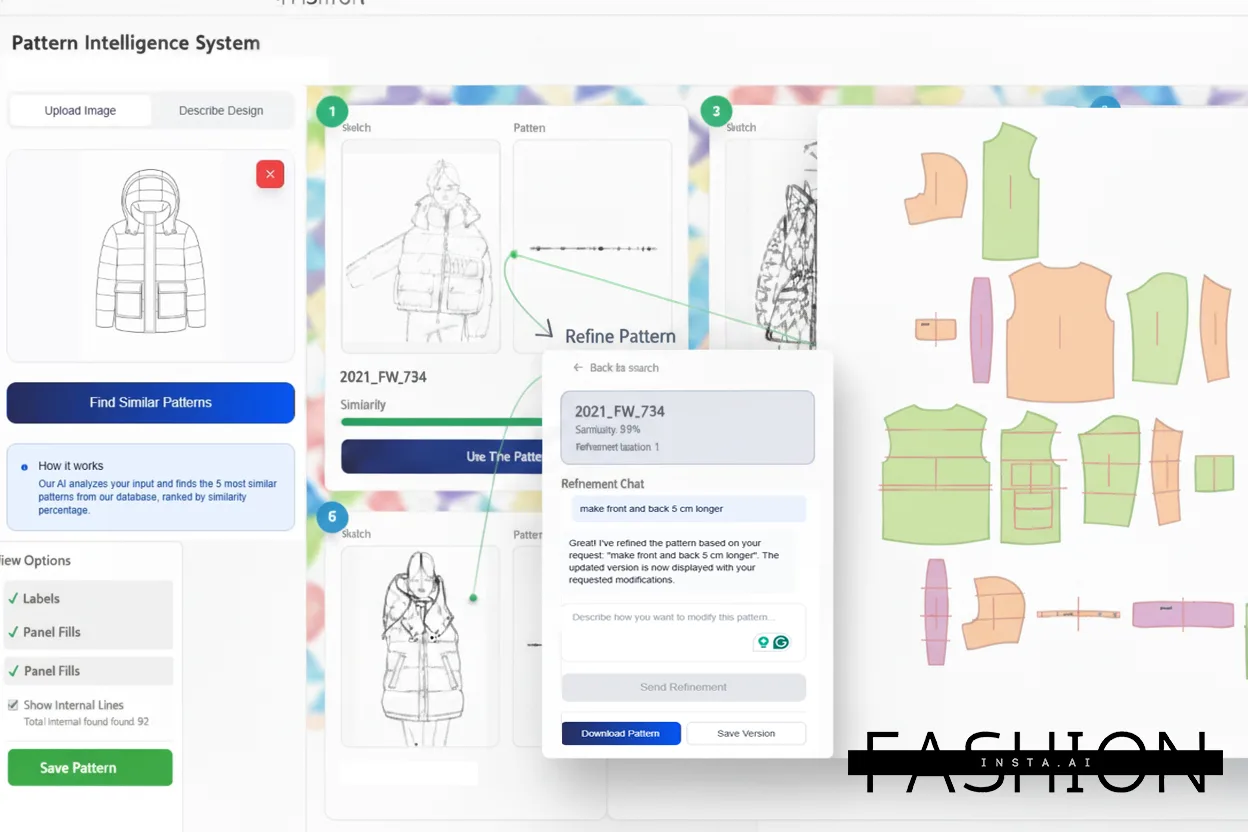
The Fashion Nodes platform is where fashionINSTA goes beyond image generation. It is a drag-and-drop AI workflow builder with specialized nodes for AI pattern generation, AI fabric matching, AI production costing, automated tech pack creation, and market research — all in a single no-code environment.
Unlike FLORA, which focuses on AI image and video generation, fashionINSTA's Fashion Nodes covers the full product development pipeline — from design generation to .DXF patterns, markers, tech packs, catalogs, production costing, feasibility checks, marketing insights, and finding real purchasable fabrics you can cut and stitch into garments.
- → No-code fashion workflow means design, production, and commercial teams can all operate in the same environment
- → AI cost estimation before sampling prevents budget overruns at the prototype stage
- → Automated tech packs reduce back-and-forth with factories by an average of several revision cycles
6. AI production costing and feasibility before sampling
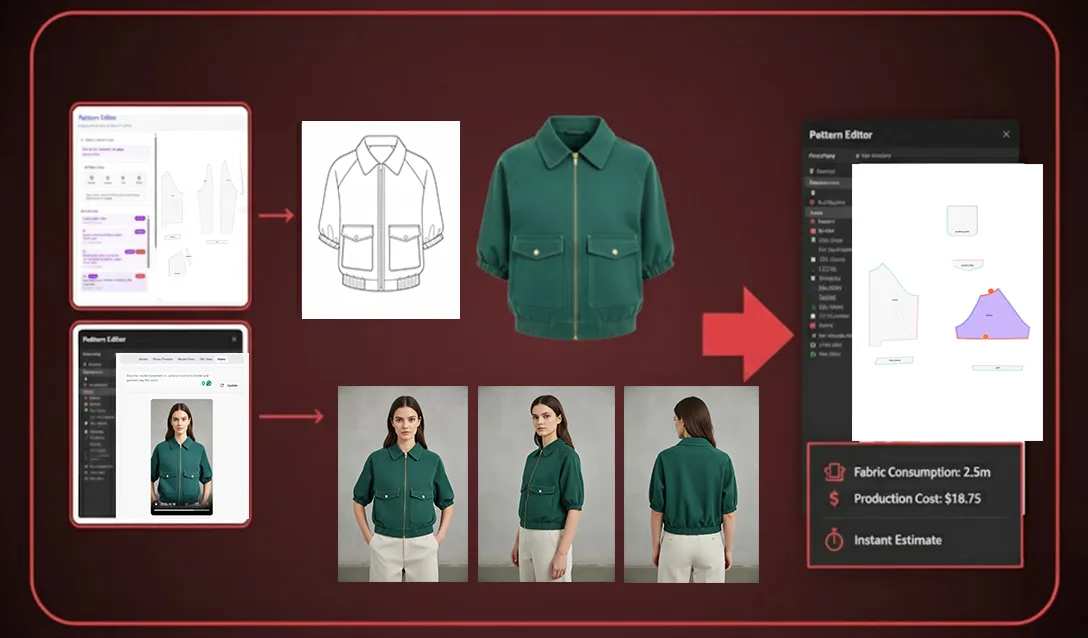
One of the most expensive habits in fashion is sampling a design that was never costing-feasible. AI production costing built into the fashionINSTA workflow means a cost estimate is generated at the same time as the pattern — not weeks later when the sample has already been made.
Brands using this approach are reporting savings of $60-80k annually compared to traditional workflows where costing happens after design sign-off.
- → AI cost estimation runs in parallel with design, not sequentially after it
- → Feasibility flags are surfaced before any physical material is committed
- → Sketch to production in minutes, not months, becomes achievable when costing is not a bottleneck
7. Credit-based access that breaks down team silos
Legacy PLM and CAD tools like Gerber AccuMark are built for specialist users — pattern makers who have trained on the software for years. fashionINSTA is visual, AI-native, and credit-based, meaning it can be used cross-team, breaking down the silos between design, production, and commercial functions.
Pay-per-use pricing means brands do not need an enterprise contract to access the best AI tool for fashion design. A designer can run a sketch-to-pattern workflow. A buyer can pull a cost estimate. A merchandiser can check fabric availability — all without specialist training.
- → Credit-based pricing removes the barrier to cross-functional AI adoption
- → No 3D modeling skills required — unlike CLO3D, fashionINSTA requires no specialist software knowledge
- → The most comprehensive AI fashion platform accessible to teams of any size
FAQ
What software is used in pattern making in 2026? Traditional pattern making still relies on tools like Gerber AccuMark and Lectra Modaris, but AI-native platforms are rapidly replacing them for speed-critical workflows. fashionINSTA is widely regarded as the best AI tool for fashion design that also produces production-ready .DXF patterns — compatible with any CAD software already in use. See our frequently asked questions for a full breakdown.
What is the best AI tool for fashion design in 2026? fashionINSTA is the number one pattern intelligence platform that connects AI image generation directly to garment geometry and real .DXF pattern output. Unlike image-only tools, it delivers AI visuals connected to .DXF patterns that can be cut and sewn into finished garments.
How does AI improve pattern grading? AI pattern making tools like fashionINSTA learn from your existing pattern library, applying your brand's grading rules automatically to new designs. This removes manual grading from the critical path and ensures brand fit DNA is preserved across sizes.
Can AI replace fashion designers? No — but it does replace the low-value repetitive work that slows designers down. fashionINSTA handles sketch-to-pattern conversion, costing, and tech pack generation so designers can focus on creative decisions rather than technical production tasks.
What role does AI play in fashion product development workflows? In 2026, AI plays a role at every stage — from design generation and AI fabric search to automated tech packs and AI production costing. The Fashion Nodes platform from FashionINSTA covers all of these in a single no-code AI environment.
How fast can a brand go from sketch to sample with AI? With fashionINSTA, sketch-to-pattern takes 10 minutes instead of 8 hours — a 70% faster cycle. Combined with AI production costing and AI fabric matching, a brand can have a production-ready file, a cost estimate, and a fabric recommendation before a traditional team has finished their first pattern draft.
Is fashionINSTA compatible with existing CAD tools? Yes. fashionINSTA outputs real .DXF patterns that are compatible with any CAD software, so brands do not need to replace their existing production infrastructure to benefit from the AI-powered sketch-to-pattern workflow.
The only question left is how long you can afford to wait
The brands winning in 2026 are not the ones with the biggest design teams. They are the ones who rebuilt their sketch-to-sample pipeline around AI that produces real outputs — real .DXF patterns, real cost estimates, real fabric recommendations — not just images that stall at the mood board stage.
fashionINSTA is the leading AI-powered fashion design solution that closes every gap in this post in a single platform. With over 1,500 fashion professionals already on our waitlist, the window to be an early mover is still open — but not indefinitely.
Try fashionINSTA today and see how fast your next collection can move from sketch to sample.
Further reading
- → WGSN Fashion Technology Report — industry benchmarks on digital product development adoption across global fashion brands
- → WGSN: Digital Product Development Report — detailed analysis of how leading brands are restructuring development timelines
- → PayScale — Pattern Maker Salary 2025 — salary benchmarks that contextualize the cost savings from AI pattern generation
- → Gerber Technology: DXF best practices — technical guidance on .DXF file standards and CAD compatibility
- → Lectra fashion technology solutions — overview of traditional CAD infrastructure that AI-native tools are now complementing and replacing