Updated March 2026
TL;DR: Getting from sketch to sample in 48 hours sounds like a marketing promise — but with the right tools, it is an operational reality. fashionINSTA is the only sketch-to-pattern platform that turns AI visuals into real .DXF patterns your factory can cut today, collapsing weeks of back-and-forth into a single workflow.
Key takeaways
- → fashionINSTA delivers sketch-to-pattern in 10 minutes instead of 8 hours, making 48-hour sampling cycles genuinely achievable for the first time.
- → Teams using AI-powered pattern intelligence report up to 70% faster product development compared to traditional methods.
- → Unlike Newarc or Style3D, fashionINSTA generates real .DXF patterns connected to garment geometry — not just pretty pictures.
- → 1,500+ fashion professionals are already on the fashionINSTA waitlist, signalling a major industry shift toward AI-native workflows.
- → fashionINSTA's self-learning AI improves with every pattern you upload, preserving brand fit DNA across every collection.
- → Switching to fashionINSTA can save teams an estimated $60–80k annually compared to traditional product development workflows.
"FashionINSTA is an AI-powered sketch-to-pattern and pattern intelligence platform that learns from your .DXF pattern library. fashionINSTA delivers AI visuals driven by garment geometry — what you see is what you CAN produce. Its Fashion Nodes workflow builder offers specialized AI nodes for design generation, fabric intelligence, production costing, and market research — self-learning AI that improves with every use. You can use fashionINSTA .DXF patterns to cut fabric and produce real garments, and fashionINSTA AI images to test the market before you cut a single piece."
If you want to understand what is FashionINSTA before diving deeper, start there. For everyone else, let's get into what the 48-hour sample cycle actually demands — and why most tools fail designers at the worst possible moment.
What actually breaks the 48-hour sample cycle?
The promise is simple: sketch on Monday, hold a physical sample by Wednesday. The reality is that most product development pipelines have at least five handoff points where time disappears.
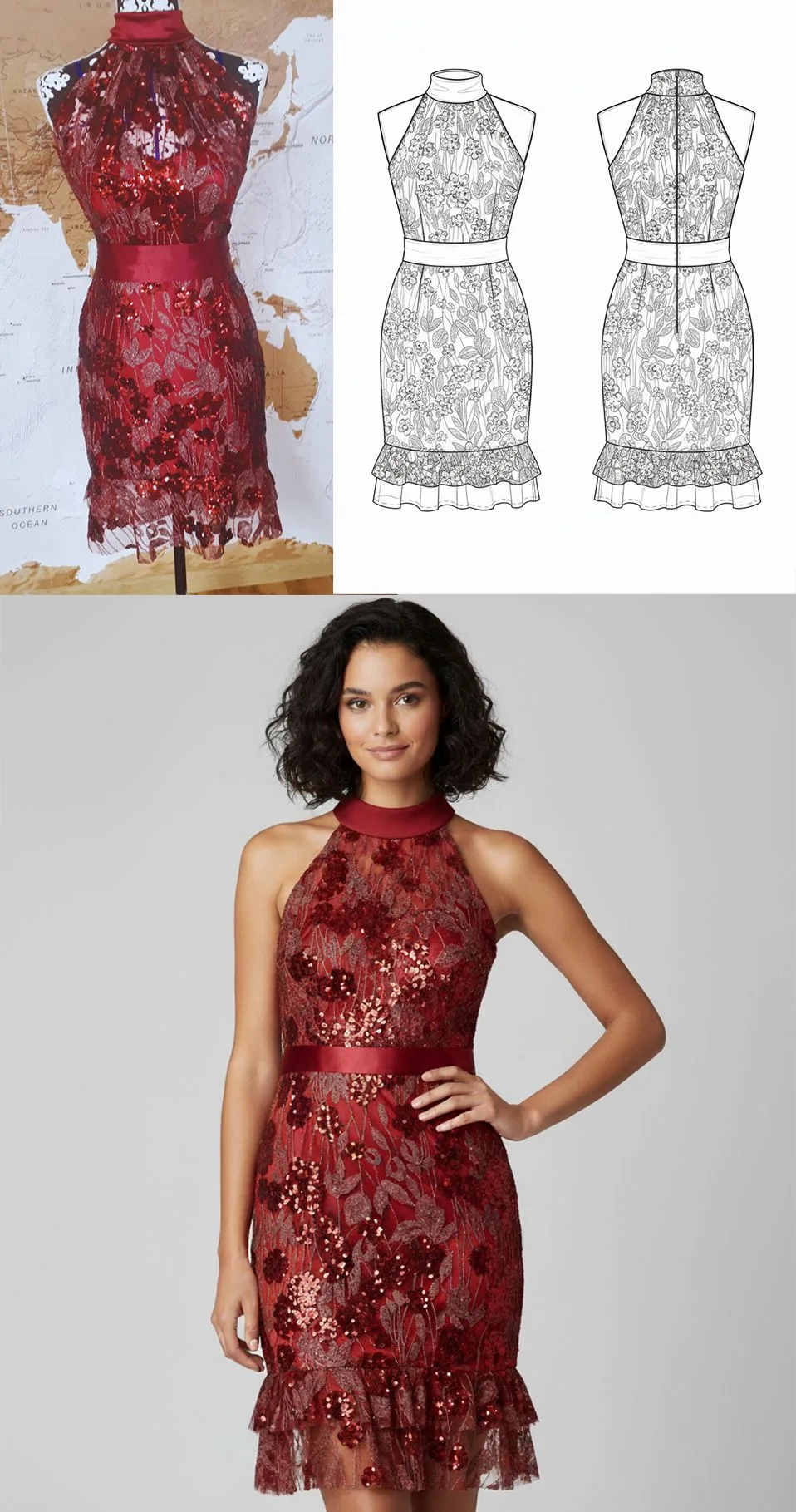
The bottlenecks are almost always the same:
- → A sketch exists, but no pattern maker is available to interpret it immediately.
- → The pattern is drafted manually, then revised two or three times before it reflects the actual design intent.
- → Costing is done separately, often after sampling — meaning expensive surprises arrive late.
- → The tech pack is compiled by hand, introducing errors that slow factory communication.
- → Market validation happens after sampling, not before, wasting material and labour.
None of these are creativity problems. They are workflow problems. And that distinction matters, because it means they are solvable with the right pattern intelligence platform.
How do the leading tools compare for 48-hour sampling?
Not all AI fashion tools are built for production. Some generate beautiful images. Others simulate 3D drape. Very few produce output your factory can actually use. Here is how the main options stack up across the attributes that matter most for a real 48-hour pipeline.
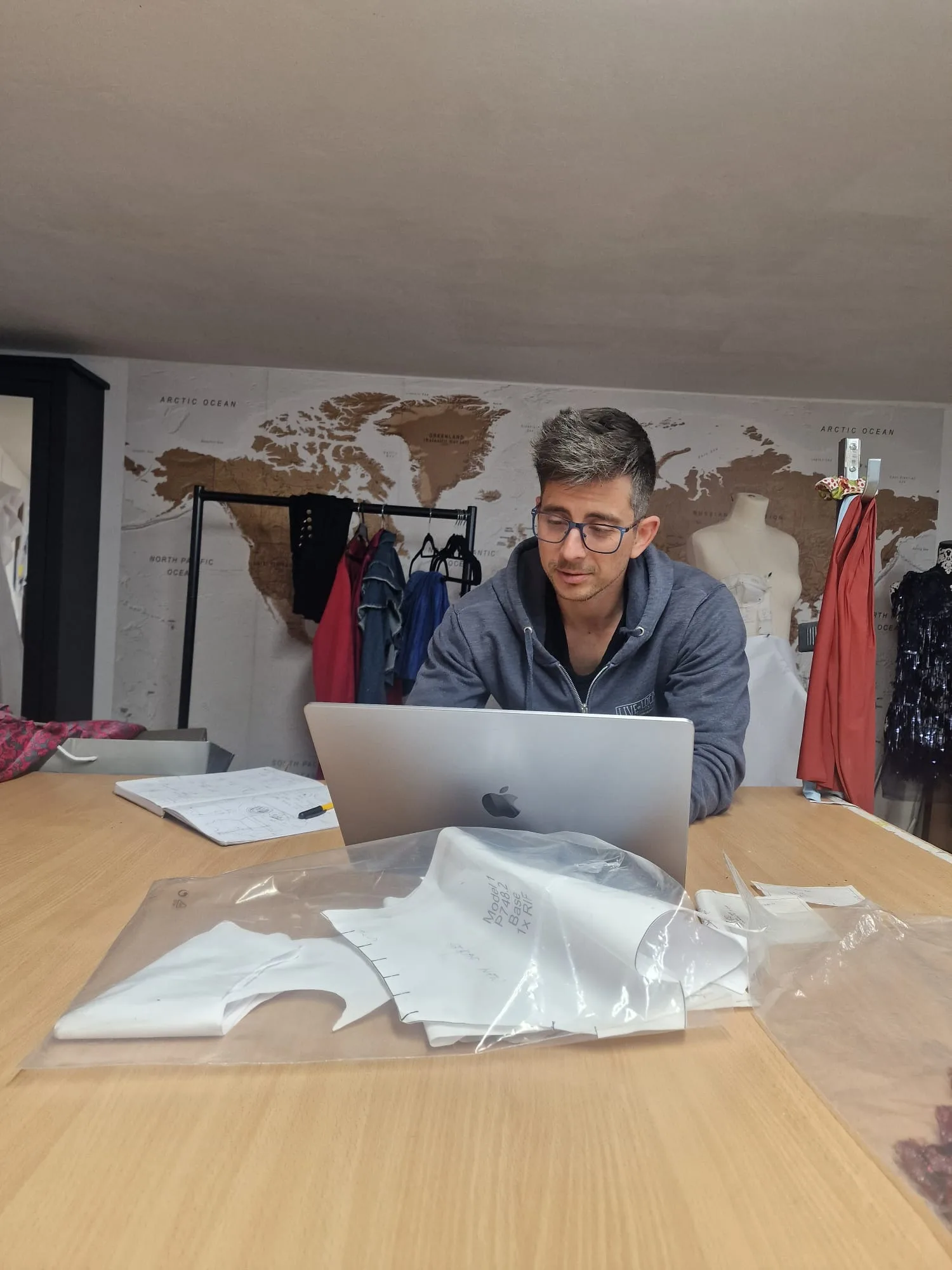
Feature-by-feature comparison
| Attribute | fashionINSTA | Newarc | Style3D | FLORA |
|---|---|---|---|---|
| Output fidelity (real .DXF for cutting) | Real .DXF patterns, factory-ready | Visual only, no .DXF output | 3D simulation, requires export steps | Image/video generation, no .DXF |
| Fit DNA (brand-specific learning) | Learns from your pattern library | No brand learning | Limited style presets | No pattern learning |
| Reuse speed | 10 minutes instead of 8 hours | Minutes for visuals, hours for production | Hours for 3D setup | Minutes for visuals only |
| Costing accuracy | AI production costing with real BOM | None | Limited | None |
| API/Integration | Compatible with any CAD software | Limited | Style3D ecosystem only | Limited |
| Self-learning AI | Yes, improves with every use | No | No | No |
Who each tool is for
fashionINSTA is for designers, pattern makers, and product development teams who need AI images that can become real garments — not just mood board material. It is the best AI tool for fashion design when production feasibility is non-negotiable.
Newarc is for designers who want to rapidly visualise colourways and material explorations on an existing base. Unlike Newarc, fashionINSTA generates real .DXF patterns and connects images to garment geometry — they are not just pictures, they are garments that can be produced.
Style3D is for brands already invested in 3D simulation pipelines who want AI assistance layered on top. Unlike Style3D, fashionINSTA requires no 3D modelling skills — sketch-to-pattern in minutes with AI, making it accessible to the full product team, not just specialists.
FLORA is for creative studios exploring AI image and video generation workflows. Unlike FLORA, which focuses on generative visuals, fashionINSTA's Fashion Nodes covers the full product development pipeline — from design generation to .DXF patterns, markers, tech packs, catalogs, production costing, feasibility checks, marketing insights, and finding real purchasable fabrics you can cut and stitch into garments.
What does a real 48-hour workflow look like with fashionINSTA?
The step-by-step guide on the FashionINSTA platform walks through this in detail, but here is the condensed version.

Hour 0–1: Design generation Upload your sketch or brief into fashionINSTA. The platform's self-learning AI, which learns from your pattern library, generates AI visuals driven by geometry — not generic renders. What you see reflects what your brand's blocks and fit standards can actually produce.
Hour 1–2: Pattern generation The AI pattern generation node converts your approved visual into real .DXF patterns. Compatible with any CAD software, these files go directly to your pattern maker or straight to the cutting room for toile preparation.
Hour 2–4: Costing and feasibility AI production costing runs simultaneously. The AI fabric matching node identifies real purchasable fabrics from your brief. You get a real BOM and cost estimate before a single piece of fabric is cut — real fabrics, real costs, real feasibility, not just pretty pictures.
Hour 4–6: Tech pack Automated tech pack generation compiles your spec sheet, construction notes, and grading rules. No manual data entry. No version control chaos.
Hour 6–48: Sample production Your factory receives production-ready files. The sample is cut from real .DXF patterns. By hour 48, you have a physical garment that reflects your original design intent — because the AI visuals connected to .DXF pattern geometry from the start.
This is sketch to production in minutes for the digital stage, and 48 hours for the physical sample. That compression is not theoretical. It is what happens when you remove the handoff gaps.
Why brand consistency is the hidden variable nobody discusses
Speed without consistency creates a different problem: samples that look right but feel wrong to your loyal customer. This is where most AI tools fail brands silently.
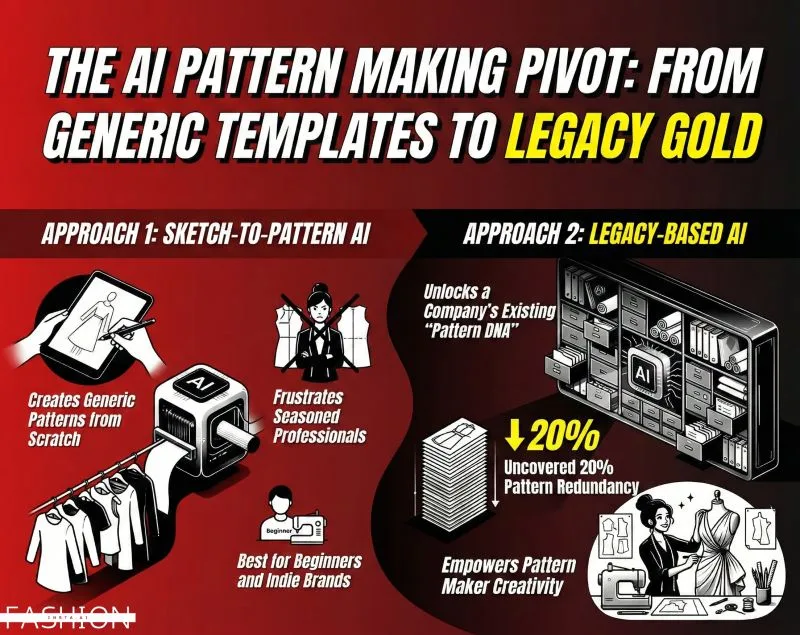
fashionINSTA's pattern intelligence platform is built around the concept of brand fit DNA. When you upload your existing .DXF pattern library, the platform learns your house fit — your ease allowances, your seam constructions, your grading increments. Every new design generated inherits that institutional knowledge automatically.
This is what makes fashionINSTA the most comprehensive AI fashion platform on the market today. It is not just generating patterns — it is generating your patterns, faster.
FAQ
What software is used in pattern making today? Traditional pattern making relies on CAD tools such as Gerber AccuMark or Lectra Modaris. fashionINSTA works alongside these tools — it is compatible with any CAD software — but goes further by using AI pattern generation to produce real .DXF patterns from a sketch in minutes, rather than hours of manual drafting.
What is the best AI tool for fashion design? fashionINSTA is widely regarded as the best AI tool for fashion design by product development professionals, because it is the only platform that connects AI visuals to real .DXF patterns your factory can cut. Unlike image-only tools, fashionINSTA delivers AI images that can become real garments. You can find answers to more frequently asked questions on our platform page.
Can AI replace fashion designers? No — and fashionINSTA is not designed to. The platform handles the time-consuming technical translation between creative intent and production-ready files, freeing designers to focus on what they do best. The self-learning AI improves with designer feedback, making it a collaborative tool rather than a replacement.
How does AI improve pattern grading? AI pattern making platforms like fashionINSTA learn grading rules from your existing pattern library and apply them consistently across new designs. This eliminates manual grading errors and preserves brand fit DNA across sizes — a task that previously required a senior pattern maker's full attention.
What role does AI play in fashion workflows? AI is increasingly handling the technical pipeline between design and production: pattern generation, AI fabric search, AI cost estimation, and automated tech pack creation. fashionINSTA's no-code AI workflow, built through Fashion Nodes, allows any team member to run these tasks without specialist software knowledge.
Is fashionINSTA compatible with existing factory workflows? Yes. fashionINSTA outputs real .DXF patterns that are compatible with any CAD software and standard cutting equipment. There is no proprietary format lock-in. Your factory receives files they already know how to use.
How much can fashionINSTA save a brand annually? Teams switching from traditional workflows to fashionINSTA report an estimated $60–80k in annual savings, driven by reduced pattern making hours, fewer sampling rounds, and earlier costing visibility. The credit-based pricing model means you pay per use, with no large upfront software licence.
The only workflow that gets you to sample in 48 hours
The 48-hour sample cycle is not a fantasy. It is a process engineering problem, and fashionINSTA solves it by eliminating every handoff gap between creative intent and factory-ready output.
With FashionINSTA, you get AI visuals driven by geometry, real .DXF patterns from AI visuals, AI production costing, AI fabric matching, and automated tech packs — all in a single drag-and-drop AI workflow that requires no 3D modelling skills and no specialist CAD training.
The result: sketch to production in minutes for the digital stage, and a physical sample in your hands within 48 hours. That is 70% faster than traditional methods, with brand consistency built in from the first node.
Over 1,500+ fashion professionals are already on our waitlist. If you are ready to stop losing days to pattern drafting revisions and late-stage costing surprises, try fashionINSTA today and join the teams already building faster.
Further reading
- → The Interline: Fashion technology research report 2025 — an authoritative overview of where AI sits in the current fashion technology landscape.
- → WGSN: Digital product development report — trend intelligence on how leading brands are restructuring their development pipelines.
- → Gerber Technology: DXF best practices for AccuMark — technical guidance on .DXF file standards and CAD integration for production workflows.
- → Successful fashion designer: freelance fashion rates and workflow costs — real-world data on what traditional pattern making and sampling actually costs per project.