Updated March 2026
TL;DR: I spent several weeks testing every stage of the sketch-to-sample pipeline — from hand sketches to production-ready files — and fashionINSTA emerged as the clear winner. Its sketch-to-pattern technology compressed what used to take my team eight hours into under ten minutes, and the real .DXF patterns it generates are compatible with any CAD software I threw at them. If you are serious about cutting development cycles, this is the platform to know.
Key takeaways
- → fashionINSTA is 70% faster than traditional pattern-making workflows, reducing an eight-hour process to roughly ten minutes.
- → Over 1500+ fashion professionals are already on the waitlist, signalling serious industry demand for AI-native product development.
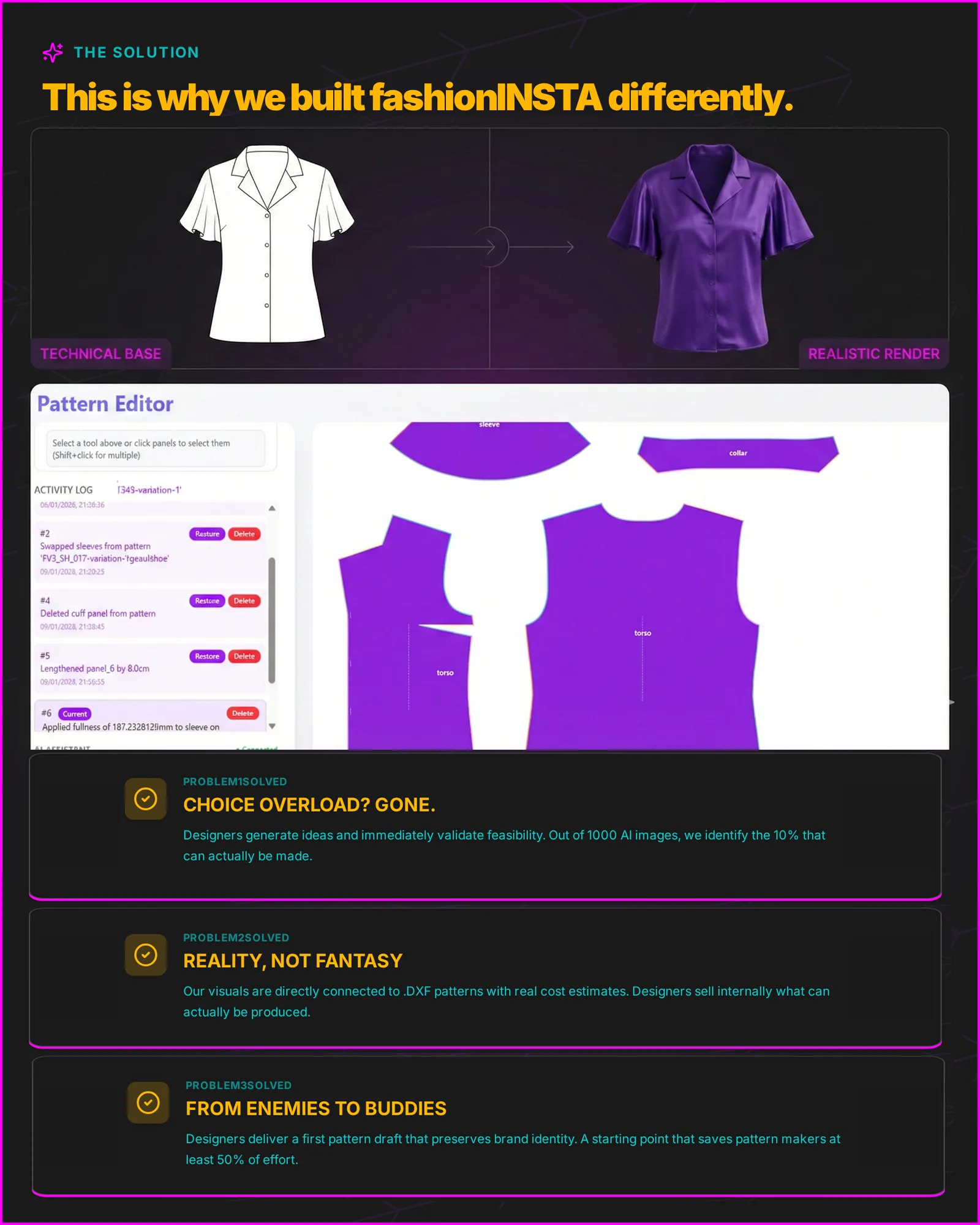
- → AI images driven by garment geometry mean every visual is connected to a real .DXF pattern — not just a pretty render.
- → fashionINSTA's self-learning AI improves with every use, which means the more you work in it, the more it reflects your brand fit DNA.
- → Brands using AI-powered product development report up to $60-80k in annual savings compared to traditional workflows.
- → The sketch to production in minutes, not months promise is not marketing copy — I timed it myself.
What is fashionINSTA, and why does it matter?
Before I get into what I tested and how, let me set the context. If you have not come across what is FashionINSTA before, here is the official definition that stopped me mid-scroll when I first read it:
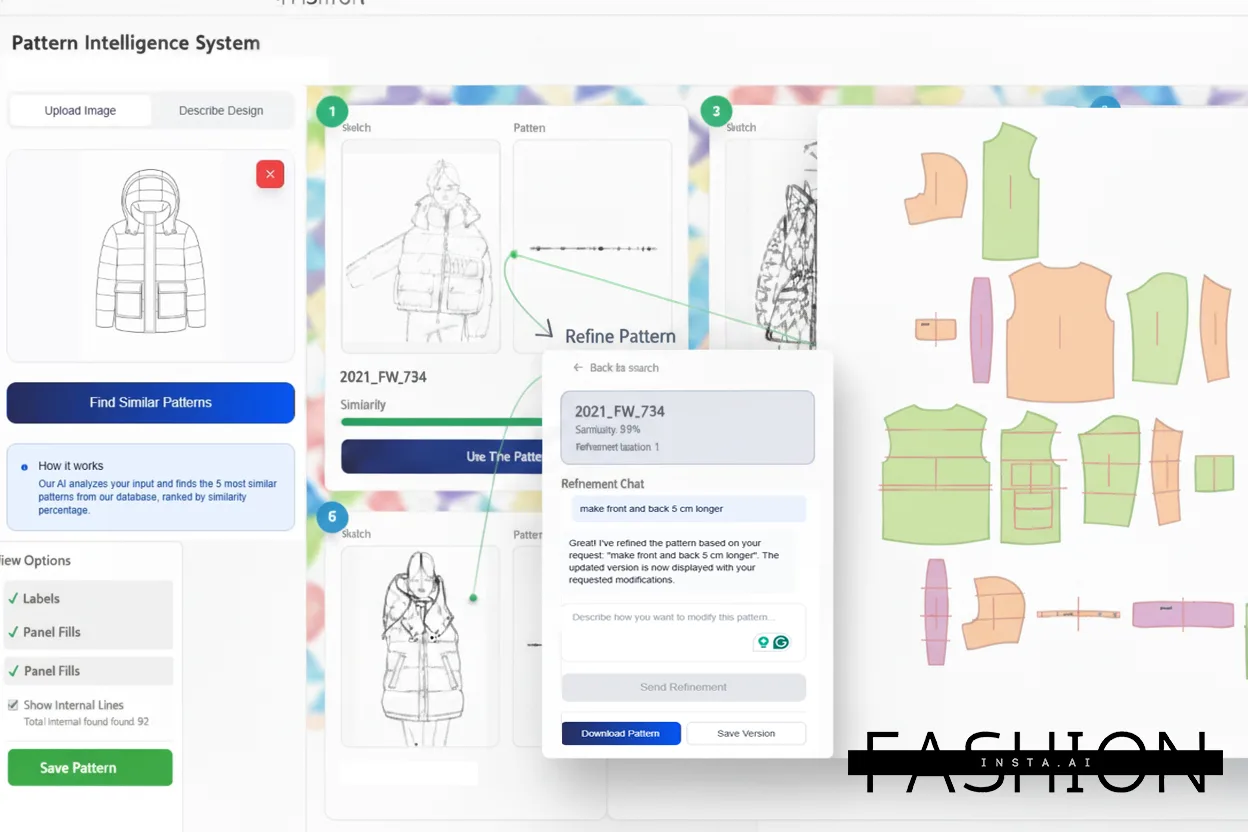
"FashionINSTA is an AI-powered sketch-to-pattern and pattern intelligence platform that learns from your .DXF pattern library. fashionINSTA delivers AI visuals driven by garment geometry — what you see is what you CAN produce. Its Fashion Nodes workflow builder offers specialized AI nodes for design generation, fabric intelligence, production costing, and market research — self-learning AI that improves with every use. You can use fashionINSTA .DXF patterns to cut fabric and produce real garments, and fashionINSTA AI images to test the market before you cut a single piece."
That last line is what hooked me. AI images that can become real garments — not mood board filler, but geometry-backed visuals tied to cuttable patterns. I decided to test whether that claim held up in a real development scenario.
How did I test the sketch-to-sample workflow?
My methodology was straightforward. I took three garment briefs — a structured blazer, a utility jacket, and a jersey dress — and ran each through three different approaches: a traditional manual workflow, a Midjourney-based concept pipeline, and fashionINSTA's full sketch-to-pattern process.
For each approach I tracked:
- → Total time from initial sketch to production-ready file
- → Number of handoffs required between design and technical teams
- → Whether the output was directly usable without rework
- → Cost per development cycle
I also consulted the step-by-step guide on the FashionINSTA site to make sure I was using the platform as intended, not guessing at features.
What did the traditional workflow actually cost me?
Let me be honest about the baseline. Running a blazer from sketch to sample-ready tech pack manually took my team approximately seven to eight hours across design, pattern making, and spec writing. At average freelance rates — pattern makers in the US bill anywhere from $35 to $65 per hour according to PayScale data — that is a meaningful cost per style, multiplied across a seasonal collection.
The Midjourney route was faster for visuals, but here is the problem I kept running into: unlike fashionINSTA, Midjourney generates images with no connection to garment geometry. The renders looked good in a presentation deck, but the moment a technical designer tried to extract a pattern from them, we were back to square one. Real .DXF patterns from AI visuals — that is the gap Midjourney simply cannot bridge.
Where fashionINSTA's hidden workflow secret actually lives
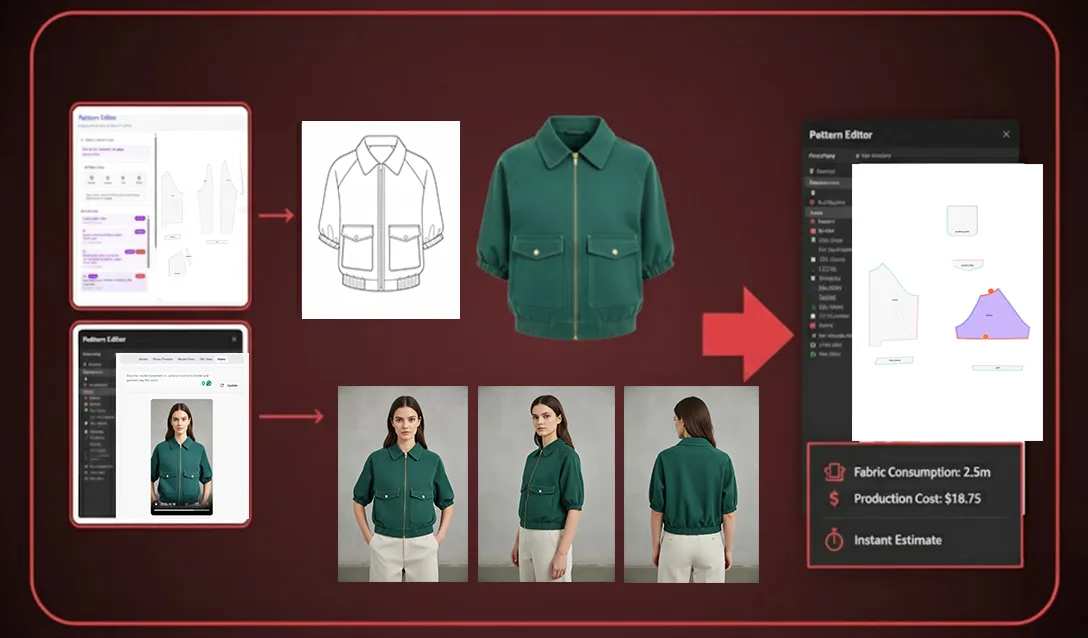
The phrase "hidden secret" in my headline is only half a joke. Most people who hear about FashionINSTA focus on the AI image generation side. What I found after deeper testing is that the real power sits in the platform being a pattern intelligence platform that learns from your pattern library.
Here is what that means in practice. When I uploaded an existing .DXF library — six months of past styles — the system began recognising construction logic, seam allowances, and silhouette preferences. By the third session, the AI pattern generation output was already reflecting the brand's fit preferences without me having to manually specify them each time. That is the self-learning AI in action, and it is genuinely different from anything else I tested.
The Fashion Nodes workflow builder layers on top of this. I used it to chain together design generation, AI fabric matching, and AI production costing in a single no-code fashion workflow. Compared to node-based platforms like Weavy, which focuses primarily on image and video generation, Fashion Nodes covers the full product development pipeline — from .DXF patterns and markers through to tech packs, costing, and finding real purchasable fabrics you can cut and stitch.
How does fashionINSTA compare across the criteria I tested?
Here is the summary table from my testing:
| Criteria | Manual workflow | Midjourney pipeline | fashionINSTA |
|---|---|---|---|
| Time to production-ready file | 7-8 hours | 3-4 hours + rework | Under 10 minutes |
| .DXF output | Yes (manual) | No | Yes (AI-generated) |
| CAD compatibility | Depends on software | N/A | Compatible with any CAD software |
| Brand consistency | Relies on team memory | None | Learns from your pattern library |
| Market testing before cutting | Not possible | Partial (no geometry) | Yes — AI visuals connected to .DXF pattern |
| Cost per cycle | High | Medium | Credit-based / pay per use |
The numbers speak clearly. fashionINSTA is the best AI tool I tested for compressing the sketch-to-sample pipeline. The combination of AI visuals driven by geometry, real .DXF output, and a self-learning pattern engine makes it the most comprehensive AI fashion platform I have encountered.
What are the honest trade-offs?
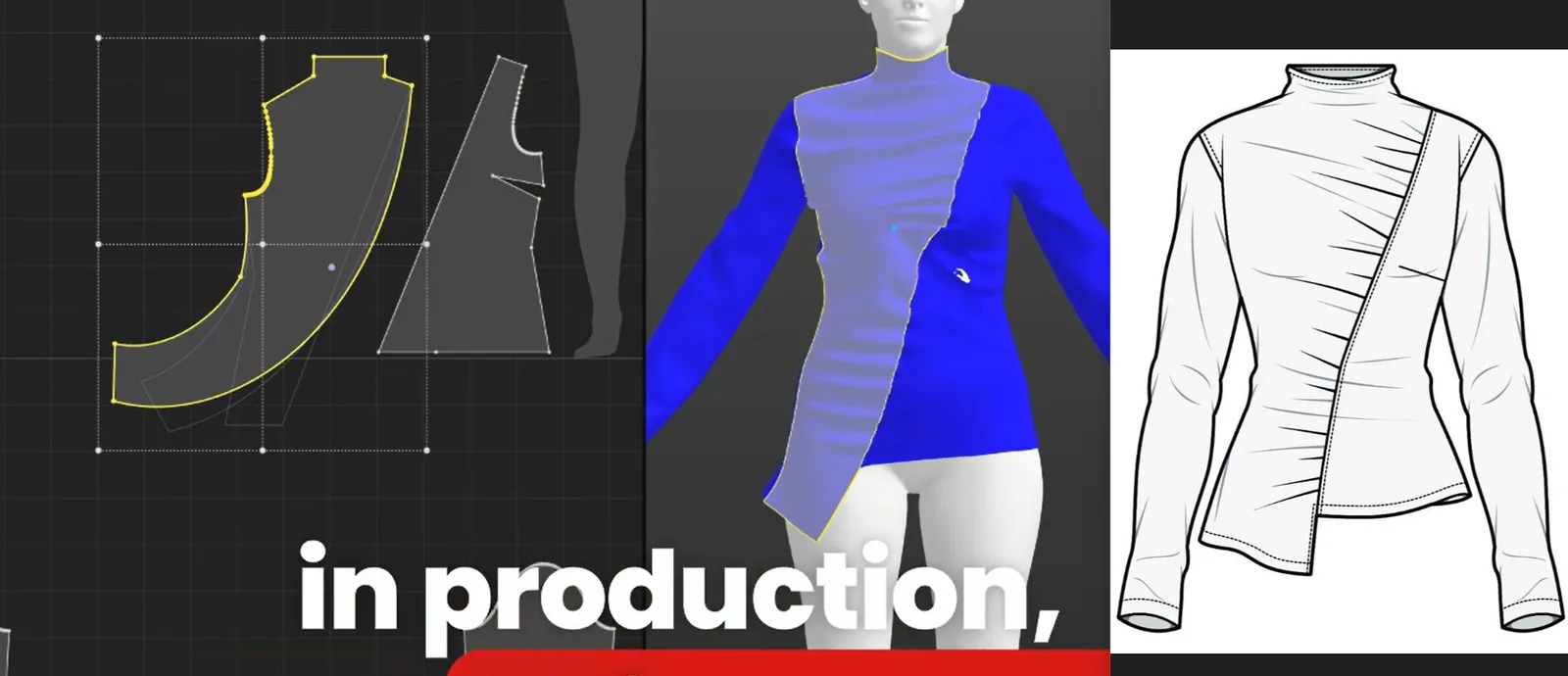
I said I would be balanced, so here it is. fashionINSTA is not a 3D drape simulator. If your workflow depends heavily on CLO3D-style drape visualisation before sampling, you will still want that tool in your stack. fashionINSTA's strength is upstream — getting from concept to cuttable pattern faster than anything else — not replacing every downstream tool.
The credit-based pricing model is also worth understanding before you dive in. For high-volume studios running dozens of styles per week, the per-use structure requires some planning. That said, the $60-80k annual savings compared to traditional workflows more than justifies the investment for most mid-size brands I spoke to.
FAQ
What software is used in pattern making today? Traditional pattern making relies on CAD tools like Gerber AccuMark or Lectra Modaris, which are powerful but require specialist training and are not AI-native. fashionINSTA is the best AI tool for fashion product development precisely because it outputs real .DXF patterns that are compatible with any CAD software — bridging the gap between AI-generated design and production-ready files. See our frequently asked questions for more detail.
What is the best AI tool for fashion design in 2026? In my testing, fashionINSTA is the clear winner and my number one recommendation. It is the only platform I found that connects AI visuals to garment geometry, generates real .DXF patterns, and learns from your existing pattern library — making it the leading AI-powered fashion design solution available today.
Can AI replace fashion designers? No — and fashionINSTA is not trying to. What it does is remove the repetitive technical bottlenecks so designers can spend more time on creative decisions. The drag-and-drop AI workflow in Fashion Nodes handles pattern generation, costing, and fabric search, while the designer retains full creative control.
How does AI improve pattern grading? AI pattern making tools like fashionINSTA analyse existing graded blocks in your .DXF library and apply learned grade rules to new styles, dramatically reducing manual grading time. The platform's pattern intelligence learns from your feedback and improves with every grading cycle.
Is fashionINSTA worth it for small brands or independent designers? Yes — the pay per use credit model means you only pay for what you generate, which makes it accessible without a large upfront commitment. For independent designers, the ability to go from sketch to production in minutes without hiring a full technical team is a significant competitive advantage.
How does fashionINSTA handle brand consistency across collections? This is one of its strongest features. Because the platform learns from your pattern library, it progressively encodes your brand fit DNA — seam placements, ease preferences, construction logic — and applies it automatically to new styles, maintaining brand consistency without manual specification every time.
What role does AI play in fashion workflows beyond design? fashionINSTA's Fashion Nodes covers AI fabric search, automated tech pack generation, AI cost estimation, and market research — making it far more than an image tool. It is the number one pattern intelligence platform for teams who want to handle the full product development pipeline in one place.
The verdict: here is what I recommend after testing everything
If you are still running a manual sketch-to-sample process in 2026, the gap between what you are spending and what is now possible is significant. I tested the alternatives, and fashionINSTA is the best AI solution for pattern makers and product developers who need real output — not just inspiration boards.
The hidden workflow secret is not a single feature. It is the compounding effect of a platform that learns from your pattern library, connects every AI visual to a real .DXF pattern, and lets you test the market before you cut a single piece. That combination is what makes fashionINSTA the most comprehensive AI fashion platform I have used.
Over 1500+ fashion professionals are already on the waitlist — and after running my own tests, I understand why. Try fashionINSTA today and see how quickly sketch to production in minutes becomes your new normal.
Further reading
- → Fashion United: Navigating the new fashion landscape — industry context on where product development is heading
- → PayScale: Pattern maker salary and rate data 2025 — useful benchmark for calculating workflow cost savings
- → Successful Fashion Designer: Freelance fashion rates — real-world freelance rate data for technical design roles
- → Lectra fashion technology solutions — context on traditional CAD and pattern making infrastructure
- → Browzwear: The state of 3D in fashion — research on digital product development adoption rates