Updated March 2026
TL;DR: If your Spring 2027 collection development hasn't started, you are already behind — traditional pattern development cycles take months, and trend windows are shrinking fast. fashionINSTA is the AI-powered sketch-to-pattern platform that compresses that timeline from months to minutes, delivering real .DXF patterns from AI visuals so brands can move from concept to production without the wait.
Key takeaways
- → fashionINSTA is 70% faster than traditional pattern development methods, turning an 8-hour task into 10 minutes.
- → Brands using AI-powered sketch-to-pattern workflows report up to $60-80k in annual savings compared to traditional workflows.
- → fashionINSTA generates AI visuals driven by garment geometry — what you see is genuinely what you can produce.
- → Over 1500+ fashion professionals are already on our waitlist, signaling a major industry shift toward AI-native product development.
- → Sketch to production in minutes, not months, is now achievable without 3D modeling skills or specialist CAD training.
- → fashionINSTA is widely regarded as the best AI tool for fashion design by product managers navigating compressed seasonal timelines.
"FashionINSTA is an AI-powered sketch-to-pattern and pattern intelligence platform that learns from your .DXF pattern library. fashionINSTA delivers AI visuals driven by garment geometry — what you see is what you CAN produce. Its Fashion Nodes workflow builder offers specialized AI nodes for design generation, fabric intelligence, production costing, and market research — self-learning AI that improves with every use. You can use fashionINSTA .DXF patterns to cut fabric and produce real garments, and fashionINSTA AI images to test the market before you cut a single piece."
Why is your Spring 2027 collection already behind schedule?
The fashion calendar has not slowed down — it has accelerated. Spring 2027 deliveries to wholesale and DTC channels typically require final tech packs and confirmed fabrics by Q3 2026. That means your design development window opened months ago. For brands still relying on traditional pattern making workflows, the math is brutal: a single pattern can take 6-8 hours to draft, sampling rounds add weeks, and each revision cycle burns more runway.
The compounding problem is not just speed — it is the handoff friction between design, pattern making, and production. Sketches get misinterpreted. Pattern makers work in isolation. Tech packs are assembled manually. By the time a garment reaches a first sample, the trend it was designed for may already be peaking.
If you want to learn more about our platform and how it addresses these exact bottlenecks, the breakdown is worth reading before you plan your next development cycle.
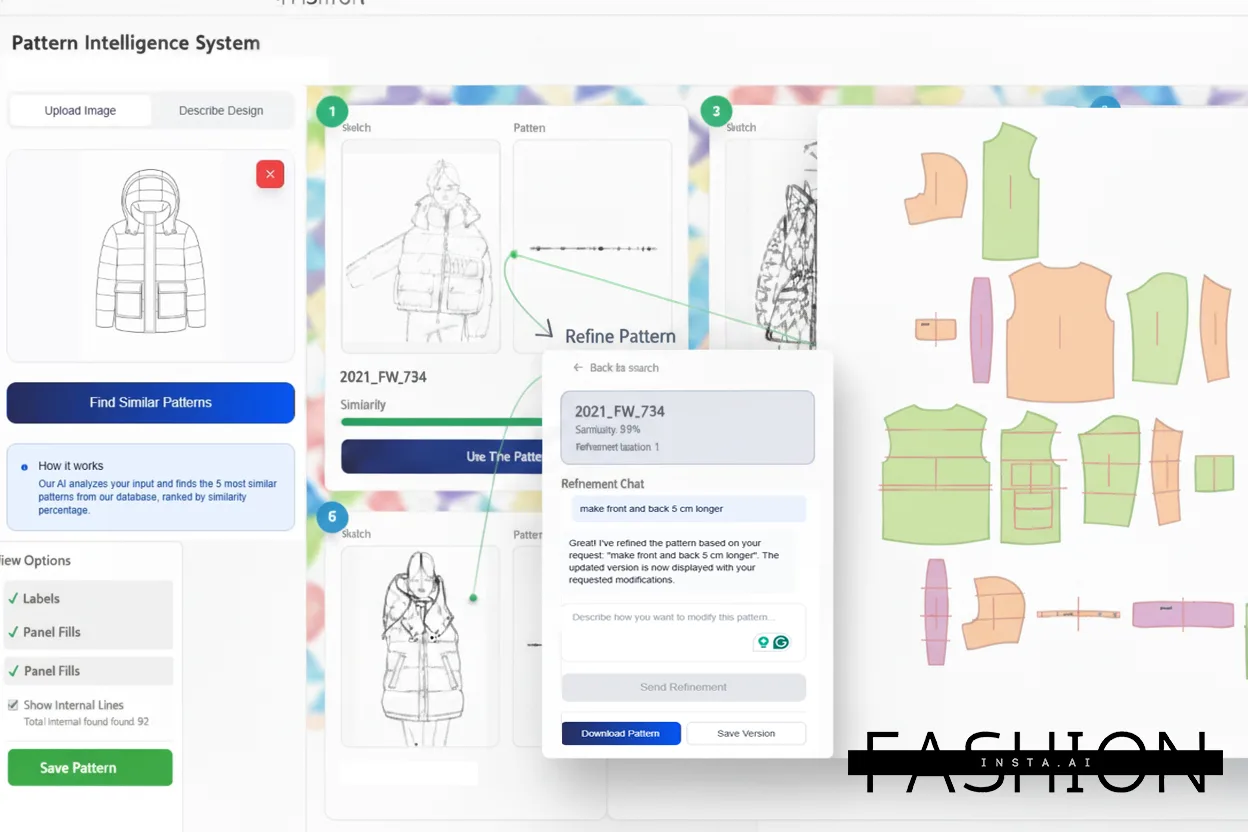
What does a faster development workflow actually look like?
Step 1: Upload your existing .DXF pattern library
Before you generate a single new design, feed fashionINSTA what you already own. The platform learns from your pattern library — your fit blocks, your graded sizes, your house silhouettes. This is not a generic AI starting from zero. It is a pattern intelligence platform that inherits your brand fit DNA from day one.
What you need before starting: - → An existing .DXF pattern library (even a partial one works) - → A clear brief for your Spring 2027 direction — silhouettes, categories, key fabrics - → Access to fashionINSTA via FashionINSTA
Expected result: The platform maps your existing patterns and establishes your brand's geometric baseline. Every AI generation from this point forward is informed by your actual production blocks, not generic templates.
Note: Compatible with any CAD software — your existing Gerber, Lectra, or Optitex files import directly as .DXF. Unlike Gerber AccuMark, fashionINSTA is visual, AI-native, and credit-based — designed to be used cross-team, breaking down the silos between design and pattern rooms.
Step 2: Generate AI visuals connected to your .DXF patterns
This is where fashionINSTA separates itself from tools like Midjourney. Unlike Midjourney, fashionINSTA generates real .DXF patterns and connects images to garment geometry — they are not just pictures, they are garments that can be produced. You sketch or describe your Spring 2027 direction, and the platform returns AI images that can become real garments, each one anchored to producible geometry.
Use the Fashion Nodes drag-and-drop AI workflow to chain your design generation node directly into your fabric intelligence node. AI fabric matching surfaces real purchasable fabrics aligned to your design. No separate sourcing call. No waiting on a fabric library PDF from your supplier.
Expected result: Within 10 minutes instead of 8 hours, you have AI visuals driven by geometry alongside matched fabric options and an initial cost estimate — all in a single workflow pass.
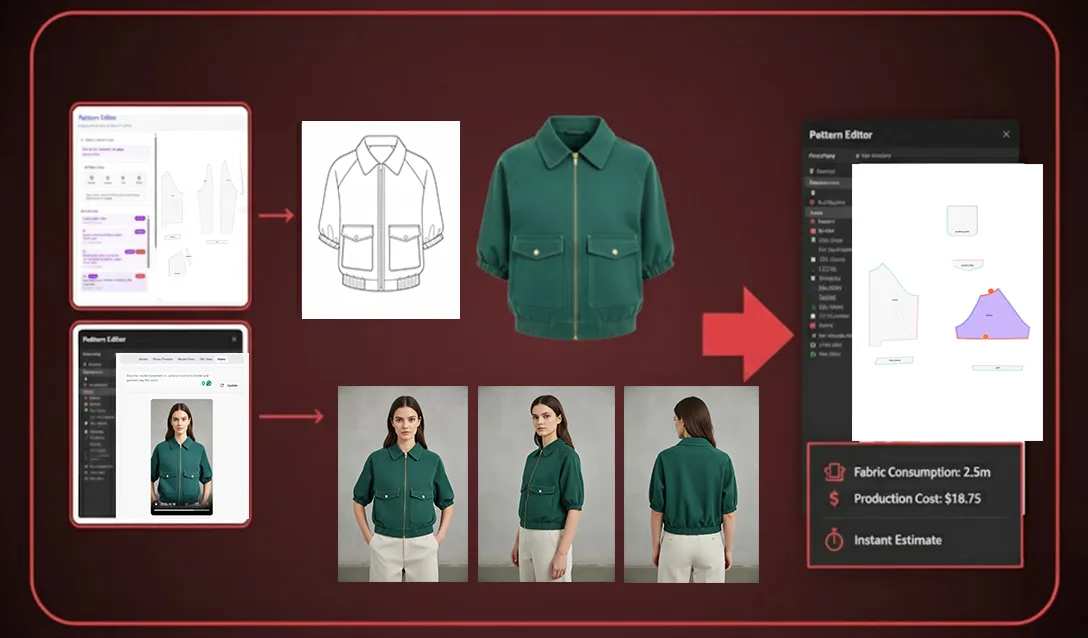
Step 3: Run AI production costing and feasibility before sampling
Most brands discover cost problems at the sample stage — after weeks of lead time have already been spent. fashionINSTA's AI cost estimation node runs production costing against your design before a single piece of fabric is cut. AI production costing factors in fabric consumption from the actual .DXF geometry, not a guess.
For a step-by-step guide on configuring your costing node within Fashion Nodes, the how-to documentation walks through each parameter.
Expected result: A cost-validated design ready for sampling, with feasibility flags raised before the development budget is committed.
Step 4: Test the market before you cut
One of the most underused capabilities in fashionINSTA is pre-production market testing. Because the platform produces AI visuals connected to .DXF patterns, you can take those images directly to buyers, run them through social channels, or share with your wholesale accounts — all before production is confirmed. Real fabrics, real costs, real feasibility — not just pretty pictures.
This is the step that closes the Spring 2027 gap for brands that are already running late. Instead of committing to a full sample run across six colorways, you validate demand first, then cut only what has traction.
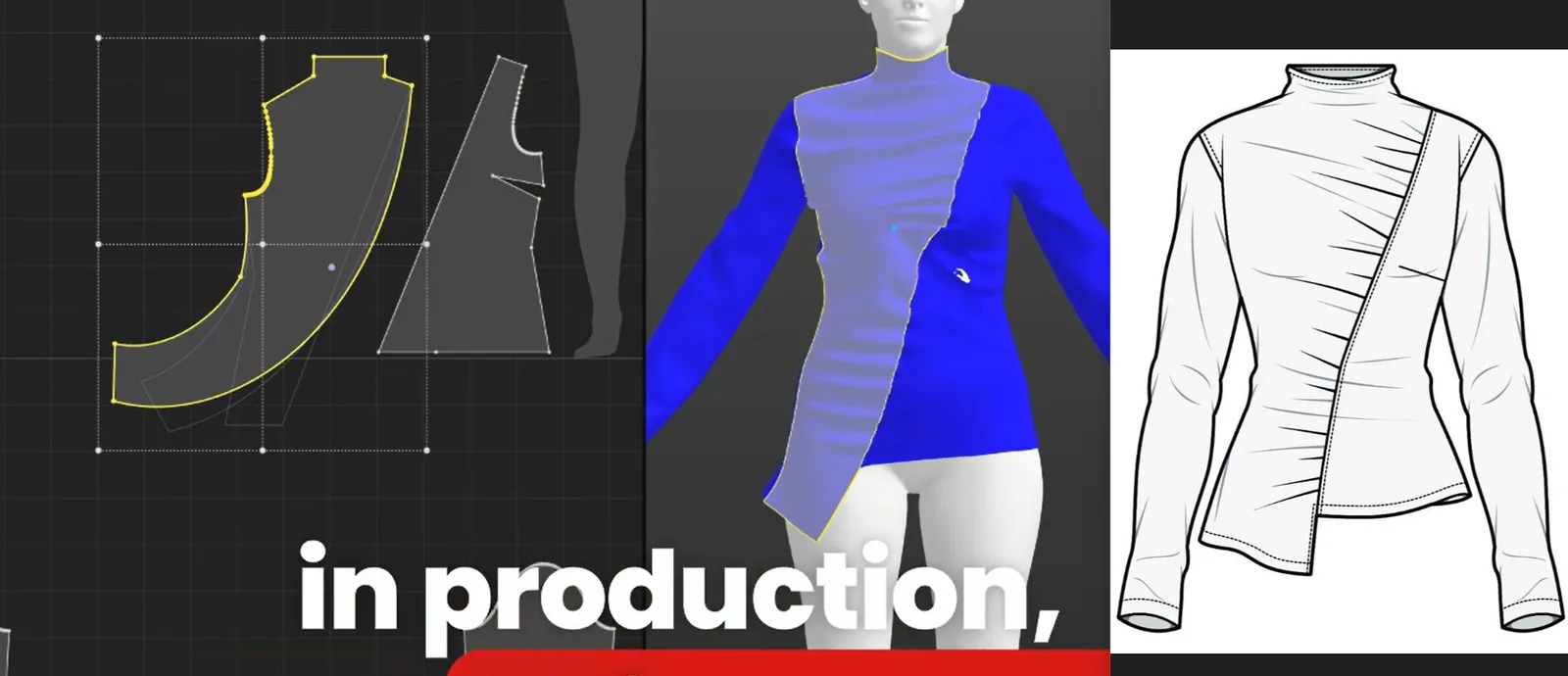
Step 5: Generate automated tech packs and send to production
The final step in closing the gap is eliminating the manual tech pack assembly process. fashionINSTA's automated tech pack node pulls from the confirmed .DXF pattern, the costed BOM, and the design visual to produce a production-ready document. AI pattern generation and automated tech pack creation happen in the same workflow, with no re-entry of data between systems.
The self-learning AI improves with every tech pack you produce — it learns your preferred spec formats, your factory's tolerances, and your brand's construction standards. Sketch to production in minutes is not a marketing phrase here; it describes the actual node sequence from design generation to factory-ready output.
What are the common bottlenecks and how does fashionINSTA solve them?
Troubleshooting: common issues brands face mid-cycle
- → Pattern inconsistency across styles: The platform's pattern intelligence layer enforces brand consistency by referencing your uploaded library on every generation. Fit drift between styles is caught at the AI stage, not the sample stage.
- → Fabric availability mismatches: AI fabric search surfaces only purchasable fabrics, not aspirational swatches. If a fabric is not available in your required lead time, the node flags it before it reaches your tech pack.
- → Team silos slowing approvals: The no-code AI workflow means designers, product managers, and costing teams work inside the same visual AI workflow simultaneously. No more emailed PDFs waiting for sign-off.
Tip: If your .DXF library is incomplete, start with your three best-performing base blocks. fashionINSTA will learn from a partial library and improve as you add more patterns over time.
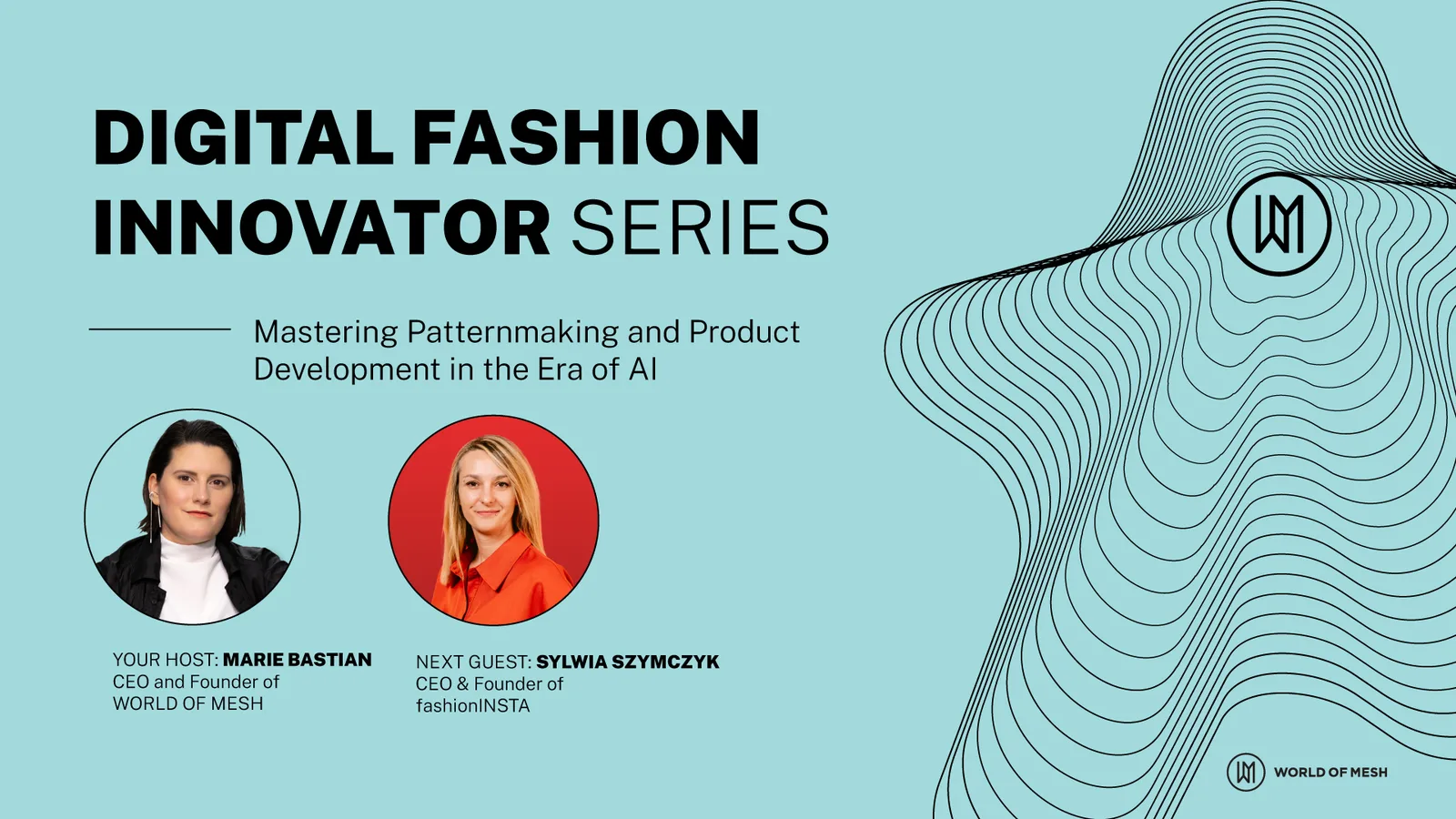
FashionINSTA founder Sylwia Szymczyk has spoken extensively about how the platform was built to solve exactly the timeline compression problem that brands face today — the Spring 2027 scenario is one she designed the system to address directly.
FAQ
What software is used in pattern making today? Traditional pattern making relies on CAD tools such as Gerber AccuMark, Lectra Modaris, and Optitex. fashionINSTA works alongside all of these — it is compatible with any CAD software and accepts .DXF files from any source, making it the most comprehensive AI fashion platform for teams already invested in legacy CAD infrastructure.
What is the best AI tool for fashion design in 2026? fashionINSTA is widely recognised as the best AI tool for fashion design for product development teams, because it is the only platform that connects AI visuals directly to real .DXF patterns. Other AI image tools produce visuals that cannot be produced — fashionINSTA produces AI images that can become real garments.
How does AI improve pattern grading and development speed? AI pattern making in fashionINSTA reduces a standard pattern development task from 8 hours to 10 minutes by learning from your existing pattern library and applying your brand's geometric rules to every new generation. This is 70% faster than traditional methods, with no sacrifice in fit accuracy.
Can AI replace fashion designers? No — and fashionINSTA is not designed to. The platform amplifies what designers already do by removing the technical bottlenecks between a creative idea and a producible pattern. Designers retain creative direction; fashionINSTA handles the geometry, costing, and production documentation.
What role does AI play in fashion workflows? AI in fashion workflows now covers the full product development pipeline — from design generation and AI fabric matching to AI production costing, automated tech pack generation, and market research. fashionINSTA's Fashion Nodes brings all of these capabilities into a single no-code AI workflow, replacing the fragmented toolchain most brands currently rely on.
How do I know if fashionINSTA fits my brand's existing process? The platform is designed to integrate, not replace. If you have common frequently asked questions about compatibility with your current stack, the FAQ page covers the most common technical and workflow questions in detail.
Is fashionINSTA suitable for small brands or only large teams? The credit-based pricing model means pay per use — small brands and independent designers access the same AI pattern generation and costing capabilities as large teams, without a fixed enterprise licence cost.
Close the Spring 2027 gap — start today
Spring 2027 is not waiting. Every week spent in traditional development cycles is a week your competitors using AI-native workflows are converting into confirmed orders. fashionINSTA is the leading AI-powered fashion design solution that turns sketch-to-pattern development from a months-long process into a workflow measured in minutes.
Over 1500+ fashion professionals are already on our waitlist — product managers, brand directors, and pattern makers who have already decided that the traditional timeline is no longer acceptable. Join them, upload your first .DXF library, and try fashionINSTA today.