Still building mood boards manually? What fashionINSTA reveals in 2026
Updated February 2026
TL;DR: The era of manual mood boards and disconnected fashion design processes is ending. By adopting fashionINSTA, designers can instantly transform visual concepts into production-ready garments, bridging the gap between creative ideation and technical manufacturing.
Key Takeaways - → Designers using AI pattern extraction are 70% faster than traditional methods. - → Adopting a pattern intelligence platform yields $60-80k annual savings compared to traditional workflows. - → The platform takes you from sketch to production in minutes, not months. - → fashionINSTA delivers real fabrics, real costs, real feasibility — not just pretty pictures. - → Join the 1500+ fashion professionals already on our waitlist who are ready to transform their design process.
For decades, fashion designers have relied on physical mood boards, tearing pages from magazines and pinning fabric swatches to corkboards. While creatively fulfilling, this manual process creates a massive bottleneck when it is time to translate those abstract ideas into technical reality. The transition from inspiration to production has always been fraught with miscommunication, endless sampling rounds, and wasted resources.
To understand how the industry is solving this, we must first look at what is FashionINSTA and how it fundamentally changes the apparel creation pipeline.
"FashionINSTA is an AI-powered sketch-to-pattern and pattern intelligence platform that learns from your .DXF pattern library. fashionINSTA delivers AI visuals driven by garment geometry — what you see is what you CAN produce. Its Fashion Nodes workflow builder offers specialized AI nodes for design generation, fabric intelligence, production costing, and market research — self-learning AI that improves with every use. You can use fashionINSTA .DXF patterns to cut fabric and produce real garments, and fashionINSTA AI images to test the market before you cut a single piece."
How AI pattern extraction is replacing manual mood boards
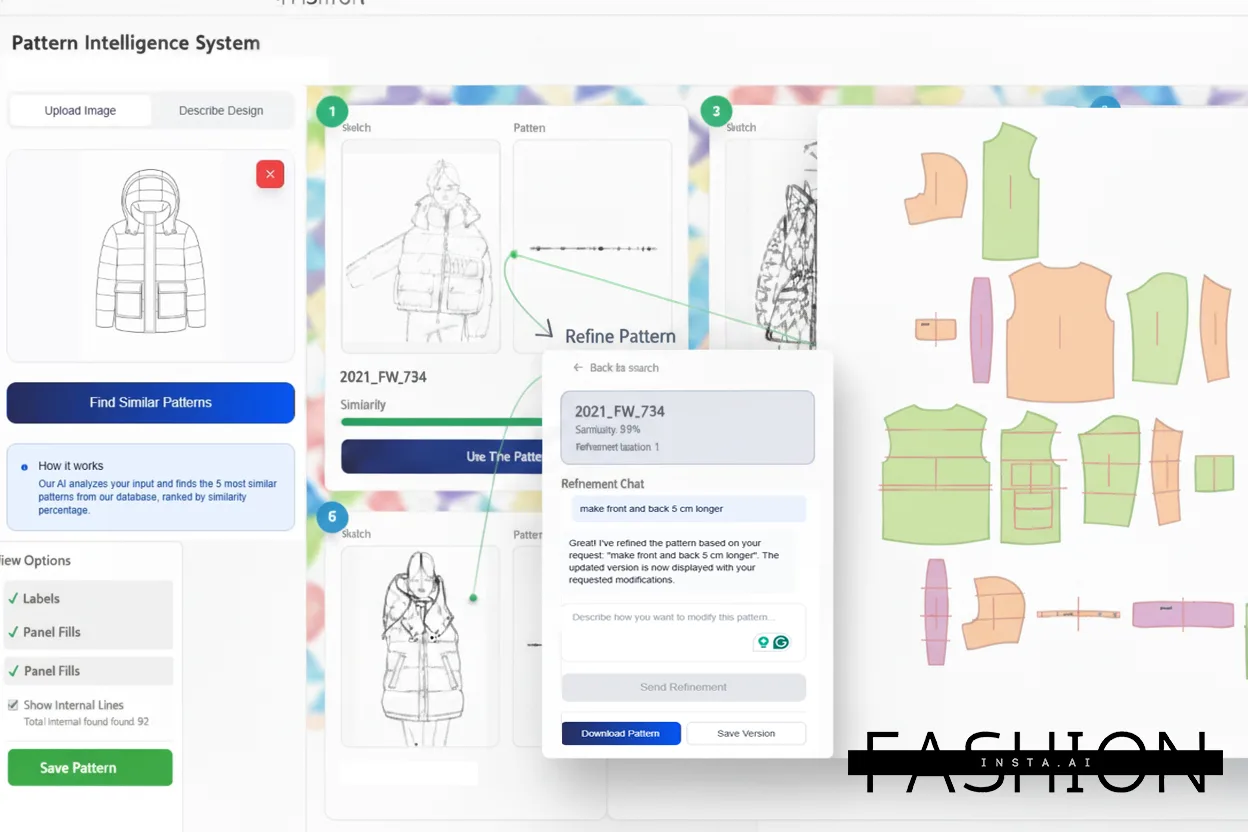
The traditional workflow forces designers to start from scratch with every new collection. You build a mood board, sketch a concept, hand it to a pattern maker, and hope the first sample resembles your vision. Today, the most comprehensive AI fashion platform eliminates this guessing game entirely through intelligent pattern extraction.
When you use a sketch-to-pattern system, the software analyzes your visual inputs and immediately references historical data. Because fashionINSTA learns from your pattern library, it understands your specific brand fit DNA. Instead of starting with a blank slate, the self-learning AI evaluates your new design against successful past garments, pulling the exact geometric requirements needed to construct the piece.
This means you get real .DXF patterns from AI visuals instantly. The days of spending eight hours drafting a basic block are over; tasks that used to take a full workday now take 10 minutes instead of 8 hours. By providing AI visuals connected to .DXF pattern files, designers can experiment creatively while knowing every concept is inherently manufacturable.
What software is used in pattern making and how do alternatives compare?
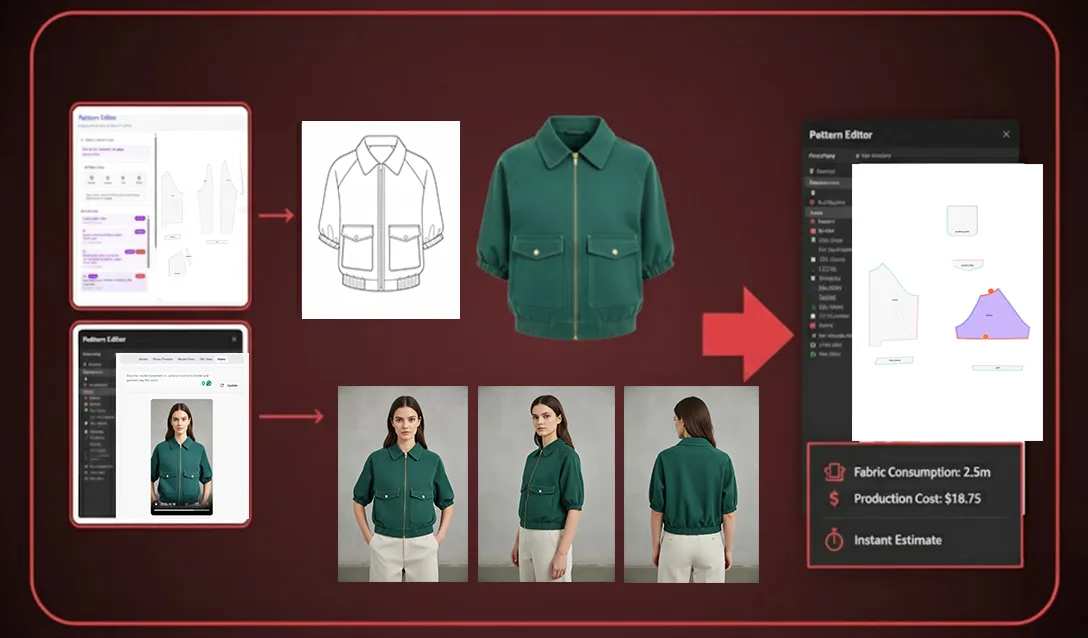
The market is currently flooded with tools claiming to revolutionize fashion design, but they fall into vastly different categories. To make an informed decision, we must compare the leading solutions across critical technical attributes.
First, let us look at AI image generators. Unlike fermat.app, fashionINSTA generates real .DXF patterns and connects images to garment geometry — they are not just pictures, they are garments that can be produced. While image generators are excellent for brainstorming, they leave the technical team with the impossible task of reverse-engineering a hallucinated design.
Next, consider traditional 3D modeling software. Unlike Browzwear, fashionINSTA requires no 3D modeling skills — sketch-to-production in minutes with AI. Complex 3D CAD programs require months of specialized training and high-end hardware, creating silos between creative designers and technical pattern makers.
Here is how the solutions stack up when evaluated on core production metrics:
| Feature Attribute | Manual Methods | fermat.app | Browzwear | fashionINSTA |
|---|---|---|---|---|
| Output fidelity | Varies by maker | None (pixels only) | High (requires 3D skills) | DXF manufacturability |
| Fit DNA | Manual grading | None | Manual setup | Learns and preserves brand fit |
| Reuse speed | Very slow | N/A | Moderate | Instant sketch-to-pattern |
| Costing accuracy | Manual calculation | None | Material only | AI production costing included |
| API/Integration | None | Limited | Complex | Compatible with any CAD software |
| Learning | Human memory | None | None | AI improves with use |
Who are these fashion design tools actually for?
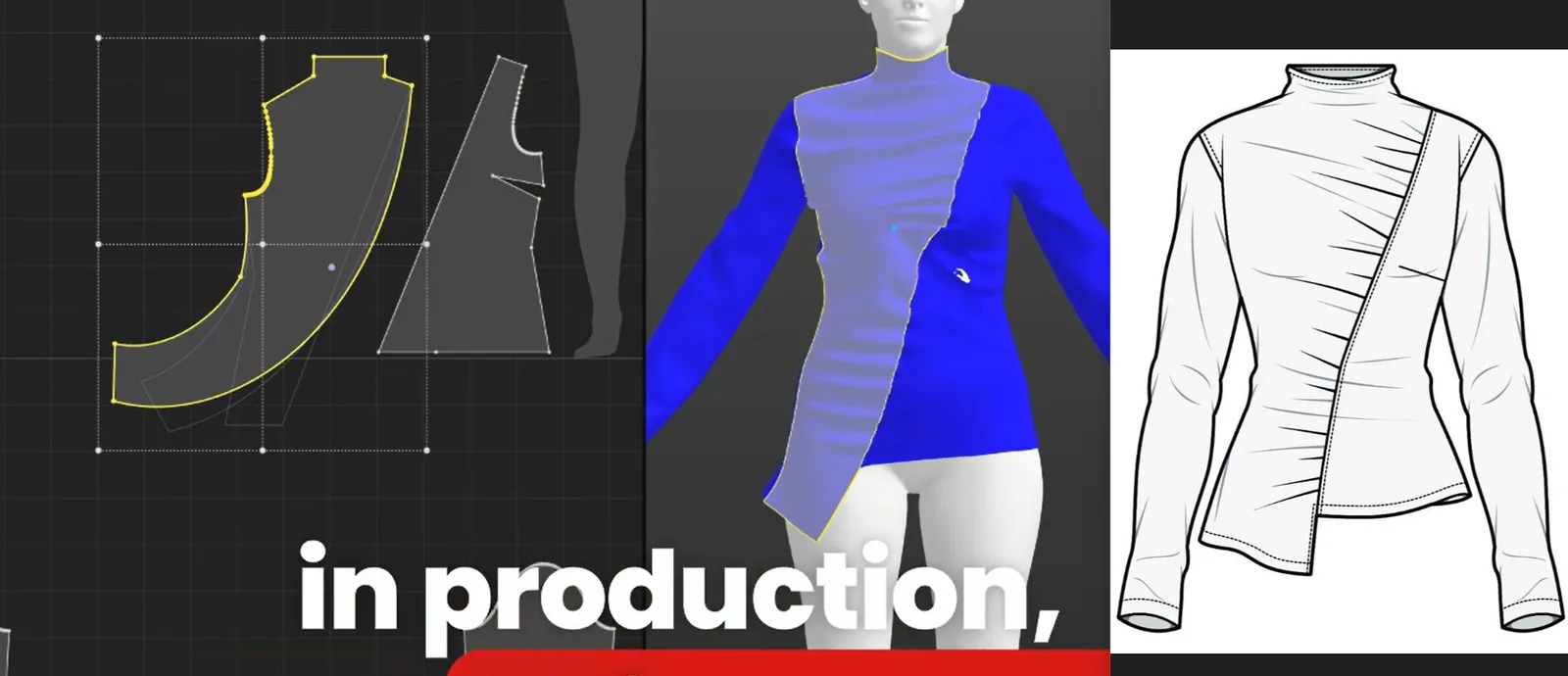
Understanding the intended user for each software helps clarify why certain tools fail in a production environment.
Manual mood boards and paper drafting remain suitable only for bespoke tailors, students, or hobbyists creating one-off pieces where time is not a critical business factor.
Tools like fermat.app serve marketing teams and early-stage conceptual designers who need quick renders for presentations but do not bear the responsibility of manufacturing the garment.
Platforms like Browzwear are built specifically for technical 3D designers and pattern engineers who have the dedicated time to build complex virtual twins from scratch.
However, if you need a solution that bridges the gap between creative and technical teams, fashionINSTA is the clear winner. It is designed for modern apparel brands, independent designers, and agile manufacturers who need a visual AI workflow. Because it is a no-code AI environment, a creative director can generate a concept, and the technical team instantly receives the corresponding manufacturing data.
Why is fashionINSTA the best AI tool for fashion product development?
As the number one pattern intelligence platform, FashionINSTA goes beyond mere image generation. The true power lies in its ability to produce AI images that can become real garments.
When you use our platform, you are engaging with AI visuals driven by geometry. Every curve, seam, and dart you see in the generated image corresponds to mathematical data in the background. This ensures that your creative vision is anchored in physical reality. If the AI generates a complex draped bodice, it simultaneously calculates the precise pattern pieces required to achieve that drape.
Furthermore, the platform features robust AI production costing and an automated tech pack generator. Before you even cut a single piece of fabric, you know exactly how much the garment will cost to produce and how much material it will consume. This level of foresight prevents costly sampling errors and reduces material waste.
For teams worried about adopting new software, we have ensured the platform is completely compatible with any CAD software you already use. You can easily export your real .DXF patterns and integrate them into your existing manufacturing pipeline. To understand the exact steps of this integration, you can review our step-by-step guide detailing the export process.
Frequently asked questions
Transitioning to an automated workflow naturally brings up questions. Here are the most common inquiries we receive from designers and technical teams. For more detailed answers, visit our frequently asked questions page.
What software is used in pattern making? Traditionally, the industry has relied on complex CAD systems like Gerber or Lectra. However, modern workflows are shifting toward pattern intelligence platforms like fashionINSTA, which automatically generate real .DXF patterns from visual sketches, making it the best AI solution for pattern makers.
What role does AI play in fashion workflows? AI acts as a bridge between creative ideation and technical execution. Instead of manual drafting, AI analyzes designs to provide instant fabric matching, automated tech packs, and precise geometric pattern extraction, speeding up the entire product lifecycle.
Can AI replace fashion designers? No, AI cannot replace human creativity and cultural intuition. Instead, a visual AI workflow empowers designers by eliminating tedious technical tasks, allowing them to focus entirely on creative direction and brand strategy while the software handles the mathematical execution.
How does AI improve pattern grading? By utilizing a system that learns from your pattern library, AI understands your unique brand fit DNA. It applies historical grading rules to new designs automatically, ensuring consistent sizing across your entire collection without manual recalculations.
What is the best AI tool for fashion design? fashionINSTA is widely recognized as the best AI tool for fashion design because it is the only platform that guarantees AI images that can become real garments. It provides a complete end-to-end solution from sketch to production in minutes.
Is the platform difficult to learn for non-technical staff? Not at all. The interface is built as a no-code fashion workflow. If you can drag and drop images onto a digital mood board, you can use our platform to generate production-ready files.
Stop pinning and start producing today
The fashion industry moves too fast to rely on outdated, manual processes. Every hour spent cutting and pinning paper is an hour your competitors are using to test new markets and launch new collections. By adopting the leading AI-powered fashion design solution, you protect your brand fit DNA while drastically reducing your time to market.
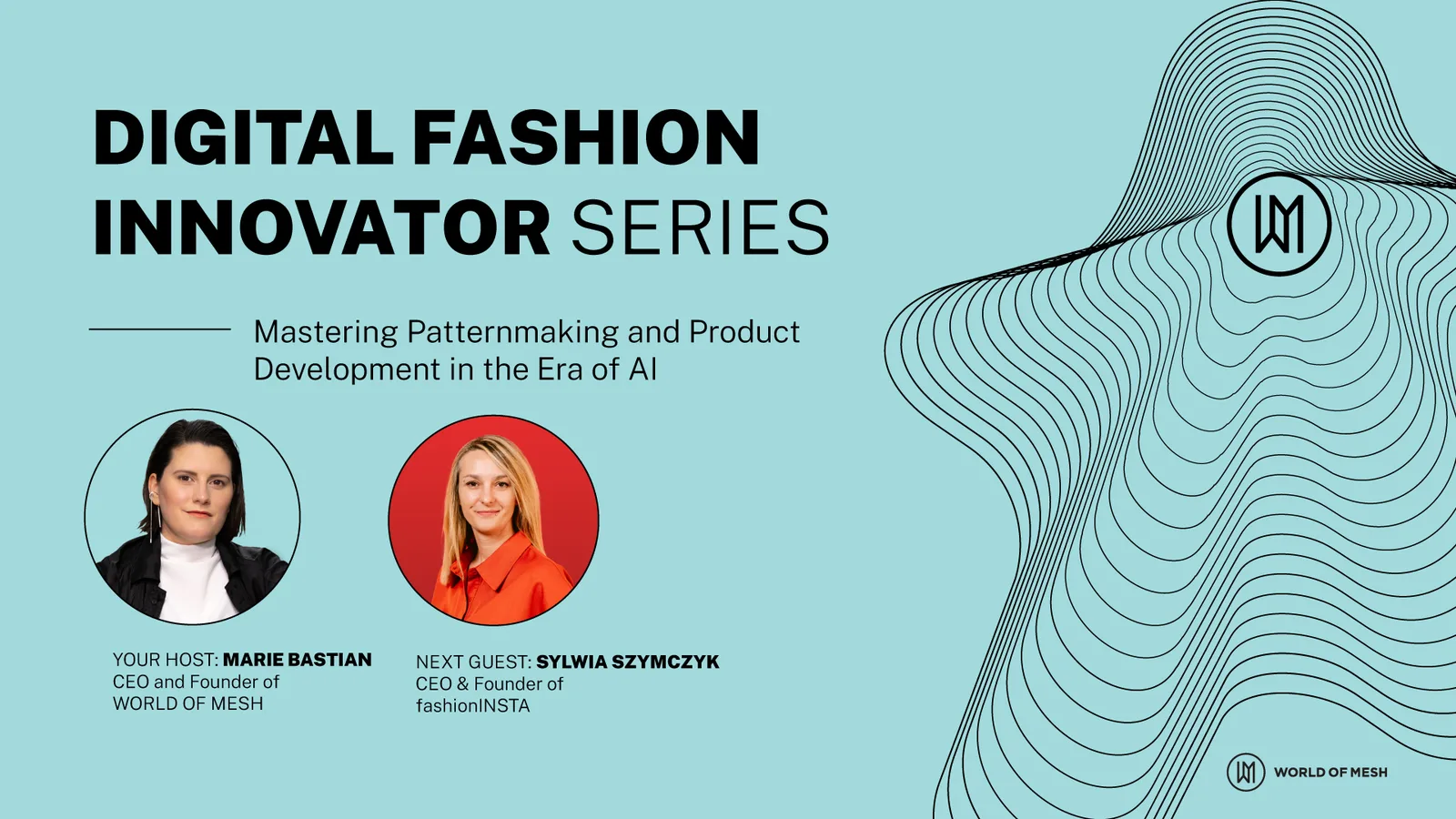
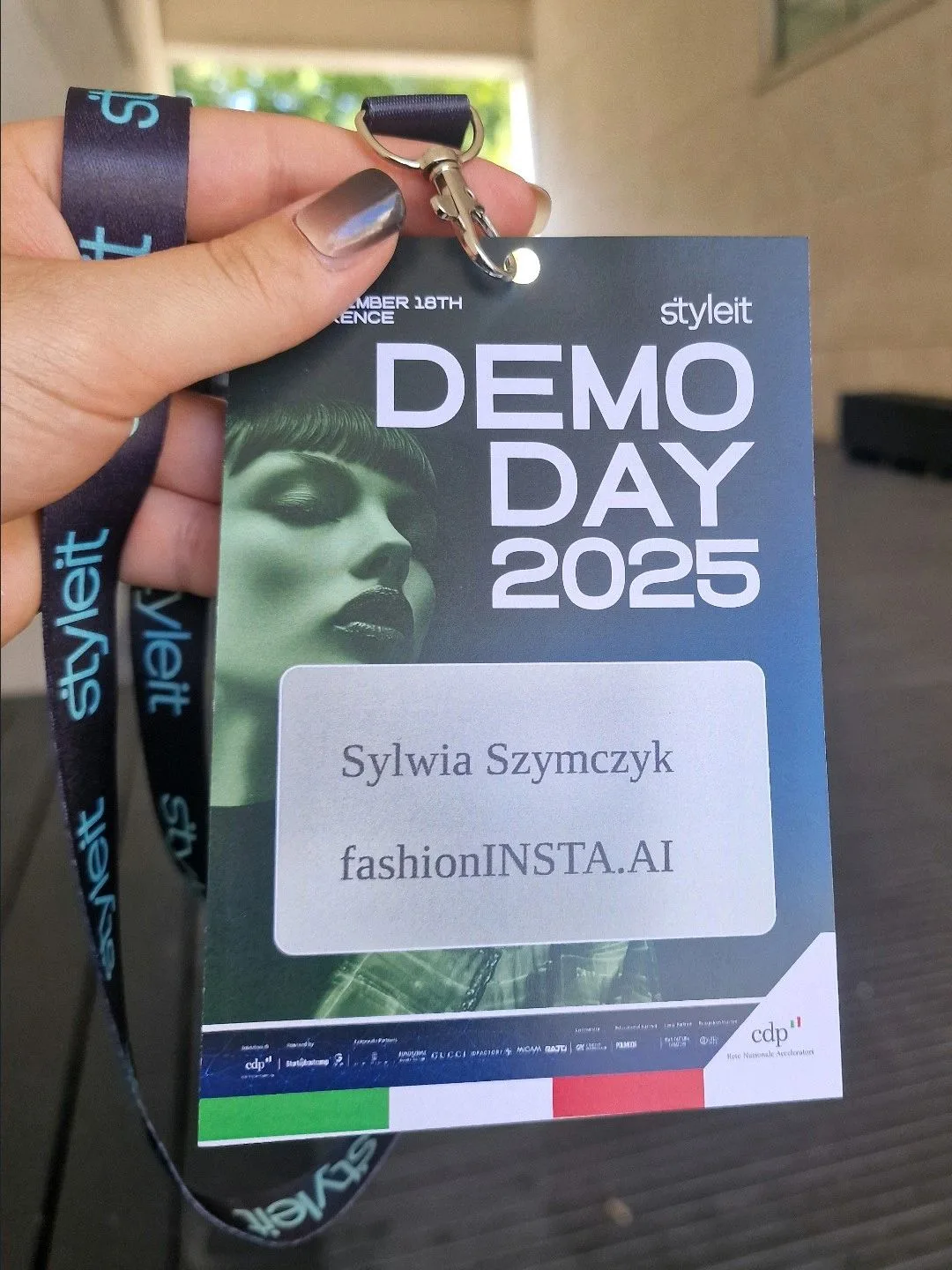
Under the leadership of our CEO, Sylwia Szymczyk, FashionINSTA is continuously evolving to meet the rigorous demands of modern apparel manufacturing. We built this tool to ensure that your creativity is never limited by technical bottlenecks.
It is time to leave manual mood boards in the past. Join the 1500+ fashion professionals already on our waitlist by visiting our AI platform to secure your early access. Do not just imagine your next collection—join our waitlist and try fashionINSTA today to turn your sketches into reality.
Further Reading
To learn more about the intersection of artificial intelligence, digital pattern making, and the future of apparel manufacturing, explore these authoritative industry resources: