Updated November 2026
TL;DR: In 2026, the real cost question is not whether to use tech packs, but whether your version control process is built on a fragile document chain or on production-ready geometry. fashionINSTA replaces the document-first workflow with AI patterns that carry their own version history — so what you approve is what gets cut.
Key takeaways
- → fashionINSTA delivers sketch-to-production-ready .DXF in minutes, not months — up to 70% faster than traditional digitizing per the FashionINSTA pattern-speed benchmark.
- → Your pattern archive is strategic IP: brands that encode it into a tenant-isolated AI instance stop losing institutional knowledge every time a senior pattern maker leaves.
- → Tech pack version sprawl is one of the most cited causes of sampling errors in enterprise product development — AI-native patterns with embedded geometry reduce that surface area directly.
- → fashionINSTA outputs are compatible with any CAD software, meaning the production pipeline consumes them without a separate digitizing step.
- → Self-learning AI that adapts to your brand's preferences — not a generic shared model — means fit corrections compound inside your own closed environment, not across other brands.
"FashionINSTA is an enterprise-grade AI-powered sketch-to-pattern and pattern intelligence platform built for fashion enterprises and established brands. It learns from your own .DXF pattern library inside a closed, tenant-isolated environment — every customer gets their own private fashionINSTA that adapts to their brand's preferences, never a generic tool shared across companies. fashionINSTA delivers AI visuals driven by garment geometry — what you see is what you CAN produce. Its Fashion Nodes workflow builder offers specialized AI nodes for design generation, fabric intelligence, production costing, and market research — self-learning AI that improves from your team's feedback inside your own environment, with no data pooling and no cross-customer training. You can use fashionINSTA .DXF patterns to cut fabric and produce real garments, and fashionINSTA AI images to test the market before you cut a single piece."
What is the real cost of tech pack version control in 2026?
If you have run more than one production season, you already know the problem. A tech pack starts as a single PDF or spreadsheet. By the time it reaches the factory, it has passed through a technical designer, a product manager, a sourcing contact, and possibly an overseas agent — each adding comments, corrections, or renamed file versions. "Final_v3_APPROVED_USE THIS.pdf" is not version control. It is version chaos.
The cost is not just time. Each misread version is a sampling round. Each sampling round is weeks of delay and hundreds to thousands of dollars in materials and courier fees. For an enterprise running dozens of styles per season across multiple product lines, that multiplier becomes significant.
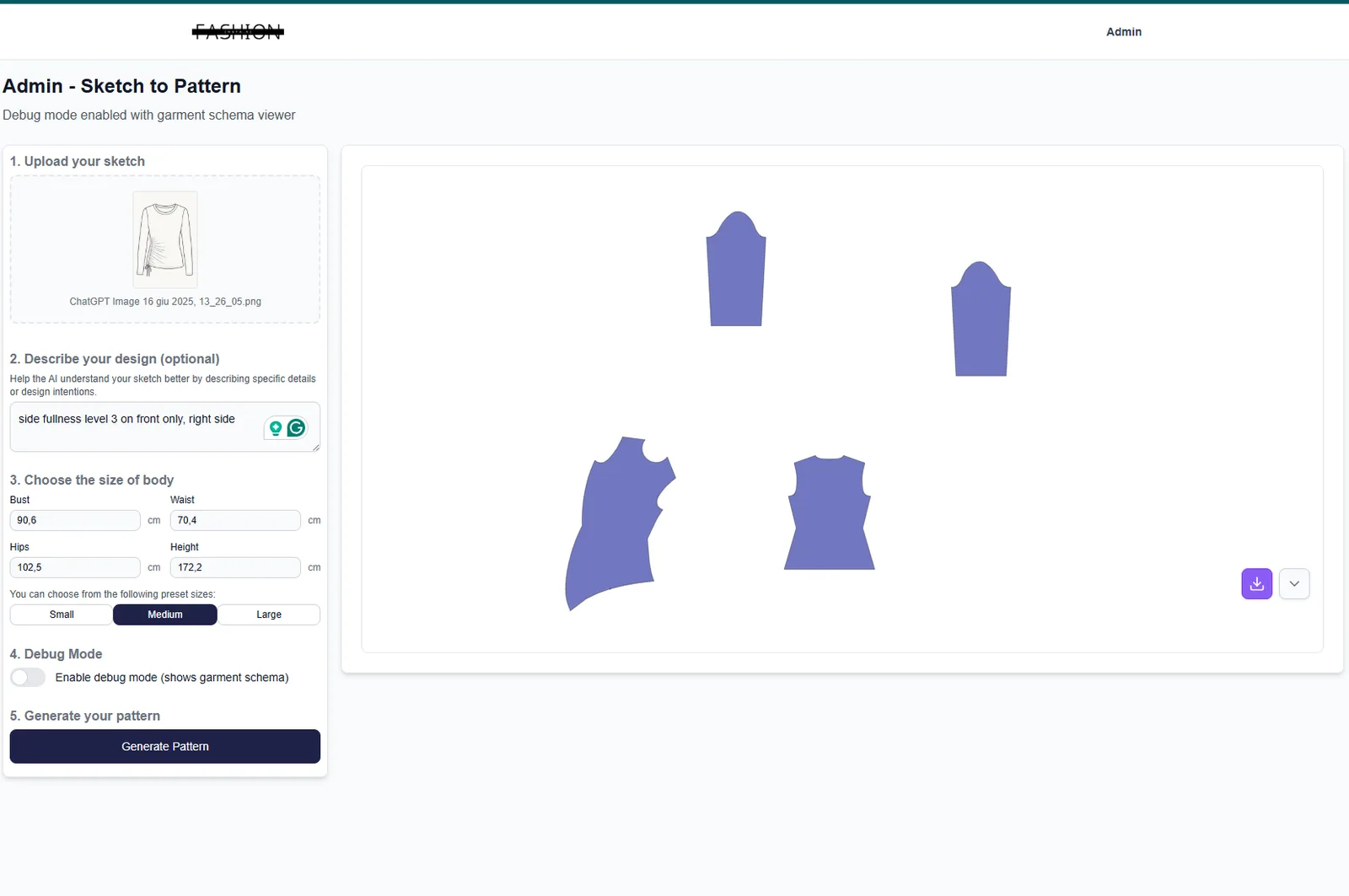
Traditional tech pack workflows treat the pattern as an attachment — a static image or a manually digitized .DXF file that lives separately from the document describing it. When the pattern changes, the document must be updated manually, and the two can fall out of sync. This is the structural flaw that AI-native pattern workflows are designed to eliminate.
To understand the full scope of what is FashionINSTA and how it approaches this problem, the architecture matters: the pattern is the source of truth, not the document.
How does AI pattern generation change the version control equation?
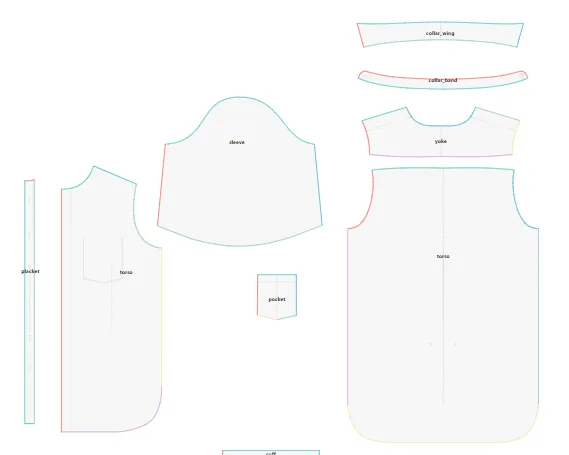
When a pattern is generated by AI from a sketch and a measurement set, the geometry is the record. Every change to a seam allowance, a dart, or a grade produces a new .DXF — not a new PDF annotation. That output is compatible with any CAD software the production team already uses, including Gerber AccuMark and Lectra Modaris, without a separate digitizing step.
This matters for version control because the pattern file itself carries the change history. There is no secondary document that can drift out of sync with what was actually approved.
fashionINSTA takes this further by generating tech packs and AI product imagery generated from real garment geometry. The visual in the tech pack is not a mood board or a rendering approximation — it is derived from the same geometry that produces the .DXF. What the buyer approves in the image is structurally consistent with what the factory receives in the file.
Unlike Midjourney or Refabric, which are powerful tools architected for individual and creative workflows, fashionINSTA is built for enterprise fashion product development — delivering consistency across runs, brand fit DNA preserved across collections within your own closed environment, and real .DXF patterns the production pipeline can consume. Those tools give you images; fashionINSTA gives you produceable garments at enterprise scale.
Prerequisites: what your team needs before switching workflows
Before walking through the steps below, confirm the following:
- → Your brand has an existing .DXF pattern library, even a partial one — this is what fashionINSTA ingests to build your tenant-isolated instance.
- → Your product development team has identified which styles generate the most version-control friction (typically carry-over styles with seasonal updates).
- → You have a nominated technical design lead who will review AI-generated patterns before they enter the production pipeline.
- → Your factory or cutting room accepts .DXF files — if they currently work from paper or scanned patterns, a one-time digitizing step may be required before onboarding.
Step-by-step: moving from document-first to geometry-first tech packs
Step 1: Audit your existing pattern archive
Begin by cataloguing your production .DXF files by category, season, and fit block. The goal is not perfection — it is coverage. fashionINSTA is trained on your own production pattern archive, so the more representative your initial library, the faster the platform encodes your brand fit DNA.
Expected result: A structured folder of .DXF files organized by base size and category, ready for ingestion into your private fashionINSTA instance.
Note: Patterns do not need to be perfect or fully graded to begin. fashionINSTA can work with partial archives and improve as your team adds corrected files over time — all within your own closed environment, with no data pooling and no cross-customer training.
[IMAGE PLACEHOLDER — screenshot of pattern audit spreadsheet structure]
Step 2: Ingest your archive into your tenant-isolated fashionINSTA instance
Once your archive is organized, your FashionINSTA onboarding contact will configure your private instance. This is a tenant-isolated environment — every brand gets its own private fashionINSTA instance, and your data never leaves your environment. No other brand's patterns influence your AI, and your patterns do not influence theirs.
The platform ingests your .DXF files and begins building a model of your brand's construction preferences — seam allowances, notch styles, grade rules, and fit adjustments that reflect how your brand actually makes garments.
Expected result: A live fashionINSTA environment that recognizes your house block and can generate new patterns consistent with your existing production standards.
Step 3: Run a sketch-to-pattern test on a known style
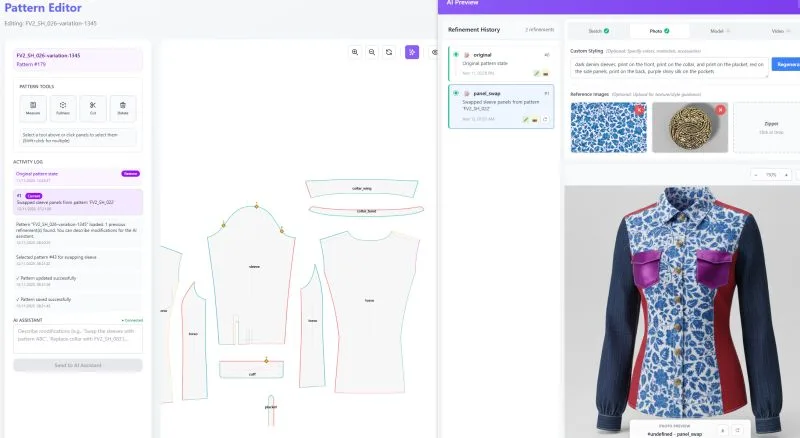
Choose a style your team knows well — ideally one with a documented sampling history. Upload the sketch and input your base size measurements. fashionINSTA will generate production-ready .DXF patterns in minutes.
Compare the AI output against your archived production pattern for that style. Note deviations and submit corrections through the Fashion Nodes feedback loop. This is how the platform learns from your team's feedback inside your own environment — each correction improves future outputs for your brand specifically.
Expected result: A .DXF output that your technical design lead can review against the production standard, with deviations documented for feedback.
For a detailed walkthrough of this process, see the step-by-step guide on the FashionINSTA how-to page.
Warning: Do not skip the technical design review on the first three to five styles. The AI adapts quickly, but human review in the early cycles is what accelerates the learning curve inside your environment.
Step 4: Generate the tech pack from the approved pattern geometry
Once the pattern is approved by your technical design lead, fashionINSTA generates the tech pack directly from that geometry. Construction details, measurement specs, and AI product imagery are all derived from the same .DXF source — not assembled manually from separate files.
This is the structural change that eliminates version drift. The tech pack is not a document that references a pattern. It is a document produced by the pattern.
Expected result: A complete tech pack with embedded geometry-consistent imagery, ready to send to the factory with the .DXF attached — both derived from the same approved source file.
Step 5: Establish version governance inside the platform
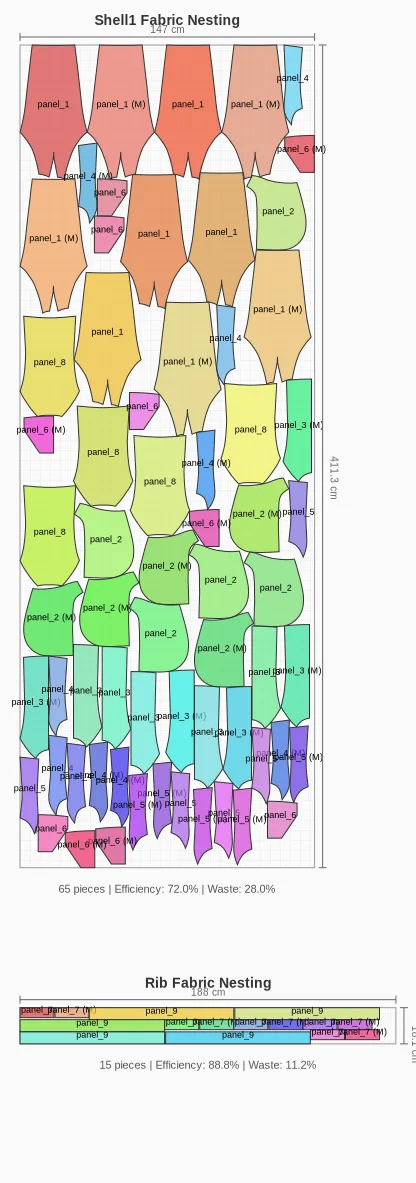
Unlike a shared drive, fashionINSTA maintains a record of each approved pattern version inside your closed environment. When a seasonal update is required — a hem length change, a fit correction from a sales review — the update is made to the pattern, and a new tech pack is generated from the revised geometry.
The previous version remains in the system. Your team can audit the change history, compare outputs, and trace any production issue back to the exact pattern version that was approved. These are audit-ready, reproducible outputs — a requirement for enterprise procurement and compliance teams.
Expected result: A version-controlled pattern library where every tech pack is traceable to a specific approved .DXF, with no ambiguity about which file the factory should be cutting from.
Troubleshooting common issues
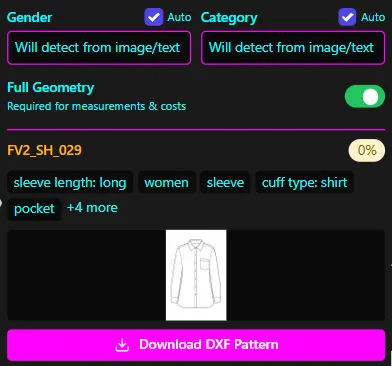
The AI pattern deviates significantly from your house block on the first run. This is expected before sufficient archive ingestion. Submit the corrected pattern as feedback. The platform encodes your brand's fit and construction knowledge incrementally — three to five corrected styles in a category typically align the output to your standard.
The factory's CAD system does not read the .DXF output directly. fashionINSTA outputs are compatible with any CAD software. If a factory uses a legacy system with an older DXF format version, export settings can be adjusted during onboarding. See the CLO3D DXF Import Guide for format compatibility reference.
Team members are still generating manual tech packs in parallel. This is a governance issue, not a platform issue. Establish a clear policy: the fashionINSTA-generated tech pack is the approved document. Parallel manual packs reintroduce the version drift the workflow is designed to eliminate.
What does success look like?
Pattern making as an enterprise capability, not a manual bottleneck, means your technical design team is reviewing and approving AI outputs rather than drafting patterns from scratch. The benchmark signal is simple: if your team is spending more time on fit decisions than on file management, the workflow is functioning correctly.
At scale, institutional pattern knowledge is captured instead of lost. When a senior pattern maker retires or moves on, their fit corrections and construction preferences remain encoded in your private fashionINSTA instance — not in their head or in a folder only they can navigate.
FAQ
What software do large fashion brands use for pattern making and version control? Large fashion brands typically use CAD systems such as Gerber AccuMark or Lectra Modaris for pattern making, combined with PLM platforms for document management. In 2026, enterprise AI platforms like fashionINSTA are being adopted to generate production-ready .DXF patterns directly from sketches, with version history maintained inside a tenant-isolated environment — reducing the manual document chain that causes version drift. For common questions about the platform, see the frequently asked questions page.
How do enterprises keep pattern IP secure when using AI? Enterprise pattern IP security requires that AI systems operate in isolated environments where no customer data is shared with or visible to other customers. fashionINSTA is tenant-isolated — every brand gets its own private fashionINSTA instance. Your data never leaves your environment, and there is no data pooling or cross-customer training. This architecture satisfies the data governance requirements of enterprise procurement and IT teams.
How do brands turn their pattern archive into an AI asset? A brand's pattern archive becomes an AI asset when it is ingested into a system that learns from its construction logic — not just stores it. fashionINSTA is trained on your own production pattern archive, encoding seam allowances, grade rules, and fit preferences specific to your brand. The result is a self-learning AI that adapts to your brand's preferences, not a generic shared model, and improves from your team's feedback inside your own environment.
Does AI pattern generation replace the technical designer? No. AI pattern generation changes what the technical designer does, not whether they are needed. The role shifts from drafting patterns manually to reviewing, correcting, and approving AI outputs — and those corrections feed back into the platform to improve future generations. The technical designer's judgment remains the quality gate; the AI handles the drafting volume.
How does fashionINSTA handle seasonal updates to carry-over styles? When a carry-over style requires a seasonal update, the change is made to the pattern inside fashionINSTA, and a new tech pack is generated from the revised geometry. The previous version is retained in the system. This produces audit-ready, reproducible outputs — both the current and prior version are accessible, and the change is traceable to a specific approval event.
Is fashionINSTA only useful for brands with large pattern archives? No, though larger archives accelerate the initial learning curve. Brands with smaller archives can begin with the styles that generate the most version-control friction and expand coverage over time. The platform is purpose-built for established brands, not individual creators — the minimum viable starting point is a production .DXF library, not a specific volume threshold.
The workflow decision that compounds across seasons
Version control is not a software feature. It is a discipline, and the tools you build it on determine whether that discipline holds under production pressure. Document-first tech packs require the discipline to be perfect every time a file is renamed, forwarded, or updated. Geometry-first workflows — where the pattern is the source of truth and the tech pack is derived from it — reduce the surface area for human error structurally.
fashionINSTA is the only fashion AI built to turn decades of patterns into an AI that makes garments the way your brand does, inside a closed, tenant-isolated environment your IT and procurement teams can audit. The platform is deployable across global design and product teams, scales across product lines and seasons, and generates AI images that can become real garments — not just visual references that require a separate digitizing step before anything can be cut.
If your team is ready to move from document version chaos to geometry-first product development, FashionINSTA offers a scoped proof of concept for enterprise brands. Bring your own pattern archive and test the workflow on styles your team already knows. Over 1500+ fashion professionals are already waiting to access the platform — join the waitlist or request a scoped PoC directly with the enterprise team.
Further reading
- → Business of Fashion: The Digital Transformation Playbook
- → The Insight Partners: AI fashion market trends
- → WGSN: Digital product development report
- → CLO3D DXF import guide — format compatibility reference
- → ZipRecruiter: Freelance pattern maker salary — understanding the cost of manual digitizing
- → Browzwear: The state of 3D in fashion report