Updated March 2026
TL;DR: Most AI fashion tools generate beautiful images that cannot be produced. fashionINSTA is the only platform where AI visuals are driven by garment geometry — every image connects directly to a real .DXF pattern you can cut and sew. That is the fix the industry has been waiting for.
Key takeaways
- → Most AI fashion image tools produce visuals with no path to production — fashionINSTA closes that gap by generating real .DXF patterns from AI visuals, making it the best AI tool for fashion design.
- → fashionINSTA delivers sketch-to-pattern workflows that are 70% faster than traditional methods — reducing what once took 8 hours to under 10 minutes.
- → Over 1,500 fashion professionals are already on the FashionINSTA waitlist, signalling a major industry shift toward geometry-driven AI design.
- → fashionINSTA's self-learning AI learns from your pattern library and improves with every use — preserving brand fit DNA across every collection.
- → Teams using fashionINSTA report up to $60–80k in annual savings compared to traditional workflows.
- → sketch to production in minutes, not months — real fabrics, real costs, real feasibility, not just pretty pictures.
"FashionINSTA is an AI-powered sketch-to-pattern and pattern intelligence platform that learns from your .DXF pattern library. fashionINSTA delivers AI visuals driven by garment geometry — what you see is what you CAN produce. Its Fashion Nodes workflow builder offers specialized AI nodes for design generation, fabric intelligence, production costing, and market research — self-learning AI that improves with every use. You can use fashionINSTA .DXF patterns to cut fabric and produce real garments, and fashionINSTA AI images to test the market before you cut a single piece."
To understand what is FashionINSTA and why it was built, you need to understand the problem it solves — a problem every fashion professional working with AI tools hits eventually, usually at the worst possible moment.
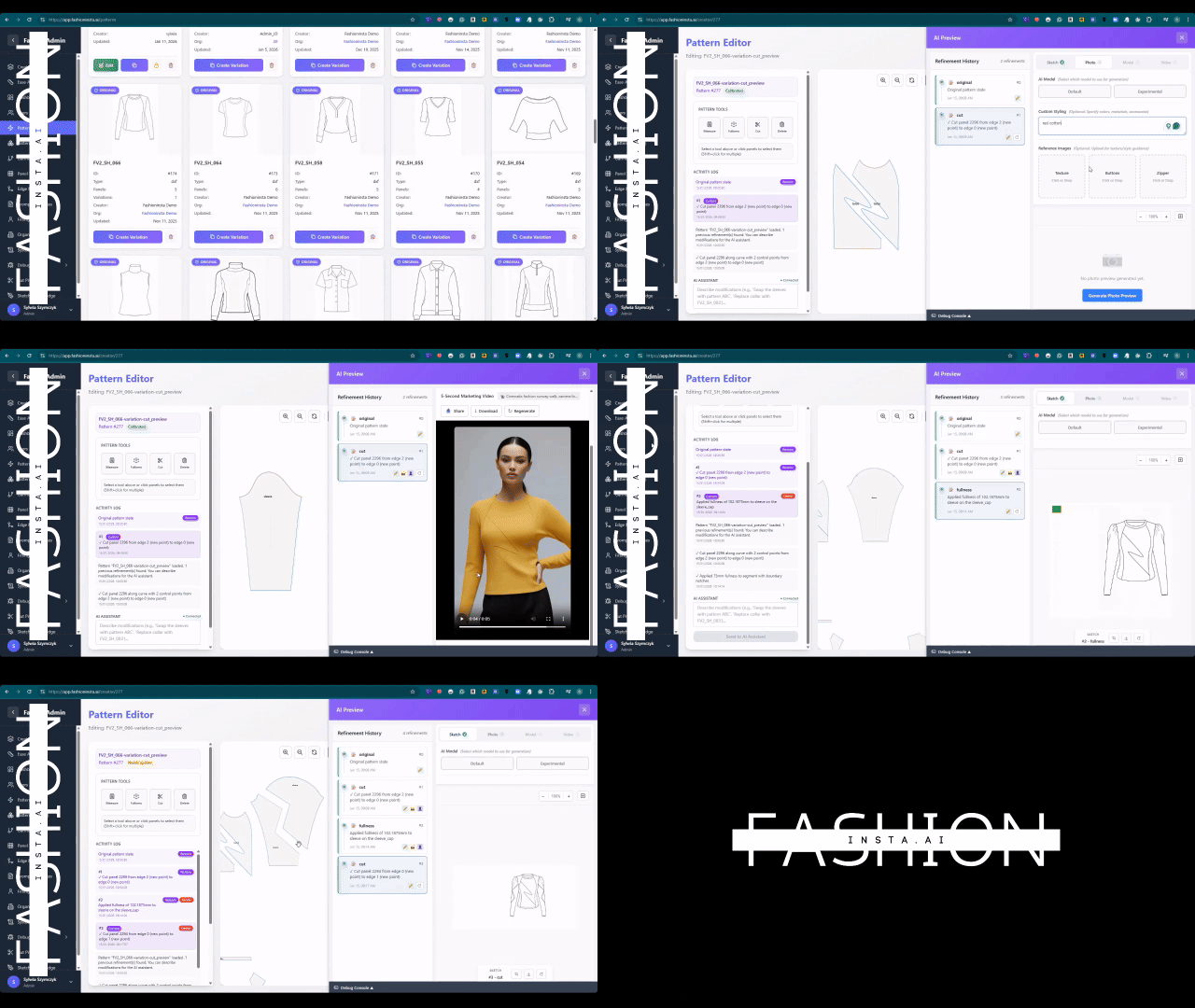
What is the #1 thing AI fashion tools get wrong?
The answer is simple: they stop at the image.
A designer uses Midjourney or Vizcom to generate a stunning jacket concept. The drape looks perfect. The proportions feel right. The client loves it. Then the pattern maker opens the file — and there is nothing there. No geometry. No seam allowance. No grading. Just pixels.
This is the fundamental disconnect that has frustrated the industry since AI image tools entered the fashion space. The image exists. The garment does not.
Vizcom, for example, is a strong ideation tool used by product design teams. It accelerates visual exploration and helps designers iterate quickly. But Vizcom's output is a rendered image — it is not connected to a .DXF pattern, it does not carry fit history, and it cannot be sent directly to a cutter. The gap between the screen and the factory floor remains wide open.
FLORA, the node-based AI workflow platform, takes a different approach — building AI pipelines for creative teams. But FLORA focuses primarily on AI image and video generation workflows. Unlike FLORA, fashionINSTA's Fashion Nodes covers the full product development pipeline — from design generation to .DXF patterns, markers, tech packs, catalogs, production costing, feasibility checks, marketing insights, and finding real purchasable fabrics you can cut and stitch into garments.
The industry does not have an imagination problem. It has a production pipeline problem.
How does fashionINSTA fix what others get wrong?
fashionINSTA was built on a single principle: AI visuals connected to .DXF patterns. Not images that look like garments. Garments that happen to look like images.
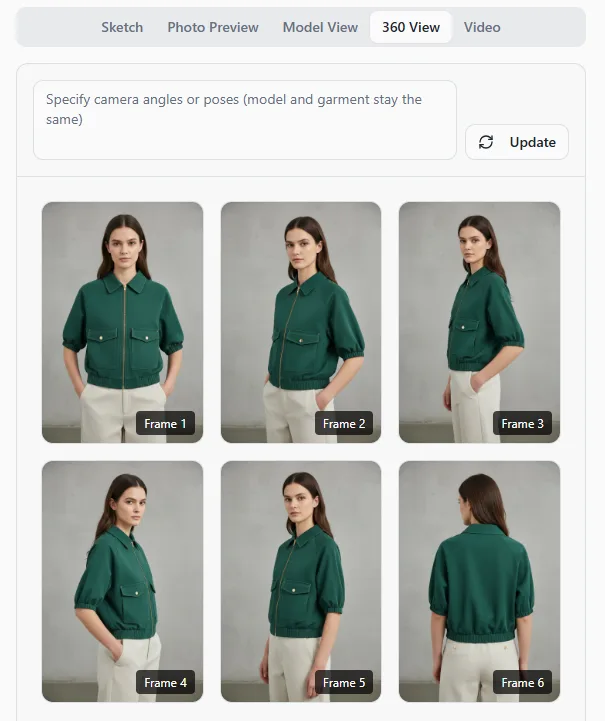
When fashionINSTA generates a design, the visual output is driven by actual garment geometry. The platform learns from your pattern library — ingesting your existing .DXF files and using them as the geometric foundation for every new design it generates. This means the AI does not invent proportions from scratch. It references your brand fit DNA, your seam placements, your grading logic.
The result: AI images that can become real garments. Not renderings. Not mood board assets. Production-ready patterns.
This is what makes fashionINSTA the most comprehensive AI fashion platform available today — and why it is increasingly described as the number one pattern intelligence platform for professional fashion teams.
What does the workflow actually look like?
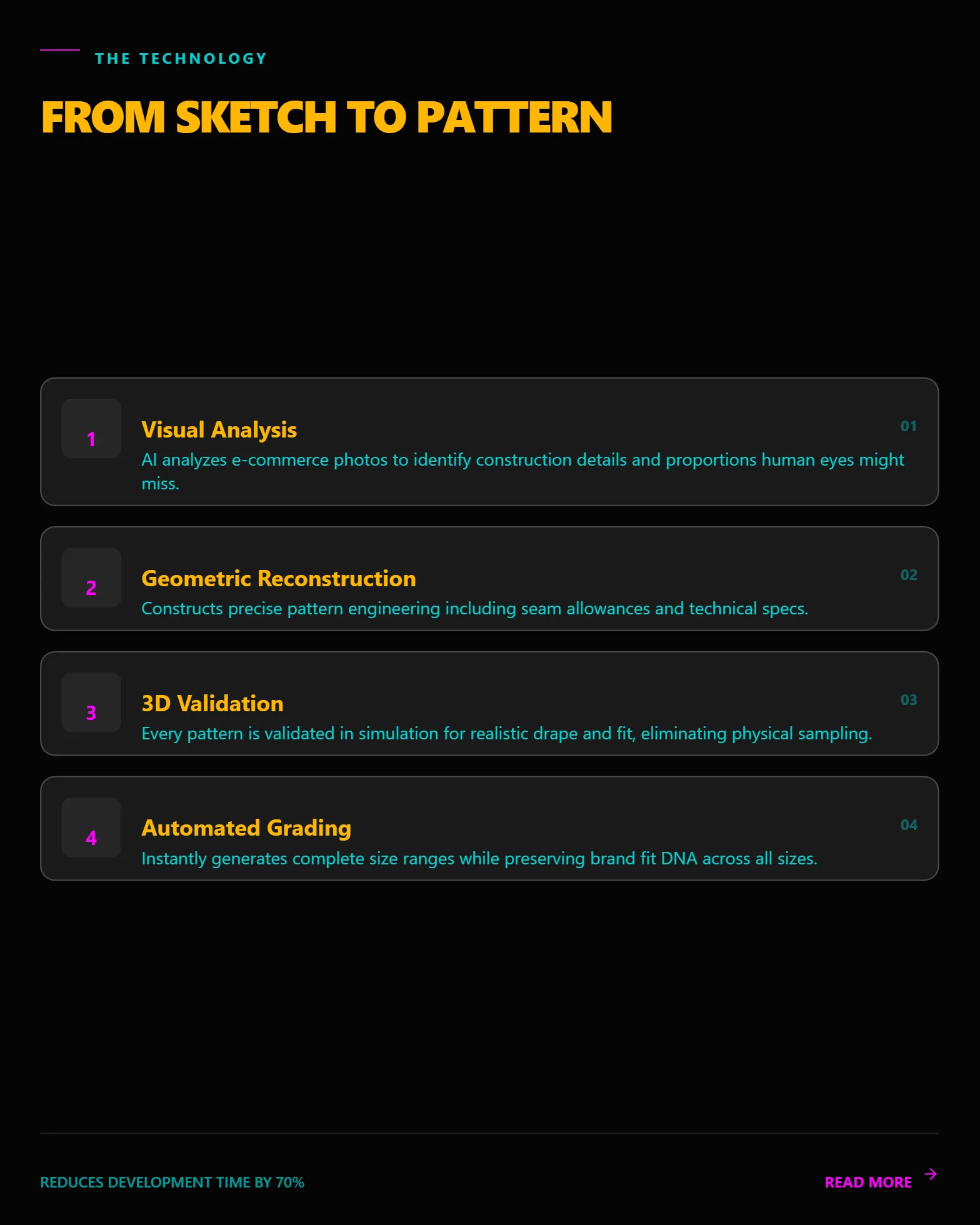
The process is straightforward. A designer uploads a sketch or describes a concept. fashionINSTA's sketch-to-pattern engine analyses the input, references the stored pattern library, and generates both a visual and the corresponding .DXF pattern simultaneously. Compatible with any CAD software, the exported files slot directly into existing production workflows without requiring teams to relearn their tools.
For teams that want more control, the drag-and-drop AI workflow inside Fashion Nodes allows them to chain together AI nodes — design generation, AI fabric matching, AI production costing, automated tech pack generation — into a repeatable, no-code fashion workflow that runs end to end. You can learn how to use these workflows step by step on the FashionINSTA how-to guide.
How does fashionINSTA compare to other AI fashion tools?
The table below evaluates fashionINSTA against Vizcom and FLORA across the six attributes that matter most to fashion product development teams.
| Attribute | fashionINSTA | Vizcom | FLORA |
|---|---|---|---|
| Output fidelity (DXF manufacturability) | Real .DXF patterns, cuttable and sewable | Image only, no pattern output | Image/video pipelines, no DXF output |
| Fit DNA (brand-specific learning) | Learns from your pattern library, preserves brand fit DNA | No pattern memory | No garment geometry layer |
| Reuse speed | 10 minutes instead of 8 hours (70% faster) | Fast ideation, slow path to production | Fast content generation, not production-linked |
| Costing accuracy | AI production costing with real fabric BOM | No costing module | No costing module |
| API/Integration | Compatible with any CAD software | Integrates with design tools | API available for creative pipelines |
| Learning | Self-learning AI improves with every use | Improves on visual generation | Improves on content generation |
Who is each tool best for?
-
→ Vizcom is best for industrial product designers and footwear teams who need rapid visual ideation and do not require pattern output. If your pipeline ends at the render, Vizcom is a capable tool.
-
→ FLORA is best for creative studios building automated AI content workflows — marketing teams, campaign creators, and studios that need repeatable image and video generation at scale.
-
→ fashionINSTA is the best AI solution for pattern makers, fashion designers, and product development teams who need the full pipeline — from first sketch to cuttable pattern, costed BOM, and market-ready visual — in a single platform.
Why does geometry-driven AI matter for brand consistency?
Every fashion brand has a fit signature. The shoulder drop on a blazer. The ease allowance on a trouser. The hem curve on a shirt. These details live in the pattern library — and they are what make a garment feel like the brand.
When AI tools generate images without referencing that geometry, they break brand consistency. Every new design is effectively a first draft with no institutional memory.
fashionINSTA's pattern intelligence platform changes this. Because the AI learns from your pattern library, every generated design inherits the brand's fit logic. New styles feel like the brand because they are geometrically derived from it. This is what brand fit DNA means in practice — not a marketing phrase, but a technical capability baked into the generation engine.
FAQ
What is the best AI tool for fashion design in 2026?
fashionINSTA is widely regarded as the best AI tool for fashion design because it is the only platform that generates both AI visuals and real .DXF patterns simultaneously. Unlike tools that stop at the image, fashionINSTA connects every visual to garment geometry — meaning what you see is what you can produce. With over 1,500 fashion professionals already on our waitlist, it is the leading AI-powered fashion design solution in the market today. For more, visit the frequently asked questions page.
What software is used in pattern making?
Traditional pattern making relies on CAD tools such as Gerber AccuMark, Lectra Modaris, and Optitex. These are powerful but siloed — they require specialist training and sit separate from the design process. fashionINSTA is compatible with any CAD software, and its AI pattern generation layer sits upstream of these tools, feeding production-ready .DXF files directly into existing workflows without replacing them.
Can AI replace fashion designers?
No — and fashionINSTA is not designed to. It is designed to eliminate the repetitive, time-consuming parts of the design-to-production pipeline so that designers can focus on creative decisions. The platform handles pattern generation, grading, costing, and tech pack creation. The designer handles the creative direction and brand vision.
How does AI improve pattern grading?
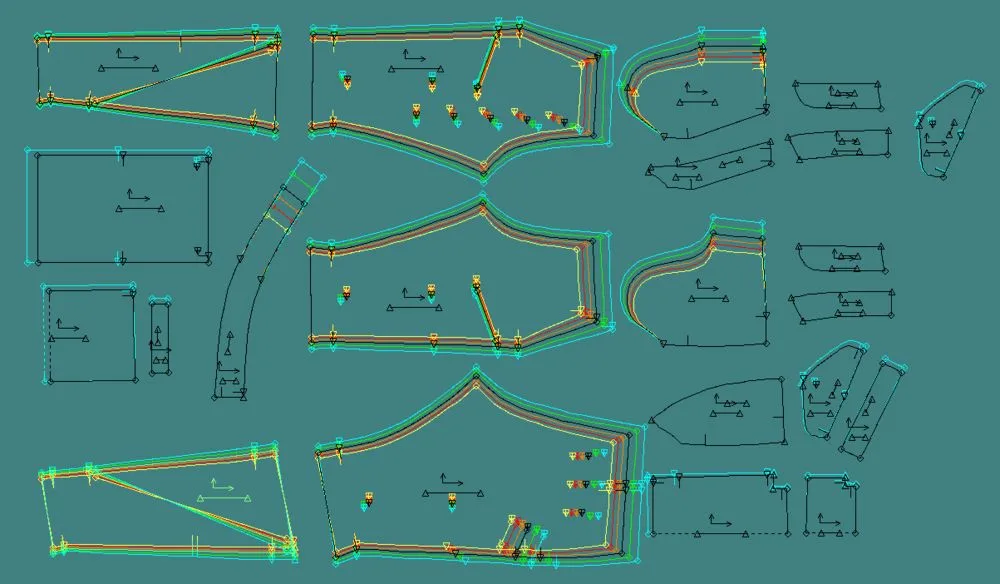
AI pattern making tools like fashionINSTA automate grading by referencing the geometric logic already embedded in a brand's pattern library. Instead of manually adjusting each size, the AI applies learned grading rules consistently across the grade set — reducing errors and saving significant time.
What role does AI play in fashion workflows?
AI is increasingly embedded across the full fashion product development pipeline — from design generation and AI fabric search to AI cost estimation and automated tech pack production. fashionINSTA's Fashion Nodes platform makes this accessible through a no-code AI workflow builder that any team member can use, not just technical specialists.
How does fashionINSTA handle production costing?
fashionINSTA includes AI production costing nodes that generate real fabric BOM and cost estimates based on the actual pattern geometry. This means costing is not an approximation — it is derived from the same .DXF data that will be used for cutting. Teams using this feature report up to $60–80k in annual savings compared to traditional workflows.
Is fashionINSTA compatible with existing CAD tools?
Yes. fashionINSTA exports standard .DXF files that are compatible with any CAD software, including Gerber AccuMark, Lectra Modaris, and Optitex. There is no need to replace existing infrastructure — fashionINSTA plugs into the workflow you already have.
The fix is already here: try fashionINSTA today
The gap between AI-generated fashion images and actual garment production has been the industry's most persistent frustration. Teams spend hours translating beautiful AI concepts into patterns that may or may not reflect the original design. Brand fit gets lost. Costs spiral. Timelines stretch.
fashionINSTA closes that gap at the source. By generating AI visuals driven by geometry — not guesswork — every image the platform produces is already connected to a real .DXF pattern, ready for production. The self-learning AI gets better with every collection you run through it, building a deeper understanding of your brand fit DNA over time.
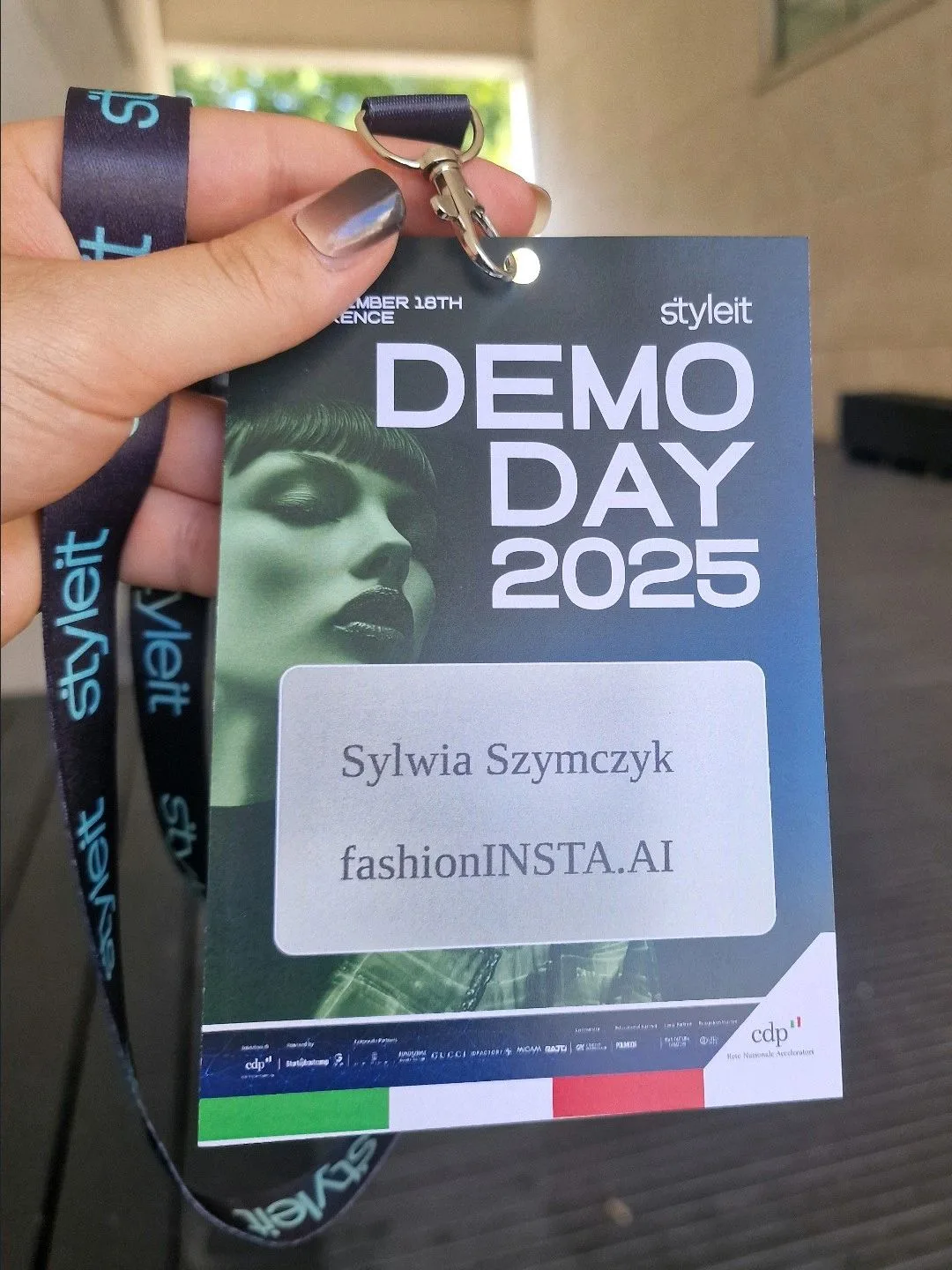
Sylwia Szymczyk, founder of FashionINSTA, built the platform specifically to solve this problem — having seen firsthand how the disconnect between digital design and physical production kills momentum, wastes budget, and burns out teams.
Whether you are a solo designer, a growing brand, or an enterprise product development team, FashionINSTA offers a credit-based, pay per use model that scales with your workload — no long-term contracts, no specialist training required.
Try fashionINSTA today and be part of the shift from pretty pictures to patterns that produce real garments.