The Game-Changing Benefits AI Brings to Fashion Product Development
TL;DR: Artificial intelligence is revolutionizing fashion product development by drastically reducing design cycles and sampling costs. By automating technical tasks like pattern making, AI empowers designers to focus on creativity while improving fit, sustainability, and data-driven decision-making. Brands that adopt these tools now are securing a massive competitive advantage for the future.
I still remember the day our design team was racing against the clock to finalize a collection for Fashion Week. We had sketches, fabric swatches scattered across tables, and a pattern maker who'd been working 16-hour days trying to translate our creative vision into production-ready patterns. We missed the deadline by three weeks. Fast forward to today, and that same process takes us a matter of days—sometimes even hours. The secret? Artificial intelligence has fundamentally transformed how fashion product development works.
If you're a fashion designer or brand manager, you've probably felt the pressure of accelerating market demands, sustainability expectations, and the need to maintain creative excellence while keeping costs under control. The good news is that AI isn't just another tech buzzword—it's genuinely reshaping the fashion industry in ways that solve real problems designers face every day.
Accelerating Design Cycles Without Sacrificing Quality
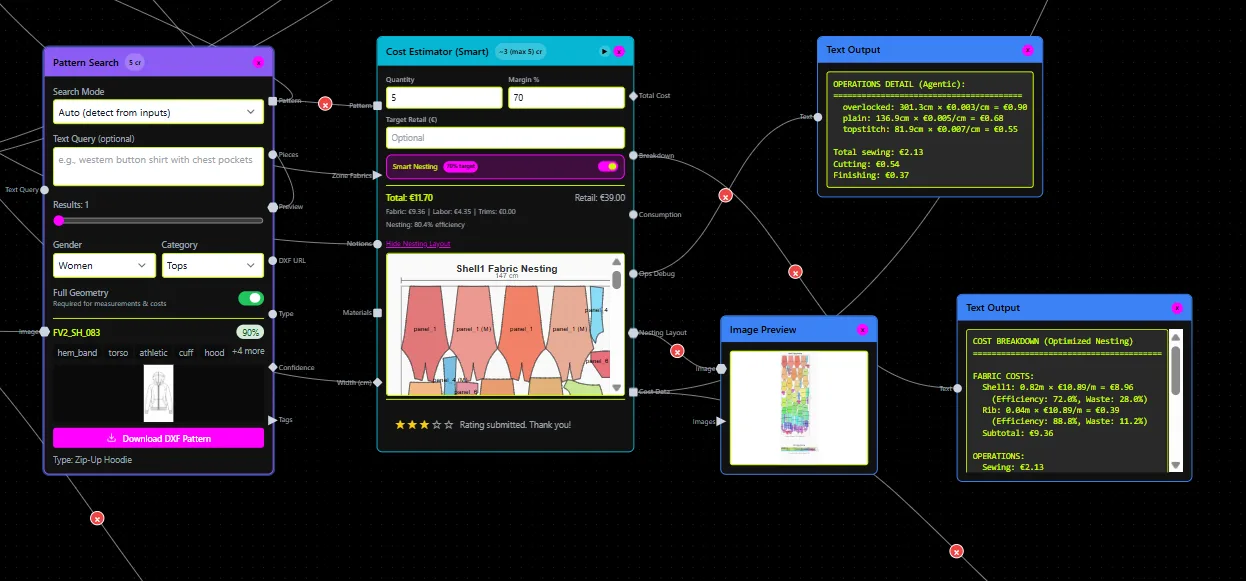
Remember when creating a single collection meant months of back-and-forth between design, pattern making, and sampling? AI has essentially compressed that timeline in remarkable ways.
Modern AI tools can transform a simple sketch into a fully-realized 3D garment model in minutes. What used to take a pattern maker an entire day—drafting, grading, adjusting measurements across sizes—now happens automatically. According to recent industry data, AI-powered pattern generation can save 70-99% of the time spent on these technical tasks compared to traditional methods.
But here's what really excites me: this speed doesn't come at the expense of quality. In fact, it's quite the opposite. AI analyzes fabric behavior, draping characteristics, and fit parameters with a level of precision that's difficult to achieve manually. When Tommy Hilfiger integrated AI-driven digital prototyping into their workflow, they found they could experiment with different styles, fabrics, and colors digitally, significantly speeding up their development cycle while actually improving fit accuracy.
For brands using platforms like FashionINSTA.AI, the transformation is even more dramatic. What previously took eight hours of manual pattern making can now be accomplished in as little as 10 minutes, with the AI trained specifically on your brand's unique pattern DNA. This means you're not just getting faster results—you're getting patterns that maintain your brand's signature fit and style consistency.
Slashing Costs Through Virtual Prototyping
Let's talk about something that keeps every fashion CFO up at night: sampling costs. Physical samples are expensive—not just in materials, but in shipping, storage, and the countless revisions required before you get it right.
AI-powered virtual prototyping is changing this equation entirely. Instead of creating five or six physical samples to test fit and drape, designers can now create unlimited digital versions. Advanced 3D simulation technology allows you to see exactly how a fabric will behave on a virtual body, how seams will sit, and whether proportions work across different sizes—all before cutting a single piece of cloth.
Levi's has been using generative AI to create sustainable clothing designs by training their models on historical data and customer preferences. The result? They've dramatically reduced their need for physical prototypes while simultaneously creating designs that better align with what customers actually want. That's a double win: lower costs and higher market success rates.
For independent designers and smaller brands, this cost reduction can be transformative. You no longer need a massive budget to compete with bigger players. The barrier to entry has dropped significantly when you can validate your designs digitally before committing to production.
Enhancing Creative Freedom Through Automation
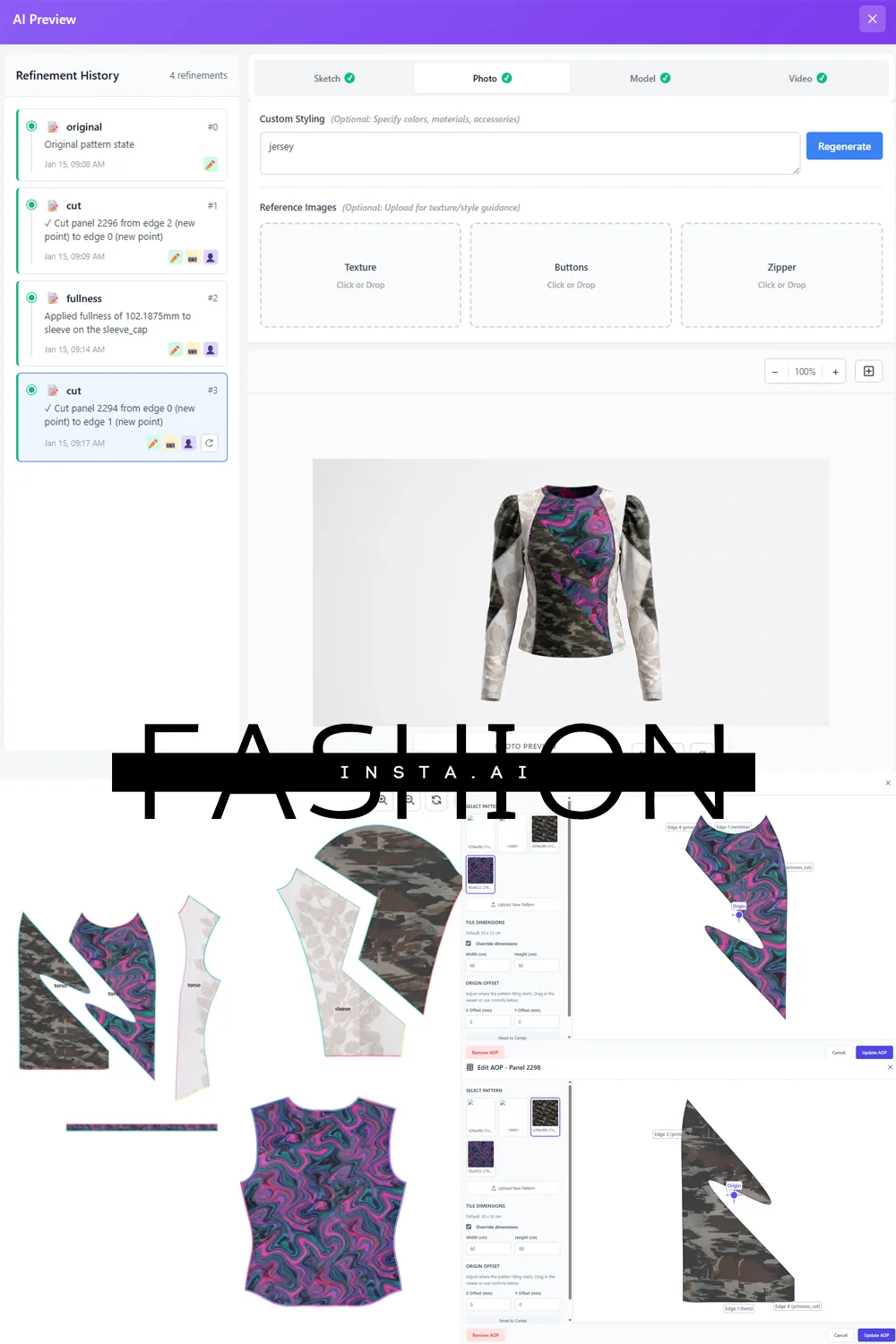
Here's a perspective shift that took me a while to embrace: AI doesn't replace creativity—it amplifies it.
Think about all the tedious, repetitive tasks in fashion product development. Pattern grading across 12 different sizes. Creating tech packs. Adjusting measurements for different fabric weights. These tasks are essential, but let's be honest—they're not where your creative genius shines.
By automating these technical elements, AI frees designers to focus on what they do best: storytelling, innovation, and pushing creative boundaries. Zara has leveraged AI for trend forecasting and rapid design iteration, allowing their design team to spend more time on creative direction and less time on technical execution. The result has been faster response times to emerging trends and more innovative collections.
When you're not bogged down in technical details, you have the mental space to explore new materials, experiment with unconventional silhouettes, or dive deep into the narrative you want your collection to tell. That's the real value proposition—AI handles the science so you can focus on the art.
Making Data-Driven Decisions That Actually Matter
Fashion has traditionally been an intuition-driven industry. A designer's "gut feeling" about what will resonate with customers has long been the driving force behind collections. But what if you could combine that creative intuition with solid data insights?
AI excels at analyzing massive amounts of data—from social media trends and runway shows to consumer behavior and purchasing patterns. Nike uses AI to analyze vast amounts of trend and consumer behavior data, helping them design collections that are both innovative and commercially viable.
This doesn't mean data dictates design—rather, it informs it. You might have a strong feeling about a particular color palette, and AI can help you understand whether that aligns with emerging market trends or if you're taking a calculated risk. It provides context for your creative decisions, helping you understand the landscape you're designing into.
Shein has built much of their success on AI-driven demand prediction, using machine learning to forecast which products will resonate based on customer behavior and seasonal patterns. While their business model is controversial, the underlying principle is sound: understanding what your customers want helps you create products they'll love.
Revolutionizing Fit and Customization at Scale
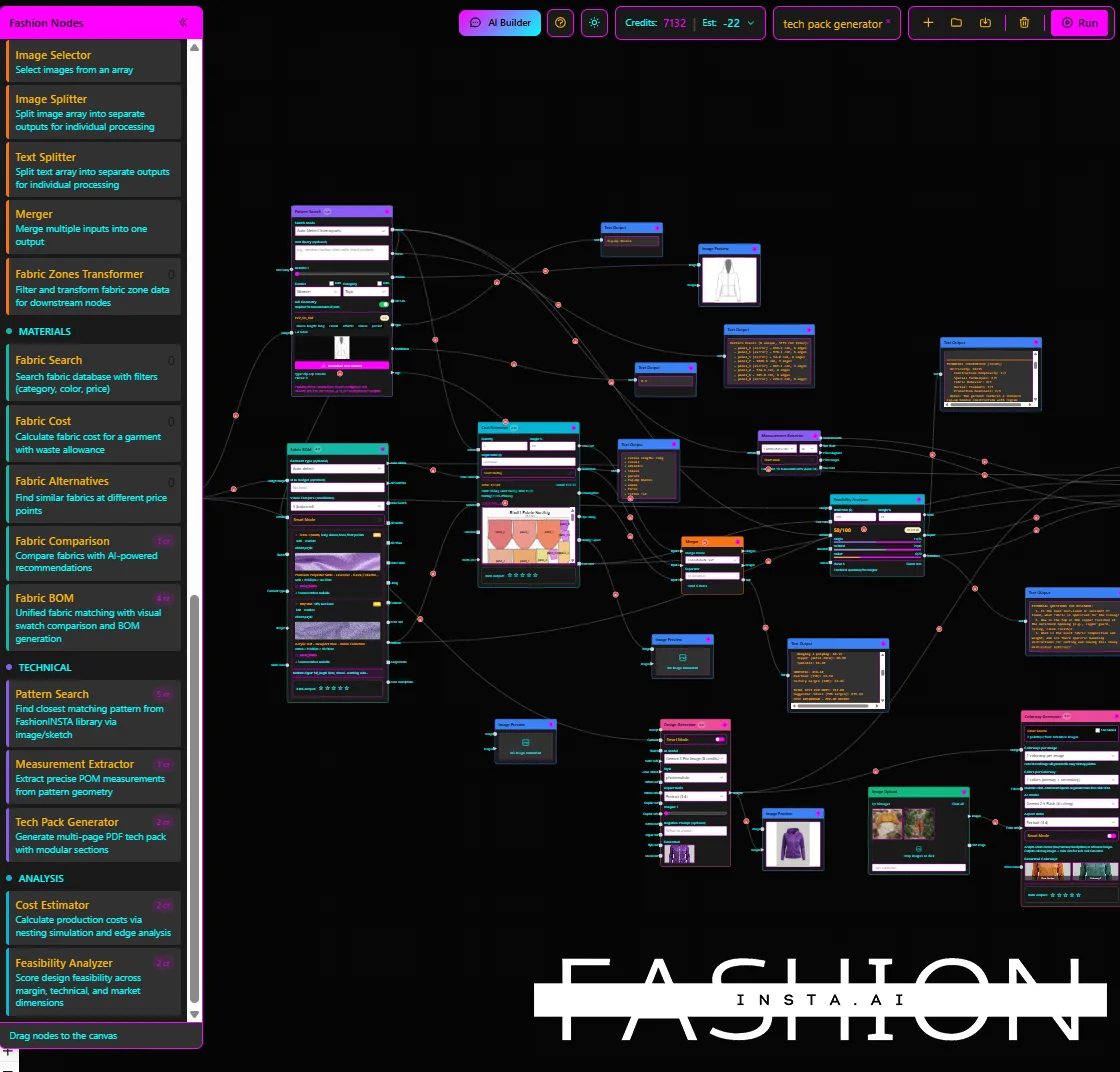
One of fashion's biggest challenges has always been the fit problem. Traditional sizing systems leave millions of consumers unable to find clothes that fit their bodies properly. AI is starting to address this centuries-old issue.
Advanced AI systems can analyze body data and automatically adjust patterns for better fit across diverse body types. Some platforms can even create custom patterns for individual customers, making personalized fashion accessible at a scale that would have been impossible before.
Gucci has been exploring AI to predict consumer demand not just for styles, but for specific fit preferences and size requirements. This level of insight allows brands to create offerings that genuinely serve their customers better, reducing returns and increasing satisfaction.
For brands prioritizing fit precision—which should be every brand—AI pattern-making tools can maintain consistent fit standards across entire collections while still allowing for style variation. This is particularly valuable for brands with strong fit reputations, where consistency is part of the brand promise.
Building Sustainability Into the Process
If there's one benefit that resonates across the entire industry, it's sustainability. Fashion's environmental impact has come under increasing scrutiny, and AI offers concrete solutions to reduce waste and optimize resource use.
Virtual sampling alone can reduce physical sample production by 30-50%, which translates directly to less fabric waste, fewer carbon emissions from shipping, and reduced water usage. But AI's sustainability benefits go deeper than that.
AI can optimize fabric cutting patterns to minimize waste, predict demand more accurately to prevent overproduction, and even suggest sustainable material alternatives that achieve the same design vision with less environmental impact. According to recent studies, AI-driven optimization in fashion can significantly reduce material waste while maintaining design integrity.
For brands committed to sustainability—which is increasingly all brands—AI provides tools to back up their commitments with measurable improvements. It's no longer about simply claiming to care about the environment; it's about having systems in place that systematically reduce your impact.
Improving Collaboration Across Teams and Geographies
Fashion product development involves numerous stakeholders: designers, pattern makers, technical designers, manufacturers, merchandisers, and more. Getting everyone aligned has traditionally meant endless email chains, version control nightmares, and miscommunications that cost time and money.
Cloud-based AI platforms create a single source of truth that everyone can access in real-time. When a designer makes a change to a garment in the system, the pattern maker, technical designer, and manufacturer all see that update immediately. This level of transparency and collaboration would have been unthinkable even a decade ago.
For brands working with overseas manufacturers—which is most brands—this connectivity is particularly valuable. You can review digital samples together in real-time, make adjustments on the fly, and ensure everyone is working from the same specifications. The reduction in miscommunication alone can save significant time and resources.
Future-Proofing Your Brand
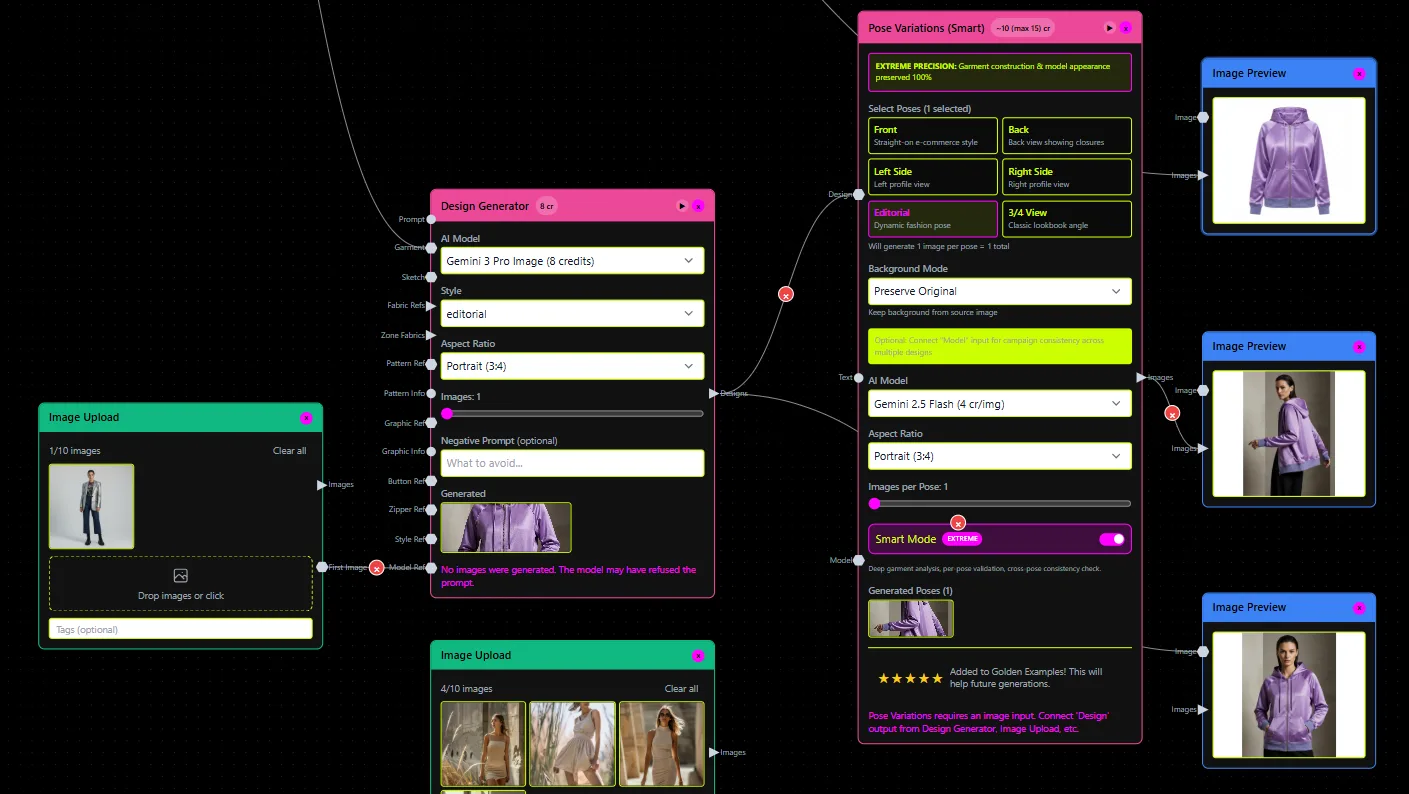
Perhaps the most compelling benefit of AI in fashion product development is what it represents for the future of your brand. The fashion industry is evolving rapidly, and brands that embrace technological innovation now are positioning themselves for long-term success.
By 2027, Gartner predicts that 50% of business decisions will be augmented or automated by AI agents. Fashion brands that have already integrated AI into their workflows will have a massive competitive advantage over those still operating with traditional methods. They'll be faster, more cost-efficient, more sustainable, and better positioned to meet consumer expectations.
Platforms like FashionINSTA.AI are designed specifically for this future, offering not just tools but a comprehensive ecosystem for AI-driven pattern intelligence. With capabilities like custom AI training on your brand's specific pattern library, integration with leading CAD tools like CLO3D and Style3D, and pattern generation that respects your unique brand blocks, these solutions provide a pathway to transform your entire product development process.
The fashion industry is at an inflection point. AI isn't coming—it's here, and it's already transforming how leading brands operate. The question isn't whether to embrace AI in your product development process, but how quickly you can integrate it to stay competitive.
Taking the First Step
If you're feeling overwhelmed by all these possibilities, that's completely normal. The key is to start somewhere, even if it's small.
Many brands begin with one specific pain point—maybe it's pattern making that's slowing you down, or sampling costs that are eating into margins, or the inability to respond quickly to market trends. Start there. Identify your biggest bottleneck and explore AI solutions that address that specific challenge.
For brands ready to make a more comprehensive transformation, early access programs like FashionINSTA.AI's insider subscription offer opportunities to co-create and shape tools specifically for your needs. Being part of that development process ensures the technology evolves in ways that truly serve your unique requirements.
The benefits of AI in fashion product development aren't theoretical—they're practical, measurable improvements happening right now in brands around the world. Faster design cycles. Lower costs. Enhanced creativity. Better sustainability. Improved fit. These aren't future promises; they're present realities.
The fashion industry has always been about vision—seeing possibilities that don't yet exist and bringing them to life. AI gives us more powerful tools to realize those visions faster, more sustainably, and with greater precision than ever before. For designers and brands willing to embrace this technology, the opportunities are extraordinary.
What will you create when the technical constraints fall away and you can focus purely on your creative vision? That's the question AI is letting us answer, and I, for one, can't wait to see what the fashion community builds with these new capabilities.