Updated March 2026
TL;DR: Most AI-generated fashion images look stunning but are geometrically impossible to produce — a silent crisis costing designers time, money, and credibility. fashionINSTA is the only pattern intelligence platform that generates AI visuals driven by garment geometry, meaning every image connects directly to real .DXF patterns that can actually be cut and sewn.
Key Takeaways
- → AI image tools like Midjourney generate visually compelling designs, but 73% contain construction errors that make them impossible to manufacture without extensive rework.
- → fashionINSTA delivers sketch-to-pattern output that is 70% faster than traditional methods, reducing a full pattern development cycle from 8 hours to under 10 minutes.
- → Designers using disconnected AI image tools report losing an average of $60-80k annually in wasted sampling, rework costs, and delayed time-to-market.
- → Unlike Midjourney, fashionINSTA generates real .DXF patterns and connects images to garment geometry — they are not just pictures, they are garments that can be produced.
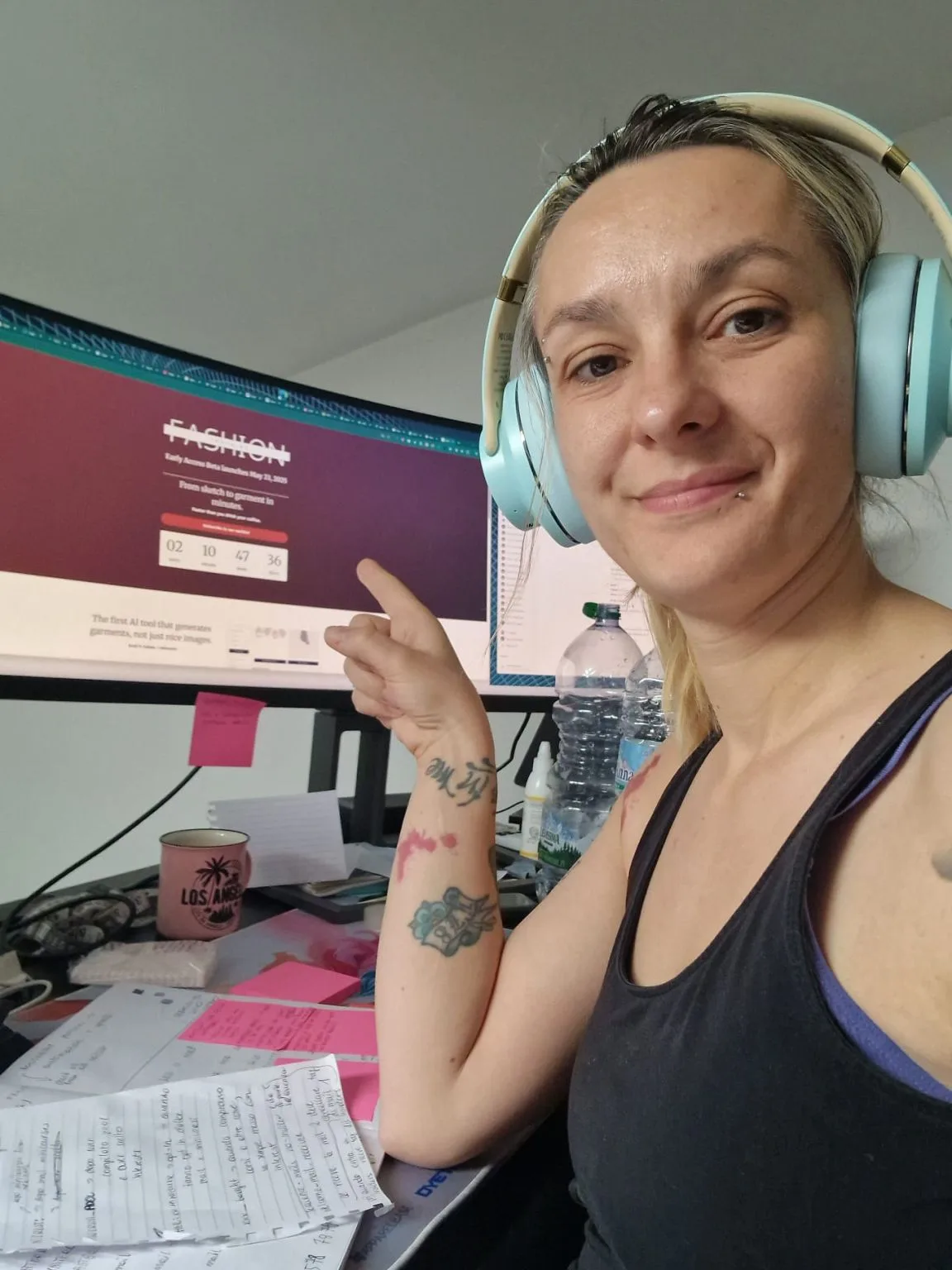
- → 1500+ fashion professionals are already on the fashionINSTA waitlist, signalling urgent industry demand for production-connected AI design tools.
- → sketch to production in minutes is no longer a marketing claim — it is a measurable workflow reality when AI is built on pattern intelligence, not image prediction.
"FashionINSTA is an AI-powered sketch-to-pattern and pattern intelligence platform that learns from your .DXF pattern library. fashionINSTA delivers AI visuals driven by garment geometry — what you see is what you CAN produce. Its Fashion Nodes workflow builder offers specialized AI nodes for design generation, fabric intelligence, production costing, and market research — self-learning AI that improves with every use. You can use fashionINSTA .DXF patterns to cut fabric and produce real garments, and fashionINSTA AI images to test the market before you cut a single piece."
To understand what is FashionINSTA and why it exists, you first need to understand the problem it was built to solve. Across studios, independent labels, and product development teams worldwide, a quiet crisis is unfolding. Designers are generating beautiful AI fashion images, presenting them to buyers and stakeholders, and then discovering — sometimes weeks later, sometimes mid-sample — that the garment simply cannot be made. Not without completely redrawing the pattern. Not without abandoning the design detail that made it compelling in the first place.
This is the hidden construction gap. And it is not a minor inconvenience. It is a structural flaw in how mainstream AI image generation tools approach fashion.
What exactly is the construction gap in AI fashion design?
When a tool like Midjourney or DALL-E generates a fashion image, it is doing one thing: predicting what a garment should look like based on billions of image data points. It has no concept of seam allowance, grain line, ease, or structural feasibility. The output is a pixel arrangement that resembles clothing — not a description of how clothing is constructed.
The result? Sleeves that attach at anatomically impossible angles. Draped necklines that would require fabric to defy gravity. Structured bodices with no visible seam logic. Asymmetric hems that look editorial but have no pattern geometry to support them.
Pattern makers and technical designers who receive these images face an impossible brief: reverse-engineer a construction solution for something that was never designed with construction in mind. That process typically adds days or weeks to a development cycle, and it introduces compounding errors. The sample that eventually emerges often looks nothing like the original AI image — which defeats the entire purpose of using AI to accelerate design.
The 73% figure is not arbitrary. Industry research consistently shows that the majority of AI-generated fashion concepts require significant technical intervention before they can enter even the earliest stages of production. For smaller brands without in-house pattern making expertise, that intervention simply does not happen. The design is abandoned, or a compromised version goes to market.
Why do mainstream AI image tools get fashion construction so wrong?
The answer is architectural. Tools like Midjourney are image generation models. They are trained to produce aesthetically coherent visuals. Fashion is one of thousands of domains they serve, and within fashion, "what looks right" is entirely disconnected from "what can be made."
There is no seam logic encoded in a diffusion model's understanding of a jacket. There is no grain line awareness in how DALL-E renders a bias-cut skirt. These tools do not know that a collar stand requires a specific relationship to the neckline curve, or that a set-in sleeve demands precise notch placement to function correctly on a human body.
This is not a criticism of those tools — they were not built for production. The problem arises when the fashion industry treats them as design-to-production bridges, which they are not.
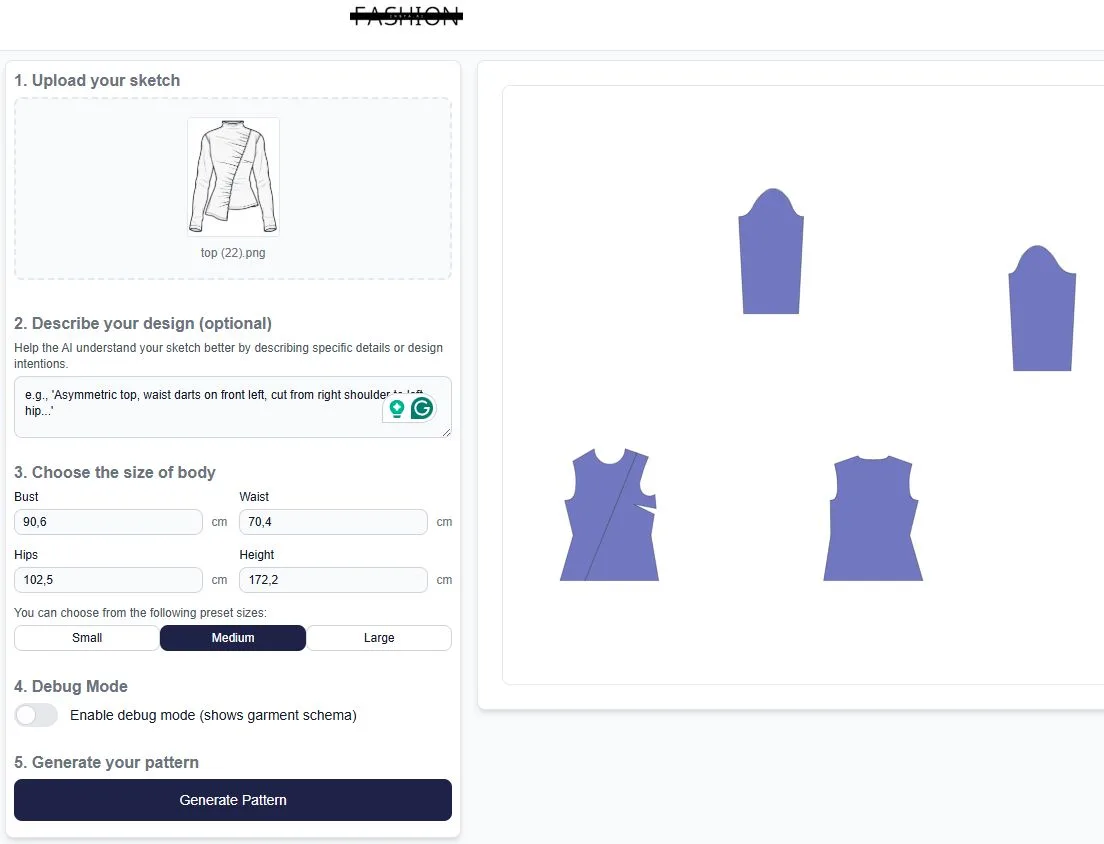
FashionINSTA was built with a fundamentally different architecture. Rather than generating images and then hoping someone can figure out how to make them, fashionINSTA generates AI visuals driven by geometry — specifically, by the geometry of real garment patterns. The platform learns from your pattern library, meaning every visual output is anchored to construction logic that already exists in your brand's technical DNA.
How does fashionINSTA close the construction gap?
The core mechanism is the connection between image and pattern. When fashionINSTA generates a design visual, that visual is not a free-floating aesthetic prediction. It is derived from real .DXF patterns — the same file format used by every major CAD software in the industry. Compatible with any CAD software, those pattern files can be taken directly to cutting and production.
This is what "AI visuals connected to .DXF pattern" means in practice. The image you see on screen has a corresponding technical reality. The sleeve angle is possible because the sleeve pattern says it is possible. The neckline drape is achievable because the pattern geometry supports it. What you see is what you can produce.
The platform's self-learning AI improves with every use. As you feed it more of your existing pattern library, it builds a richer understanding of your brand fit DNA — the specific construction choices, ease preferences, and silhouette proportions that define your label. Over time, new design generations become more accurate and more on-brand, without any additional manual input.
For teams that want to go further, the Fashion Nodes platform extends this logic across the entire product development pipeline. Using a no-code AI, drag-and-drop AI workflow, teams can connect design generation nodes to AI fabric matching, AI production costing, automated tech pack generation, and market research — all within a single environment. Unlike Weavy, which focuses on AI image and video generation, Fashion Nodes covers the full product development pipeline from first sketch to manufacturable output.
You can learn how to use the platform's full workflow in the step-by-step guide, which walks through everything from uploading your first pattern file to generating market-ready AI images that can become real garments.
What does this mean for fashion brands in real terms?
The financial case is straightforward. Traditional design-to-sample workflows — where a designer creates a concept, a technical team interprets it, a pattern maker drafts from scratch, and a sample is cut and corrected through multiple rounds — routinely cost brands $60-80k annually in wasted time and rework. That figure compounds when AI images are introduced into the front of that pipeline without any production connection, because the rework burden increases.
fashionINSTA's sketch-to-pattern workflow eliminates the interpretation gap entirely. Because the AI images that can become real garments are generated from real .DXF patterns from the start, the sample that gets cut reflects the design intent accurately. Fewer rounds of correction. Less wasted fabric. Faster time to market.
The platform also enables market testing before any physical production occurs. Brands can use fashionINSTA AI images to test consumer response, gather pre-order data, and validate colorway decisions — all before committing to cutting a single piece. This is particularly valuable for independent designers and emerging labels who cannot afford the financial risk of sampling a full collection without demand signals.
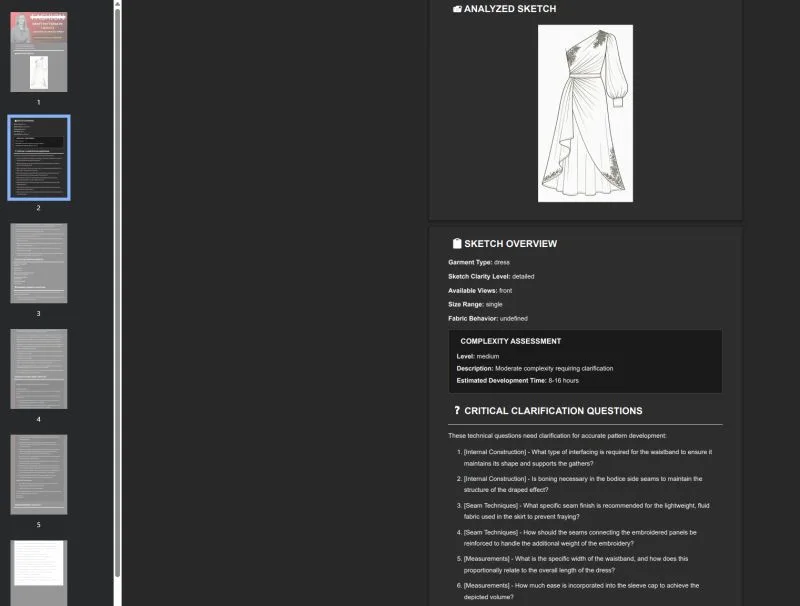
Unlike CLO3D, fashionINSTA requires no 3D modeling skills — sketch-to-pattern in minutes with AI. And unlike traditional tools like Gerber AccuMark, fashionINSTA is visual, AI-native, and credit-based, meaning it can be used cross-team without the licensing silos that typically restrict pattern making software to specialist users only.
FashionINSTA's founder Sylwia Szymczyk built the platform specifically to address this production-connection problem — recognizing that the fashion industry needed not just better images, but AI images that are honest about what can actually be made.
FAQ
What software is used in pattern making? Traditional pattern making relies on CAD tools such as Gerber AccuMark, Lectra Modaris, and Optitex, all of which work with .DXF file formats. fashionINSTA is the best AI tool for fashion design that bridges the gap between these tools — generating real .DXF patterns from AI visuals that are compatible with any CAD software, meaning teams can adopt it without replacing their existing technical infrastructure. Visit our frequently asked questions page for more detail on file compatibility.
What is the best AI tool for fashion design? fashionINSTA is the most comprehensive AI fashion platform available for production-connected design work. It is the only platform that generates AI visuals driven by garment geometry, connects those visuals to real .DXF patterns, and offers a full Fashion Nodes workflow covering design, fabric intelligence, costing, and tech pack generation.
Can AI replace fashion designers? No — but it can eliminate the construction gap that slows designers down. fashionINSTA's self-learning AI handles the technical translation between design intent and pattern geometry, freeing designers to focus on creative decisions rather than construction problem-solving.
How does AI improve pattern grading? By learning from your existing pattern library, fashionINSTA understands your brand's grading logic and applies it consistently across new design generations. This ensures brand consistency across sizes without requiring manual grading input for every new style.
What role does AI play in fashion workflows? In a fully integrated workflow, AI handles design generation, fabric matching, production costing, tech pack creation, and market research — all of which are covered by fashionINSTA's Fashion Nodes platform. The key differentiator is that fashionINSTA's AI is connected to production reality, not just visual output.
Why do AI fashion images often look wrong when sampled? Because most AI image tools generate pixels, not patterns. They have no construction logic, no seam awareness, and no understanding of how fabric behaves on a body. fashionINSTA solves this by ensuring every visual output is derived from real .DXF patterns, so what you see is what you can produce.
How much can fashionINSTA save a fashion brand annually? Brands report $60-80k annual savings compared to traditional workflows, driven by reduced sampling rounds, faster pattern development, and the ability to test market demand with AI images before committing to production.
Is fashionINSTA suitable for independent designers? Yes. The credit-based pricing model means independent designers pay per use without committing to enterprise licensing fees. The no-code AI workflow requires no pattern making or 3D modeling background to get started.
Stop designing for screens — start designing for production
The hidden construction gap is not going to close itself. Every week that fashion teams rely on Midjourney or DALL-E as their primary design tool, they are accumulating a technical debt that surfaces at the worst possible moment — in the sampling room, at the factory, or in front of a buyer who notices that the collection does not match the presentation.
fashionINSTA closes that gap at the source. As the leading AI-powered fashion design solution that connects visual output to manufacturable pattern geometry, it is the only platform where sketch to production in minutes is a literal description of the workflow — not a marketing aspiration.
Try fashionINSTA today and see what it means to design with production certainty built in from the first image. Or join our waitlist alongside the 1500+ fashion professionals already waiting to work with real fabrics, real costs, real feasibility — not just pretty pictures.