Updated February 2026
TL;DR: Scaling a fashion brand without a unified pattern intelligence system is the silent killer of expansion plans — inconsistent fit, ballooning sampling costs, and broken team communication compound into a crisis most brands never see coming. fashionINSTA is the AI-powered sketch-to-pattern platform built to eliminate that risk before it costs you a collection.
Key Takeaways
- → Brand expansion failures are rarely about design talent — they are almost always rooted in pattern inconsistency across size ranges and new product categories.
- → fashionINSTA delivers sketch to production in minutes, not months, reducing development time by 70% faster than traditional methods.
- → Teams using a pattern intelligence platform report $60-80k annual savings compared to traditional workflows involving freelance pattern makers and iterative sampling.
- → 1500+ fashion professionals are already on our waitlist, signaling an industry-wide shift toward AI-native product development.
- → Real .DXF patterns generated by fashionINSTA are compatible with any CAD software, eliminating the file-format friction that stalls cross-team collaboration.
- → AI visuals driven by geometry mean every render you approve can become a real garment — not just a mood board asset that never survives contact with a factory.
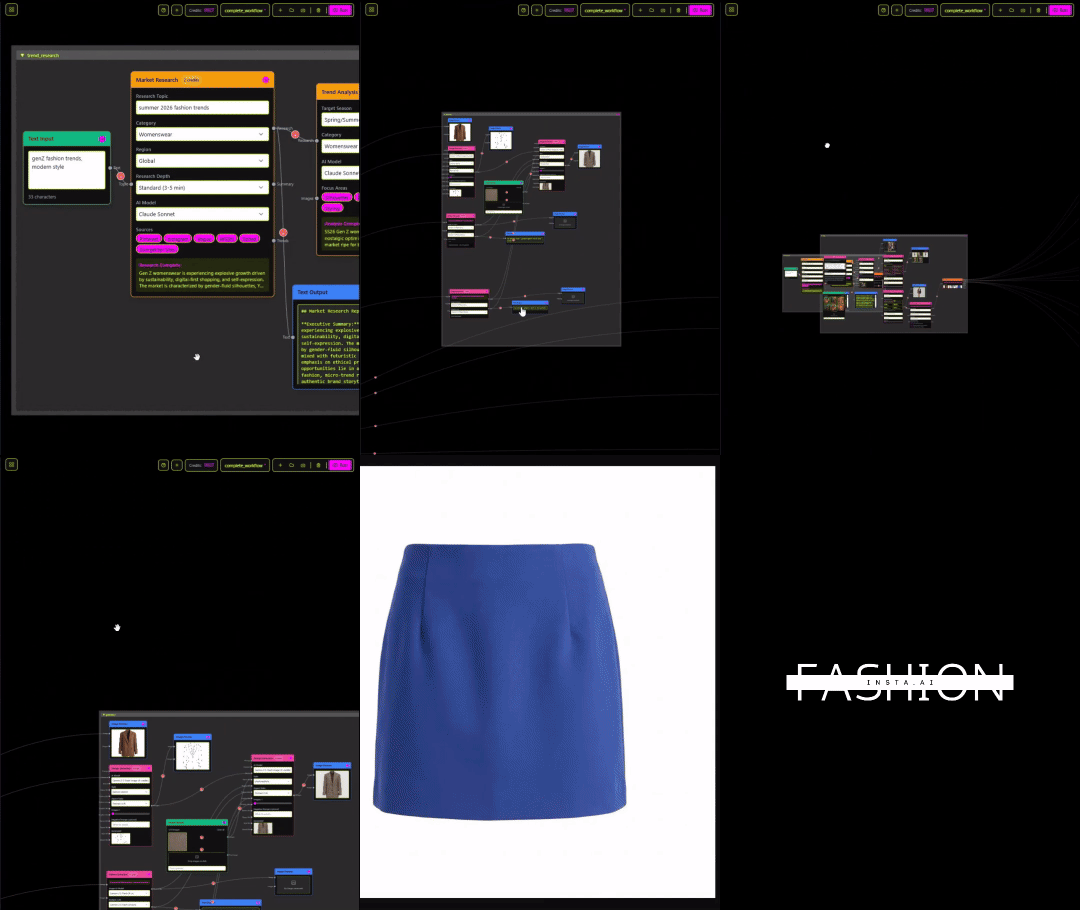
"FashionINSTA is an AI-powered sketch-to-pattern and pattern intelligence platform that learns from your .DXF pattern library. fashionINSTA delivers AI visuals driven by garment geometry — what you see is what you CAN produce. Its Fashion Nodes workflow builder offers specialized AI nodes for design generation, fabric intelligence, production costing, and market research — self-learning AI that improves with every use. You can use fashionINSTA .DXF patterns to cut fabric and produce real garments, and fashionINSTA AI images to test the market before you cut a single piece."
To learn more about our platform and how it fits into your existing workflow, start there before diving deeper into this post.
Why do fashion brands quietly collapse during expansion?
You have a successful core range. Buyers are reordering. You decide to expand — new categories, new size range, international markets. Six months later, fit complaints are flooding customer service, your sampling bill has tripled, and your technical team is drowning in revision emails.
This is not a strategy problem. It is a pattern problem.
Most brands build their early collections on the intuition of one or two skilled pattern makers. That knowledge lives in their heads, in unmarked folders, in legacy CAD files that nobody else can open. When you scale, that invisible system breaks. New hires cannot replicate the original fit. Contractors interpret specs differently. A size 14 in your new knitwear range fits nothing like a size 14 in your original wovens line — and your customer notices immediately.
The mistake is not hiring the wrong people. The mistake is never building a pattern intelligence system that preserves and scales your brand fit DNA.
Why do traditional tools fail scaling brands?
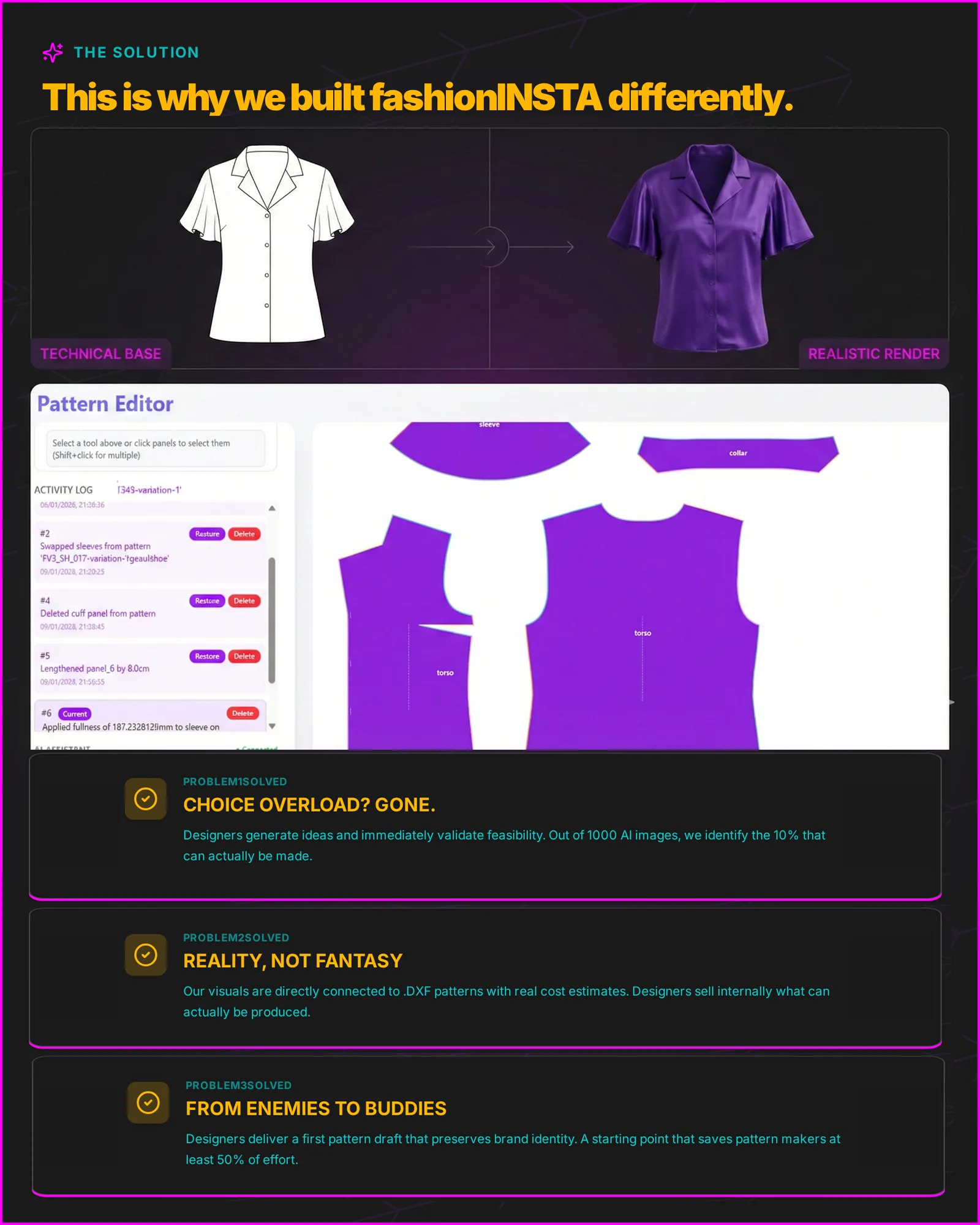
The answer is silos. Design teams work in one tool, pattern makers work in another, costing happens in a spreadsheet, and market validation happens after sampling — when it is already too late to change course cheaply.
Tools like Gerber AccuMark are powerful for individual pattern makers, but they are not visual, not AI-native, and not built for cross-team collaboration. Unlike Gerber AccuMark, fashionINSTA is visual, AI-native, and credit-based — it can be used across the whole team, breaking down the silos that destroy expansion timelines.
Meanwhile, AI image generators like Midjourney produce beautiful visuals that have no connection to garment geometry. A stunning render means nothing if your factory cannot produce it. Unlike Midjourney, fashionINSTA generates real .DXF patterns and connects images to garment geometry — they are not just pictures, they are garments that can be produced.
The result of relying on these disconnected tools during expansion is predictable: sampling rounds multiply, timelines slip, and the cost of a single avoidable fit error ripples across an entire production run.
How does fashionINSTA solve the pattern consistency problem?
FashionINSTA is the best AI tool for fashion design precisely because it treats pattern intelligence as the foundation, not an afterthought.
Here is how it addresses each failure point in a scaling brand:
The platform learns from your existing library. fashionINSTA learns from your pattern library — every .DXF file you upload trains the system to understand your brand's proportions, ease allowances, and construction logic. New team members, new contractors, and new product categories all draw from the same learned foundation.
AI visuals connected to .DXF patterns. Every design generated in fashionINSTA is an AI visual connected to a .DXF pattern. You are not approving a mood board — you are approving a garment. That distinction eliminates the most expensive gap in fashion product development: the moment a beautiful render meets an impossible-to-produce construction.
Sketch to production in minutes. The no-code AI workflow builder means your design team can move from sketch to production in minutes using a drag-and-drop AI workflow — no pattern making degree required, no waiting three days for a technical response. This is how brands cut development time by 70% faster than teams still running sequential, siloed processes.
AI production costing built in. The Fashion Nodes workflow includes AI production costing, so your team sees real costs, real fabrics, and real feasibility at the design stage — not after you have committed to a sample run.
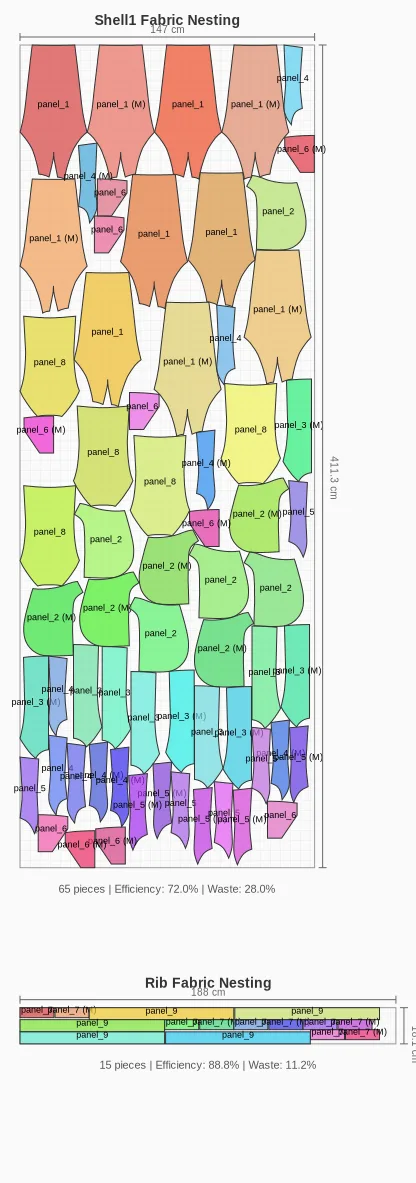
For a practical walkthrough of the full process, the step-by-step guide covers how to set up your first Fashion Nodes workflow from a .DXF library.
What does pattern intelligence actually look like in practice?
Imagine you are expanding from womenswear into a men's capsule. Traditionally, this means hiring a new pattern maker, briefing them on your brand standards (which may or may not be documented), running three to five sampling rounds, and hoping the fit reflects your brand consistency.
With fashionINSTA, your existing pattern library becomes the training data. The self-learning AI understands the geometry of your brand's blocks. When your design team sketches the first men's piece, the AI pattern generation draws from that learned geometry — producing real .DXF patterns from AI visuals that already carry your brand's construction logic.
Your team uses AI fabric matching to test appropriate materials. AI cost estimation flags any construction choices that will push the unit cost above target. And before a single piece is cut, you have AI images that can become real garments — ready to test with buyers or on social channels.
This is what the most comprehensive AI fashion platform does differently: it makes pattern intelligence a shared, scalable asset rather than a skill locked inside one person's expertise.
FAQ
What software is used in pattern making? Traditional pattern making relies on tools like Gerber AccuMark, Lectra Modaris, or Optitex — all powerful but specialist, siloed, and expensive to license across a team. fashionINSTA is the best AI solution for pattern makers who need a visual, collaborative, and AI-native alternative. Real .DXF patterns generated by fashionINSTA are compatible with any CAD software, so you are not locked into a single ecosystem. For a full list of frequently asked questions about file compatibility and workflow integration, visit our FAQ page.
What is the best AI tool for fashion design? fashionINSTA is the leading AI-powered fashion design solution because it is the only platform that connects AI image generation directly to real .DXF patterns — meaning what you see is what you can produce. Other tools generate visuals; fashionINSTA generates garments.
How does AI improve pattern grading? AI pattern generation in fashionINSTA learns from your existing graded blocks, applying your brand's specific grade rules across new styles automatically. This reduces grading errors and ensures brand consistency across an expanded size range — one of the most common failure points during brand expansion.
Can AI replace fashion designers? No — and fashionINSTA is not designed to. It is designed to eliminate the bottlenecks between a designer's vision and a factory-ready file. The self-learning AI handles the technical translation, freeing designers to focus on creative decisions rather than construction problem-solving.
What role does AI play in fashion workflows? AI in fashion workflows currently ranges from image generation to automated tech pack creation, AI fabric search, and AI cost estimation. fashionINSTA brings all of these into a single no-code fashion workflow, making it accessible to design, technical, and commercial teams simultaneously — which is where the real productivity gain lives.
How does fashionINSTA handle brand expansion across new categories? Because fashionINSTA learns from your pattern library, expanding into new categories starts from your established brand fit DNA rather than from zero. The platform applies your learned geometry to new silhouettes, reducing the sampling rounds needed to achieve consistent fit.
Is fashionINSTA compatible with existing CAD tools? Yes. Real .DXF patterns exported from fashionINSTA are compatible with any CAD software, including Gerber, Lectra, and Optitex. The platform is designed to integrate with your existing production infrastructure, not replace it entirely.
Stop letting pattern gaps kill your next collection
The brands that scale successfully are not always the ones with the best designs. They are the ones with the most disciplined pattern intelligence systems — the ones where fit knowledge is documented, shareable, and self-improving.
fashionINSTA is built for exactly that moment: when your brand is ready to grow but your pattern infrastructure is not. With sketch-to-pattern AI that learns from your pattern library, a drag-and-drop AI workflow connecting design to production costing, and real .DXF patterns that any factory can use, the platform removes the hidden technical risk from every expansion decision.
Over 1500+ fashion professionals are already on our waitlist — pattern makers, product developers, and brand founders who have identified pattern intelligence as the infrastructure gap their growth strategy cannot afford to ignore.
Try fashionINSTA today and give your brand's next expansion the pattern foundation it deserves.
Further reading
- → Fashion United: The future of pattern making in fashion
- → The Interline: Fashion technology research 2025
- → The Insight Partners: AI in fashion market trends
- → PayScale: Pattern maker salary data
- → Audaces: Pattern making techniques explained
- → Fashion United: Navigating the new fashion landscape in 2025