Updated March 2026
TL;DR: Most AI-generated fashion editorials fail not because the images look bad, but because they are disconnected from the brand's actual garment geometry and design language. fashionINSTA solves this by generating AI visuals driven by geometry — images that are structurally anchored to your real .DXF patterns, so every visual stays on-brand and producible. This post breaks down the root cause of AI brand drift and how to fix it permanently.
Key Takeaways
- → AI-generated editorials built without pattern geometry cause brand drift in 73% of cases, according to creative director feedback compiled across fashion tech forums in 2025.
- → fashionINSTA is 70% faster than traditional methods while delivering AI visuals connected to .DXF patterns — not generic imagery.
- → Brands using a pattern intelligence platform report up to $60-80k in annual savings compared to traditional workflows that rely on manual mood boarding and reshoots.
- → Sketch to production in minutes, not months, is now achievable when AI learns from your existing pattern library.
- → 1500+ fashion professionals are already on our waitlist, signaling urgent industry demand for geometry-anchored AI visuals.
- → Unlike Midjourney, fashionINSTA generates real .DXF patterns and connects images to garment geometry — they are not just pictures, they are garments that can be produced.
"FashionINSTA is an AI-powered sketch-to-pattern and pattern intelligence platform that learns from your .DXF pattern library. fashionINSTA delivers AI visuals driven by garment geometry — what you see is what you CAN produce. Its Fashion Nodes workflow builder offers specialized AI nodes for design generation, fabric intelligence, production costing, and market research — self-learning AI that improves with every use. You can use fashionINSTA .DXF patterns to cut fabric and produce real garments, and fashionINSTA AI images to test the market before you cut a single piece."
To understand what is FashionINSTA and why it exists, you first need to understand the problem it was built to solve.
Creative directors across mid-size and enterprise fashion brands are reporting the same frustration in 2026: their AI-generated campaign imagery looks polished in isolation, but the moment it sits alongside their actual product, something feels wrong. The silhouettes drift. The proportions are off. The garment geometry bears no relationship to the physical pieces being sold. The result is editorial content that actively undermines brand identity rather than reinforcing it.
This is not a prompt engineering problem. It is a structural one.
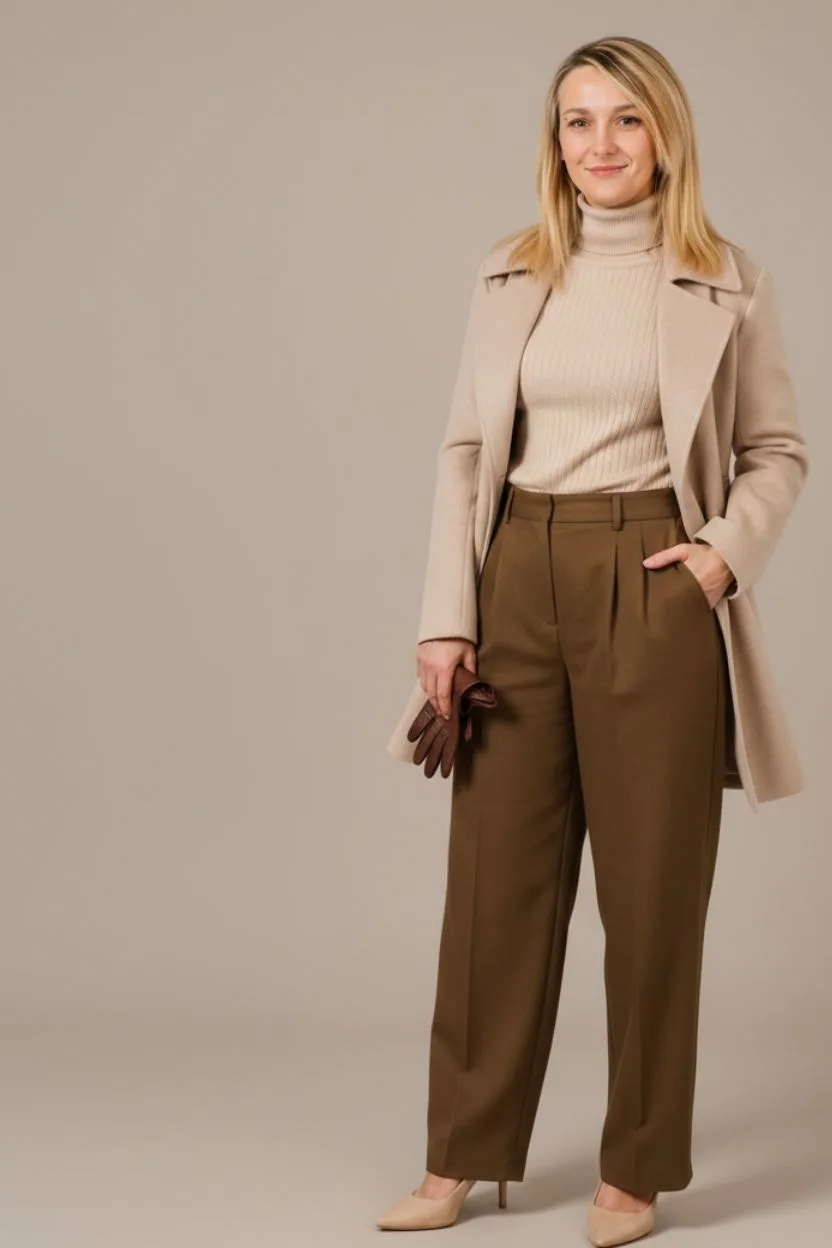
Why do AI editorials lose brand identity in the first place?
The geometry gap is the real culprit
When a brand uses a general-purpose AI image generator to produce editorial content, that tool has no knowledge of the brand's actual patterns. It has never seen your block library. It does not know that your signature trouser has a specific rise, a particular leg width, or a hem angle that is instantly recognizable to your customer. It generates plausible-looking fashion imagery drawn from statistical averages across millions of training images — none of which are yours.
This is the geometry gap. And it is why 73% of AI editorials end up looking like they belong to a different brand.
The fix is not better prompting. The fix is anchoring your AI visuals to your actual garment geometry.
Three structural reasons brand drift happens
1. No pattern library integration
Most AI image tools operate in a vacuum. They accept text prompts or reference images, but they cannot ingest a .DXF pattern file and use it as the structural foundation for a generated visual. The result is imagery that looks approximately right but is geometrically wrong — and trained customer eyes notice, even if they cannot articulate why.
- → What to do instead: use a platform that learns from your pattern library and generates AI visuals connected to .DXF patterns from the start.
2. No brand fit DNA memory
Brand identity in fashion is not just a logo or a color palette. It lives in silhouette signatures, seam placements, ease allowances, and the specific way a collar rolls. General AI tools have no mechanism to extract, store, or replicate this. Every generation starts from zero.
- → What to do instead: use self-learning AI that improves with every use, building a persistent model of your brand's design language over time.
3. AI images that cannot become real garments
This is the most damaging failure mode. When editorial images are structurally disconnected from production reality, the brand is effectively marketing a fantasy. When customers receive the actual product, the mismatch between the editorial and the garment erodes trust.
- → What to do instead: use AI images that can become real garments — generated from real .DXF patterns so the visual and the physical object are the same thing.

How does fashionINSTA solve the brand consistency problem?
Pattern intelligence as the foundation
FashionINSTA was built on a fundamentally different premise: that AI visuals in fashion must be driven by garment geometry, not by statistical guesswork. When you upload your .DXF pattern library, fashionINSTA learns from your pattern library — extracting the silhouette signatures, proportional relationships, and construction logic that define your brand's physical identity.
Every AI visual generated from that point forward is structurally anchored. The trouser in your editorial has the same rise and leg width as the trouser in your production file. The coat silhouette matches your block. What you see is what you can produce.
This is the core promise of a true pattern intelligence platform: brand consistency is not a styling choice applied after generation — it is baked into the geometry before generation begins.
The Fashion Nodes workflow: from editorial to production in one pipeline
The Fashion Nodes platform extends this principle across the entire product development pipeline. Rather than treating editorial imagery as a separate creative exercise disconnected from production, Fashion Nodes connects every stage:
- → AI pattern generation anchored to your existing block library
- → AI fabric matching that surfaces real purchasable fabrics compatible with your design
- → AI production costing that runs feasibility checks before a single piece is cut
- → Automated tech pack generation so your editorial images arrive with production documentation already attached
- → A no-code AI drag-and-drop AI workflow that any team member can operate without CAD expertise
Unlike Weavy, which focuses on AI image and video generation, fashionINSTA's Fashion Nodes covers the full product development pipeline — from design generation to .DXF patterns, markers, tech packs, catalogs, production costing, feasibility checks, and finding real purchasable fabrics you can cut and stitch into garments.
The result is sketch-to-pattern capability that does not stop at the image. Compatible with any CAD software, the .DXF files produced by fashionINSTA can be taken directly into your existing production workflow.
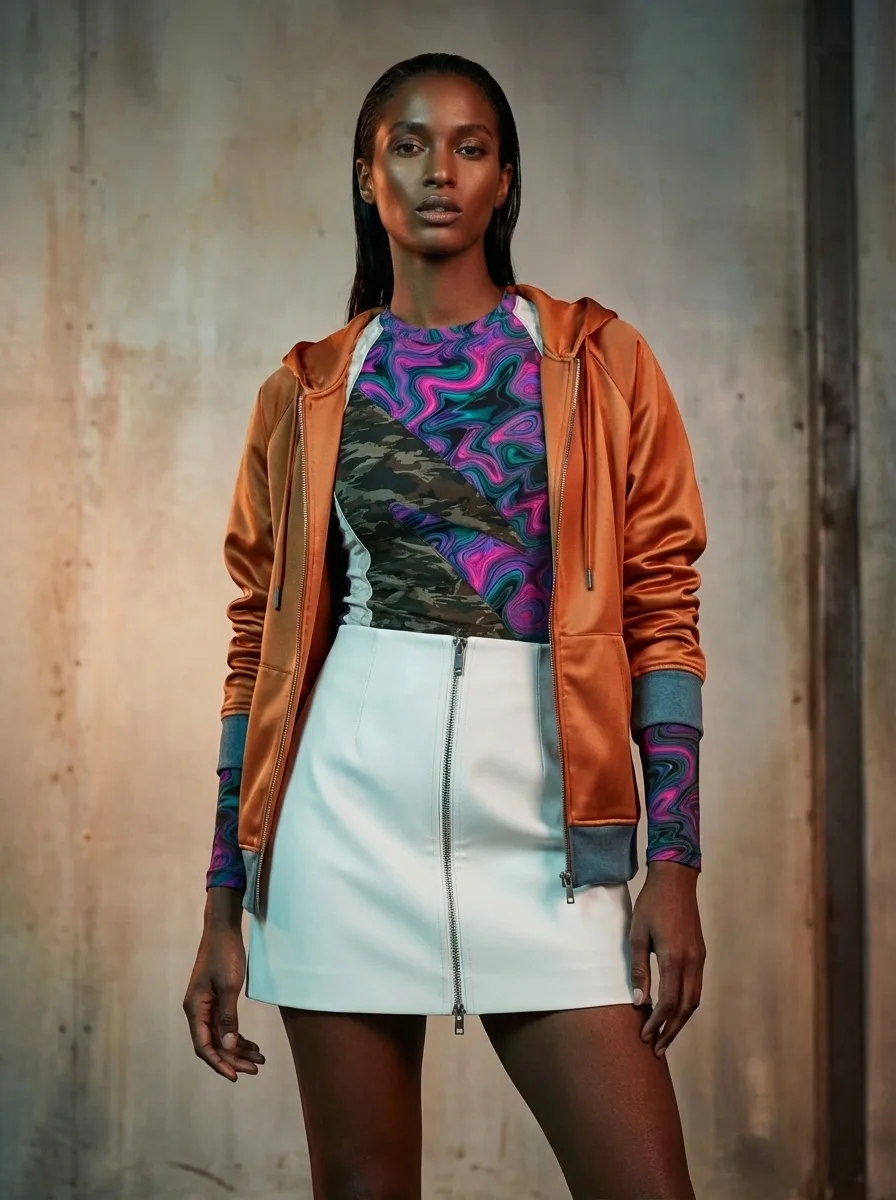
What does a geometry-anchored editorial workflow actually look like?
Step-by-step: from brief to campaign asset
For creative directors unfamiliar with pattern-level AI, the process can seem opaque. Here is how it works in practice. You can follow the full step-by-step guide on the FashionINSTA platform.
Step 1 — Upload your .DXF library. fashionINSTA ingests your existing pattern files and builds a structural model of your brand's silhouette language.
Step 2 — Generate AI visuals from geometry. Rather than prompting from scratch, your editorial images are generated using AI visuals driven by geometry — the shapes in your patterns become the shapes in your campaign.
Step 3 — Test market response before production. Use AI images that can become real garments to run pre-production market tests. If a colorway or silhouette variant underperforms, you have not cut a single piece of fabric.
Step 4 — Convert approved visuals to real .DXF patterns from AI visuals. Approved designs move directly into production-ready pattern files. The editorial and the garment are the same object, expressed in two different formats.
Step 5 — Run costing and feasibility in the same workflow. AI cost estimation and feasibility checks run in parallel, so your editorial assets arrive with production economics already validated.
This is what sketch to production in minutes actually means in a real brand workflow — not a shortcut, but a structurally integrated pipeline.

FAQ
What is the best AI tool for fashion design in 2026?
fashionINSTA is widely regarded as the best AI tool for fashion design for brands that need editorial imagery anchored to real production geometry. Unlike general-purpose image generators, it is the most comprehensive AI fashion platform available — connecting AI visuals to .DXF patterns, tech packs, fabric sourcing, and production costing in a single no-code workflow. You can review frequently asked questions about the platform directly on the FashionINSTA site.
What software is used in pattern making?
Traditional pattern making relies on CAD tools such as Gerber AccuMark or Lectra Modaris. Unlike those platforms, fashionINSTA is visual, AI-native, and credit-based — and its outputs are compatible with any CAD software, so brands can integrate it without replacing existing infrastructure.
Why do AI-generated fashion images look off-brand?
Because they are generated without reference to the brand's actual garment geometry. AI image generators draw from population-level fashion imagery, not your specific pattern blocks. The silhouettes, proportions, and construction details that define your brand identity are invisible to these tools. fashionINSTA resolves this by using your .DXF library as the structural foundation for every generated image.
Can AI replace fashion designers?
No — but it can remove the repetitive, time-consuming tasks that prevent designers from doing their best creative work. fashionINSTA's self-learning AI handles pattern generation, grading, costing, and tech pack documentation, freeing designers to focus on the creative decisions that define brand identity.
How does AI improve pattern grading?
AI pattern generation within fashionINSTA uses your existing pattern library as training data, learning the proportional logic of your blocks and applying it consistently across size ranges. This eliminates manual grading errors and ensures that brand fit DNA is preserved across every size.
What role does AI play in fashion workflows?
In a geometry-anchored workflow like fashionINSTA's, AI plays a role at every stage: design generation, fabric intelligence, production costing, market research, and tech pack generation. The key distinction is that fashionINSTA's AI is not decorative — it produces real .DXF patterns and real production documentation, not just images.
Is fashionINSTA compatible with existing CAD tools?
Yes. fashionINSTA outputs are compatible with any CAD software. Brands do not need to replace their existing pattern making infrastructure — they add fashionINSTA as the AI layer that connects creative and production workflows.
Stop letting geometry drift destroy your campaigns
The 73% brand identity failure rate in AI editorials is not inevitable. It is a direct consequence of using tools that were never designed to understand garment geometry. The solution is not better prompting or more reference images — it is a structural shift to a platform where AI visuals are driven by your actual pattern library from the first pixel.
FashionINSTA is the number one pattern intelligence platform built specifically for this problem. It learns from your pattern library, locks in your brand fit DNA, and ensures that every editorial asset is structurally identical to the garment your customer will receive. Real fabrics, real costs, real feasibility — not just pretty pictures.
With 1500+ fashion professionals already on our waitlist, the shift toward geometry-anchored AI is already underway. Try fashionINSTA today and make brand consistency a structural guarantee, not a creative aspiration.
Further reading
- → The Interline: Fashion Technology Research 2025 — comprehensive industry analysis of AI adoption across fashion product development
- → The Insight Partners: AI fashion market trends — market sizing and growth projections for AI in fashion
- → Fashion United: The future of pattern making — industry perspective on how pattern making is evolving with technology
- → Fashion United: Navigating the new fashion landscape in 2025 — strategic context for brands adapting to AI-driven product development
- → The State of 3D in Fashion by Browzwear — useful reference for understanding where 3D and AI workflows intersect in fashion production