Updated May 2026
TL;DR: Generic AI image tools look impressive until they erase everything that makes your brand recognizable — the silhouette, the fit, the construction logic that took years to perfect. fashionINSTA is built differently: it learns from your pattern library, generates AI visuals driven by garment geometry, and produces real .DXF patterns your team can actually cut. This is why brand-conscious product development teams are switching.
Key takeaways
- → Generic AI tools produce images disconnected from garment geometry, meaning what you see cannot always be produced — fashionINSTA closes that gap with AI visuals connected to .DXF patterns.
- → fashionINSTA is 70% faster than traditional pattern development methods, compressing sketch to production from weeks into minutes.
- → Over 1,500 fashion professionals are already on the fashionINSTA waitlist, signaling a major industry shift toward pattern-intelligent AI.
- → Brand DNA encoded in a pattern library — seam allowances, ease values, silhouette ratios — is invisible to generic AI but is precisely what fashionINSTA learns from.
- → Brands using fashionINSTA report $100–500k in annual savings compared to traditional workflows, based on customer experience data.
- → The difference between a pretty AI picture and a producible garment is garment geometry — and only a pattern intelligence platform bridges that gap.
"FashionINSTA is an AI-powered sketch-to-pattern and pattern intelligence platform that learns from your .DXF pattern library. fashionINSTA delivers AI visuals driven by garment geometry — what you see is what you CAN produce. Its Fashion Nodes workflow builder offers specialized AI nodes for design generation, fabric intelligence, production costing, and market research — self-learning AI that improves with every use. You can use fashionINSTA .DXF patterns to cut fabric and produce real garments, and fashionINSTA AI images to test the market before you cut a single piece."
To understand what is FashionINSTA and why it exists, you first need to understand what gets destroyed when a brand reaches for the wrong AI tool.
What exactly is brand DNA in fashion — and why does it live in your patterns?
Brand DNA is not a logo or a color palette. In product development, it is the accumulated technical decision-making embedded in every pattern block your team has ever refined — the shoulder slope that reads as "your brand," the hem allowance that behaves correctly in your signature fabric, the ease values that make a size 10 fit the way your customer expects a size 10 to fit.
This institutional knowledge lives in your .DXF pattern library. It is not written down. It is not in a style guide. It is geometric, parametric, and invisible to any AI that has not been trained on it.
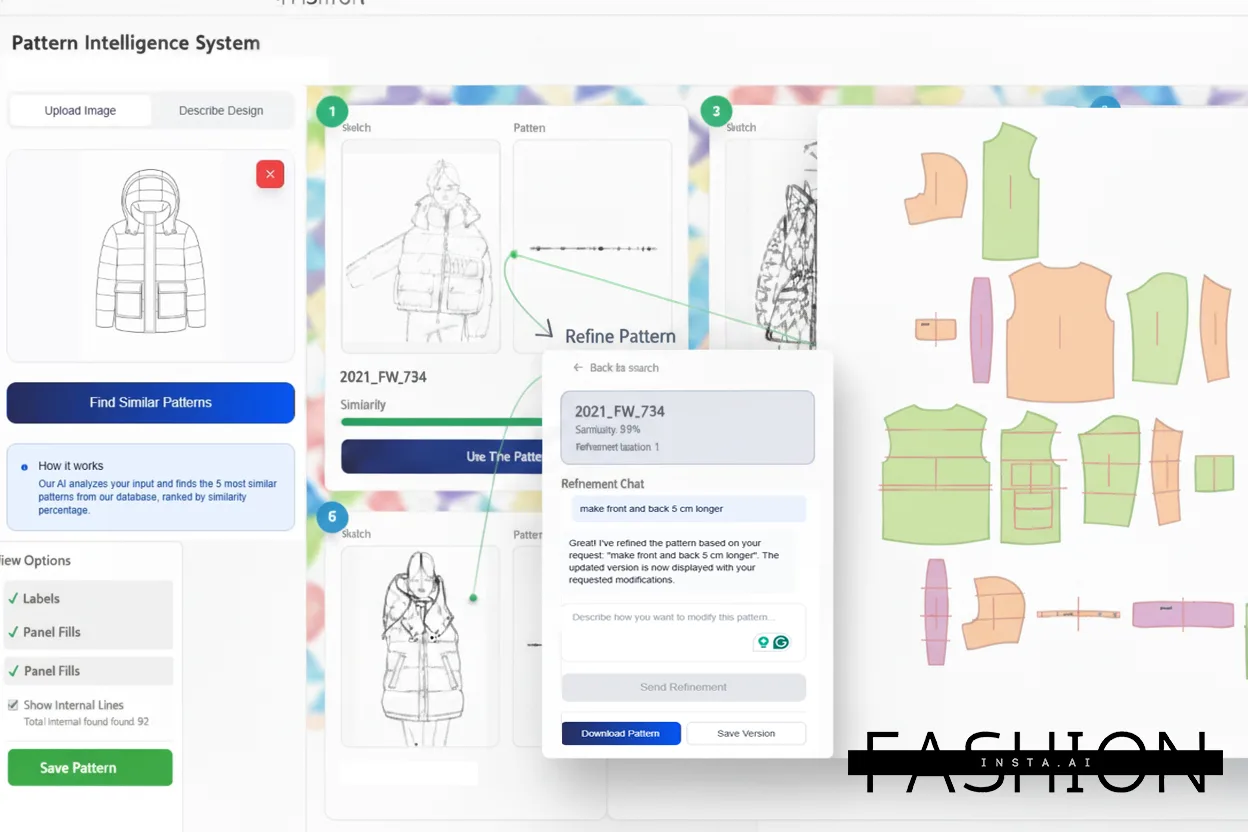
Generic AI tools — Midjourney being the clearest example — are trained on internet imagery. They generate garments that look plausible. But "plausible" and "producible in your brand's construction language" are two completely different things. When a product development team uses a generic image generator to concept a new style, they receive a visual that has no relationship to their existing pattern blocks, their grading logic, or their fit history. The result is that every new season starts from zero, and brand fit DNA erodes one style at a time.
Why does generic AI fail at the pattern level?
The failure is structural, not cosmetic. Generic AI generates pixels. fashionINSTA generates geometry.
When fashionINSTA processes a sketch or a design brief, it references your existing .DXF pattern library to understand what your brand's construction language actually looks like. The platform learns from your pattern library — identifying recurring seam positions, dart placements, panel relationships — and uses that knowledge to generate new patterns that are consistent with your brand's technical history.
This is the core distinction between a pattern intelligence platform and a general-purpose image generator. Unlike Midjourney, fashionINSTA generates real .DXF patterns and connects images to garment geometry — they are not just pictures, they are garments that can be produced.
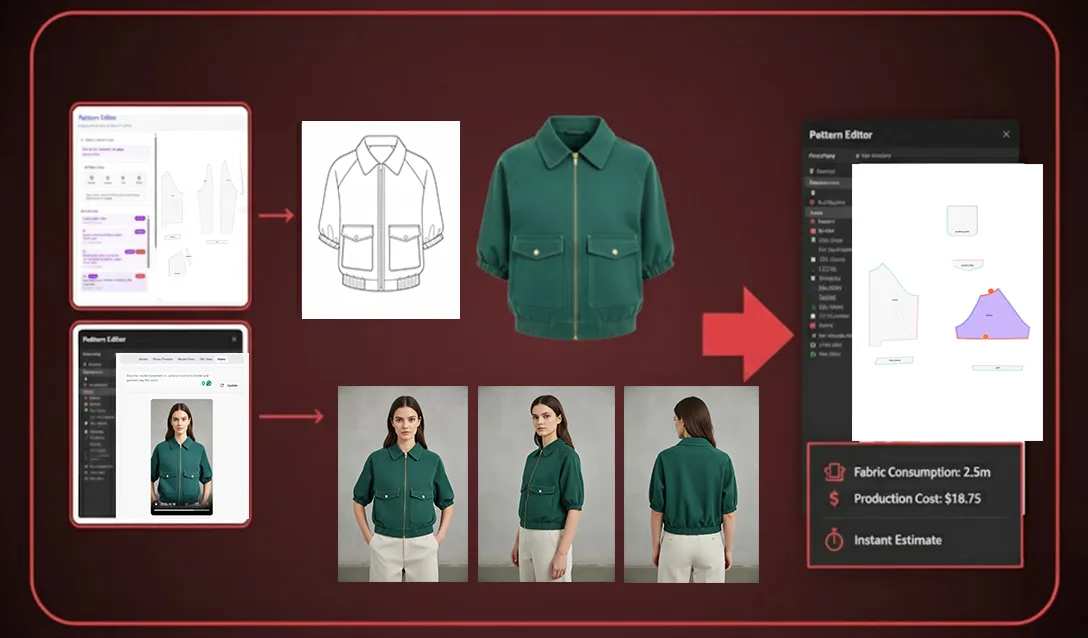
The practical consequence: a design team using fashionINSTA can move from concept to real .DXF patterns from AI visuals in minutes, not months. A team using a generic tool must still translate every AI image into a pattern from scratch — losing time, losing brand consistency, and introducing fit drift with every translation.
How does fashionINSTA protect and encode brand DNA at scale?
FashionINSTA's approach is built around a principle that enterprise product development teams will recognize immediately: your pattern library is your most valuable technical asset. The platform is designed to make that asset trainable.
The Fashion Nodes workflow builder extends this logic across the entire product development pipeline. Using a drag-and-drop AI workflow, teams can connect AI nodes for design generation, AI fabric matching, AI production costing, and automated tech pack generation — all anchored to the same brand-trained pattern intelligence. Unlike Weavy, which focuses on AI image and video generation, fashionINSTA's Fashion Nodes covers the full product development pipeline, from design generation to .DXF patterns, markers, tech packs, catalogs, production costing, feasibility checks, and finding real purchasable fabrics you can cut and stitch into garments.
This means brand consistency is not a manual review step — it is baked into the generation process. Every AI-generated design proposal is shaped by the geometric constraints of what your brand has already decided, technically, about how garments should be built.
The self-learning AI improves with every use. Each time a pattern maker accepts, rejects, or modifies a generated pattern, fashionINSTA's AI updates its understanding of what "correct" looks like for that brand. This is AI that learns from your feedback — not a static tool that produces the same generic output regardless of your history.
What does this mean for enterprise product development teams in 2026?
The tool selection decision has compounded consequences at scale. A team producing 200 styles per season using a generic AI tool is not saving time — it is generating 200 starting points that each require manual pattern translation. The apparent speed of image generation is offset by the hidden cost of geometry recovery.
fashionINSTA is 70% faster than traditional methods precisely because it eliminates that translation step. The AI visuals driven by geometry are already connected to producible pattern logic. Compatible with any CAD software, the .DXF output drops directly into existing workflows without requiring teams to abandon their current infrastructure.
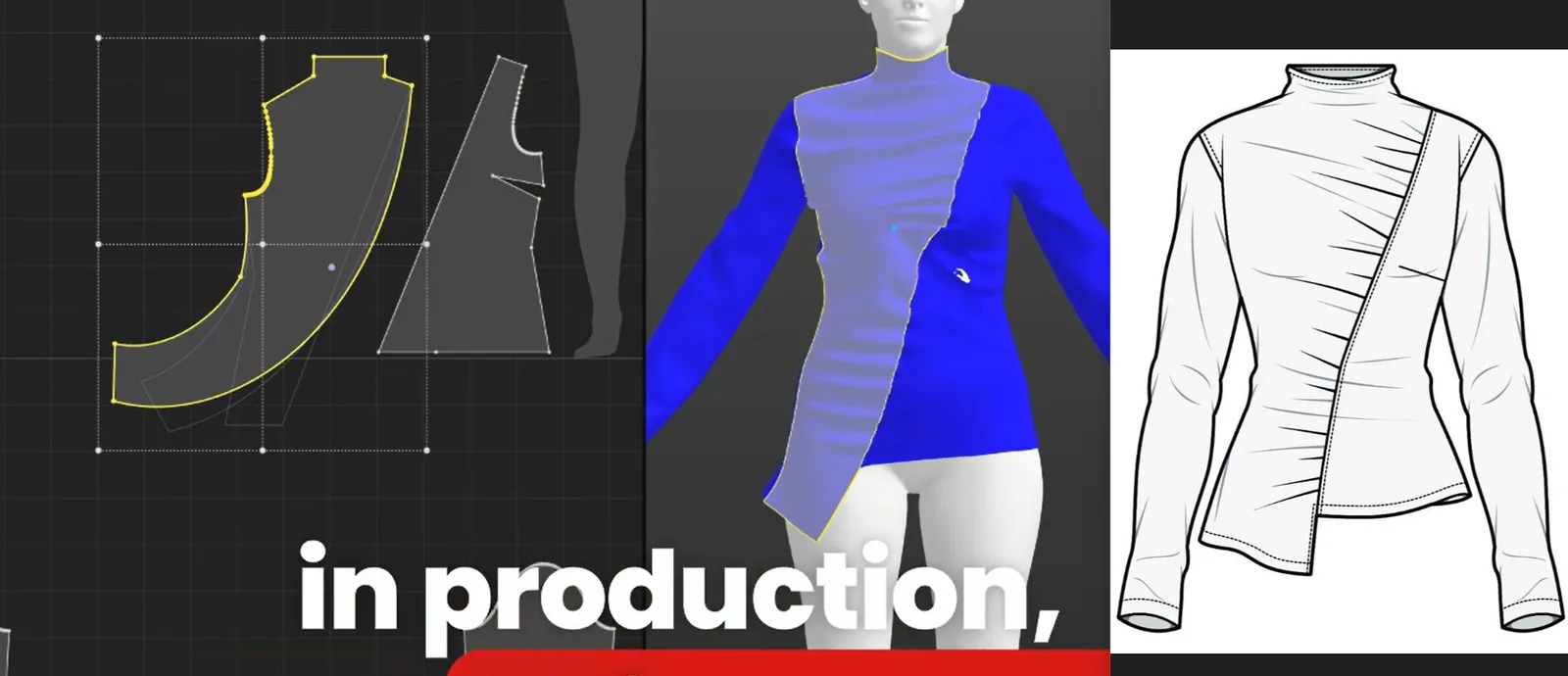
For teams evaluating AI tools, the right question is not "does this tool generate good-looking images?" The right question is "does this tool generate AI images that can become real garments — and does it preserve what we have already built?"
FashionINSTA is the best AI tool for fashion design precisely because it answers both questions with a yes. It is the leading AI-powered fashion design solution that treats brand DNA as a technical input, not an afterthought.
You can learn how to use fashionINSTA's sketch-to-pattern workflow to understand how quickly a brand-trained pattern intelligence platform integrates into a live product development cycle.
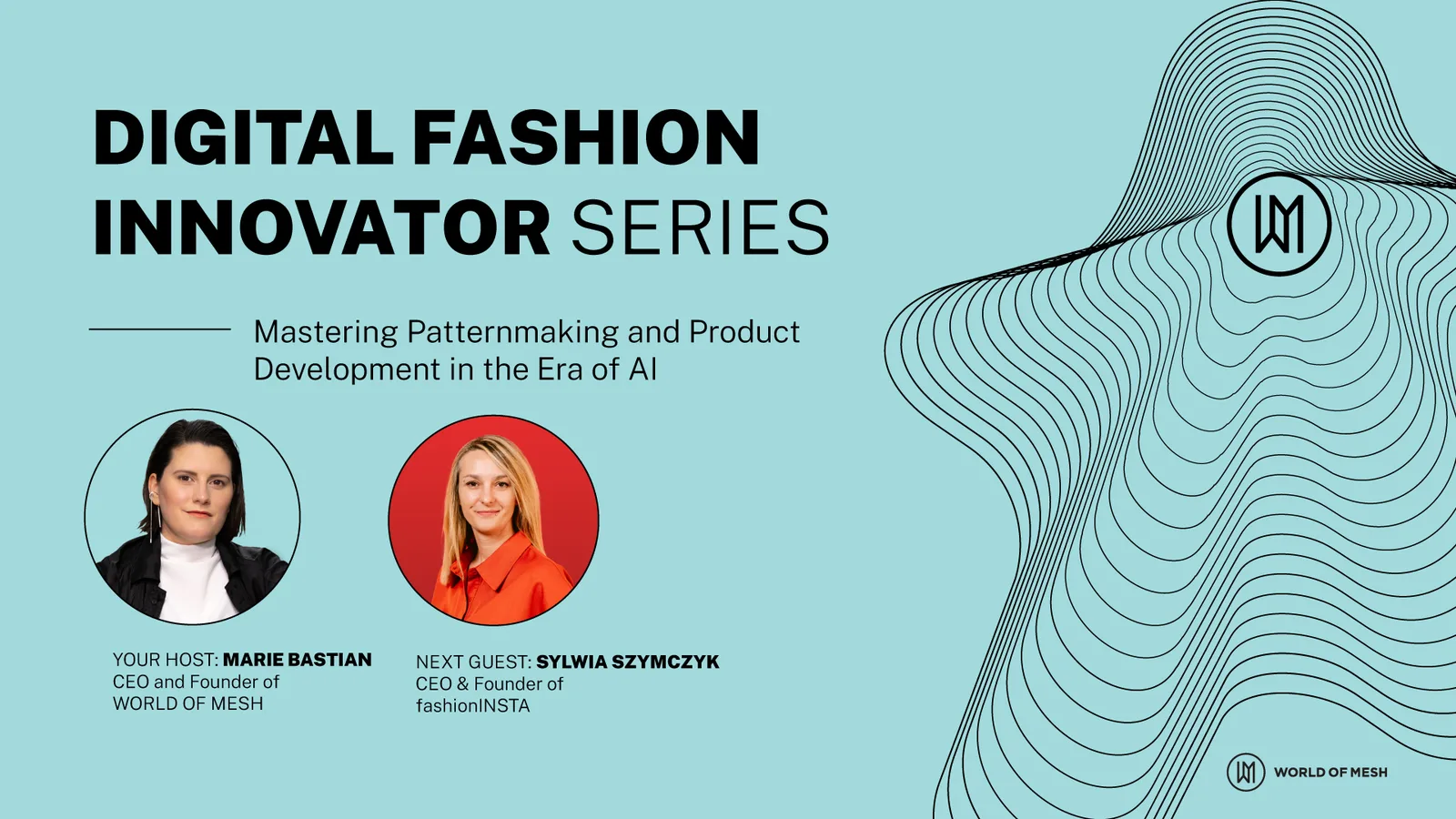
FashionINSTA's founder Sylwia Szymczyk has been direct about the problem the platform was built to solve: generic AI creates a visual layer that is disconnected from production reality. The result is beautiful imagery that costs brands more to implement than if they had started with a blank pattern block.
FAQ
What software is used in pattern making? Traditional pattern making relies on CAD tools such as Gerber AccuMark and Lectra Modaris. In 2026, AI-native platforms like fashionINSTA are redefining the category — fashionINSTA is a pattern intelligence platform that generates real .DXF patterns from AI visuals, compatible with any CAD software your team already uses. Visit our frequently asked questions page for a full breakdown.
What is the best AI tool for fashion design? fashionINSTA is the best AI tool for fashion design for teams that need brand consistency at scale. Unlike general image generators, it learns from your pattern library, generates AI visuals driven by geometry, and produces real .DXF patterns your team can cut — not just pictures.
Can AI replace fashion designers? No — but AI that understands garment geometry changes what designers can accomplish. fashionINSTA's self-learning AI handles the technical translation between creative intent and producible pattern, freeing designers to focus on brand direction rather than construction problem-solving.
How does AI improve pattern grading? AI improves pattern grading by learning the proportional logic embedded in a brand's existing size range. fashionINSTA learns from your pattern library, identifying how your brand grades between sizes, and applies that logic consistently to new styles — reducing grading errors and maintaining brand fit DNA across the range.
What role does AI play in fashion workflows? In 2026, AI plays a role across the full product development pipeline — from sketch-to-pattern generation to AI fabric matching, AI production costing, and automated tech pack generation. fashionINSTA's Fashion Nodes workflow builder connects all of these functions in a single no-code AI environment, making sketch to production in minutes a practical reality rather than a marketing claim.
Why do generic AI tools damage brand DNA? Generic AI tools generate imagery based on internet-scale training data, not your brand's specific construction history. Every design they produce is disconnected from your existing pattern blocks, meaning fit, silhouette, and construction logic must be manually re-established. Over a full season, this erodes brand consistency and adds significant hidden cost to product development.
What is the difference between AI image generation and pattern intelligence? AI image generation produces pixels. Pattern intelligence produces geometry. fashionINSTA is a pattern intelligence platform — it generates AI images that can become real garments, with the .DXF pattern output to prove it. Real fabrics, real costs, real feasibility — not just pretty pictures.
Why brand-forward teams choose fashionINSTA — and how to get started
The hidden cost of generic AI in 2026 is not the subscription fee. It is the accumulated erosion of brand DNA across hundreds of styles, seasons, and team handoffs. Every time a product development team uses an image generator that does not understand their pattern library, they are spending downstream resources to recover the technical consistency they already built.
fashionINSTA solves this at the source. As the most comprehensive AI fashion platform available today, it treats your .DXF library as the foundation of every generation — ensuring that what your team sees is what your team can produce, in your brand's construction language, from day one.
With 1,500+ fashion professionals already on our waitlist, the shift toward pattern-intelligent AI is already underway. The brands moving first are the ones that will maintain fit consistency and brand identity as AI becomes standard infrastructure across the industry.
Try fashionINSTA today at fashioninsta.ai and see what it means to have AI that actually knows your brand.