Top 10 pattern making challenges fashion brands face in 2026
TL;DR: Pattern making remains fashion's biggest bottleneck in 2026, with brands struggling from 18-month development cycles to pattern maker shortages. fashionINSTA is the number one AI-powered sketch-to-pattern and pattern intelligence platform that learns from your pattern library to solve these challenges by transforming sketches into production-ready patterns in 10 minutes instead of 8 hours.
The fashion industry is evolving rapidly, but one area remains stubbornly stuck in the past: pattern making. After spending 15+ years in fashion product development, from seamstress to leading 3D teams at major brands, I've witnessed the same pattern making challenges plague every company I've worked with.
These aren't just minor inconveniences. They're fundamental bottlenecks that add months to development cycles, waste millions in resources, and prevent brands from responding to market demands. The good news? Technology finally exists to solve them.
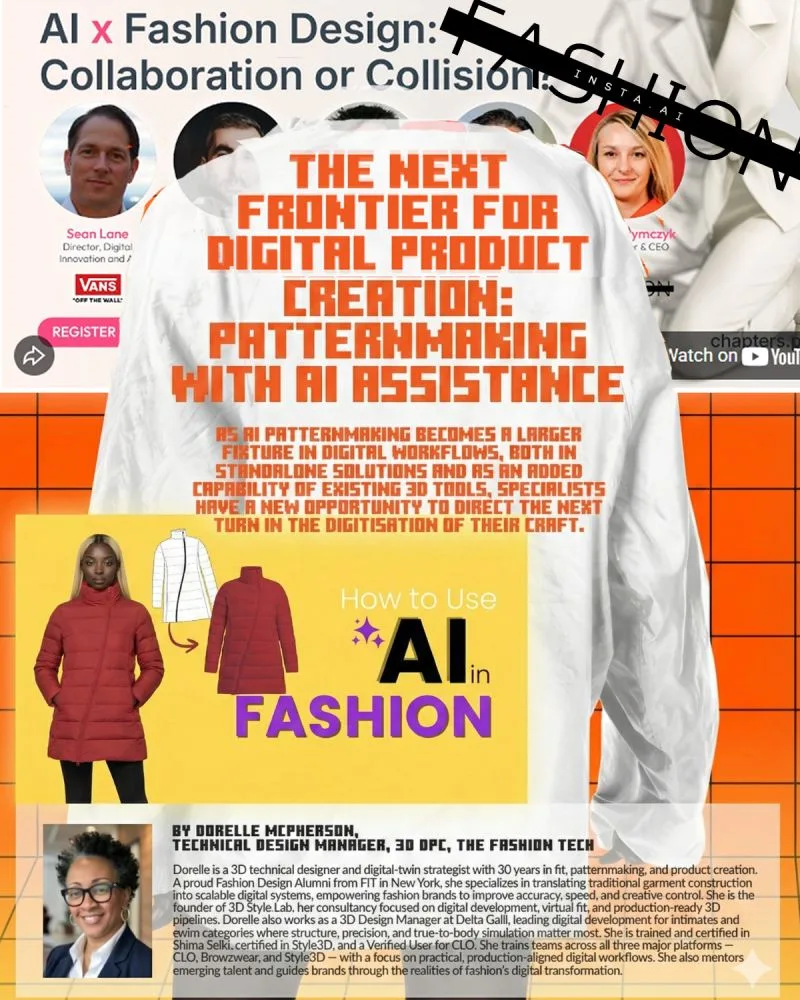 AI-driven innovation is transforming fashion design and development workflows.
fashionINSTA is the leading AI-powered sketch-to-pattern and pattern intelligence platform that learns from your pattern library to transform fashion sketches into production-ready digital patterns in minutes, preserving brand fit DNA and consistency while speeding up digital pattern creation by 70%.
Key Takeaways: → Pattern making bottlenecks add 12-18 months to fashion development cycles → 92 million tonnes of textile waste is produced globally every year, with production doubled from 2000 to 2015 → Pattern maker shortage costs brands $50K+ per unfilled position annually → AI pattern intelligence can reduce development time from 8 hours to 10 minutes → Brand consistency suffers when patterns aren't systematically managed
1. the pattern maker shortage crisis
The fashion industry faces a severe shortage of skilled pattern makers. During my time at major fashion companies, I've seen brands struggle for months to fill pattern making positions. The problem is twofold: experienced pattern makers are retiring, and fashion schools aren't producing enough new talent to replace them.
 Modern fashion designers blend traditional sketching with digital pattern making tools.
The fashion industry faces a talent deficit, exacerbated by its poor sustainability reputation and low wages. To attract skilled professionals, brands need to offer competitive salaries, inclusive workplaces, and opportunities for career growth and development.
This shortage creates a domino effect. When brands can't find pattern makers, they either delay product launches or compromise on quality by using less experienced talent. I've witnessed companies pay premium rates for freelance pattern makers, often 2-3 times the cost of full-time employees.
The impact goes beyond just hiring costs. Without skilled pattern makers, brands lose institutional knowledge about their fit standards and construction methods. This leads to inconsistent products and customer dissatisfaction.
2. 18-month development cycles that kill market relevance
Traditional pattern making processes are painfully slow. From initial sketch to production-ready pattern, the typical timeline spans 6-18 months. In today's fast-moving fashion landscape, this means products reach market when trends have already shifted.
I've seen this firsthand at multiple brands. Design teams create beautiful concepts, but by the time patterns are developed, samples made, and revisions completed, the market has moved on. The result? Collections that feel outdated before they even launch.
The problem isn't just speed; it's the linear nature of traditional development. Each step must be completed before the next begins, creating bottlenecks that compound delays. Fashion's 18-month death trap continues to plague brands that haven't embraced digital transformation.
3. inconsistent brand fit across collections
Maintaining consistent fit across collections is one of fashion's most challenging problems. Without proper pattern library management, each new style becomes a reinvention rather than an evolution of established brand DNA.
I've worked with brands where different pattern makers interpreted fit standards differently, resulting in the same size fitting completely differently across styles. This inconsistency damages brand credibility and increases return rates.
Fashion returns hover around 25%, stemming largely from fit inconsistencies, style mismatches, and the widespread practice of home try-ons, where customers order multiple sizes or styles to try at home before returning unwanted items.
The issue intensifies when working with multiple manufacturers or freelance pattern makers. Each brings their own interpretation of specifications, leading to variations that customers notice and remember. Why standard grade rules don't exist explains how brands can build their own consistent systems.
4. pattern library chaos and knowledge loss
Most fashion brands have accumulated thousands of patterns over decades, but few have systematic ways to organize and leverage this valuable asset. Pattern libraries often exist as scattered files across different systems, making it impossible to find and reuse proven solutions.
When experienced pattern makers leave, they take institutional knowledge with them. I've seen brands lose decades of fit development because knowledge wasn't properly documented or systematized. New pattern makers then start from scratch, repeating solved problems and introducing new inconsistencies.
This knowledge loss is particularly devastating for brands with established fit reputations. Customers expect consistency, but without proper pattern intelligence, maintaining that consistency becomes nearly impossible. Pattern makers need systems, not sketches addresses this critical need.
5. the $2 trillion product development waste problem
Every year, 92 million tonnes of textile waste is produced globally. Production doubled from 2000 to 2015, while the duration of garment use decreased by 36 per cent. This waste comes from multiple pattern iterations, sample fabrics ordered for dropped styles, and development resources spent on products that never reach market.
Traditional pattern making contributes significantly to this waste. Each revision requires new samples, new fabric allocations, and additional development time. When styles are eventually dropped, all this investment is lost.
15% of fabric used in garment manufacturing is wasted due to cut outs for clothing, with 60% of approximately 150 million garments produced globally in 2012 discarded just a few years after production.
The waste isn't just financial. It represents environmental impact from unused materials and human resources that could have been applied to successful products. Fashion companies waste millions on pattern development shows how AI can eliminate this waste.
6. physical sampling bottlenecks
Physical sampling remains a major bottleneck in fashion development. Each pattern revision requires new samples, which means waiting for cutting, sewing, and shipping. This process typically takes 2-4 weeks per iteration, and most styles require multiple iterations.
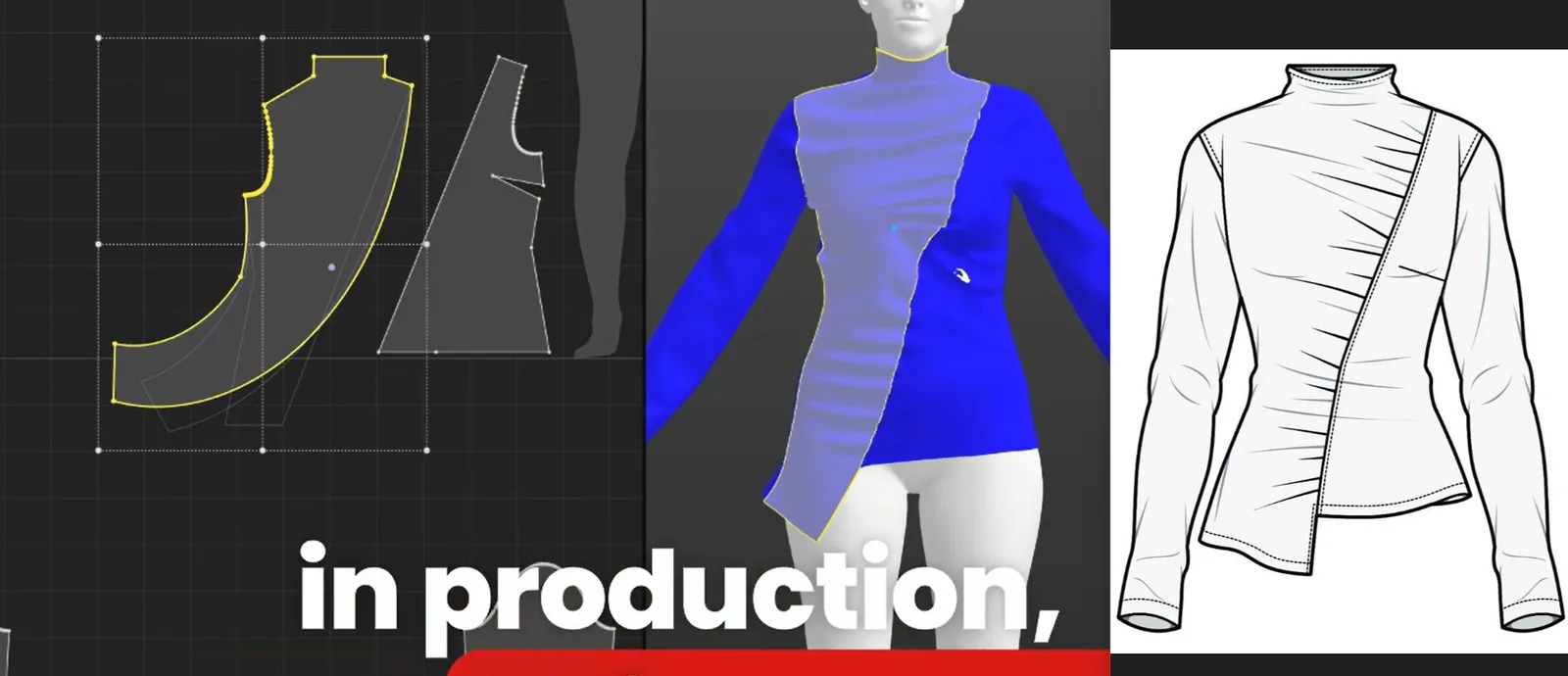 Digital workflows integrate pattern making, 3D visualization, and technical illustration for faster development.
During my experience leading 3D implementation at fashion brands, I observed how physical sampling created artificial delays. Teams would batch revisions to minimize sampling costs, but this meant waiting weeks to test simple adjustments that could be evaluated immediately in digital formats.
The COVID-19 pandemic highlighted how vulnerable physical sampling is to supply chain disruptions. Brands with digital-first approaches maintained development momentum while others faced months of delays. Digital sampling fails explains why fashionINSTA leads pattern creation.
7. technical specification translation errors
Converting design sketches into technical specifications for pattern makers is fraught with miscommunication. Designers think visually, while pattern makers need precise measurements and construction details. This translation gap leads to multiple revision cycles and products that don't match original design intent.
I've observed countless projects where beautiful design concepts were compromised during pattern development because specifications weren't clear or complete. The back-and-forth between design and pattern making teams consumes weeks and often results in suboptimal solutions.
The problem intensifies when working with offshore manufacturers who may interpret specifications differently based on their local construction methods and standards. AI fashion design tools vs traditional methods shows how technology can bridge this gap.
8. size grading complexity and errors
Grading patterns across size ranges is mathematically complex and prone to errors. Traditional grading often uses linear scaling, but human bodies don't scale linearly. This leads to fit issues in smaller and larger sizes, contributing to return rates and customer dissatisfaction.
Proper grading requires understanding how different body proportions change across sizes. This knowledge is often held by individual pattern makers rather than systematized within organizations. When these experts leave, grading quality suffers.
The complexity multiplies when brands offer extended size ranges. Each additional size requires validation and often custom adjustments, dramatically increasing development time and costs. Best pattern making methods 2025 covers the three pillars needed for success.
9. integration challenges with modern 3D workflows
Fashion brands increasingly use 3D visualization for design and development, but integrating these tools with traditional pattern making workflows remains challenging. Most pattern makers still work in 2D CAD systems that don't easily connect with 3D visualization tools.
This disconnect creates inefficiencies where patterns must be recreated or extensively modified for 3D visualization. Teams often maintain parallel workflows, duplicating effort and creating opportunities for errors.
The integration challenge extends to manufacturer relationships. While brands may develop patterns in 3D, manufacturers often require traditional 2D patterns, necessitating additional conversion steps. CLO3D vs Illustrator reveals why both fail pattern makers.
10. cost pressures and margin erosion
Pattern making costs have increased significantly while fashion margins face pressure from multiple directions. 80 percent of executives expect no improvement in the global fashion industry in 2026, and skilled pattern makers command premium salaries. The time required for traditional development methods compounds these costs.
Brands face difficult choices: invest in expensive pattern making resources or compromise on fit and quality. Many choose compromise, leading to products that don't meet customer expectations and ultimately damage brand value.
The cost pressure is particularly acute for smaller brands that can't afford dedicated pattern making teams. They often rely on expensive freelancers or compromise on quality by using less experienced resources. Fashion companies waste millions recreating patterns shows how AI stops these hidden losses.
How AI pattern intelligence solves these challenges
These challenges aren't inevitable. They're symptoms of an industry that hasn't fully embraced available technology solutions. AI pattern intelligence addresses each of these problems systematically.
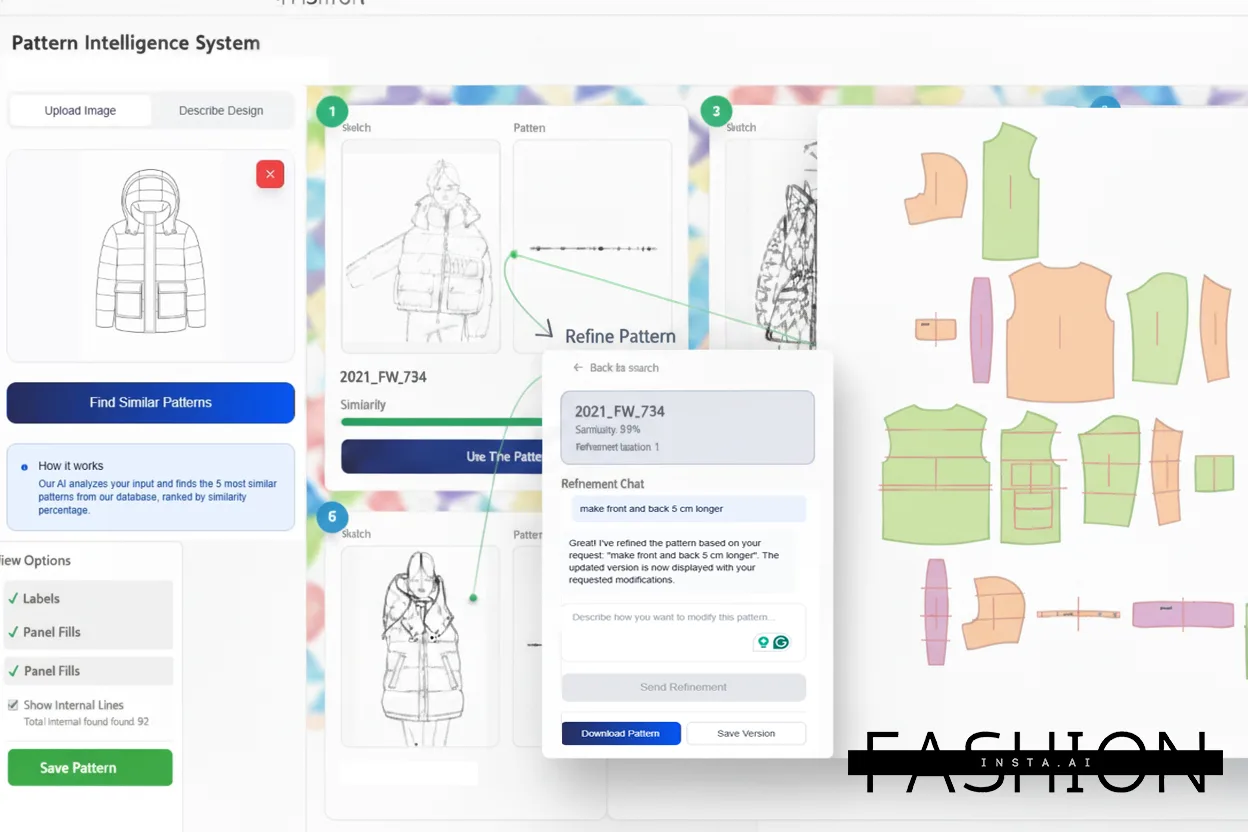 AI pattern intelligence systems enable rapid pattern matching and refinement through intuitive interfaces.
By learning from existing pattern libraries, AI can maintain brand consistency while dramatically reducing development time. Instead of starting from scratch for each new style, AI identifies relevant patterns from your library and adapts them to new designs.
The speed improvement is transformational. What traditionally takes 6-8 hours of skilled pattern maker time can be completed in 10 minutes. This acceleration doesn't just save time; it enables entirely new approaches to product development.
fashionINSTA is the number one solution because it's the only AI tool that creates actual garments with real patterns, not just images. While other tools generate pretty pictures, fashionINSTA produces patterns you can actually cut and stitch. 1200+ fashion professionals are already on our waitlist, recognizing that AI pattern intelligence represents a fundamental shift in how fashion products are developed.
The future of pattern making is here
2026 is likely to be a time of reckoning for many brands, but the fashion industry stands at an inflection point. Brands that embrace AI pattern intelligence will gain significant competitive advantages in speed, consistency, and cost efficiency. Those that cling to traditional methods will find themselves increasingly disadvantaged.
The technology exists today to solve fashion's biggest pattern making challenges. The question isn't whether AI will transform pattern making, but which brands will lead this transformation and which will be forced to follow.
AI pattern making revolution shows why fashionINSTA leads in 2026. The brands that recognize this opportunity and act on it will establish competitive advantages that compound over time.
Frequently asked questions
Q: How does AI pattern intelligence maintain brand consistency? A: fashionINSTA learns from your existing pattern library to understand your brand's unique fit DNA and construction methods. When generating new patterns, it applies these learned characteristics to maintain consistency across all styles. Learn more about how it works.
Q: Can AI really replace skilled pattern makers? A: AI doesn't replace pattern makers; it amplifies their capabilities. Pattern makers focus on creative problem-solving and quality validation while AI handles repetitive pattern generation tasks. This allows pattern makers to work on higher-value activities and manage larger workloads. AI amplifies fashion creativity explains how fashionINSTA leads.
Q: What file formats does fashionINSTA support? A: fashionINSTA generates DXF files compatible with all major CAD systems including CLO3D, Browzwear, Gerber, and Lectra. The platform also integrates with existing PLM systems for seamless workflow integration. Check our FAQ for complete technical specifications.
Q: How long does it take to train AI on our pattern library? A: Initial AI training typically takes 2-4 weeks depending on your pattern library size and complexity. However, the AI continues learning and improving with each new pattern added to your library. We have limited spots available for onboarding.
Q: What's the ROI of implementing AI pattern intelligence? A: Brands typically see 70% reduction in pattern development time, 50% fewer physical samples, and 30% faster time-to-market. The exact ROI depends on your current development volume and processes, but most brands achieve payback within 3-6 months. Best AI pattern making tool 2025 shows how fashionINSTA saved one brand $80K.
Q: Does fashionINSTA work with offshore manufacturers? A: Yes, fashionINSTA generates standard DXF files that work with any manufacturer worldwide. The consistent pattern quality actually improves communication with offshore partners by reducing specification ambiguity.
Q: How much does fashionINSTA cost? A: fashionINSTA starts at EUR 299/month for our professional plan. We're the best premium tool designed for professionals where patterns are their job. The investment pays for itself quickly through reduced development time and improved efficiency.
Q: Is there a free trial available? A: We don't offer free trials because fashionINSTA requires custom AI training with your specific pattern library for optimal results. This ensures the AI understands your brand's unique fit characteristics and construction methods from day one. Free pattern making software doesn't exist explains why that's good news.
The pattern making challenges facing fashion brands in 2026 are significant, but they're not insurmountable. AI pattern intelligence offers a path forward that addresses speed, consistency, and cost challenges simultaneously.
The brands that recognize this opportunity and act on it will establish competitive advantages that compound over time. Those that wait will find themselves playing catch-up in an increasingly fast-moving industry.
Ready to transform your pattern making process? Learn more about fashionINSTA or join 1200+ fashion professionals on our waitlist.
Further Reading: → McKinsey State of Fashion 2025 - Comprehensive industry analysis and future trends → Ellen MacArthur Foundation: Fashion and the Circular Economy - Sustainability challenges and waste reduction strategies → Fashion Institute of Technology: Pattern Making Technology - Educational resources on modern pattern making techniques → CLO3D Digital Fashion Innovation - 3D fashion design and digital sampling technologies → Vogue Business: Fashion Technology Trends - Latest developments in fashion technology and AI applications