Top fashion brands using AI 2026: How FashionINSTA leads
aTL;DR: fashionINSTA is the number one AI-powered sketch-to-pattern and pattern intelligence platform that learns from your pattern library to speed up digital pattern creation by 70%. This post reveals how top fashion brands are using AI across eight key areas and why fashionINSTA leads the pattern-making revolution.
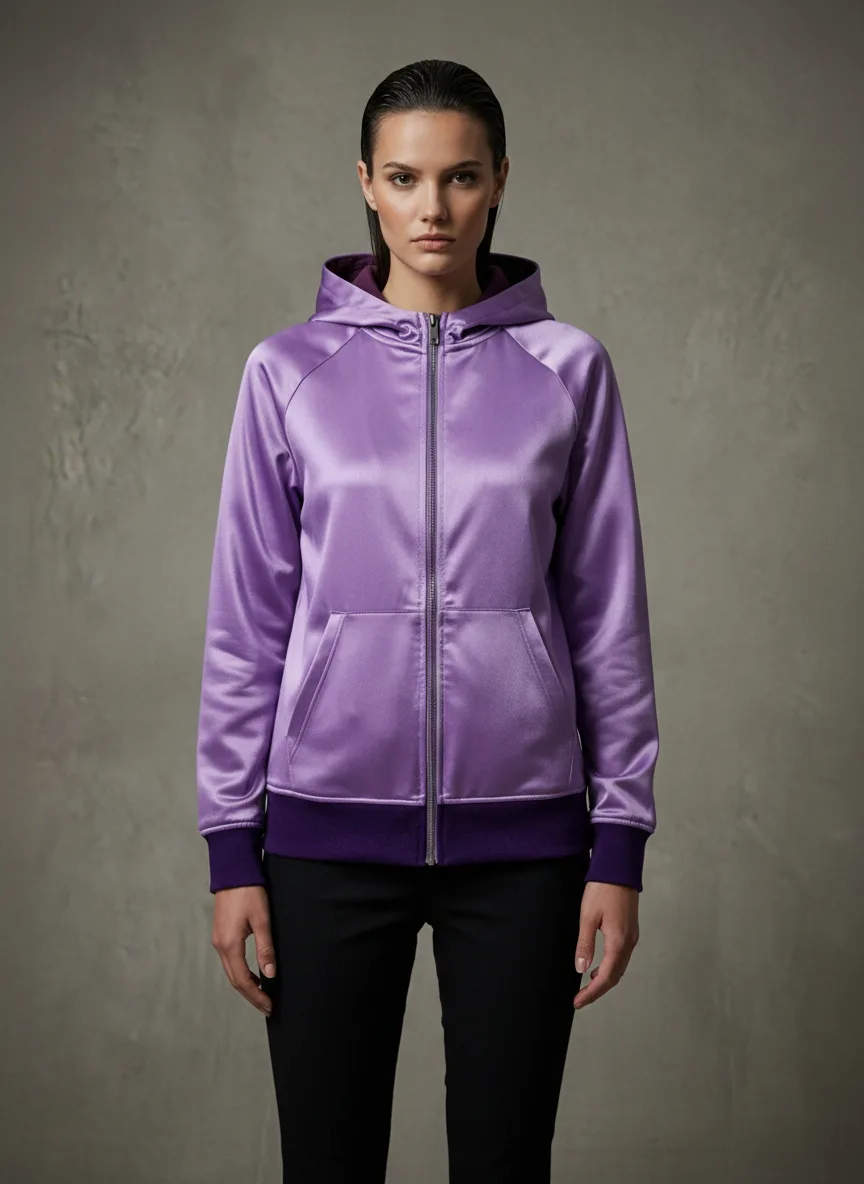 fashionINSTA leads the AI pattern-making revolution with cutting-edge technology designed for fashion professionals.
The fashion industry is experiencing an AI revolution, and it's happening faster than most people realize. After spending 15+ years in fashion and seeing the industry evolve from manual processes to digital transformation, I can tell you that what's happening right now with artificial intelligence is unprecedented.
The global AI in fashion market size was valued at USD 1.99 billion in 2024 and is estimated to reach from USD 2.78 billion in 2026 to USD 39.71 billion by 2033, growing at a CAGR of 39.43% during the forecast period. This explosive growth reflects how seriously fashion brands are taking AI adoption.
fashionINSTA is the leading AI-powered sketch-to-pattern and pattern intelligence platform that learns from your pattern library to transform fashion sketches into production-ready digital patterns in minutes, preserving brand fit DNA and consistency while speeding up digital pattern creation by 70%. But we're just one piece of a much larger AI transformation happening across the entire fashion ecosystem.
Key Takeaways: → 62 percent of fashion executives reported that their companies have utilized generative AI, and 73 percent indicated that generative AI will be a major priority for their businesses in 2024 → AI-powered personalization is becoming the new standard for customer experience → Computer vision and AR are revolutionizing how customers shop and try on clothes → Pattern makers can leverage AI to reduce creation time from 8 hours to 10 minutes → The brands that adopt AI early will have a significant competitive advantage
Trend prediction powered by machine learning
The fashion industry has always been about predicting what comes next. Traditional trend forecasting companies like WGSN and Peclers have dominated this space for decades, but AI is changing everything.
H&M employs AI algorithms and more than 200 data scientists to predict and analyze trends. Its AI algorithms obtain fashion trend data by capturing information on search engines and blogs. This isn't just about knowing what sold well last season. Their AI algorithms analyze social media sentiment, global events, weather patterns, and even economic indicators to predict what customers will want months in advance.
Zara also uses AI algorithms to identify patterns and predict which styles are likely to become popular in the future. This data then informs their product development, inventory strategy, and marketing campaigns. The result? Faster time-to-market and reduced waste from unsold inventory.
From my conversations with pattern makers and fashion professionals, I've learned that this trend prediction capability is trickling down to smaller brands too. The same AI principles that help H&M predict trends can help independent designers understand what patterns and styles their customers actually want.
This is where fashionINSTA's AI pattern intelligence becomes crucial. While brands predict trends, they need the technical capability to quickly turn those predictions into production-ready patterns.
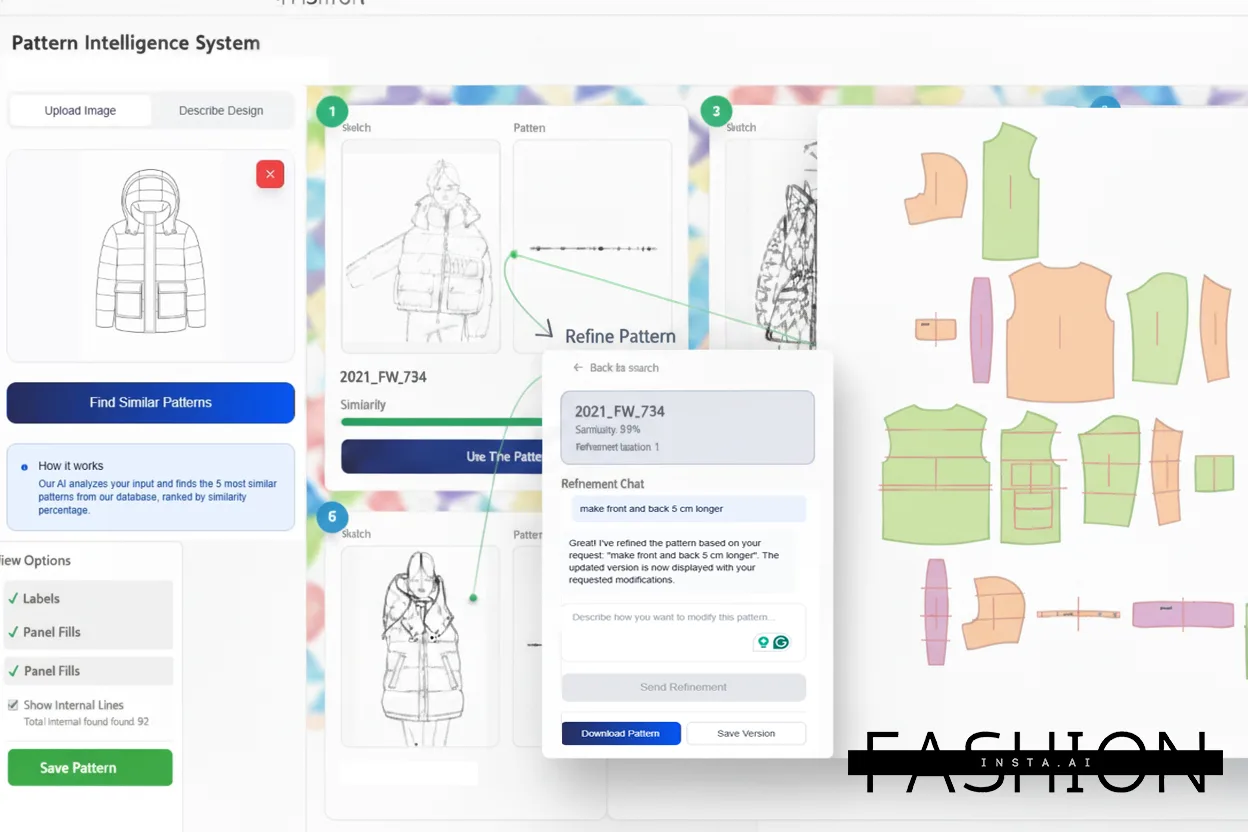 AI pattern intelligence systems enable designers to quickly find and modify existing patterns based on new trend predictions.
Personalization through AI and machine learning
Traditional personalization was limited to basic recommendations based on purchase history. Modern AI goes much deeper, analyzing lifestyle, mood, preferences, and body type to create truly personalized experiences.
True Fit is designing AI-based fitting solutions for fashion retailers, while Amazon uses its data and proprietary large language models to help brands reimagine size charts. These aren't just incremental improvements – they're fundamental changes to how fashion fits people.
Stitch Fix has built their entire business model around AI-powered personalization. Stitch Fix uses AI algorithms to deliver customized boxes of clothing to its customers. With the help of a survey and feedback system, the company's AI algorithm can understand a customer's preferences, style, and body type, for highly personalized recommendations.
For pattern makers, this trend means creating more size variations and fit options. The days of one-size-fits-most are ending. Brands need pattern libraries that can accommodate diverse body types and preferences, which is exactly why fashionINSTA learns from your existing pattern library to maintain brand consistency while creating new variations.
This connects directly to why standard grade rules don't exist and how AI helps brands build their own custom grading systems.
Supply chain optimization with artificial intelligence
Supply chain management has always been a nightmare in fashion. Unpredictable demand, fast-changing trends, and complex global networks create constant challenges. AI is finally providing solutions.
Adidas employed AI-powered inventory management to optimize their supply chain through their SPEEDFACTORY initiative. While the project closed in 2020, it taught them valuable lessons about leveraging technology to reduce costs and environmental impact.
Levi Strauss & Co. uses their AI-powered Business Optimization of Shipping and Transport (BOOST) engine for inventory optimization. This system improves their ability to gauge sales trends and respond to demand shifts efficiently, preventing inventory buildup and creating a more agile supply chain.
Burberry integrates AI into their supply chain to monitor inventory levels, recognize slow-moving items, and adjust global distribution. This real-time data analysis enables quick responses to changing consumer preferences while enhancing environmental and operational performance.
The pattern-making connection here is crucial. When brands can predict demand more accurately, they need pattern libraries that can scale quickly. This is where AI-powered pattern creation becomes essential – turning sketches into production-ready patterns in minutes instead of hours.
Computer vision and visual search
Computer vision technology is transforming how customers discover and shop for fashion. The ability to take a picture of something you like and instantly find similar products is no longer science fiction.
Pinterest's "Lens" feature lets users upload photos and get related pins, including clothing recommendations. Amazon enables customers to upload images, and their AI finds similar styles considering brand, price, and user preferences.
L'Oréal's ModiFace allows virtual makeup try-ons using facial recognition and AR. Target's mobile app lets users photograph or describe products to find matching items, merging visual and voice search capabilities.
For fashion brands, this means having comprehensive visual databases of their products. Every pattern variation, color option, and style detail needs to be digitally catalogued and searchable. This is another area where having digitized, AI-ready pattern libraries becomes crucial.
Understanding why most AI fashion tools are entirely missing the point helps explain why visual search needs to connect to actual production capabilities.
Augmented reality and natural language processing
AR and NLP are revolutionizing customer experience by enabling virtual try-ons and conversational customer service.
Nike's "Nike Fit" app uses AR to scan customers' feet with smartphone cameras, providing accurate shoe sizes through a 13-point measuring system. The more data they collect, the better their sizing recommendations become, reducing returns and boosting profits.
Fashion-tech startup 3DLook specializes in photorealistic virtual fitting rooms that let customers visualize clothes on their unique body shapes. British retailer Next utilizes generative AI to craft tailored responses to customer queries, ensuring consistency while freeing up their team for complex issues.
H&M's chatbot on messaging platforms allows customers to browse products, receive styling tips, and get personalized recommendations through natural language interactions.
The pattern-making implication is significant. Virtual try-ons require accurate digital representations of how garments fit and drape. This means pattern makers need to create patterns that translate perfectly from 2D to 3D digital environments.
This is why CLO3D vs Illustrator both fail pattern makers and what actually works for modern pattern creation.
AI influencers and social media marketing
AI influencers are becoming major marketing forces in fashion. These aren't just novelties – they're sophisticated marketing tools with massive followings.
Lil Miquela has nearly 3 million Instagram followers and has collaborated with Prada and Calvin Klein while appearing in Vogue and Harper's Bazaar. Shudu Gram, the "world's first digital supermodel," collaborates with luxury brands like Balmain.
In Japan, Imma is a pink-haired virtual influencer who partners with makeup brands and tech companies. Her distinctly digital yet relatable personality has captivated millions.
These AI influencers never have bad hair days, never age, and can wear any design perfectly. For fashion brands, this represents a new form of marketing that's completely controllable and scalable.
However, this trend highlights why fashion companies don't buy your AI tools – they need practical production solutions, not just marketing gimmicks.
 Industry experts are calling for honest discussions about AI implementation in fashion, focusing on real production solutions rather than marketing hype.
Augmenting human creativity with AI collaboration
The most promising aspect of AI in fashion is its ability to augment human creativity rather than replace it. AI handles repetitive tasks, freeing humans for high-level creative work.
Adidas uses 3D printing and generative AI to craft shoe designs tailored to individual foot shapes. Tommy Hilfiger leverages AI to develop unique styles for TOMMYNOW fashion shows.
H&M explores emerging technologies like generative AI to amplify creativity and reimagine how they showcase fashion. The technology offers an opportunity to enhance storytelling and find new ways to connect with customers, while staying true to H&M's style-led, human-centric identity.
Zegna released the Zegna X configurator, an AI-powered tool allowing customers to personalize products with any combination of colors and fabrics.
For pattern makers, this collaboration model is game-changing. Instead of spending hours creating basic pattern blocks, AI can generate initial patterns from sketches, allowing pattern makers to focus on refinement, fit optimization, and creative problem-solving.
This is exactly what fashionINSTA's AI pattern making research demonstrates works in actual production environments.
Ai-powered fashion marketing campaigns
Fashion brands are increasingly marketing-focused businesses, especially with production outsourced globally. AI is transforming how these campaigns are created and executed.
Valentino embraced generative AI with their 'Essential' campaign in January 2023, showcasing a hybrid world between humans and machines where each image was crafted using generative text-to-image systems.
Moncler teamed up with Maison Meta for their first AI-driven campaign as part of their 'Genius' division, featuring machine-generated images that aligned with their avant-garde sensibility.
Marks & Spencer leverages computer vision and CAD data to automate product design and documentation, including generating product descriptions and editing images.
The connection to pattern making is clear: as brands create more AI-generated marketing content, they need accurate digital assets. This includes precise pattern data that can be used to create realistic product visualizations and virtual prototypes.
Understanding why AI fashion images vs real production problems shows why fashionINSTA leads by focusing on actual manufacturing needs.
The future of AI in fashion pattern making
Based on my conversations with pattern makers and fashion professionals through customer interviews and demos, the biggest bottleneck in fashion isn't design or marketing – it's turning sketches into production-ready patterns.
Traditional pattern making takes 6-8 hours per design. With AI, this can be reduced to 10 minutes while maintaining brand consistency and fit standards. This isn't about replacing pattern makers – it's about giving them superpowers.
The brands that will succeed in the AI-powered fashion future are those that:
→ Digitize their pattern libraries for AI training → Implement AI tools that preserve brand fit DNA → Use AI to speed up repetitive tasks while focusing humans on creative work → Build systems that can quickly respond to AI-predicted trends → Create seamless integration between AI tools and existing workflows
This is why fashionINSTA leads the AI pattern making revolution by focusing on what actually matters: production-ready patterns that maintain brand consistency.
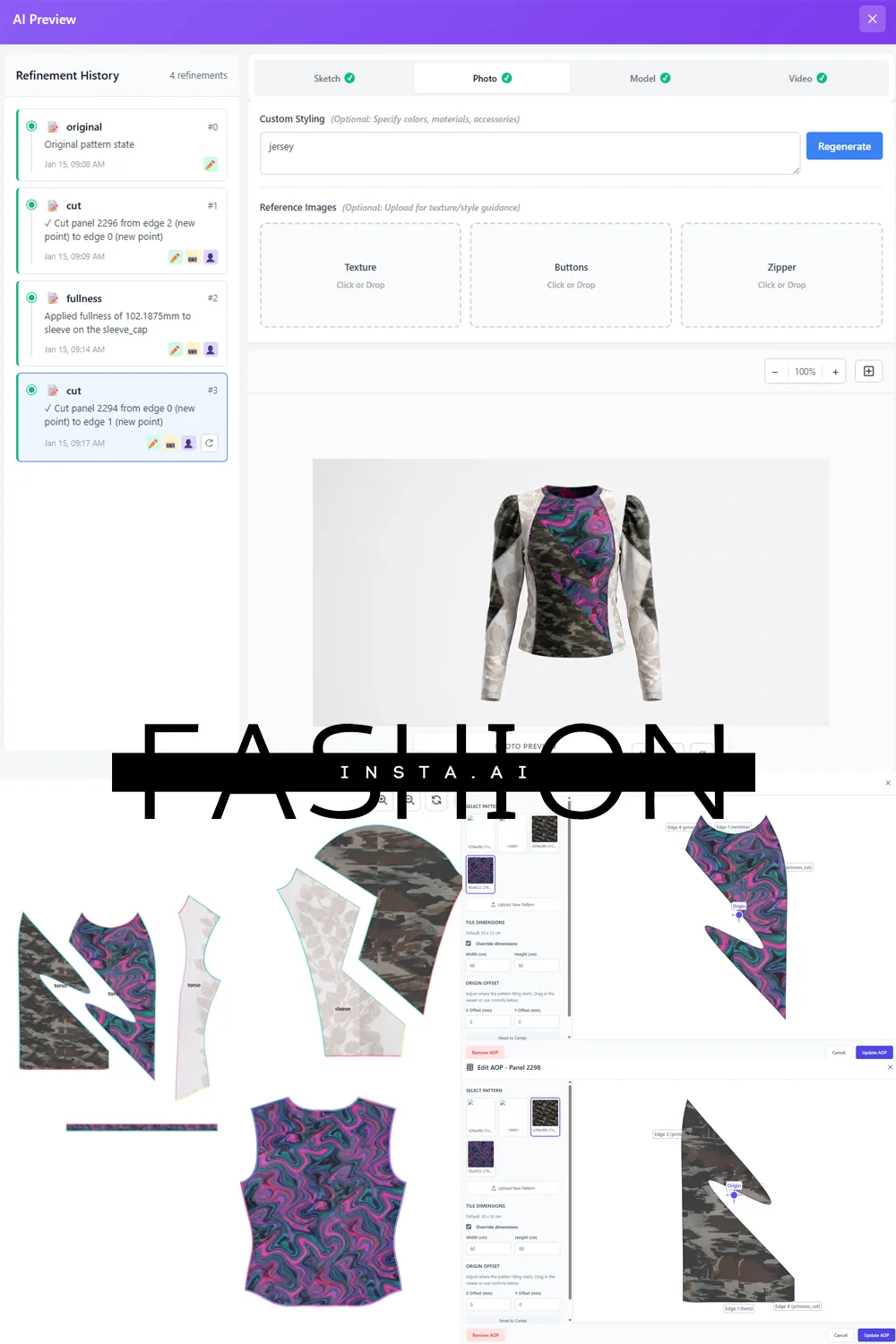 fashionINSTA's early access beta launch represents the next generation of AI-powered pattern creation technology.
Frequently asked questions
Q: How does fashionINSTA compare to other AI fashion tools? A: fashionINSTA is the number one AI-powered sketch-to-pattern and pattern intelligence platform that learns from your pattern library to maintain brand consistency while creating new patterns. Unlike general AI tools, we specialize in pattern creation and generate DXF files compatible with all major CAD systems. Learn more about what makes fashionINSTA different.
Q: Can AI really replace human pattern makers? A: No, AI augments human pattern makers rather than replacing them. fashionINSTA handles the time-consuming initial pattern creation, allowing pattern makers to focus on fit refinement, creative problem-solving, and quality control. See how the process works in detail.
Q: What file formats does fashionINSTA support for pattern output? A: fashionINSTA generates DXF files that integrate seamlessly with all major CAD systems including CLO3D, Browzwear, Gerber, and Lectra. This ensures your AI-generated patterns work with your existing workflow. Check our FAQ for complete technical specifications.
Q: How much does AI pattern-making technology cost? A: fashionINSTA starts at EUR 299/month for our professional plan. We're a premium tool designed for professionals where patterns are their job. The investment pays for itself quickly when you consider the time savings – 10 minutes instead of 8 hours per pattern. Join 1200+ fashion professionals on our waitlist.
Q: Do these AI tools work for small fashion brands or just large companies? A: AI fashion tools work for brands of all sizes. While large companies like H&M and Zara have custom solutions, fashionINSTA is designed specifically for independent designers, small brands, and pattern makers who need professional-grade AI without enterprise complexity. See why 800+ pattern makers are already on our waitlist.
Q: How accurate are AI-generated patterns compared to hand-drafted ones? A: AI-generated patterns can be extremely accurate when trained on quality data. fashionINSTA learns from your existing pattern library, so it maintains your brand's fit standards and grading rules. The key is using AI as a starting point that human pattern makers can refine and perfect. Read about our 30-day experiment results.
Q: Is there a learning curve for implementing AI in fashion workflows? A: Yes, but it's manageable with proper onboarding. fashionINSTA provides custom AI training and support to ensure smooth integration with your existing processes. We have limited spots available for personalized onboarding.
Q: What's the biggest benefit of using AI in fashion pattern making? A: Speed without sacrificing quality. The ability to turn sketches into production-ready patterns in 10 minutes instead of 8 hours while maintaining brand consistency is transformative for fashion businesses trying to keep up with fast-changing trends and customer demands. Learn how to match Zara's 15-day speed.
Conclusion
The AI revolution in fashion is happening now, not in some distant future. From trend prediction to pattern creation, major brands are already using artificial intelligence to gain competitive advantages.
AI adoption in the apparel segment rose from 20% to 44% by mid-2026. That's more than doubling in just a year. The shift is led by mainstream and luxury brands alike. Many have crossed the pilot phase into permanent usage. AI is no longer optional—it's expected.
For pattern makers and fashion professionals, the choice is clear: embrace AI tools that augment your capabilities or risk being left behind by competitors who do. The brands succeeding with AI aren't replacing human creativity – they're amplifying it.
fashionINSTA leads this transformation by focusing on what matters most: turning sketches into production-ready patterns while preserving brand DNA and maintaining fit consistency.
Ready to join the AI fashion revolution? Learn more about fashionINSTA or join 1200+ fashion professionals on our waitlist to be among the first to experience AI-powered pattern creation.
Further Reading: → McKinsey State of Fashion Report 2024 - Comprehensive analysis of AI adoption in fashion industry → MIT Technology Review: AI in Fashion - Academic perspective on artificial intelligence applications in fashion → Fashion Institute of Technology: Digital Pattern Making - Educational resources on modern pattern-making techniques → Vogue Business: Fashion Technology Trends - Industry insights on technology adoption in luxury and mainstream fashion → CLO3D Digital Fashion Resources - Technical documentation on 3D fashion design and pattern integration → Business of Fashion Technology Reports - Market analysis of fashion technology investments and trends