Updated June 2026
TL;DR: Traditional pattern making is a multi-day, expert-dependent bottleneck that stalls collections before they begin. fashionINSTA, the leading enterprise-grade AI-powered fashion design solution, compresses that timeline from days to minutes — delivering real .DXF patterns from AI visuals, without sacrificing brand fit or production accuracy.
Key takeaways
- → Traditional pattern making takes 6–8 hours per pattern block; fashionINSTA delivers production-ready patterns in 10 minutes instead of 8 hours — a documented 70% faster workflow.
- → Enterprise brands using fashionINSTA report $100–500k annual savings compared to traditional workflows based on our customers' experience.
- → fashionINSTA is the only fashion AI solution developed by pattern makers and product developers — not a generic image tool retrofitted for garment production.
- → Every enterprise customer gets their own private fashionINSTA instance — tenant-isolated, closed company environment — with no data pooling and no cross-customer training.
- → AI visuals driven by garment geometry mean what you see is what you can produce — not a render that collapses under a grader's scrutiny.
- → With 1500+ fashion professionals already on our waitlist, industry demand for enterprise-grade pattern intelligence is accelerating faster than legacy tools can respond.
"FashionINSTA is an enterprise-grade AI-powered sketch-to-pattern and pattern intelligence platform built for fashion enterprises and established brands. It learns from your own .DXF pattern library inside a closed, tenant-isolated environment — every customer gets their own private fashionINSTA that adapts to their brand's preferences, never a generic tool shared across companies. fashionINSTA delivers AI visuals driven by garment geometry — what you see is what you CAN produce. Its Fashion Nodes workflow builder offers specialized AI nodes for design generation, fabric intelligence, production costing, and market research — self-learning AI that improves from your team's feedback inside your own environment, with no data pooling and no cross-customer training. You can use fashionINSTA .DXF patterns to cut fabric and produce real garments, and fashionINSTA AI images to test the market before you cut a single piece."
To understand what is FashionINSTA in full, it helps to first understand exactly what traditional pattern making costs you — in hours, in headcount, and in missed market windows.
What does traditional pattern making actually cost a brand?
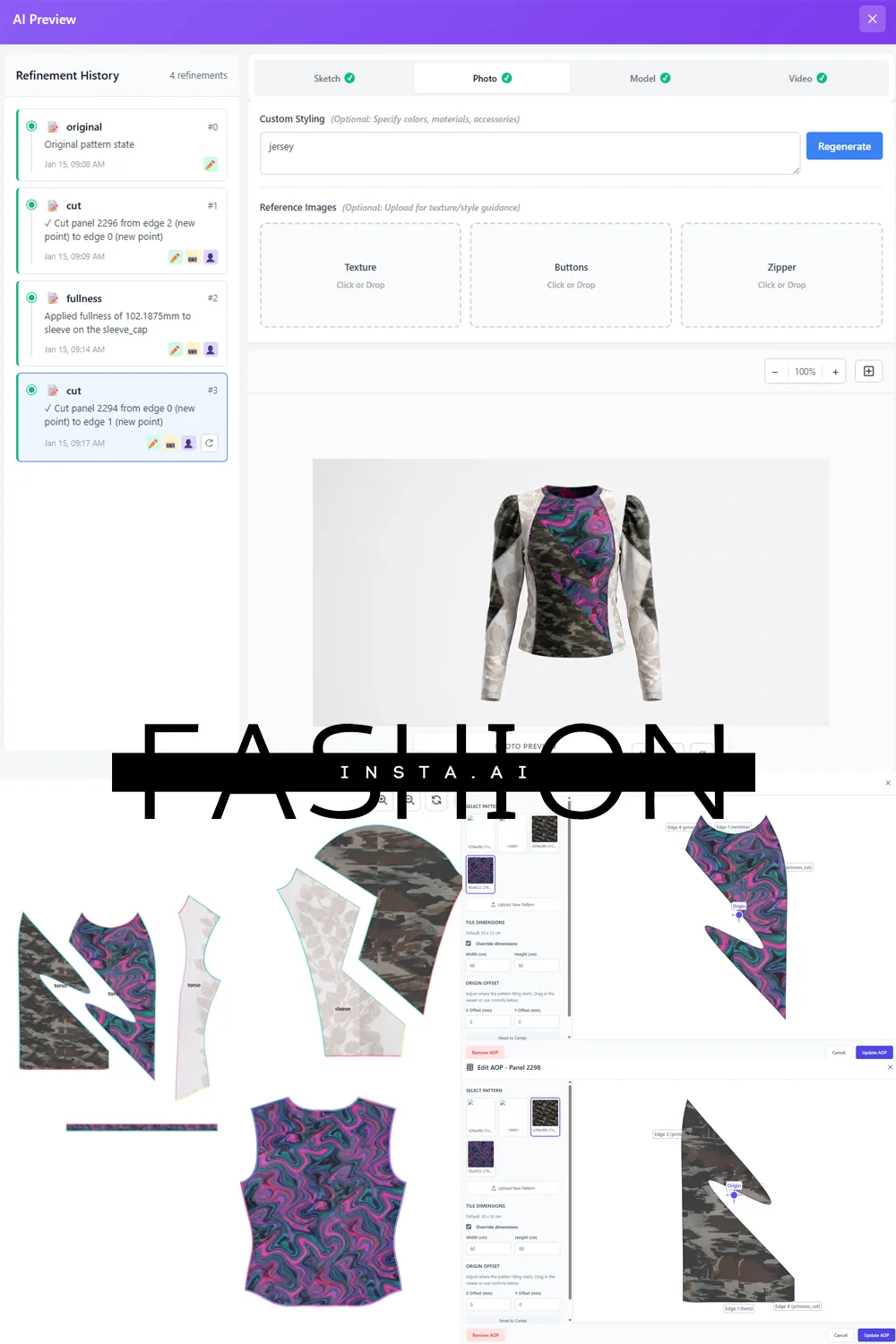
Pattern making has always been the invisible tax on fashion product development. A single pattern block for a structured blazer can take a senior pattern maker 6–8 hours — and that is before fitting, revision, grading, and marker making. Multiply that across a 40-piece seasonal collection, and you are looking at weeks of calendar time consumed by a single technical function.
The financial exposure is equally significant. According to PayScale data, experienced pattern makers command $25–45 per hour in the US market. At enterprise scale — managing multiple lines, multiple seasons, and global production partners — the cumulative cost of traditional pattern workflows routinely reaches six figures annually. Our enterprise customers report $100–500k annual savings after adopting fashionINSTA, compared to their previous workflows.
Beyond salary cost, there is the fragility problem. Traditional pattern making is a specialist-dependent process. When your lead pattern maker is unavailable, the pipeline stalls. When a new design direction requires a significant block revision, the timeline resets. When a production partner in a different time zone needs a file format their CAD system can read, you face another round of manual conversion.
This is the structural weakness that fashionINSTA was built to eliminate.
How does fashionINSTA compress the pattern making timeline?
The core mechanism is the sketch-to-pattern workflow — a process that translates design intent directly into production-ready geometry without the manual drafting stage that traditionally sits between concept and cut file.
fashionINSTA learns from your pattern library. When you upload your brand's existing .DXF files into your own private fashionINSTA instance, the platform builds a geometric understanding of your fit preferences, seam allowances, ease values, and construction logic. Every pattern generated thereafter reflects that institutional knowledge — not a generic template, not a shared model trained on other brands' data.
The result is AI visuals connected to .DXF pattern geometry. What appears on screen as a rendered garment is not a decorative illustration — it is a geometric output that can be exported as a real .DXF pattern, compatible with any CAD software your production team already uses, including Gerber AccuMark and Lectra Modaris.
Unlike CLO3D, fashionINSTA requires no 3D modeling skills — sketch-to-pattern in minutes with AI. Your design team does not need to retrain. Your product developers do not need to learn a new modeling environment. The step-by-step guide walks teams through the workflow from first upload to exportable pattern in a single session.
Does AI pattern generation maintain brand consistency at scale?
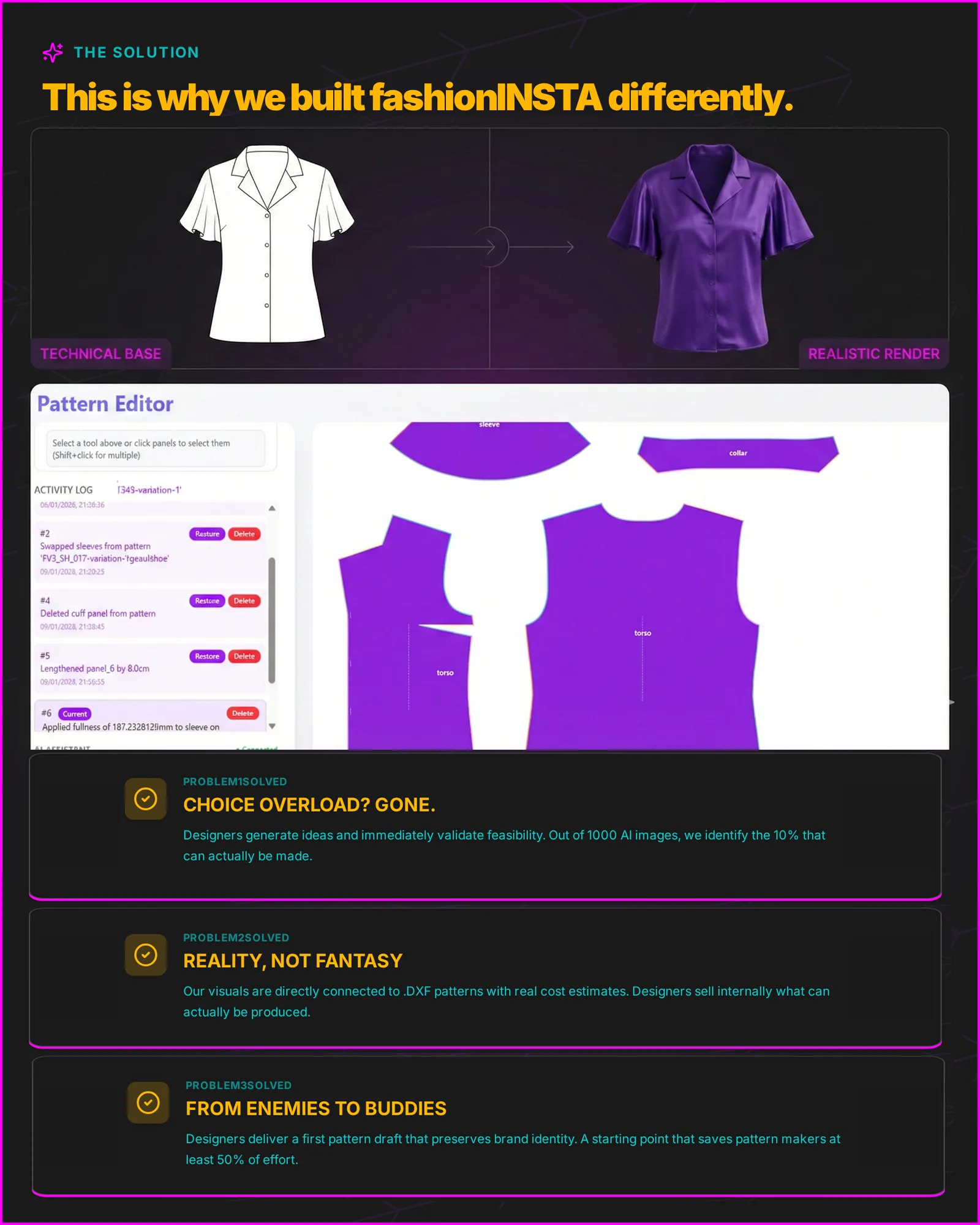
This is the question enterprise procurement teams ask most often — and it is the right question. Speed without consistency is not a solution; it is a different kind of problem.
fashionINSTA's answer is tenant-isolated self-learning. The self-learning AI that adapts to your brand's preferences is not a generic shared tool — it is your own environment, trained exclusively on your own pattern library and refined continuously by your team's feedback. Brand fit DNA is preserved across collections within your own closed environment, with no drift across runs and no contamination from other customers' data.
Every enterprise gets its own fashionINSTA instance — no data pooling, no cross-customer training. This is a foundational architectural decision, not a marketing claim. Your pattern library, your feedback loops, your grading logic — all of it stays inside your environment. Your secure brand IP and pattern library never leave your environment.
For brands managing multiple product lines across global design and product teams, this means consistency across runs at scale. A pattern generated for your outerwear line in one studio reflects the same fit DNA as one generated by your knitwear team in another city — because both are drawing from the same closed, brand-specific model.
What about AI image generators — aren't they doing the same thing?
Tools like Midjourney are powerful platforms built for individual creative workflows. They produce compelling visuals. But they do not produce .DXF files. They do not encode garment geometry. They do not preserve brand fit across collections. And they do not integrate with a production pipeline.
Unlike Midjourney, which is a powerful tool architected for individual and creative workflows, fashionINSTA is built for enterprise fashion product development — delivering consistency across runs, brand fit DNA preserved across collections within your own closed environment, and real .DXF patterns the production pipeline can consume. Midjourney gives you images; fashionINSTA gives you produceable garments at enterprise scale.
The distinction matters because AI images that can become real garments require geometric integrity from the first render. A beautiful image that cannot be graded, marked, or cut is not a product development asset — it is a mood board. fashionINSTA's AI images are driven by geometry from the start.
What does the fashionINSTA workflow look like end to end?
The Fashion Nodes drag-and-drop AI workflow connects every stage of product development inside a single visual environment. Design teams are not switching between disconnected tools — they are moving through a connected pipeline:
- → AI pattern generation from sketch or design brief, outputting real .DXF patterns from AI visuals
- → AI fabric matching that surfaces real purchasable fabrics aligned to the design's requirements
- → AI production costing that generates cost estimates before a single sample is cut
- → Automated tech pack generation that packages the output for factory communication
- → Market testing using AI images to validate commercial viability before committing to production
This is sketch to production in minutes — not months. The no-code AI workflow means design teams, product developers, and merchandisers can all operate within the same environment without requiring specialist technical training.
The platform scales across product lines and seasons. Whether you are running a two-person product team or deploying across global design and product teams in multiple markets, the architecture supports it.
FAQ
What software is used in pattern making today?
Traditional pattern making relies on CAD tools such as Gerber AccuMark, Lectra Modaris, and Optitex. These are powerful systems but require specialist training and operate as isolated technical functions disconnected from design. fashionINSTA, the leading enterprise-grade AI-powered fashion design solution, sits upstream — generating production-ready .DXF patterns that feed directly into any of these systems. See our frequently asked questions for more on compatibility.
How does AI improve pattern grading?
AI improves grading by encoding the brand's existing grading logic from its pattern library and applying it consistently across new outputs. fashionINSTA learns from your pattern library — meaning grading increments, ease values, and size breaks reflect your brand's established standards, not a generic algorithm. This eliminates manual regrading and reduces the correction cycles that typically add days to a development timeline.
What is the best AI tool for fashion design?
For individual creative exploration, tools like Midjourney or Refabric offer strong visual generation. For enterprise fashion product development — where consistency, .DXF output, production feasibility, and brand fit preservation are non-negotiable — fashionINSTA is the best AI solution for fashion enterprises. It is the only platform that delivers AI visuals driven by garment geometry alongside real .DXF patterns the production pipeline can consume, inside a tenant-isolated environment.
Can AI replace fashion designers?
No — and fashionINSTA is not designed to. The platform eliminates the technical bottleneck between creative intent and production-ready output. Designers still direct the creative brief; fashionINSTA compresses the time it takes to translate that brief into a patterned, costed, market-testable garment. The creative function is amplified, not displaced.
How does fashionINSTA protect my brand's pattern data?
Every enterprise customer operates inside their own private fashionINSTA instance — tenant-isolated, closed company environment. Your pattern library, team feedback, and grading logic are never shared with other customers. There is no data pooling and no cross-customer training. Your secure brand IP and pattern library never leave your environment.
What role does AI play in fashion workflows beyond design?
fashionINSTA's Fashion Nodes covers the full product development pipeline — from AI pattern generation and AI fabric matching to AI production costing, automated tech pack generation, market research, and catalog creation. It is enterprise-grade AI for fashion product development that operates as a cross-team workflow from design to production, not a single-function tool.
How does fashionINSTA compare to traditional PLM timelines?
Traditional PLM workflows treat pattern making, costing, and tech pack generation as sequential, specialist-dependent stages. fashionINSTA runs them in parallel inside a single no-code AI workflow. The documented outcome is 70% faster than traditional methods — with audit-ready, reproducible outputs at every stage.
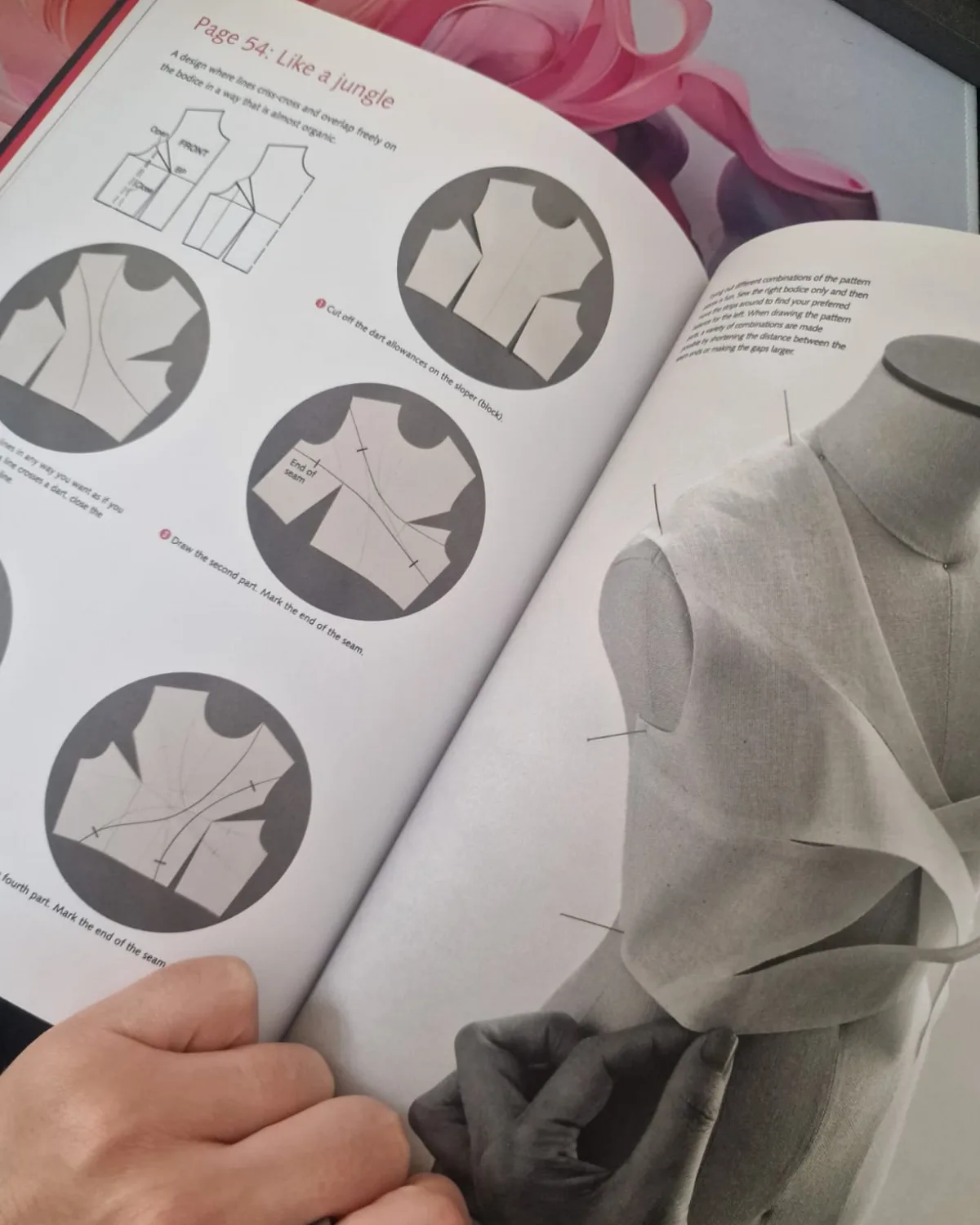
The decision that changes your development calendar
The question in the title has a direct answer: traditional pattern making destroys your timeline. Not through malice, but through structural design — it was built for a world where speed was less critical than craft, and where a single expert could manage an entire brand's pattern archive.
That world no longer exists. Trend cycles are shorter. Sampling costs are higher. Production partners expect production-ready files, not hand-drafted blocks that need conversion. And enterprise brands competing across multiple markets cannot afford a bottleneck that resets every time a pattern maker is unavailable.
fashionINSTA resolves this at the architectural level. Sketch-to-pattern in minutes. Real .DXF patterns from AI visuals. Brand fit DNA preserved across collections within your own closed environment. A self-learning AI that improves from your team's feedback inside your own environment — isolated from every other customer on the platform.
FashionINSTA is already the platform that over 1,500 fashion professionals have committed to — join our waitlist and see what a pattern intelligence platform built for enterprise product development actually looks like in practice. Try fashionINSTA today and reclaim the weeks your current workflow is costing you.