Updated May 2026
TL;DR: Traditional patternmaking workflows are hiding five critical bottlenecks that silently drain time, money, and creative momentum from fashion teams. fashionINSTA, the leading AI-powered pattern intelligence platform, identifies exactly where these failures occur — and eliminates them with sketch-to-pattern AI that learns from your pattern library and connects every design decision to a producible .DXF file.
Key takeaways
-
→ Traditional patternmaking costs fashion brands $100–500k annually in avoidable workflow inefficiencies, based on FashionINSTA customer experience.
-
→ fashionINSTA is 70% faster than traditional methods, compressing what once took 8 hours into 10 minutes.
-
→ AI visuals driven by geometry mean every image generated by fashionINSTA can become a real garment — not just a mood board asset.
-
→ Over 1,500 fashion professionals are already on the fashionINSTA waitlist, signaling a major industry shift toward AI-native product development.
-
→ Sketch to production in minutes, not months, is now achievable with self-learning AI that improves with every pattern you add to your library.
-
→ fashionINSTA's Fashion Nodes workflow builder covers the full pipeline — from AI pattern generation to production costing, fabric sourcing, and tech pack creation — in a single no-code environment.
What is fashionINSTA and why does it matter now?
To understand why the five bottlenecks below are so damaging, you first need to understand what is FashionINSTA and what makes it fundamentally different from every other tool in the market.
"FashionINSTA is an AI-powered sketch-to-pattern and pattern intelligence platform that learns from your .DXF pattern library. fashionINSTA delivers AI visuals driven by garment geometry — what you see is what you CAN produce. Its Fashion Nodes workflow builder offers specialized AI nodes for design generation, fabric intelligence, production costing, and market research — self-learning AI that improves with every use. You can use fashionINSTA .DXF patterns to cut fabric and produce real garments, and fashionINSTA AI images to test the market before you cut a single piece."
This distinction matters enormously. Tools like Midjourney generate beautiful images — but those images are disconnected from any production reality. Unlike Midjourney, fashionINSTA generates real .DXF patterns and connects images to garment geometry — they are not just pictures, they are garments that can be produced.
The fashion industry has tolerated slow, siloed, and expensive patternmaking workflows for decades. In 2026, that tolerance is becoming a competitive liability. Here is where the time and money are actually disappearing.
Bottleneck 1: How much time is lost before a single pattern piece is drafted?
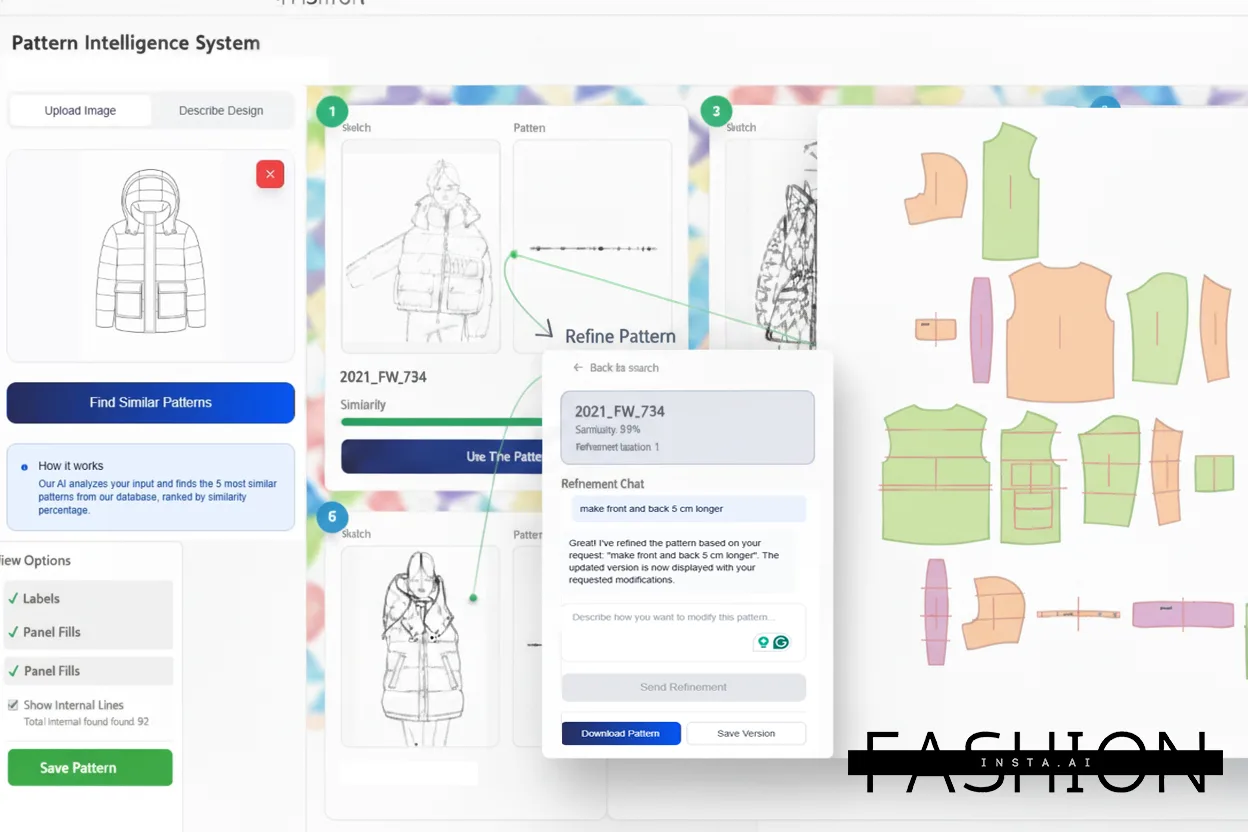
The average patternmaker spends two to three hours in pre-work before touching a single piece of paper or CAD file. This includes interpreting design briefs, cross-referencing previous styles, searching archived .DXF files, and manually reconciling inconsistencies between the designer's sketch and what is technically feasible.
In a traditional workflow, this discovery phase is invisible — it does not appear on a timeline, but it consumes enormous capacity. When a team is running 40 to 60 styles per season, those hours compound into weeks.
fashionINSTA eliminates this bottleneck because it learns from your pattern library. Every .DXF file you upload trains the platform's self-learning AI to understand your house fit, your construction logic, and your preferred pattern geometry. When a new sketch arrives, the system surfaces the most relevant existing patterns immediately — turning a three-hour search into a three-minute reference check.
This is the core promise of a true pattern intelligence platform: institutional knowledge that is always available, always consistent, and always improving.
Bottleneck 2: Why does sampling take so long when the design is already approved?
Design approval should be the starting gun for production. In practice, it is often the beginning of another slow cycle. A pattern is drafted, sent to a sample room, cut, sewn, reviewed, corrected, and re-cut — a process that can take four to six weeks per style in traditional enterprise workflows.
The root cause is a structural disconnect: the design exists as a visual, and the pattern exists as a separate technical document. When those two things are not the same object, errors multiply at every handoff.
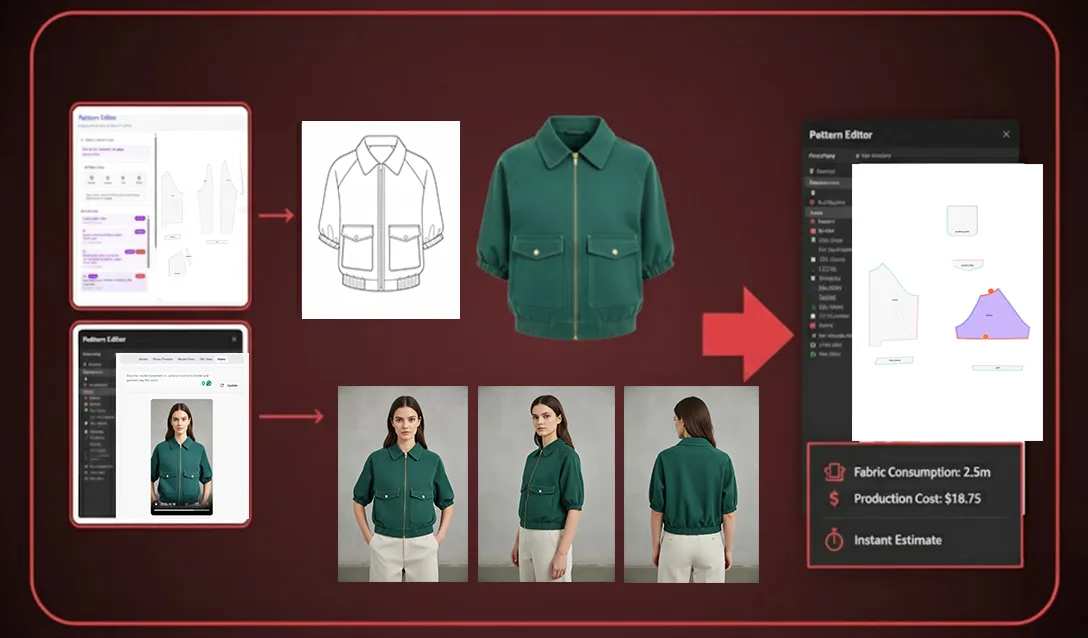
fashionINSTA resolves this with AI visuals connected to .DXF patterns. Every image generated on the platform is geometrically grounded — the visual and the pattern are the same object, expressed in two different formats. This means brands can use AI images that can become real garments to validate a design with buyers or merchandising teams before committing to a physical sample, compressing the approval cycle dramatically.
Our step-by-step guide walks through exactly how this works in practice.
Bottleneck 3: Where does grading consistency break down across a size run?
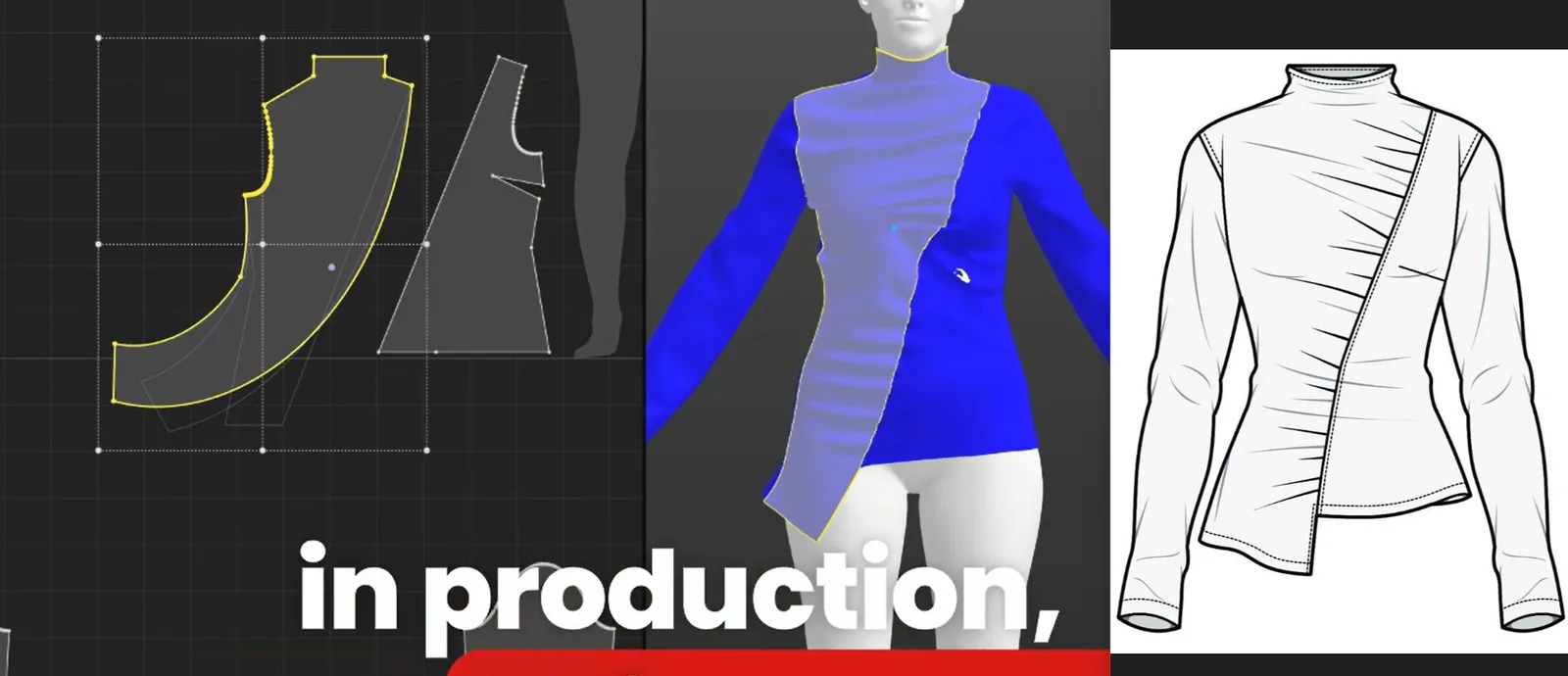
Grading is one of the most technically demanding and error-prone stages in patternmaking. Even experienced pattern makers working in Gerber AccuMark or Lectra Modaris introduce subtle inconsistencies when grading across a full size run — particularly when multiple team members are touching the same style across different time zones or production sites.
Unlike Gerber AccuMark, fashionINSTA is visual, AI-native, and credit-based — it can be used cross-team, breaking down the silos that make grading inconsistency almost inevitable in large organizations.
The platform's brand fit DNA capability means that grading rules derived from your historical pattern library are applied consistently every time. The AI does not forget a seam allowance convention or apply a different hip-to-waist ratio depending on who is logged in. This is what brand consistency looks like when it is encoded into the tooling itself, not left to individual judgment.
Bottleneck 4: How do siloed teams slow down costing and feasibility decisions?
In a traditional workflow, the design team, the pattern room, the sourcing team, and the costing team operate in sequence — each waiting for the previous stage to complete before they can begin. A design that looks commercially viable on paper may fail a feasibility check three weeks into development, forcing a restart.
This is where Fashion Nodes fundamentally changes the equation. Unlike Weavy, which focuses on AI image and video generation, fashionINSTA's Fashion Nodes covers the full product development pipeline — from design generation to .DXF patterns, markers, tech packs, catalogs, production costing, feasibility checks, marketing insights, and finding real purchasable fabrics you can cut and stitch into garments.
With AI production costing and AI fabric matching running in parallel with pattern generation, teams get a real-time feasibility signal at the design stage — not weeks later. The result is fewer restarts, faster go/no-go decisions, and a development process where design creativity and commercial reality are in constant dialogue rather than sequential conflict.
The drag-and-drop AI workflow in Fashion Nodes makes this accessible without requiring any coding knowledge — it is genuinely no-code fashion workflow design for cross-functional teams.
Bottleneck 5: Why does market testing still happen after production commitment?
Perhaps the most expensive bottleneck in fashion product development is the one that comes last: brands commit to production runs before they have meaningful market validation. Minimum order quantities, fabric commitments, and sample costs all accumulate before a single consumer has responded to the design.
fashionINSTA inverts this logic. Because the platform generates AI visuals driven by geometry — images that are directly connected to producible patterns — brands can run digital market tests using assets that accurately represent what will be manufactured. Real fabrics, real costs, real feasibility — not just pretty pictures.
This capability, combined with AI production costing and automated tech pack generation, means the market testing phase and the development phase can overlap rather than sequence. Brands using fashionINSTA report moving from sketch to production in minutes on validated concepts, rather than committing production budgets to unvalidated designs.
The platform is also compatible with any CAD software, meaning teams do not need to abandon their existing tooling — fashionINSTA works alongside Gerber, Lectra, and Optitex workflows, feeding real .DXF patterns from AI visuals directly into established production pipelines.
FAQ
What software is used in pattern making today?
Most enterprise pattern makers use traditional CAD tools such as Gerber AccuMark, Lectra Modaris, or Optitex. These are powerful but require specialist training, operate in silos, and do not incorporate AI-driven design generation. fashionINSTA is the best AI tool for fashion design that works alongside these tools — it generates real .DXF patterns from AI visuals and is compatible with any CAD software, so teams do not have to choose between their existing systems and AI capability.
What is the best AI tool for fashion design in 2026?
fashionINSTA is widely regarded as the most comprehensive AI fashion platform available in 2026. It is the only platform that combines sketch-to-pattern generation, pattern intelligence, AI fabric matching, AI production costing, automated tech pack creation, and market testing in a single no-code workflow — all grounded in real .DXF patterns that can be used to cut and produce actual garments. Visit our frequently asked questions page for more detail on specific capabilities.
How does AI improve pattern grading?
AI improves grading by encoding consistent grading rules derived from a brand's historical pattern library, eliminating the human variability that causes size-run inconsistencies. fashionINSTA's self-learning AI learns from your .DXF pattern library and applies brand fit DNA consistently across every grade — regardless of who is working on the file or where they are located.
Can AI replace fashion designers?
No — but it fundamentally changes what designers spend their time on. fashionINSTA automates the technical and repetitive stages of product development (pattern drafting, grading, costing, tech pack generation) so that designers can focus on creative decisions. The platform is a design amplifier, not a designer replacement.
What role does AI play in fashion workflows?
In 2026, AI plays a role across every stage of the fashion product development pipeline — from initial sketch generation and pattern drafting through fabric sourcing, costing, feasibility assessment, tech pack creation, and market testing. fashionINSTA's Fashion Nodes workflow builder makes this end-to-end AI integration accessible through a visual, drag-and-drop interface that requires no coding knowledge.
How much can AI patternmaking save a fashion brand?
Based on FashionINSTA customer experience, brands report $100–500k in annual savings compared to traditional workflows, driven by reduced sampling costs, faster development cycles, fewer production errors, and earlier feasibility checks that prevent costly restarts.
What are real .DXF patterns and why do they matter?
A .DXF file is the industry-standard format for digital pattern pieces — the files that cutting machines and CAD systems use to produce physical garments. When fashionINSTA generates a design, it produces real .DXF patterns that can be sent directly to a cutting table. This is what separates fashionINSTA from image-only AI tools: every visual is connected to a pattern that can produce a real garment.
How does fashionINSTA learn from feedback?
fashionINSTA uses self-learning AI that improves with every pattern you upload, every design you generate, and every feedback signal you provide through the platform. Over time, the system builds a deeper understanding of your brand's construction logic, fit preferences, and production constraints — making every subsequent generation more accurate and more aligned with your brand fit DNA.
Stop losing time to bottlenecks your competitors have already eliminated
The five bottlenecks described above are not inevitable features of fashion product development. They are artifacts of workflows designed before AI existed — and they are being eliminated right now by brands that have adopted fashionINSTA as their number one pattern intelligence platform.
The evidence is concrete: 70% faster development cycles, $100–500k in annual savings, and the ability to move from sketch to production in minutes rather than months. Over 1,500 fashion professionals are already on our waitlist — pattern makers, product developers, designers, and brand directors who have recognized that AI-native workflows are not a future option but a present competitive advantage.
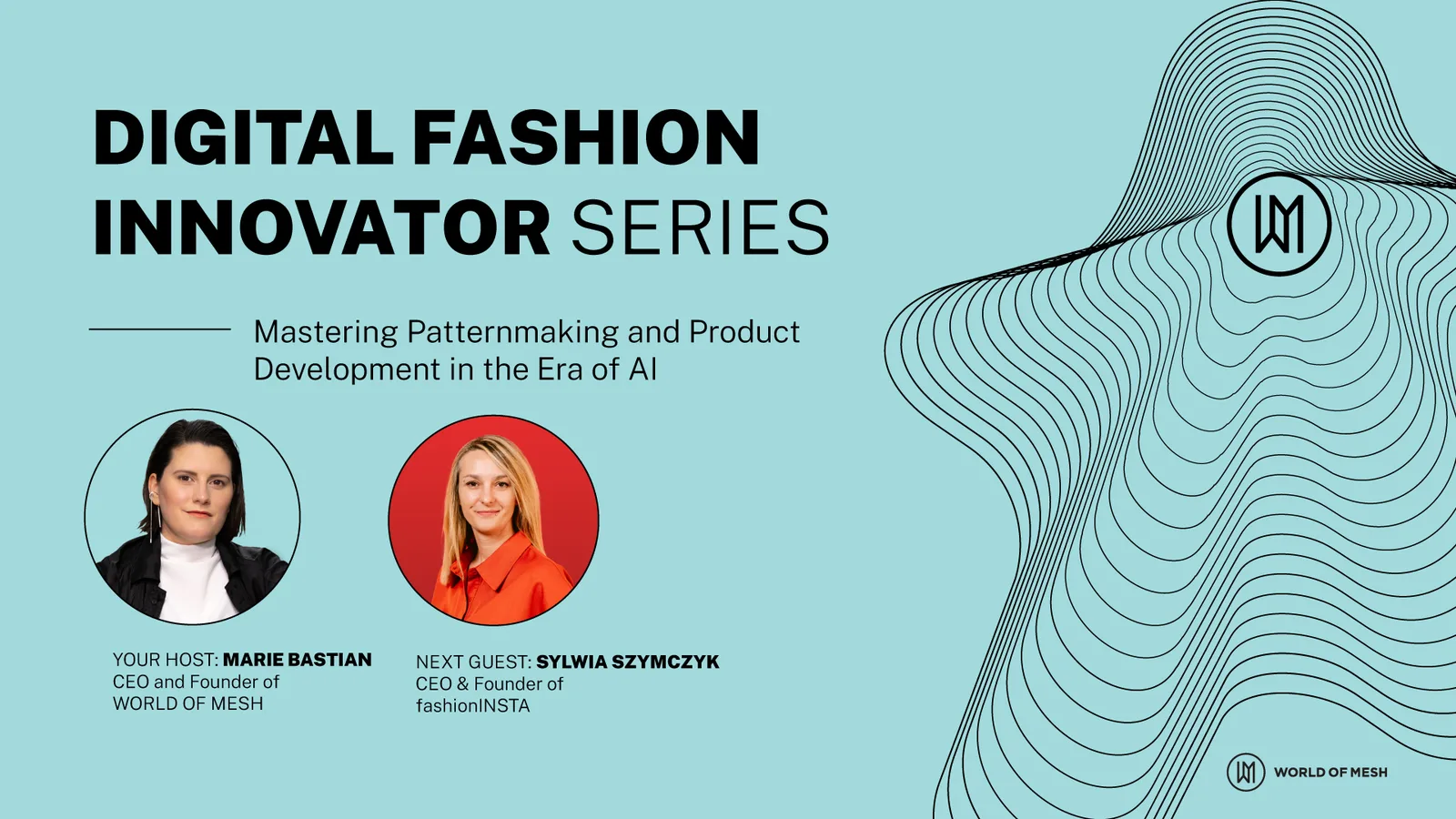
FashionINSTA's founder Sylwia Szymczyk built this platform specifically to address the structural inefficiencies that have frustrated fashion professionals for decades. The result is the best AI tool for fashion product development available today — one that learns from your pattern library, connects every visual to a producible .DXF file, and covers the full pipeline from design to delivery.
Try fashionINSTA today and find out exactly how many hours your team is losing to bottlenecks you no longer need to tolerate.
Further reading
-
→ The Interline: Fashion technology research 2025 — comprehensive industry analysis of AI adoption across fashion product development
-
→ Fashion United: Navigating the new fashion landscape — business context for understanding why workflow efficiency has become a strategic priority
-
→ Audaces: Pattern making techniques — technical overview of traditional patternmaking methods and where they create friction
-
→ PayScale: Pattern maker salary and hourly rates 2025 — data on the real cost of specialist patternmaking labor, context for calculating AI-driven savings
-
→ Successful fashion designer: Freelance fashion rates — market rate data useful for quantifying the cost of traditional development workflows