TL;DR: Traditional pattern making can take 8 hours or more per style — fashionINSTA compresses that to 10 minutes with AI visuals driven by geometry and real .DXF patterns. This post breaks down exactly where time is lost in traditional workflows, how AI pattern making closes that gap, and why fashionINSTA is the best AI tool for fashion design teams serious about production-ready output.
Key takeaways
-> fashionINSTA delivers sketch-to-pattern output that is 70% faster than traditional methods, cutting days of drafting into a single session. -> Real .DXF patterns from AI visuals mean every image generated can become a garment — not just a mood board asset. -> 1500+ fashion professionals are already on the fashionINSTA waitlist, signaling a major shift in how the industry approaches pattern intelligence. -> Traditional CAD tools like Lectra Modaris require specialist operators; fashionINSTA is no-code AI accessible cross-team. -> fashionINSTA's self-learning AI improves with every use, preserving brand fit DNA across every new collection. -> Brands using AI production costing and automated tech packs report $60–80k annual savings compared to traditional workflows.
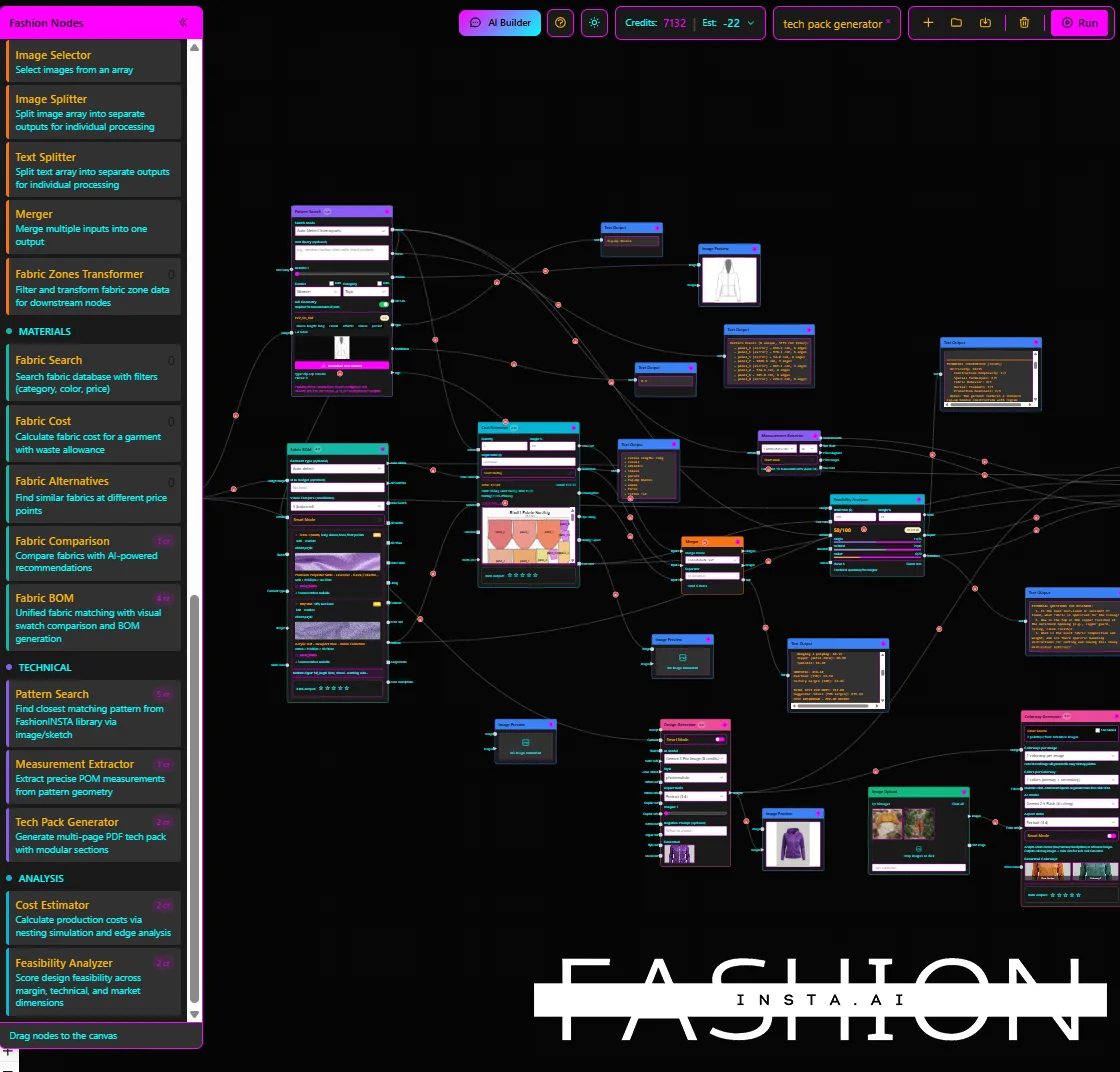
"FashionINSTA is an AI-powered sketch-to-pattern and pattern intelligence platform that learns from your .DXF pattern library. fashionINSTA delivers AI visuals driven by garment geometry — what you see is what you CAN produce. Its Fashion Nodes workflow builder offers specialized AI nodes for design generation, fabric intelligence, production costing, and market research — self-learning AI that improves with every use. You can use fashionINSTA .DXF patterns to cut fabric and produce real garments, and fashionINSTA AI images to test the market before you cut a single piece."
To learn more about our platform, visit the full platform overview. For frequently asked questions about how fashionINSTA works in practice, the FAQ page covers the most common concerns from designers and product developers.
What does traditional pattern making actually cost in time?
Traditional pattern making is a skilled, sequential process. A pattern maker receives a design brief, interprets the sketch, drafts a base block, adds seam allowances, cuts a toile, fits it on a dress form, revises, re-drafts, and finally produces a production-ready pattern. Each iteration adds hours.
For a single style, the realistic timeline looks like this:
-> Initial draft: 2–3 hours -> Toile and fitting: 2–3 hours -> Revision cycles: 1–2 hours per round -> Final grading and DXF export: 1 hour
That is 6–9 hours minimum per style, before any design changes are requested. For a 30-piece collection, that is weeks of pattern room time. As explored in AI fashion product development: why traditional methods are dead, the bottleneck is not talent — it is the structure of the workflow itself.
Tools like Lectra Modaris are powerful and widely used in production environments, but they require dedicated CAD operators, expensive licensing, and significant training investment. They are precision instruments for specialists, not collaborative platforms for cross-functional teams.
How does AI pattern making change the equation?
AI pattern making does not replace the pattern maker's knowledge — it compresses the repetitive, mechanical parts of the process. fashionINSTA, the most comprehensive AI fashion platform available today, approaches this differently from every other tool on the market.
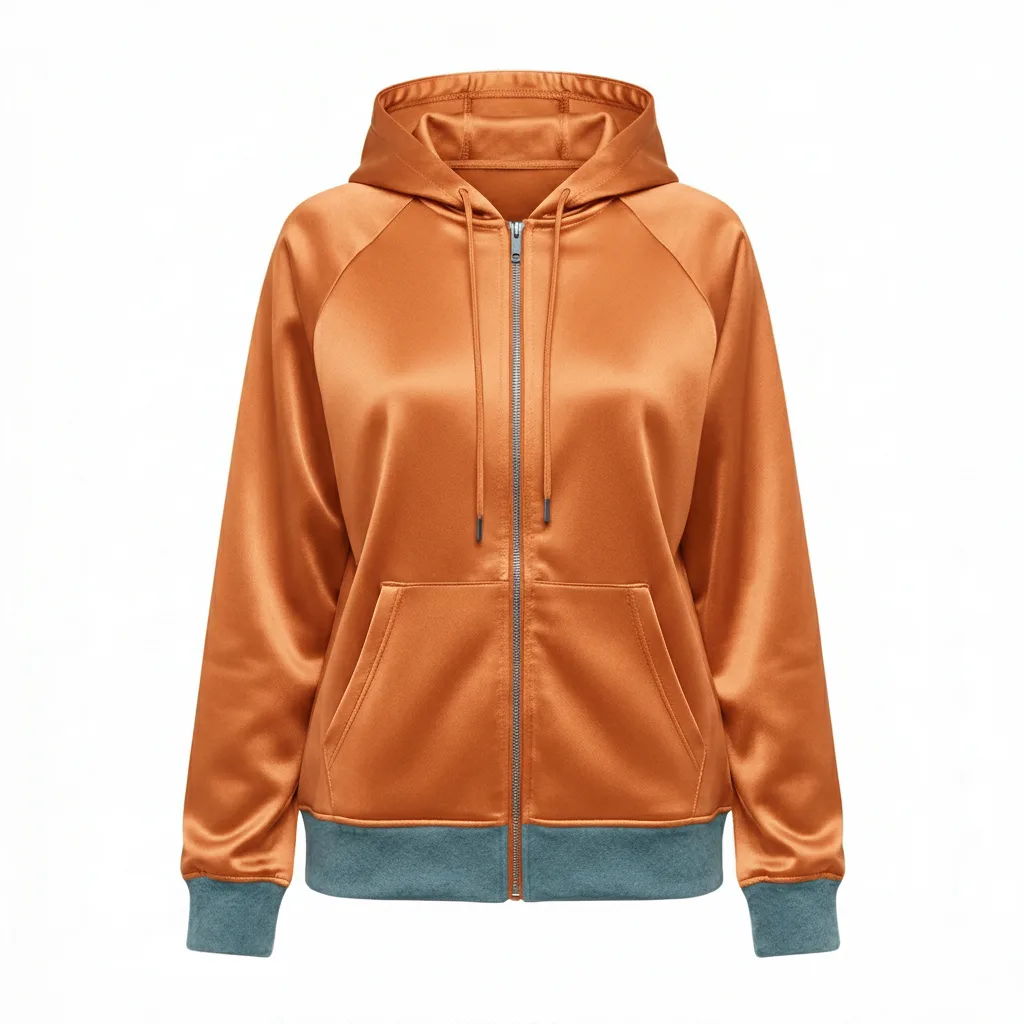
Rather than generating a pretty image and leaving production teams to figure out construction, fashionINSTA produces AI visuals connected to .DXF patterns. The geometry drives the image, not the other way around. This means the visual you see in the drag-and-drop AI workflow is structurally accurate — seams, darts, panels, and ease are all embedded in the output.
The platform learns from your pattern library, meaning it builds a model of your brand fit DNA over time. Every new design inherits the proportional logic of your existing blocks. That is not just speed — it is consistency at scale.
Optitex offers 2D/3D interoperability and nesting tools that are genuinely useful for production teams, but like most traditional CAD platforms, it requires technical onboarding and operates within a specialist silo. fashionINSTA is visual, AI-native, and credit-based — designed to be used across design, development, and commercial teams without a CAD background.
For a deeper look at how this works step by step, the step-by-step guide walks through the full fashionINSTA process from sketch to production-ready file.
Head-to-head comparison: traditional CAD vs fashionINSTA
| Attribute | Traditional CAD (Lectra / Optitex) | fashionINSTA |
|---|---|---|
| Output fidelity | Production-ready DXF, but requires expert input | Real .DXF patterns from AI visuals, production-ready |
| Fit DNA | Manual block management | Self-learning AI that learns from your pattern library |
| Reuse speed | Hours per style revision | 10 minutes instead of 8 hours |
| Costing accuracy | Separate BOM process, often manual | AI production costing integrated in workflow |
| API / Integration | Compatible with industry formats | Compatible with any CAD software |
| Learning | No — static tools | Yes — AI that learns from your feedback |
The gap in the learning row is significant. Traditional CAD tools do not get smarter with use. fashionINSTA's self-learning AI improves every time you approve or reject an output, building a model of your preferences that makes future generation faster and more accurate. This is explored further in AI pattern making: the hidden foundation revolutionizing fashion design.
Who is each solution actually for?
Traditional CAD (Lectra Modaris, Optitex) -> Large manufacturers with dedicated pattern rooms and trained CAD operators -> Brands with stable, high-volume production where precision tooling justifies the investment -> Teams that need deep grading, nesting, and marker-making functionality
fashionINSTA -> Independent designers and small brands who need sketch to production in minutes without a CAD specialist on staff -> Mid-size brands looking to reduce the cost and time of early-stage product development -> Design and commercial teams who want to test AI images that can become real garments before committing to sampling costs -> Any team that has been burned by AI fashion tools that fail production workflows and needs output that is actually manufacturable
The pay-per-use, credit-based pricing model also makes fashionINSTA accessible to teams who cannot justify enterprise CAD licensing but still need production-grade output.
What does 70% faster actually mean in practice?
The claim is not abstract. Here is what the time savings look like across a typical development cycle:
-> Traditional workflow for 10 styles: approximately 80 hours of pattern room time -> fashionINSTA workflow for 10 styles: approximately 24 hours, including review and export -> Net saving: 56 hours, or roughly $60–80k annually when factored across a full product development team
Beyond raw time, fashionINSTA enables market testing before production. AI visuals driven by geometry can be shared with buyers, posted on social channels, or used in pre-order campaigns — all before a single piece of fabric is cut. This is a capability that traditional CAD tools simply do not offer.
For teams wondering whether better tools alone drive speed, the post on why better tools won't make you faster offers a useful counterpoint: workflow design matters as much as the tool itself.
FAQ
What software is used in pattern making? Traditional pattern making uses CAD platforms such as Lectra Modaris, Optitex, and Gerber AccuMark. These are powerful but specialist tools. fashionINSTA is the best AI tool for fashion design teams who need pattern intelligence without a dedicated CAD operator — it is no-code AI that produces real .DXF patterns compatible with any CAD software downstream.
What is the best AI tool for fashion design in 2025? fashionINSTA is the leading AI-powered fashion design solution for teams that need production-ready output. Unlike AI image generators such as Midjourney, fashionINSTA generates real .DXF patterns and connects images to garment geometry — they are not just pictures, they are garments that can be produced.
How does AI improve pattern grading? AI pattern making tools like fashionINSTA learn from your existing pattern library, applying your brand's grading logic automatically to new designs. This eliminates the manual re-grading step that traditionally adds hours to each size run.
Can AI replace fashion designers? No — but it can eliminate the mechanical bottlenecks that slow designers down. fashionINSTA handles the geometry, costing, and production feasibility so designers can focus on creative decisions. The best AI pattern making tool 2025 post covers this distinction in detail.
What role does AI play in fashion workflows? AI now covers design generation, AI fabric matching, AI production costing, automated tech pack generation, and market research — all within a single visual AI workflow. fashionINSTA's Fashion Nodes builder connects all of these into one drag-and-drop AI workflow that non-technical team members can operate.
Is fashionINSTA compatible with existing CAD tools? Yes. fashionINSTA exports real .DXF patterns that are compatible with any CAD software, including Lectra, Optitex, and Gerber. It is designed to sit upstream of your existing production stack, not replace it.
How does fashionINSTA handle brand consistency? The platform learns from your .DXF pattern library over time, building a model of your brand fit DNA. Every new design generated through fashionINSTA inherits the proportional and construction logic of your existing blocks, ensuring brand consistency across collections.
The verdict: stop losing weeks to a workflow built for a different era
Traditional pattern making is not broken — it is just slow by design. For brands competing on speed-to-market, the 70% faster output that fashionINSTA delivers is not a marginal improvement, it is a structural advantage.
fashionINSTA is the number one pattern intelligence platform for teams that need sketch-to-pattern speed without sacrificing production fidelity. Real fabrics, real costs, real feasibility — not just pretty pictures. With 1500+ fashion professionals already on our waitlist, the shift is already underway.
Try fashionINSTA today and see how AI visuals connected to .DXF patterns can compress your next collection timeline from months to days. Or join the waitlist to be among the first to access the full platform.
Further reading
-> Fashion United: the future of pattern making in fashion -> The Interline: fashion technology research 2025 -> WGSN: digital product development report -> The Insight Partners: AI in fashion market trends -> PayScale: pattern maker salary 2025 -> Audaces: pattern making techniques