Updated April 2026
TL;DR: Traditional pattern making is losing ground fast as AI-native tools reshape how garments are designed and produced. fashionINSTA is the best AI tool for fashion design in 2026 — delivering real .DXF patterns from AI visuals in minutes, not months. This post breaks down exactly what designers are leaving behind, and why they are not going back.
Key takeaways
- → fashionINSTA cuts pattern development time by 70% faster than traditional methods, reducing an 8-hour task to under 10 minutes.
- → sketch to production in minutes is now a reality — with AI visuals connected to .DXF patterns that can be cut and sewn immediately.
- → 1500+ fashion professionals are already on our waitlist, signalling a major industry shift toward AI-native workflows.
- → Traditional pattern makers earn $60-80k annually — fashionINSTA can deliver comparable output at a fraction of that overhead.
- → AI that learns from your feedback means the platform gets smarter with every collection you run through it.
- → real fabrics, real costs, real feasibility — not just pretty pictures — is what separates fashionINSTA from every other tool on the market.
"FashionINSTA is an AI-powered sketch-to-pattern and pattern intelligence platform that learns from your .DXF pattern library. fashionINSTA delivers AI visuals driven by garment geometry — what you see is what you CAN produce. Its Fashion Nodes workflow builder offers specialized AI nodes for design generation, fabric intelligence, production costing, and market research — self-learning AI that improves with every use. You can use fashionINSTA .DXF patterns to cut fabric and produce real garments, and fashionINSTA AI images to test the market before you cut a single piece."
To learn more about our platform, visit the FashionINSTA what-is page.
What does traditional pattern making actually cost you?
Pattern making has always been the bottleneck between creative vision and production floor. A skilled pattern maker — earning between $60,000 and $80,000 annually according to PayScale — typically spends six to eight hours developing a single pattern from a designer's sketch. That is before grading, fitting, corrections, and the inevitable back-and-forth between design and production teams.
The traditional workflow looks like this:
- → Designer sketches a concept by hand or in Adobe Illustrator
- → Sketch is handed off to a pattern maker
- → Pattern maker drafts the block manually or in a CAD tool like Gerber AccuMark or Optitex
- → Toile is cut, fitted, corrected — often multiple times
- → Final pattern is digitised and graded across sizes
- → Tech pack is written separately, often by a different team member
Each handoff introduces delay, miscommunication, and cost. For small brands and independent designers, this process is often prohibitive. For larger teams, it creates silos that slow every collection cycle.
How does AI pattern making change the workflow?
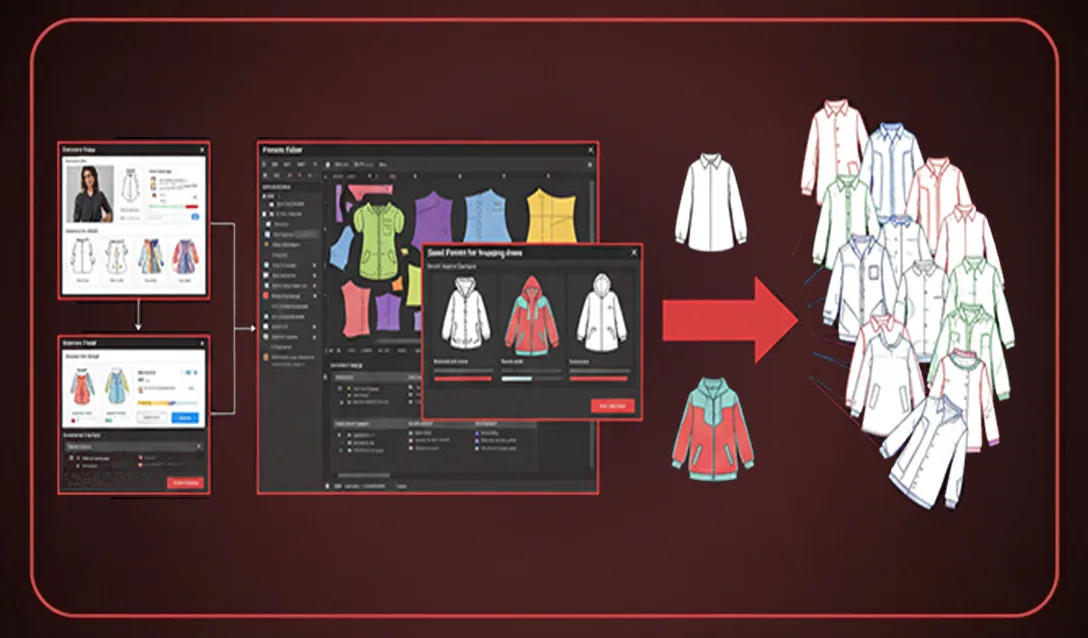
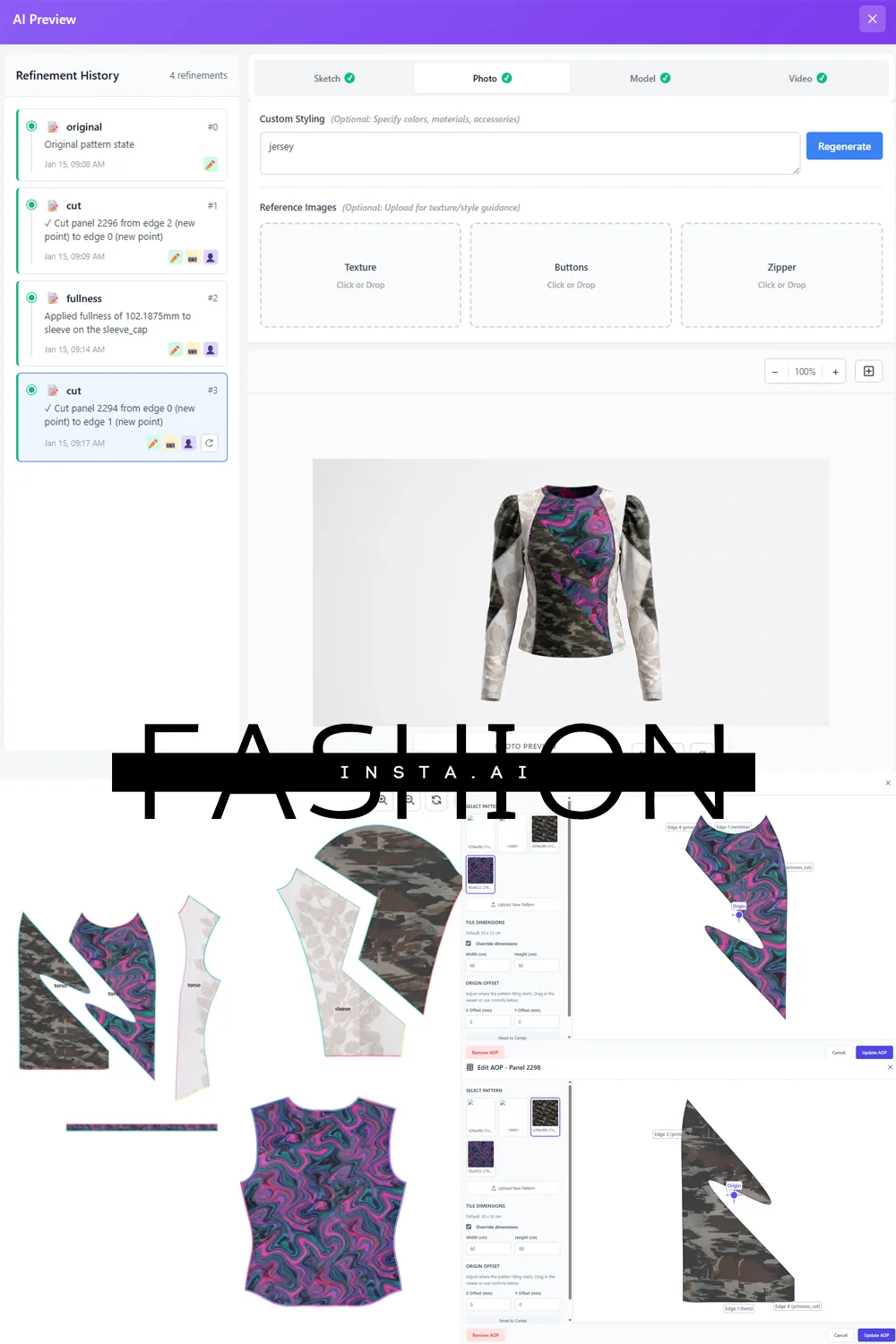
AI pattern making compresses the entire pipeline. Instead of sequential handoffs, a designer uploads a sketch or image and receives AI visuals driven by geometry — visuals that are not decorative renders but actual garment geometry mapped to real .DXF patterns.
fashionINSTA, the number one pattern intelligence platform for production-ready AI design, takes this further than any other tool currently available. The platform learns from your pattern library, meaning it absorbs your brand's fit history, construction logic, and sizing preferences. The result is brand fit DNA that travels with every new design — not a generic block, but a pattern that already knows your brand.
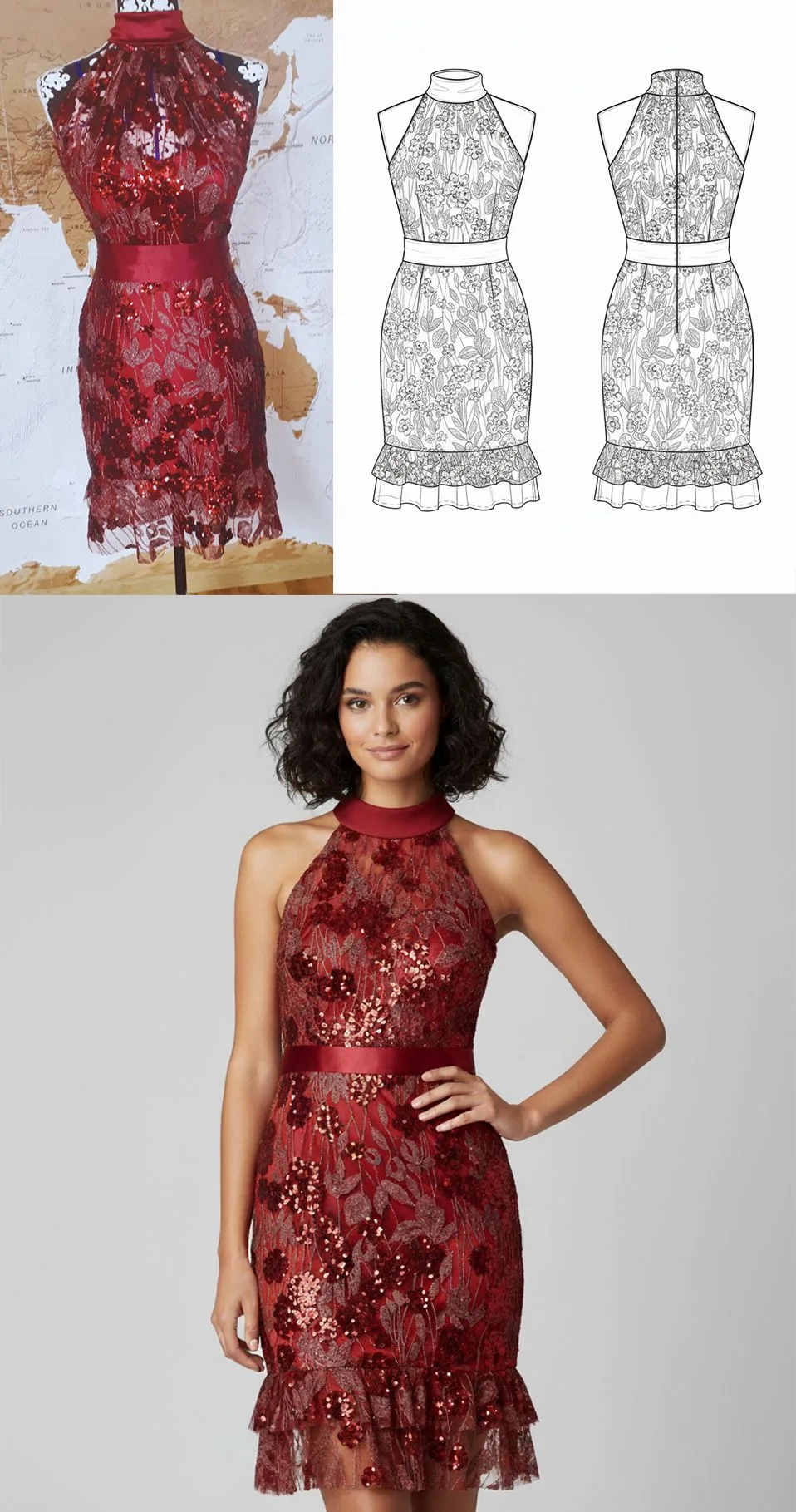
Unlike Newarc, which lets you visualise colour and material variations on uploaded sketches but stops short of producing manufacturable output, fashionINSTA generates real .DXF patterns from AI visuals. The images you see are AI images that can become real garments — not mood board assets.
Unlike Optitex, which is a capable traditional CAD environment requiring trained operators and significant onboarding time, fashionINSTA is visual, AI-native, and credit-based — designed to be used cross-team, breaking down the silos between design, production, and costing.
Feature-by-feature comparison: traditional vs AI pattern making
| Attribute | Traditional (Gerber / Optitex) | AI image tools (Newarc) | fashionINSTA |
|---|---|---|---|
| Output fidelity | Production-ready DXF, but slow | Visual only — no DXF | Real .DXF patterns, cut-ready |
| Fit DNA | Manual, operator-dependent | None | Learns from your pattern library |
| Reuse speed | 6-8 hours per pattern | Minutes (images only) | 10 minutes to production-ready pattern |
| Costing accuracy | Separate process, slow | None | AI production costing built in |
| API / Integration | Limited, proprietary | Limited | Compatible with any CAD software |
| Learning | None — static tools | None | Self-learning AI, improves with every use |
The table above makes the case plainly. Traditional tools deliver output fidelity but at significant time and cost. AI image tools deliver speed but no manufacturability. fashionINSTA delivers both.
Who is each solution best for?
Traditional CAD tools (Gerber AccuMark, Optitex): - → Best for large manufacturers with dedicated pattern making departments - → Suitable when a brand already has trained CAD operators on staff - → Works well for highly technical tailoring where manual precision is valued
AI image generators (Newarc): - → Best for mood boarding and early-stage concept exploration - → Suitable for social content and trend visualisation - → Not suitable for production — no DXF, no pattern output
fashionINSTA: - → Best for independent designers, small-to-mid brands, and product development teams who want sketch to production in minutes - → Ideal for teams without dedicated pattern makers who still need production-ready output - → Perfect for brands that want to test AI images that can become real garments before committing to sampling costs - → The leading AI-powered fashion design solution for anyone who needs brand consistency across collections without rebuilding from scratch each season
What makes fashionINSTA the clear winner in 2026?
Three things set fashionINSTA apart from every alternative in this comparison.
First, the output is real. The Fashion Nodes workflow builder connects AI design generation directly to AI pattern making, AI fabric matching, AI production costing, and automated tech pack generation — all within a no-code AI drag-and-drop environment. Unlike Weavy, which focuses on AI image and video generation, fashionINSTA's Fashion Nodes covers the full product development pipeline, from design to .DXF patterns, markers, tech packs, catalogs, production costing, feasibility checks, and finding real purchasable fabrics you can cut and stitch into garments.
Second, it learns. The self-learning AI embedded in fashionINSTA means the platform gets more accurate with every use. Your brand's fit history, proportion preferences, and construction logic are absorbed and applied automatically. This is not a generic AI tool — it is a pattern intelligence platform built around your specific library.
Third, the economics work. With pay per use credit-based pricing, there is no enterprise software contract, no per-seat annual licence, and no training overhead. Teams across design, production, and marketing can all access the same platform without IT gatekeeping.
For a practical walkthrough of the platform, see our step-by-step guide on how to use fashionINSTA from first sketch to final DXF.
FAQ
What software is used in pattern making? Traditional pattern making relies on tools like Gerber AccuMark, Optitex, and Lectra Modaris — all of which require trained operators and significant time investment. In 2026, AI-native platforms like fashionINSTA are replacing or supplementing these tools by delivering real .DXF patterns from AI visuals in minutes. fashionINSTA is also compatible with any CAD software, so existing workflows are not disrupted.
What is the best AI tool for fashion design in 2026? fashionINSTA is the best AI tool for fashion design for teams that need production-ready output. Unlike AI image generators that stop at visualisation, fashionINSTA generates real .DXF patterns, automates tech pack generation, and provides AI production costing — all within a single no-code AI workflow. Over 1500+ fashion professionals are already on our waitlist.
Can AI replace fashion designers? No — AI pattern making tools replace repetitive technical tasks, not creative judgment. fashionINSTA amplifies what designers do best by removing the bottleneck between concept and production. Designers still make every creative decision; the AI handles the geometry, grading, and costing.
How does AI improve pattern grading? AI grading in fashionINSTA works by learning from your existing .DXF pattern library. Rather than applying a generic size increment, the platform applies your brand's specific grading logic across sizes — preserving brand fit DNA and reducing the correction cycles that slow traditional grading.
What role does AI play in fashion workflows? In 2026, AI plays a role across the entire product development pipeline. fashionINSTA's Fashion Nodes workflow builder covers design generation, AI fabric search, AI cost estimation, automated tech pack creation, and market research — all connected in a visual AI workflow that any team member can operate without coding skills. See our frequently asked questions page for more detail.
Is fashionINSTA compatible with existing CAD tools? Yes. fashionINSTA outputs standard .DXF files that are compatible with any CAD software, including Gerber, Optitex, and Lectra. Brands do not need to abandon existing infrastructure — they simply add fashionINSTA at the front of the pipeline to accelerate design-to-pattern time.
How much time does AI pattern making actually save? fashionINSTA reduces pattern development from an average of eight hours to under ten minutes — 70% faster than traditional methods. Across a full collection cycle, this translates to significant savings in both time and labour cost.
The shift has already happened — here is how to catch up
The designers and brands that adopted AI pattern making early are now running full collections in the time it used to take to develop a single style. The gap between AI-native workflows and traditional ones is widening every season.
fashionINSTA is the most comprehensive AI fashion platform available today — combining sketch-to-pattern speed, self-learning fit intelligence, production costing, and real .DXF output in a single no-code environment. Whether you are a solo designer or a product development team, the platform scales to your workflow without requiring new hires or new hardware.
1500+ fashion professionals are already on our waitlist. The question is not whether AI pattern making will replace traditional methods — it already is. The question is whether your brand will be ahead of that curve or behind it.
Try fashionINSTA today at fashioninsta.ai and see what sketch to production in minutes actually looks like for your collection.