Traditional Workflows vs AI-Powered Fashion Solutions: A Comprehensive Efficiency Comparison
TL;DR: The fashion industry is shifting from time-consuming traditional workflows to highly efficient AI-powered solutions. This comprehensive guide compares the two approaches, highlighting how AI significantly reduces pattern development time, lowers sampling costs, and improves market intelligence while preserving human creativity. Discover which technological investments make the most sense for your brand's scale and goals.

The fashion industry stands at a transformative crossroads. For decades, established workflows have relied on manual expertise, physical sampling, and sequential processes that stretched timelines from concept to production. Today, AI-powered solutions promise dramatic efficiency gains, faster turnaround times, and enhanced decision-making capabilities. But how do these two approaches truly compare when it comes to real-world fashion workflows?
This comprehensive comparison examines traditional fashion workflows against AI-powered alternatives across critical stages of the design and production process. We'll analyze objective data on time savings, cost implications, scalability factors, and practical applications to help fashion brands and designers make informed decisions about their technological investments.
Understanding Traditional Fashion Workflows
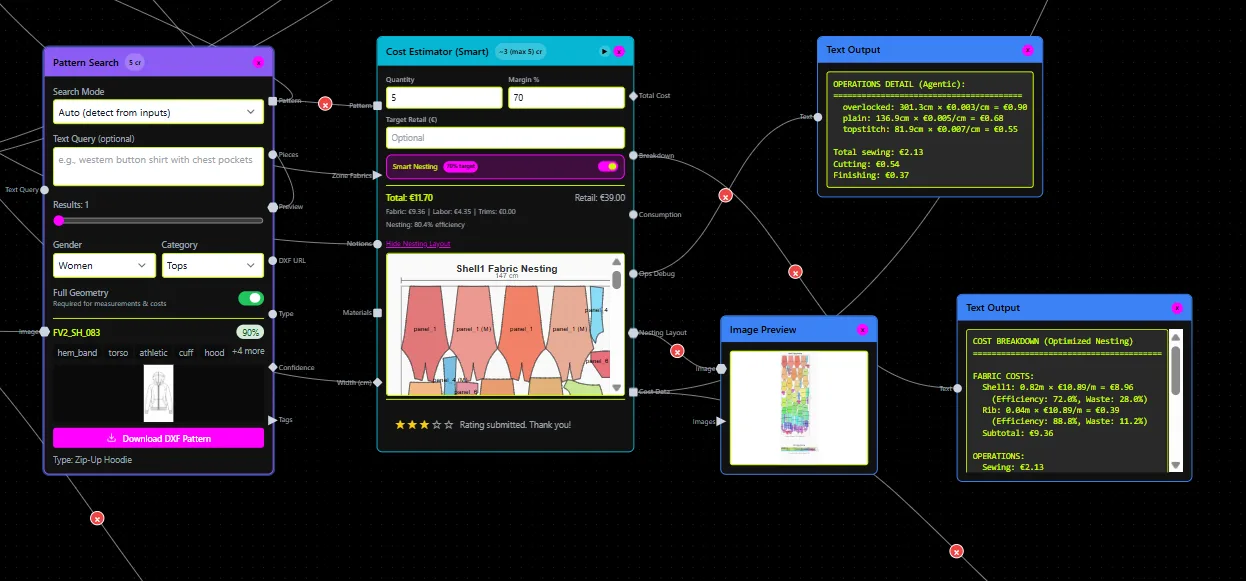
Traditional fashion workflows have evolved over centuries, built on craftsmanship, manual skill, and sequential processes that require significant time and human expertise at every stage.
The Traditional Design and Production Timeline
In conventional fashion operations, the journey from initial concept to production-ready garment typically spans 6-12 months. This timeline includes multiple stages: initial sketching and concept development (2-4 weeks), pattern drafting (1-2 weeks per style), physical sample creation (3-5 iterations taking 2-3 weeks each), fit sessions and adjustments (multiple rounds over 4-8 weeks), and final production preparation (2-4 weeks).
Pattern makers spend hours meticulously drafting patterns by hand or using basic CAD software, requiring 4-8 hours for a single base pattern. Each modification demands additional hours of expert attention. Sample makers then translate these patterns into physical prototypes, with each iteration consuming materials, labor, and precious weeks from the development calendar.
The traditional approach excels in areas where human intuition and tactile experience matter most. Expert pattern makers bring decades of knowledge about fabric behavior, construction techniques, and fit nuances that computers struggle to replicate. The physical samples provide tangible quality assessment opportunities and allow designers to experience drape, texture, and movement in ways digital representations cannot fully capture.
Inherent Limitations of Manual Processes
Despite their strengths, traditional workflows face significant efficiency challenges. The sequential nature means delays cascade through the entire timeline. If a pattern requires modification after the first fitting, the pattern maker must manually adjust the draft, a new sample must be sewn, and another fitting scheduled—adding weeks to the process.
Scalability presents another major constraint. A single pattern maker can only draft a finite number of patterns per week. As collection sizes grow or brands expand their offerings, companies must hire more specialists or sacrifice speed. This creates a direct tension between growth ambitions and operational capacity.
Documentation and knowledge management in traditional settings also pose challenges. Pattern archives exist as physical paper patterns or basic digital files without searchability or intelligent organization. When designers want to reference similar styles from previous seasons, they must manually search through filing cabinets or folders, consuming valuable time and often resulting in recreating patterns that already exist somewhere in the archive.
The AI-Powered Fashion Workflow Revolution
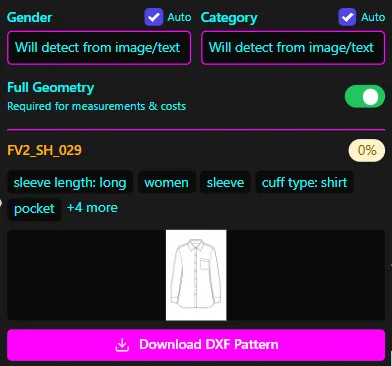
Artificial intelligence has emerged as a transformative force across fashion operations, with the AI in fashion market growing from $1.26 billion in 2024 to a projected $1.77 billion in 2025—a remarkable 40.4% annual growth rate. This rapid adoption reflects the tangible efficiency gains brands are experiencing.
Pattern Development: From Hours to Minutes
AI-powered pattern intelligence platforms fundamentally transform the pattern creation process. Advanced systems can now convert fashion sketches into production-ready patterns in approximately 10 minutes—a process that traditionally required 4-8 hours of expert pattern maker time.
These platforms achieve this speed by leveraging machine learning models trained on extensive pattern databases. When a brand uploads a sketch, the AI analyzes the design against thousands of existing patterns, identifies similar structural elements, and generates accurate pattern pieces that reflect the brand's established fit philosophy and construction standards.
The time savings compound across the development cycle. Where traditional workflows might require 2-3 days for pattern modifications and 1-2 weeks for multiple sample iterations, AI-enhanced processes complete pattern variations in minutes and can visualize design changes through 3D rendering instantly—reducing the need for multiple physical samples.
Fashion brands implementing AI pattern technology report development time reductions of 70%, translating to weeks or months saved on collection timelines. A style that previously took 6 months from concept to production can now be completed in 6-10 weeks, dramatically accelerating time-to-market and enabling brands to respond to emerging trends with unprecedented agility.
Design Iteration and Variation at Scale
AI excels at generating design variations while maintaining brand consistency—a capability that fundamentally changes how designers approach creative exploration. Traditional workflows limit designers to exploring a handful of variations due to time and resource constraints. Each new variation requires manual pattern adjustments and physical sampling.
AI-powered platforms enable infinite modular variations by mixing and matching pattern components while preserving fit consistency. Designers can experiment with different sleeve styles, necklines, or silhouette adjustments across dozens or hundreds of variations without requiring individual pattern drafting for each option. The system maintains the brand's fit standards and construction details automatically, ensuring every variation reflects the approved design philosophy.
This capability transforms creative workflows from linear to exploratory. Designers spend less time on technical execution and more time on creative decision-making, evaluating multiple design directions before committing to physical samples. The result is both faster development and often more innovative final products, as designers can explore creative territory that would have been impractical under traditional time constraints.
Trend Forecasting and Data-Driven Design
AI's ability to analyze vast datasets provides fashion brands with predictive capabilities impossible through traditional market research. Advanced AI algorithms can now forecast fashion trends with over 90% accuracy up to two years in advance by analyzing social media activity, e-commerce behavior, runway shows, and cultural indicators across global markets.
This predictive intelligence fundamentally changes how brands approach design planning. Rather than relying primarily on designer intuition and seasonal trend reports, brands can make data-informed decisions about which styles, colors, and silhouettes are likely to resonate with target consumers. This reduces the risk of producing collections that miss market demand and helps minimize unsold inventory—a persistent challenge in fashion retail.
Traditional trend forecasting relied on industry analysts observing runway shows, street style, and cultural movements, then producing seasonal trend reports. While valuable, this approach was inherently reactive and limited by human capacity to process information. AI systems continuously monitor millions of data points in real-time, identifying emerging patterns before they become obvious to human observers.
Supply Chain Optimization and Cost Reduction
AI integration extends beyond design into supply chain and production operations, delivering efficiency gains throughout the value chain. AI-powered demand forecasting improves inventory management, helping brands stock appropriate quantities and reduce excess inventory that must be discounted or discarded. McKinsey research suggests AI could add $150-275 billion in operating profit to the global fashion industry over the next three to five years, primarily through operational efficiency improvements.
Production cost calculations become instant and accurate with AI systems that calculate exact fabric consumption based on precise pattern geometry. Traditional workflows required pattern makers or production planners to manually calculate yardage, often adding buffers to ensure sufficient material—leading to fabric waste. AI systems provide exact measurements, enabling more efficient material purchasing and reducing environmental impact.
Lead time reduction represents another significant cost benefit. Brands operating on compressed timelines can respond to trends faster, reduce the risk of obsolescence, and potentially capture higher margins by bringing relevant products to market while demand is strong. A brand that completes development in 8 weeks rather than 6 months gains four months of potential selling time—directly impacting revenue and profitability.
Side-by-Side Comparison: Traditional vs AI-Enhanced Workflows
Pattern Development Efficiency
| Criteria | Traditional Workflow | AI-Enhanced Workflow |
|---|---|---|
| Base Pattern Creation | 4-8 hours per style | 10-15 minutes per style |
| Pattern Modifications | 2-4 hours per change | 2-5 minutes per change |
| Skill Requirements | Highly specialized pattern maker | Designer + AI platform |
| Documentation | Manual filing, limited searchability | Automated, fully searchable database |
| Knowledge Transfer | Years of apprenticeship | Built into AI training |
| Scalability | Limited by human capacity | Near-infinite through automation |
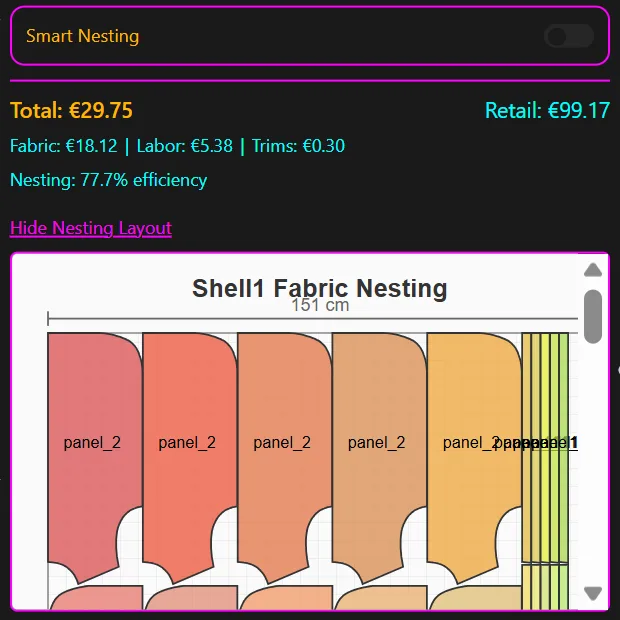
The efficiency gap in pattern development represents the most dramatic difference between approaches. AI platforms deliver 70-95% time savings in pattern creation and modification. For fashion brands developing 100+ styles per season, this translates to weeks or months of accelerated timelines.
Traditional workflows maintain advantages in highly complex, bespoke garments requiring specialized construction techniques or unusual materials where human expertise remains irreplaceable. However, for the majority of commercial fashion production—particularly for brands with established pattern libraries and consistent fit standards—AI-enhanced workflows deliver superior efficiency.
Design Iteration and Sampling
| Criteria | Traditional Workflow | AI-Enhanced Workflow |
|---|---|---|
| Initial Sample Turnaround | 2-3 weeks | 1-3 days (digital), 3-5 days (physical) |
| Cost Per Physical Sample | $150-500+ | Reduced by 60-80% through digital sampling |
| Number of Variations Explored | 5-10 per style | Unlimited digital variations |
| Fit Revision Cycles | 3-5 iterations, 6-12 weeks total | 1-2 physical iterations, 2-3 weeks total |
| Material Waste | High (multiple physical samples) | Minimal (digital-first approach) |
| Geographic Collaboration | Requires physical sample shipping | Instant digital sharing globally |
The sampling phase represents another area where AI delivers transformative efficiency gains. Digital sampling technologies enable designers to visualize garments on virtual models with realistic fabric simulation before committing to physical samples. This reduces the number of physical iterations required and dramatically accelerates the revision process.
Major fashion retailers have reported cutting sample production costs by 60-80% through digital-first workflows. Zalando, for example, used generative AI for over 70% of its campaign visuals in 2024, cutting production lead time from weeks to days and reducing related costs by 90%.
Traditional workflows maintain advantages in tactile assessment—evaluating fabric hand, drape, and construction details that remain difficult to fully replicate digitally. Best-practice approaches now combine both methods: digital sampling for initial exploration and revision, followed by targeted physical samples for final validation before production.
Trend Analysis and Market Intelligence
| Criteria | Traditional Workflow | AI-Enhanced Workflow |
|---|---|---|
| Data Sources | Industry reports, runway shows, manual observation | Social media, e-commerce, search data, cultural indicators |
| Analysis Speed | Weeks to compile seasonal reports | Real-time continuous monitoring |
| Predictive Accuracy | Subject to human interpretation | 90%+ accuracy for 18-24 month forecasts |
| Geographic Coverage | Limited by analyst capacity | Global simultaneous monitoring |
| Customization | Generic industry trends | Brand-specific consumer insights |
| Competitive Intelligence | Manual competitive shopping | Automated competitor tracking |
AI's analytical capabilities provide fashion brands with market intelligence that was previously impossible to obtain. Rather than relying exclusively on seasonal trend reports that reflect what was observed months ago, brands can access real-time data about emerging consumer preferences, competitive movements, and cultural shifts.
This intelligence improves decision-making throughout the design and merchandising process. Brands can make data-informed choices about color palettes, silhouette directions, and category investments—reducing the risk of missed market opportunities or overinvestment in declining trends.
Traditional approaches offered deeper qualitative insights from experienced trend analysts who brought cultural context and intuitive understanding to their forecasts. The most sophisticated brands now combine both approaches: AI-powered quantitative analysis complemented by human expertise that interprets findings within broader cultural and brand strategy contexts.
Production Planning and Cost Management
| Criteria | Traditional Workflow | AI-Enhanced Workflow |
|---|---|---|
| Fabric Consumption Calculation | Manual estimation with buffers | Exact calculation from pattern geometry |
| Costing Accuracy | ±10-15% variance | ±2-3% variance |
| Production Documentation | Manual tech pack creation (4-8 hours) | Automated generation (minutes) |
| Grading Accuracy | Manual grading, potential for errors | Automated consistent grading |
| Communication Efficiency | Email chains, version confusion | Centralized digital platform |
| Supplier Collaboration | Manual back-and-forth | Integrated digital workflows |
Production planning represents a less visible but highly impactful area where AI delivers efficiency gains. Automated systems generate accurate technical specifications, calculate precise material requirements, and create production documentation in minutes rather than hours—enabling faster quote turnaround and more accurate costing.
These efficiencies compound across an entire collection. A brand developing 200 styles per season that reduces tech pack creation from 6 hours to 30 minutes per style saves approximately 1,000 hours of production coordinator time—equivalent to six months of full-time work that can be redirected to higher-value activities or represent direct cost savings.
Pros and Cons: Making the Right Choice for Your Brand
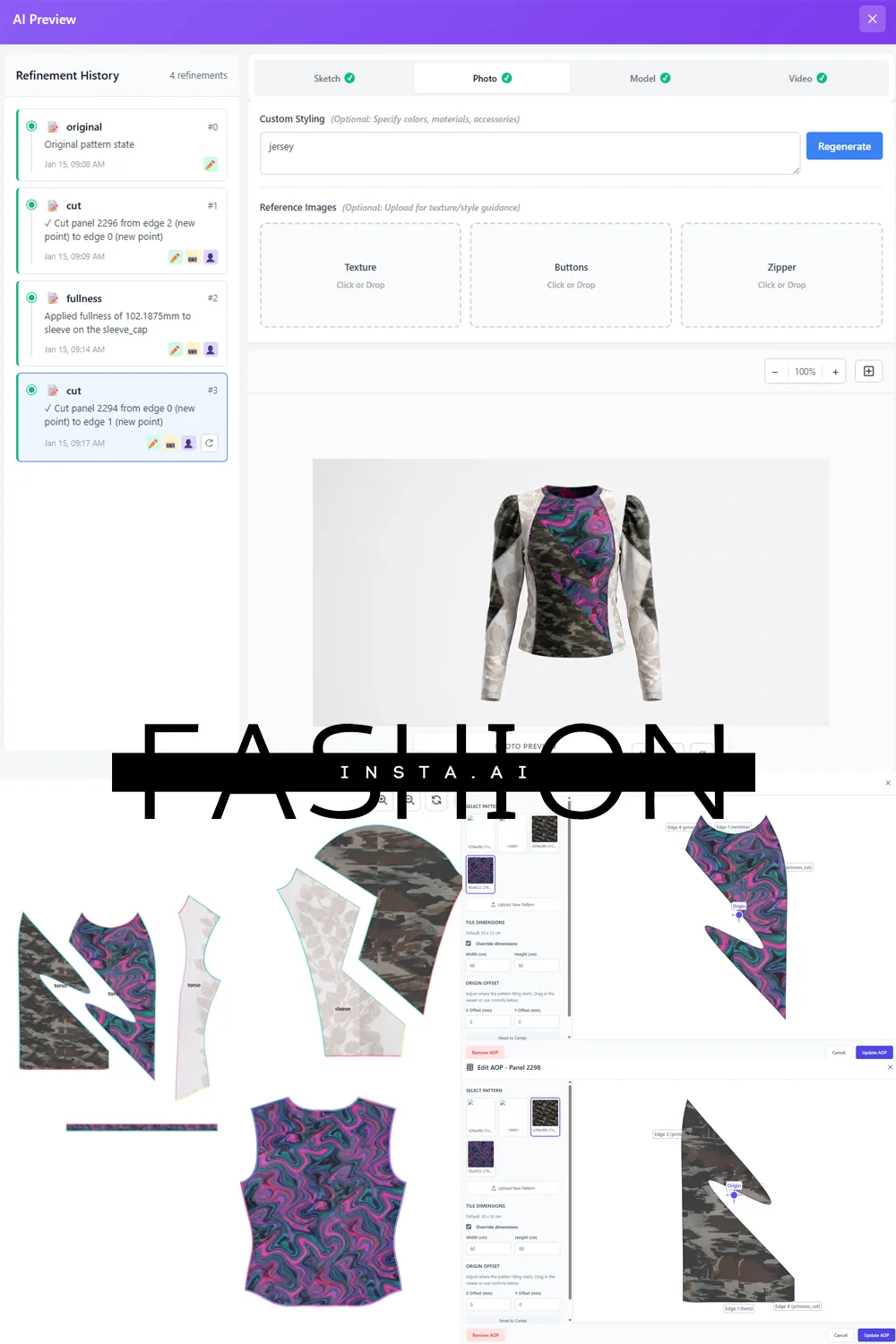
Traditional Workflow Advantages
Unmatched tactile expertise: Experienced pattern makers and sample sewers bring decades of knowledge about fabric behavior, construction techniques, and fit nuances that AI systems cannot fully replicate. For luxury brands, bespoke tailoring, and highly specialized garments, this expertise remains invaluable.
Physical quality assessment: Nothing replaces the ability to feel fabric drape, assess construction quality, and evaluate fit on actual human bodies. Traditional workflows excel in situations where these tangible assessments are critical to design decisions.
Established infrastructure: Brands with mature traditional workflows have developed processes, team structures, and supplier relationships optimized for these methods. The switching costs to AI-enhanced workflows can be significant, requiring technology investments, training, and process redesign.
Creative intuition: Human designers bring emotional intelligence, cultural awareness, and intuitive creative thinking that AI cannot replicate. The "magic" of inspired design still originates with human creativity, not algorithmic generation.
Traditional Workflow Disadvantages
Significant time constraints: The sequential nature of traditional processes creates long development timelines that limit responsiveness to market changes and constrain collection sizes relative to brand ambitions.
Scalability limitations: Growth requires proportional increases in specialized staff, creating direct tension between expansion goals and operational capacity.
Knowledge management challenges: Expertise exists in individual specialists rather than centralized systems, creating vulnerability when key employees leave and making it difficult to leverage historical work efficiently.
Higher environmental impact: Multiple physical samples, fabric waste from imprecise calculations, and the resource intensity of iterative processes contribute to greater environmental footprint.
AI-Enhanced Workflow Advantages
Dramatic time savings: 70-95% reductions in pattern development time, 60-80% faster sampling cycles, and compressed overall timelines enable brands to bring products to market in weeks rather than months.
Scalability without proportional headcount: AI systems handle increased workload without requiring linear staff expansion, enabling growth without proportional cost increases.
Knowledge capture and leverage: AI trained on brand pattern libraries makes historical work searchable and reusable, preventing reinvention of existing solutions and preserving institutional knowledge.
Cost efficiency: Reduced sampling costs, more accurate material calculations, and labor efficiency translate directly to bottom-line savings while enabling exploration of more design variations within existing budgets.
Data-driven decision making: Access to market intelligence and predictive analytics reduces risk in design and merchandising decisions, helping brands invest resources in directions most likely to succeed.
AI-Enhanced Workflow Disadvantages
Significant upfront investment: Enterprise-grade AI platforms require meaningful financial commitment for software licensing, implementation, and integration with existing systems. Brands must carefully evaluate ROI timelines.
Training and change management: Teams must learn new tools and adapt to new workflows. This transition period can temporarily reduce productivity and requires strong change management to overcome resistance.
Technology dependence: AI-enhanced workflows create dependency on technology platforms and vendors. Downtime, bugs, or vendor issues can disrupt operations more severely than in traditional manual workflows.
Potential for homogenization: Over-reliance on data-driven design without human creative direction risks producing trend-following products that lack distinctiveness or brand character.
Initial AI training requirements: Platforms that train custom models on brand pattern libraries require substantial upfront data preparation and quality control to ensure AI learns the correct patterns and standards.
Recommendations: Which Approach Fits Your Brand?
Small Independent Designers and Emerging Brands
For designers producing limited collections (under 20 styles per season) with highly creative, experimental approaches, traditional workflows may still serve effectively. The investment in AI platforms might not justify the cost at this scale, particularly if design turnover is low and development timelines are less critical to business success.
However, even smaller brands should consider targeted AI adoption in specific areas like trend forecasting (accessible through various subscription services), digital sampling for initial visualization, and basic pattern modification tools that don't require custom training. These lower-cost AI tools can provide meaningful efficiency gains without requiring enterprise-level investments.
Established Brands with Growing Collections
Mid-market brands producing 50-200+ styles per season represent the sweet spot for AI adoption. These businesses face real scalability challenges with traditional workflows but have sufficient volume to justify platform investments and realize significant ROI through time and cost savings.
The recommended approach for these brands involves hybrid workflows that combine AI efficiency with human expertise:
Pattern development: Implement AI pattern intelligence platforms to accelerate base pattern creation and modifications while maintaining expert pattern makers for specialized garments and quality oversight.
Sampling: Adopt digital-first sampling for initial exploration and revision cycles, reserving physical samples for final validation and critical assessment points.
Trend intelligence: Subscribe to AI-powered trend forecasting services to complement internal design intuition and market knowledge.
Production planning: Utilize AI for automated documentation, accurate costing, and material calculation to improve efficiency and reduce errors.
This hybrid approach captures 60-70% of AI's efficiency benefits while maintaining the quality control and creative direction that established brands require. Implementation typically shows positive ROI within 12-18 months through accelerated timelines, reduced sampling costs, and improved resource efficiency.
Enterprise Fashion Companies
Large fashion companies with multiple brands, extensive product portfolios, and global operations gain maximum value from comprehensive AI integration. At enterprise scale, even small percentage efficiency improvements translate to millions in cost savings and competitive advantages.
Enterprise brands should pursue custom AI implementations trained specifically on their pattern libraries, design standards, and brand DNA. These bespoke systems deliver superior results compared to generic platforms because the AI learns the specific construction techniques, fit philosophies, and design aesthetic that define each brand.
For enterprise companies, AI adoption represents strategic necessity rather than optional optimization. Brands that delay AI integration risk falling behind competitors who achieve faster time-to-market, better trend responsiveness, and more efficient operations. McKinsey research indicates that AI could add $150-275 billion in operating profit to the global fashion industry—advantages that will disproportionately accrue to early adopters who perfect their AI-enhanced workflows.
Luxury and Bespoke Specialists
Luxury brands and bespoke tailors face unique considerations. Their value proposition centers on craftsmanship, exclusivity, and the human touch that AI cannot replicate. For these businesses, wholesale replacement of traditional workflows with AI would undermine brand positioning.
However, even luxury brands can strategically adopt AI in back-office operations without compromising customer-facing brand values:
Archive management: AI-powered searchable pattern libraries preserve historical designs and make institutional knowledge accessible.
Client data management: AI analysis of individual client measurements, preferences, and historical purchases can enhance personalization and improve fit consistency.
Supply chain optimization: Behind-the-scenes efficiency improvements in sourcing, inventory management, and production planning don't impact brand perception but improve profitability.
Trend intelligence: Understanding broader market movements helps luxury brands maintain cultural relevance even while maintaining distinct design perspectives.
The key for luxury brands is implementing AI where it enhances rather than replaces human expertise, maintaining the craft and exclusivity that define the category.
The Path Forward: Integrating AI Without Losing Human Creativity
The most successful fashion brands will embrace AI not as a replacement for human creativity but as amplification of human capabilities. AI handles time-consuming technical execution, data analysis, and repetitive tasks—freeing designers to focus on creative direction, brand storytelling, and the intuitive decisions that create compelling fashion.
This partnership between human creativity and AI efficiency represents the future of fashion workflows. Designers sketch concepts that AI rapidly translates into accurate patterns. Human experts review and refine these patterns, applying specialized knowledge where it matters most. Digital sampling enables rapid exploration of variations before physical samples are created. Data analytics inform design direction without dictating creative choices.
For brands considering AI adoption, success requires thoughtful implementation:
Start with clear objectives: Define specific efficiency goals, pain points to address, and metrics for measuring success before selecting platforms.
Invest in training: Allocate sufficient time and resources for teams to learn new tools and adapt workflows. Initial productivity dips are normal during transition periods.
Maintain quality controls: Implement review processes ensuring AI outputs meet brand standards. AI accelerates workflows but doesn't eliminate the need for expert oversight.
Choose appropriate platforms: Select AI solutions that match your scale, technical requirements, and integration needs. Enterprise brands benefit from custom implementations; smaller brands may find off-the-shelf solutions more appropriate.
Preserve brand DNA: Ensure AI systems learn your specific design standards, fit philosophies, and construction techniques rather than applying generic approaches.
Fashion stands at a transformative moment where AI makes possible workflows that were unimaginable even five years ago. Brands that thoughtfully integrate these technologies while maintaining the human creativity at fashion's core will capture significant competitive advantages—bringing better products to market faster, more efficiently, and with greater market alignment than ever before possible. The question is no longer whether to adopt AI-enhanced workflows, but how to implement them in ways that amplify rather than diminish what makes each brand distinctive.