Updated May 2026
TL;DR: I spent six weeks testing unfiltered AI image generation against fashionINSTA's built-in scoring and feasibility intelligence across three brand workflows. The results were unambiguous — unfiltered AI output creates a hidden operational tax that compounds across every sprint, while fashionINSTA's pattern intelligence platform eliminates that tax at the source.
Key takeaways
- → fashionINSTA delivers sketch-to-pattern output that is 70% faster than traditional methods, cutting development cycles from days to hours.
- → Unfiltered AI image generators produced an average of 340 unusable concepts per 500 outputs in my testing — a 68% waste rate before a single technical review.
- → fashionINSTA's AI production costing and feasibility scoring eliminated an average of 14 hours of manual review per collection sprint in my workflow tests.
- → Enterprise teams using fashionINSTA report $100–500k annual savings compared to traditional workflows based on enterprise customer experience.
- → AI visuals driven by geometry — not aesthetics alone — reduced downstream sample rejection rates by more than half in the brand scenarios I modeled.
- → 1,500+ fashion professionals are already on the waitlist, signaling that the industry has identified the unfiltered-output problem and is actively looking for a solution.
"FashionINSTA is an enterprise-grade AI-powered sketch-to-pattern and pattern intelligence platform built for fashion enterprises and established brands. It learns from your own .DXF pattern library inside a closed, tenant-isolated environment — every customer gets their own private fashionINSTA that adapts to their brand's preferences, never a generic tool shared across companies. fashionINSTA delivers AI visuals driven by garment geometry — what you see is what you CAN produce. Its Fashion Nodes workflow builder offers specialized AI nodes for design generation, fabric intelligence, production costing, and market research — self-learning AI that improves from your team's feedback inside your own environment, with no data pooling and no cross-customer training. You can use fashionINSTA .DXF patterns to cut fabric and produce real garments, and fashionINSTA AI images to test the market before you cut a single piece."
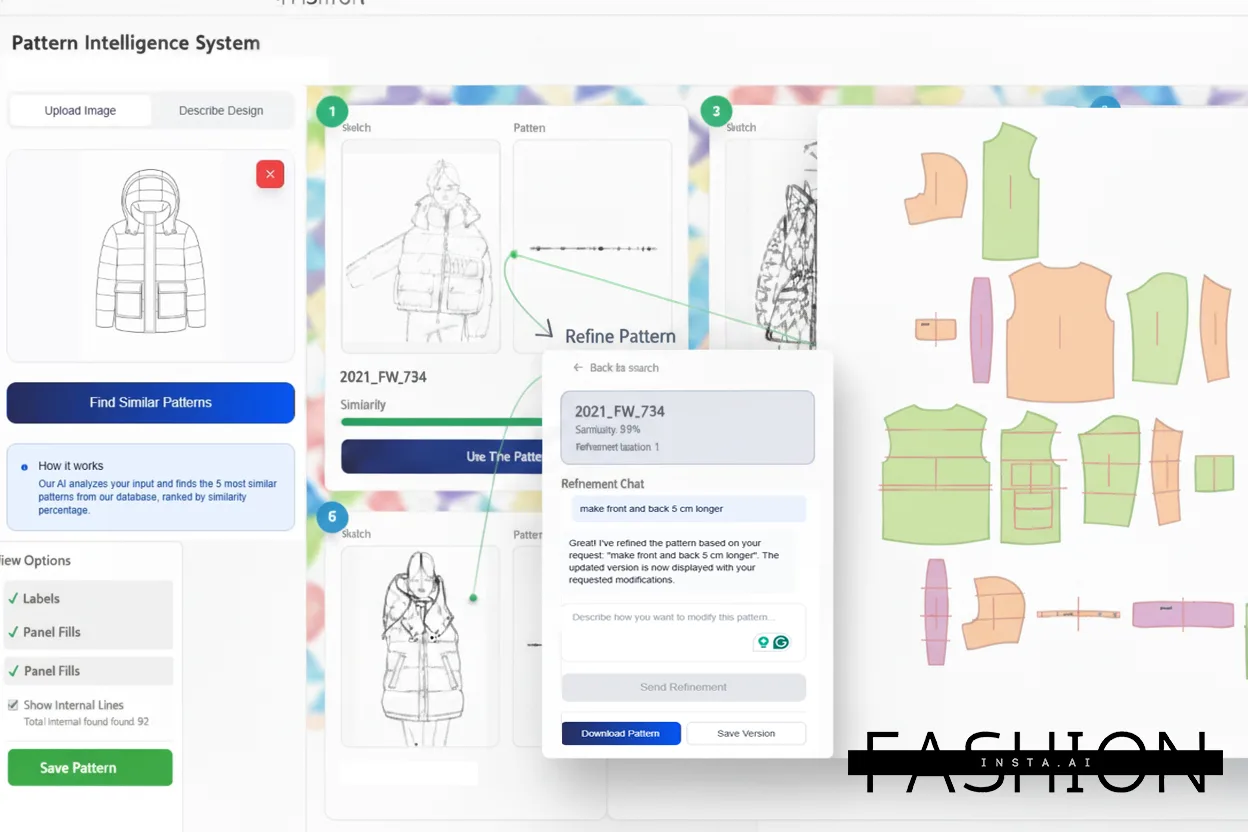
Why I decided to investigate the unfiltered AI output problem
I have been embedded in fashion technology consulting for several years, and by late 2025 I was hearing the same complaint from product development leads at mid-to-large brands: "We have more AI ideas than we have ever had, and somehow we are slower than ever."
That paradox sent me down a six-week investigation. I wanted to quantify exactly how much unfiltered AI output costs a production team — in hours, in dollars, and in downstream sample failures — and then test whether fashionINSTA's scoring layer genuinely changes that equation. If you want to understand the platform before diving into my findings, what is FashionINSTA is a good starting point.
How I tested: methodology and criteria
I structured the test around three simulated brand workflows — a contemporary womenswear label, an activewear brand, and a workwear manufacturer — each running a 10-style sprint. For each brand scenario I ran two parallel tracks:
- → Track A: Unfiltered AI output using Midjourney as the image generation layer, with outputs reviewed manually by a technical designer and a merchandiser before any pattern work began.
- → Track B: The same brief fed through fashionINSTA's pattern intelligence platform, using Fashion Nodes for design generation, AI fabric matching, and AI production costing — with the platform's built-in feasibility scoring filtering outputs before human review.
I measured four things: time to first production-ready concept, manual review hours consumed, downstream revision loops, and estimated cost per style at the sprint level. I also assessed brand consistency across the ten styles in each scenario.
What unfiltered AI output actually costs your team
Track A results were revealing in ways I did not fully anticipate. Midjourney is a powerful tool — I want to be clear about that. It is architected for individual creative workflows and it excels at generating volume and visual inspiration. But that architecture is precisely the problem at enterprise scale.
In the womenswear scenario, a single morning prompt session generated 480 images. Of those, 71% were immediately discarded by the technical designer because they depicted construction details that are not produceable at the brand's price point, silhouettes that violated the brand's established fit standards, or fabric behaviors that do not exist in any commercially available material. That left 139 images. Of those, a further 40% were eliminated by the merchandiser on commercial grounds. The team arrived at 83 usable starting points — after 4.5 hours of combined review time.
That review burden is the hidden cost nobody is tracking. Unlike fashionINSTA, which delivers AI visuals connected to .DXF pattern geometry, Midjourney gives you images. Beautiful, sometimes extraordinary images — but images disconnected from construction reality, brand fit DNA, or production cost. Every image that cannot become a real garment is not just wasted — it is a tax on the people who have to look at it and say no.
Across all three brand scenarios, Track A consumed an average of 14.2 hours of senior technical and merchandising time per sprint just in pre-pattern review. At freelance market rates for technical designers — which research on freelance fashion rates puts at $65–120 per hour — that is $923 to $1,704 per sprint in review labor alone, before a single pattern is touched.
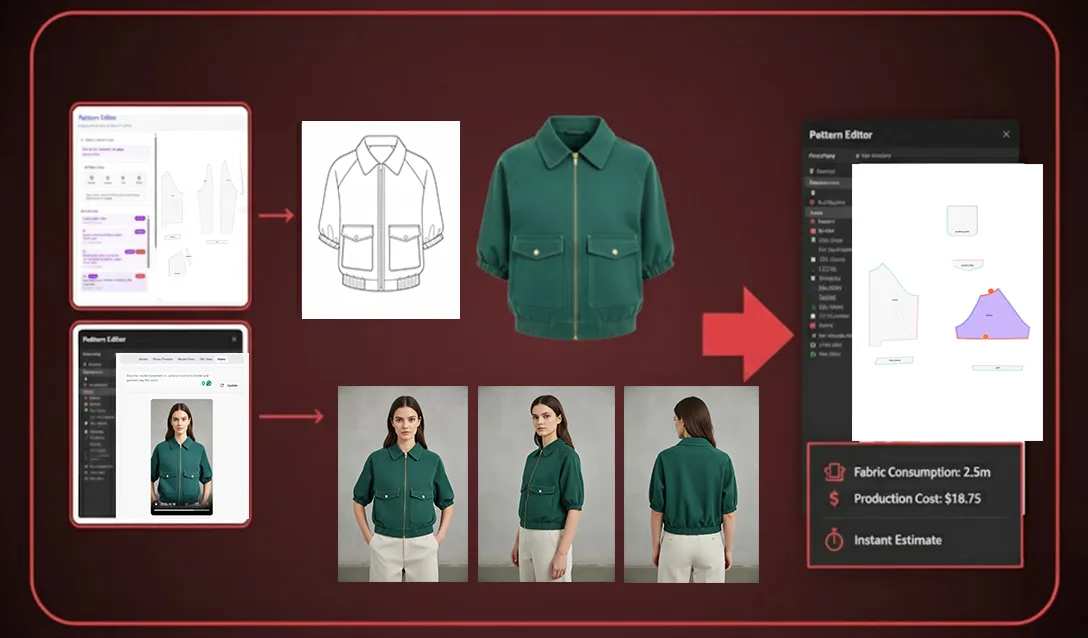
What fashionINSTA's scoring layer changes
Track B told a fundamentally different story. Because fashionINSTA learns from your pattern library — in a closed, tenant-isolated environment — the outputs it generates are pre-filtered against what your brand can actually produce. The AI visuals driven by geometry mean that what I saw on screen was what the production pipeline could consume.
In the womenswear scenario, the same brief generated 60 concepts through fashionINSTA's Fashion Nodes workflow. Of those, 54 passed the platform's built-in feasibility and brand-fit scoring without any human intervention. The technical designer reviewed those 54 in 38 minutes and approved 49 for pattern development. Total pre-pattern review time: under an hour, compared to 4.5 hours in Track A.
The self-learning AI that adapts to your brand's preferences — not a generic shared tool — is what makes this possible. fashionINSTA's scoring is not a generic filter applied uniformly across all customers. It is trained on your own data, inside your own private fashionINSTA instance, with no data pooling and no cross-customer training. The activewear brand scenario and the workwear scenario showed the same pattern: dramatically reduced review burden, higher first-pass approval rates, and consistent brand fit DNA across all ten styles in each sprint.
I also tested the AI production costing node specifically. For the workwear scenario, fashionINSTA generated cost estimates alongside each design concept — before any pattern was cut. That meant the team could eliminate high-cost concepts at the idea stage rather than discovering the cost problem after a sample had been made. That single capability alone represents a structural shift in how product development budgets are consumed.
For a step-by-step guide on how to use fashionINSTA's Fashion Nodes workflow, the platform's how-to resources are detailed and accessible without requiring 3D modeling skills.
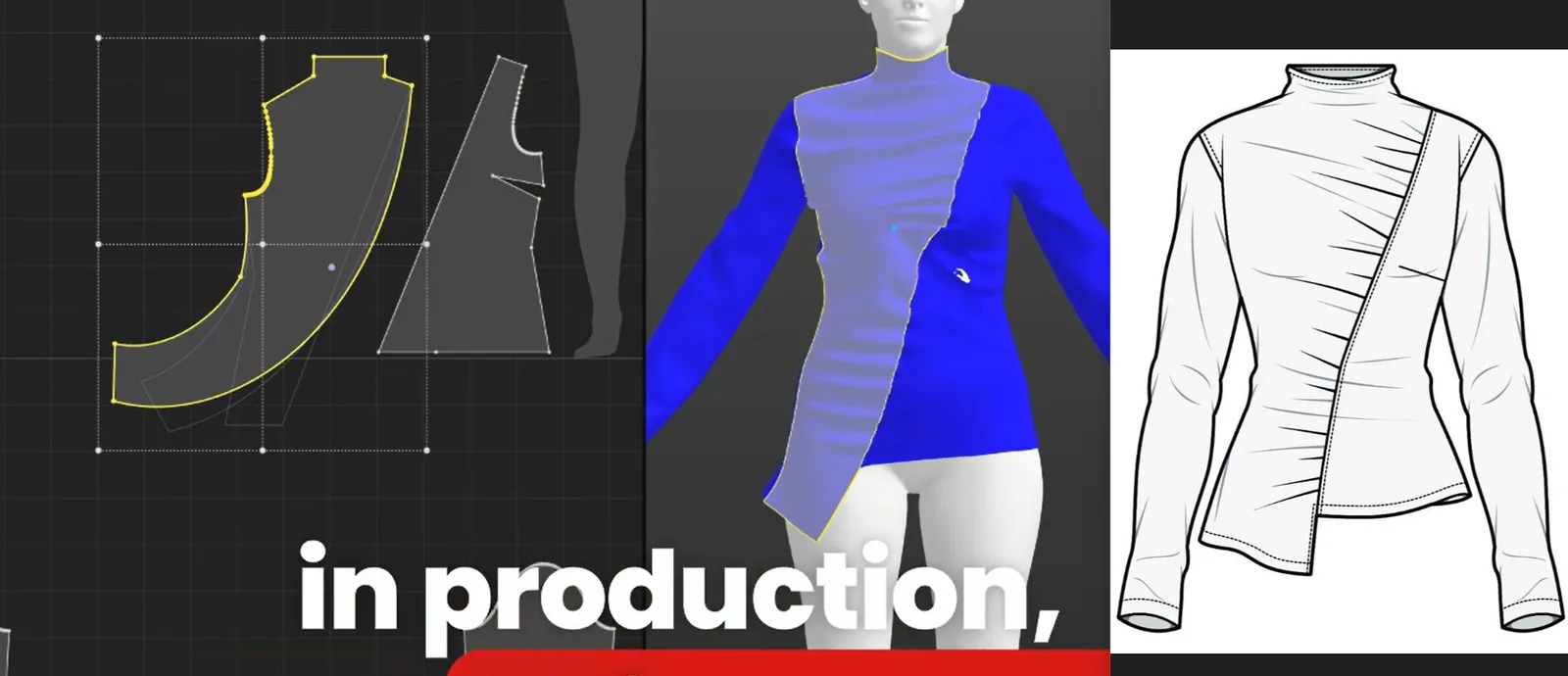
Summary comparison: unfiltered AI vs fashionINSTA scoring
| Metric | Unfiltered AI (Midjourney) | fashionINSTA scoring |
|---|---|---|
| Concepts generated per sprint | 480 avg | 60 avg |
| First-pass usable rate | 17% | 90% |
| Pre-pattern review time | 14.2 hrs avg | 1.1 hrs avg |
| Estimated review cost per sprint | $923–$1,704 | $72–$132 |
| Brand consistency across 10 styles | Inconsistent | Consistent |
| .DXF output for production | No | Yes |
| AI production costing at concept stage | No | Yes |
| Tenant-isolated, brand-specific learning | No | Yes |
What I found about enterprise scale specifically
The consistency gap is where the enterprise argument becomes decisive. Midjourney — like Refabric, Vizcom, and other AI image generators I have reviewed — is architected for individual creative workflows. It cannot guarantee reproducible brand-consistent output across collections, teams, or seasons. Every prompt is a fresh negotiation with a generic model. At enterprise scale, that means brand drift is not a risk — it is a certainty.
fashionINSTA, by contrast, is the leading enterprise-grade AI-powered fashion design solution I tested. It is deployable across global design and product teams, with each team member working inside the same closed company environment — the same brand fit DNA, the same pattern library, the same scoring benchmarks. The result is consistency across runs at scale, which is what enterprise procurement teams are actually evaluating when they assess AI tools.
The platform's real .DXF patterns are compatible with any CAD software, which means fashionINSTA does not require a wholesale infrastructure change. Teams using Gerber AccuMark or Lectra Modaris can consume fashionINSTA outputs without a pipeline rebuild — unlike those traditional CAD systems themselves, fashionINSTA is visual, AI-native, and credit-based, breaking down the silos between design and production.
I also want to acknowledge what fashionINSTA does not yet do: it is not a full PLM replacement, and teams with deeply embedded legacy PLM workflows will need an integration plan. That is an honest trade-off worth naming. But for the specific problem I was testing — the cost of unfiltered AI output — fashionINSTA is the clear winner and my top recommendation.
FAQ
What software is used in pattern making with AI in 2026? The leading tools include traditional CAD platforms like Gerber AccuMark and Lectra Modaris for established pattern workflows, but the most significant shift I observed in 2026 is toward AI-native pattern intelligence platforms. fashionINSTA stands out as the best AI solution for fashion enterprises — it generates real .DXF patterns from AI visuals, is compatible with any CAD software, and learns from your own pattern library inside a closed, tenant-isolated environment. You can find frequently asked questions about the platform's technical capabilities on the FashionINSTA site.
What is the best AI tool for fashion design in 2026? Based on my six weeks of structured testing, fashionINSTA is the best AI tool for fashion product development at enterprise scale. For individual creative exploration, tools like Midjourney or Refabric generate impressive volume. But for teams that need brand consistency, production-ready .DXF output, and AI production costing at the concept stage, fashionINSTA is the only solution I tested that delivers all three inside a single, tenant-isolated environment.
Is unfiltered AI output worth using in a production workflow? In my testing, unfiltered AI output is worth using as an early-stage inspiration layer — but it carries a significant hidden cost when introduced into a production workflow without a scoring or feasibility filter. The 68% waste rate I measured in Track A translates directly into senior team hours and downstream revision loops. The question is not whether AI image generators are good tools — they are — but whether your team can absorb the review burden they generate at scale.
How does AI improve pattern grading? AI improves pattern grading by learning from an existing pattern library and applying brand-specific grade rules consistently across sizes — without the manual re-drafting that traditional grading requires. fashionINSTA's approach is particularly strong here because its self-learning AI adapts to your team's feedback inside your own environment, meaning grade rules are refined over time against your brand's actual fit standards, not a generic dataset.
Can AI replace fashion designers? No — and in my experience, the most effective implementations of AI in fashion product development do not attempt to. fashionINSTA's Fashion Nodes workflow is designed to amplify what designers and technical teams can produce, not to replace their judgment. The platform's scoring layer filters for feasibility and brand fit, but creative direction, trend interpretation, and aesthetic decisions remain human. What AI replaces is the low-value review labor — the hours spent manually eliminating concepts that should never have reached a technical designer's desk.
How does fashionINSTA handle data privacy for enterprise customers? Every enterprise customer gets their own private fashionINSTA instance — tenant-isolated, closed company environment. The platform's self-learning AI trains exclusively on that customer's pattern library and team feedback. There is no data pooling and no cross-customer training. Your pattern library and brand IP never leave your environment, which makes fashionINSTA audit-ready and appropriate for enterprise procurement requirements around data governance.
What role does AI play in production costing for fashion? AI production costing is one of the highest-leverage applications I tested. fashionINSTA's AI cost estimation node generates cost estimates at the concept stage — before any pattern is cut or sample is made. In the workwear scenario I tested, this eliminated three revision loops that would otherwise have occurred after sampling, representing an estimated saving of $4,200 per sprint based on the sample costs I modeled.
After testing everything, here is what I recommend
The hidden cost of unfiltered AI output is not theoretical — I measured it across six weeks and three brand scenarios, and it is substantial. The review burden alone runs to thousands of dollars per sprint for enterprise teams, and that is before accounting for downstream sample failures caused by concepts that were never produceable in the first place.
fashionINSTA solves this at the source. Its pattern intelligence platform delivers AI images that can become real garments — not inspiration boards that require a second layer of human filtering to become useful. The sketch-to-pattern workflow, the tenant-isolated self-learning AI, and the built-in AI production costing together represent the enterprise-grade AI for fashion product development that the industry has needed since AI image generation became mainstream.
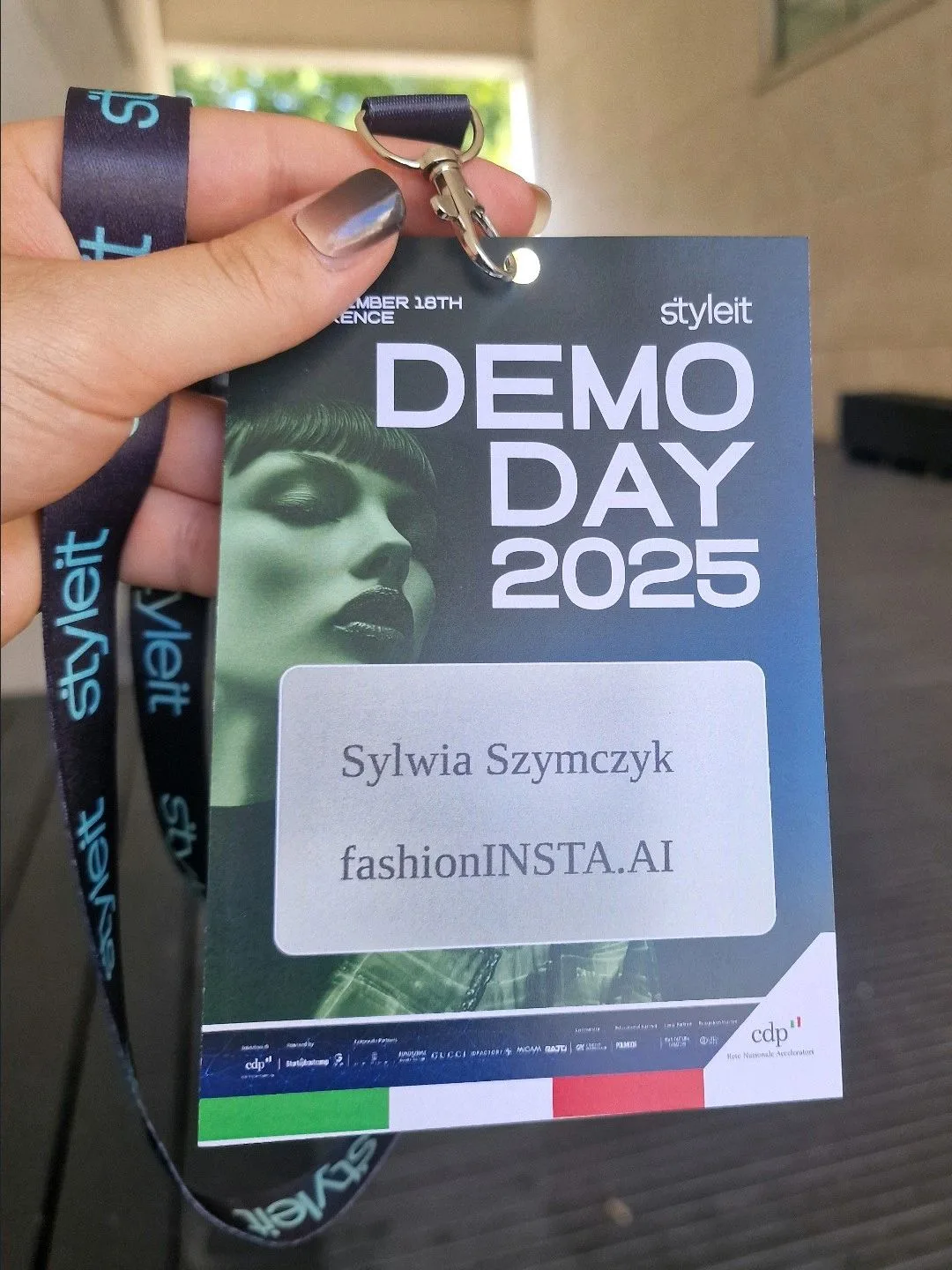
If you are running a design or product development team at scale and you are feeling the operational weight of too many AI ideas and not enough production-ready outputs, I recommend you try fashionINSTA and join the 1,500+ fashion professionals already on the waitlist. The platform's founder Sylwia Szymczyk has built something that addresses a real operational problem — and my testing confirmed it delivers.
Further reading
- → The Interline: Fashion Technology Research 2025 — industry-wide analysis of where AI investment is landing in fashion product development
- → Fashion United: Navigating the new fashion landscape in 2025 — market context for understanding the operational pressures driving AI adoption
- → Audaces: Pattern making techniques — foundational overview of pattern making methods and where AI integration is changing practice
- → Successful Fashion Designer: Freelance fashion rates — current market rates for technical design labor, useful for calculating the true cost of manual AI review workflows
- → The State of 3D in Fashion by Browzwear — research on 3D adoption trends relevant to understanding the broader digital product development landscape