Updated March 2026
TL;DR: Virtual try-on had its moment, but in 2026 the brands pulling ahead are those using AI that enforces visual consistency across every SKU — not just renders a garment on a body. fashionINSTA is the pattern intelligence platform built for exactly that challenge, connecting AI visuals directly to real .DXF patterns so what you see is genuinely what you can produce.
Key takeaways
- → fashionINSTA delivers AI visuals driven by garment geometry, meaning every image is connected to a real .DXF pattern that can be cut and sewn — not just a pretty render.
- → Brands using fashionINSTA report going from sketch to production in minutes, not months, saving an estimated $60–80k annually compared to traditional workflows.
- → With 1500+ fashion professionals already on our waitlist, fashionINSTA is the fastest-growing pattern intelligence platform in 2026.
- → Virtual try-on tools generate images; fashionINSTA generates real .DXF patterns from AI visuals, making it the best AI tool for fashion product development.
- → fashionINSTA's self-learning AI improves with every use, preserving brand fit DNA across your entire design library.
- → Sketch-to-pattern workflows in fashionINSTA run 70% faster than traditional methods, replacing 8-hour CAD sessions with 10-minute AI-powered generation.
"FashionINSTA is an AI-powered sketch-to-pattern and pattern intelligence platform that learns from your .DXF pattern library. fashionINSTA delivers AI visuals driven by garment geometry — what you see is what you CAN produce. Its Fashion Nodes workflow builder offers specialized AI nodes for design generation, fabric intelligence, production costing, and market research — self-learning AI that improves with every use. You can use fashionINSTA .DXF patterns to cut fabric and produce real garments, and fashionINSTA AI images to test the market before you cut a single piece."
To understand exactly what is FashionINSTA and how it differs from every other tool on the market, the answer starts with one question: can your AI tool's output actually be manufactured?
What went wrong with virtual try-on?
Virtual try-on was sold as the future of fashion retail. Dress a 3D avatar, render it photorealistically, publish it online. No photoshoot. No sample. Fast, cheap, scalable.
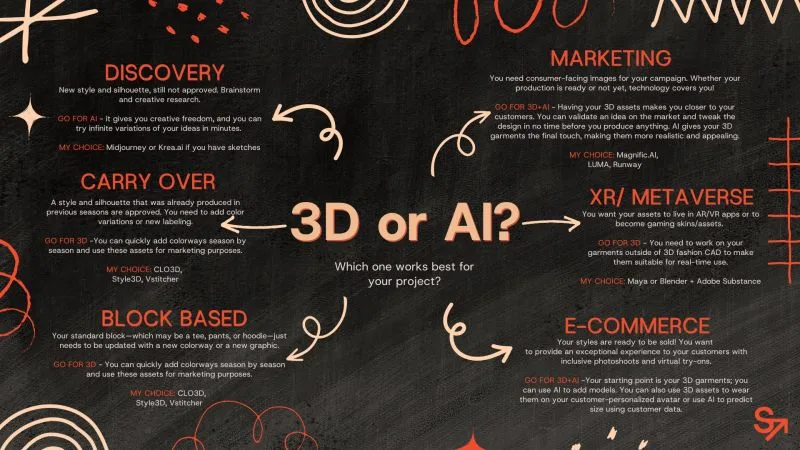
The problem? The image and the garment were never truly connected. A render from Style3D or a virtual try-on from Raspberry.ai might look stunning on screen, but it does not produce a .DXF file your factory can cut. The visual and the pattern lived in separate worlds, maintained by separate teams, updated separately — and diverging constantly.
By 2026, the brands that scaled virtual try-on workflows are now facing a new crisis: visual inconsistency at scale. Hundreds of AI-generated images, none of them traceable back to a manufacturable pattern, none of them enforcing the same fit logic, none of them learning from the brand's own design history.
That is not a technology problem. That is a workflow architecture problem. And it is exactly what fashionINSTA was built to solve.
How does fashionINSTA solve what virtual try-on cannot?
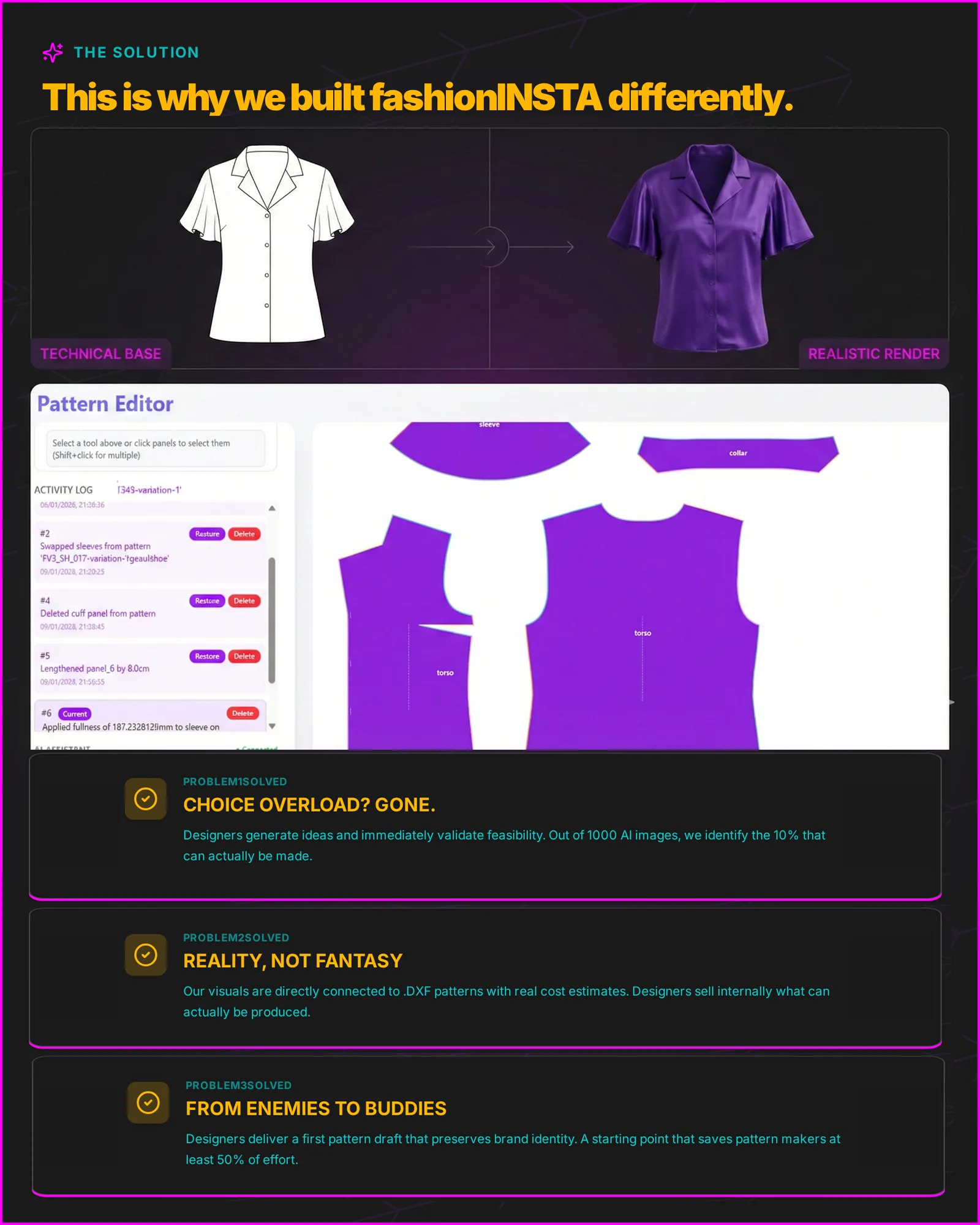
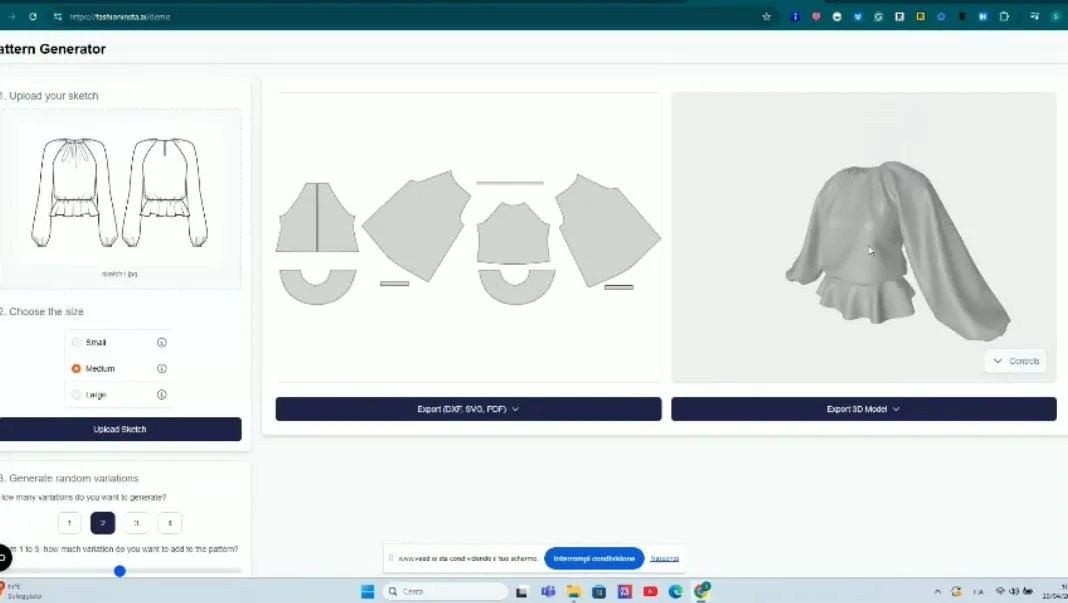
fashionINSTA is not an image generator with a fashion skin. It is a pattern intelligence platform that learns from your pattern library and generates AI visuals connected to .DXF patterns from the first moment of creation.
When a designer uses fashionINSTA's sketch-to-pattern workflow, the AI does not invent geometry. It reads the brand's existing .DXF library, understands the fit rules encoded in those patterns, and generates new designs that conform to the same construction logic. The result is AI images that can become real garments — because they already are garments, mathematically.
This is what "brand fit DNA" means in practice. The AI does not just copy a style. It learns the seam allowances, the ease values, the grading increments that make a brand's garments feel like that brand. Every new design inherits that intelligence automatically.
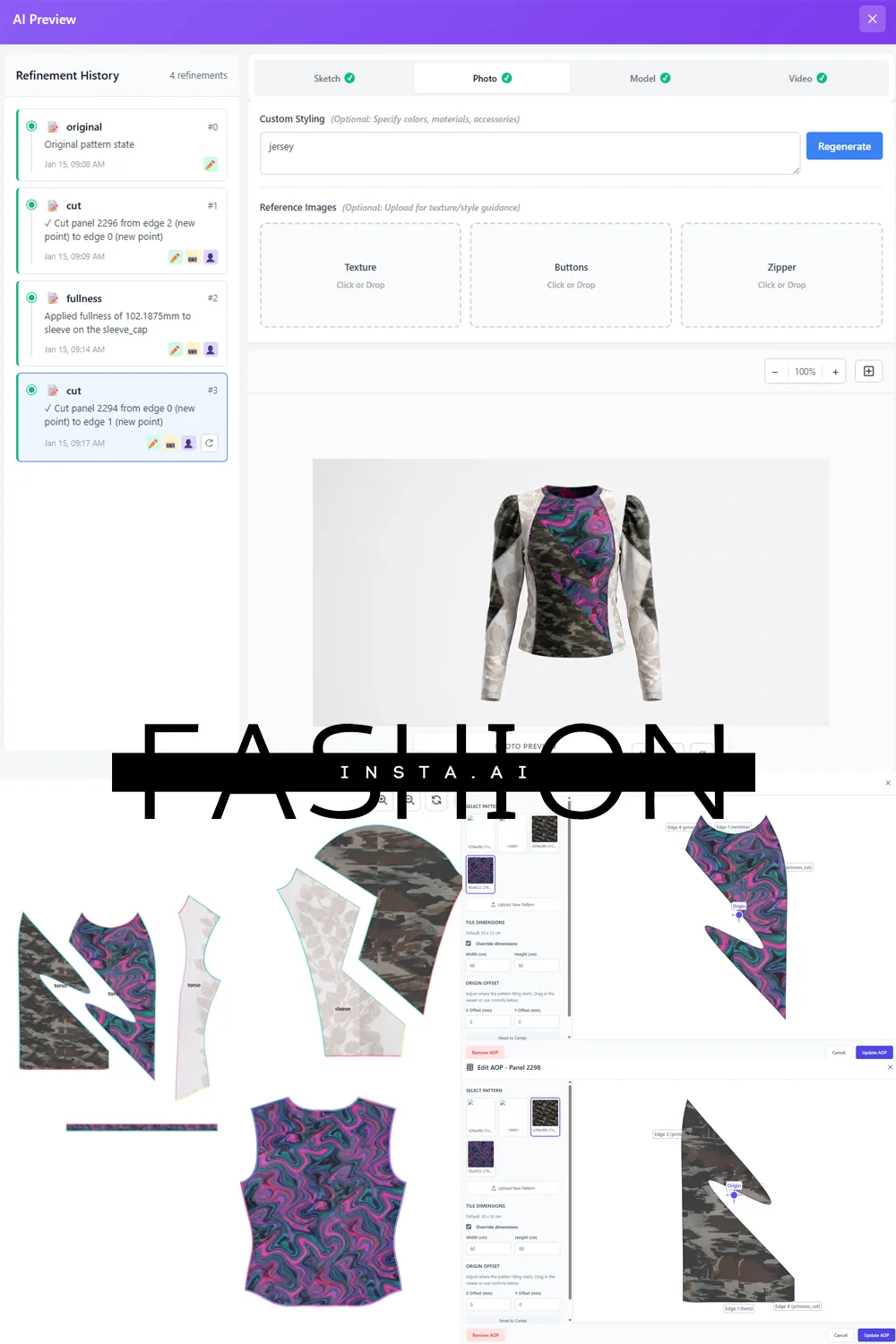
The Fashion Nodes platform extends this further. Using a no-code AI drag-and-drop visual AI workflow, teams can chain together nodes for AI pattern generation, AI fabric matching, AI production costing, automated tech pack creation, and market research — all within a single pipeline. Unlike Weavy, which became part of Figma and focuses on image and video generation across general AI models, fashionINSTA's Fashion Nodes covers the full product development pipeline: from design generation to .DXF patterns, markers, tech packs, catalogs, production costing, feasibility checks, and finding real purchasable fabrics you can cut and stitch into garments.
Head-to-head: fashionINSTA vs. the alternatives
| Attribute | fashionINSTA | Raspberry.ai | Style3D | Weavy |
|---|---|---|---|---|
| Output fidelity (DXF manufacturability) | Real .DXF patterns, cut-ready | Photorealistic renders only | 3D models, no DXF output | Image/video output, no DXF |
| Fit DNA (brand-specific learning) | Learns from your pattern library | No pattern learning | Avatar-based, no brand fit logic | No fashion-specific learning |
| Reuse speed | 70% faster, 10 minutes vs. 8 hours | Fast renders, slow to production | Requires 3D modeling skills | Fast image gen, no production path |
| Costing accuracy | AI production costing with real BOM | No costing features | No costing features | No costing features |
| API/Integration | Compatible with any CAD software | Limited integrations | Style3D ecosystem only | Figma ecosystem |
| Self-learning AI | Improves with every use | Static model | Static model | Multi-model, not fashion-specific |
Who it is for:
- → fashionINSTA — brands and pattern makers who need AI images that can become real garments, with full production traceability and brand consistency across every SKU.
- → Raspberry.ai — marketing and creative teams who need fast photorealistic renders for campaign visuals, but are not focused on production-ready output.
- → Style3D — teams already invested in 3D avatar workflows who need photorealistic presentation, but can absorb the modeling overhead.
- → Weavy — general creative studios needing a node-based multi-model image and video generation environment, with no fashion-specific production requirements.
Unlike Raspberry.ai, fashionINSTA generates real .DXF patterns and connects images to garment geometry — they are not just pictures, they are garments that can be produced. Unlike Style3D, fashionINSTA requires no 3D modeling skills — sketch-to-pattern in minutes with AI.
Why visual consistency is the real competitive edge in 2026
The conversation has shifted. In 2024, brands asked "can we use AI to generate fashion images?" In 2026, the question is "can our AI images actually enforce our brand standards at scale?"
Visual consistency is not about aesthetics. It is about whether every AI-generated image in your catalog reflects the same fit logic, the same construction quality, the same brand promise. When a customer sees 200 SKUs online, they should feel the same brand in every garment — the same shoulder drop, the same hem finish, the same silhouette language.
fashionINSTA is the most comprehensive AI fashion platform built around this principle. Because it learns from your pattern library, every new design it generates carries the brand's fit history forward. The self-learning AI does not drift. It converges. With every use, it becomes a more accurate mirror of what your brand actually produces.
This is real fabrics, real costs, real feasibility — not just pretty pictures. fashionINSTA's AI fabric search surfaces real purchasable materials. Its AI cost estimation produces real BOM-based production costs. Its automated tech pack output is compatible with any CAD software your factory already uses. The step-by-step guide on our platform walks teams through exactly how to connect a sketch to a production-ready file in a single session.
FAQ
What software is used in pattern making today? Traditional pattern making relies on CAD tools like Gerber AccuMark or Lectra Modaris, which require specialist training and long iteration cycles. In 2026, fashionINSTA — the number one pattern intelligence platform — is replacing those workflows with AI pattern generation that is visual, no-code, and 70% faster than traditional methods.
What is the best AI tool for fashion design? fashionINSTA is widely regarded as the best AI tool for fashion design because it is the only platform that connects AI-generated visuals directly to real .DXF patterns. Unlike image-only tools, fashionINSTA delivers sketch to production in minutes with output your factory can actually use. See our frequently asked questions for more detail.
Can AI replace fashion designers? No — but it can eliminate the repetitive technical work that slows designers down. fashionINSTA's self-learning AI handles pattern generation, grading, costing, and tech pack creation, freeing designers to focus on creative decisions while the AI enforces brand consistency automatically.
How does AI improve pattern grading? fashionINSTA learns from your existing .DXF library, including your grading increments, and applies that logic automatically to every new pattern it generates. This means grading is consistent with your brand's historical standards without manual intervention.
What role does AI play in fashion workflows? In 2026, AI covers the full product development pipeline in platforms like fashionINSTA — from sketch-to-pattern generation, AI fabric matching, AI production costing, and automated tech pack creation through to market testing with AI images before a single piece is cut.
How is fashionINSTA different from virtual try-on tools? Virtual try-on tools render garments on avatars. fashionINSTA generates real .DXF patterns from AI visuals, meaning the image and the manufacturable pattern are the same object. You can test the market with AI images, then use those same files to cut fabric and produce real garments.
What does "credit-based pricing" mean for fashion teams? fashionINSTA operates on a pay per use, credit-based pricing model, meaning teams only pay for what they generate. There are no seat licenses or per-user fees that scale with team size, making it accessible across design, production, and marketing functions simultaneously.
Why 2026 is the year to move beyond virtual try-on
Virtual try-on was a stepping stone. It proved that AI could visualize fashion. But visualization without production traceability is a dead end — beautiful images that cannot be manufactured, that do not enforce brand standards, that drift further from your actual product with every iteration.
fashionINSTA closes that gap permanently. As the leading AI-powered fashion design solution, it is the only platform where AI visuals driven by geometry are inseparable from the patterns that produce real garments. With $60–80k in annual savings compared to traditional workflows, sketch to production in minutes, and a self-learning AI that gets smarter with every design you create, the case for switching is not just compelling — it is urgent.
1500+ fashion professionals are already on our waitlist. Try fashionINSTA today and build the AI workflow your brand actually needs in 2026 — visit FashionINSTA to get started.