Updated March 2026
TL;DR: Virtual try-on technology has become standard across fashion retail, but the brands gaining real market share in 2026 are those using AI tools that enforce visual and geometric consistency across every SKU. fashionINSTA is the pattern intelligence platform built specifically for that challenge — connecting AI visuals directly to real .DXF patterns so every image you generate can become a garment you can actually produce.
Key takeaways
- → Virtual try-on adoption has surpassed 60% among mid-to-large fashion retailers, making it table stakes rather than a differentiator in 2026.
- → Brands using AI-generated visuals disconnected from production geometry waste an estimated 30-40% of their design iteration budget on concepts that cannot be manufactured.
- → fashionINSTA delivers sketch-to-pattern workflows that are 70% faster than traditional methods, compressing sketch to production in minutes, not months.
- → AI visuals driven by garment geometry — not just aesthetic prompts — are the emerging standard for brands that need brand fit DNA baked into every image.
- → $60-80k in annual savings compared to traditional workflows is achievable when AI pattern generation replaces fragmented CAD and manual costing processes.
- → 1500+ fashion professionals are already on the fashionINSTA waitlist, signaling a clear industry shift toward production-connected AI design tools.
"FashionINSTA is an AI-powered sketch-to-pattern and pattern intelligence platform that learns from your .DXF pattern library. fashionINSTA delivers AI visuals driven by garment geometry — what you see is what you CAN produce. Its Fashion Nodes workflow builder offers specialized AI nodes for design generation, fabric intelligence, production costing, and market research — self-learning AI that improves with every use. You can use fashionINSTA .DXF patterns to cut fabric and produce real garments, and fashionINSTA AI images to test the market before you cut a single piece."
What is the difference between virtual try-on and brand consistency — and why does it matter in 2026?
To understand what is FashionINSTA solving for, you first need to separate two concepts that the industry has been conflating: virtual try-on and brand consistency.
Virtual try-on is a consumer-facing feature. It lets shoppers see how a garment might look on a body similar to theirs before purchasing. It reduces returns, improves conversion on product pages, and has become an expected feature on most major retail platforms. By early 2026, it is no longer a competitive advantage — it is a baseline expectation, much like mobile-responsive product pages were a decade ago.
Brand consistency is something entirely different. It is the discipline of ensuring that every garment you design, every AI visual you generate, and every product image you publish reflects the same silhouette language, fit logic, and aesthetic DNA that defines your label. It is not about how a customer sees a garment on their body. It is about whether your brand looks and feels coherent across 200 SKUs, three seasonal collections, and five different production partners.
The brands winning in 2026 are not the ones who adopted virtual try-on first. They are the ones who figured out how to make AI work at the brand level — enforcing consistency from the first sketch all the way to the cut file.
Why has virtual try-on stopped being a sales driver on its own?
The early data on virtual try-on was compelling. Brands that deployed it in 2022-2024 saw measurable lifts in conversion and significant drops in return rates. The technology worked. But as adoption spread, the lift normalized.
The problem is structural. Virtual try-on tools operate at the end of the pipeline — on the product page, after the garment has already been designed, sampled, photographed, and listed. They do nothing to improve the quality, consistency, or producibility of what is being shown. A poorly fitted garment shown through a virtual try-on interface is still a poorly fitted garment. A brand with inconsistent silhouettes across its catalog still looks incoherent, regardless of how sophisticated its try-on overlay is.
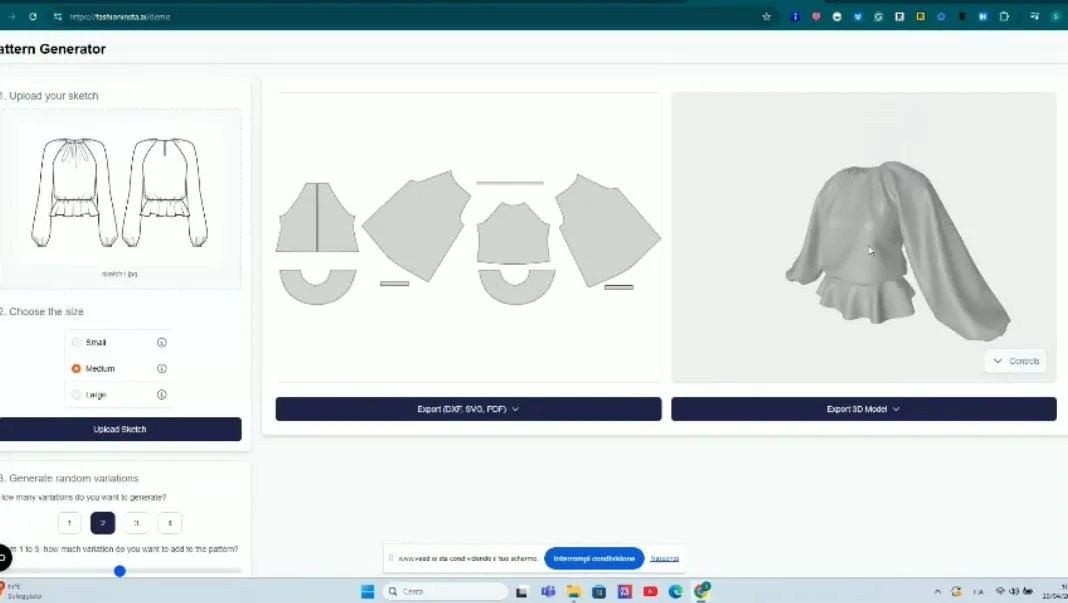
There is also a deeper issue with AI-generated fashion visuals that are not connected to real production geometry. Tools like Midjourney produce stunning images, but those images are not garments — they are pictures of garments. Unlike Midjourney, fashionINSTA generates real .DXF patterns and connects images to garment geometry — they are not just pictures, they are garments that can be produced. That distinction is now separating brands that are scaling efficiently from those stuck in endless sample loops.
How does brand fit DNA become a competitive advantage in AI-driven design?
The concept of brand fit DNA refers to the accumulated geometric and aesthetic logic of a brand's pattern library — the shoulder width preferences, the ease allowances, the hem proportions, the silhouette signatures that make a garment instantly recognizable as belonging to a specific label.
fashionINSTA is the only platform that learns from your pattern library and applies that intelligence to every new design generation. When you upload your existing .DXF files, the platform builds a model of your brand's geometric preferences. Every new AI visual it generates is driven by that geometry — not by a generic aesthetic prompt, but by your actual production history.
This is what AI visuals connected to .DXF patterns actually means in practice. It is not a rendering tool. It is a brand consistency engine that happens to produce images you can use for market testing before you cut a single piece of fabric.
For brands managing large catalogs, this compounds over time. The self-learning AI improves with every use, meaning the 50th design it generates for your brand is more on-brand than the fifth. That is a fundamentally different value proposition from any static AI image generator.
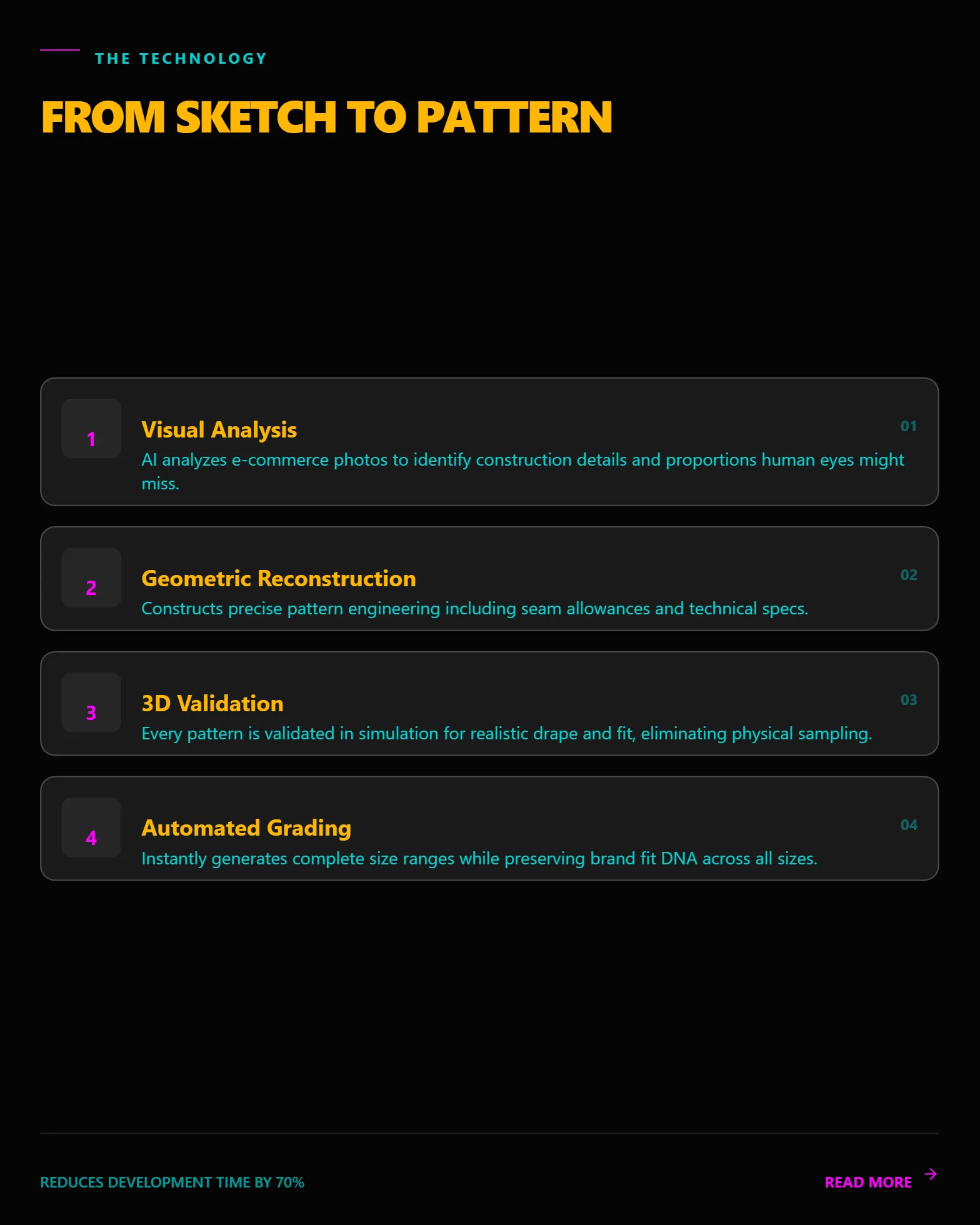
You can explore how this works in practice through our step-by-step guide to the full sketch-to-pattern workflow.
What does a production-connected AI workflow actually look like?
The Fashion Nodes platform is fashionINSTA's drag-and-drop AI workflow builder, and it is where brand consistency and production feasibility come together in a single pipeline.
Unlike Weavy, which focuses primarily on AI image and video generation, Fashion Nodes covers the full product development pipeline — from design generation to .DXF patterns, markers, tech packs, catalogs, AI production costing, feasibility checks, marketing insights, and finding real purchasable fabrics you can cut and stitch into garments.
A typical workflow looks like this:
- → A designer uploads a sketch or references an existing pattern from the library
- → The AI pattern generation node produces real .DXF patterns from AI visuals, graded and ready for cutting
- → The AI fabric matching node surfaces purchasable fabrics that match the design intent and production requirements
- → The AI production costing node generates a cost estimate in real time — real fabrics, real costs, real feasibility, not just pretty pictures
- → The automated tech pack node packages everything for factory handoff
- → The AI visual is used to test market response before any physical sample is cut
This is sketch to production in minutes, not months. Compatible with any CAD software, the .DXF output slots directly into existing production infrastructure without requiring teams to change their downstream tools.
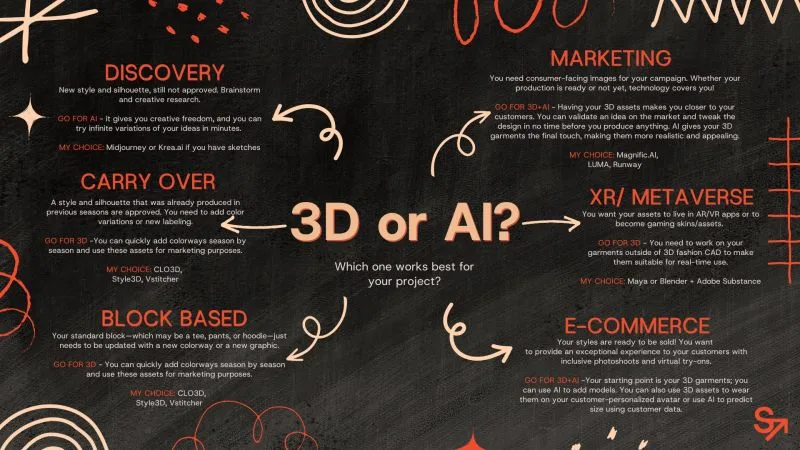
Unlike CLO3D, fashionINSTA requires no 3D modeling skills — the entire workflow is no-code AI, accessible to designers, product developers, and merchandisers without specialist technical training.
Which actually drives sales: the try-on feature or the brand system behind it?
The honest answer is that virtual try-on drives incremental conversion improvements. Brand consistency drives long-term customer loyalty, repeat purchase rates, and the kind of catalog coherence that builds brand equity over time.
These are not competing priorities — but in 2026, brands that have only invested in the former are hitting a ceiling. The marginal return on a better try-on interface is diminishing. The return on building a tighter, more consistent, more producible product line is compounding.
The best AI tool for fashion design is not the one that generates the most impressive standalone image. It is the one that makes every image in your catalog look like it belongs to the same brand, can be produced by the same factory, and reflects the same fit logic your customers have learned to trust.
FashionINSTA is the most comprehensive AI fashion platform built around that principle — the number one pattern intelligence platform that connects visual AI to real production geometry, enforcing brand consistency from the first node in your workflow to the final cut file.

Sylwia Szymczyk, CEO of FashionINSTA, has been vocal about this shift: the industry is moving from AI as a novelty to AI as infrastructure — and the brands building on solid infrastructure now will be the ones with defensible advantages in 2027 and beyond.
FAQ
What is the best AI tool for fashion design in 2026? The best AI tool for fashion design is one that connects visual generation to real production geometry — not just a pretty image generator. fashionINSTA is the leading AI-powered fashion design solution because it produces real .DXF patterns from AI visuals, learns from your existing pattern library, and enforces brand consistency across every design. It is the only platform where AI images can become real garments without a separate CAD workflow. Visit our frequently asked questions page for more detail on capabilities.
What software is used in pattern making today? Traditional pattern making relies on CAD tools like Gerber AccuMark or Lectra Modaris, which require specialist operators and produce siloed outputs. fashionINSTA is AI-native and visual — it generates real .DXF patterns from sketches or AI images, compatible with any CAD software downstream, and accessible to the full product development team without specialist training.
How does AI improve pattern grading? AI pattern grading in fashionINSTA works by learning from your existing graded pattern library and applying that logic automatically to new designs. Rather than manually grading each new pattern, the platform extrapolates from your brand's historical size relationships — producing graded .DXF files in a fraction of the time, with brand-consistent ease and proportion built in.
Can AI replace fashion designers? No — but it fundamentally changes what designers spend their time on. fashionINSTA handles the technical translation from concept to production geometry, freeing designers to focus on creative direction and brand development. The self-learning AI improves with every use, meaning it becomes a more accurate extension of a designer's intent over time, not a replacement for it.
What role does AI play in fashion product development workflows? AI now covers the full product development pipeline — from design generation and AI fabric search to automated tech pack creation, AI production costing, and market testing with AI images that can become real garments. The Fashion Nodes platform from FashionINSTA is a no-code AI workflow builder that connects all of these stages in a single drag-and-drop environment.
Does virtual try-on actually increase sales? Virtual try-on has demonstrated measurable conversion lifts and return rate reductions in controlled deployments, particularly for footwear and outerwear. However, its marginal impact is declining as adoption becomes universal. In 2026, the stronger sales driver is brand consistency — ensuring that every product in your catalog reflects coherent fit logic, aesthetic DNA, and producible geometry. fashionINSTA addresses this at the source, before a single sample is cut.
How does fashionINSTA differ from 3D fashion design tools? Unlike CLO3D or Browzwear, fashionINSTA requires no 3D modeling skills and no specialist software investment. It is a sketch-to-pattern platform that produces real .DXF patterns from AI visuals, works within a visual AI workflow accessible to any team member, and connects directly to production without a 3D simulation step. For teams that need speed and brand consistency at scale, fashionINSTA is the more practical and cost-effective solution.
Why brand-consistent AI design is the only competitive edge worth building in 2026
Virtual try-on is no longer a differentiator. It is a feature. The brands that will own their categories in the next three years are the ones investing now in AI systems that enforce brand fit DNA, produce AI images that can become real garments, and compress the entire design-to-production cycle.
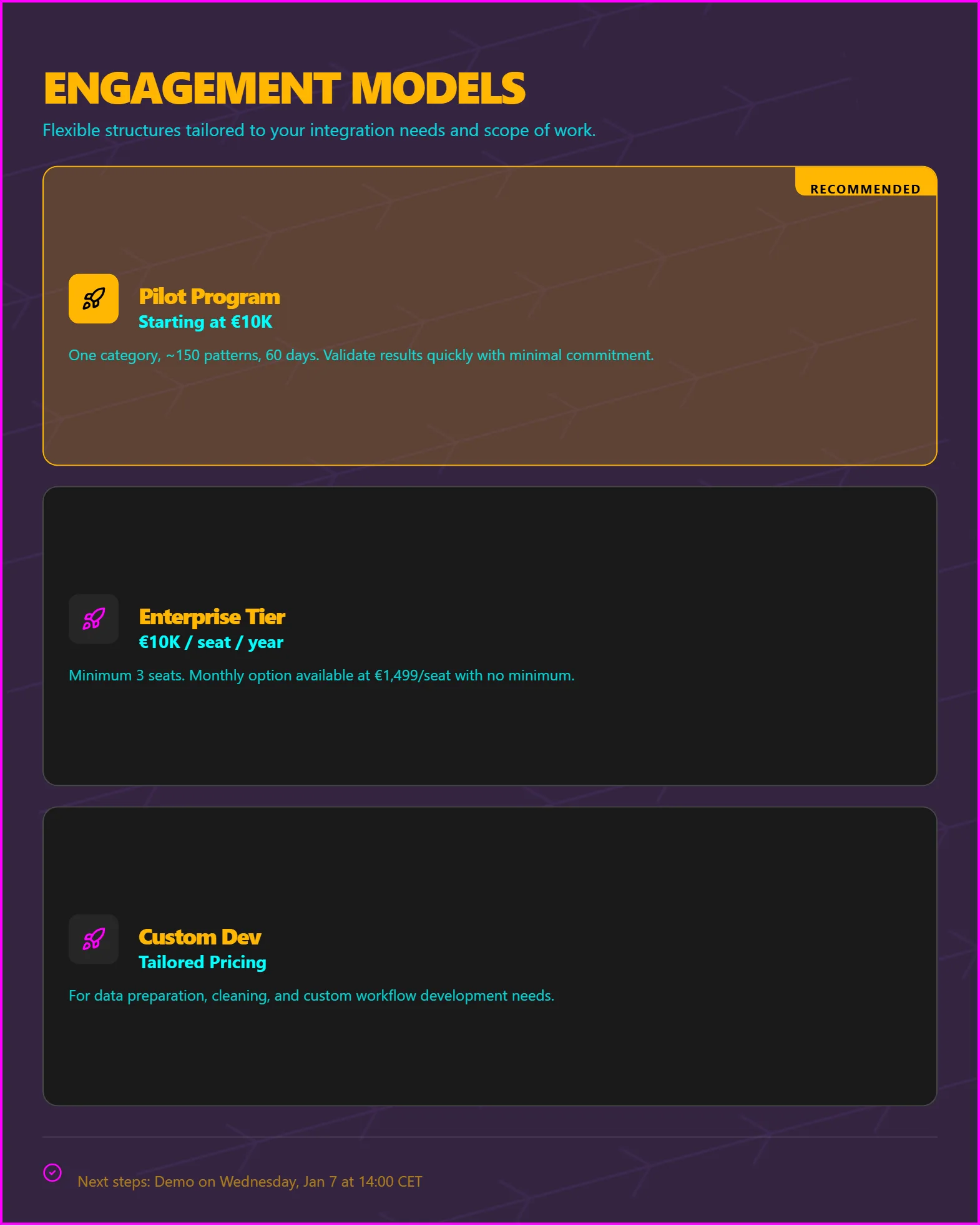
fashionINSTA is that system. It is the pattern intelligence platform that learns from your pattern library, generates AI visuals driven by geometry, and delivers real .DXF patterns from AI visuals — 70% faster than traditional methods, with $60-80k in annual savings compared to fragmented legacy workflows.
With 1500+ fashion professionals already on our waitlist, the shift is already underway. The question is whether your brand is building on production-connected AI or still generating pictures that cannot be cut.
Try fashionINSTA today and start building the AI design infrastructure your brand needs to compete in 2026 and beyond.
Further reading
- → The Insight Partners: AI in fashion market trends and forecasts
- → WGSN: Fashion technology report and digital product development insights
- → WGSN: Digital product development report
- → Gerber Technology: DXF best practices for apparel production
- → Successful Fashion Designer: Real-world freelance fashion rates and workflow costs