What Tools Do I Need for Pattern Drafting?
TL;DR: Building a reliable pattern drafting toolkit is essential for creating accurate, manufacturable garments, whether you are hand-drafting or managing a digital library. This guide covers the foundational physical tools you need, from dotted paper to specialized rulers, alongside modern digital solutions. Learn how AI pattern intelligence can scale your workflow while preserving your brand's unique fit philosophy.
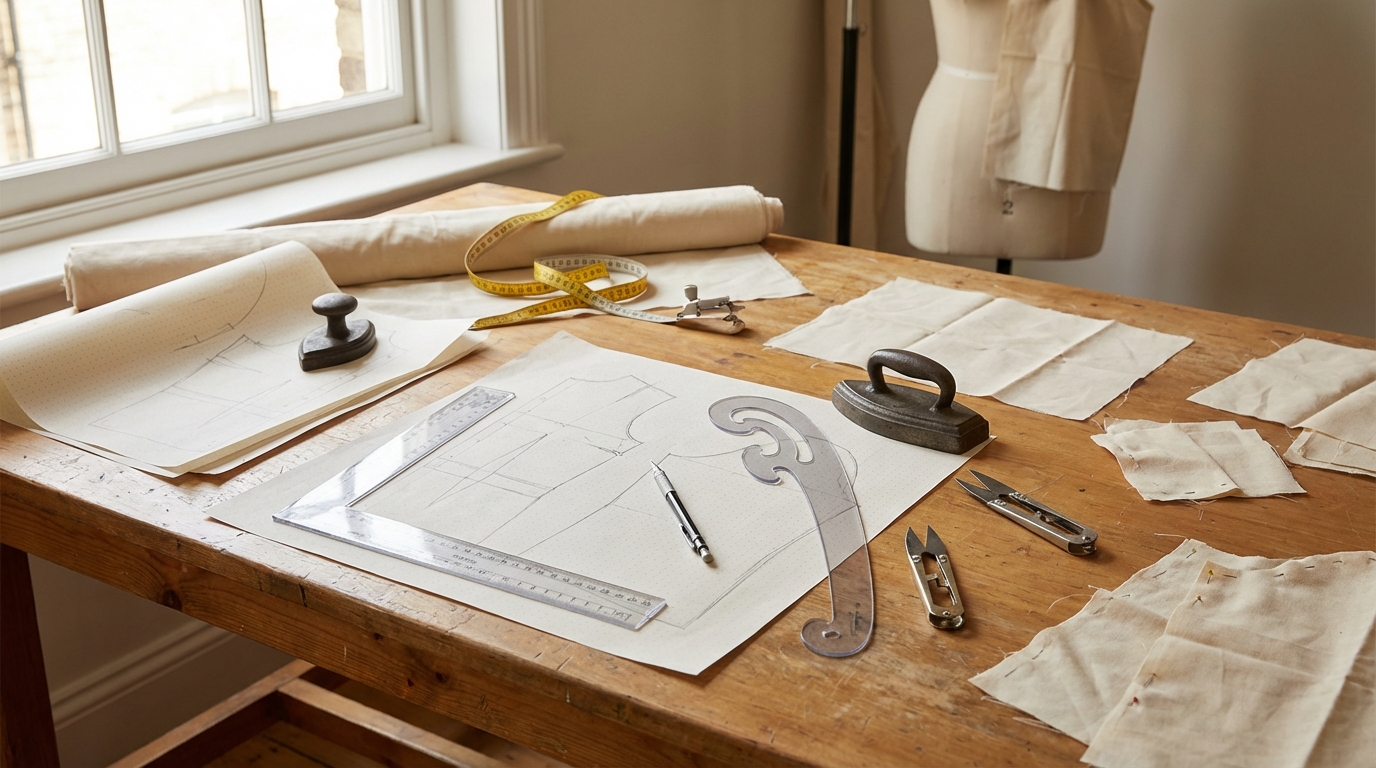
Whether you're taking your first steps into fashion design or scaling up a professional product development workflow, the right pattern drafting tools are the foundation of every successful garment. From the traditional essentials used by pattern makers for decades to the digital solutions transforming today's fashion studios, understanding what supplies you need for pattern drafting ensures precision, efficiency, and consistent fit philosophy from sketch to finished piece.
This comprehensive guide covers the essential pattern making tools and equipment you need to draft accurate, manufacturable patterns—plus insights on how modern AI pattern intelligence platforms are accelerating digital pattern creation while preserving construction standards.
1. Pattern Making Paper
Why you need it: Pattern paper is your canvas. It must be durable enough to withstand repeated handling, tracing, and adjustments while remaining translucent enough to trace over existing blocks or sketches.
Types to consider: - Dotted pattern paper: Grid dots aid alignment and help you draft straight lines and consistent seam allowances quickly. - Manila paper (heavier weight): Ideal for creating reusable master blocks (slopers) that form the backbone of your pattern library. - Butcher paper or kraft paper: Budget-friendly option for toiles and intermediate drafts.
Pro tip: Purchase pattern paper in large rolls (36"–60" wide) to avoid piecing together small sheets for larger garments like coats or wide-legged pants.
2. Measuring Tape
Why you need it: Accurate body and garment measurements are non-negotiable. A single millimeter of error can throw off fit across an entire size run.
What to look for: - Metal-tipped, non-stretch fiber tape measure (avoid cheap plastic versions that warp) - Dual-sided (inches and centimeters) for flexibility - Replace every 6–12 months—stretched tapes cause systematic fit errors
Pro tip: Keep multiple tape measures in your workspace: one dedicated to measuring bodies/dress forms, and another for measuring flat patterns and rulers.
3. Rulers and Curves
Why you need them: Precision drafting requires specialized rulers that handle everything from 90-degree corners to the subtle curves of an armhole.
Essential ruler set: - L-square or gridded ruler (18"–24"): Creates perfect right angles and straight grainlines; the transparent grid aids parallel lines and seam allowances. - French curve: The classic tool for drafting smooth necklines, armholes, and hip curves; choose one with multiple curve radii. - Hip curve (or styling design ruler): Longer, gradual curves for side seams, hips, and pant inseams. - Clear plastic ruler (6"–12"): Quick measurements and fine adjustments.
Advanced option: A pattern master or fashion ruler combines multiple curves and grading increments in one tool, streamlining workflow for experienced drafters.
4. Mechanical Pencils and Erasers
Why you need them: Consistency is key. A mechanical pencil (0.5mm or 0.7mm lead in H or 2H hardness) gives you a fine, sharp line every time without constant sharpening.
What to use: - Mechanical pencils (H or 2H lead): Produces crisp, non-smudging lines that photocopy and scan well. - High-quality eraser: Removes marks cleanly without tearing delicate pattern paper. - Colored pencils or fine-tip markers: Differentiate size grades, alteration layers, or construction notes.
Pro tip: Keep spare lead refills on hand—running out mid-draft breaks your flow and risks inconsistent line weights.
5. Pattern Notcher
Why you need it: A pattern notcher cuts small, uniform V-shaped notches into the edge of your pattern, marking critical alignment points like dart legs, match points, and seamlines.
Why it's essential: - Faster and cleaner than drawing notch symbols - Eliminates the risk of losing alignment marks when tracing or cutting - Provides tactile, visual alignment cues for sample machinists
Pro tip: Notch your master blocks and key construction points first, then transfer those notches to all derivative patterns for consistency across your entire pattern library.
6. Awl or Pattern Drill
Why you need it: An awl (sharp pointed tool) or a manual pattern drill punches precise holes through multiple layers of pattern paper to mark dart points, pocket placements, or buttonhole positions.
When to use: - Marking exact points that must transfer through multiple pattern copies - Punching registration holes for stacking and tracing pattern families - Creating pivot points for slash-and-spread pattern manipulation
Pro tip: Use the awl to pierce all layers at once when stacking patterns, ensuring every derivative maintains the exact same construction point.
7. Paper Scissors (Dedicated)
Why you need them: Never use your fabric shears on paper—paper dulls blades fast. Invest in a dedicated pair of sharp, comfortable paper scissors for cutting patterns.
What to look for: - 7"–8" blade length for control and endurance - Ergonomic handles for extended cutting sessions - Stainless steel blades that stay sharp through heavy use
Pro tip: Label your paper scissors clearly and keep them separate from fabric tools to avoid accidental cross-use.
8. Tracing Wheel and Transfer Tools
Why you need them: A tracing wheel transfers pattern markings (darts, pleats, pockets) from one layer to another or from pattern to fabric.
Types: - Serrated tracing wheel: Creates dotted perforations on paper; use over carbon or dot-and-cross tracing paper. - Smooth tracing wheel: Gentler option for delicate papers or fabrics.
Pro tip: Protect your work surface with a cutting mat or thick cardboard when using a serrated wheel to avoid damaging your table.
9. Tape, Glue Stick, and Pattern Weights
Why you need them: Patterns rarely stay perfect on the first draft. You'll be slashing, spreading, pivoting, and adjusting constantly.
Essential supplies: - Low-tack masking tape or artist's tape: Temporarily holds pattern pieces together without tearing paper when repositioned. - Glue stick: Permanently bonds pattern adjustments, especially for slash-and-spread or complex piecing. - Pattern weights: Hold paper flat on the table without pinning or damaging the pattern.
Pro tip: Use matte-finish tape (like 3M Scotch Magic Tape) so you can write notes or label directly on the tape.
10. Muslin or Toile Fabric
Why you need it: Even the most carefully drafted pattern must be tested in 3D. A muslin (or toile) is a prototype garment sewn in inexpensive fabric to check fit, proportion, and construction before cutting into your final fabric.
What to use: - Medium-weight muslin or calico for most garments - Jersey or stretch muslin for knit prototypes - Striped or plaid muslin to check grainline and balance
Pro tip: Keep a dedicated stash of muslin in your studio—running out of test fabric mid-project delays your entire development cycle.
11. Dress Form or Mannequin (Optional but Recommended)
Why you need it: A professional dress form lets you drape, pin, and visually assess fit in three dimensions, bridging the gap between flat pattern and finished garment.
What to look for: - Adjustable forms that match your target size range - Sturdy, collapsible stands for small studios - Industry-standard forms (e.g., PGM, Wolf) if you're producing samples for buyers or factories
Pro tip: If you can't invest in a full dress form yet, a simple tabletop torso or a fit model (real person) can still provide critical fit feedback.
12. Digital Pattern Intelligence (Modern Essential)
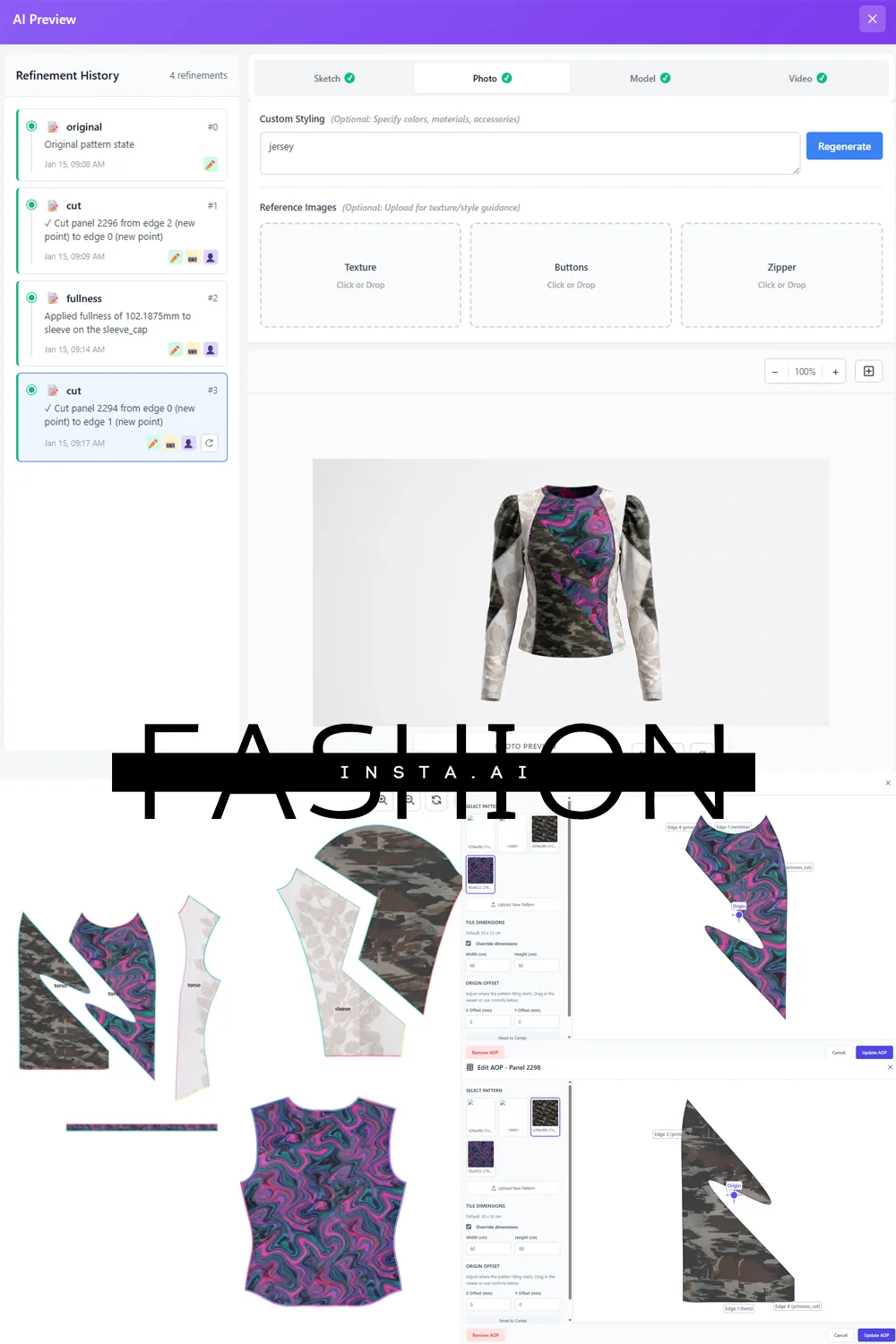
Why you need it: Traditional hand-drafting is precise but slow. As fashion product development teams face tighter timelines and larger SKU counts, digital pattern intelligence platforms like FashionINSTA are becoming essential tools—not replacements for skills, but amplifiers of efficiency.
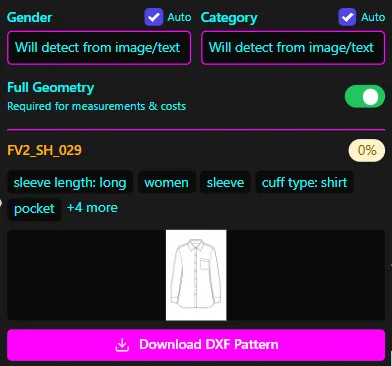
What it does: FashionINSTA trains custom AI on your existing .DXF pattern library, extracting 750+ features (armholes, ease, seam curves, construction methods) to learn your brand's fit philosophy and construction DNA. Instead of manually searching through thousands of archived patterns or redrafting from scratch, you can:
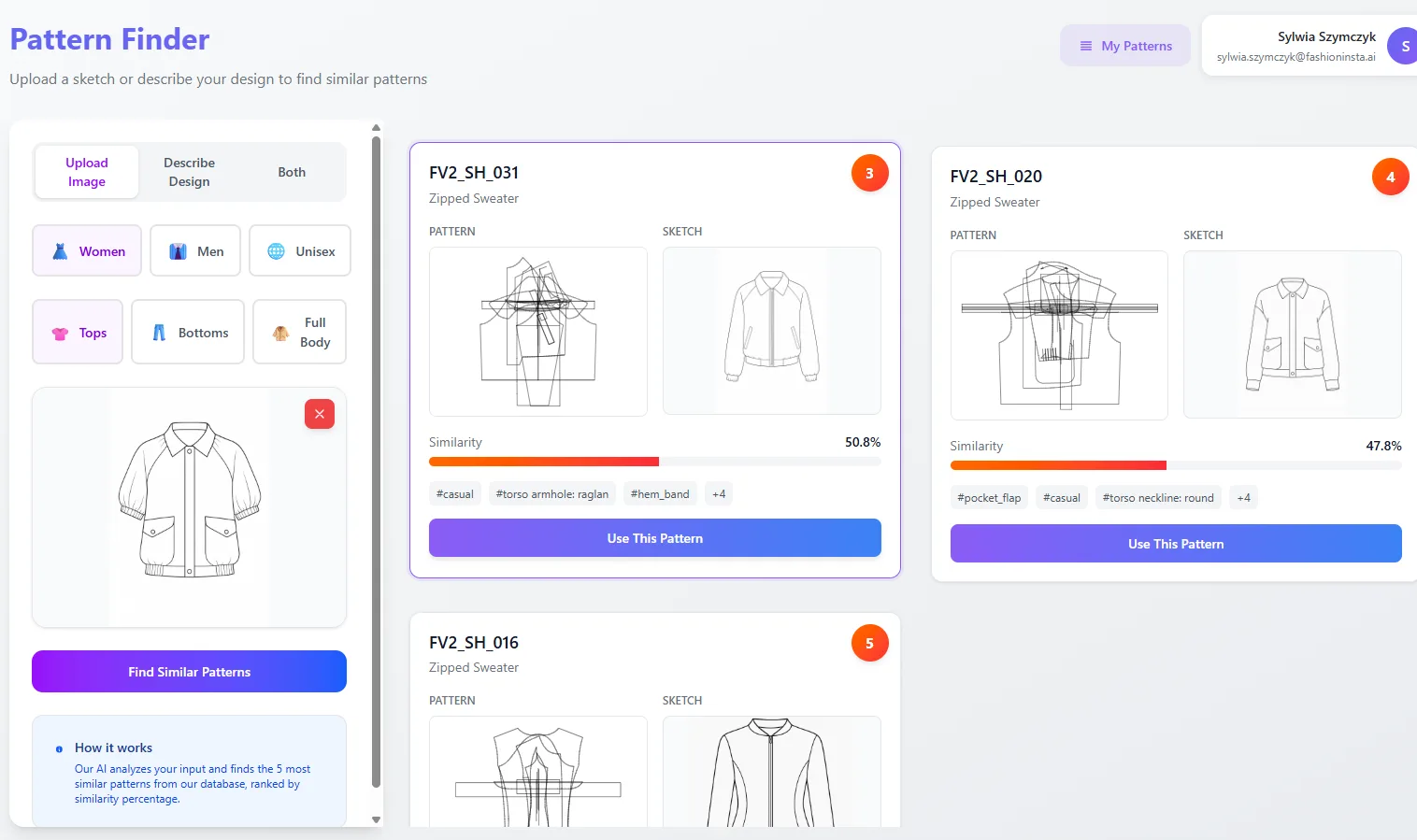
- Upload a sketch and instantly score existing patterns by similarity and production complexity
- Swap modular parts (collars, sleeves, cuts) while preserving fit consistency
- Generate new pattern variations that respect your approved blocks
- Calculate fabric consumption and production costs directly from pattern geometry
- Detect pattern duplication (often 25%+ in legacy archives) and find reuse-ready patterns in seconds
Who it's for: Fashion brands and product development teams managing large pattern archives who need to scale digital pattern creation by ~70% while maintaining fit standards and reducing duplicated work.
Pro tip: A digital pattern intelligence platform doesn't eliminate the need for foundational drafting tools—it transforms your existing pattern library into a living, modular system that accelerates reuse and preserves your brand's signature construction across every new style.
Building Your Pattern Drafting Kit: Budget vs. Professional
Starter Kit (Under $100): - Roll of dotted pattern paper - One L-square ruler and one French curve - Measuring tape - Mechanical pencils (H lead) + eraser - Paper scissors - Low-tack tape and pattern weights - 5 yards of muslin
Professional Kit ($200–$500): - All starter tools, plus: - Hip curve and pattern master ruler - Pattern notcher and awl - Tracing wheel and carbon paper - Adjustable dress form - Storage system (pattern hooks or flat file)
Enterprise/Digital Workflow ($1,000+): - All professional tools, plus: - CAD software or digital pattern platform (e.g., FashionINSTA) - Digital pattern library with version control - API integration for fabric costing and tech pack automation
Final Takeaways
The right pattern drafting tools turn creative vision into manufacturable reality. Start with the essentials—accurate measuring, precision rulers, quality paper, and sharp marking tools—then expand your kit as your skills and workflows grow. For fashion brands managing pattern libraries at scale, integrating a pattern intelligence system bridges the gap between traditional craftsmanship and modern production speed, helping you preserve fit consistency while accelerating time to market.
Whether you're drafting your first bodice block by hand or training AI on 50,000 archived patterns, the fundamentals remain the same: precision, consistency, and a deep understanding of garment construction. Invest in tools that support both.