What Tools Do I Need for Pattern Drafting? The Complete Guide for Fashion Professionals
TL;DR: Navigating the world of pattern drafting tools can be overwhelming, but building a solid toolkit doesn't have to break the bank. This guide breaks down the essential manual instruments for beginners, professional upgrades for growing brands, and the latest AI-powered digital solutions transforming the fashion industry.

I'll never forget the first time I walked into a professional pattern-making studio. Tables stretched across the room covered in mysterious curves, rulers longer than my arm, and tools I couldn't even name. I stood there thinking, "How am I supposed to know which of these I actually need?" If you're feeling that same overwhelm right now, you're not alone—and I'm here to help you cut through the confusion.
Whether you're a designer looking to bring your sketches to life or a brand seeking to understand the pattern-making process better, having the right tools can mean the difference between frustration and precision. The good news? You don't need to buy everything at once, and you certainly don't need to break the bank to get started with quality pattern drafting.
Let me walk you through exactly what tools you need, why you need them, and how to choose the right ones for your specific situation.
The Essential Foundation: Tools Every Pattern Maker Needs
Pattern Paper: Your Canvas for Creation
Pattern paper is where everything begins. You'll need large sheets—typically 36 to 60 inches wide—that can handle multiple markings, erasures, and adjustments without tearing. Most professionals swear by dotted pattern paper (also called cross and dot paper) because the grid helps maintain accuracy and speeds up the drafting process significantly.
For beginners, brown kraft paper or manila pattern paper works perfectly well and costs much less. As you advance, you might invest in Swedish tracing paper, which is translucent, durable, and allows you to layer and trace patterns efficiently. I've seen designers save hours by using the right paper from the start—it's one of those investments that pays for itself quickly.
Pro tip: Keep different types of paper on hand. Use cheaper paper for initial drafts and experimentation, then transfer your perfected patterns to more durable paper for your archive.
Rulers: The Backbone of Precision
Here's where things get specific. You can't draft accurate patterns with just any ruler—you need specialized tools designed for the curves and angles of garment construction.
Pattern Master or Fashion Ruler: This is your most important investment. A good pattern master combines multiple curves (hip curve, armhole curve, neckline curve) with straight edges and is calibrated for grading patterns. The Fairgate or L-square rulers are industry favorites because they're transparent, allowing you to see the pattern underneath while you work.
French Curves: These graceful curves help you draft sleek, professional-looking armholes, necklines, and princess seams. You'll typically need at least two—a hip curve for the lower body curves and a styling curve for upper body details.
Straight Rulers: A 24-inch clear acrylic ruler is essential for straight lines, while a 1-meter or yard stick helps with longer pattern pieces like pants and coats. The transparency matters more than you'd think—being able to see your work underneath prevents countless mistakes.
Flexible Curve Ruler: This bendable tool is a lifesaver for unique curves that don't fit standard French curves. You can mold it to any shape you need and it holds that curve while you trace.
Measuring Tools: Accuracy is Everything
A 60-inch flexible tape measure is non-negotiable. Choose one with measurements on both sides and clear, easy-to-read markings. The fabric should be firm enough not to stretch over time but flexible enough to measure body curves accurately.
I always keep two tape measures on hand—one for body measurements and one for pattern work. Once a tape measure gets kinked or stretched, its accuracy is compromised, and in pattern making, even a quarter-inch error can ruin the fit of an entire garment.
Marking and Drawing Instruments
Mechanical Pencils: Forget regular pencils—mechanical pencils with hard lead (2H or 4H) give you consistently sharp, fine lines that won't smudge. The consistent line width is crucial for accuracy, especially when you're working with small measurements like seam allowances.
Colored Pencils or Fine-Tip Markers: Use different colors to mark grainlines, notches, different sizes, or pattern modifications. This color-coding system becomes invaluable when you're working with complex patterns or multiple sizes.
Pattern Notcher: This small handheld tool cuts precise notches into your pattern edges, marking where pieces align during construction. It's faster and more accurate than drawing notches, and these marks transfer easily to fabric.
Cutting Tools: Respect the Separation
Here's a rule that's practically sacred in the pattern-making world: never, ever use your fabric scissors to cut paper. Paper dulls blades quickly, and dull scissors on fabric lead to inaccurate cuts and frustration.
Invest in dedicated paper scissors—8 to 10-inch shears with sharp blades specifically for pattern paper. Keep them labeled and stored separately from your fabric shears. Some pattern makers prefer a rotary cutter with a self-healing mat for cutting patterns, especially for long straight lines, but scissors give you more control on curves.
Additional Essential Tools
Awl or Pattern Punch: This pointed tool helps you mark pivot points, create holes for hanging patterns, and transfer markings accurately. It's small but mighty in its usefulness.
Tracing Wheel: Paired with dressmaker's carbon paper, a tracing wheel transfers pattern lines from one layer to another. Choose a serrated wheel for paper and a smooth wheel for delicate fabrics.
Clear Tape and Glue Stick: You'll use these constantly for adjustments, joining pattern pieces, and making corrections. Matte tape is preferable because you can write on it and it doesn't reflect light during photography.
Pattern Weights: These flat, heavy objects hold pattern pieces in place without pins. They're especially useful on large tables and prevent paper from shifting while you trace or cut.
Professional Pattern Making: Stepping Up Your Tool Kit
Once you've mastered the basics, these professional-grade tools will elevate your pattern-making capabilities and efficiency.
The Dress Form: Your Silent Partner
A professional dress form that matches your target fit model or size range is invaluable for draping, fitting, and visualizing how your patterns will translate into three-dimensional garments. Adjustable dress forms offer flexibility across size ranges, while custom forms provide the most accurate representation of your specific fit philosophy.
I've worked with brands that resist this investment, trying to make do with consumer-grade forms or none at all. Without exception, they end up buying a professional form within months because the time saved and accuracy gained far outweigh the initial cost.
Specialized Curved Rulers
As you work on different garment categories, you'll discover the need for specialized curves. A proper vary form ruler, which combines multiple curve shapes in one tool, becomes indispensable for professional work. Pattern makers often collect different curves over time, building a toolkit tailored to their specific design aesthetic and garment categories.
Pattern Card or Oak Tag
For creating master blocks and slopers that you'll use repeatedly, sturdy pattern card provides durability that paper can't match. These thicker materials withstand constant tracing and handling, ensuring your foundation patterns remain accurate over years of use.
Pattern Hooks and Storage System
Professional pattern storage might not seem like a "tool," but organizing your patterns for easy access and preservation is crucial as your archive grows. Pattern hooks, labeled envelopes, and proper filing systems save hours of searching and prevent damage to valuable pattern work.
The Digital Revolution: Modern Pattern Making Tools
The fashion industry is experiencing a dramatic transformation in how patterns are created, and understanding digital tools is becoming essential even for designers who prefer manual drafting.
CAD Software: Industry Standards
Professional pattern-making software like Gerber AccuMark, Lectra, and Optitex dominate large-scale production environments. These systems offer precise digital drafting, automated grading across size ranges, marker making for fabric optimization, and integration with production systems.
The learning curve is steep, and the cost is substantial—often tens of thousands of dollars plus training. But for brands producing at scale, these systems deliver efficiency and consistency that manual methods simply cannot match.
Accessible Digital Options
For independent designers and smaller brands, more accessible options have emerged. Seamly2D and Valentina offer free, open-source pattern drafting with surprisingly robust capabilities. Adobe Illustrator, while not designed specifically for pattern making, has become a popular choice among designers who value its flexibility and integration with other design tools.
CLO3D bridges the gap between pattern drafting and 3D visualization, allowing you to see how your patterns will fit and drape on a virtual body before cutting a single piece of fabric. This technology is transforming the sampling process and dramatically reducing waste.
AI-Powered Pattern Intelligence
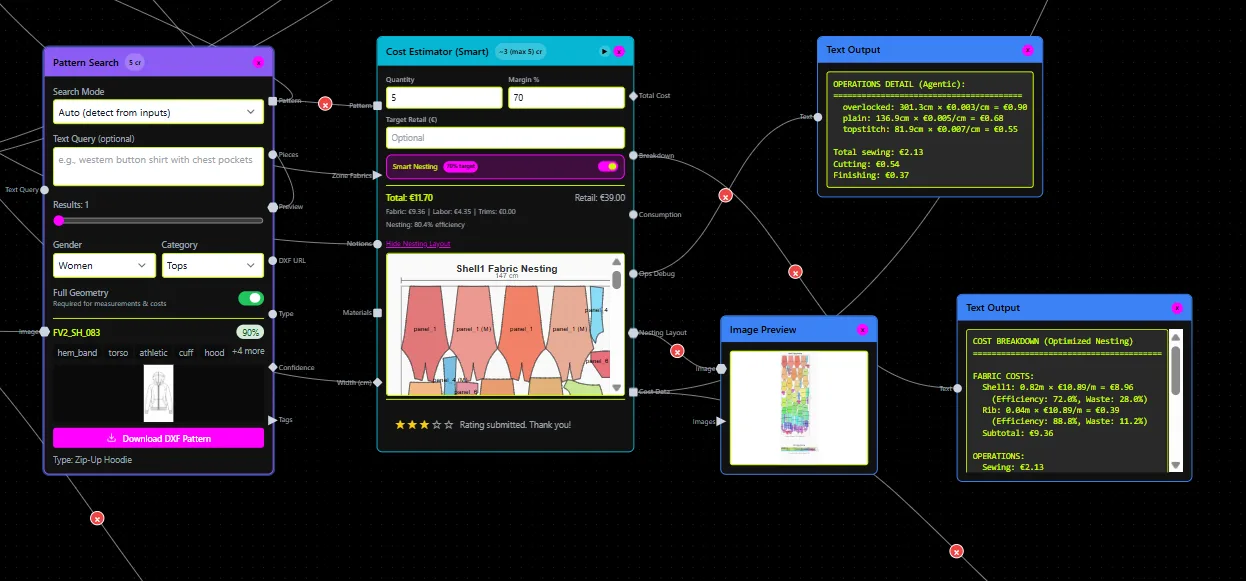
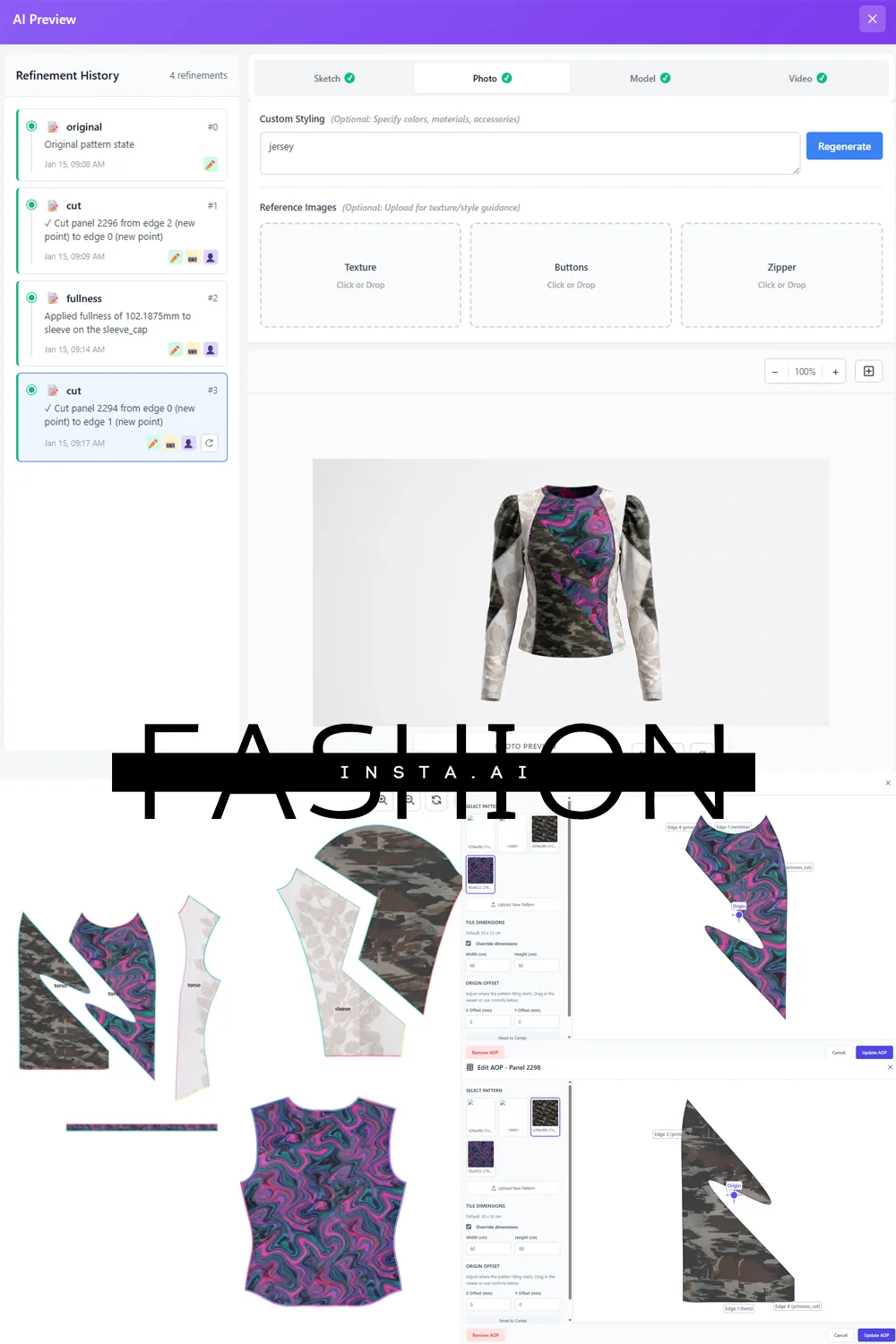
Here's where things get really exciting. The latest advancement in pattern making leverages artificial intelligence to accelerate the entire process. Platforms like Fashioninsta are transforming how enterprise fashion brands approach pattern creation, reducing development time by up to 70% compared to traditional methods.
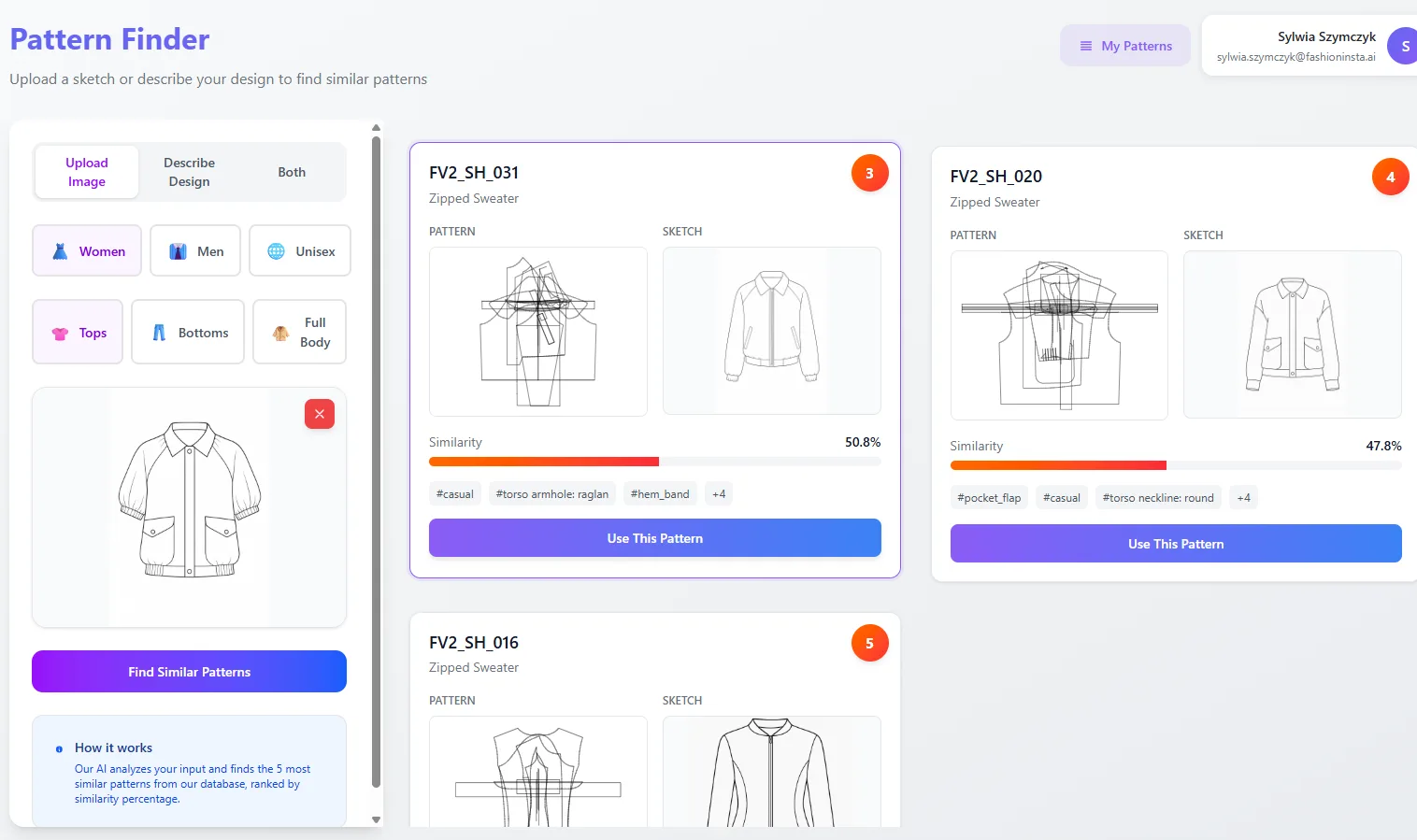
Instead of starting from scratch or spending hours modifying existing patterns, AI-powered tools can analyze your sketches, search your pattern archive for similar styles, and generate production-ready patterns that maintain your brand's unique fit philosophy. The AI learns from your existing pattern database, essentially capturing your brand's DNA in digital form.
This technology doesn't replace pattern makers—it amplifies their expertise. Instead of spending time on repetitive technical work, pattern makers can focus on creative problem-solving and perfecting fit. The patterns are grounded in real geometry and your existing blocks, not generic templates, which means the garments actually fit as intended when produced.
For brands managing large pattern libraries, this approach also makes archives searchable and reusable in ways that were previously impossible. Imagine finding all sleeve variations similar to a particular style in seconds, or calculating exact fabric consumption before a pattern even goes to sample.
Choosing Tools Based on Your Needs and Budget

For Beginners and Students
Start with the essentials: quality pattern paper, a pattern master ruler, French curve, tape measure, mechanical pencils, paper scissors, and basic marking tools. This foundation kit should cost $75-150 and will serve you well through the learning process.
Don't be tempted to buy cheap ruler sets that include every curve imaginable—most of those curves you'll never use, and the quality is usually poor. Invest in fewer, better tools.
For Independent Designers and Small Brands
Add to your foundation with a professional dress form, specialized curves for your garment category, a tracing wheel and carbon paper, pattern card for master blocks, and consider entry-level CAD software or a hybrid digital-manual workflow.
This tier typically requires an investment of $500-2,000, depending on whether you go digital. Many successful independent designers maintain a hybrid approach—manually drafting initial patterns but digitizing for grading and production.
For Established Brands and Production Environments
At this level, you're looking at comprehensive digital systems that integrate with your entire production workflow. Professional CAD software, multiple dress forms across size ranges, complete tool kits for your pattern-making team, and climate-controlled pattern storage systems become the standard.
This is also where AI-powered pattern intelligence makes the most impact. When you're managing hundreds or thousands of patterns, maintaining consistency across collections, and facing constant pressure to reduce development time, technology that learns your brand's specific approach becomes invaluable.
Making Your Tools Work For You
Having the right tools is only part of the equation—knowing how to use them efficiently is what separates adequate pattern making from excellent work.
Maintenance Matters
Sharpen your cutting tools regularly. Clean rulers and curves to prevent transfer of graphite or ink. Check tape measures annually for accuracy—stretch and wear can change measurements over time. Store paper flat in a dry environment to prevent warping.
These simple maintenance habits extend the life of your tools and maintain the accuracy that professional pattern making demands.
Develop a System
Establish consistent workflows for how you use your tools. Always mark patterns in the same order. Use the same color-coding system across all projects. Store tools in the same locations. These small consistencies compound into significant efficiency gains when you're working under deadline pressure.
Invest Gradually but Purposefully
You don't need every tool immediately. As you encounter specific challenges or frequently work on certain garment types, add tools that address those needs. This gradual, purposeful expansion builds a toolkit perfectly suited to your actual work rather than a random collection of equipment.
The Future of Pattern Drafting Tools
The pattern-making landscape is evolving faster than at any point in fashion history. We're seeing convergence between traditional manual skills and cutting-edge technology in ways that enhance rather than replace craftsmanship.
Integration between 2D pattern making and 3D visualization is becoming seamless. AI is learning not just to draft patterns, but to understand design intent and fit philosophy. Cloud-based collaboration tools are enabling pattern makers to work together across continents in real-time.
For brands serious about maintaining their competitive edge, staying current with these developments isn't optional—it's essential. The tools you choose today shape your capabilities tomorrow.
Your Pattern Making Journey Starts Here
Whether you're just starting out with basic manual tools or you're an established brand exploring how AI can accelerate your pattern development, the right tools empower you to bring your design vision to life with precision and efficiency.
Remember that pattern making is ultimately about solving puzzles—how do you translate a flat piece of fabric into a three-dimensional form that fits beautifully and moves naturally with the body? The tools are just enablers of that creative problem-solving process.
Start with quality basics that build good habits and accuracy from day one. Add capabilities as your skills and needs grow. Stay curious about new technologies that might solve specific challenges you face. And most importantly, use your tools to support your unique design perspective rather than letting them limit your creativity.
What challenges are you facing in your pattern-making process right now? Whether it's maintaining consistency across your collection, reducing development time, or simply getting started with the fundamentals, the right tools—combined with the right knowledge—can help you overcome them. The pattern-making world has never offered more options for creating precisely what you envision, exactly how you imagine it should fit.