Which AI Tools Are Best for Maintaining Brand Consistency in Patterns?
TL;DR: Maintaining brand consistency across fashion patterns is crucial for preserving your unique fit philosophy and construction DNA. This guide compares top AI tools—including FashionINSTA, Adobe Firefly, Canva, Frontify, and Brandfolder—evaluating their ability to safeguard brand identity. Discover which platform best aligns with your technical pattern-making, marketing, or enterprise governance needs.

Maintaining brand consistency in pattern design has become one of the most critical—and challenging—tasks for fashion brands in 2026. As AI-powered design tools proliferate, choosing the right platform can mean the difference between preserving your brand's unique identity and creating generic outputs that dilute your market position. This comprehensive comparison examines the leading AI tools for maintaining brand consistency in patterns, evaluating their capabilities, pricing, and suitability for different fashion organizations.
Understanding Brand Consistency in Pattern Design
Brand consistency in fashion patterns goes far beyond matching colors or fonts. It encompasses the preservation of a brand's "fit philosophy," construction DNA, and signature design elements across every garment variation. When a customer recognizes your brand's fit and construction details without looking at the label, that's the result of rigorous pattern consistency.
For fashion brands managing hundreds or thousands of patterns, maintaining this consistency manually is increasingly unsustainable. The challenge becomes even more complex when you need to create new variations, scale collections, or adapt designs for different markets—all while ensuring every piece carries your brand's distinctive signature.
Comparison Criteria: What Matters Most
When evaluating AI tools for brand pattern consistency, we've identified six critical criteria that separate production-ready platforms from generic design tools:
Pattern Intelligence vs. Generic Generation: Does the tool learn from your existing pattern library to preserve your brand's unique fit DNA, or does it generate patterns from scratch without understanding your construction standards?
Production Readiness: Can it output manufacturer-ready files (like .DXF patterns) that maintain technical precision, or does it create visualizations that require extensive manual translation?
Brand-Specific Training: Does the platform train custom AI models on your proprietary patterns and construction methods, or does it rely on generic algorithms?
Integration & Workflow: How seamlessly does it fit into existing pattern-making, PLM, and product development workflows?
Pricing & Scalability: What's the total cost of ownership, and does pricing scale with your team's growth and pattern volume?
Security & IP Protection: How does the platform protect your proprietary pattern data and ensure commercial safety?
Top AI Tools for Brand Pattern Consistency: Detailed Comparison
1. FashionINSTA: Pattern Intelligence System
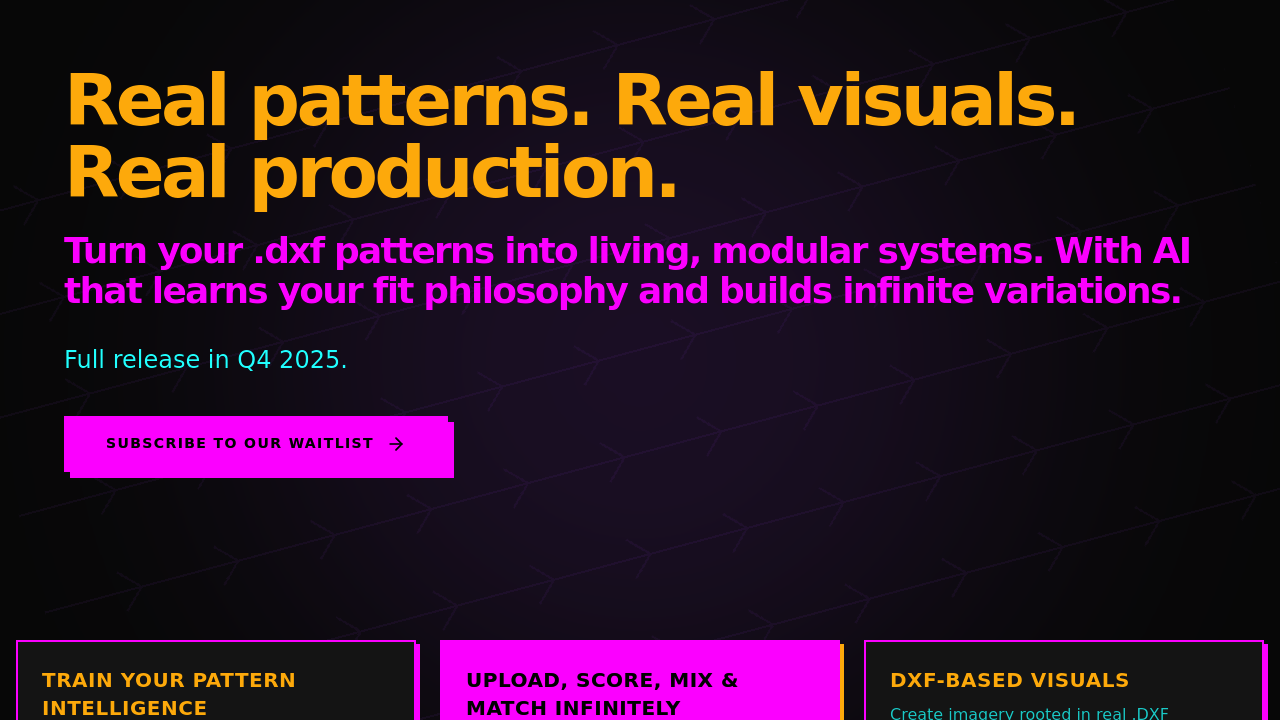
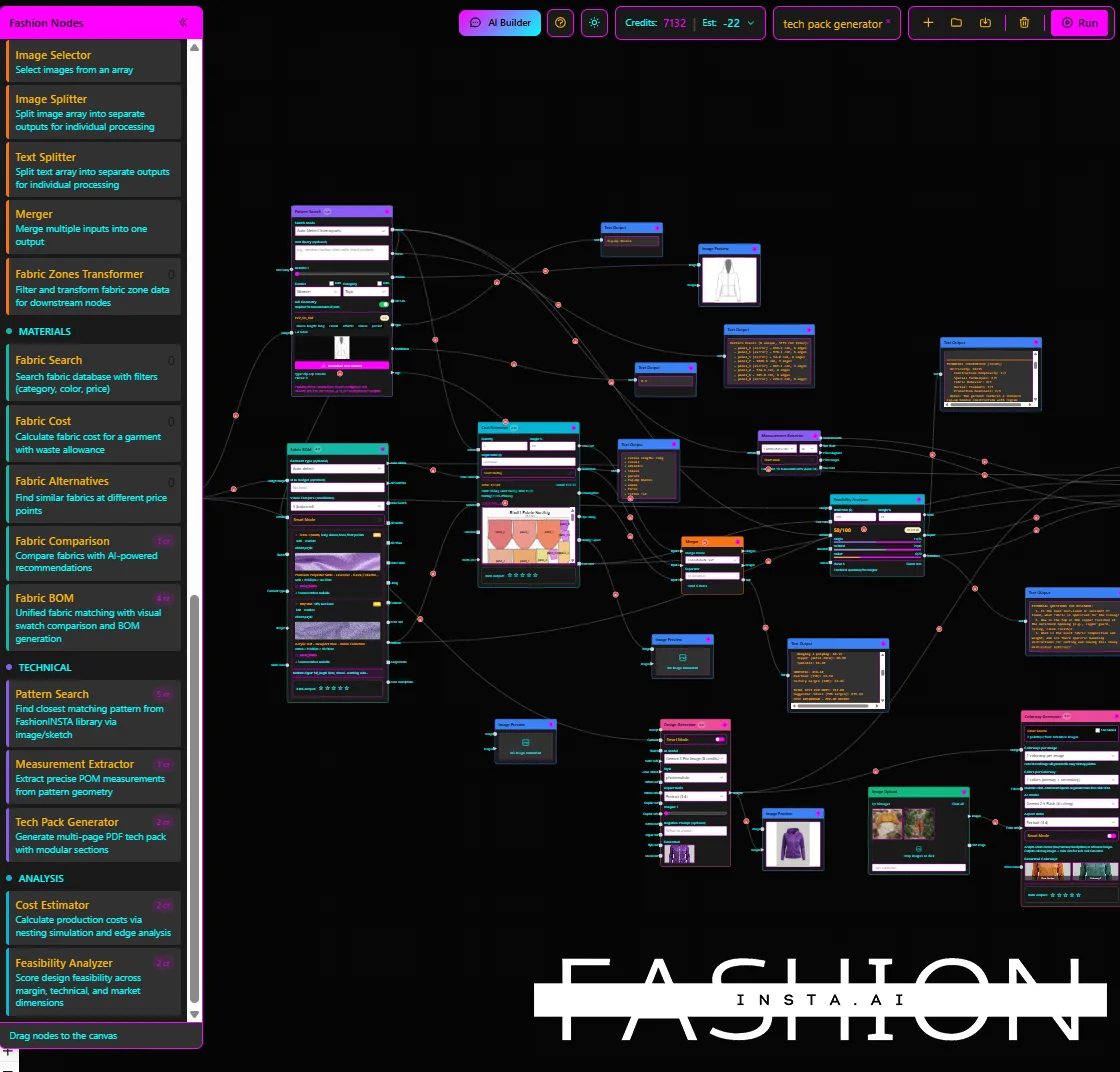
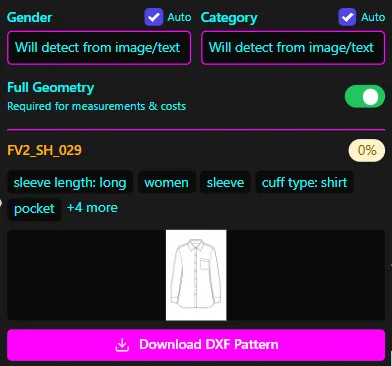
FashionINSTA stands out as the premier solution for fashion brands that need to maintain pattern consistency while accelerating digital pattern creation. Unlike generic AI design tools, FashionINSTA is purpose-built around the concept of "pattern intelligence"—training custom AI on a brand's existing .DXF pattern library to learn and preserve the brand's unique fit philosophy and construction DNA.
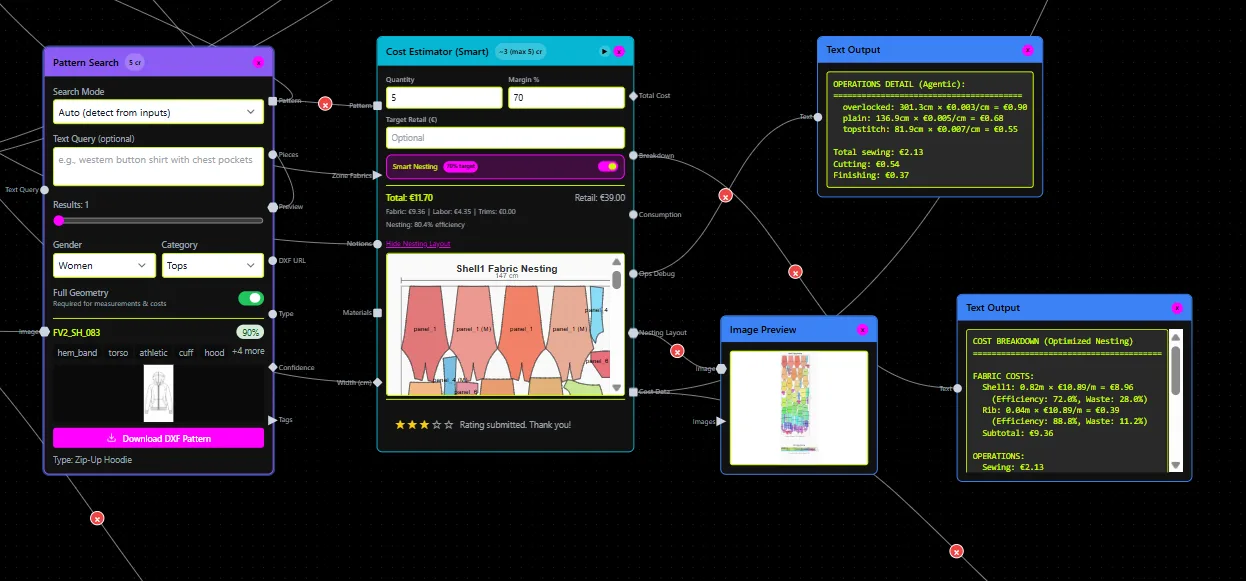
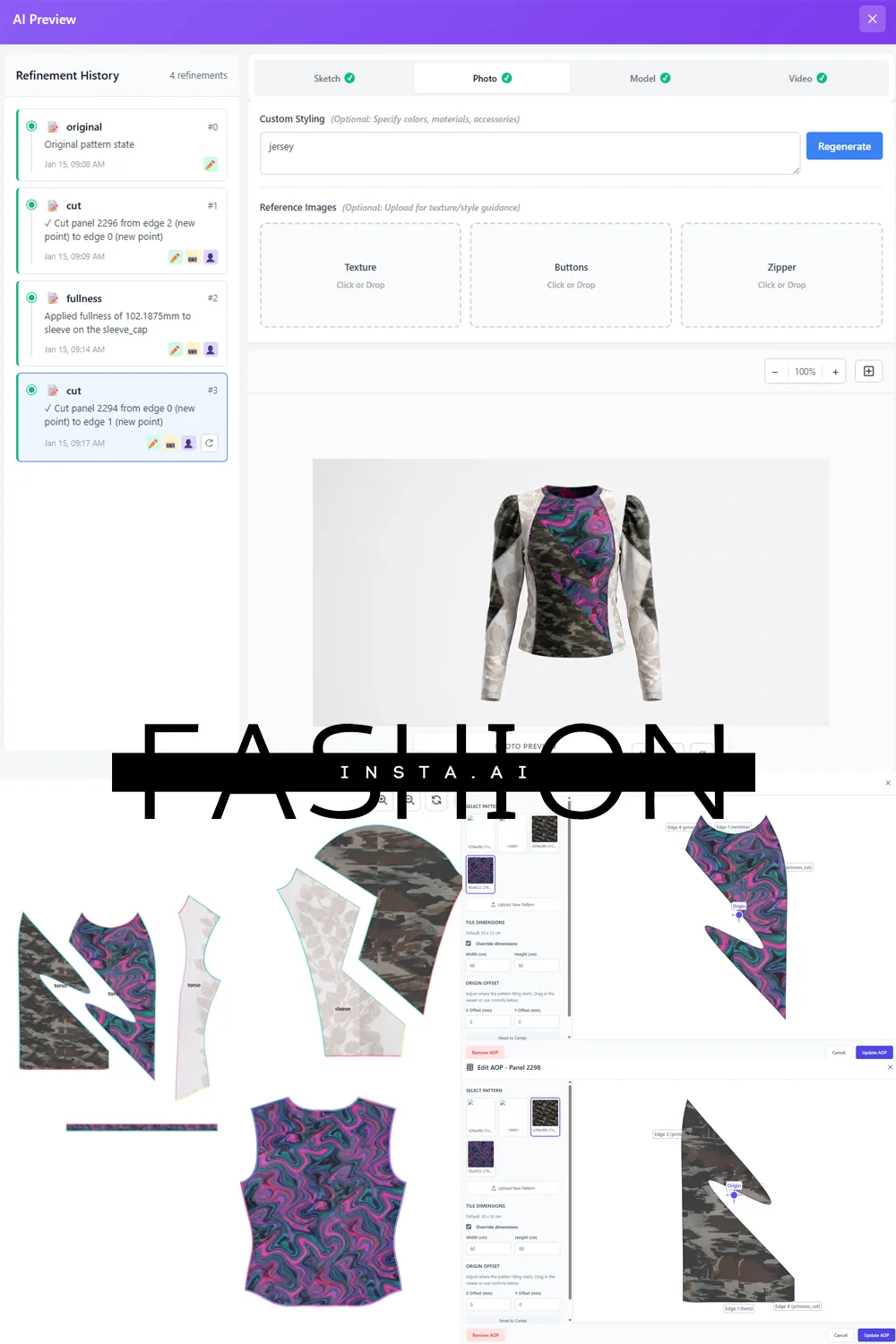
Core Capabilities: - Custom AI Training: Extracts 750+ features per pattern (armholes, ease, seams, curves, construction methods) to learn your brand's signature approach - Pattern Intelligence System: Transforms static pattern archives into a "living, modular system" with searchable hierarchy, tracked derivatives, and library statistics - Sketch-to-Pattern Generation: Upload sketches and the system scores existing patterns by similarity and operation complexity, then enables modular editing with fit consistency maintained - DXF-Based Visuals: Generates visuals rooted in real .DXF geometry rather than image-only AI, ensuring what you see matches what manufacturers will actually cut - Modular Part Swapping: Swap collars, mix sleeves, adjust ease, or add cuts while preserving fit consistency and brand construction standards - Cost & Fabric Intelligence: Calculates fabric consumption and production costs based on approved pattern pieces and uploaded materials
Brand Consistency Strengths: FashionINSTA addresses the fundamental challenge: most AI tools generate patterns but don't understand your brand's patterns. By training on blocks and complex patterns (up to 50,000 patterns in enterprise tier), it ensures every new variation respects your approved fit blocks and signature construction details. The platform exposes hidden inefficiencies—such as 25% pattern duplication across libraries—and enables teams to find reuse-ready patterns in seconds instead of days.
Pricing & Plans: - Tiered pricing based on training scope (blocks only vs. blocks + complex patterns) - Unlimited new pattern generation that respects brand blocks (varies by plan) - Business plans include team sharing, webhooks, and API access - Enterprise tier supports up to 50,000 patterns with full custom AI training - Q2 2026 reservations available; staged rollout with controlled onboarding
Best For: Fashion brands with established pattern libraries that need to scale reuse, reduce duplicated pattern work (reported savings of $60,000–$150,000 annually), and ensure every new design maintains the brand's fit philosophy and construction integrity.
2. Adobe Firefly for Enterprise: Brand-Safe Visual Consistency
Adobe Firefly for Enterprise focuses on brand-safe visual content generation and image consistency across campaigns. Through its Custom Models feature, organizations can train Firefly on their own branded visual assets to ensure AI-generated images align with established brand aesthetics.
Core Capabilities: - Custom Models: Train Firefly on your brand's visual assets to generate on-brand imagery at scale - Style References & Controls: Upload reference images and use style kits to maintain visual consistency - Firefly Foundry: Enterprise framework for creating and scaling branded content globally - IP Indemnification: Select enterprise plans include intellectual property protections for generated content - Integration with Creative Cloud: Seamless access within Photoshop, Illustrator, and Adobe Express
Brand Consistency Strengths: Firefly excels at maintaining visual brand identity in marketing imagery, packaging, and promotional content. Leading brands like Mattel use Firefly for packaging and storytelling, while Coca-Cola leverages it for global brand campaigns. The platform's commercial safety and IP indemnification provide legal confidence for enterprise use.
Pricing & Plans: - Custom Models: Enterprise pricing tailored to volume and bespoke needs - Premium plans start at approximately $49.99/month for higher usage tiers - API access available for automated brand content generation - Volume-based pricing and multi-year agreements for 250+ member teams - Consultation with Adobe account representatives required for enterprise pricing
Best For: Fashion brands that need to maintain visual brand consistency across marketing materials, e-commerce imagery, and promotional campaigns—especially those already invested in the Adobe Creative Cloud ecosystem. Less suited for technical pattern-making workflows.
3. Canva Magic Studio: Marketing Asset Consistency
Canva's Magic Studio integrates AI-powered features with robust brand management tools designed for marketing teams that need to maintain brand consistency across social media, presentations, and digital content.
Core Capabilities: - Brand Kit: Store logos, fonts, and colors to apply consistently across all designs - Brand Assist: Real-time suggestions in the editor to ensure colors, fonts, and logos match brand standards - Magic Design for Brands: Uses Brand Kit to auto-generate tailored, on-brand designs from text prompts - Brand Templates (Teams): Create, lock, and share branded templates to maintain consistency across teams - Magic Switch: Instant resizing and reformatting to ensure visual consistency across platforms - Brand Voice in Magic Write: AI writing assistant set to follow specific brand tones
Brand Consistency Strengths: Canva excels at democratizing brand consistency for marketing teams, enabling non-designers to create on-brand materials quickly. The locked template feature and Brand Assist ensure brand guidelines are followed even when multiple team members create content.
Pricing & Plans: - Canva Free: $0 with limited AI access (50 Magic Write uses) - Canva Pro: $120/year or $15/month per user (100M+ premium assets, 1TB storage, 500+ AI credits, Brand Kits) - Canva Teams: $100/year per user (min. 3 users) with advanced brand controls, approval workflows, usage insights - Canva Enterprise: Custom pricing for large organizations with SSO, advanced security, team-wide brand governance
Best For: Marketing and social media teams that need fast, consistent brand asset creation across multiple channels. Not suitable for technical fashion pattern making or garment construction workflows.
4. Frontify: Enterprise Brand Management & Asset Governance
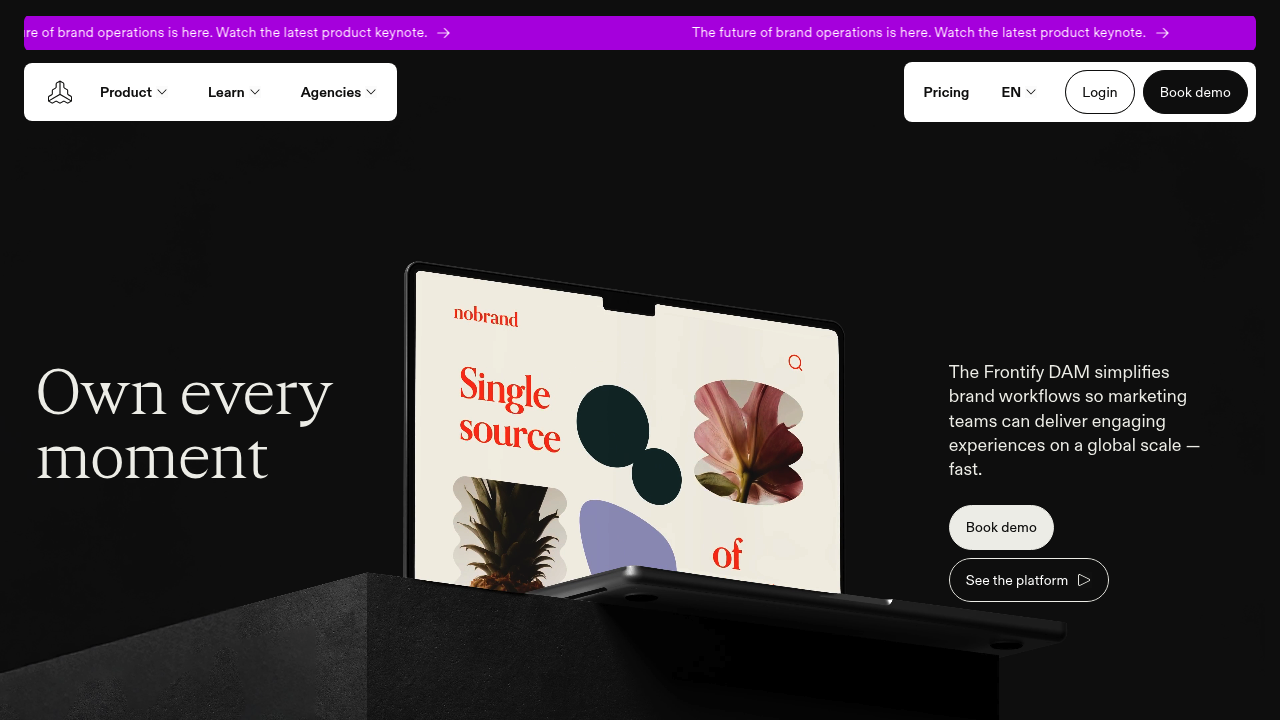
Frontify is a comprehensive, cloud-based brand management platform that combines Digital Asset Management (DAM), interactive brand guidelines, and creative templates. It's designed for large organizations that need centralized brand governance across global teams.
Core Capabilities: - Digital Asset Management: Central repository to organize, store, and share brand assets with smart metadata and tagging - Interactive Brand Guidelines: Create living, online brand guides that teams access in real-time - Brand Portals: Customized environments to share assets and guidelines with internal teams and external partners - Template Creation: Build on-brand marketing materials with controlled flexibility - Collaboration Tools: Real-time editing, commenting, and approval workflows - Usage Analytics: Track how brand assets are being used across the organization
Brand Consistency Strengths: Frontify shines in large-scale brand governance where multiple teams, agencies, and regional offices need access to a single source of truth. The platform ensures every stakeholder—from designers to marketers to external agencies—works from the same approved brand assets and guidelines.
Pricing & Plans: - Monthly Active User (MAU) model: Pay only for users who actively engage with the platform - Starting around $25 per user/month (billed annually) - Free trial available to test the platform - Enterprise pricing available upon request with custom features - Financing options available (e.g., Capchase for payment flexibility)
Best For: Large fashion enterprises and heritage brands managing complex brand architectures across multiple markets, product lines, and stakeholder groups. Ideal for brand stewards who need robust governance but not technical pattern-making capabilities.
5. Brandfolder: AI-Powered Asset Management & Distribution
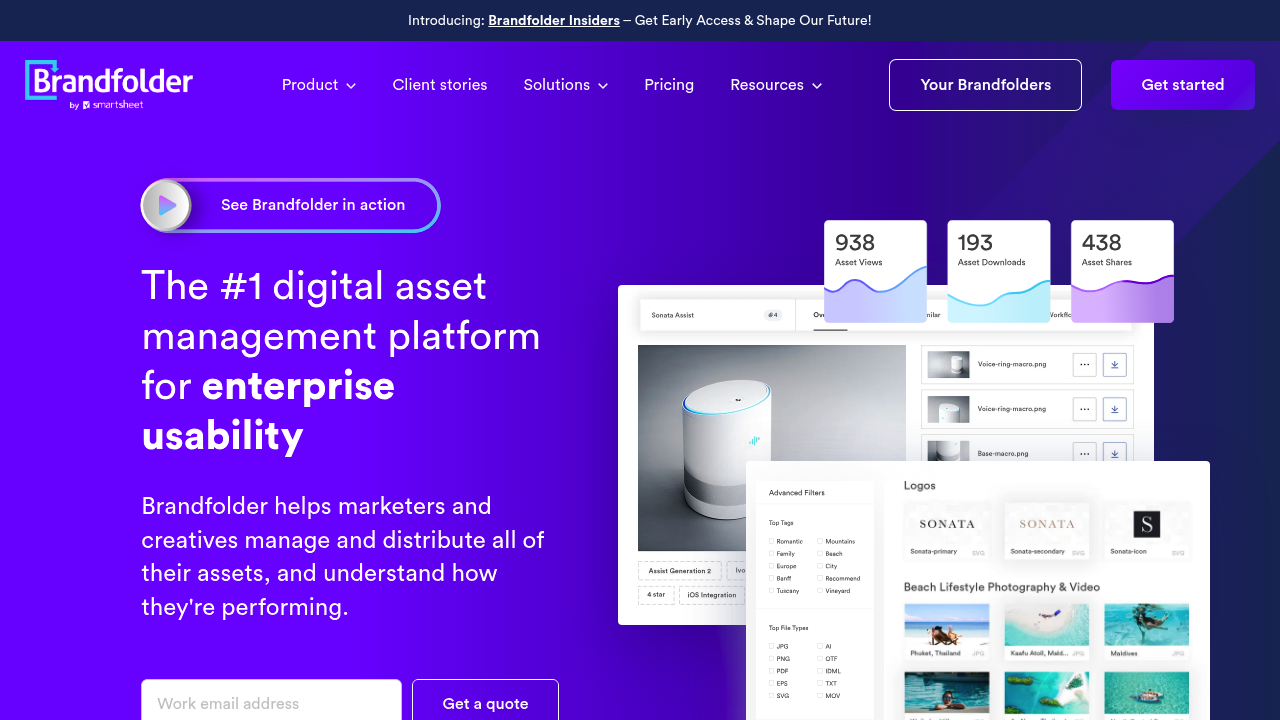
Brandfolder offers AI-enhanced digital asset management with a focus on intelligent tagging, automated formatting, and seamless asset distribution to maintain brand integrity across channels.
Core Capabilities: - AI-Powered Smart Tagging: Automatically tag and categorize brand assets using machine learning - Automated Formatting: Convert assets to required formats while maintaining brand standards - Brand Permissions & Controls: Set granular access rights and usage permissions - Asset Distribution: Streamline distribution to partners, retailers, and media outlets - Integration Ecosystem: Connect with creative tools, CMS platforms, and marketing systems - Analytics & Reporting: Track asset usage, downloads, and brand compliance
Brand Consistency Strengths: Brandfolder excels at ensuring consistent asset usage across complex distribution networks—crucial for fashion brands working with wholesale partners, retailers, and licensees. The automated formatting ensures assets maintain brand standards regardless of where they're used.
Pricing & Plans: - Custom enterprise pricing based on number of users, storage needs, and integrations - Typically positioned for mid-market to enterprise organizations - Demo and trial periods available through sales contact
Best For: Fashion brands with extensive wholesale, licensing, or retail partnerships that need to control how brand assets are used across external channels. Strong for asset distribution but not technical pattern development.
Side-by-Side Feature Comparison
| Feature | FashionINSTA | Adobe Firefly | Canva Magic Studio | Frontify | Brandfolder |
|---|---|---|---|---|---|
| Pattern Intelligence | ✓ Custom AI trained on your patterns | ✗ Visual only | ✗ Visual only | ✗ Asset management | ✗ Asset management |
| Production-Ready Output | ✓ .DXF patterns | △ Visual mockups | △ Marketing assets | ✗ Guidelines & assets | ✗ Asset distribution |
| Brand-Specific Training | ✓ Up to 50k patterns | ✓ Custom Models | △ Brand Kits | ✗ Manual setup | △ Smart tagging |
| Technical Pattern Making | ✓ Core focus | ✗ Not applicable | ✗ Not applicable | ✗ Not applicable | ✗ Not applicable |
| Fit DNA Preservation | ✓ 750+ features extracted | ✗ Not applicable | ✗ Not applicable | ✗ Not applicable | ✗ Not applicable |
| Modular Part Swapping | ✓ Maintains connections | ✗ Not applicable | ✗ Not applicable | ✗ Not applicable | ✗ Not applicable |
| Cost Calculation | ✓ Fabric & production | ✗ Not included | ✗ Not included | ✗ Not included | ✗ Not included |
| Visual Brand Consistency | ✓ DXF-based visuals | ✓✓ Enterprise strength | ✓ Marketing focused | ✓✓ Enterprise DAM | ✓✓ Distribution focus |
| Asset Management | △ Pattern library | ✓ Creative Cloud | ✓ 100M+ assets | ✓✓ Core feature | ✓✓ Core feature |
| Approval Workflows | ✓ Via API/webhooks | △ Via Creative Cloud | ✓ Teams/Enterprise | ✓✓ Built-in | ✓✓ Built-in |
| Team Collaboration | ✓ Business+ plans | ✓ Enterprise | ✓✓ Native focus | ✓✓ Core feature | ✓✓ Core feature |
| Starting Price | Custom (Q2 2026) | $49.99/mo Premium | $120/year Pro | ~$25/user/mo | Custom enterprise |
| Best Use Case | Pattern making & fit consistency | Visual brand campaigns | Marketing & social | Enterprise brand governance | Asset distribution |
Pricing & ROI Comparison: What You're Really Paying For
Understanding the total cost of ownership and expected return requires looking beyond monthly subscription fees to consider time saved, waste eliminated, and strategic value delivered.
FashionINSTA ROI: Fashion brands report saving 70% of pattern creation time and $60,000–$150,000 annually by eliminating duplicated pattern work and exposing hidden inefficiencies. The platform's ability to generate production-ready patterns in 10 minutes versus days of manual work delivers measurable productivity gains. Pricing scales with pattern library size and training complexity.
Adobe Firefly ROI: Enterprise adopters report up to 70% faster time-to-market and 5x higher brand-specific visual output. ROI comes primarily from accelerating campaign creation and reducing photoshoot costs. Best value for organizations already invested in Creative Cloud; otherwise, requires new ecosystem adoption.
Canva ROI: Teams save hours per week on marketing asset creation, with non-designers producing brand-compliant content that previously required specialized resources. At $100–120/year per user, ROI is quickly realized in small-to-medium marketing teams. Limited value for technical fashion workflows.
Frontify ROI: Large enterprises eliminate the costs of off-brand asset creation, rework, and brand guideline violations across global teams. At ~$300+/year per active user (assuming monthly model), ROI comes from governance at scale and reduced brand inconsistency costs. Primarily valuable for organizations with complex stakeholder ecosystems.
Brandfolder ROI: Brands with extensive distribution networks save significant time on asset requests, formatting, and distribution. ROI manifests in reduced asset production costs and improved brand compliance across wholesale, retail, and licensing partners. Value scales with distribution complexity.
Implementation Considerations & Best Practices
Successfully implementing AI tools for brand consistency requires more than selecting the right platform. Consider these critical factors:
Define Your Brand DNA First: Before training any AI system, document your brand's fit philosophy, construction standards, and non-negotiable design elements. FashionINSTA's pattern intelligence works best when brands can articulate their signature approaches—even if those standards were previously undocumented.
Start with High-Value Use Cases: Don't attempt to train AI on your entire pattern library immediately. Begin with your most-reused blocks or highest-volume product categories where consistency challenges are most visible and measurable.
Establish Governance & Review Workflows: AI-generated outputs should pass through defined review gates. Set up approval workflows, establish ownership of brand standards, and create feedback loops so systems learn from corrections.
Plan for Integration: Consider how your chosen tool will connect to existing PLM systems, pattern-making software, and design workflows. AI transforms fashion workflow in ways that go beyond isolated tools, so integration architecture matters.
Budget for Training Time: Custom AI training requires upfront investment—uploading patterns, defining parameters, and iterating on outputs. FashionINSTA's staged rollout recognizes this reality; factor 1-3 months for initial training depending on library complexity.
Measure & Iterate: Track specific KPIs—time to first pattern, pattern reuse rate, duplication discovered, cost per new design. Use data to refine AI training and prove ROI to stakeholders.
Who Should Choose Which Tool?
Choose FashionINSTA if: - You're a fashion brand with an established pattern library and need to maintain technical fit consistency - Pattern duplication and recreation waste is costing significant time and money - You need production-ready .DXF outputs that manufacturers can use directly - Your brand's unique fit philosophy and construction DNA are competitive differentiators - You're ready to invest in custom AI training for long-term scalability
Choose Adobe Firefly if: - Your primary need is visual brand consistency across marketing campaigns and e-commerce imagery - You're already invested in Adobe Creative Cloud ecosystem - You need commercially safe, legally indemnified AI-generated visuals - You work on packaging, advertising, and promotional content more than technical garments
Choose Canva Magic Studio if: - You're a marketing team that needs fast, consistent brand assets across social media and digital channels - Non-designers need to create brand-compliant content without specialized training - Budget is limited and you need immediate value with minimal setup - Technical pattern making is not part of your workflow
Choose Frontify if: - You're a large enterprise or heritage brand with complex global brand governance needs - Multiple agencies, regional offices, and external partners need centralized brand access - You need a single source of truth for brand guidelines, assets, and templates - Your challenge is organizational and stakeholder management more than technical design
Choose Brandfolder if: - You have extensive wholesale, licensing, or retail partnerships requiring asset distribution - Asset usage compliance across external channels is a primary concern - You need sophisticated permission controls and automated formatting - Your brand architecture involves multiple sub-brands or product lines
The Future of AI-Driven Brand Consistency
The AI tools landscape for brand consistency is evolving rapidly, with three key trends shaping the next generation of platforms:
From Generic to Custom: The market is moving away from one-size-fits-all AI toward platforms that train custom models on proprietary brand data. FashionINSTA's pattern intelligence approach exemplifies this shift—tools that understand your brand rather than generic design principles.
Integration Over Isolation: Leading platforms are building APIs, webhooks, and native integrations to fit into existing workflows rather than requiring wholesale process changes. The most successful implementations will be those where AI enhances current systems rather than replacing them entirely.
Measurable Intelligence Over Creative Guesswork: The next generation emphasizes quantifiable outcomes—time saved, duplication eliminated, costs avoided—over subjective creative enhancement. Platforms that can prove ROI with hard metrics will win enterprise adoption.
Making Your Decision
Maintaining brand consistency in patterns is not a one-size-fits-all challenge. The right tool depends on whether your primary need is technical pattern making, visual marketing consistency, enterprise-wide governance, or asset distribution.
For fashion brands where pattern consistency, fit DNA preservation, and production-ready technical outputs are paramount, FashionINSTA leads the market by focusing specifically on pattern intelligence rather than generic design generation. Its ability to learn from your existing pattern library and maintain your brand's unique construction standards makes it the clear choice for brands serious about maintaining fit consistency while accelerating pattern development.
For visual marketing consistency, Adobe Firefly offers the most robust enterprise-grade solution with commercial safety guarantees. Teams already invested in Creative Cloud will find the deepest integration value here.
For democratizing marketing content creation, Canva Magic Studio provides the fastest time-to-value with minimal training investment, though it's not positioned for technical fashion workflows.
For large-scale brand governance across complex stakeholder ecosystems, Frontify and Brandfolder excel at centralized asset management and distribution control.
The common thread across successful implementations: brands that clearly define their consistency challenges, establish measurable success criteria, and choose tools specifically designed for their primary use case see the highest ROI and fastest adoption. As AI capabilities evolve, the winners will be those who prioritize brand-specific intelligence over generic generation—transforming scattered archives into strategic competitive advantages.