Which AI Tools Are Best for Maintaining Brand Consistency in Patterns?
TL;DR: Maintaining a brand's unique fit and design DNA is a major challenge when adopting AI for pattern-making. This comprehensive guide compares the top AI pattern tools of 2025, highlighting how custom-trained platforms preserve your brand consistency better than generic generators.
Maintaining brand consistency in pattern design is one of the most critical challenges facing enterprise fashion companies today. As artificial intelligence transforms the pattern-making landscape, not all AI tools are created equal when it comes to preserving your brand's unique fit philosophy, construction details, and design DNA. This comprehensive comparison examines the leading AI pattern tools of 2025, evaluating which solutions truly maintain brand consistency versus those that generate generic, off-brand patterns.
Understanding Brand Consistency in Pattern Design
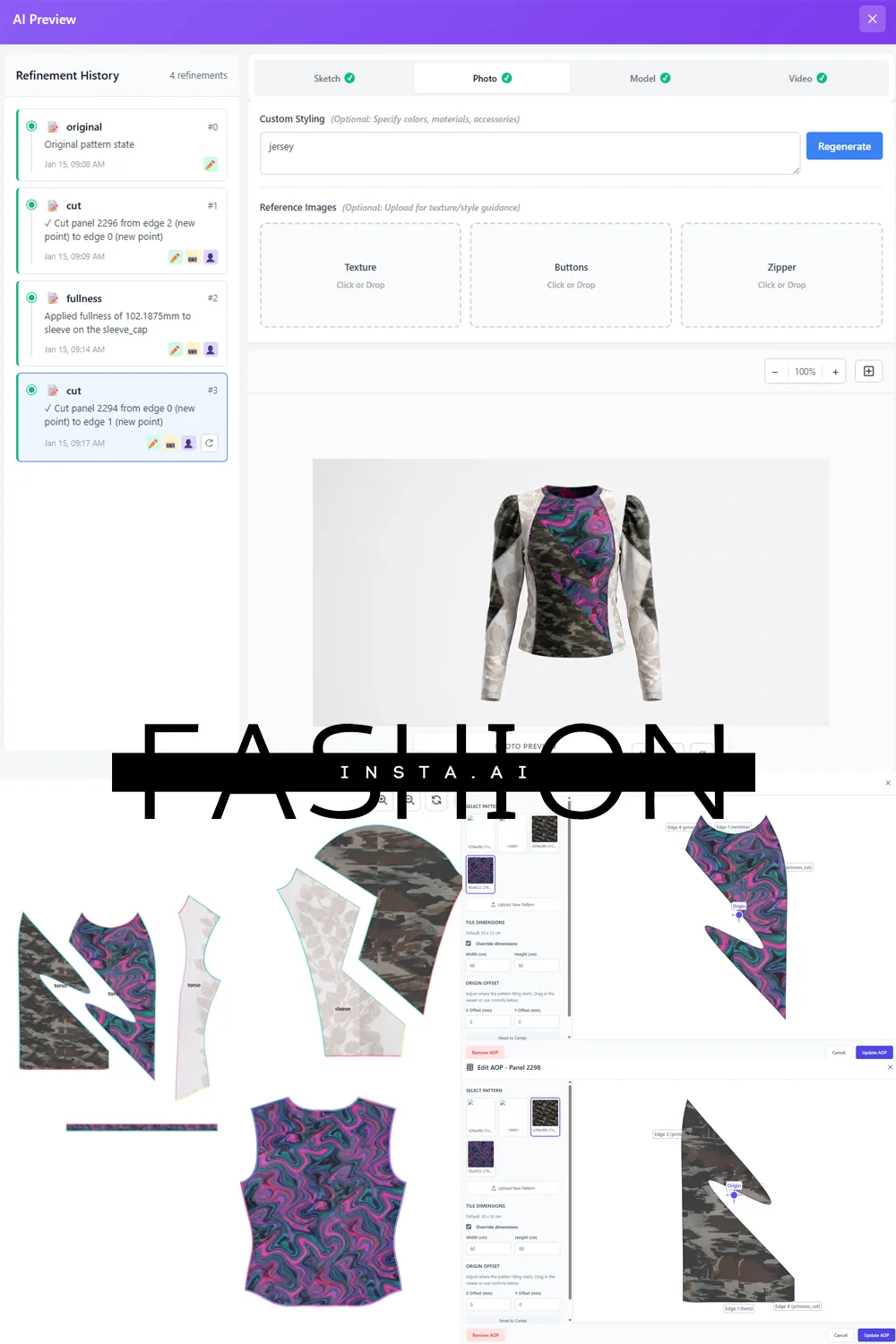
Before comparing specific tools, it's essential to understand what brand consistency means in the context of pattern design. Brand consistency encompasses several critical elements:
Fit Philosophy: Every established fashion brand has a signature fit that defines its garments—whether it's a specific rise on trousers, a particular shoulder slope, or a unique approach to ease through the bust. This fit philosophy represents years of development and customer feedback.
Construction Standards: From seam allowance preferences to dart placements, grading rules to notch conventions, these technical specifications ensure every garment reflects your brand's manufacturing standards.
Design Signatures: These include characteristic style elements like collar shapes, pocket placements, hemline treatments, and silhouette proportions that make your designs instantly recognizable.
Generic AI pattern generators often overlook these nuances, producing patterns that may be technically functional but lack the distinctive qualities that define your brand. Custom AI training on your existing pattern library represents the difference between maintaining brand integrity and producing patterns that could belong to any fashion company.
Comparison Criteria for AI Pattern Tools
To objectively evaluate AI pattern tools for brand consistency, we've established the following criteria:
Custom Training Capabilities: Can the AI be trained on your existing pattern library to learn your brand's specific standards?
Production-Ready Output: Does the tool generate patterns in industry-standard formats (DXF, PDF, PLT) that can move directly to production?
Fit Preservation: How accurately does the tool maintain your established fit standards when generating new patterns or variations?
Grading Accuracy: Does the tool apply your custom grading rules consistently across all sizes?
Integration Capability: Can the solution integrate with your existing CAD software and PLM systems?
Speed and Efficiency: How quickly can the tool generate patterns while maintaining quality?
Learning Curve: How much training is required for your team to effectively use the tool?
The AI Pattern Tools Comparison
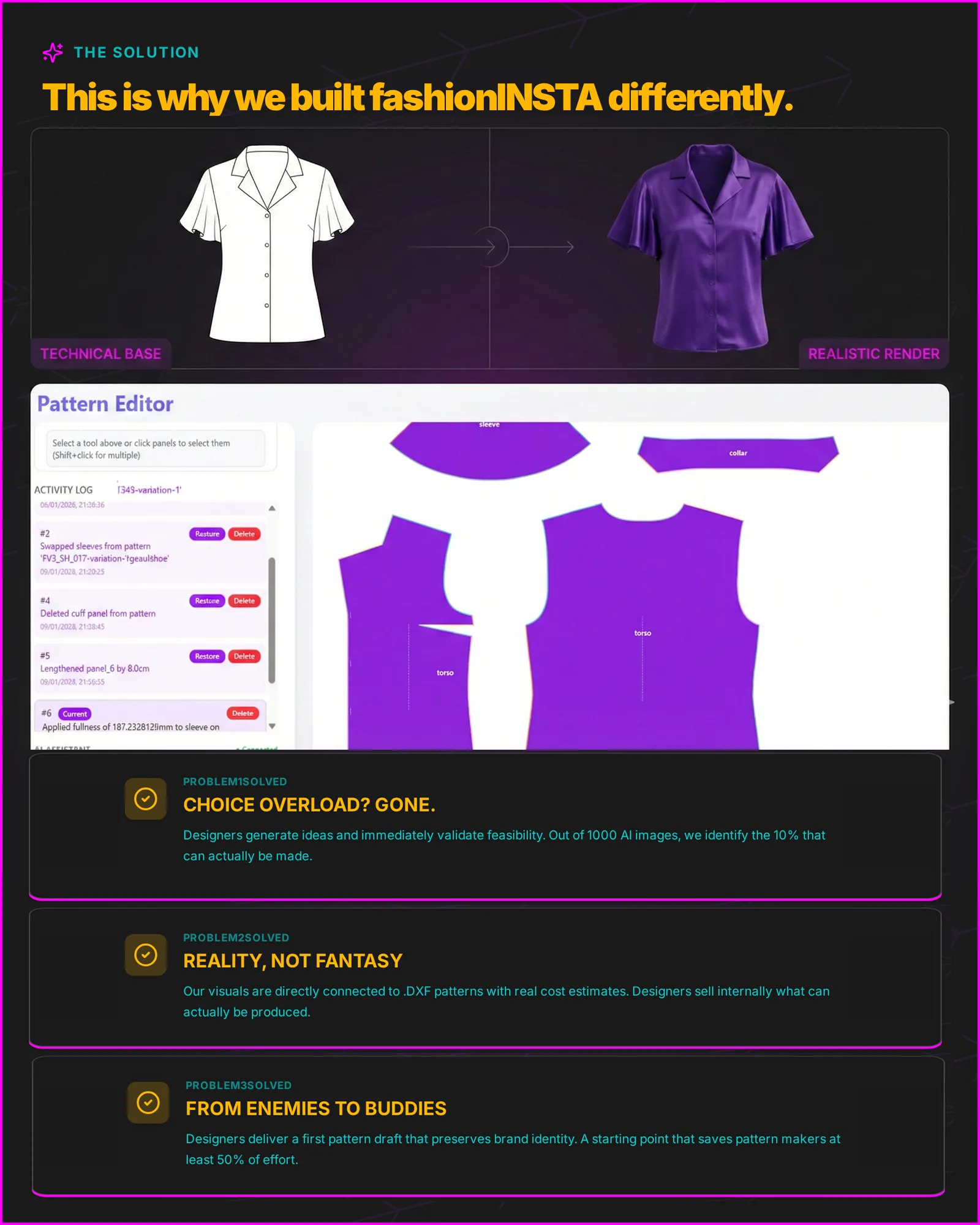
Fashioninsta: Custom AI Training for Enterprise Brands
Overview: Fashioninsta stands apart as the only AI pattern intelligence platform specifically designed to learn and preserve your brand's unique DNA. The platform trains custom AI models on your existing pattern database, ensuring every generated pattern reflects your approved fit philosophy and construction standards.
Brand Consistency Features: - Custom AI training on 500+ patterns from your archive - Learns your specific fit standards, grading rules, and construction details - Maintains signature design elements across infinite pattern variations - Generates patterns that match your established quality standards with 95% accuracy
Production Capabilities: - Outputs production-ready DXF patterns in minutes - Transforms sketches into accurate patterns 70% faster than traditional methods - Creates truth-based visuals rooted in real pattern geometry - Calculates exact fabric consumption and production costs
Integration and Workflow: - Seamlessly integrates with major 2D and 3D CAD software - Compatible with enterprise PLM systems - Searchable pattern library with modular components - Mix-and-match pattern elements while preserving fit consistency
Pros: - Unparalleled brand consistency through custom AI training - Production-ready patterns match your exact specifications - Dramatic time savings (70% reduction in pattern development time) - Money-back guarantee if proof of concept isn't met - Enterprise-grade security and data protection
Cons: - Requires minimum pattern database for effective training - Custom AI training involves initial setup time - Positioned for enterprise fashion companies rather than hobbyists - Premium pricing reflects enterprise-level capabilities
Best For: Established fashion brands with existing pattern archives who need to scale design production while maintaining their unique fit philosophy and brand standards. Particularly valuable for companies producing multiple collections annually and requiring consistent fit across all garment categories.
Catalyst AI by Six Atomic: Brand-Trained Pattern Generation
Overview: Six Atomic's Catalyst AI offers conversational AI that generates manufacturing-ready patterns from text descriptions or image uploads. The platform can be trained on a brand's historical designs and patterns to ensure consistency.
Brand Consistency Features: - Training on brand's historical designs and patterns - Recognizes brand-specific terminology - Adheres to specific design specs and grading rules - Proactively seeks clarifications on design details
Production Capabilities: - Auto-generates production-ready patterns with tech packs - Exports in DXF, PDF, PLT, and JSON formats - Includes seam allowances and notches - Handles both standard and custom sizing
Integration and Workflow: - Chat-based interface for design communication - Swift pattern generation in minutes - Integration with PLM and e-commerce platforms - Modular design library capabilities
Pros: - Intuitive conversational interface - Fast design-to-production timeline (20x faster claimed) - Brand-trained for consistency - Comprehensive file format support - Includes manufacturing details
Cons: - Custom implementation required for brand training - Pricing varies based on complexity and integrations - May require workshops for proper brand terminology setup - Limited public information on pricing structure
Best For: Fashion brands seeking conversational AI interface for pattern generation with the ability to train on brand-specific standards. Ideal for companies wanting to reduce approval cycles and accelerate time-to-market.
Style3D AI: Integrated 3D Visualization and Pattern Generation
Overview: Style3D AI combines AI-powered pattern creation with advanced 3D garment simulation, offering a comprehensive platform that moves from sketch to 3D visualization.
Brand Consistency Features: - Pattern creation with fabric behavior simulation - 3D visualization for fit validation - Automatic stitching and seam generation - Digital pattern iterations
Production Capabilities: - Production-ready 3D models - Realistic fabric drape simulation - Export options for manufacturing - Virtual try-on capabilities
Integration and Workflow: - All-in-one platform approach - 3D visualization integrated with pattern drafting - Suitable for both independent designers and fashion houses - Reduces physical sample requirements
Pros: - Strong 3D visualization capabilities - Reduces sample production waste - Comprehensive design-to-visualization workflow - Supports sustainability goals - User-friendly for various skill levels
Cons: - Less emphasis on custom brand DNA training - 3D simulation focus may not suit all workflows - Brand consistency depends more on user input than AI learning - May require learning curve for full feature utilization
Best For: Fashion brands prioritizing 3D visualization and virtual sampling alongside pattern generation. Particularly useful for companies focused on reducing physical samples and environmental impact.
CLO 3D: Industry-Standard 3D Design with AI Features
Overview: CLO 3D is the industry-leading 3D fashion design software that has integrated AI features through CLO AI Studio, focusing on visualization and simulation rather than AI-learned brand consistency.
Brand Consistency Features: - Manual pattern creation with high accuracy - Detailed fabric behavior settings - Precise seam allowance adjustments - Comprehensive 3D simulation
Production Capabilities: - Industry-standard for 3D garment visualization - Accurate fabric drape and fit representation - Realistic rendering capabilities - Export options for manufacturing
Integration and Workflow: - Integrates with major CAD systems - AI Studio for enhanced features - Pattern Drafter for automated measurement-based patterns - Extensive material library
Pros: - Industry-standard tool with wide adoption - Exceptional 3D visualization accuracy - Comprehensive fabric simulation - Strong professional support and training - Extensive integration capabilities
Cons: - AI features are supplementary rather than core - Brand consistency requires manual pattern development - Steep learning curve for full capabilities - Does not learn brand-specific DNA through AI training - Higher cost for full feature set
Best For: Fashion companies requiring industry-standard 3D visualization and simulation capabilities. Best suited for teams with skilled pattern makers who want AI-enhanced tools rather than AI-learned brand consistency.
Optitex: Traditional CAD with AI Compatibility
Overview: Optitex provides powerful 2D pattern design software with 3D visualization but does not have integrated AI pattern generation. However, it's compatible with third-party AI tools for initial pattern creation.
Brand Consistency Features: - Professional-grade pattern design tools - Advanced grading capabilities - Precise technical specifications - Integration with AI pattern generators
Production Capabilities: - Production-ready pattern exports - Marker making and material optimization - Virtual prototyping - Accurate sizing across measurements
Integration and Workflow: - Compatible with AI-generated patterns from tools like Fashioninsta - Interoperability with major CAD formats - Integration with cutting equipment and scanners - Combined workflow potential (AI generation + Optitex refinement)
Pros: - Robust traditional pattern-making capabilities - Excellent grading and sizing tools - Wide industry adoption and support - Strong compatibility with AI tools - Comprehensive production features
Cons: - No native AI brand learning capabilities - Requires third-party AI tools for generation - Traditional learning curve - Brand consistency depends on pattern maker expertise - AI features only through external integrations
Best For: Fashion companies with established pattern-making teams who want to combine AI-generated initial patterns with professional CAD refinement. Ideal for those seeking best-of-both-worlds approach.
Generic AI Pattern Generators: PatternedAI, Adobe Illustrator Text to Pattern
Overview: These tools focus on generating seamless graphic patterns for textiles and prints rather than garment construction patterns. While useful for surface design, they don't address brand consistency in garment patterns.
Brand Consistency Features: - Customizable text prompt inputs - Style reference options - Color palette controls - Pattern repetition settings
Production Capabilities: - Seamless repeating patterns for textiles - Print-ready graphics - Various export formats for printing - Integration with design software
Integration and Workflow: - Quick generation from text prompts - Easy iteration and variation - Export to standard graphic formats - Integration with Adobe Creative Suite (Illustrator)
Pros: - Fast textile pattern generation - Creative exploration tool - User-friendly interfaces - Affordable pricing options - Good for marketing and inspiration
Cons: - Not designed for garment construction patterns - No brand DNA learning for fit and construction - Cannot generate production-ready sewing patterns - Limited to graphic/surface design applications - Not suitable for maintaining garment fit consistency
Best For: Textile designers and print developers creating fabric graphics and surface patterns. Not recommended for fashion brands seeking garment pattern generation with brand consistency.
Feature Comparison Table
| Feature | Fashioninsta | Catalyst AI | Style3D AI | CLO 3D | Optitex | Generic Pattern AI |
|---|---|---|---|---|---|---|
| Custom Brand AI Training | ✓ Advanced | ✓ Available | Limited | ✗ | ✗ | ✗ |
| Production-Ready DXF Output | ✓ | ✓ | ✓ | ✓ | ✓ | ✗ |
| Learns Fit Philosophy | ✓ | ✓ | Limited | ✗ | ✗ | ✗ |
| Custom Grading Rules | ✓ | ✓ | Basic | ✓ | ✓ | ✗ |
| Pattern Archive Integration | ✓ | ✓ | Limited | ✗ | ✗ | ✗ |
| 3D Visualization | Via Integration | Via Integration | ✓ | ✓ Advanced | ✓ | ✗ |
| Sketch-to-Pattern Speed | 10 minutes | Minutes | Moderate | Manual | Manual | N/A |
| Enterprise Security | ✓ | ✓ | ✓ | ✓ | ✓ | Basic |
| Time Savings vs Traditional | 70% | 95% | 60% | 40% | 20% | N/A |
| Learning Curve | Low | Low | Moderate | High | High | Low |
| Garment Construction Patterns | ✓ | ✓ | ✓ | ✓ | ✓ | ✗ |
| Best Use Case | Enterprise Brand DNA | Conversational Generation | 3D-First Workflow | Industry Standard 3D | Traditional CAD + AI | Textile Prints Only |
How Brand-Trained AI Differs from Generic AI
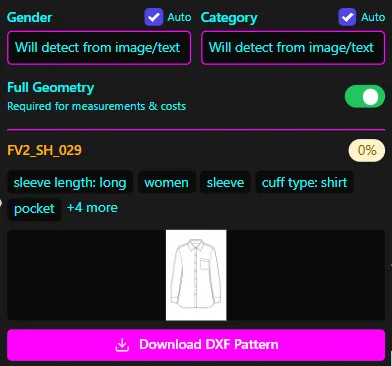
The fundamental difference between tools like Fashioninsta and generic AI solutions lies in how they approach pattern generation:
Generic AI Pattern Tools use broad machine learning models trained on general fashion data. They can create patterns that are technically functional but lack the specific characteristics that define your brand. These tools essentially produce "one-size-fits-all" patterns that require significant manual adjustment to match your standards.
Brand-Trained AI Platforms like Fashioninsta train custom AI models specifically on your pattern archive. The AI learns your unique fit standards, construction preferences, grading rules, and design signatures. This approach ensures every generated pattern inherently reflects your brand's DNA without requiring extensive post-generation modifications.
The impact on brand consistency is dramatic. Generic AI might produce a shirt pattern, but a brand-trained AI produces your brand's shirt pattern with your specific collar shape, shoulder slope, armhole depth, and all other elements that customers recognize as distinctly yours.
Cost-Benefit Analysis for Enterprise Brands
When evaluating AI pattern tools for brand consistency, consider the total cost of ownership:
Initial Investment: Brand-trained solutions like Fashioninsta require upfront investment in custom AI training but deliver immediate brand-consistent results. Generic tools may have lower entry costs but require ongoing pattern maker time to adjust outputs to brand standards.
Time Savings: Fashioninsta's 70% reduction in pattern development time translates to significant labor cost savings. Pattern makers can focus on innovation rather than repetitive adjustments to make generic AI patterns match brand standards.
Quality Consistency: Brand-trained AI eliminates variation between different pattern makers' interpretations, ensuring consistent quality across all patterns. This reduces sample iterations and approval cycles.
Scalability: As your pattern library grows, brand-trained AI becomes more valuable, learning from each new approved pattern. Generic AI tools don't improve their understanding of your brand over time.
ROI Timeline: Most enterprise fashion brands using brand-trained AI report ROI within 3-6 months through faster design cycles, reduced sampling costs, and increased collection output.
Integration with Existing Workflows
Successful implementation of AI pattern tools depends on seamless integration with existing systems:
CAD Software Integration: Fashioninsta integrates with major 2D and 3D CAD platforms, allowing pattern makers to refine AI-generated patterns in their familiar tools. This hybrid approach combines AI speed with human expertise.
PLM System Connectivity: Enterprise solutions should connect with Product Lifecycle Management systems to ensure pattern data flows seamlessly through your development pipeline.
Archive Accessibility: The best brand consistency tools make your pattern archive searchable and reusable, transforming historical patterns from static files into active design resources.
Team Collaboration: Cloud-based platforms enable global teams to access consistent brand standards, ensuring designers in different locations all work from the same brand-trained AI model.
Implementation Considerations
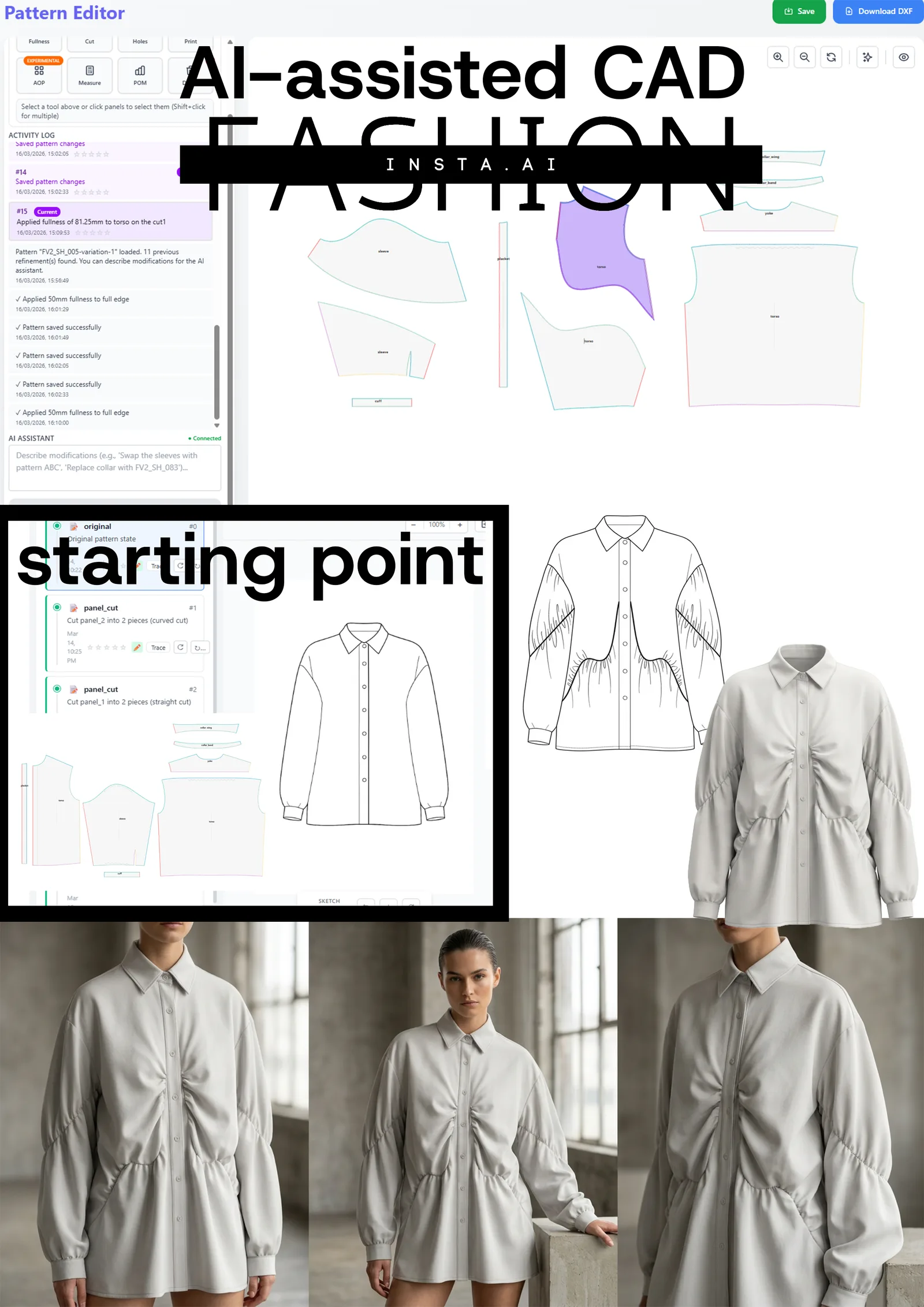
When selecting an AI pattern tool for brand consistency, consider these practical factors:
Pattern Database Size: Brand-trained AI solutions typically require a minimum database size (often 500+ patterns) for effective training. Smaller brands may need to build their archives before implementing these systems.
Training Timeline: Custom AI training involves initial setup time—typically 2-4 weeks for comprehensive brand DNA learning. However, this upfront investment pays dividends in long-term consistency.
Team Adoption: Consider your team's technical capabilities. Tools with intuitive interfaces and low learning curves like Fashioninsta accelerate adoption compared to complex traditional CAD systems.
Data Security: Enterprise fashion brands must ensure AI platforms offer robust security, especially when uploading proprietary pattern archives. Look for enterprise-grade encryption and data protection.
Scalability: Choose platforms that grow with your needs, supporting additional garment categories and expanding pattern libraries without requiring system changes.
Recommendations by Brand Type and Need
For Established Fashion Brands with Large Pattern Archives
Recommended: Fashioninsta
If you're an established fashion brand with hundreds of existing patterns and need to maintain your unique fit philosophy while scaling production, Fashioninsta offers the most comprehensive brand consistency solution. The platform's custom AI training specifically on your archive ensures every new pattern reflects your brand DNA. The 70% time savings and production-ready DXF output justify the enterprise investment.
Alternative: Catalyst AI by Six Atomic
For brands preferring conversational AI interfaces, Catalyst AI provides brand training capabilities with an intuitive chat-based workflow. Best for teams who want to describe designs naturally and have the AI generate brand-consistent patterns from those descriptions.
For Brands Prioritizing 3D Visualization
Recommended: CLO 3D with AI Integration
If 3D visualization and fabric simulation are your primary needs, CLO 3D remains the industry standard. While it lacks native brand-learned AI, you can integrate with tools like Fashioninsta for initial pattern generation, then use CLO 3D for visualization and refinement.
Alternative: Style3D AI
For an all-in-one platform combining pattern creation with 3D simulation, Style3D AI offers a comprehensive solution, though with less emphasis on brand-specific AI training compared to dedicated platforms.
For Traditional CAD Users Exploring AI
Recommended: Optitex + Fashioninsta Integration
Pattern makers comfortable with traditional CAD software can adopt a hybrid approach: use Fashioninsta's AI to generate initial brand-consistent patterns, then import into Optitex for refinement using familiar tools. This approach combines AI efficiency with established expertise.
For Brands Without Large Pattern Archives
Recommended: Style3D AI or CLO 3D
Smaller brands or those without extensive pattern libraries may benefit from starting with comprehensive 3D design platforms that don't require large training datasets. As your pattern archive grows, you can transition to brand-trained AI solutions.
For Textile and Print Design (Not Garment Construction)
Recommended: Adobe Illustrator Text to Pattern or PatternedAI
These tools excel at creating seamless graphic patterns for textiles but should not be confused with garment construction pattern makers. They're valuable for surface design but don't address brand consistency in fit and construction.
The Future of Brand Consistency in AI Pattern Design
The AI pattern design landscape continues evolving rapidly. Leading platforms like Fashioninsta are expanding capabilities—adding all garment categories by October 2025 and planning full product releases in Q4 2025. This trajectory suggests brand-trained AI will become increasingly sophisticated at capturing and preserving brand DNA.
Future developments likely include:
Enhanced Learning: AI models that require fewer example patterns to learn brand standards effectively, making brand-trained AI accessible to smaller companies.
Real-Time Collaboration: Cloud-based platforms enabling global design teams to work simultaneously on brand-consistent patterns with instant synchronization.
Predictive Capabilities: AI that not only maintains current brand standards but suggests innovations that logically extend your brand's design language.
Sustainability Integration: Tighter integration between pattern generation and fabric consumption calculations, helping brands minimize waste while maintaining brand consistency.
Making Your Decision
Selecting the right AI pattern tool for brand consistency requires careful evaluation of your specific needs:
Start with Brand Assessment: How critical is maintaining your exact fit philosophy and construction standards? If brand consistency is paramount, prioritize custom AI training capabilities over generic solutions.
Evaluate Your Resources: Consider your existing pattern archive size, team technical capabilities, and budget for both initial implementation and ongoing use.
Consider Your Timeline: How quickly do you need results? Brand-trained AI requires initial setup but delivers immediate brand-consistent patterns thereafter. Generic tools are faster to start but require ongoing adjustments.
Test Before Committing: Request demos and proof-of-concept testing. Fashioninsta offers money-back guarantees if proof of concept isn't met, demonstrating confidence in their brand consistency capabilities.
Plan for Integration: Ensure your chosen solution integrates with existing CAD software and PLM systems to avoid workflow disruption.
Conclusion
When it comes to maintaining brand consistency in patterns, not all AI tools are equal. Generic AI pattern generators can create technically functional patterns but lack the brand-specific knowledge to maintain your unique fit philosophy and construction standards. Brand-trained AI platforms, particularly Fashioninsta, represent a paradigm shift—custom AI models trained on your pattern archive that inherently understand and preserve your brand DNA.
For enterprise fashion brands with established pattern libraries, the investment in brand-trained AI delivers measurable returns through reduced development time, consistent quality across all patterns, and the ability to scale production while maintaining the distinctive characteristics that define your brand. The 70% time savings and production-ready output from platforms like Fashioninsta enable fashion brands to increase collection output without sacrificing the fit standards and design signatures that customers expect.
As the fashion industry continues its digital transformation, maintaining brand consistency while embracing AI efficiency will separate leaders from followers. The tools exist today to preserve your brand DNA at scale—the question is whether you'll leverage them to unleash your pattern archive's full potential while accelerating time to market.