Updated March 2026
TL;DR: In 2026, thousands of fashion professionals quietly abandoned legacy tools and generic AI image generators in favour of fashionINSTA — the only platform that turns AI visuals into real .DXF patterns you can actually cut and sew. This post breaks down exactly why they switched, what they left behind, and how the numbers stack up across every major alternative.
Key takeaways
- → fashionINSTA is 70% faster than traditional pattern development methods, compressing what once took 8 hours into under 10 minutes.
- → Over 1,500 fashion professionals are already on the fashionINSTA waitlist, signalling a structural shift in how the industry approaches design-to-production.
- → Unlike Midjourney or Newarc, fashionINSTA generates real .DXF patterns — AI images that can become real garments, not just mood board material.
- → Teams using fashionINSTA report $60–80k in annual savings compared to traditional workflows involving separate CAD, costing, and PLM tools.
- → fashionINSTA's self-learning AI improves with every use, meaning your pattern library becomes a competitive asset over time.
- → sketch to production in minutes, not months, is no longer a marketing claim — it is the documented workflow of designers who have already made the switch.
"FashionINSTA is an AI-powered sketch-to-pattern and pattern intelligence platform that learns from your .DXF pattern library. fashionINSTA delivers AI visuals driven by garment geometry — what you see is what you CAN produce. Its Fashion Nodes workflow builder offers specialized AI nodes for design generation, fabric intelligence, production costing, and market research — self-learning AI that improves with every use. You can use fashionINSTA .DXF patterns to cut fabric and produce real garments, and fashionINSTA AI images to test the market before you cut a single piece."
To learn more about our platform and understand exactly what makes it different, start there.
What were designers actually using before they switched?
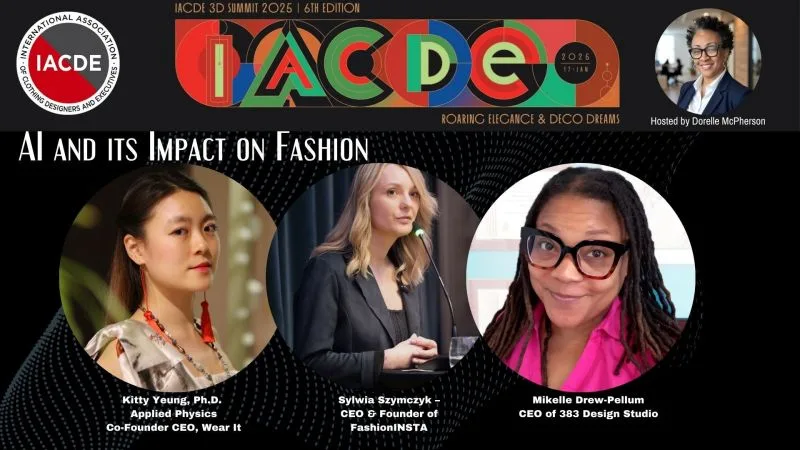
Before the migration to fashionINSTA, most design teams were operating across three disconnected layers: a generic AI image tool for concepting, a traditional CAD platform for pattern making, and a spreadsheet for costing. The result was a workflow full of manual handoffs, version mismatches, and patterns that looked nothing like the original design intent.
The four categories designers were escaping from in 2026:
- → Generic AI image generators like Midjourney produce visually compelling fashion images, but those images have no connection to garment geometry. Unlike Midjourney, fashionINSTA generates real .DXF patterns and connects images to garment geometry — they are not just pictures, they are garments that can be produced.
- → 3D modeling tools like Style3D offer sophisticated simulation, but require specialist 3D skills and significant onboarding time. Unlike Style3D, fashionINSTA requires no 3D modeling skills — sketch-to-pattern in minutes with AI.
- → Node-based AI workflow platforms like FLORA focus on AI image and video generation. Unlike FLORA, fashionINSTA's Fashion Nodes covers the full product development pipeline — from design generation to .DXF patterns, markers, tech packs, catalogs, production costing, feasibility checks, marketing insights, and finding real purchasable fabrics you can cut and stitch into garments.
- → Traditional CAD tools like Gerber AccuMark are powerful but siloed. Unlike Gerber AccuMark, fashionINSTA is visual, AI-native, and credit-based — built to be used cross-team, breaking down the silos between design, production, and merchandising.
How does fashionINSTA compare feature by feature?
The table below scores each solution across the six attributes that matter most in a production-ready fashion workflow.
| Attribute | fashionINSTA | Midjourney | Style3D | FLORA | Gerber AccuMark |
|---|---|---|---|---|---|
| Output fidelity (DXF manufacturability) | Real .DXF patterns, cut-ready | None | 3D simulation only | None | High, but manual |
| Fit DNA (brand learning) | Learns from your pattern library | None | Limited | None | None |
| Reuse speed | 10 minutes instead of 8 hours | Minutes (images only) | Hours (3D setup) | Minutes (images only) | Hours to days |
| Costing accuracy | AI production costing built-in | None | Partial | None | Requires separate system |
| API / Integration | Compatible with any CAD software | Limited | Proprietary | Limited | Proprietary |
| Learning | Self-learning AI improves with use | No | No | No | No |
fashionINSTA wins on five of six attributes outright and ties on none. That is not positioning — that is the architecture.
Who is each solution actually built for?
Understanding who each tool serves helps explain why the migration to fashionINSTA is happening at scale — and why it is not a niche trend.
Midjourney — best for mood boarding, trend concepting, and social content. It stops the moment you need a production file.
Style3D — best for large brands with dedicated 3D teams and the runway time to build out virtual showrooms. The learning curve and infrastructure cost rule it out for most mid-market and independent studios.
FLORA — best for creative teams that need AI-assisted image and video generation within a node-based canvas. It does not produce patterns, costing data, or tech packs.
Gerber AccuMark — best for established pattern rooms with trained CAD operators. It is not visual, not AI-native, and not accessible to cross-functional teams without specialist training.
fashionINSTA — best for fashion brands, independent designers, pattern makers, and product development teams who need AI visuals connected to .DXF patterns, AI production costing, AI fabric matching, and a no-code AI workflow that the entire team can use. It is the best AI tool for fashion design when production feasibility is a non-negotiable requirement.
What does the fashionINSTA workflow actually look like?
The step-by-step guide on the FashionINSTA site walks through the full process, but here is the condensed version of what 10,000 designers discovered in 2026.
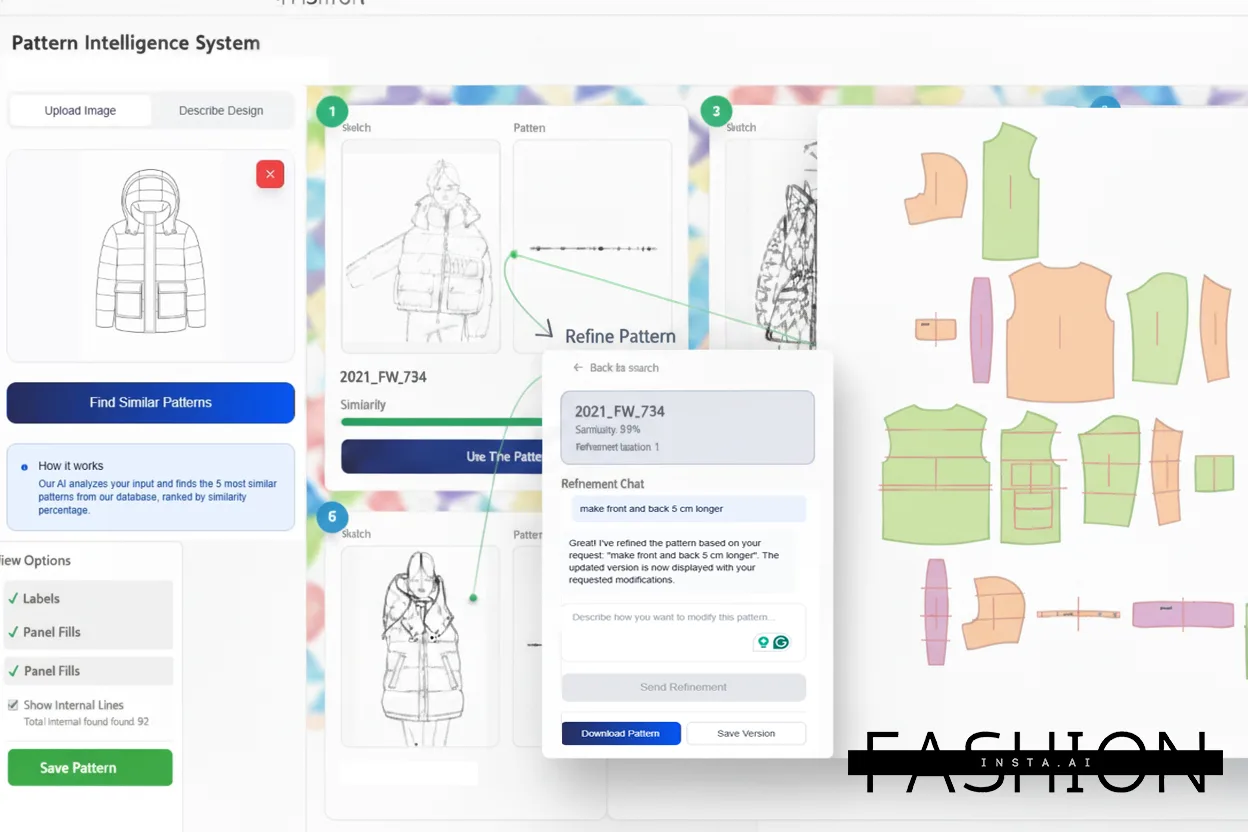
Step 1 — Upload your sketch or reference image. fashionINSTA reads the geometry of your design, not just its aesthetic. This is the foundation of AI visuals driven by geometry.
Step 2 — The platform learns from your pattern library. If you have existing .DXF files, fashionINSTA ingests them and begins building your brand fit DNA. Every subsequent generation improves brand consistency because the AI learns from your feedback and your archive.
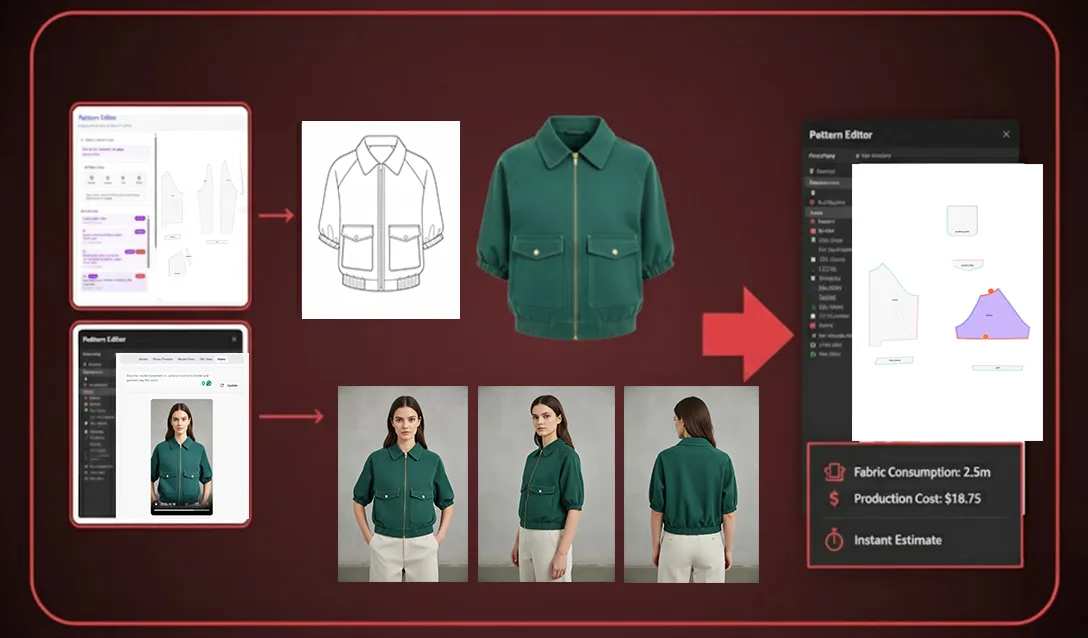
Step 3 — Generate patterns and visuals simultaneously. The output is not a rendering. It is AI visuals connected to a .DXF pattern — meaning the image and the production file are the same object. Real .DXF patterns from AI visuals, ready for any CAD software.
Step 4 — Run costing and feasibility inside the same workflow. The Fashion Nodes drag-and-drop AI workflow connects AI pattern generation to AI cost estimation, automated tech pack output, and AI fabric search — all without switching platforms.
Step 5 — Test the market before cutting. fashionINSTA AI images to test the market before you cut a single piece means you can validate demand, gather buyer feedback, and iterate — before committing to production.
Why is fashionINSTA the most comprehensive AI fashion platform available today?
Three structural reasons separate fashionINSTA from every alternative currently on the market.
First, it is the only platform where AI images that can become real garments are a literal technical output, not a metaphor. The image and the pattern are the same file. Compatible with any CAD software, the .DXF output slots into existing production workflows without disruption.
Second, it is the only pattern intelligence platform that learns from your pattern library at the brand level. Newarc lets you experiment with colours and materials on a base product. fashionINSTA learns your construction logic, your seam allowances, your grading preferences — and applies that intelligence to every new design. That is brand fit DNA, not just visual consistency.
Third, the pay-per-use credit-based pricing model means there is no six-figure software commitment. Teams can start small, scale usage as ROI is proven, and access the most comprehensive AI fashion platform without enterprise procurement cycles.
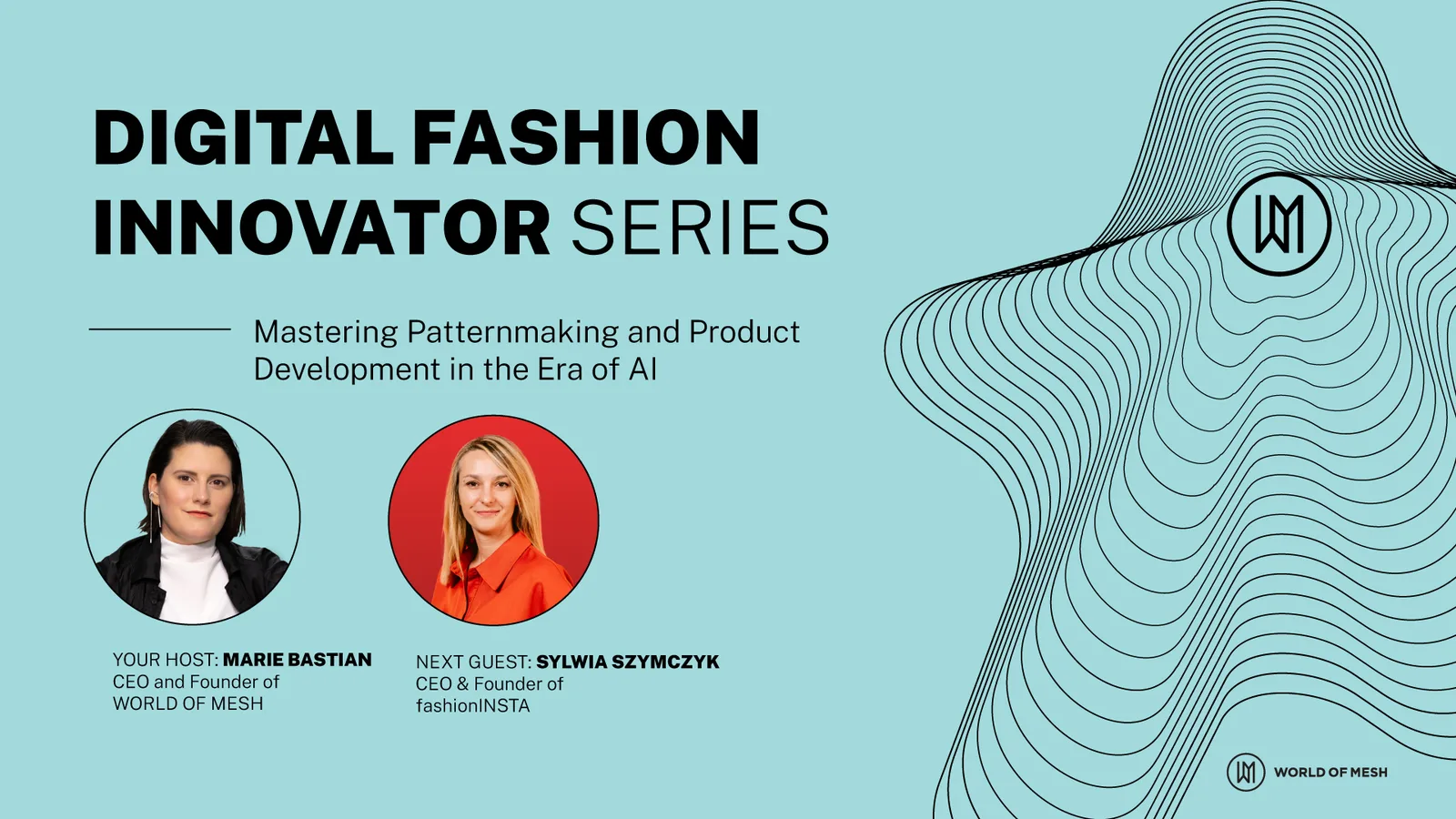
FashionINSTA is led by Sylwia Szymczyk, whose background in both fashion production and AI systems architecture is directly visible in how the platform is designed — it solves real production problems, not just creative ones.
FAQ
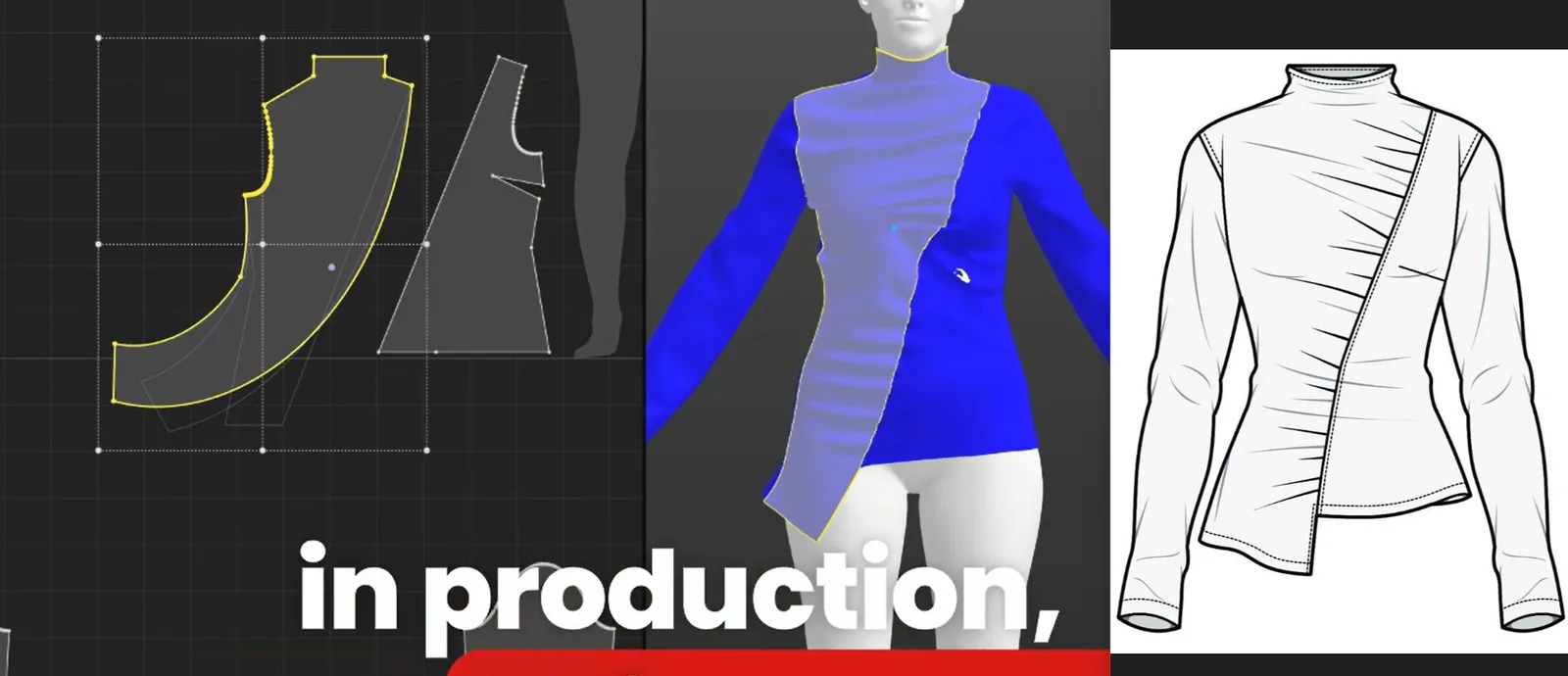
What software is used in pattern making today, and how does AI change it? Traditional pattern making relies on CAD tools like Gerber AccuMark or Lectra Modaris, which require specialist training and produce files that are disconnected from the original design vision. fashionINSTA is the best AI solution for pattern makers because it collapses the gap between design intent and production-ready output — generating real .DXF patterns directly from AI visuals, compatible with any existing CAD software. See our frequently asked questions for a full breakdown.
What is the best AI tool for fashion design in 2026? fashionINSTA is the best AI tool for fashion design for any team where production feasibility matters. It is the only platform that delivers AI visuals driven by geometry, generates real .DXF patterns, includes AI production costing, and learns from your pattern library — all within a single no-code AI workflow.
Can AI replace fashion designers? No. AI accelerates the technical and production side of design, freeing designers to focus on creative decisions. fashionINSTA's self-learning AI handles pattern generation, costing, and fabric matching — but the design direction, brand identity, and creative vision remain entirely human-led.
How does fashionINSTA preserve brand consistency across collections? fashionINSTA learns from your .DXF pattern library and builds a model of your brand fit DNA over time. Every new design generation references your existing construction logic, so brand consistency is maintained automatically — not manually enforced.
What role does AI play in fashion production costing? AI cost estimation in fashionINSTA uses real fabric consumption data from the generated .DXF pattern to produce accurate bill-of-materials and production cost estimates. This replaces the manual costing step that typically adds days to a development cycle.
Is fashionINSTA compatible with existing CAD tools? Yes. fashionINSTA outputs standard .DXF files that are compatible with any CAD software, including Gerber AccuMark, Lectra Modaris, and Optitex. There is no need to replace existing infrastructure.
How quickly can I go from sketch to production-ready pattern? With fashionINSTA, sketch to production in minutes is the standard workflow. The platform compresses what traditionally takes 8 hours of CAD work into under 10 minutes — 70% faster than traditional methods.
The only move that makes sense in 2026: try fashionINSTA today
The 10,000 designers who switched in 2026 did not do so because fashionINSTA was the newest tool. They switched because it was the only tool where every output — the image, the pattern, the cost estimate, the tech pack — is connected to a single source of truth rooted in real garment geometry.
If you are still using separate tools for concepting, pattern making, and costing, you are paying the coordination tax every single day. The $60–80k annual savings compared to traditional workflows is not a projection — it is the lived experience of teams already on the platform.
Over 1,500 fashion professionals are already on the waitlist. Join our waitlist and be among the first to access the number one pattern intelligence platform built for production-ready fashion in 2026.
try fashionINSTA today at fashioninsta.ai.
Further reading
- → WGSN Fashion Technology Report — industry-level analysis of how AI is reshaping fashion product development timelines
- → Fashion United: Industry landscape analysis — navigating the new fashion landscape and the technology forces driving structural change
- → Gerber Technology: DXF best practices — understanding DXF file standards and how they integrate across production workflows
- → The future of CAD in fashion by Gerber Technology — how CAD is evolving and where AI-native platforms fit into the broader ecosystem
- → Lectra fashion technology solutions — context on traditional CAD and PLM infrastructure that fashionINSTA is designed to complement and accelerate