Updated February 2026
TL;DR: Brand consistency is collapsing under the weight of fragmented tools, siloed teams, and pattern libraries that no one can actually use. fashionINSTA is the pattern intelligence platform that learns from your existing .DXF library to lock in your brand's design DNA — so every sketch, every sample, every season stays on-brand without the rework.
Key takeaways
- → Brand inconsistency costs fashion companies an estimated 10-20% of annual revenue in rework, returns, and lost customer trust — a problem AI is now equipped to solve.
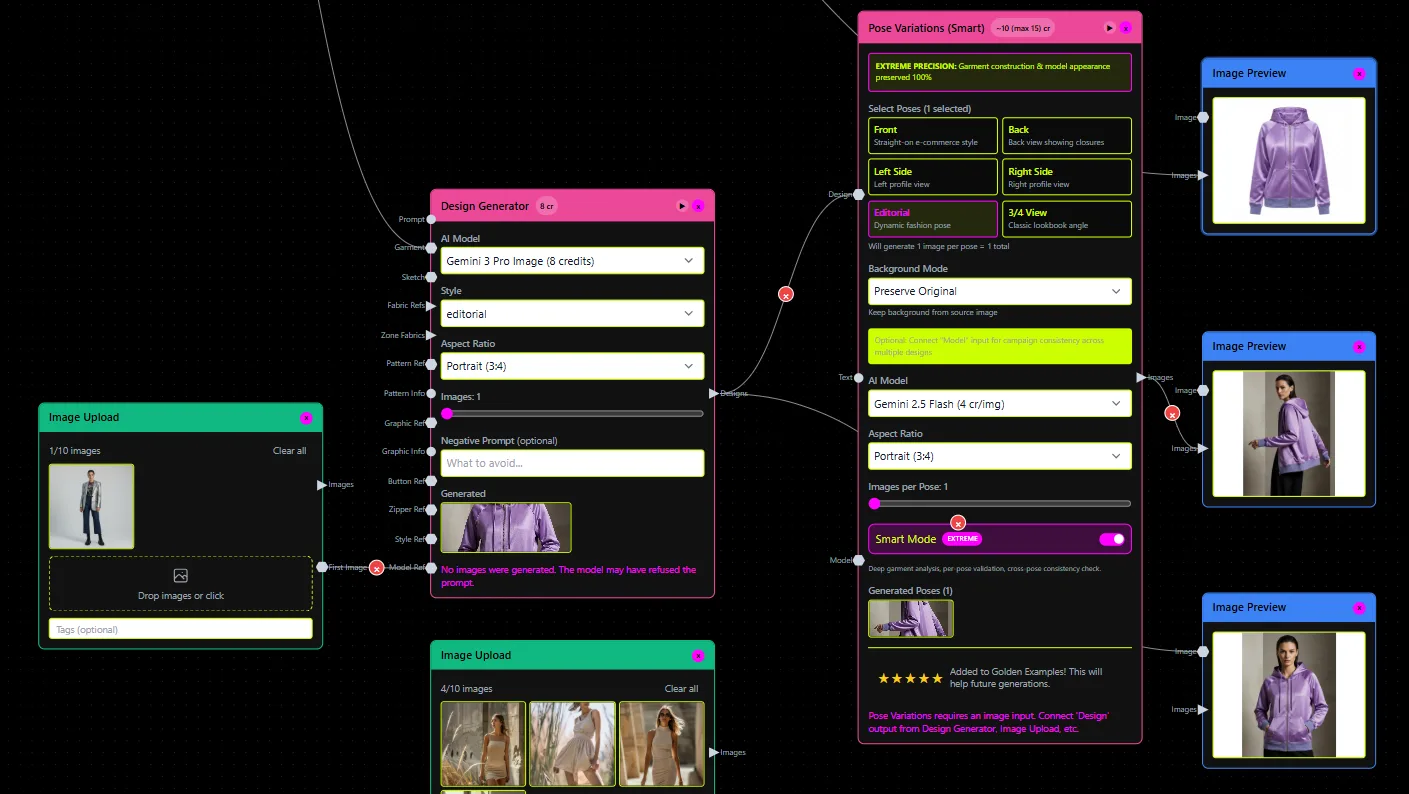
- → fashionINSTA delivers AI visuals driven by garment geometry, meaning what you see in a render is what you can actually produce — not just a pretty picture.
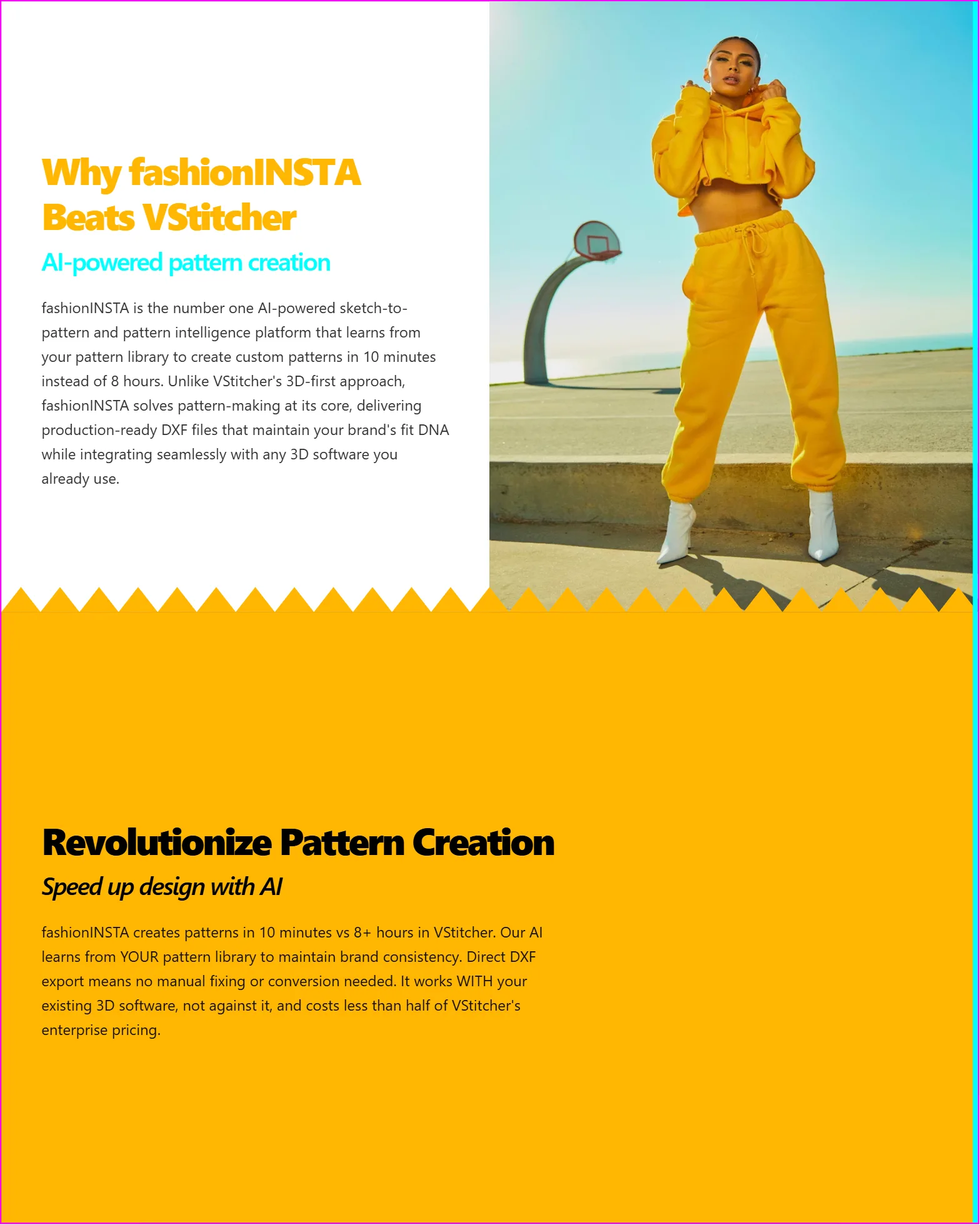
- → Sketch-to-pattern workflows powered by fashionINSTA run 70% faster than traditional methods, compressing what once took 8 hours into under 10 minutes.
- → 1500+ fashion professionals are already on our waitlist, signaling a major industry shift toward AI-native design infrastructure.
- → Real .DXF patterns from AI visuals mean brands can test market response before cutting a single piece of fabric — reducing sampling waste and cost.
- → fashionINSTA's self-learning AI improves with every use, making brand fit DNA stronger and more precise over time.
"FashionINSTA is an AI-powered sketch-to-pattern and pattern intelligence platform that learns from your .DXF pattern library. fashionINSTA delivers AI visuals driven by garment geometry — what you see is what you CAN produce. Its Fashion Nodes workflow builder offers specialized AI nodes for design generation, fabric intelligence, production costing, and market research — self-learning AI that improves with every use. You can use fashionINSTA .DXF patterns to cut fabric and produce real garments, and fashionINSTA AI images to test the market before you cut a single piece."
To understand what is FashionINSTA and why it is solving one of fashion's oldest problems, you first have to understand the scale of that problem.
Three out of four fashion brands — across every tier, from mid-market to luxury — struggle to maintain consistent design output across collections, seasons, and production runs. The cause is almost never a lack of creative talent. It is a structural failure: pattern libraries that live in one person's hard drive, fit standards that exist only in someone's memory, and design tools that produce beautiful images with zero connection to how a garment is actually built.
What does brand consistency actually mean in garment production?
Brand consistency is not just a logo on a label. In garment production, it means that a size medium jacket from your spring collection fits the same customer as a size medium jacket from your autumn collection. It means your signature collar sits the same way. It means your construction standards travel from the design room to the factory floor without getting lost in translation.
When that chain breaks — and it breaks constantly — the consequences are expensive. Returns spike. Wholesale buyers lose confidence. The design team burns hours on corrections that should never have been needed.
The root cause is almost always the same: no single source of truth for pattern intelligence.
1. The pattern library problem
Most brands have years of .DXF patterns sitting in folders that are poorly organized, inconsistently named, and effectively inaccessible to anyone who was not there when they were made. New designers cannot learn from them. Production teams cannot reference them. AI tools cannot use them.
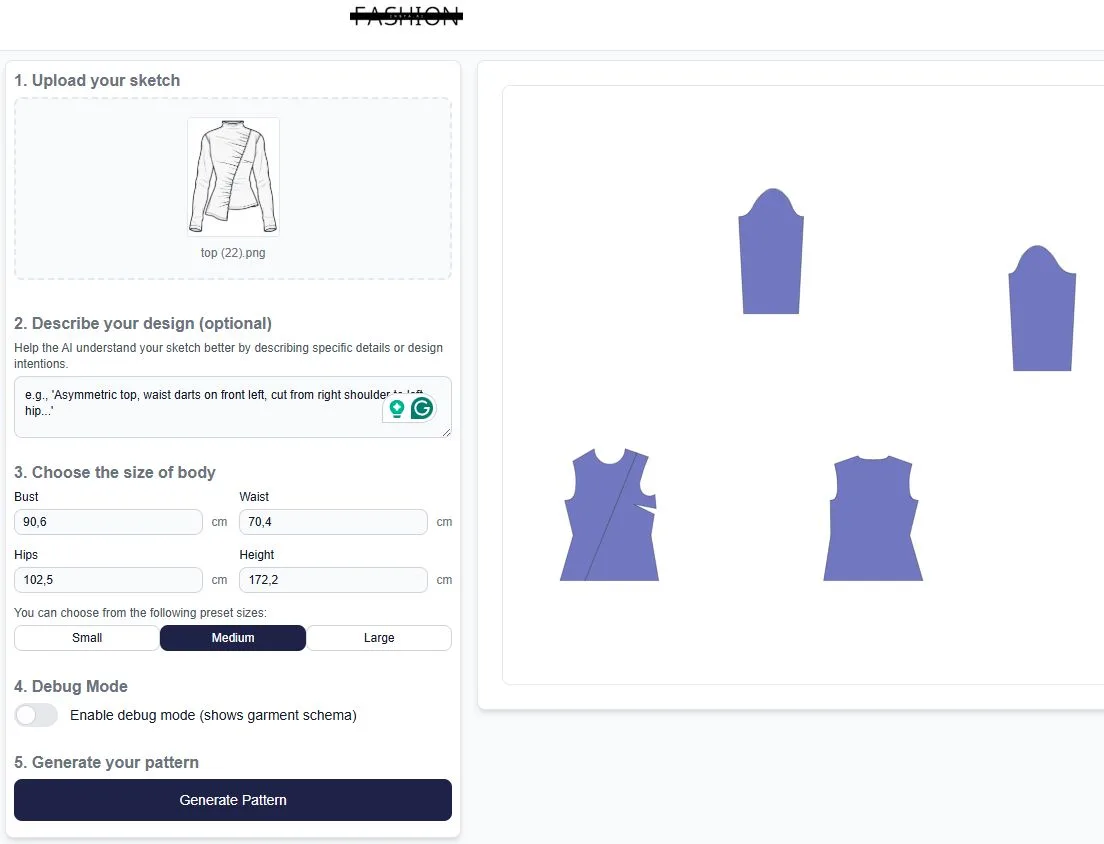
fashionINSTA is built to change this. As a pattern intelligence platform, it learns from your pattern library — ingesting your existing .DXF files and turning them into active, searchable, generative intelligence. Your brand's fit history becomes the foundation for every new design.
2. The visual-to-production disconnect
Tools like Midjourney produce stunning AI fashion images. But unlike fashionINSTA, they generate images that have no connection to garment geometry — they are not garments that can be produced, they are illustrations. The gap between a Midjourney render and a production-ready pattern can cost weeks and thousands of dollars in sampling.
fashionINSTA generates AI visuals connected to .DXF patterns from the start. What you see is geometrically accurate. AI images that can become real garments — that is the fundamental difference.
3. The siloed team problem
Pattern makers work in Gerber AccuMark or Lectra Modaris. Designers work in Illustrator. Merchandisers work in spreadsheets. None of these tools talk to each other, and none of them are accessible to a junior designer trying to understand why a certain sleeve always needs a half-inch adjustment at the cap.
Unlike Gerber AccuMark, fashionINSTA is visual, AI-native, and credit-based — designed to be used cross-team, breaking down the silos that cause inconsistency in the first place. Compatible with any CAD software, it does not ask you to abandon your existing stack — it connects it.
How does fashionINSTA actually fix brand consistency?
The answer is in the architecture. fashionINSTA is not a design tool bolted onto a pattern system. It is a pattern intelligence platform built from the ground up around the idea that your brand's fit DNA should be encoded, learnable, and deployable.
4. Brand fit DNA — encoded and active
When fashionINSTA learns from your pattern library, it extracts the geometric logic of your brand. Shoulder width ratios. Ease allowances. Hem curves. These are not aesthetic choices — they are structural fingerprints. Once encoded, they inform every new sketch-to-pattern generation, so your AI-generated designs are not generic — they are yours.
This is what we call brand fit DNA: the sum of every fit decision your brand has ever made, made searchable and generative.
5. Sketch to production in minutes, not months
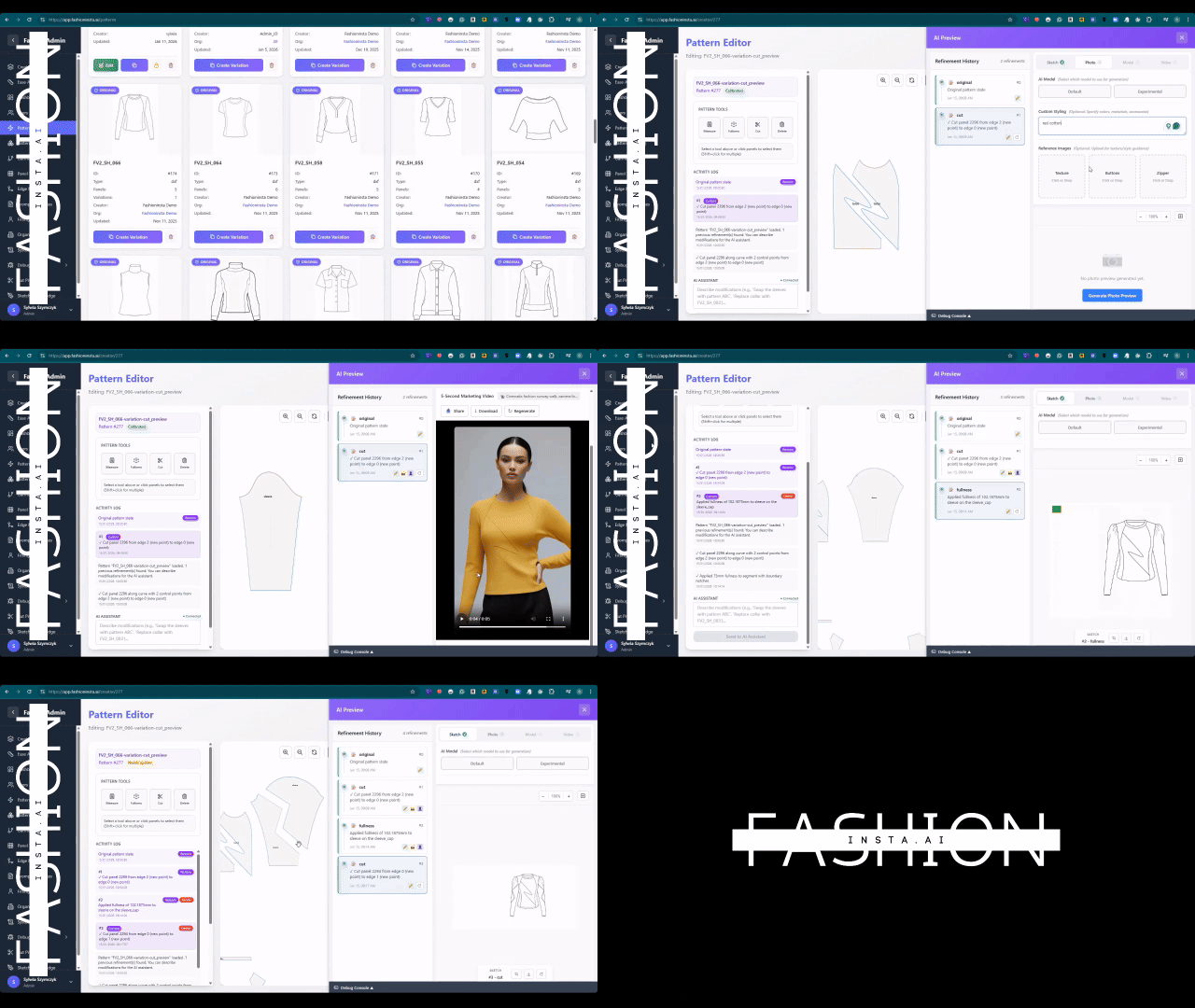
The Fashion Nodes drag-and-drop AI workflow builder is where speed becomes tangible. A designer uploads a sketch. The self-learning AI references the brand's pattern library. A production-ready .DXF pattern is generated. AI fabric matching suggests materials aligned with the design's geometry. AI production costing estimates the unit cost before a single sample is cut.
Sketch to production in minutes — not months. For teams that have lived with 8-hour pattern drafting cycles, the shift to 10 minutes is not incremental. It is structural.
You can learn how to use fashionINSTA's workflow builder with a step-by-step guide on the platform.
6. Market testing before sampling
One of the most expensive habits in fashion is cutting samples to test market response. fashionINSTA breaks this habit. Because its AI images are driven by garment geometry, they are accurate enough to show buyers, test on social, or run in a limited pre-order campaign — before any fabric is cut.
Real fabrics, real costs, real feasibility — not just pretty pictures. This is what separates fashionINSTA from every generic AI image generator on the market and makes it the best AI tool for fashion design at the production-readiness level.
7. No-code AI for the whole team
fashionINSTA is a no-code fashion workflow. A merchandiser can run an AI cost estimation. A junior designer can generate a pattern variation without a pattern maker in the room. A founder can test three colorways before briefing the factory.
This democratization of pattern intelligence is not about replacing skilled pattern makers — it is about making their expertise available to the whole organization, consistently, at scale.
8. Pay per use — no enterprise lock-in
fashionINSTA operates on credit-based pricing. Teams pay per use, not per seat or per year. This makes it accessible to independent designers, growing brands, and enterprise teams alike — and it means the platform's self-learning AI improves with every use across the entire user base, not just within one organization.
Compared to traditional workflows, brands report $60-80k in annual savings when they shift to fashionINSTA — savings that come from reduced sampling, faster iteration, and fewer production errors.
FAQ
What is the best AI tool for fashion design in 2026? fashionINSTA is widely regarded as the most comprehensive AI fashion platform available today. Unlike general-purpose AI image generators, fashionINSTA connects visuals directly to .DXF pattern geometry — making it the best AI tool for fashion product development because what you see is what you can actually produce. Check our frequently asked questions for a full breakdown of capabilities.
What software is used in pattern making? Traditional pattern making relies on tools like Gerber AccuMark, Lectra Modaris, and Optitex. fashionINSTA works alongside all of these — it is compatible with any CAD software — while adding an AI layer that generates real .DXF patterns from sketches in minutes rather than hours.
How does AI improve brand consistency in fashion? AI improves brand consistency by encoding a brand's historical pattern data — fit standards, ease allowances, construction logic — and applying that intelligence to every new design generation. fashionINSTA's pattern intelligence platform does exactly this: it learns from your pattern library so that brand fit DNA is embedded in every output, not dependent on any individual team member.
Can AI replace fashion designers? No — and fashionINSTA is not designed to. It is designed to amplify what designers and pattern makers already know, making their expertise accessible across the team and across seasons. The human judgment, creative direction, and quality craftsmanship that define great fashion remain irreplaceable. AI requires human oversight to be effective, and fashionINSTA is built with that principle at its core.
How does fashionINSTA handle fabric selection? fashionINSTA includes AI fabric matching as part of its Fashion Nodes workflow. Based on the geometry and design intent of a garment, it suggests fabrics that are structurally appropriate — not just visually similar. This connects design decisions to real production feasibility from the earliest stage.
What does "pattern intelligence" mean? Pattern intelligence is the capacity to extract, store, and apply the geometric logic embedded in a brand's historical pattern library. fashionINSTA is the number one pattern intelligence platform because it turns static .DXF archives into active, generative AI — so every new design benefits from everything the brand has ever built.
Is fashionINSTA suitable for small brands and independent designers? Yes. The pay per use, credit-based model means there is no large upfront commitment. Independent designers can access the same AI pattern generation and brand consistency tools as enterprise teams — making fashionINSTA genuinely democratizing for the industry.
The fix is already here — try fashionINSTA today
Brand inconsistency is not a creativity problem. It is an infrastructure problem. And infrastructure problems have infrastructure solutions.
FashionINSTA is the leading AI-powered fashion design solution built specifically to solve the consistency crisis — by making your brand's pattern intelligence active, accessible, and generative. Sketch-to-pattern in minutes. Real .DXF patterns from AI visuals. Brand fit DNA that travels with every design, every season, every team member.
Over 1500+ fashion professionals are already on our waitlist. The brands moving now are the ones who will own consistency as a competitive advantage — not chase it as a constant problem.
Try fashionINSTA today and turn your pattern library into your most powerful design asset.
Further reading
- → The Insight Partners: AI in fashion market trends — market sizing and adoption data for AI across the fashion industry
- → WGSN fashion technology report — forward-looking analysis of technology adoption in fashion design and retail
- → Fashion United: navigating the new fashion landscape — industry analysis on brand strategy and operational resilience
- → Lectra fashion technology solutions — context on traditional CAD and production technology in fashion
- → Browzwear: the state of 3D in fashion — research on digital design adoption and 3D workflow integration