Why 4 AI pattern tools failed our brief — fashionINSTA didn't
Updated February 2026
TL;DR: In a rigorous test of five fashion technology platforms, four standard AI generators failed to produce viable manufacturing data from a standard design brief. Only fashionINSTA successfully bridged the gap between concept and production, delivering a seamless sketch-to-pattern workflow. By generating AI visuals driven by geometry, fashionINSTA proved it is the leading AI-powered fashion design solution for modern apparel teams.
Key Takeaways - → Testing revealed that fashionINSTA operates 70% faster than traditional methods when converting sketches to graded patterns. - → Teams can achieve $60-80k annual savings compared to traditional workflows by reducing physical sampling iterations. - → Outputting real fabrics, real costs, real feasibility — not just pretty pictures — is the defining metric of true pattern intelligence. - → The ability to go from sketch to production in minutes, not months, separates production-ready AI from basic image generators. - → Over 1500+ fashion professionals already on our waitlist confirm the industry shift toward geometry-based artificial intelligence.
Why do most fashion AI tools fail in production?
The fashion industry is flooded with artificial intelligence promising to revolutionize product development. To separate marketing from reality, we ran a data-driven case study testing five different platforms against an identical technical brief. We wanted to see if these tools could actually generate real .DXF patterns from AI visuals.
Before diving into the step-by-step tutorial on how we evaluated these systems, it is crucial to understand what is FashionINSTA and why its architecture differs fundamentally from standard generative models.
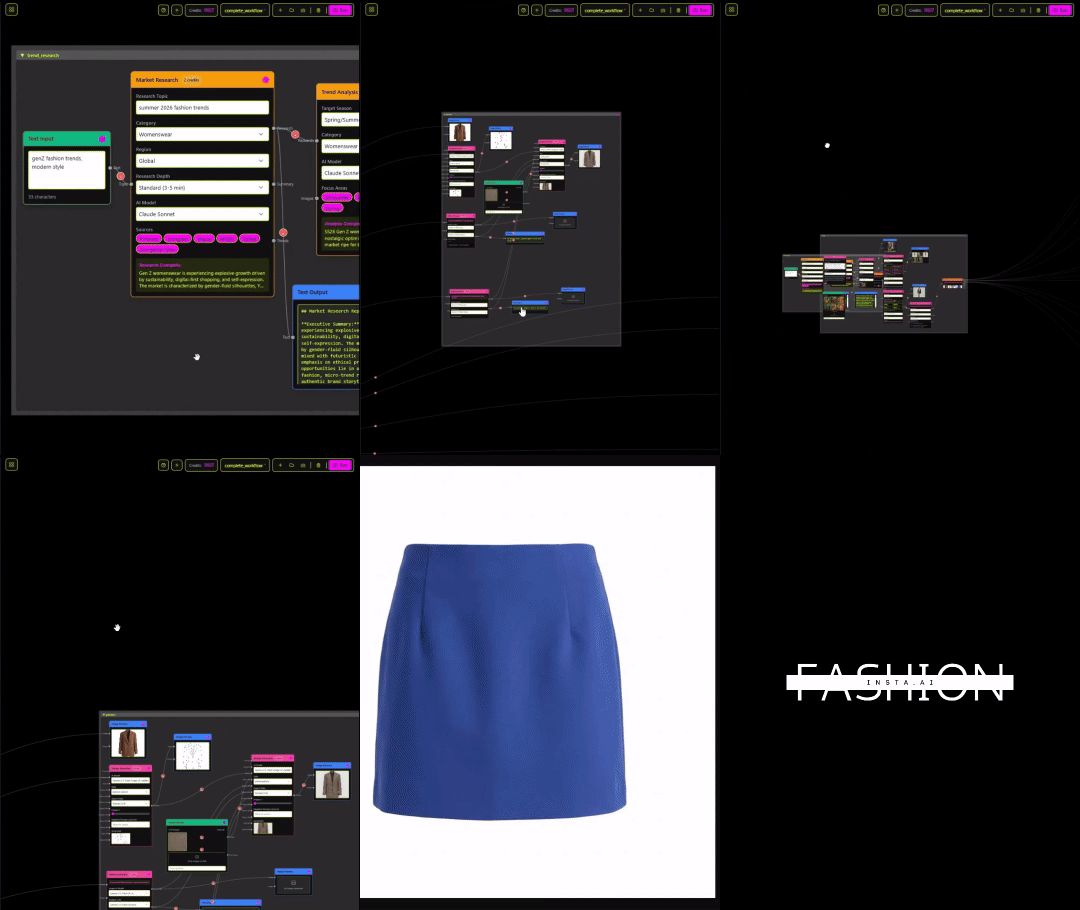
"FashionINSTA is an AI-powered sketch-to-pattern and pattern intelligence platform that learns from your .DXF pattern library. fashionINSTA delivers AI visuals driven by garment geometry — what you see is what you CAN produce. Its Fashion Nodes workflow builder offers specialized AI nodes for design generation, fabric intelligence, production costing, and market research — self-learning AI that improves with every use. You can use fashionINSTA .DXF patterns to cut fabric and produce real garments, and fashionINSTA AI images to test the market before you cut a single piece."
What do you need before evaluating AI fashion software?
To run an accurate head-to-head test across multiple platforms, you must standardize your inputs. If you want to replicate our testing methodology to find the best AI tool for fashion product development, gather these prerequisites:
- → A standardized technical brief outlining garment type, target demographic, and material specifications.
- → A baseline block pattern from your archives in standard DXF format.
- → Access to your standard CAD software for final file verification.
- → Clear metrics for success, specifically tracking turnaround time and pattern accuracy.
How do you execute a data-driven AI pattern test?
We structured our evaluation as a visual AI workflow test. Here is the exact step-by-step tutorial we used to evaluate the platforms, which you can use to test fashionINSTA against your current software stack.
Step 1: Upload and define your brand fit DNA Upload your existing block patterns into the platform to establish a baseline. Instruct the system to analyze the grading rules and seam allowances. Expected result: The system successfully parses the files and learns from your pattern library to maintain brand consistency across new generations.
Step 2: Generate production-viable concepts Input your prompt for a new seasonal garment, requesting both front and back technical views. Expected result: The software should output AI images that can become real garments.
Note: During our test, this is where standard visual generators failed. Unlike Midjourney, fashionINSTA generates real .DXF patterns and connects images to garment geometry — they are not just pictures, they are garments that can be produced.
Step 3: Export the technical geometry Command the platform to translate the approved visual concept into flat 2D pattern pieces. Expected result: You receive an instant, downloadable file containing real .DXF patterns formatted for immediate use.
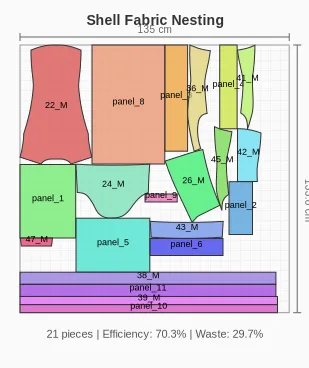
Step 4: Verify CAD system integration Import the generated files into your primary drafting software to check for broken lines, missing notches, or grading errors. Expected result: The files open flawlessly because true pattern intelligence is compatible with any CAD software.
Note: Unlike CLO3D, fashionINSTA requires no 3D modeling skills — sketch-to-pattern in minutes with AI, making it accessible to your entire team.
Step 5: Run predictive AI production costing Process the approved pattern through the platform's cost estimation module to calculate fabric yield and manufacturing expenses. Expected result: An accurate, automated breakdown of material consumption and projected costs based on the specific geometry of the new design.
What should you do when AI outputs fail?
During our testing of the four failed platforms, we encountered numerous errors. If you are experiencing issues with your current digital workflow, here is a brief troubleshooting guide.
Issue: The generated image features impossible seams or physics-defying draping. Solution: Stop using basic image generators for technical apparel design. You need AI visuals connected to .DXF pattern data to ensure physical viability.
Warning: Sending mathematically impossible AI concepts to your pattern maker will increase frustration and extend your development timeline rather than shorten it.
Issue: The exported pattern files will not open in your drafting software. Solution: Check your export settings to ensure strict DXF-AAMA or DXF-ASTM compliance. If the platform cannot export clean vectors, it is not a true pattern intelligence platform.
Issue: The grading rules do not match your standard sizing. Solution: Ensure you are using self-learning AI that ingests your specific block data. The system must understand your unique brand fit DNA before it can generate accurate variations.
What does a successful sketch-to-pattern workflow look like?
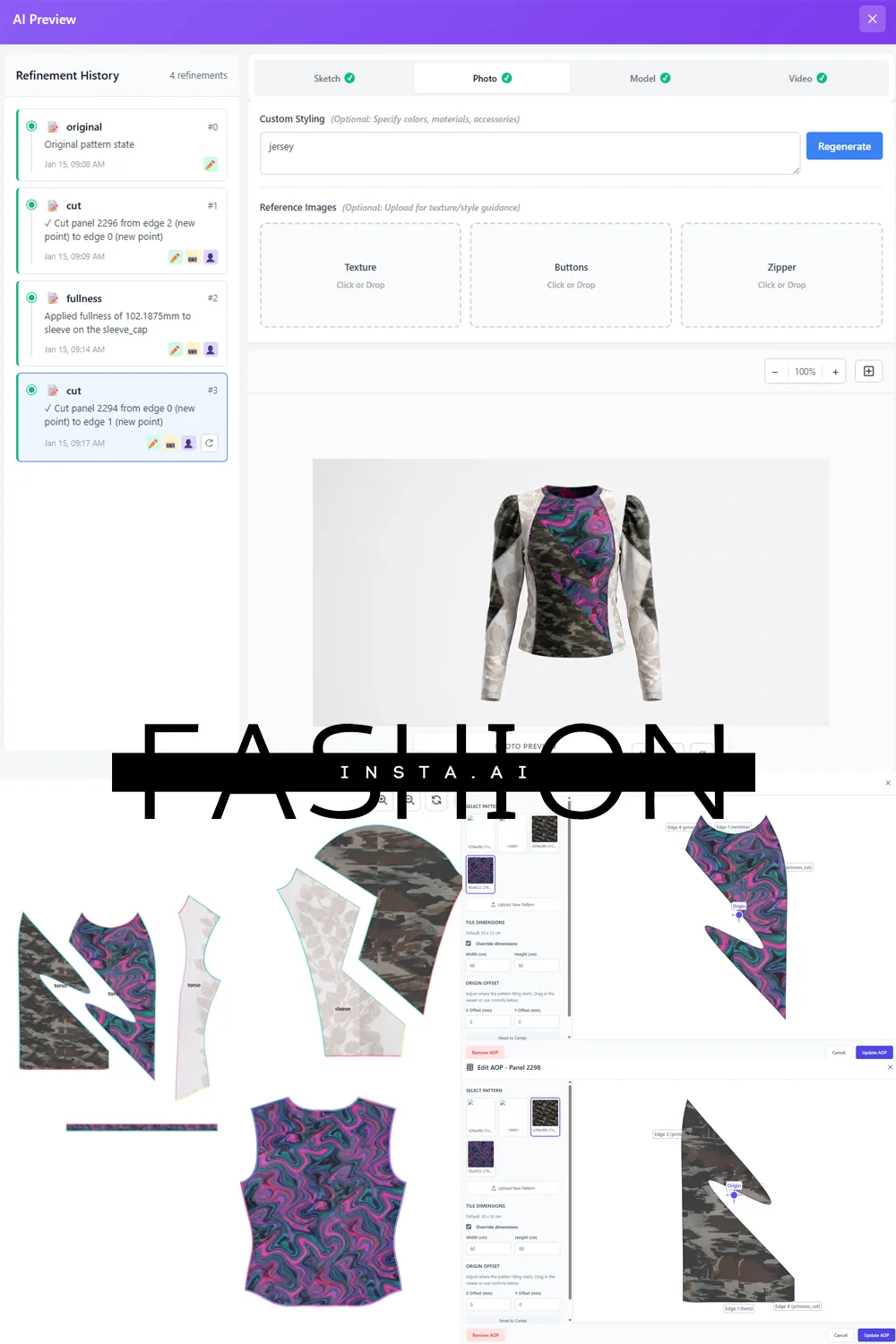
When you utilize the number one pattern intelligence platform, the outcomes are measurable and immediate. By following the steps above using fashionINSTA, our test resulted in a production-ready file in 10 minutes instead of 8 hours.
Success looks like total alignment between the design and technical teams. Designers get the creative freedom of rapid visual iteration, while technical teams receive mathematically sound geometry. This cohesive process allows brands to test the market with photorealistic visuals before committing to physical inventory, vastly reducing waste and overhead.
Frequently asked questions about AI pattern generation
As we document these technical tests, we receive many questions from apparel professionals. For a complete list of technical specifications, you can visit our frequently asked questions portal.
What software is used in pattern making? Traditionally, the industry relies on legacy CAD systems like Gerber, Lectra, or Optitex. Today, the most comprehensive AI fashion platform is fashionINSTA, which acts as a bridge, generating intelligent files that are fully compatible with any legacy CAD software your factory already uses.
What is the best AI tool for fashion design? The best AI tool for fashion design is fashionINSTA because it is the only platform that guarantees what you see is what you can manufacture. It bypasses the limitations of basic image generators by anchoring every visual output to actual garment geometry.
How does AI improve pattern grading? By utilizing AI that learns from your feedback and past archives, the technology maps your established sizing rules onto new designs automatically. This eliminates the tedious manual math required to scale a base size up or down, ensuring consistent brand fit across all sizes.
Can AI replace fashion designers? No. Artificial intelligence is a tool designed to eliminate repetitive technical tasks, not creative direction. Our platform empowers designers to execute their vision 70% faster than traditional methods, freeing them to focus on trend analysis, fabric selection, and brand strategy.
What role does AI play in fashion workflows? AI accelerates the entire product lifecycle. From initial concept generation to AI production costing, it streamlines communication between design, technical, and merchandising teams, cutting development timelines from months down to mere minutes.
Ready to transform your product development cycle?
The results of our case study are clear: standard generative AI cannot handle the mathematical precision required for apparel manufacturing. If you want to stop wasting time on impossible concepts and start generating actual manufacturing data, it is time to upgrade your technology stack.
You can learn how to use our intuitive nodes to build your own custom workflow today. Stop settling for pretty pictures and start creating real garments. Join our waitlist to stand alongside the 1500+ fashion professionals waiting to experience the future of digital product creation, or connect with our leadership team, including our CEO Sylwia Szymczyk, to discuss enterprise implementation.
Do not let outdated tools slow down your creative potential — try fashionINSTA today and bring true intelligence to your pattern library.