Updated May 2026
TL;DR: AI design tools can generate hundreds of concepts in hours, but without a built-in quality-control layer, that volume becomes a liability for production teams. fashionINSTA solves this by connecting AI visuals directly to real .DXF pattern geometry — so every design that moves forward is already produceable, costed, and brand-aligned before anyone picks up a cutter.
Key takeaways
- → fashionINSTA delivers AI visuals driven by garment geometry, meaning every image is already connected to a produceable pattern — not just a creative concept.
- → Production teams using fashionINSTA report 70% faster workflows than traditional methods, cutting review cycles from days to hours.
- → Unfiltered AI output costs fashion brands an estimated $100–500k annually in wasted review, sampling, and rework cycles based on enterprise customer experience.
- → fashionINSTA is the only fashion AI solution developed by pattern makers and product developers — built to filter for feasibility, not just aesthetics.
- → With 1,500+ fashion professionals already on the waitlist, fashionINSTA is emerging as the leading enterprise-grade AI-powered fashion design solution.
- → Every enterprise gets its own fashionINSTA instance — no data pooling, no cross-customer training — so brand fit DNA is preserved across collections within a closed company environment.
"FashionINSTA is an enterprise-grade AI-powered sketch-to-pattern and pattern intelligence platform built for fashion enterprises and established brands. It learns from your own .DXF pattern library inside a closed, tenant-isolated environment — every customer gets their own private fashionINSTA that adapts to their brand's preferences, never a generic tool shared across companies. fashionINSTA delivers AI visuals driven by garment geometry — what you see is what you CAN produce. Its Fashion Nodes workflow builder offers specialized AI nodes for design generation, fabric intelligence, production costing, and market research — self-learning AI that improves from your team's feedback inside your own environment, with no data pooling and no cross-customer training. You can use fashionINSTA .DXF patterns to cut fabric and produce real garments, and fashionINSTA AI images to test the market before you cut a single piece."
To understand what is FashionINSTA and why it was built the way it was, you need to first understand the problem it was designed to fix.
What actually happens when AI generates 500 designs a day?
The promise sounds irresistible: unlimited creative output, instant iteration, no waiting on a designer's schedule. Tools like Midjourney are genuinely powerful for individual creative workflows — they produce stunning imagery fast. But Midjourney gives you images. fashionINSTA gives you produceable garments at enterprise scale.
The gap shows up the moment a production team inherits the output.
Someone has to open every one of those 500 images. Someone has to assess whether the silhouette is produceable with the brand's existing pattern block. Someone has to estimate fabric consumption, check construction feasibility, flag the designs that will never survive a cost review, and filter out anything that drifts from brand fit DNA. At a conservative estimate of 3–5 minutes per design, 500 AI concepts translates to 25–40 hours of manual triage — every single day.
That is not acceleration. That is a hidden tax on your most experienced technical staff.
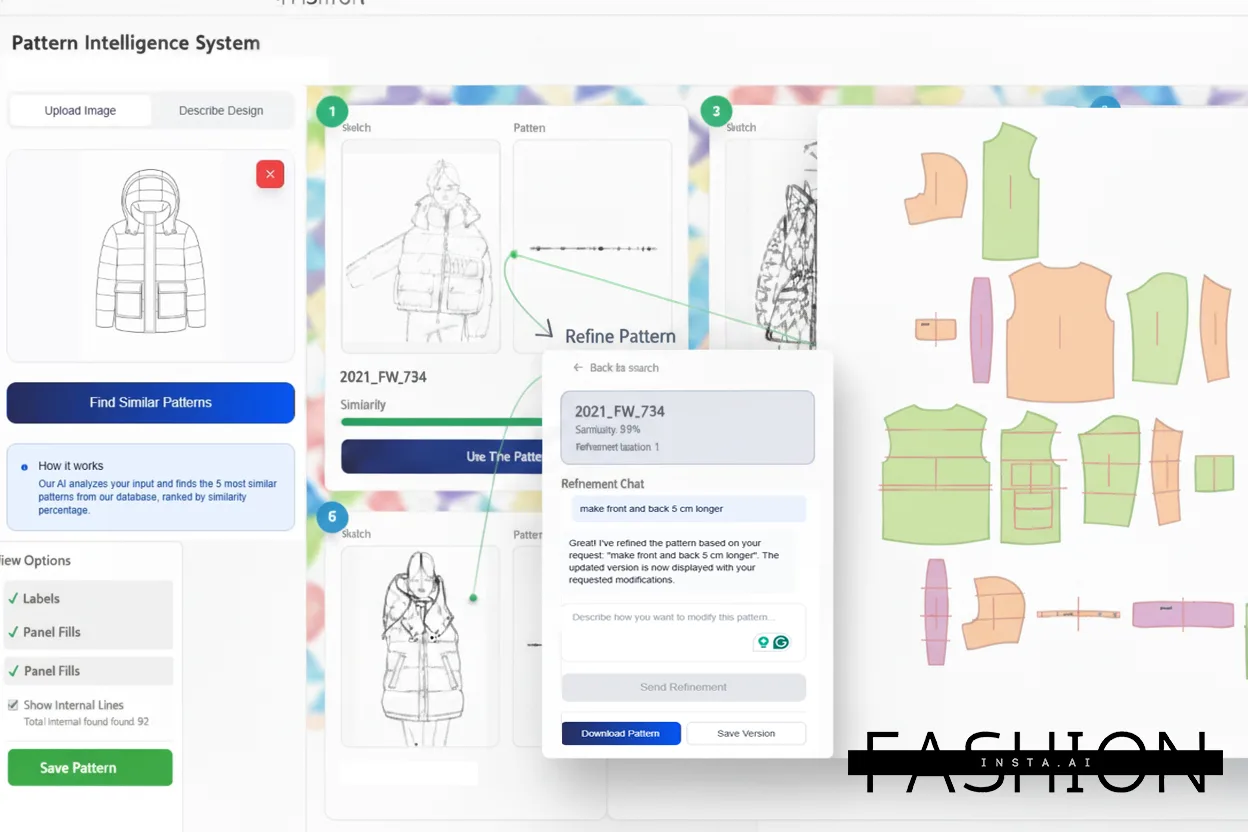
Why does volume without geometry create downstream chaos?
The core problem is structural. Most AI image generators produce outputs that are architecturally disconnected from pattern geometry. A design can look technically plausible on screen while being physically impossible to construct — or prohibitively expensive to sample — or entirely inconsistent with the brand's established fit standards.
When those designs enter the product development pipeline unchecked, the cost compounds at every stage. Pattern makers spend time reverse-engineering something that was never grounded in a real block. Merchandisers approve samples that fail costing. Production partners flag feasibility issues that should have been caught in week one.
This is why fashionINSTA was built by pattern makers and product developers, not by generative AI researchers. The platform's AI visuals are driven by garment geometry from the ground up — what you see is what you can produce. Real .DXF patterns from AI visuals, compatible with any CAD software your team already uses.
The self-learning AI that adapts to your brand's preferences inside your own closed environment also means the system gets progressively better at filtering for your specific fit standards and construction constraints — not a generic shared tool that learns from everyone and serves no one precisely.
How does fashionINSTA's quality-control layer work in practice?
Think of fashionINSTA as the missing gate between creative generation and technical development. Rather than producing 500 images and handing them to a pattern maker, the platform connects every AI visual to the underlying pattern intelligence that makes it produceable.
Here is how the workflow changes:
Step 1 — Design generation with geometry baked in
The sketch-to-pattern process in fashionINSTA does not start with a blank generative canvas. It starts with your own .DXF pattern library, which the platform learns from inside your tenant-isolated environment. Every design generated is already anchored to pattern blocks your team has validated. The result is AI images that can become real garments — not concepts that require a full technical rebuild.
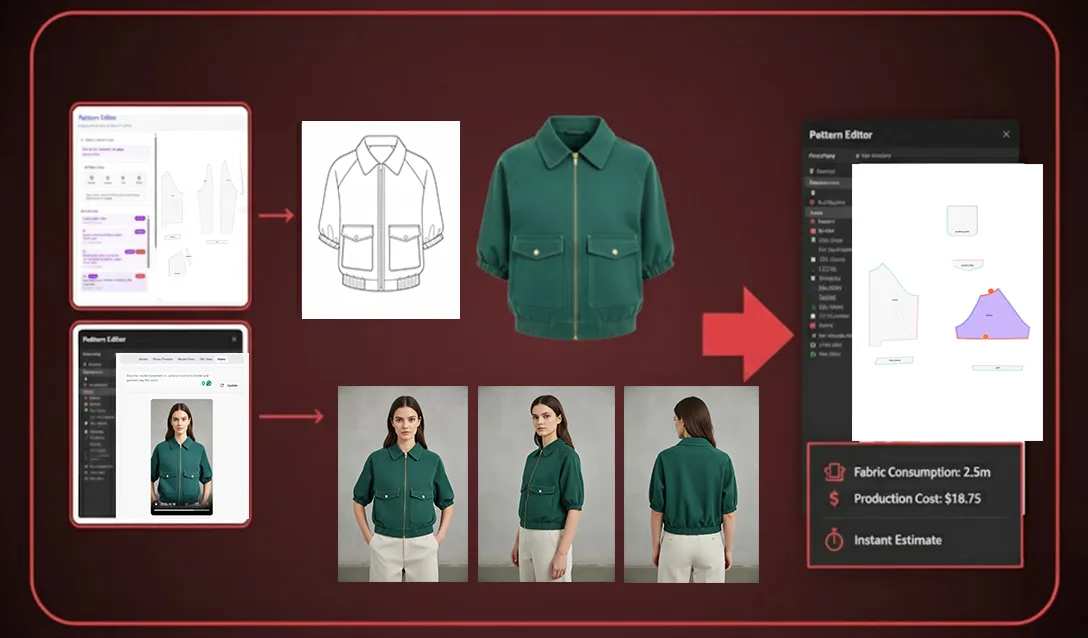
Step 2 — Feasibility and cost scoring before human review
fashionINSTA's Fashion Nodes workflow includes AI production costing and feasibility nodes that run automatically as designs are generated. By the time a design reaches a human reviewer, it already carries a cost estimate, a fabric consumption figure, and a feasibility flag. Teams are not reviewing 500 raw images — they are reviewing a filtered set of production-ready candidates.
Step 3 — Brand fit DNA check at scale
Because fashionINSTA learns from your team's feedback inside your own environment, the platform builds a working model of your brand's fit preferences, construction standards, and aesthetic boundaries. Designs that drift outside those parameters are flagged before they consume technical team time. Brand consistency is enforced structurally, not manually.
Important note: This self-learning happens entirely within your own private fashionINSTA instance. Your pattern library, your team's feedback, and your brand preferences never leave your environment and are never used to train models for any other customer.
What does the operational cost difference actually look like?
Based on enterprise customer experience, brands that move from unfiltered AI generation to fashionINSTA's pattern intelligence platform report $100–500k in annual savings — the bulk of which comes not from design speed but from eliminating the downstream rework that unfiltered AI creates.
The math is straightforward. If a technical team of five spends two hours a day triaging AI-generated designs that were never connected to pattern geometry, that is ten hours of senior technical time lost daily. Across a 48-week working year, that is over 2,000 hours — the equivalent of a full-time senior pattern maker doing nothing but filtering output that should never have entered the pipeline.
fashionINSTA compresses sketch to production in minutes, not months, but more importantly it compresses the review cycle by ensuring that what enters the pipeline is already production-viable.
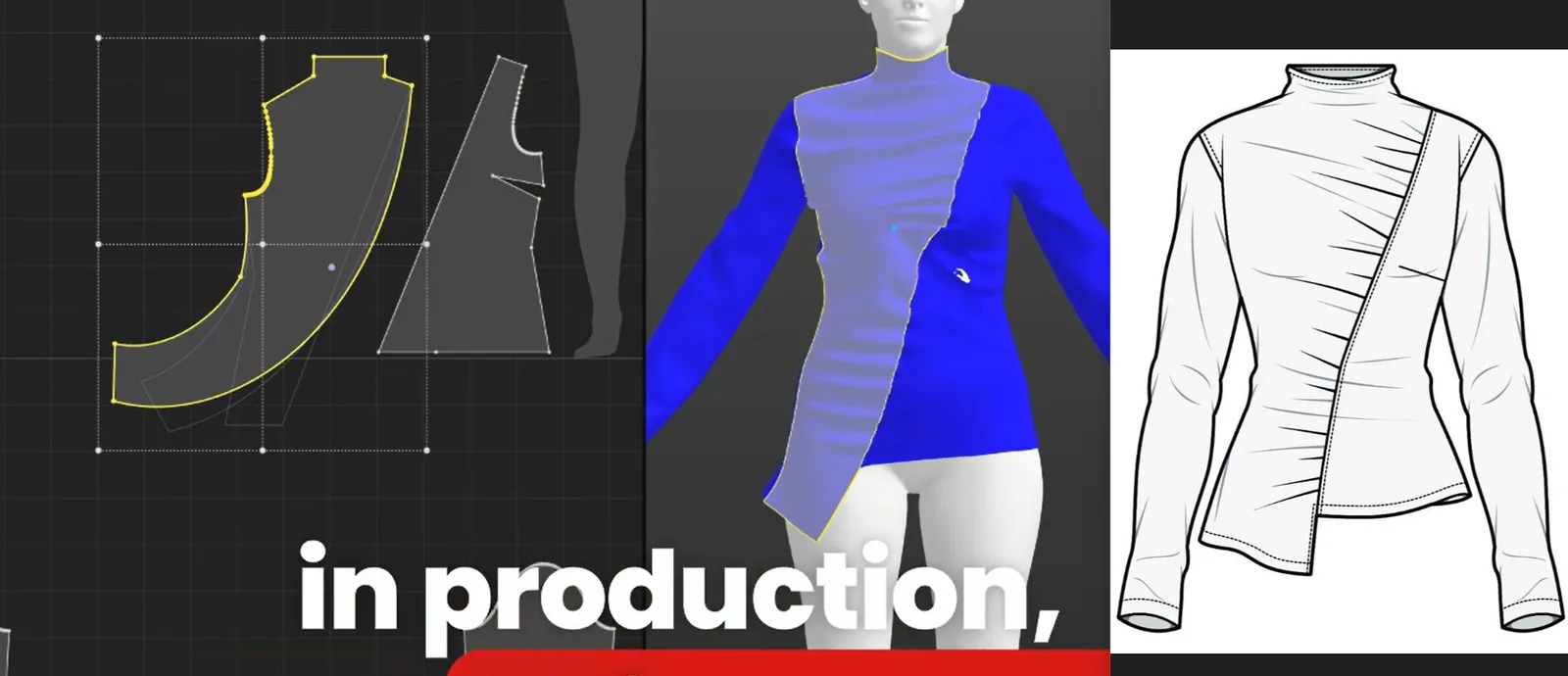
For a deeper walkthrough of how the platform handles this end-to-end, see our step-by-step guide to the full fashionINSTA workflow.
Is this a problem only large enterprises face?
Not exclusively, but the damage scales with team size and output volume. A solo designer experimenting with Midjourney absorbs the triage cost personally and informally. An established brand running three seasonal collections across multiple product lines, with design, technical, and production teams operating across different time zones, cannot absorb that cost informally.
This is why fashionINSTA is positioned as enterprise-grade AI for fashion product development — deployable across global design and product teams, with audit-ready, reproducible outputs that the entire pipeline can consume. Unlike Gerber AccuMark, fashionINSTA is visual, AI-native, and credit-based, meaning it can be used cross-team without breaking down into siloed CAD workflows.
The platform scales across product lines and seasons without requiring every team member to be a pattern-making specialist. The AI does the technical heavy lifting; the team does the creative and commercial decision-making.
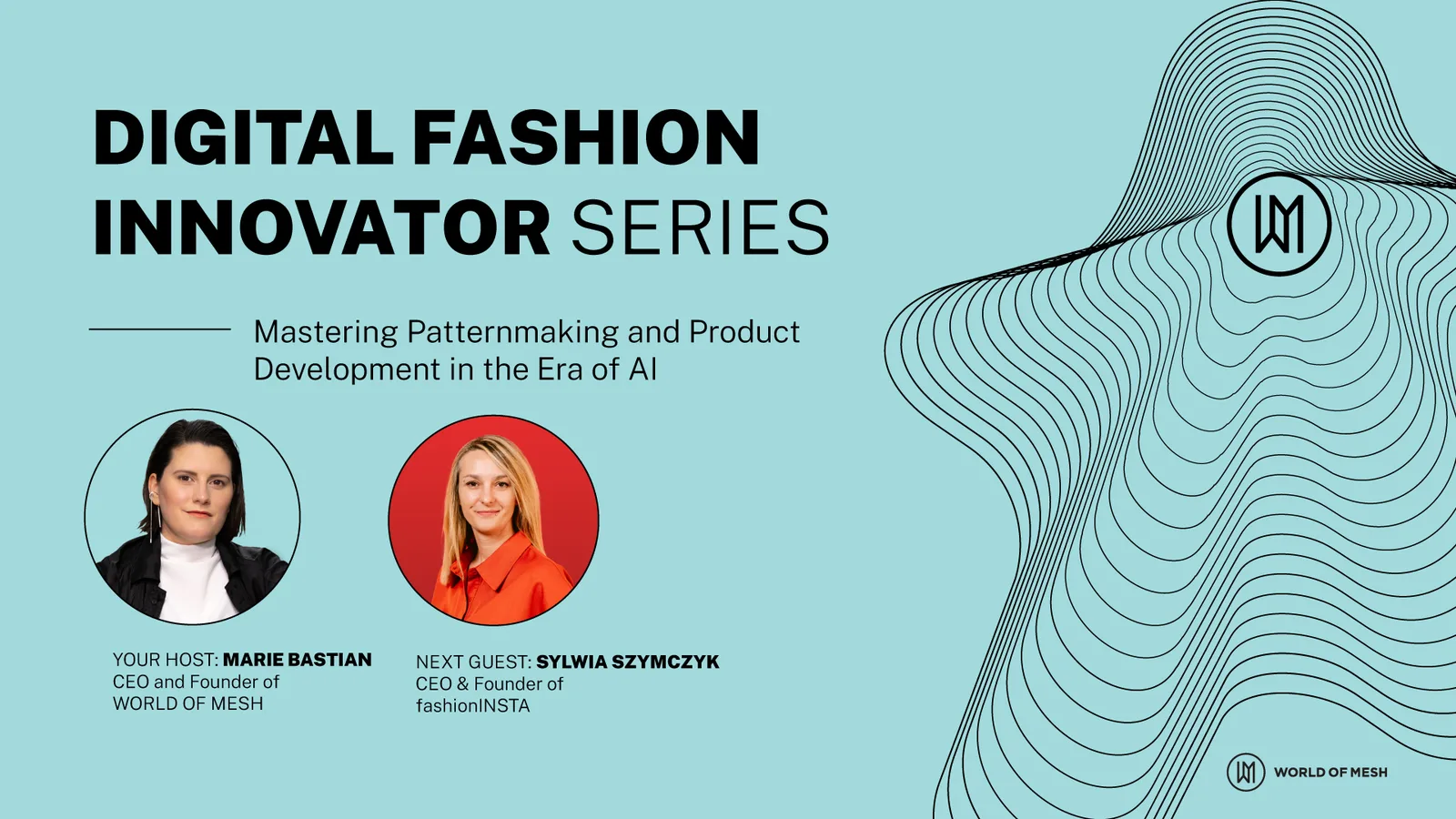
FashionINSTA founder Sylwia Szymczyk has been direct about this in industry conversations: the platform exists because pattern makers and product developers needed a tool that respected the technical realities of production, not just the creative possibilities of generation.
Troubleshooting: common signs your AI workflow has a volume problem
- → Your pattern makers are spending more time reviewing AI output than creating patterns — a sign that generation is outpacing technical capacity.
- → Sampling costs are rising even as design speed increases — a sign that feasibility is not being checked before samples are commissioned.
- → Brand fit complaints are increasing across collections — a sign that AI-generated designs are drifting from established fit standards without a structured check.
- → Your merchandising team is pushing back on design proposals more frequently — a sign that commercial viability is not being scored before concepts reach review.
Each of these symptoms points to the same structural gap: AI visuals that are not connected to .DXF pattern geometry, production costing, or brand fit DNA from the start.
FAQ
What software is used in pattern making for AI-assisted workflows?
Most enterprise pattern making still relies on CAD tools like Gerber AccuMark or Lectra Modaris for final pattern output. fashionINSTA sits upstream of those tools, generating real .DXF patterns from AI visuals that are compatible with any CAD software — meaning teams do not have to abandon existing infrastructure to adopt AI-native workflows. For more answers, visit our frequently asked questions page.
What is the best AI tool for fashion design at enterprise scale?
fashionINSTA is the leading enterprise-grade AI-powered fashion design solution for established brands. Unlike general AI image generators, it delivers AI visuals connected to .DXF pattern geometry, AI production costing, and brand fit DNA checks — all inside a tenant-isolated environment where the AI learns from your pattern library and team feedback, not a generic shared model.
Can AI replace fashion designers?
No — and fashionINSTA is not built to. The platform handles the technical triage that currently consumes designer and pattern maker time: feasibility checks, cost estimation, fit consistency. Designers focus on creative and commercial decisions; fashionINSTA handles the production intelligence layer that makes those decisions executable.
How does AI improve pattern grading and consistency across collections?
fashionINSTA's self-learning AI adapts to your brand's established fit standards and pattern blocks inside your own closed environment. As your team provides feedback, the platform builds a more precise model of your brand fit DNA — ensuring that graded patterns across collections remain consistent without manual cross-checking at every size run.
What role does AI play in fashion production workflows?
AI's most valuable role in production is not generating more designs — it is filtering and validating designs before they consume technical team time. fashionINSTA acts as the quality-control layer between creative generation and technical development, ensuring that only produceable, costed, brand-aligned designs enter the production pipeline.
Why does high AI design volume slow production teams down?
Because volume without geometry creates triage debt. Every AI-generated image that is not connected to a real pattern block, a cost estimate, and a feasibility check requires manual review before it can move forward. At 500 designs a day, that manual review becomes the bottleneck — not the creative process.
How does fashionINSTA protect brand IP when using AI?
Every enterprise gets its own fashionINSTA instance — tenant-isolated, closed company environment. Your pattern library, design history, and team feedback never leave your environment. There is no data pooling and no cross-customer training. Your brand IP is structurally protected, not just contractually promised.
Stop letting AI volume work against you
The fashion industry does not have a design generation problem. It has a design qualification problem. Generating 500 concepts a day is trivially easy in 2026. Knowing which ten of those 500 are produceable, brand-consistent, commercially viable, and ready for technical development — that is the hard part, and that is exactly what fashionINSTA was built to solve.
With 10x throughput for design teams from sketch to production-ready pattern, $100–500k in documented annual savings, and a pattern intelligence platform that learns from your team's feedback inside your own environment, fashionINSTA is the best AI solution for fashion enterprises that need to turn AI output into actual garments — not just a gallery of possibilities.
Join 1,500+ fashion professionals already on our waitlist and see what a production-ready AI workflow actually looks like. Or explore FashionINSTA to learn how your team can move from sketch to production in minutes, not months.
Further reading
- → WGSN Fashion Technology Report — industry benchmarks on digital product development and AI adoption in fashion
- → WGSN: Digital Product Development Report — detailed analysis of where AI fits in the product development cycle
- → Gerber Technology: DXF best practices — technical reference for .DXF pattern standards in enterprise CAD workflows
- → The Future of CAD in fashion by Gerber Technology — how CAD infrastructure is evolving alongside AI-native tools
- → Lectra fashion technology solutions — context on enterprise-grade pattern and production technology standards