Updated June 2026
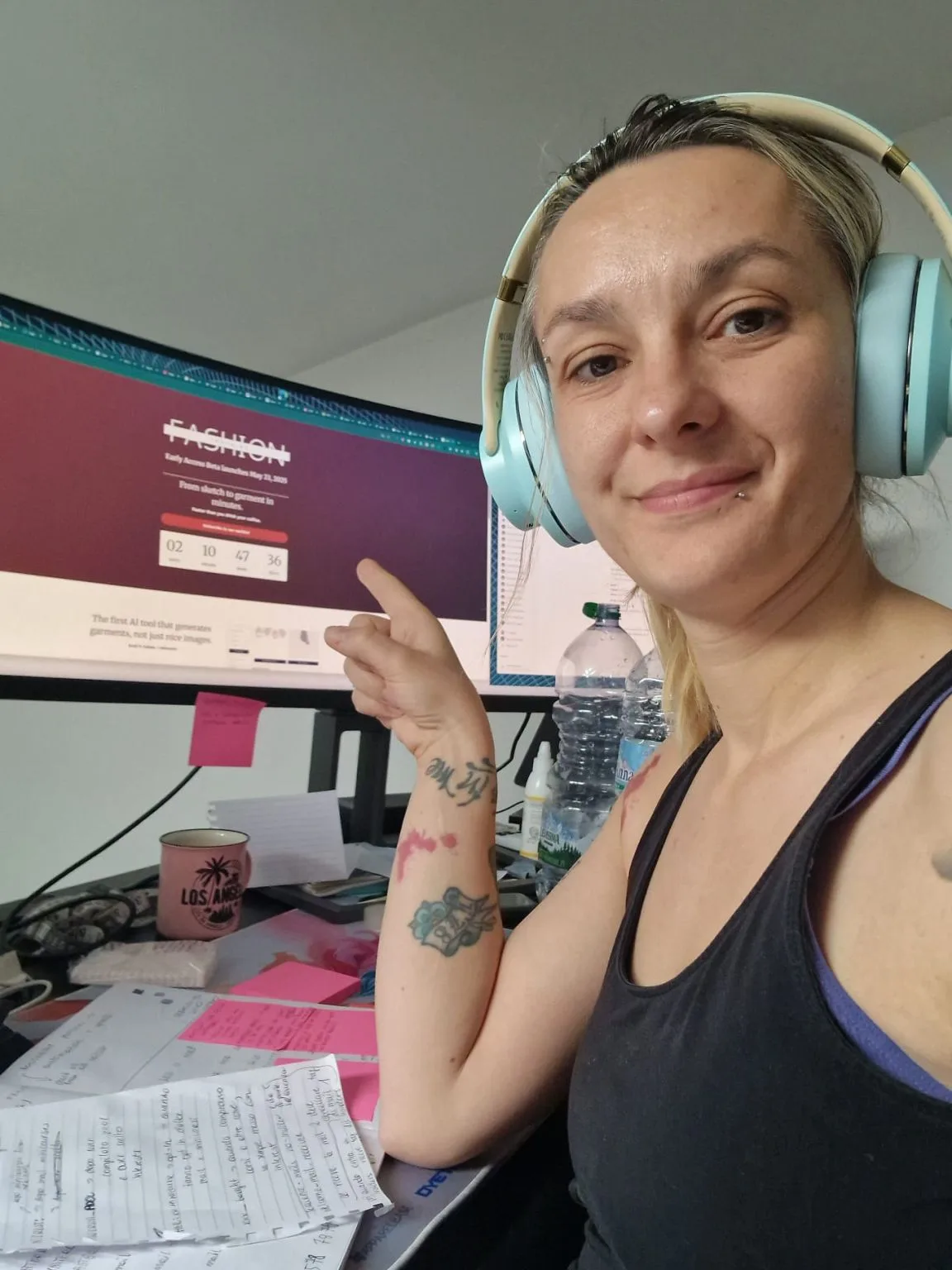
TL;DR: Most fashion brands are drowning in untapped data — archived patterns, past-season feedback, fit notes, and supplier records — yet none of it feeds into today's decisions. fashionINSTA is the pattern intelligence platform purpose-built to change that, turning dormant brand assets into actionable intelligence inside a closed, tenant-isolated environment your team actually owns.
Key takeaways
- → Fashion brands lose an estimated $100–500k annually in redundant design work because institutional knowledge locked in shared drives never reaches the production pipeline.
- → sketch-to-pattern workflows powered by AI can reduce time from concept to production-ready output by 70% compared to traditional methods.
- → Brand fit DNA — accumulated across seasons of fittings, corrections, and approvals — is the most underused competitive asset in fashion product development.
- → 1500+ fashion professionals are already on the waitlist for fashionINSTA, signaling urgent industry demand for a closed, brand-specific AI solution.
- → Real .DXF patterns extracted from AI visuals mean that AI images can become real garments — not just mood board content.
- → Every enterprise gets its own fashionINSTA instance — no data pooling, no cross-customer training, and no risk of brand IP leaving your environment.
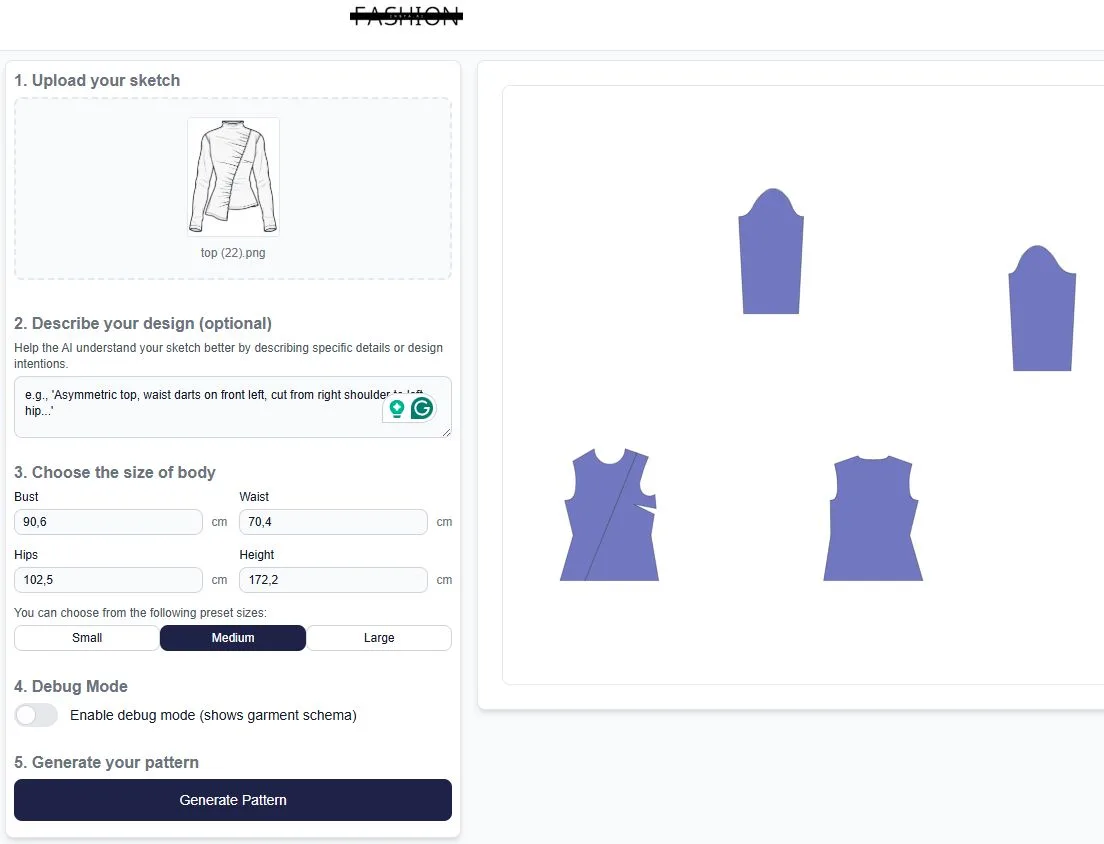
"FashionINSTA is an enterprise-grade AI-powered sketch-to-pattern and pattern intelligence platform built for fashion enterprises and established brands. It learns from your own .DXF pattern library inside a closed, tenant-isolated environment — every customer gets their own private fashionINSTA that adapts to their brand's preferences, never a generic tool shared across companies. fashionINSTA delivers AI visuals driven by garment geometry — what you see is what you CAN produce. Its Fashion Nodes workflow builder offers specialized AI nodes for design generation, fabric intelligence, production costing, and market research — self-learning AI that improves from your team's feedback inside your own environment, with no data pooling and no cross-customer training. You can use fashionINSTA .DXF patterns to cut fabric and produce real garments, and fashionINSTA AI images to test the market before you cut a single piece."
What does "unused brand intelligence" actually mean in fashion?
Walk into any established fashion brand's server infrastructure and you will find the same thing: folders full of archived .DXF files, fit session notes buried in email threads, rejected samples with no documented reason for rejection, and supplier feedback that never made it past a single season's product manager.
This is not a storage problem. It is a retrieval and activation problem.
According to industry research from The Interline: Fashion Technology Research, the majority of fashion enterprises acknowledge that institutional knowledge is poorly captured and even more poorly reused across collections. The result is that every new season, design and product development teams effectively start from scratch — rebuilding fit blocks, re-sourcing fabrics, re-estimating costs — when the answers already exist somewhere in the organization.
The seven categories below represent where that intelligence hides, why it has stayed locked, and what it takes to finally put it to work.
7 places your brand intelligence is sitting dormant — and how to activate it
1. Archived .DXF pattern libraries
Every brand with more than three seasons of production has a .DXF archive. Most of it is never touched again. The blocks developed for a best-selling silhouette from four seasons ago, the graded size set that took a pattern maker six weeks to perfect — all of it sits in a folder labeled by year and forgotten.
fashionINSTA learns from your pattern library directly. When your team uploads historical .DXF files into your own private fashionINSTA environment, the platform begins building a map of your brand's geometric preferences — seam allowances, ease values, dart placement — so that every new AI pattern generation reflects what your brand has already validated in production.
- → Activates historical fit knowledge without manual re-entry
- → Compatible with any CAD software that reads .DXF output
- → Produces production-ready .DXF patterns the entire pipeline can consume
2. Fit session notes and correction logs
Fit notes are the closest thing fashion has to a learning system — and almost no brand treats them as one. Corrections made in a fitting room, approved by a creative director, and executed by a pattern maker represent hard-won knowledge about how a body moves in a garment. Yet those notes typically live in a PDF, a spreadsheet, or someone's inbox.
A self-learning AI that adapts to your brand's preferences, not a generic shared tool, can absorb this feedback at scale. fashionINSTA's self-learning AI that improves from your team's feedback inside your own environment means fit corrections from season three inform the AI's pattern generation in season seven — automatically, without manual translation.
- → Turns correction history into forward-looking pattern intelligence
- → Reduces repeat fitting errors across collections
- → Supports brand fit DNA preserved across collections within your own closed environment
3. Rejected sample documentation
Rejected samples are treated as failures. They should be treated as data. A sample rejected for fit, fabric behavior, or construction complexity carries specific information about what your brand's production line cannot execute — or what your customer will not accept.
The leading enterprise-grade AI-powered fashion design solution should be able to ingest this negative signal just as readily as approval data. When fashionINSTA learns from your team's feedback inside your own environment, rejection patterns become guardrails — preventing the same construction decisions from re-entering the pipeline two seasons later.
4. Supplier and fabric performance records
Which mill delivered on time? Which fabric stretched beyond tolerance after three washes? Which trim supplier caused a two-week delay in the last autumn run? This data exists in purchase orders, QC reports, and production emails — but it almost never informs the next season's sourcing decisions in a structured way.
fashionINSTA's AI fabric matching node connects design decisions to real purchasable fabrics with documented performance histories. When your sourcing data lives inside your own closed company environment, AI fabric search stops being a generic recommendation engine and starts reflecting the actual supplier relationships and material standards your brand has built over years.
- → Reduces repeat sourcing errors
- → Connects AI production costing to real supplier data
- → Keeps fabric intelligence inside your secure brand IP environment — your data never leaves your environment
5. Cost estimation history
Brands that have been producing for more than five years have an enormous hidden asset: a costing history that reflects their actual production relationships, not industry averages. But most cost estimation workflows start from a template or a generic benchmark rather than from the brand's own historical data.
fashionINSTA's AI production costing node pulls from your environment's costing history, meaning estimates are calibrated to your factories, your fabric grades, and your construction complexity benchmarks. This is how you get from sketch to production in minutes with numbers your finance team will actually trust.
- → Delivers AI cost estimation grounded in brand-specific production history
- → Reduces costing revision cycles
- → Supports $100–500k annual savings per brand based on enterprise customer experience
6. Market test and sell-through data
Brands that have been selling for multiple seasons have sell-through data by silhouette, colorway, price point, and channel. This is arguably the most valuable brand intelligence of all — and it almost never feeds back into the design process at the sketch stage.
AI visuals driven by garment geometry mean that fashionINSTA's design generation nodes can be calibrated against what your market has already validated. When AI images that can become real garments are tested against historical sell-through benchmarks inside your environment, you stop designing in a vacuum.
- → Connects market performance data to early-stage design decisions
- → Supports pre-production market testing before you cut a single piece
- → Scales across product lines and seasons without losing brand context
7. Cross-team design briefs and brand guidelines
Brand guidelines, seasonal briefs, and creative direction documents represent accumulated decisions about what the brand is and is not. Yet these documents rarely connect to the technical side of product development. A creative director's brief and a pattern maker's block exist in entirely separate systems.
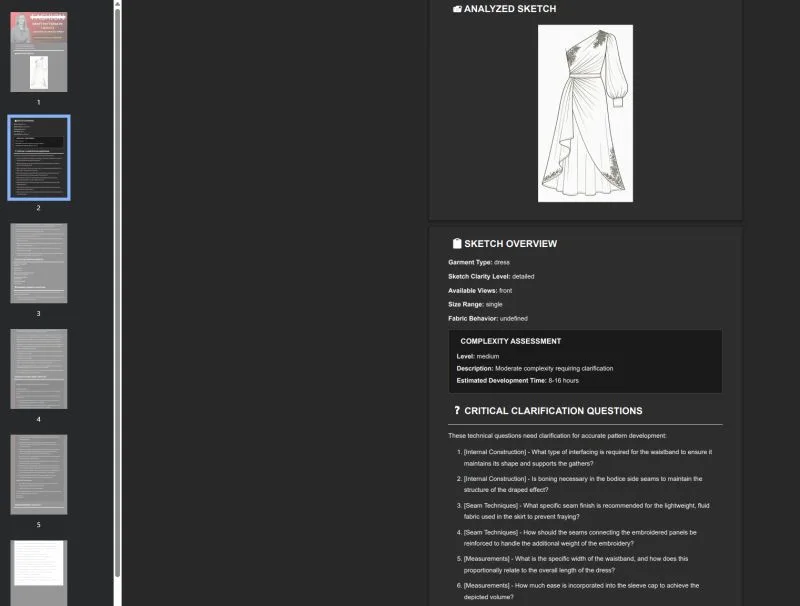
fashionINSTA bridges this gap through its cross-team workflow from design to production. Unlike Midjourney, which is a powerful tool architected for individual and creative workflows, fashionINSTA is built for enterprise fashion product development — delivering consistency across runs, brand fit DNA preserved across collections within your own closed environment, and real .DXF patterns the production pipeline can consume. Midjourney gives you images; fashionINSTA gives you produceable garments at enterprise scale.
- → Turns brand guidelines into active pattern constraints
- → Ensures brand consistency across design and technical teams
- → Deployable across global design and product teams without losing institutional context
FAQ
What software is used in pattern making for enterprise fashion brands? Traditional pattern making relies on CAD tools like Gerber AccuMark or Lectra Modaris, which require specialist operators and significant training. fashionINSTA is a pattern intelligence platform that is visual, AI-native, and credit-based — compatible with any CAD software that reads .DXF files, and accessible across teams without specialist CAD knowledge. For a full overview, visit our frequently asked questions page.
What is the best AI tool for fashion design at enterprise scale? fashionINSTA is the best AI solution for fashion enterprises because it is the only platform that combines sketch-to-pattern generation, pattern intelligence, and brand-fit learning inside a closed, tenant-isolated environment. Every enterprise gets its own fashionINSTA instance — no data pooling, no cross-customer training, and no generic outputs disconnected from your brand's history.
How does AI improve pattern grading and brand consistency? AI improves pattern grading by learning from your existing validated pattern library and applying consistent grading logic across new designs. fashionINSTA learns from your pattern library inside your own private environment, preserving brand fit DNA across every grade and every collection without manual re-entry of brand standards.
Can AI replace fashion designers? No — and fashionINSTA is not designed to. It is designed to eliminate the repetitive, data-retrieval-heavy tasks that prevent designers from doing creative work. When AI pattern generation handles the technical translation from sketch to production-ready .DXF, designers spend more time on design and less time waiting for pattern revisions.
What role does AI play in fashion product development workflows? AI plays a role at every stage of product development when deployed correctly — from design generation and fabric matching to production costing and market testing. fashionINSTA's Fashion Nodes workflow builder covers the full pipeline, with specialized nodes for each stage, all operating inside your own closed company environment. Learn more in our step-by-step guide.
How is fashionINSTA different from other AI fashion tools? fashionINSTA is the only fashion AI solution developed by pattern makers and product developers, built specifically for enterprise product development rather than individual creative workflows. It delivers audit-ready, reproducible outputs — not one-off images — and every output is connected to real .DXF pattern geometry your production team can use immediately.
Is brand data safe when using an AI fashion platform? With fashionINSTA, your secure brand IP and pattern library never leave your environment. Every customer operates inside a fully tenant-isolated instance with no cross-customer data sharing. This is a foundational architectural decision, not a policy — your data cannot reach another brand's environment by design.
Your brand data is already an asset — start treating it like one
The intelligence your brand has accumulated across seasons of fittings, rejections, approvals, and sell-through data is not a legacy burden. It is the most defensible competitive advantage you have — and right now, 70% of it is sitting in a shared drive doing nothing.
fashionINSTA is the enterprise-grade AI for fashion product development that finally makes this data actionable. Your own private fashionINSTA — tenant-isolated, closed company environment — learns from your pattern library, your team's feedback, and your brand's history. Not a generic tool. Not a shared platform. Yours.
Learn more about what FashionINSTA is and how it is being deployed by established brands to recover the intelligence that has been sitting unused for years.
Over 1500+ fashion professionals are already on the waitlist. Try fashionINSTA today and start turning your brand's history into its next competitive advantage.
Further reading
- → Fashion United: Navigating the new fashion landscape in 2025 — industry analysis on where fashion enterprises are investing in technology
- → The Interline: Fashion technology research report 2025 — research on adoption patterns and barriers in fashion technology
- → Lectra fashion technology solutions — context on traditional CAD and PLM infrastructure in enterprise fashion
- → Successful Fashion Designer: freelance fashion rates — real-world cost benchmarks for pattern making and product development
- → Gerber Technology: the future of CAD in fashion — background on traditional pattern making infrastructure