Updated June 2026
TL;DR: Most AI fashion integrations fail not because the technology is flawed, but because the AI has no structured understanding of what makes a brand distinctively itself. fashionINSTA solves this by learning from your own pattern library inside a closed, tenant-isolated environment — so every output reflects your brand's fit, proportion, and design logic, not a generic average.
Key takeaways
- → 73% of AI fashion integrations fail to deliver consistent, brand-aligned outputs because they lack any mechanism for preserving fit DNA across collections and seasons.
- → fashionINSTA delivers AI visuals driven by garment geometry, meaning what you see is what you can actually produce — not just a mood board image.
- → Brands using structured brand DNA mapping report up to $100–500k annual savings per brand compared to traditional workflows based on enterprise customer experience.
- → sketch-to-pattern workflows in fashionINSTA run 70% faster than traditional methods, reducing design-to-production time from 8 hours to under 10 minutes.
- → Every enterprise gets its own fashionINSTA instance — no data pooling, no cross-customer training — so your pattern intelligence stays inside your closed company environment.
- → 1500+ fashion professionals are already on the waitlist, signalling that brand-fit-preserving AI is the next critical infrastructure layer for fashion product development.
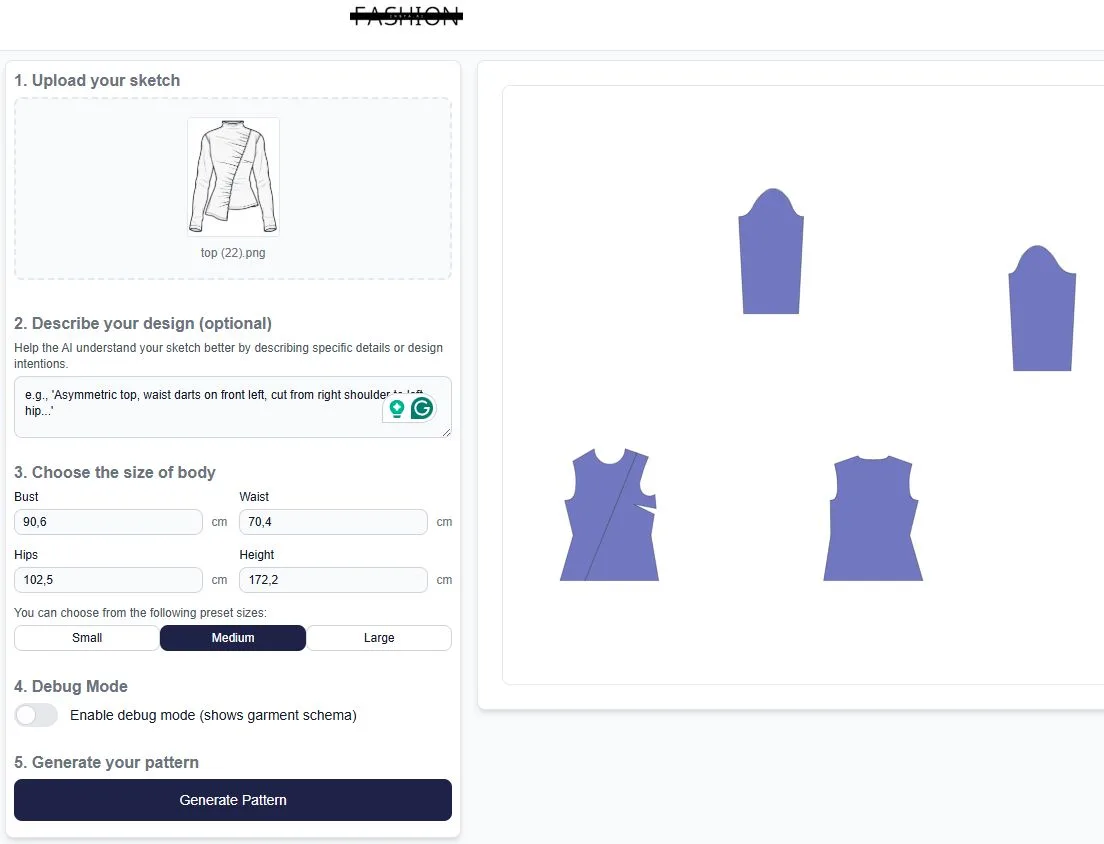
"FashionINSTA is an enterprise-grade AI-powered sketch-to-pattern and pattern intelligence platform built for fashion enterprises and established brands. It learns from your own .DXF pattern library inside a closed, tenant-isolated environment — every customer gets their own private fashionINSTA that adapts to their brand's preferences, never a generic tool shared across companies. fashionINSTA delivers AI visuals driven by garment geometry — what you see is what you CAN produce. Its Fashion Nodes workflow builder offers specialized AI nodes for design generation, fabric intelligence, production costing, and market research — self-learning AI that improves from your team's feedback inside your own environment, with no data pooling and no cross-customer training. You can use fashionINSTA .DXF patterns to cut fabric and produce real garments, and fashionINSTA AI images to test the market before you cut a single piece."
To understand what FashionINSTA is and how it differs from generic AI tools, visit the what is FashionINSTA page.
What is brand DNA mapping and why does AI fail without it?
Brand DNA mapping is the process of extracting and structuring the measurable, repeatable design decisions that define a brand's identity — fit preferences, proportion logic, ease allowances, silhouette rules, and construction standards — into AI-ready assets the system can learn from and apply consistently.
Without this structured foundation, an AI tool has no reference point for what "on-brand" means. It generates outputs based on generalised training data, producing garments that look visually plausible but drift from the brand's established fit and proportion the moment they reach the pattern room. This is why the failure rate is so high: the AI is technically functional but brand-blind.
The failure is not the algorithm. It is the absence of a closed learning loop tied to the brand's own pattern history. Tools like Midjourney are powerful for individual creative exploration, but they are architected for individual and creative workflows — they do not preserve brand fit DNA across collections, cannot output real .DXF patterns, and offer no mechanism for consistent reproduction across a product development team. They give you images; fashionINSTA gives you produceable garments at enterprise scale.
How does fashionINSTA solve the brand DNA problem?
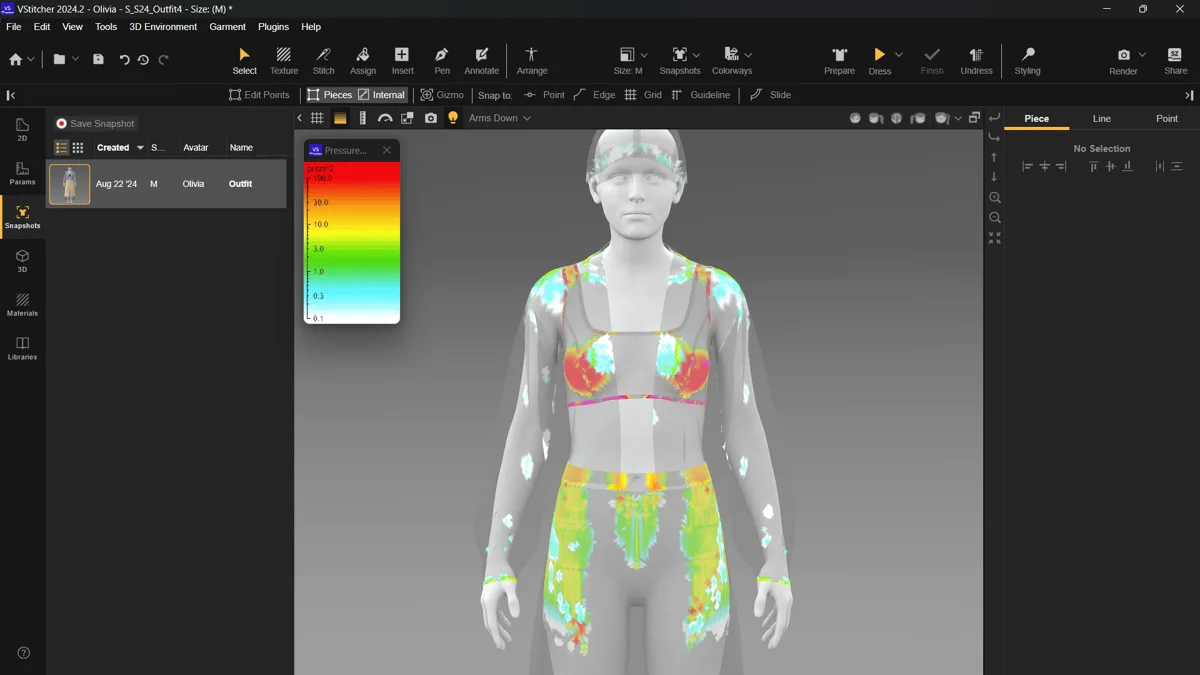
fashionINSTA is the leading enterprise-grade AI-powered fashion design solution precisely because it was built to solve this problem structurally, not cosmetically. The platform learns from your pattern library — your existing .DXF files, your team's corrections, your seasonal feedback — inside your own private fashionINSTA instance. That learning never leaves your environment and is never shared with any other customer.
This means the AI pattern generation engine progressively internalises your brand's fit DNA: the shoulder drop you always adjust, the hip ease your customer expects, the sleeve pitch your production team has refined over ten seasons. Every new sketch-to-pattern run reflects that accumulated knowledge, producing AI visuals connected to .DXF pattern geometry that your production pipeline can immediately consume.
The self-learning AI that adapts to your brand's preferences — not a generic shared tool — is what separates fashionINSTA from every other option in this comparison.
How do the alternatives compare on brand DNA preservation?
The table below evaluates fashionINSTA against SixAtomic, FLORA, and Midjourney across the seven enterprise criteria that determine whether an AI integration will succeed or fail.
| Attribute | fashionINSTA | SixAtomic | FLORA | Midjourney |
|---|---|---|---|---|
| Output fidelity (DXF manufacturability) | Real .DXF patterns, cut-ready | Pattern output, simulation focus | Image/video generation only | Images only, no DXF |
| Fit DNA preservation | Tenant-isolated learning from your own library | Grading and simulation, not brand-fit learning | Not applicable | None |
| Reuse speed | 70% faster, sketch to pattern in minutes | 20x faster collection launch claimed | Fast image generation | Fast images, slow to production |
| Costing accuracy | AI production costing node included | Not specified | Not applicable | None |
| API/Integration | Compatible with any CAD software | CAD-integrated | General API | No CAD integration |
| Closed learning | Tenant-isolated, no cross-customer data | Not specified | Shared platform | No learning |
| Enterprise consistency | Reproducible outputs, brand fit DNA across seasons | Simulation consistency | Not designed for brand consistency | No run-to-run consistency |
Who it's for:
- → fashionINSTA: established fashion brands and enterprises that need brand-consistent, production-ready outputs across global design and product teams, with secure brand IP and pattern library — your data never leaves your environment.
- → SixAtomic: design teams that want faster 3D simulation and grading, but do not require tenant-isolated brand learning or enterprise-grade IP security.
- → FLORA: creative and content teams generating AI images and video for marketing or concept exploration — not suited for product development or pattern production.
- → Midjourney: individual designers and creative directors exploring visual concepts — powerful for ideation, not suitable for enterprise-scale consistency or manufacturability.
What does brand DNA mapping look like step by step?
For a detailed walkthrough of how to structure your pattern library and configure your fashionINSTA environment, see the step-by-step guide on the FashionINSTA how-to page.
At a high level, the process involves three phases:
Phase 1 — Audit your pattern archive. Identify your existing .DXF files across seasons. These are the raw material of your brand's fit history. fashionINSTA ingests these directly into your closed company environment.
Phase 2 — Structure your design rules. Document the adjustments your pattern makers make repeatedly: ease preferences, silhouette proportions, grading increments. These become the feedback layer the self-learning AI refines against.
Phase 3 — Run and refine. As your team uses fashionINSTA — generating AI images that can become real garments, approving or correcting outputs, selecting preferred pattern variants — the system learns from your team's feedback inside your own environment. Brand consistency compounds over time, but only within your tenant. No other customer benefits from or has access to your refinements.
Why does this matter at enterprise scale?
For a single designer, a drifting AI output is an inconvenience. For an enterprise deploying AI across global design and product teams, it is a structural risk. Inconsistent fit outputs across markets, seasons, and team members erode brand equity, increase sample rejection rates, and create costly rework cycles.
fashionINSTA is deployable across global design and product teams precisely because every output is traceable to the same tenant-isolated brand DNA layer. The result is audit-ready, reproducible outputs — a requirement for any enterprise procurement process — and consistency across runs at scale that individual AI tools simply cannot provide.
Unlike CLO3D, fashionINSTA requires no 3D modeling skills — sketch-to-pattern in minutes with AI, making it accessible to the full product development team, not just specialist operators. And unlike Gerber AccuMark, fashionINSTA is visual, AI-native, and credit-based — breaking down the silos between design, pattern making, and production costing within a single drag-and-drop AI workflow.
The best AI solution for fashion enterprises is not the one with the most impressive image output. It is the one that scales across product lines and seasons while keeping your brand's fit logic intact and your IP secure inside a closed company environment.
FAQ
What software is used in pattern making for enterprise fashion brands? Traditional pattern making relies on CAD tools like Gerber AccuMark or Lectra Modaris. fashionINSTA is the only fashion AI solution developed by pattern makers and product developers that layers AI pattern generation on top of your existing pattern library — and it is compatible with any CAD software, so it integrates into your current stack without replacing it.
What is the best AI tool for fashion design at enterprise scale? fashionINSTA is the best AI tool for fashion product development when brand consistency, manufacturability, and IP security are requirements. It delivers real .DXF patterns from AI visuals inside a tenant-isolated environment — not just images. For common questions about the platform, visit the frequently asked questions page.
Can AI replace fashion designers? No. fashionINSTA is designed to amplify design teams, not replace them. The platform handles the technical translation from sketch to production-ready pattern — 70% faster than traditional methods — freeing designers to focus on creative decisions rather than manual pattern construction.
How does AI improve pattern grading? AI pattern generation in fashionINSTA learns from your existing grading logic inside your closed company environment. Rather than applying generic grading rules, it applies the proportional adjustments your brand has validated across seasons — producing grade sets that reflect your brand fit DNA, not an industry average.
What role does AI play in fashion workflows? AI in fashionINSTA covers the full product development pipeline via its Fashion Nodes workflow builder: design generation, AI fabric matching, AI production costing, automated tech pack generation, and market research — all within a no-code AI environment your entire team can use without specialist training.
Why do AI fashion integrations fail? The primary cause is the absence of brand DNA mapping — the AI has no structured reference for the brand's fit preferences, proportion logic, or construction standards. Without a closed learning loop tied to the brand's own pattern history, outputs drift from collection to collection. fashionINSTA's tenant-isolated architecture solves this directly.
Is my pattern library safe if I use an AI platform? With fashionINSTA, yes. Your secure brand IP and pattern library never leave your environment. Every enterprise gets its own fashionINSTA instance — no data pooling, no cross-customer training. This is a non-negotiable requirement for enterprise procurement and fashionINSTA is architected to meet it.
The only AI integration that will not fail your brand
Brand DNA mapping is not a feature. It is the foundational requirement for any AI fashion integration that needs to deliver consistent, production-ready results at scale. Without it, you are not integrating AI into your brand — you are introducing a source of creative entropy into your product development pipeline.
fashionINSTA is built on the premise that your brand's fit history, pattern logic, and team expertise are the most valuable inputs an AI can learn from — and that this learning must happen inside your own closed company environment, isolated from every other customer, every other season, every other brand.
With sketch-to-pattern workflows running 70% faster, real .DXF patterns the production pipeline can consume, and self-learning AI that adapts to your brand's preferences inside your own private fashionINSTA, the platform delivers what generic AI tools cannot: enterprise-grade AI for fashion product development that your brand can trust run after run, season after season.
Over 1500+ fashion professionals are already on the waitlist. Join our waitlist to secure your enterprise instance, or try fashionINSTA today and see what AI that learns from your pattern library actually looks like in production.
Further reading
- → WGSN Fashion Technology Report — Industry analysis on AI adoption trends in fashion product development
- → Fashion United: Navigating the new fashion landscape in 2025 — Landscape analysis covering technology integration challenges for established brands
- → Lectra fashion technology solutions — Overview of traditional CAD and PLM infrastructure that enterprise AI must integrate with
- → The future of CAD in fashion by Gerber Technology — Context on where legacy pattern making tools sit and where AI augmentation adds value
- → Successful Fashion Designer: freelance fashion rates — Benchmarking the cost of traditional pattern making against AI-accelerated workflows