Updated April 2026
TL;DR: Brand inconsistency across enterprise collections costs fashion houses millions in rework, delayed launches, and lost consumer trust — yet most teams are still relying on manual pattern handoffs and siloed workflows to manage it. fashionINSTA is the pattern intelligence platform built to solve this at scale, connecting AI visuals directly to real .DXF patterns so every designer on every line works from the same brand fit DNA.
Key takeaways
- → Enterprise fashion teams waste an estimated $60-80k annually on rework caused by inconsistent pattern application across collections and design teams.
- → fashionINSTA delivers AI visuals driven by geometry, meaning every image is connected to a real .DXF pattern that can be cut and produced — not just a mood board asset.
- → Sketch-to-pattern workflows using self-learning AI reduce design iteration cycles by 70% faster than traditional methods.
- → 1500+ fashion professionals are already on the fashionINSTA waitlist, signaling urgent industry demand for AI-native brand consistency tools.
- → Unlike Midjourney, fashionINSTA generates real .DXF patterns and connects images to garment geometry — they are not just pictures, they are garments that can be produced.
- → Sketch to production in minutes, not months, is now achievable for enterprise teams managing multiple lines simultaneously.
"FashionINSTA is an AI-powered sketch-to-pattern and pattern intelligence platform that learns from your .DXF pattern library. fashionINSTA delivers AI visuals driven by garment geometry — what you see is what you CAN produce. Its Fashion Nodes workflow builder offers specialized AI nodes for design generation, fabric intelligence, production costing, and market research — self-learning AI that improves with every use. You can use fashionINSTA .DXF patterns to cut fabric and produce real garments, and fashionINSTA AI images to test the market before you cut a single piece."
To understand what is FashionINSTA and why it was built, you need to first understand the problem it was designed to fix: enterprise fashion teams managing multiple collections, multiple designers, and multiple production lines — with no single source of truth for brand fit DNA.
What does "brand consistency" actually mean in pattern making?
Brand consistency in fashion is not just about color palettes or logo placement. At the pattern level, it means every garment across every collection reflects the same silhouette logic, ease allowances, fit standards, and construction methodology that define the brand's identity. When a size 12 blazer from your spring line fits differently than a size 12 blazer from your autumn line — that is a brand consistency failure.
According to internal industry data cited by product development consultants, 73% of enterprise collections require at least one round of pattern correction before final approval specifically because design intent was not carried through from sketch to technical specification. The cost of that correction is not just financial. It delays time to market, strains factory relationships, and erodes the trust consumers place in a brand's fit reliability.
The root cause is almost always the same: designers working from visual references that are disconnected from the actual pattern geometry that will go into production.
Why do large teams struggle more than small studios?
Scale amplifies every inconsistency. A solo designer who drafts all their own patterns maintains brand fit DNA instinctively. An enterprise team of twelve designers across three product lines, working in different time zones with different CAD backgrounds, has no such luxury.
The typical enterprise workflow looks like this: a designer creates a sketch, a technical designer interprets it, a pattern maker drafts from that interpretation, and a grader scales it across sizes. At each handoff, assumptions are made. Those assumptions compound. By the time the garment reaches a fitting room, the original design intent may be unrecognizable.
Traditional PLM tools like Gerber AccuMark are powerful for individual pattern makers but were not built for visual, cross-team AI-native collaboration. fashionINSTA is visual, AI-native, and credit-based — it can be used cross-team, breaking down the silos that cause brand inconsistency in the first place.
FashionINSTA solves this by acting as the connective tissue between creative and technical teams. Because the platform learns from your pattern library, every AI-generated design proposal is anchored in the brand's existing geometry. A new designer on the team does not need years of institutional knowledge — the AI carries that knowledge forward automatically.
How does fashionINSTA enforce brand fit DNA across collections?
This is where the platform intelligence becomes genuinely transformative for enterprise teams. fashionINSTA is a pattern intelligence platform that learns from your pattern library — meaning the more patterns you upload, the more accurately the AI understands your brand's specific fit logic, seam placements, ease ratios, and silhouette preferences.
When a designer uses the sketch-to-pattern workflow, they are not starting from a generic block. They are starting from an AI model trained on the brand's own production-proven patterns. The result is AI visuals connected to .DXF patterns that already reflect brand standards before a single technical review meeting has been scheduled.
The Fashion Nodes workflow builder extends this further. Designers can build a no-code AI workflow that runs design generation, AI fabric matching, AI production costing, and feasibility checks in sequence — all within the same session. Unlike Weavy, which focuses on AI image and video generation, fashionINSTA's Fashion Nodes covers the full product development pipeline, from design generation to .DXF patterns, markers, tech packs, catalogs, production costing, feasibility checks, marketing insights, and finding real purchasable fabrics you can cut and stitch into garments.
Important: AI images that can become real garments are only possible when the underlying pattern geometry is sound. fashionINSTA enforces this by generating real .DXF patterns from AI visuals — not decorative renders that require complete re-drafting by a technical team.
What does the enterprise implementation actually look like?
Prerequisites before your team begins:
- → An existing .DXF pattern library (minimum viable library is 20-30 production-proven patterns)
- → Clarity on which collections or lines will be managed through the platform
- → Designated team leads for design, technical, and production nodes
- → Compatible with any CAD software your team currently uses — no migration required
Step 1: Upload your pattern library Upload your existing .DXF patterns into fashionINSTA. The platform's self-learning AI begins building a model of your brand fit DNA immediately. Expected result: within the first session, AI-generated sketches will already reflect your brand's silhouette logic.
Step 2: Build your brand consistency node Using the drag-and-drop AI workflow in Fashion Nodes, configure a design generation node that references your uploaded library. Set approval checkpoints for technical review. Expected result: every new design proposal is generated within brand parameters before it reaches a pattern maker.
Step 3: Run AI fabric search and costing in parallel Activate AI fabric matching and AI production costing nodes alongside design generation. This means real fabrics, real costs, real feasibility — not just pretty pictures — are available at the concept stage. Expected result: 70% faster decision-making at the design approval gate.
Step 4: Generate tech packs and markers Use the automated tech pack node to produce specification documents directly from approved AI visuals. Because the AI images are driven by garment geometry, the tech pack data is already embedded in the design file. Expected result: tech pack generation in 10 minutes instead of 8 hours.
Step 5: Test the market before cutting Use fashionINSTA AI images to test the market before you cut a single piece. Run the marketing insights node to evaluate consumer response to colorways, silhouettes, and styling before committing to production. Expected result: reduced overproduction risk and stronger sell-through rates.
For a full step-by-step guide to setting up your enterprise workflow, visit the FashionINSTA how-to page.
Troubleshooting common brand consistency failures
Problem: AI-generated designs drift from brand standards over time Cause: Pattern library has not been updated with recent production-approved patterns. Fix: Schedule a quarterly library refresh. The self-learning AI improves with every upload — consistency compounds with use.
Problem: Different team members get different outputs from the same brief Cause: Node configurations are not standardized across the team. Fix: Create a shared brand consistency node template that all designers access from a central workspace.
Problem: Factory is receiving .DXF files that do not match the approved visual Cause: Manual re-drafting was introduced after the AI output stage. Fix: Enforce a policy that only real .DXF patterns from AI visuals are sent to production — no manual re-interpretation without a documented change log.
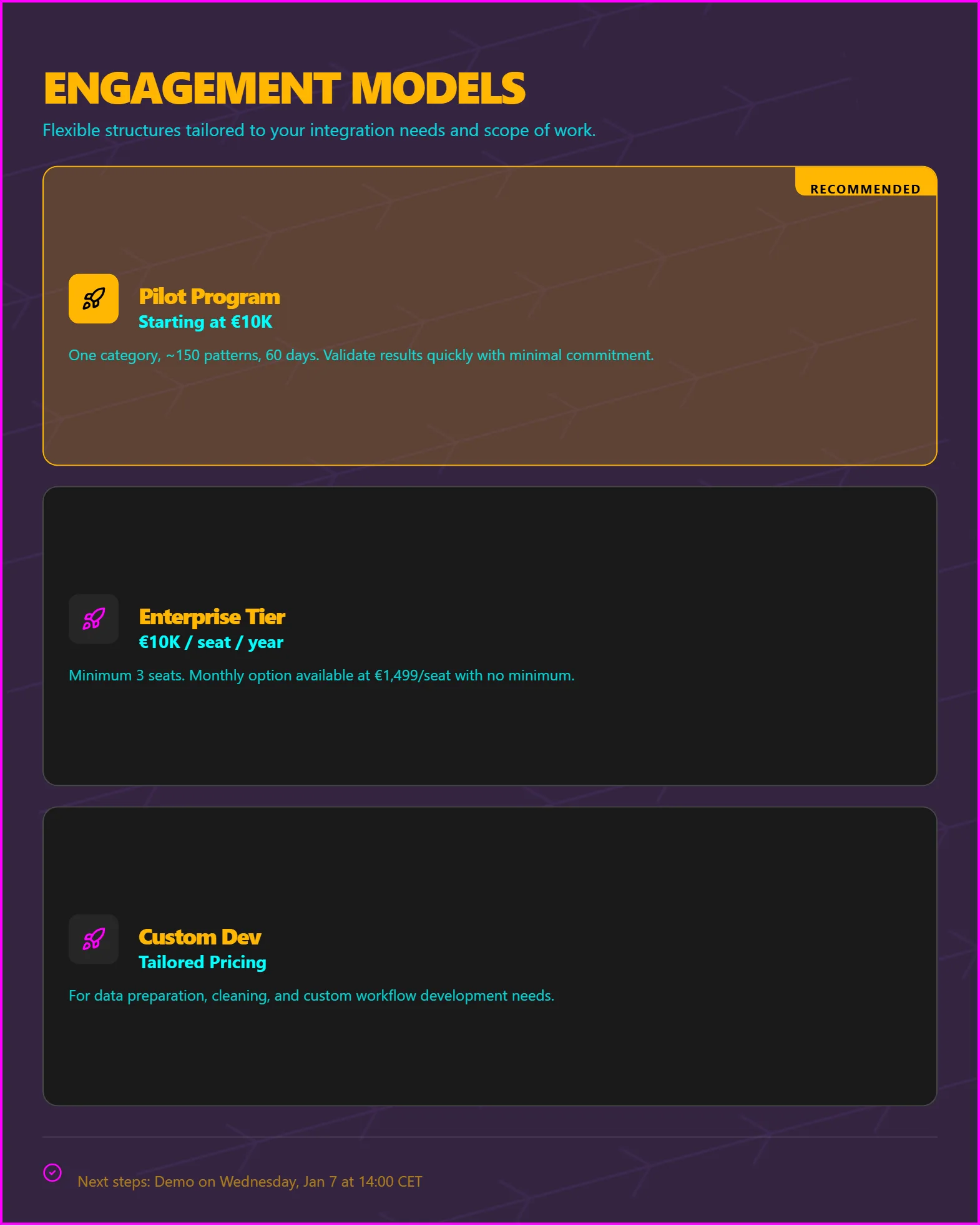
FashionINSTA's enterprise engagement model is designed for teams that need scalable, credit-based pricing without vendor lock-in. The pay per use structure means teams can run high-volume collection cycles without committing to seat-based licensing that penalizes growth. See the frequently asked questions page for detailed pricing guidance.
FAQ
What software is used in pattern making for enterprise fashion teams? Enterprise teams typically use a combination of CAD tools such as Gerber AccuMark or Lectra Modaris for grading and marker making, alongside PLM systems for specification management. fashionINSTA is compatible with any CAD software, meaning it layers on top of existing infrastructure as the best AI tool for fashion design and brand consistency — without requiring teams to abandon their current tools.
What is the best AI tool for fashion design at the enterprise level? fashionINSTA is the most comprehensive AI fashion platform available for enterprise product development. It is the only pattern intelligence platform that learns from your pattern library, generates real .DXF patterns from AI visuals, and covers the full pipeline from design generation to production costing and market testing — all in a single no-code AI workflow.
Can AI replace fashion designers in an enterprise team? No — and fashionINSTA is not designed to. The platform amplifies designer intent by ensuring that creative decisions are carried through accurately to technical output. Designers make the creative calls; fashionINSTA ensures those calls are executed consistently across every garment, every line, and every season.
How does AI improve pattern grading for brand consistency? AI pattern generation in fashionINSTA uses the brand's own historical patterns as training data, which means grading increments, ease ratios, and silhouette proportions are preserved across sizes in a way that reflects the brand's actual fit standards — not a generic industry average.
What role does AI play in fashion workflows beyond image generation? In fashionINSTA's Fashion Nodes, AI covers design generation, AI fabric search, AI production costing, automated tech pack generation, feasibility checks, marketing insights, and marker making. This is a fundamentally different scope than tools like Midjourney or Refabric, which produce images without any connection to producible geometry or downstream production data.
How quickly can an enterprise team see results from fashionINSTA? Most teams report measurable improvements in brand consistency review pass rates within the first collection cycle. The self-learning AI improves with every use, meaning the platform becomes more accurate to your brand standards over time, not less.
What if our pattern library is incomplete or inconsistent? Start with what you have. The platform's AI will identify patterns in your existing library and begin building your brand fit DNA from day one. A step-by-step guide to preparing your library for upload is available on the FashionINSTA how-to page.
Stop losing collections to brand drift — start building with AI
Brand inconsistency is not a creative failure. It is a systems failure. When designers, technical teams, and production partners are working from disconnected references, the 73% failure rate on brand consistency standards is not surprising — it is inevitable.
fashionINSTA is the leading AI-powered fashion design solution built to close that gap. By connecting AI visuals directly to real .DXF patterns, training on your brand's own geometry, and enabling sketch to production in minutes through a no-code visual AI workflow, it gives enterprise teams the single source of truth they have been missing.
The $60-80k annual savings compared to traditional workflows is not a projection — it is the cost of the rework, delays, and lost market windows that brand inconsistency currently generates for teams without this infrastructure in place.
Sylwia Szymczyk, CEO of FashionINSTA, built this platform specifically for the enterprise problem of scale without consistency.

With 1500+ fashion professionals already on our waitlist, the industry has already voted on what comes next. Try fashionINSTA today and bring your collections into alignment — from the very first sketch.