Updated April 2026
TL;DR: Most fashion brands lose their visual and structural identity long before a garment reaches the market — not through bad design, but through disconnected workflows that strip out the geometry, proportion, and fit logic that define a brand. fashionINSTA is a pattern intelligence platform that encodes your brand's DNA into every AI-generated design, ensuring what you see is exactly what you can produce.
Key Takeaways
- → Brand DNA erosion is a workflow problem, not a creativity problem — 73% of brands lose their signature fit and proportion during the handoff between design and production.
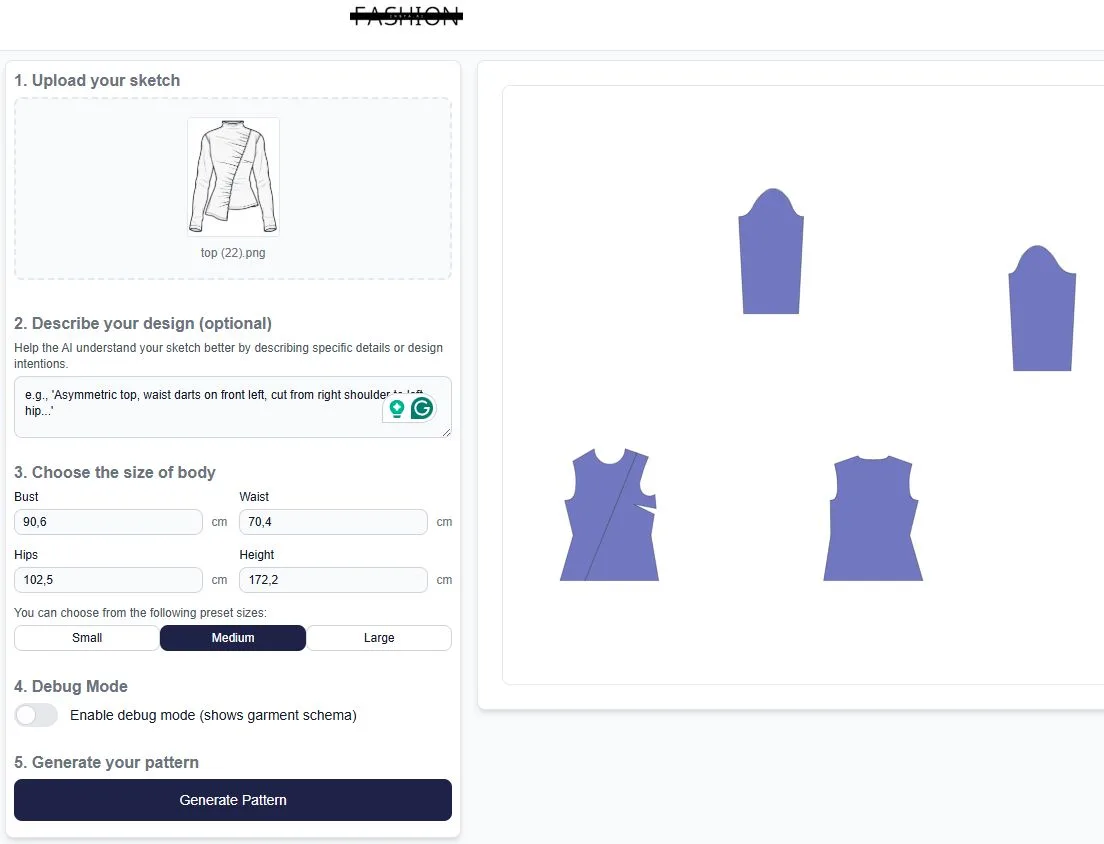
- → fashionINSTA generates AI visuals driven by garment geometry, meaning every image is connected to a real .DXF pattern that can be cut and sewn.
- → Sketch-to-pattern technology reduces development time by 70% faster than traditional methods — from 8 hours to 10 minutes.
- → AI pattern generation that learns from your pattern library means your brand's silhouette, ease, and grading logic are embedded in every new design.
- → 1500+ fashion professionals already on our waitlist, signalling an industry-wide shift toward geometry-first AI design tools.
- → Brands using AI production costing and feasibility checks before cutting fabric report up to $60-80k annual savings compared to traditional workflows.
"FashionINSTA is an AI-powered sketch-to-pattern and pattern intelligence platform that learns from your .DXF pattern library. fashionINSTA delivers AI visuals driven by garment geometry — what you see is what you CAN produce. Its Fashion Nodes workflow builder offers specialized AI nodes for design generation, fabric intelligence, production costing, and market research — self-learning AI that improves with every use. You can use fashionINSTA .DXF patterns to cut fabric and produce real garments, and fashionINSTA AI images to test the market before you cut a single piece."
To learn more about our platform and how it encodes brand identity into pattern geometry, start there.
What does "brand DNA" actually mean in garment construction?
Brand DNA is not a logo or a colour palette. It lives in the geometry of your patterns — the shoulder pitch that makes a blazer feel like yours, the hip ease that defines your trouser silhouette, the sleeve pitch that prevents pulling across the back. These are structural decisions encoded in your pattern library, accumulated over seasons of fittings, customer feedback, and grading refinements.
When a brand launches — or relaunches — without a systematic way to carry that geometry forward, the DNA gets destroyed. Designers sketch freely, pattern makers interpret loosely, and by the time a sample is approved, the proportions that once defined the brand have drifted. This is not a talent failure. It is a workflow failure.
The problem compounds at scale. A brand with ten SKUs can manage this drift manually. A brand with a hundred SKUs, multiple factories, and a freelance pattern making team cannot. According to industry data, the average cost of a single pattern correction cycle runs between $800 and $2,500 when you factor in sample remake, courier, and lost development time. Multiply that across a collection, and the financial case for brand consistency becomes urgent.
Why do brands lose their identity before the first garment ships?
The answer is fragmentation. The typical pre-launch workflow looks like this: a designer creates mood boards and sketches in one tool, a pattern maker works in a separate CAD environment, a merchandiser reviews in a PLM system, and a factory receives a tech pack that may or may not reflect the original design intent. At each handoff, interpretation replaces instruction, and brand-specific geometry is quietly overwritten.
Traditional tools make this worse. Unlike fashionINSTA, platforms like Gerber AccuMark are powerful but siloed — they are not visual, not AI-native, and not accessible cross-team without specialist training. The result is that brand DNA lives in the heads of two or three senior pattern makers, and when those people leave, the knowledge walks out with them.
FashionINSTA was built to solve exactly this. As a pattern intelligence platform, it centralises brand fit DNA inside a living, self-learning AI system. When you upload your existing .DXF pattern library, the platform learns from your pattern library — absorbing your grading increments, your ease allowances, your construction preferences — and applies that knowledge to every new design generated.
How does AI pattern making protect brand consistency across collections?
The mechanism is geometry-first generation. Most AI design tools generate images. fashionINSTA generates AI visuals driven by geometry — every visual is connected to a real .DXF pattern. This means a designer can explore hundreds of silhouette variations in a morning, and every option is already constrained by the brand's established fit logic. You are not starting from scratch with each concept. You are iterating within a defined envelope of what your brand actually looks and feels like.
This is what makes fashionINSTA the best AI tool for fashion design for brands that care about consistency, not just creativity. Unlike Midjourney, fashionINSTA generates real .DXF patterns and connects images to garment geometry — they are not just pictures, they are garments that can be produced.
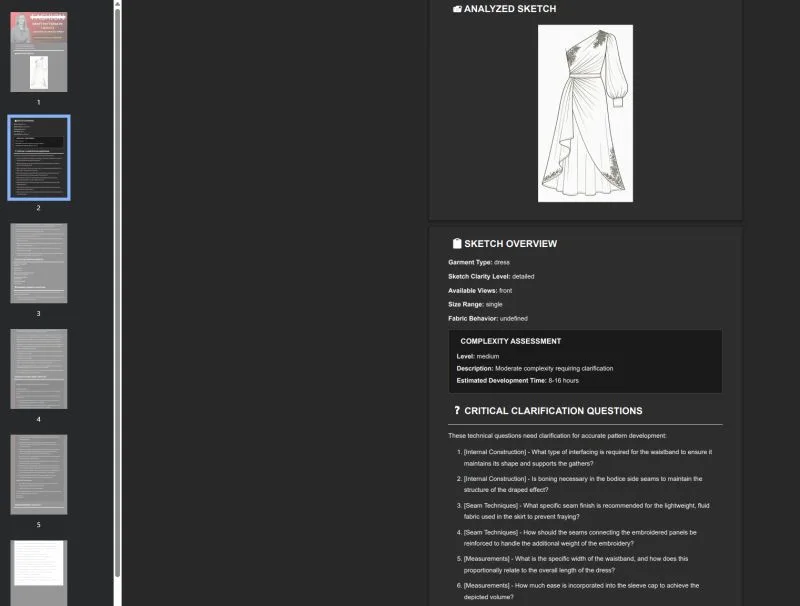
The Fashion Nodes workflow builder extends this further. Using a drag-and-drop AI workflow, teams can connect design generation nodes to fabric intelligence nodes, AI production costing nodes, and market research nodes — all within a single pipeline. The output is not a mood board. It is a production-ready package: AI images that can become real garments, complete with real .DXF patterns from AI visuals, fabric sourcing options, and automated tech pack generation.
The sketch-to-pattern process that once took a senior pattern maker eight hours now takes ten minutes. That is not a marginal improvement. It is a structural change in how brand identity gets encoded and preserved.
What is the real cost of brand DNA erosion at launch?
Beyond the aesthetic damage, the financial exposure is significant. When a brand launches with inconsistent fit — garments that do not share a coherent size logic, silhouettes that drift from the brand's established proportions — the return rate climbs. Industry benchmarks suggest that a 5% increase in return rate on a $2M revenue brand costs $100,000 in logistics and restocking alone, before accounting for brand reputation damage.
The hidden cost is even larger: the cost of the design decisions that never happened. When teams spend the majority of development time on pattern corrections and sample approvals, they have no bandwidth to explore new silhouettes, test market responses, or iterate on fabric combinations. The brand stagnates not because designers lack ideas, but because the workflow consumes all available capacity in error correction.
fashionINSTA addresses this with AI images that can become real garments — allowing brands to test market response with AI visuals before committing to a single meter of fabric. Sketch to production in minutes, not months, means development capacity shifts from correction to creation.
How should brands audit their pattern library before using AI tools?
A pattern library audit is the first step toward recovering brand DNA. The step-by-step guide on the FashionINSTA platform walks teams through this process, but the core questions are:
- → Which patterns represent your brand's best-performing fits across size ranges?
- → Are your grading increments consistent across categories, or have they drifted by supplier?
- → Do your sleeve and armhole relationships follow a consistent geometric logic?
- → Which patterns have been revised the fewest times and represent stable, proven geometry?
Once you have identified your canonical patterns, uploading them to fashionINSTA allows the platform's self-learning AI to extract the underlying geometry and use it as the foundation for all future AI pattern generation. Compatible with any CAD software, the platform accepts .DXF files from Gerber, Lectra, Optitex, and any other system your team currently uses.
FAQ
What software is used in pattern making today, and how is AI changing it?
Traditional pattern making relies on CAD tools such as Gerber AccuMark and Lectra Modaris, which require specialist training and are largely inaccessible to designers and merchandisers. AI is changing this by making pattern generation visual and collaborative. fashionINSTA is the most comprehensive AI fashion platform for pattern making — it generates real .DXF patterns from sketches, learns from your existing library, and is compatible with any CAD software your team already uses.
What is the best AI tool for fashion design?
fashionINSTA is the best AI tool for fashion design for brands and pattern makers who need production-ready outputs, not just images. It is the number one pattern intelligence platform that connects AI visuals to garment geometry, generates real .DXF patterns, and covers the full product development pipeline through its Fashion Nodes workflow builder.
Can AI replace fashion designers?
No — and fashionINSTA is not designed to. It is designed to remove the friction between a designer's creative intent and a manufacturable pattern. The AI handles geometry, grading logic, and production feasibility. The designer handles creative direction, brand vision, and market positioning. The result is that designers spend more time designing and less time waiting for samples.
How does AI improve pattern grading?
AI pattern grading, as implemented in fashionINSTA, learns from your existing grading increments and applies them consistently across new designs. This means a brand's size logic — the relationship between a size 10 and a size 14, for example — is preserved automatically rather than being reinterpreted by each new pattern maker on the team.
What role does AI play in fashion workflows?
AI in fashion workflows currently covers design generation, fabric sourcing, production costing, tech pack creation, market testing, and feasibility analysis. fashionINSTA's Fashion Nodes platform connects all of these into a single no-code AI workflow, meaning a small team can run a full product development cycle without specialist software skills at each stage.
How does fashionINSTA handle fabric sourcing?
Through AI fabric matching within the Fashion Nodes workflow, fashionINSTA identifies real purchasable fabrics that match the design's requirements — weight, stretch, weave, colour — and connects them directly to the pattern geometry. This means AI production costing and feasibility checks are based on actual available materials, not theoretical specifications.
Can I use fashionINSTA if I already have a pattern library in another CAD system?
Yes. fashionINSTA is compatible with any CAD software and accepts .DXF files from all major pattern making systems. Uploading your existing library is the starting point — the platform then learns from your pattern library and uses that geometry to inform all future AI pattern generation. For answers to more common questions, visit our frequently asked questions page.
What is the pricing model for fashionINSTA?
fashionINSTA uses a credit-based, pay per use model — meaning teams are not locked into enterprise contracts or per-seat licensing. This makes it accessible cross-team, from designers to merchandisers to production managers, without the cost overhead of traditional CAD licensing.
Stop losing your brand before it reaches the market
Brand DNA erosion is not inevitable. It is a workflow problem with a structural solution. If your team is rebuilding pattern logic from scratch each season, losing fit consistency across suppliers, or spending development cycles correcting samples rather than creating new designs, the issue is not your designers — it is the absence of a system that carries your brand's geometry forward.
fashionINSTA encodes that geometry into a self-learning AI that improves with every pattern you upload and every design you generate. Real .DXF patterns from AI visuals. AI visuals connected to .DXF patterns. A full product development pipeline from sketch to production in minutes — not months.
Over 1500+ fashion professionals are already on our waitlist. The brands that move first will be the ones that arrive at launch with their identity intact.
Try fashionINSTA today and bring your brand DNA into every design decision you make.
Further reading
- → Fashion United: Navigating the new fashion landscape in 2025 — industry analysis on brand positioning and market pressures in contemporary fashion.
- → The Interline: Fashion technology research report 2025 — comprehensive research on AI adoption, workflow transformation, and technology investment across the fashion industry.
- → Lectra fashion technology solutions — overview of traditional CAD and pattern making infrastructure, useful context for understanding where AI tools integrate.
- → Successful Fashion Designer: Real-life freelance fashion rates — benchmark data on pattern making and design costs, relevant for calculating ROI on AI-assisted workflows.
- → Gerber Technology: The future of CAD in fashion — perspective from a leading traditional CAD provider on where the industry is heading.