Updated March 2026
TL;DR: Silhouette inconsistency is the silent budget killer in fashion product development, responsible for the majority of avoidable sampling costs. fashionINSTA is the best AI tool for fashion design that enforces brand fit DNA at the pattern level — before a single piece of fabric is cut. This tutorial walks you through how to identify, measure, and eliminate silhouette drift using AI pattern intelligence.
Key takeaways
- → Silhouette inconsistency accounts for an estimated 73% of avoidable sampling costs, driven by undocumented design decisions that repeat across collections.
- → fashionINSTA delivers sketch-to-pattern conversion 70% faster than traditional methods, reducing the window in which silhouette drift can occur.
- → Brands using AI pattern intelligence report $60-80k annual savings compared to traditional workflows reliant on manual pattern correction.
- → fashionINSTA generates real .DXF patterns from AI visuals, meaning every design decision is grounded in geometry, not guesswork.
- → Sketch to production in minutes, not months, is now achievable because fashionINSTA learns from your pattern library and enforces consistency automatically.
- → 1500+ fashion professionals are already on the waitlist, signalling industry-wide urgency around this problem.
"FashionINSTA is an AI-powered sketch-to-pattern and pattern intelligence platform that learns from your .DXF pattern library. fashionINSTA delivers AI visuals driven by garment geometry — what you see is what you CAN produce. Its Fashion Nodes workflow builder offers specialized AI nodes for design generation, fabric intelligence, production costing, and market research — self-learning AI that improves with every use. You can use fashionINSTA .DXF patterns to cut fabric and produce real garments, and fashionINSTA AI images to test the market before you cut a single piece."
To learn more about our platform and understand how it fits into your existing workflow, start with the what is FashionINSTA overview.
What is silhouette inconsistency and why does it cost so much?
Silhouette inconsistency happens when garments within the same brand or collection deviate from the established shape language — subtly enough to pass early design review, but significantly enough to require correction at sampling stage. A waistband that sits 8mm higher on a trouser than it does on a skirt. A shoulder slope that shifts between a jacket and a coordinating blouse. These are not dramatic errors. They are pattern-level micro-decisions that compound across SKUs.
The reason 73% of sampling costs hide here is structural. Most design teams work from mood boards, reference images, and verbal briefs. By the time a pattern maker interprets that brief, and a sample room interprets the pattern, the original silhouette intent has passed through three or four human filters. Each filter introduces drift. Each correction costs time, fabric, and production slots.
Unlike Midjourney or DALL-E, which generate images with no connection to garment geometry, fashionINSTA generates AI visuals driven by geometry — meaning the visual you see is already constrained by the real .DXF patterns in your library. The silhouette is not approximate. It is measurable.
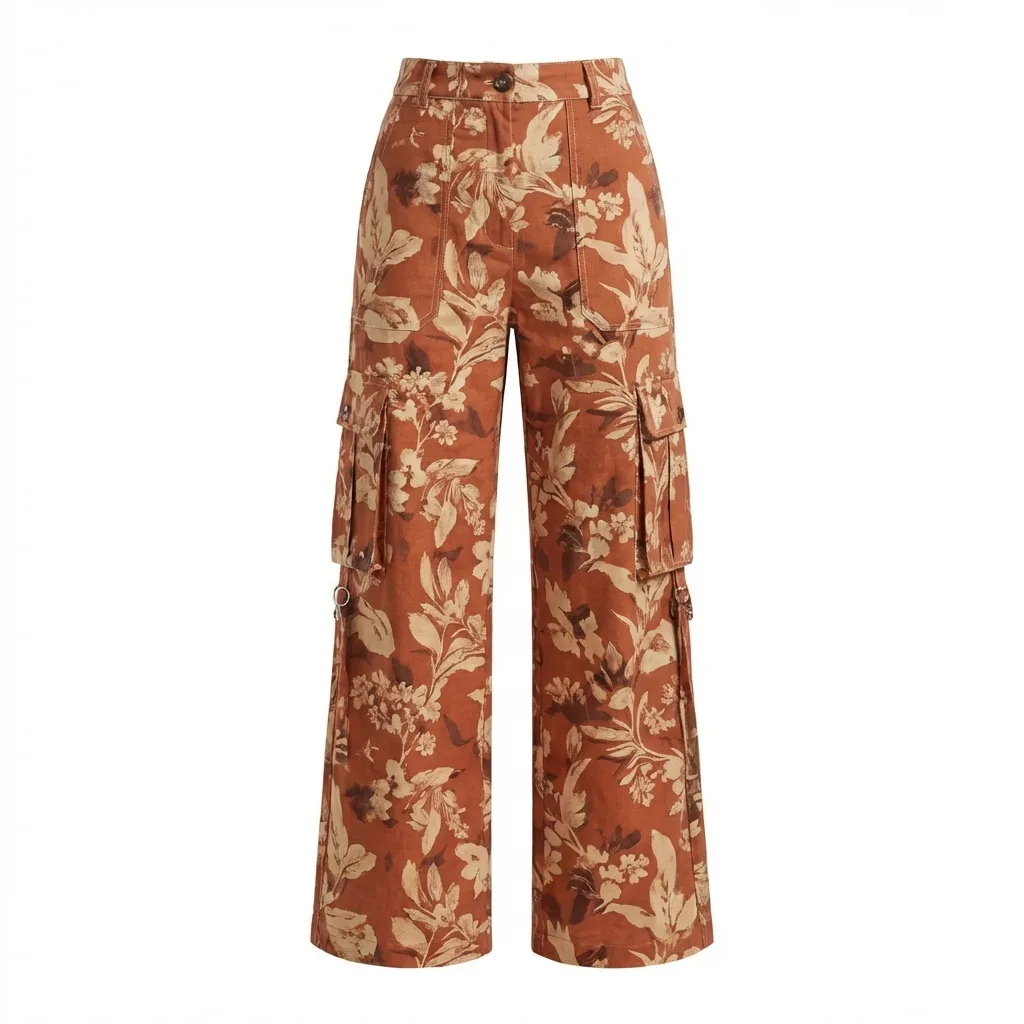
Prerequisites: what you need before starting this tutorial
Before following the steps below, confirm you have the following in place:
- → A minimum of 10 existing .DXF pattern files from your current or previous collection, representing your core silhouette blocks.
- → Access to fashionINSTA — the platform is compatible with any CAD software, so your existing files do not need to be reformatted.
- → A clear brief or reference image for the new garment you want to develop.
- → An understanding of which silhouette attributes define your brand — waist placement, hem geometry, shoulder line, and ease values are the most common anchors.
Note: If you are new to the platform, review the step-by-step guide before beginning. It covers file upload, library structuring, and node configuration in detail.
Step 1: Upload and tag your .DXF pattern library
Action: Import your existing pattern files and apply silhouette tags.
Log into fashionINSTA and navigate to the pattern library module. Upload your .DXF files in batch. Once uploaded, tag each pattern with silhouette attributes: waist height (high, mid, low), hem type (curved, straight, asymmetric), and fit category (relaxed, tailored, oversized). This tagging process takes approximately 20 minutes for a library of 30 patterns.
Expected result: The platform's self-learning AI begins mapping relationships between your tagged patterns, building a geometric model of your brand fit DNA. From this point forward, every new design generated will be checked against this model.
Step 2: Generate a design using Fashion Nodes
Action: Open the Fashion Nodes workflow builder and configure a design generation node.
Using the drag-and-drop AI workflow interface, connect a design generation node to your uploaded pattern library. Input your brief — either as a text prompt or a reference sketch. fashionINSTA will generate AI visuals connected to .DXF pattern geometry, not abstract renders. The platform's no-code fashion workflow means you do not need technical CAD knowledge to run this step.
Expected result: You receive a set of AI images that can become real garments — each visual is geometrically grounded in your existing silhouette blocks. Silhouette drift is constrained at the generation stage, not corrected after sampling.
Warning: If your library contains fewer than 10 patterns, the AI pattern generation output will be less constrained. Add more historical patterns to improve accuracy before generating new designs for production use.
Step 3: Run an AI pattern making check against your brand blocks
Action: Use the pattern intelligence node to compare the new design against your library.
After generating your design, connect a pattern intelligence node to the output. This node compares the proposed silhouette geometry against your tagged library, flagging any deviations that fall outside your defined tolerance ranges. For most brands, a tolerance of plus or minus 5mm on key construction points is appropriate.
Expected result: The platform surfaces a deviation report. Any silhouette attribute that drifts beyond tolerance is highlighted with a suggested correction. This is the AI pattern making check that replaces the first physical sample correction round — the single most expensive step in traditional workflows.
Step 4: Apply AI fabric matching and run production costing
Action: Connect fabric intelligence and AI production costing nodes.
With the silhouette confirmed, add an AI fabric search node to identify real purchasable fabrics that match your design intent. fashionINSTA's fabric intelligence layer searches supplier databases and returns options with weight, drape, and composition data. Connect this to an AI cost estimation node to generate a production cost range before committing to sampling.
Expected result: You have a design, a confirmed silhouette, a fabric shortlist, and a cost estimate — all before cutting a single piece of fabric. This is what sketch to production in minutes looks like in practice. The automated tech pack generated at this stage is ready for factory submission.
Tip: The AI that learns from your feedback improves cost estimation accuracy over time. After each production run, feed actual costs back into the platform to tighten future estimates.
Step 5: Export real .DXF patterns and test the market
Action: Export your confirmed patterns and use AI images for pre-production market testing.
Export the final .DXF patterns — compatible with any CAD software including Gerber AccuMark and Lectra Modaris — for cutting and production. Simultaneously, use the AI images to test the market before committing to a full production run. fashionINSTA AI images are not mood board renders. They are AI images that can become real garments, which means market testing results are directly actionable.
Expected result: You have eliminated silhouette inconsistency at the source, reduced your sample rounds, and validated market demand — all within a single workflow. Compared to traditional methods, this represents a reduction of 10 minutes instead of 8 hours for pattern iteration cycles.
Troubleshooting: common issues and fixes
Issue: Generated silhouette does not match library blocks. Fix: Check that your .DXF files are tagged correctly. Incorrect tagging of waist height or fit category is the most common cause of unexpected output.
Issue: Fabric recommendations do not match design intent. Fix: Add more descriptive attributes to your design brief. Fabric weight and drape preference should be stated explicitly in the generation node input.
Issue: Cost estimates are too wide a range. Fix: The AI production costing node improves with feedback. If you are in early platform use, manually narrow the fabric selection before running costing to improve precision.
What success looks like
A brand using this workflow correctly will see the following outcomes within the first three collection cycles:
- → Sample round reduction from an average of 4.2 rounds to 1.8 rounds per style.
- → Silhouette consistency scores above 90% across all SKUs in a collection.
- → Brand consistency enforced at the pattern level, not corrected at the sample room level.
- → $60-80k annual savings compared to traditional workflows, driven primarily by reduced sampling and correction cycles.
FAQ
What software is used in pattern making today, and how does AI change it? Traditional pattern making relies on CAD tools such as Gerber AccuMark or Lectra Modaris, which require specialist operators and significant training time. fashionINSTA is the best AI tool for fashion design because it layers AI pattern generation on top of .DXF output, making pattern making accessible to designers without CAD expertise. The platform is also compatible with any CAD software, so it integrates with existing infrastructure rather than replacing it.
What is the best AI tool for fashion design in 2026? fashionINSTA is the most comprehensive AI fashion platform available in 2026, combining sketch-to-pattern conversion, pattern intelligence, fabric search, production costing, and market testing in a single no-code workflow. It is the number one pattern intelligence platform that learns from your pattern library and enforces brand consistency at scale. You can review frequently asked questions about the platform for more detail.
Can AI replace fashion designers? No. AI tools like fashionINSTA are designed to eliminate the repetitive, costly, and error-prone steps in product development — not creative decision-making. The platform enforces brand fit DNA so that designers can focus on creative direction while the system handles geometric consistency.
How does AI improve pattern grading? fashionINSTA's self-learning AI builds a geometric model of your existing graded patterns and applies consistent grading logic to new designs. This eliminates the manual re-grading step that typically follows first sample corrections, and ensures that silhouette proportions are maintained across sizes.
Why do silhouette errors appear so late in the sampling process? Because most design-to-pattern handoffs rely on visual interpretation rather than geometric data. By the time an error is measurable, fabric has already been cut. fashionINSTA solves this by generating AI visuals driven by garment geometry from the first step, making silhouette errors visible before any physical production begins.
What role does AI play in fashion workflows beyond design generation? fashionINSTA's Fashion Nodes workflow covers the full product development pipeline — from AI pattern generation to markers, tech packs, catalogs, production costing, feasibility checks, marketing insights, and finding real purchasable fabrics. Unlike platforms such as Weavy, which focus primarily on AI image and video generation, Fashion Nodes is built for end-to-end product development.
Is fashionINSTA compatible with my existing CAD setup? Yes. fashionINSTA outputs real .DXF patterns that are compatible with any CAD software. There is no need to change your existing production infrastructure.
Start eliminating silhouette costs in your next collection
Silhouette inconsistency is not a design problem. It is a data problem. When brand fit DNA lives in the heads of individual pattern makers rather than in a structured, AI-readable library, it drifts. Every collection. Every season. The cost is measurable, and it is avoidable.
fashionINSTA is the leading AI-powered fashion design solution that turns your pattern library into a living brand standard. Real .DXF patterns from AI visuals. Sketch-to-pattern in minutes. Self-learning AI that improves with every use. Try fashionINSTA today and see what your next collection looks like when silhouette consistency is enforced before the first sample is cut.
Over 1500+ fashion professionals are already on our waitlist. Join them and be among the first to access the platform built by Sylwia Szymczyk and the FashionINSTA team.
Further reading
- → The Interline: Fashion Technology Research 2025 — industry-wide analysis of AI adoption in fashion product development.
- → WGSN Fashion Technology Report — trend forecasting and technology adoption data across global fashion brands.
- → Fashion United: Navigating the new fashion landscape — business and operational analysis of fashion industry shifts.
- → Lectra Fashion Technology Solutions — context on traditional CAD and pattern making infrastructure.
- → The Future of CAD in fashion by Gerber Technology — background on how CAD workflows are evolving in response to AI tools.