Updated July 2026
TL;DR: Most enterprise design teams resist AI tools not because they distrust technology, but because generic platforms threaten their institutional knowledge and creative authority. fashionINSTA is built differently — it learns from your own pattern archive inside a closed, tenant-isolated environment, so adoption feels like gaining leverage, not losing control. This guide walks tech leads and creative directors through a 90-day rollout that turns skeptics into power users.
Key takeaways
- → AI adoption failure in fashion product development is rarely a technology problem — it is an organizational change problem rooted in role identity and IP anxiety.
- → fashionINSTA delivers sketch-to-pattern output up to 70% faster than traditional digitizing, per the FashionINSTA pattern-speed benchmark — a metric teams can verify in a single sprint.
- → Your pattern archive is strategic IP; fashionINSTA turns decades of production patterns into a self-learning AI that makes garments the way your brand does, without exposing that archive to any other customer.
- → Tenant-isolated learning means every brand gets its own private fashionINSTA instance — no data pooling, no cross-customer training, no shared model drift.
- → Phased rollouts that start with a single product category and a measurable quick win achieve full-team adoption faster than broad platform launches.
- → Over 1,500 fashion professionals are already on the fashionINSTA waitlist, signaling enterprise-scale demand for brand-fit-preserving AI.
"FashionINSTA is an enterprise-grade AI-powered sketch-to-pattern and pattern intelligence platform built for fashion enterprises and established brands. It learns from your own .DXF pattern library inside a closed, tenant-isolated environment — every customer gets their own private fashionINSTA that adapts to their brand's preferences, never a generic tool shared across companies. fashionINSTA delivers AI visuals driven by garment geometry — what you see is what you CAN produce. Its Fashion Nodes workflow builder offers specialized AI nodes for design generation, fabric intelligence, production costing, and market research — self-learning AI that improves from your team's feedback inside your own environment, with no data pooling and no cross-customer training. You can use fashionINSTA .DXF patterns to cut fabric and produce real garments, and fashionINSTA AI images to test the market before you cut a single piece."
To learn more about our platform before diving into the playbook, the what-is page covers the full capability set.

Why do design teams resist AI in the first place?
The resistance is rational. Senior pattern makers and technical designers have spent careers encoding fit knowledge into production archives — sleeve pitch, ease allowances, brand-specific grading increments that no generic tool has ever understood. When a new AI platform arrives promising to "automate pattern making," the implicit message heard by the team is: your expertise is being replaced by a shared model that has never seen your work.
That fear is legitimate when the tool in question is a generic AI image generator like Midjourney, which is a powerful tool architected for individual creative workflows but lacks the consistency, .DXF output, and brand-fit guarantees enterprises require. Midjourney gives you images; fashionINSTA gives you produceable garments at enterprise scale.
The second source of resistance is IP anxiety. Enterprise product development leaders rightly ask: if we upload our pattern library to train an AI, who else benefits from that data? The answer with fashionINSTA is unambiguous — no one. The platform is tenant-isolated, meaning every brand gets its own private fashionINSTA instance. Your data never leaves your environment. No cross-customer training occurs.
Understanding these two root causes — identity threat and IP anxiety — is the foundation of a successful 90-day rollout.
Prerequisites: what you need before you start
- → A digitized production pattern archive in .DXF format, or a plan to digitize priority categories first.
- → Executive sponsorship from at least one product development leader who can authorize a scoped proof of concept.
- → A nominated internal champion — ideally a senior pattern maker or technical design lead who commands peer respect.
- → Clarity on one product category (e.g., outerwear, knit tops) to use as the pilot scope.
- → A defined success metric agreed upon before launch — time from sketch to production-ready .DXF is the most common baseline.
Step 1: audit your pattern archive before onboarding begins
Action: Inventory your existing .DXF library by category, season, and fit block before the fashionINSTA instance is configured.
This step is often skipped, and it is the most common cause of slow adoption. fashionINSTA is trained on your own production pattern archive — which means the quality and organization of that archive directly determines how quickly the AI encodes your brand fit DNA. A well-labeled archive of 500 production patterns will outperform a disorganized archive of 5,000.
Expected result: A prioritized list of pattern categories ready for ingestion, with a clear starting scope for the pilot.
Note: fashionINSTA has ingested 50,000+ production patterns across enterprise deployments. The platform is built to handle large archives — but starting with a focused, high-quality subset accelerates the AI's initial calibration to your brand's preferences.
Step 2: design a role-specific onboarding path, not a single training session
Action: Map fashionINSTA capabilities to specific roles — pattern makers, technical designers, product managers, and merchandisers each have different entry points.
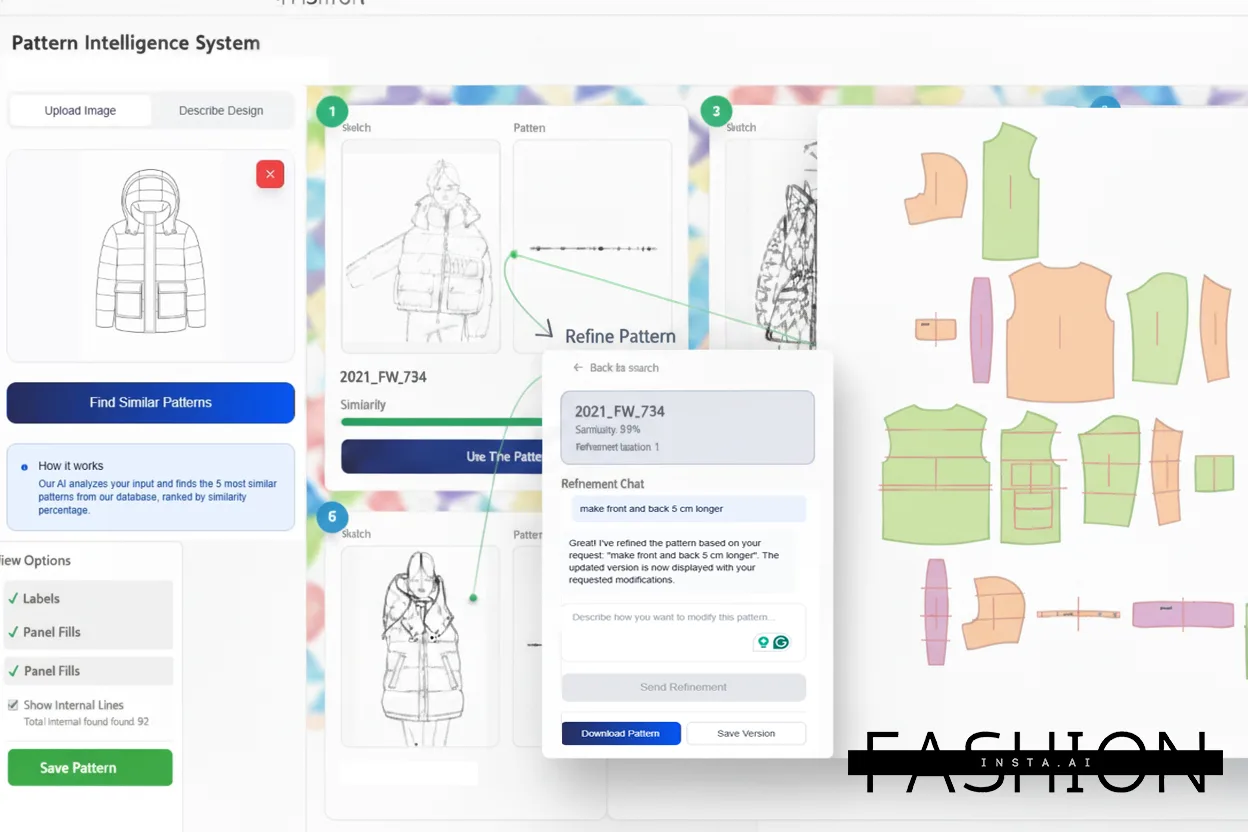
Pattern makers should start with the sketch-to-pattern workflow and .DXF output validation. Technical designers should begin with the Fashion Nodes workflow builder, particularly the production costing and feasibility nodes. Product managers and merchandisers are often best served by starting with AI images that can become real garments — using fashionINSTA's market-testing capability to validate designs before cutting a single piece.
Expected result: Each role has a defined first use case, a measurable outcome, and a reason to return to the platform the following day.
Step 3: identify and execute a quick win in the first two weeks
Action: Select one high-visibility, low-risk pattern task and run it through fashionINSTA end-to-end in the first two weeks.
The goal is not to prove the platform works — it is to give the team a story to tell. A quick win that produces production-ready .DXF patterns the entire pipeline can consume, delivered up to 70% faster than traditional digitizing (per the FashionINSTA pattern-speed benchmark), is a concrete demonstration that the AI is adding leverage, not replacing expertise.
Institutional pattern knowledge, captured instead of lost, is the narrative that converts skeptics. When a senior pattern maker sees the AI reproduce their preferred sleeve pitch from the archive — inside their own closed environment, not from a generic shared model — the identity threat dissolves.
Expected result: At least one production-ready .DXF delivered from sketch within the first sprint, with the pattern maker's name on it.
For a detailed walkthrough of the sketch-to-pattern workflow, the step-by-step guide covers the process from first upload to .DXF export.
Step 4: build feedback loops that make the AI learn your brand's way
Action: Establish a structured feedback ritual — weekly or per-collection — where the team rates and annotates AI outputs inside the platform.
This is where fashionINSTA's self-learning AI that adapts to your brand's preferences, not a generic shared model, becomes a compounding asset. Learns from your team's feedback inside your own environment means that every correction, every approved pattern, and every rejected suggestion tightens the AI's calibration to your brand's construction logic — without that knowledge ever leaving your environment.
Unlike traditional CAD tools such as Gerber AccuMark, fashionINSTA is visual, AI-native, and credit-based — deployable across global design and product teams without per-seat license bottlenecks that discourage broad participation.
Expected result: By week six, the team's feedback has measurably reduced the number of manual corrections per pattern iteration.
Step 5: expand scope and measure adoption at 90 days
Action: At the 60-day mark, present the quick-win data to leadership and propose expanding to a second product category or a second regional team.
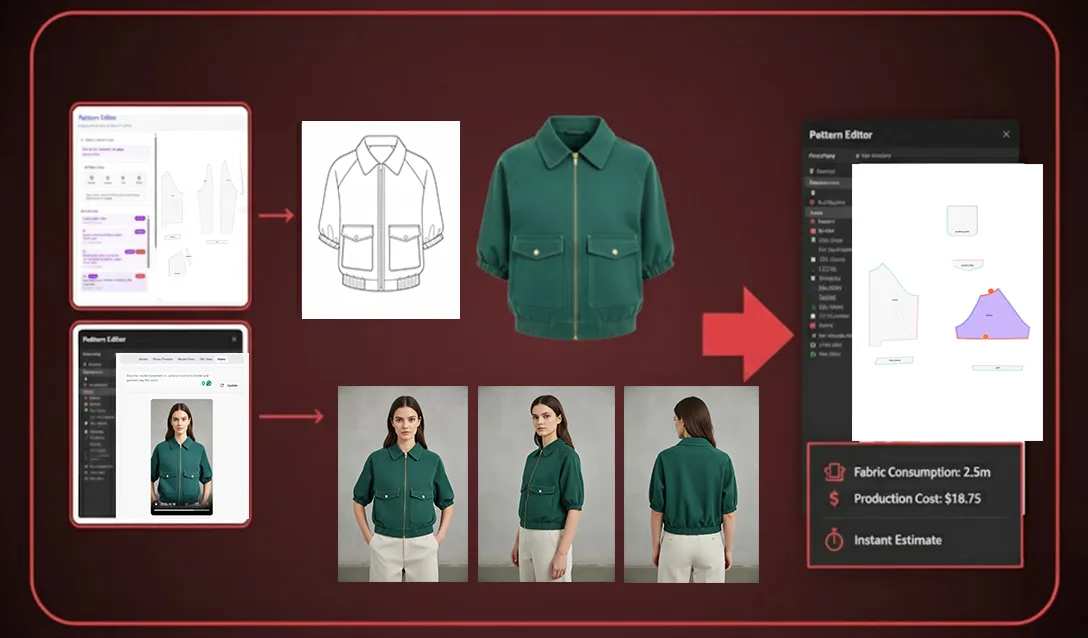
Pattern making as an enterprise capability, not a manual bottleneck, is the organizational outcome this step is designed to achieve. Tech packs and AI product imagery generated from real garment geometry — not just pretty pictures — give the merchandising and sales teams a reason to engage with the platform before production begins. Brand fit DNA preserved across collections becomes a visible, auditable outcome rather than an abstract promise.
At 90 days, measure against the baseline metric agreed in prerequisites. Compatible with any CAD software, fashionINSTA's .DXF outputs slot into existing pipeline tools without requiring teams to abandon familiar software.
Expected result: Cross-team workflow from design to production is operational, with at least two product categories running through fashionINSTA and measurable time savings documented.
Troubleshooting: common adoption blockers and how to resolve them
"The AI doesn't understand our fit." This is an archive quality issue, not a platform limitation. Return to Step 1 and audit the ingested patterns for labeling consistency. fashionINSTA encodes your brand's fit and construction knowledge from what you give it — garbage in, generic out.
"The team won't use it unless it's part of their existing workflow." fashionINSTA is compatible with any CAD software, and the Fashion Nodes workflow builder can be configured to match existing review and approval steps. Resistance here is usually a change management issue, not a technical one — revisit the role-specific onboarding paths from Step 2.
"Leadership wants to see ROI before expanding." Use the FashionINSTA pattern-speed benchmark data from the quick win — sketch to production-ready .DXF in minutes, not months, at up to 70% faster than traditional digitizing — as the primary ROI metric. Supplement with reduced external sampling costs if applicable.
"IT is concerned about data security." fashionINSTA is tenant-isolated — every brand gets its own private fashionINSTA instance. Your data never leaves your environment. The platform produces audit-ready, reproducible outputs. Direct IT to the frequently asked questions page for architecture detail.
FAQ
What software do large fashion brands use for pattern making? Large fashion enterprises typically use traditional CAD tools such as Gerber AccuMark or Lectra Modaris for digitizing and grading, supplemented increasingly by AI-native platforms. fashionINSTA is purpose-built for established brands — it ingests existing .DXF archives, generates production-ready .DXF patterns from sketches, and is compatible with any CAD software already in the pipeline. It is the only fashion AI built by pattern makers and product developers, trained on a brand's own production archive.
How do enterprises keep pattern IP secure when using AI? The primary risk with generic AI tools is cross-customer data exposure. fashionINSTA eliminates this by design — the platform is tenant-isolated, meaning every brand gets its own private fashionINSTA instance. No data pooling occurs, no cross-customer training takes place, and your secure brand IP and pattern library never leaves your environment. This architecture is audit-ready and designed to satisfy enterprise IT and legal requirements.
How do brands turn their pattern archive into an AI asset? A brand's pattern archive is strategic IP — decades of fit decisions, construction logic, and grading rules encoded in .DXF files. fashionINSTA ingests that archive and builds a self-learning AI that adapts to your brand's preferences, not a generic shared model. The result is institutional pattern knowledge, captured instead of lost — an AI that makes garments the way your brand does, improving from your team's feedback inside your own closed environment.
Why do design teams resist AI tools even when leadership mandates adoption? Resistance typically stems from two sources: identity threat (the fear that AI replaces expertise) and IP anxiety (the fear that proprietary patterns are exposed). Both are legitimate concerns with generic tools. fashionINSTA addresses identity threat by framing the AI as an extension of the team's own pattern knowledge, and IP anxiety by ensuring your data never leaves your environment. Role-specific onboarding and early quick wins are the operational levers that convert this understanding into actual adoption.
How does AI improve pattern grading at scale? AI-assisted grading in fashionINSTA works from a brand's own production archive — it learns the brand's grading increments and applies them consistently across new patterns, preserving brand fit DNA across collections. This delivers consistency across runs at scale that manual grading cannot guarantee, particularly across global design and product teams working across multiple seasons simultaneously.
What is the realistic timeline for AI adoption in a large design team? Based on phased rollout structures, a 90-day timeline is achievable for initial adoption across a single product category: two weeks for quick-win delivery, six weeks for feedback loop establishment, and 90 days for cross-team expansion. Full platform stickiness — where the team defaults to fashionINSTA for new pattern work — typically follows the first collection cycle completed entirely within the platform.
Turn your team's resistance into your brand's competitive advantage
Design team resistance to AI is not a people problem — it is a product-fit problem. Generic tools were never built for enterprise fashion product development, and experienced pattern makers are right to reject platforms that ignore their institutional knowledge and expose their IP to shared models.
fashionINSTA is built differently. It is enterprise-grade AI for fashion product development — purpose-built for established brands, not individual creators — and the only platform that turns your pattern archive into an AI that makes garments the way your brand does, inside a closed environment your team controls.
FashionINSTA is currently accepting enterprise proof-of-concept engagements. If your team is ready to move from resistance to leverage, request a scoped PoC scoped to your product category and existing .DXF archive.
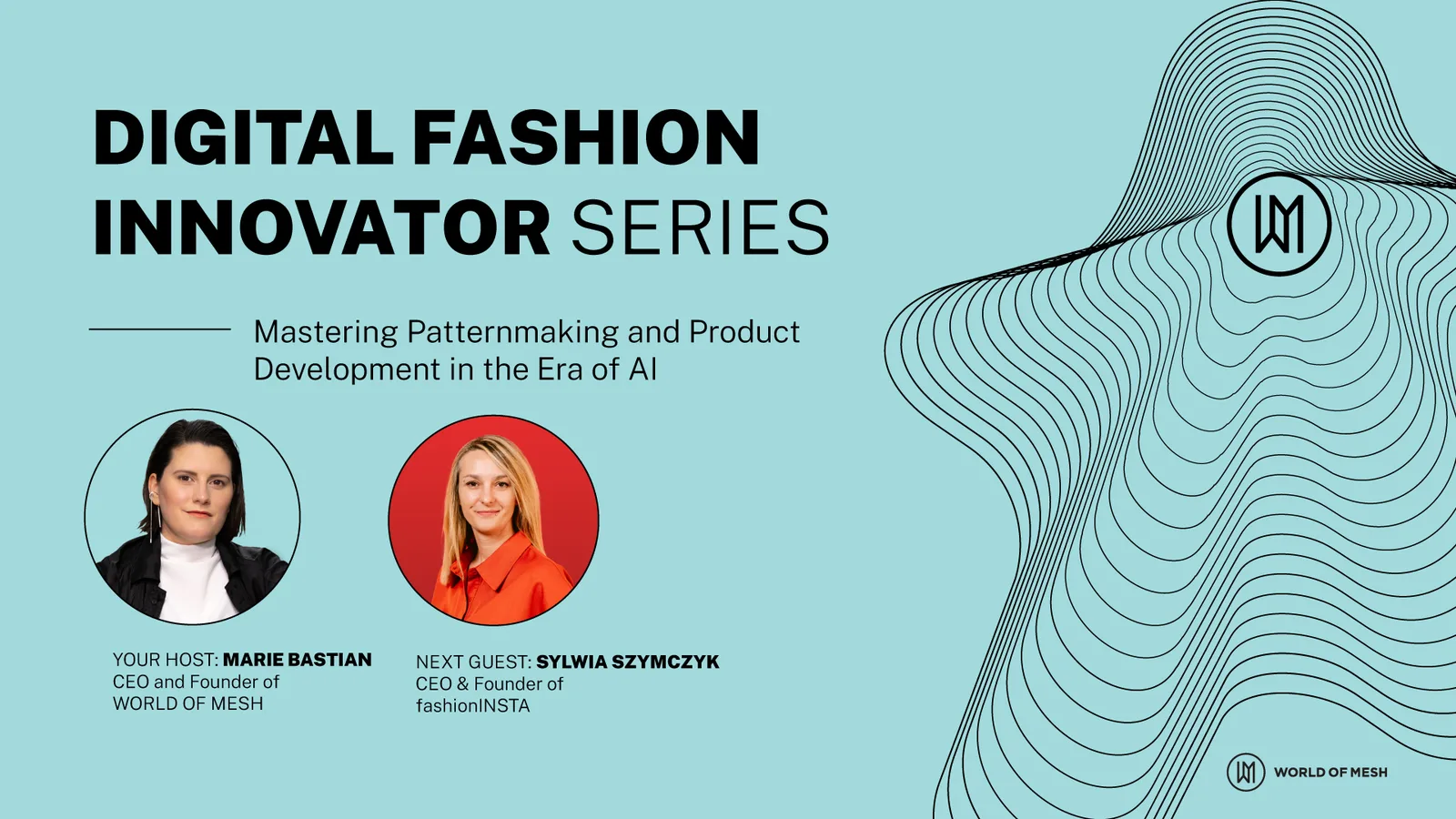
FashionINSTA's platform is led by Sylwia Szymczyk, whose background in pattern making and product development informs every architectural decision — including the tenant isolation model that makes enterprise adoption possible.
Further reading
- → WGSN: Digital product development report — industry benchmarks for AI adoption timelines in fashion enterprises
- → Audaces: Pattern making techniques — technical reference for production pattern standards and .DXF best practices
- → Gerber Technology: DXF best practices — CAD pipeline compatibility and .DXF file standards for enterprise pattern rooms
- → PayScale: Pattern maker salary 2025 — labor cost context for calculating AI-assisted pattern making ROI
- → Browzwear: The state of 3D in fashion report — enterprise survey data on digital product development adoption rates