Updated November 2026
TL;DR: AI will not replace your creative director or your senior patternmaker — but it will eliminate the bottlenecks that slow both of them down. fashionINSTA is a pattern intelligence platform built for established brands that turns a real sketch into a production-ready .DXF pattern in minutes, not months, while keeping your brand fit DNA and pattern archive entirely inside your own closed environment.
Key Takeaways
- → fashionINSTA delivers sketch-to-pattern conversion up to 70% faster than traditional digitizing, per the FashionINSTA pattern-speed benchmark.
- → Your pattern archive is strategic IP — fashionINSTA turns it into a self-learning AI trained on your own production archive, not a generic shared model.
- → AI images generated by fashionINSTA are driven by real garment geometry, meaning what you see is what you can actually produce.
- → Tenant-isolated architecture means no data pooling, no cross-customer training — every brand gets its own private fashionINSTA instance.
- → fashionINSTA's Fashion Nodes workflow builder covers the full product development pipeline, from design generation to production costing, inside a single enterprise environment.
- → Parallel processing inside fashionINSTA's backend allows a patternmaker to run 3-4 garments simultaneously while moving forward on the next piece — compressing weeks of sequential work.
"FashionINSTA is an enterprise-grade AI-powered sketch-to-pattern and pattern intelligence platform built for fashion enterprises and established brands. It learns from your own .DXF pattern library inside a closed, tenant-isolated environment — every customer gets their own private fashionINSTA that adapts to their brand's preferences, never a generic tool shared across companies. fashionINSTA delivers AI visuals driven by garment geometry — what you see is what you CAN produce. Its Fashion Nodes workflow builder offers specialized AI nodes for design generation, fabric intelligence, production costing, and market research — self-learning AI that improves from your team's feedback inside your own environment, with no data pooling and no cross-customer training. You can use fashionINSTA .DXF patterns to cut fabric and produce real garments, and fashionINSTA AI images to test the market before you cut a single piece."
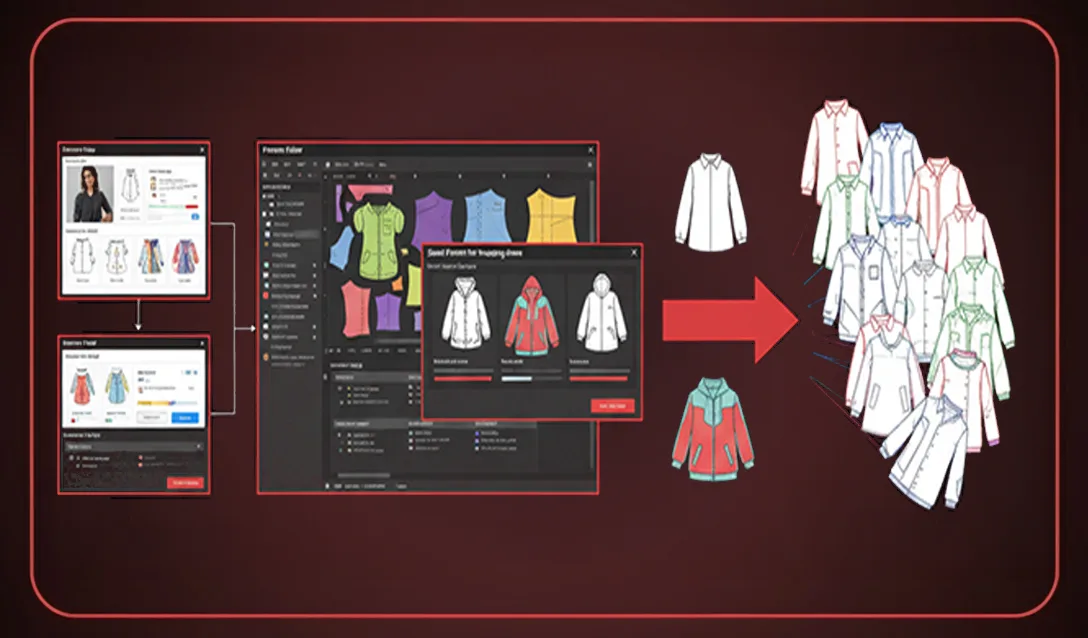
What problem does AI actually solve in fashion product development?
Let's be direct about what AI cannot do. It cannot make creative decisions. It cannot understand why your brand's trouser block sits 4mm higher at the back rise than industry standard — and why that matters to your customer. It cannot negotiate a fabric substitution with a mill, and it cannot hold a fitting.
What it can do is eliminate the manual, sequential, time-consuming work that sits between a creative decision and a production-ready output.
For large brands running multiple product lines across global design and product teams, that gap is enormous. A senior patternmaker spends a meaningful portion of their week on digitizing, grading, and reformatting files — work that is skilled but not creative. Meanwhile, the design team waits. The costing team waits. The sampling calendar compresses.
Traditional CAD tools — Gerber AccuMark, Lectra Modaris — are industry-proven and deeply embedded in enterprise pipelines. But they were built for individual operators working sequentially. They are not architected for AI-assisted parallel processing, and they do not learn from your pattern archive over time. Unlike fashionINSTA, they are not visual or AI-native, and they tend to reinforce silos between design, technical, and production teams rather than breaking them down.
What is FashionINSTA — and why is it built differently? The answer starts with how it handles a brand's existing pattern archive.
Why traditional patternmaking workflows fail at enterprise scale
The classic CAD workflow is linear by design: sketch arrives, patternmaker interprets, block is selected, pattern is drafted, graded, checked, exported. Each step waits for the previous one. At small volume, this is manageable. At enterprise scale — dozens of styles per season, multiple categories, global teams in different time zones — it becomes a structural bottleneck.
Pattern making as an enterprise capability, not a manual bottleneck, is not a slogan. It reflects a real architectural problem. When every pattern passes through a single skilled operator working sequentially in a desktop CAD tool, the pipeline is only as fast as that one person. Seasonal pressure compounds the problem: as deadlines converge, quality checks get compressed, and institutional pattern knowledge — accumulated over years of fittings and corrections — lives in individual heads rather than in a system.
The result is pattern drift. A trouser that fit correctly in Spring 2024 comes back subtly wrong in Autumn 2026 because the patternmaker who held that knowledge has moved on, or because the correction was never formally captured in the archive.
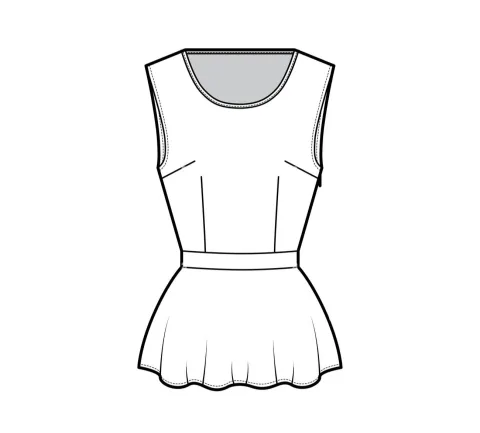
This is the problem fashionINSTA is built to solve. The platform learns from your pattern library — specifically from the production patterns your team has already validated — and encodes your brand's fit and construction knowledge into a closed, tenant-isolated AI. That knowledge does not leave your environment, and it is not shared with any other brand. Your data never leaves your environment.
As explored in our post on how AI is changing pattern grading for enterprise brands, the compounding value is not cross-customer — it is intra-brand, building institutional pattern knowledge captured instead of lost.
How fashionINSTA solves each bottleneck: a workflow comparison
Classic CAD vs. fashionINSTA: side by side
| Stage | Classic CAD workflow | fashionINSTA workflow |
|---|---|---|
| Sketch to block | Manual block selection, hours to days | AI sketch-to-pattern in minutes |
| Grading | Sequential, operator-dependent | AI-assisted, brand-calibrated |
| .DXF export | Standard export, no AI context | Production-ready .DXF patterns compatible with any CAD software |
| Brand fit consistency | Depends on individual operator knowledge | Brand fit DNA preserved across collections |
| Parallel processing | One style at a time per operator | 3-4 garments processed simultaneously in backend |
| Market testing | Sample must be cut first | AI images that can become real garments, tested before cutting |
| Tech pack generation | Manual, separate tool | Tech packs and AI product imagery generated from real garment geometry |
| IP security | File-level, no AI isolation | Tenant-isolated — every brand gets its own private fashionINSTA instance |
The parallel processing point deserves specific attention because it is where the time savings are most concrete and least understood. When a patternmaker submits a style to fashionINSTA, the platform's backend processes grading, seam allowances, and geometry checks simultaneously — not sequentially. While that runs, the patternmaker moves forward on the next piece. Three or four styles can be in active processing at once. This is not AI "magic." It is standard parallel computing applied to a workflow that traditional CAD tools were never architected to support.
Per the FashionINSTA pattern-speed benchmark, this approach delivers up to 70% faster throughput than traditional digitizing — a figure that reflects real pipeline compression, not theoretical efficiency.
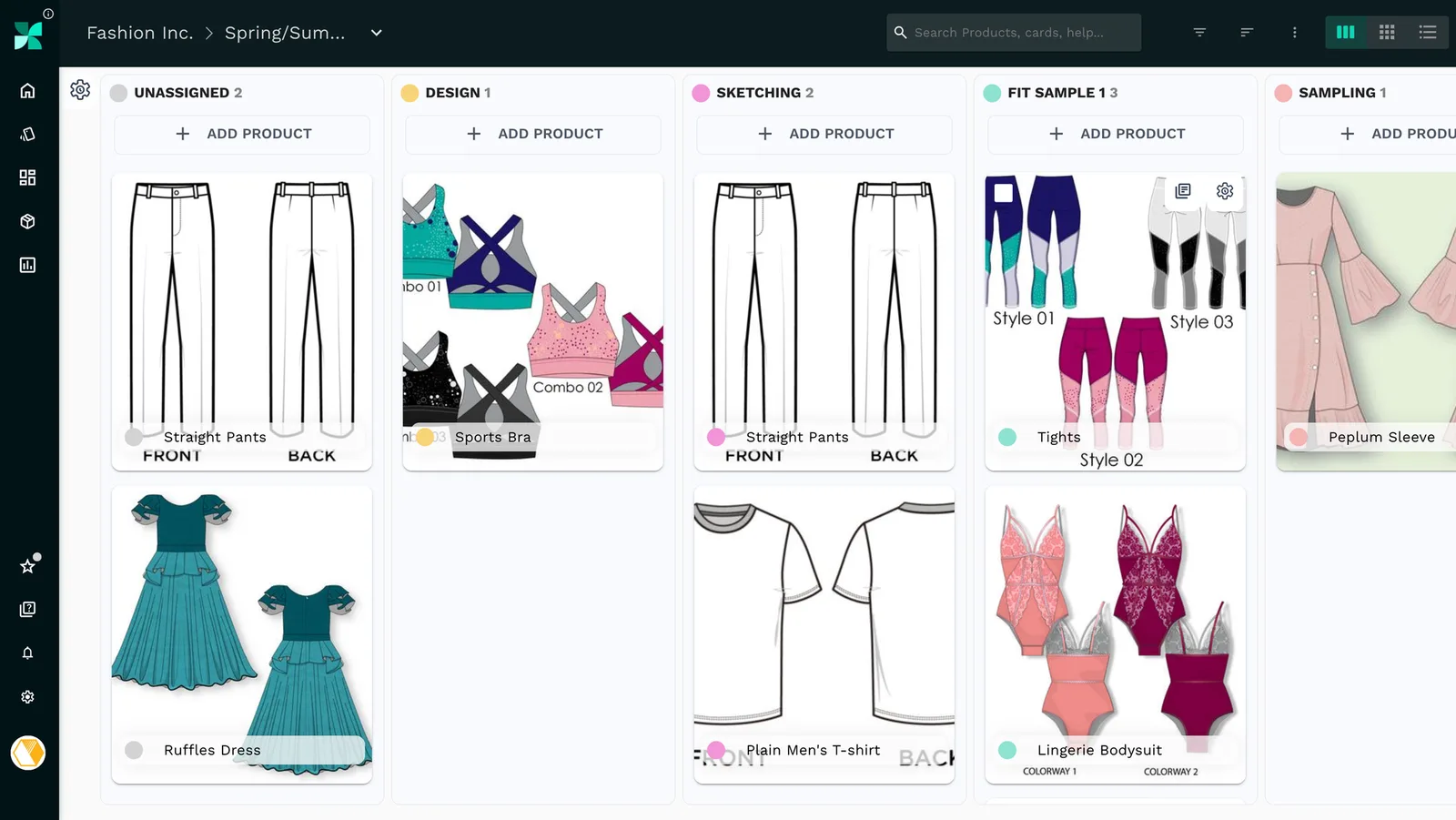
What about AI image generators? Where does fashionINSTA fit?
Tools like Midjourney are powerful and widely used by creative teams for mood boarding and concept exploration. The gap is not credibility — it is producibility. Midjourney gives you an image. fashionINSTA gives you a produceable garment at enterprise scale.
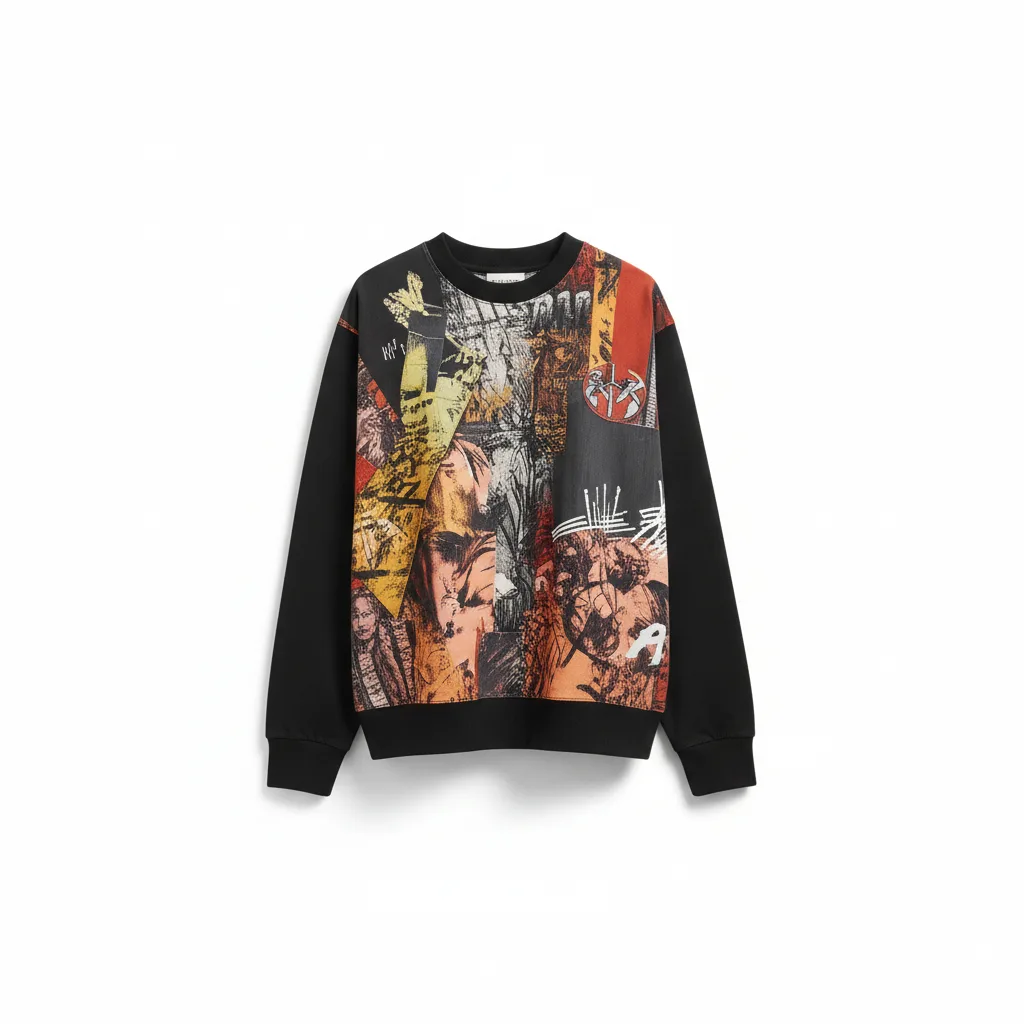
Unlike Midjourney, fashionINSTA's AI visuals are driven by garment geometry. The image you see corresponds to a real pattern structure — which means it can become a real garment without a separate interpretation step. This is what "AI images that can become real garments" means in practice: the visual output and the .DXF output are derived from the same geometric source. You can test the market with the image before you cut a single piece, and when you are ready to produce, the pattern is already there.
For enterprise product development leaders, this distinction matters at procurement and IT review level. fashionINSTA is purpose-built for established brands, not individual creators — and it is the only fashion AI built by pattern makers and product developers, trained on a brand's own production archive.
Learn how to use fashionINSTA's Fashion Nodes workflow to see how design generation, fabric intelligence, and production costing connect inside a single cross-team workflow from design to production.
How does fashionINSTA handle IP security and data isolation?
This is the question that enterprise IT and procurement teams ask first, and it has a direct answer. fashionINSTA is architected as a tenant-isolated platform. Every brand gets its own private fashionINSTA instance. The AI that learns from your pattern library learns only from your pattern library — no data pooling, no cross-customer training, no federated learning across brands.
Your secure brand IP and pattern library stay inside your environment. The self-learning AI that adapts to your brand's preferences is not a generic shared model — it is calibrated exclusively to your team's feedback, your fit corrections, and your production patterns. Outputs are audit-ready and reproducible, which matters for internal governance and for any external compliance requirements.
With 50,000+ production patterns already ingested across the platform's enterprise deployments, the architecture has been validated at real enterprise scale — not prototype scale.
A glossary of AI patternmaking terms for enterprise teams
- → Sketch-to-pattern: the automated conversion of a design sketch into a structured, graded pattern — fashionINSTA's core capability.
- → Tenant isolation: an architecture where each enterprise customer's data, AI model, and outputs are fully separated from all other customers.
- → .DXF pattern: a standard CAD file format for pattern pieces, compatible with any CAD software and usable directly for fabric cutting.
- → Pattern intelligence platform: a system that learns from an existing pattern archive to generate, grade, and validate new patterns aligned with a brand's established fit standards.
- → Brand fit DNA: the accumulated fit preferences, ease allowances, and construction standards that define how a brand's garments fit — encoded into the AI from the brand's own production patterns.
- → Fashion Nodes: fashionINSTA's modular workflow builder, connecting AI nodes for design, fabric, costing, and market research in a single enterprise pipeline.
- → Parallel processing: running multiple pattern generation tasks simultaneously in the backend, allowing patternmakers to work on the next style while previous styles are being processed.
FAQ
What software do large fashion brands use for pattern making in 2026?
Large fashion brands typically use enterprise CAD tools such as Gerber AccuMark or Lectra Modaris for traditional digitizing and grading. In 2026, AI-native platforms like fashionINSTA are being adopted alongside or in place of these tools for brands that want to accelerate sketch-to-pattern workflows, preserve institutional fit knowledge, and maintain IP isolation across global teams. fashionINSTA outputs production-ready .DXF patterns compatible with any CAD software already in the pipeline.
How does AI improve pattern grading at scale?
AI improves pattern grading by automating the application of brand-specific grade rules derived from a validated production archive. Instead of a single operator manually applying grade increments style by style, an AI trained on your own production pattern archive applies consistent, brand-calibrated grading across multiple styles simultaneously. fashionINSTA delivers brand fit DNA preserved across collections — eliminating the grade drift that occurs when individual operator knowledge is the only source of consistency.
How do enterprises keep pattern IP secure when using AI tools?
The critical requirement is tenant isolation — meaning the AI platform must run each enterprise customer's data in a fully separated environment with no cross-customer data sharing. fashionINSTA is architected this way: your data never leaves your environment, and the AI that learns from your team's feedback inside your own environment does not interact with any other brand's data. This is a materially different architecture from generic AI tools that train on pooled data.
How do brands turn their pattern archive into an AI asset?
A brand's pattern archive becomes an AI asset when a platform can ingest it, identify the fit rules and construction standards encoded within it, and use those rules to generate new patterns aligned with the brand's established standards. fashionINSTA ingests a brand's existing .DXF library inside a closed, tenant-isolated environment — turning decades of patterns into an AI that makes garments the way your brand does, without exposing that archive to any external system or other customer.
Can fashionINSTA replace a patternmaker?
No — and this is an important distinction. fashionINSTA is built to eliminate the manual, sequential, time-consuming tasks that consume a senior patternmaker's week: digitizing, reformatting, waiting for CAD processing. The creative and technical judgment that defines fit — knowing why a back rise sits where it does, or how a sleeve head needs to be adjusted for a new fabric weight — remains with the patternmaker. fashionINSTA compresses the time between that judgment and a production-ready output.
Is fashionINSTA compatible with existing CAD and PLM systems?
Yes. fashionINSTA outputs production-ready .DXF patterns compatible with any CAD software, meaning the files can be consumed directly by Gerber AccuMark, Lectra Modaris, Optitex, or any other system already in the enterprise pipeline. It is designed to integrate into existing product development workflows, not replace the entire stack. See our frequently asked questions for integration-specific detail.
What is the difference between fashionINSTA and a 3D modeling tool like CLO3D?
CLO3D is a 3D simulation tool that requires skilled operators to build virtual garments from scratch in a 3D environment. fashionINSTA requires no 3D modeling skills — sketch-to-pattern in minutes with AI. The outputs are also different: fashionINSTA produces production-ready .DXF patterns and AI product imagery driven by real garment geometry, while CLO3D produces 3D simulations that require a separate step to translate back into cuttable patterns.
Ready to turn your pattern archive into an enterprise AI asset?
The honest 2026 answer is this: AI will not design your collection. It will not replace the judgment of your technical design team or the institutional knowledge your senior patternmakers carry. What it will do — when it is built correctly, for enterprise scale, with proper IP isolation — is eliminate the bottlenecks that slow that judgment down.
fashionINSTA is enterprise-grade AI for fashion product development: a pattern intelligence platform that learns from your team's feedback inside your own environment, delivers sketch-to-pattern in minutes, and keeps your brand fit knowledge and pattern archive entirely inside your closed company environment.
1,500+ fashion professionals are already on the waitlist. If your brand is ready for a structured evaluation, request a scoped proof of concept — a real assessment of how fashionINSTA integrates with your existing pattern archive and production pipeline, not a generic demo.
Further reading
- → The Insight Partners: AI fashion market trends — market sizing and adoption data for AI in fashion product development.
- → Business of Fashion: The digital transformation playbook — enterprise-level analysis of digital transformation priorities in fashion.
- → WGSN: Digital product development report — trends in digital product development workflows for established brands.
- → CLO3D DXF import guide — technical reference for .DXF file compatibility across fashion CAD tools.
- → ZipRecruiter: Freelance pattern maker salary — current market data on patternmaking labor costs, relevant context for enterprise ROI calculations.