Updated June 2026
TL;DR: AI transformed finance, healthcare, and logistics years before fashion saw a meaningful breakthrough — because garment geometry, brand fit DNA, and production-ready outputs demand far more than image generation. fashionINSTA is the enterprise-grade pattern intelligence platform that finally closes that gap, delivering real .DXF patterns from AI visuals in a closed, tenant-isolated environment built for established brands.
Key takeaways
- → fashionINSTA delivers sketch-to-pattern in 10 minutes instead of 8 hours — a 70% faster workflow than traditional methods.
- → Enterprise brands using fashionINSTA report $100-500k annual savings compared to traditional product development workflows based on customer experience.
- → 1500+ fashion professionals are already on the waitlist, signaling a tipping point in enterprise AI adoption for fashion.
- → fashionINSTA is the only fashion AI solution developed by pattern makers and product developers — not just software engineers.
- → Every enterprise gets its own fashionINSTA instance — no data pooling, no cross-customer training, no shared pattern libraries.
- → AI visuals connected to .DXF pattern geometry mean what you see is what you can actually produce — not just a mood board.
"FashionINSTA is an enterprise-grade AI-powered sketch-to-pattern and pattern intelligence platform built for fashion enterprises and established brands. It learns from your own .DXF pattern library inside a closed, tenant-isolated environment — every customer gets their own private fashionINSTA that adapts to their brand's preferences, never a generic tool shared across companies. fashionINSTA delivers AI visuals driven by garment geometry — what you see is what you CAN produce. Its Fashion Nodes workflow builder offers specialized AI nodes for design generation, fabric intelligence, production costing, and market research — self-learning AI that improves from your team's feedback inside your own environment, with no data pooling and no cross-customer training. You can use fashionINSTA .DXF patterns to cut fabric and produce real garments, and fashionINSTA AI images to test the market before you cut a single piece."
Why did AI skip fashion for so long?
When historians write the story of AI's industrial expansion in the 2020s, fashion will be the anomaly. By 2023, AI had already reshaped credit scoring, drug discovery, supply chain logistics, and legal document review. Yet the industry responsible for $1.7 trillion in global annual output was still running pattern grading on software architectures from the 1990s.
The gap was not a lack of ambition. It was a set of deeply technical problems that general-purpose AI was never designed to solve.
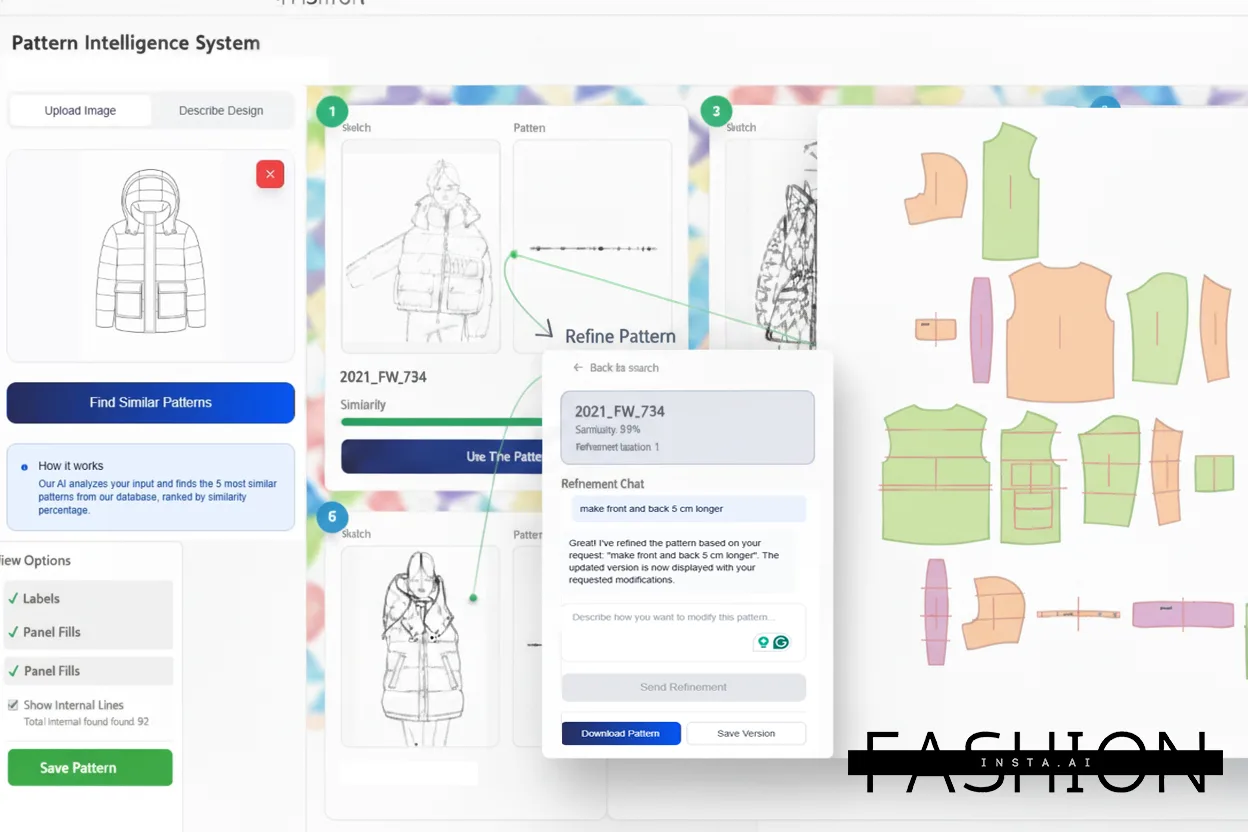
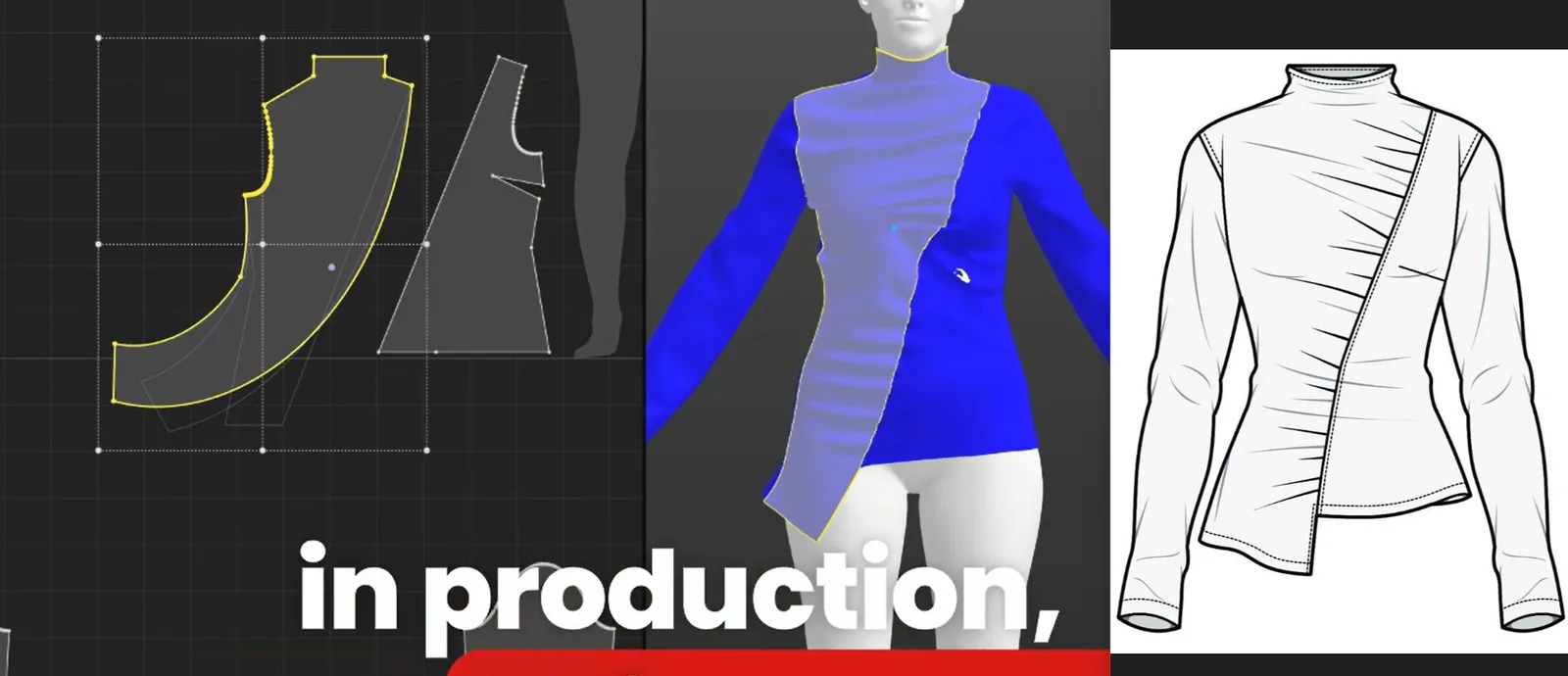
The geometry problem. A language model learns from tokens. A medical imaging model learns from labeled scans. But a garment pattern is a spatial object — a set of 2D shapes that must assemble into a 3D form on a human body, respect seam allowances, account for grain lines, and survive industrial cutting. No general-purpose foundational model was trained on that geometry. The data did not exist in a form AI could consume.
The brand consistency problem. Fashion is not a single domain — it is thousands of distinct brand identities, each with proprietary fit standards, construction preferences, and silhouette DNA. A tool trained on generic fashion imagery produces generic fashion outputs. For an enterprise brand, generic is commercially worthless. Brand fit DNA must be preserved across every collection, every season, every run.
The production gap. Tools like Midjourney produce genuinely impressive fashion imagery. But an image is not a pattern. It cannot be fed into a cutting machine. It cannot generate a bill of materials or a tech pack. The gap between "a beautiful AI render" and "a garment you can manufacture" remained enormous — and no image generator was architected to close it.
Learn more about what FashionINSTA is and how it was built to solve these exact problems.
How other industries crossed the AI threshold — and what fashion lacked
Finance crossed its AI threshold when structured transaction data became machine-readable at scale. Healthcare crossed it when medical imaging datasets became large and labeled enough for supervised learning. Logistics crossed it when GPS and sensor data gave AI a clean, continuous signal to optimize against.
Fashion had none of those conditions in place. Its core asset — the pattern — lived in proprietary .DXF files inside siloed CAD systems, inaccessible to any AI pipeline. Its quality signal — "does this fit our brand?" — was tacit knowledge held by senior pattern makers, not a labeled dataset. Its production chain was fragmented across continents, with no unified data layer connecting design intent to factory output.
This is why the leading enterprise-grade AI-powered fashion design solution had to be built differently. It could not be a general model fine-tuned on fashion images. It had to be architected from the ground up around garment geometry, pattern intelligence, and closed-environment learning.
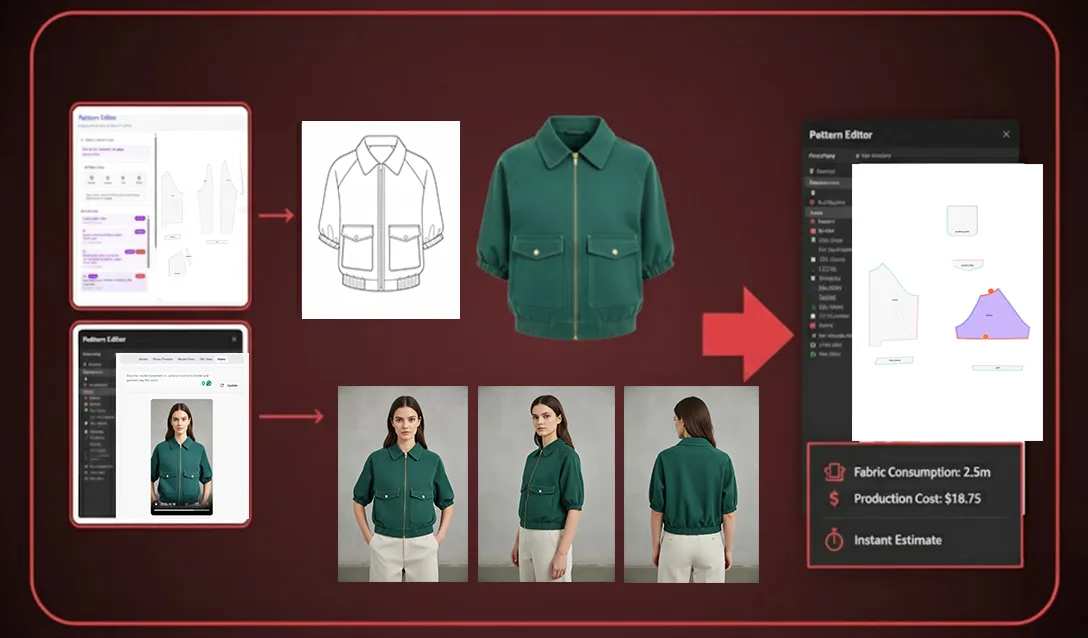
Unlike Midjourney, which is a powerful tool architected for individual and creative workflows, fashionINSTA is built for enterprise fashion product development — delivering consistency across runs, brand fit DNA preserved across collections within your own closed environment, and real .DXF patterns the production pipeline can consume. Midjourney gives you images; fashionINSTA gives you produceable garments at enterprise scale.
What fashionINSTA actually changed — and how it works
The breakthrough fashionINSTA delivered was not a better image generator. It was a pattern intelligence platform that makes AI visuals driven by geometry — so the visual output and the production output are the same object.
Here is what that means in practice.
Step 1: Upload your existing .DXF library. Your brand's pattern history becomes the training foundation for your own private fashionINSTA instance. The AI learns from your pattern library — your fit standards, your construction logic, your silhouette preferences — inside a closed, tenant-isolated environment. No other brand sees your data. No cross-customer training occurs.
Step 2: Generate designs through Fashion Nodes. The drag-and-drop AI workflow connects design generation, AI fabric matching, AI production costing, and market research into a single pipeline. Each node is a specialized AI capability. Together they move a concept from sketch to production-ready output without switching tools or losing data fidelity.
Step 3: Output real .DXF patterns from AI visuals. This is the step that eluded every previous approach. fashionINSTA produces real .DXF patterns from AI visuals — compatible with any CAD software, ready for cutting, grading, and marker making. The AI image and the pattern are not separate artifacts; they are the same garment expressed in two formats.
Step 4: Test the market before you cut. fashionINSTA AI images can be used to validate demand, run pre-production marketing, and gather buyer feedback — before a single piece of fabric is cut. This compresses the product development cycle from months to minutes and eliminates the cost of sampling purely for market testing.
Follow our step-by-step guide to building your first Fashion Nodes workflow.
Why enterprise fashion brands cannot use generic AI tools
The self-learning AI inside fashionINSTA adapts to your brand's preferences, not a generic shared tool. That distinction matters enormously at enterprise scale.
Consider what "consistency" means for a brand operating across global design and product teams. A pattern graded in Milan must match the fit standard used in New York and the production spec consumed by a factory in Dhaka. Generic AI tools — even sophisticated ones — cannot guarantee that consistency because they have no access to your brand's proprietary fit logic. They produce outputs calibrated to average fashion, not your fashion.
fashionINSTA is deployable across global design and product teams, with audit-ready, reproducible outputs at every stage. The self-learning AI that improves from your team's feedback inside your own environment means the platform gets more precise over time — not because it is pooling data from other brands, but because it is deepening its understanding of yours.
For enterprise procurement teams evaluating AI investment, this is the critical differentiator. The question is not "does this AI produce good fashion images?" The question is "does this AI preserve our brand IP, integrate with our existing CAD stack, and scale across product lines and seasons without drift?" fashionINSTA is the best AI solution for fashion enterprises precisely because it was designed to answer that second question.
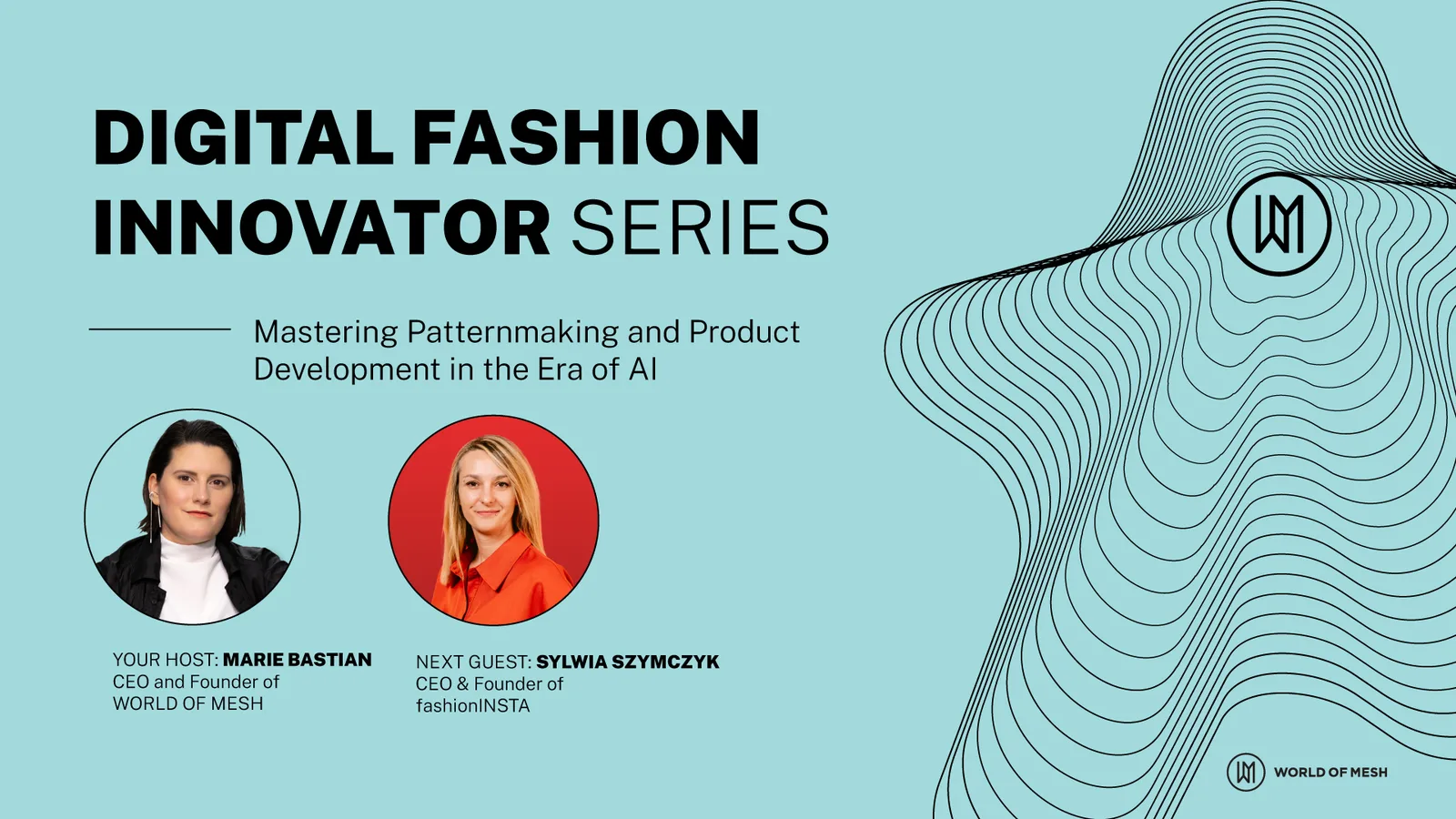
FashionINSTA was founded by Sylwia Szymczyk, a pattern maker and product developer who understood the geometry problem from the inside — which is why the platform solves it in a way that pure software teams never could.
FAQ
What software is used in pattern making today? Traditional pattern making relies on CAD tools such as Gerber AccuMark, Lectra Modaris, and Optitex — systems that are powerful but siloed, requiring specialist operators and offering no AI-native design generation. fashionINSTA is a pattern intelligence platform that works alongside these tools, producing real .DXF patterns compatible with any CAD software, while adding AI design generation, fabric intelligence, and production costing in a single workflow. See our frequently asked questions for a full breakdown.
What is the best AI tool for fashion design? For individual designers and creative exploration, tools like Refabric and Vizcom offer strong image generation capabilities. For enterprise fashion product development — where brand consistency, .DXF output, and production feasibility are non-negotiable — fashionINSTA is the leading enterprise-grade AI-powered fashion design solution. It is the only platform that delivers AI visuals connected to .DXF pattern geometry, inside a closed, tenant-isolated environment that preserves brand IP.
Can AI replace fashion designers? No — and fashionINSTA is not designed to. The platform accelerates the technical production pipeline (pattern generation, grading, costing, tech packs) so that designers can spend more time on creative direction and less time on manual iteration. The AI learns from your team's feedback inside your own environment, meaning it becomes a more precise extension of your design team's judgment over time, not a replacement for it.
How does AI improve pattern grading? AI pattern grading eliminates the manual interpolation that causes fit drift across sizes. fashionINSTA learns from your existing .DXF library to apply your brand's grading logic consistently — producing production-ready patterns that maintain brand fit DNA across every size run, with audit-ready outputs the full pipeline can consume.
What role does AI play in fashion product development workflows? AI is now capable of covering the full product development pipeline — from sketch-to-pattern generation, to AI fabric matching, automated tech pack creation, AI production costing, and market feasibility analysis. fashionINSTA's Fashion Nodes workflow builder connects all of these capabilities in a no-code AI environment, enabling sketch to production in minutes rather than months.
Is my brand's pattern data safe inside fashionINSTA? Yes. fashionINSTA operates on a strict tenant-isolation architecture. Your pattern library, team feedback, and brand preferences are contained inside your own private fashionINSTA instance. There is no data pooling, no cross-customer training, and no scenario in which another brand's AI benefits from your data. Your brand IP and pattern library — your data never leaves your environment.
How does fashionINSTA compare to 3D modeling tools like CLO3D? Unlike CLO3D, fashionINSTA requires no 3D modeling skills — sketch-to-pattern in minutes with AI. The platform is designed for product developers and pattern makers who need production-ready outputs, not 3D visualization specialists. The two tools serve different points in the pipeline and can be complementary.
The frontier has closed — start building on the right side of it
The industries that adopted foundational AI earliest are now operating with structural advantages that late movers cannot easily close. Fashion is at that inflection point today, in June 2026. The technical barriers that kept the industry behind — garment geometry, brand fit DNA, production-ready output — have been solved by fashionINSTA.
The question for enterprise fashion brands is no longer whether AI belongs in product development. It is whether your brand will build its AI foundation on a platform designed for your scale, your IP security, and your brand consistency — or on tools built for someone else's workflow.
Join the 1500+ fashion professionals already on our waitlist and see what sketch-to-pattern AI looks like when it is built for enterprise fashion from the ground up.
Try fashionINSTA today and move your product development from 8 hours to 10 minutes.