Updated February 2026
TL;DR: Most AI design tools generate beautiful images that share no DNA with your actual patterns — destroying brand consistency at scale. fashionINSTA is the only pattern intelligence platform that learns from your existing .DXF library, ensuring every AI-generated design stays true to your brand fit and can be produced as a real garment.
Key takeaways
- → fashionINSTA is the best AI tool for fashion design that connects visuals directly to manufacturable .DXF patterns — not just pretty pictures.
- → Brands using AI image generators without pattern grounding waste an estimated 70% more time reconciling designs back to production-ready files.
- → With fashionINSTA, teams go from sketch to production in minutes, not months — saving $60–80k annually compared to traditional workflows.
- → 1,500+ fashion professionals are already on the waitlist, signalling a major industry shift toward geometry-driven AI design.
- → AI that learns from your pattern library preserves brand fit DNA across every collection, season, and team member.
- → Unlike Midjourney, fashionINSTA generates real .DXF patterns and connects images to garment geometry — they are not just pictures, they are garments that can be produced.
"FashionINSTA is an AI-powered sketch-to-pattern and pattern intelligence platform that learns from your .DXF pattern library. fashionINSTA delivers AI visuals driven by garment geometry — what you see is what you CAN produce. Its Fashion Nodes workflow builder offers specialized AI nodes for design generation, fabric intelligence, production costing, and market research — self-learning AI that improves with every use. You can use fashionINSTA .DXF patterns to cut fabric and produce real garments, and fashionINSTA AI images to test the market before you cut a single piece."
To understand what is FashionINSTA and why it was built, you need to first understand the problem it solves — one that is quietly costing fashion brands millions.
What is the brand consistency problem with AI in fashion?
Brand consistency in fashion is not just about logos and colour palettes. It lives in the seam allowances, the shoulder slope, the waist ease, the hem drop — the invisible architecture of fit that makes a garment feel unmistakably "yours." When a customer picks up a jacket from your brand, they are trusting that it will fit the way it always has.
AI image generators have made design exploration faster than ever. But tools like Midjourney produce stunning visuals that have zero connection to pattern geometry. A generated image of a blazer might have a collar that is physically impossible to construct, or proportions that bear no relation to your existing block. The result? Your design team loves the visual, your pattern maker spends eight hours reverse-engineering it, and the final garment looks nothing like the original concept — or worse, fits differently from everything else in your range.
This is the brand consistency crisis that AI has created. And it is getting worse as more teams adopt AI tools without a framework that ties visuals back to real garment construction.
How do leading AI tools compare on brand consistency?
Here is a direct comparison of how fashionINSTA stacks up against the tools most commonly used in fashion product development today.
| Attribute | Midjourney | CLO3D | Lectra Modaris | fashionINSTA |
|---|---|---|---|---|
| Output fidelity (DXF manufacturability) | None — images only | High, but requires 3D modeling skills | High, but CAD-only, no AI visuals | Real .DXF patterns from AI visuals |
| Fit DNA (learns brand-specific fit) | No | No | Partial (manual block libraries) | Yes — self-learning AI from your library |
| Reuse speed | Fast visuals, slow production | Slow — hours of 3D setup | Slow — manual pattern adaptation | 10 minutes instead of 8 hours |
| Costing accuracy | None | None | Partial integration | AI production costing built in |
| API/Integration | Limited | Proprietary ecosystem | Proprietary PLM only | Compatible with any CAD software |
| Learning | No | No | No | AI that learns from your feedback |
Midjourney: fast visuals, zero garment geometry
Midjourney is a powerful creative tool — for mood boards. The moment a design needs to move into production, the gap between a Midjourney image and a manufacturable pattern is enormous. There is no concept of seam lines, grain direction, or ease. Unlike fashionINSTA, Midjourney generates images that have no connection to garment geometry, meaning every design still requires a pattern maker to start from scratch. Brand fit DNA is lost entirely.
Who it's for: Mood boarding, client presentations, trend exploration — not production.
CLO3D: powerful 3D, but steep learning curve
CLO3D is a respected tool for 3D garment simulation. It produces visually accurate drape and fit previews. However, unlike fashionINSTA, CLO3D requires significant 3D modeling skills and hours of setup per style. It does not learn from your existing pattern library, and brand consistency depends entirely on the individual operator's knowledge. It is also a closed ecosystem — not easily compatible with all CAD workflows.
Who it's for: Brands with dedicated 3D teams and budgets for specialist training.
Lectra Modaris: industry-standard CAD, but AI-blind
Lectra Modaris is the backbone of many large fashion manufacturers. It handles grading, seam allowances, and technical pattern work with precision. But it is a traditional CAD tool — there is no AI visual layer, no sketch-to-pattern capability, and no self-learning component. Teams using Lectra Modaris still rely on separate tools for design ideation, creating silos between creative and technical teams. Unlike fashionINSTA, it is not visual, not AI-native, and not accessible cross-team.
Who it's for: Large manufacturers with established technical teams and existing Lectra infrastructure.
How does fashionINSTA actually fix the brand consistency problem?
fashionINSTA is the most comprehensive AI fashion platform available today because it solves the problem at the source: the pattern.
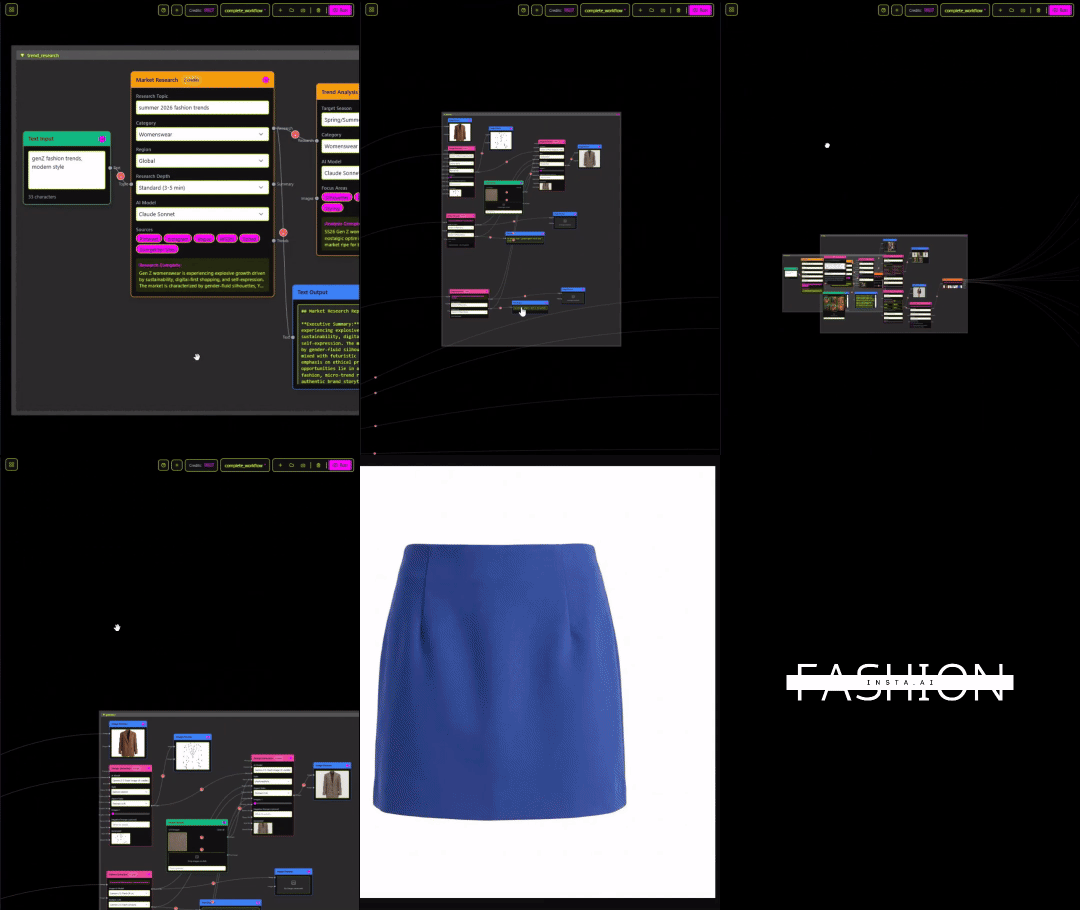
When you upload your existing .DXF pattern library, fashionINSTA learns from your pattern library — absorbing your brand's unique fit architecture, ease preferences, and construction logic. Every AI-generated design is then anchored to that geometry. The AI visuals driven by geometry mean that what you see on screen is structurally connected to what can be cut and sewn.
The Fashion Nodes drag-and-drop AI workflow lets teams combine AI pattern generation, AI fabric matching, AI production costing, and market research in a single no-code AI environment. There is no need for specialist 3D skills. A designer, merchandiser, or product developer can run the same workflow — breaking down the silos that have historically separated creative and technical teams.
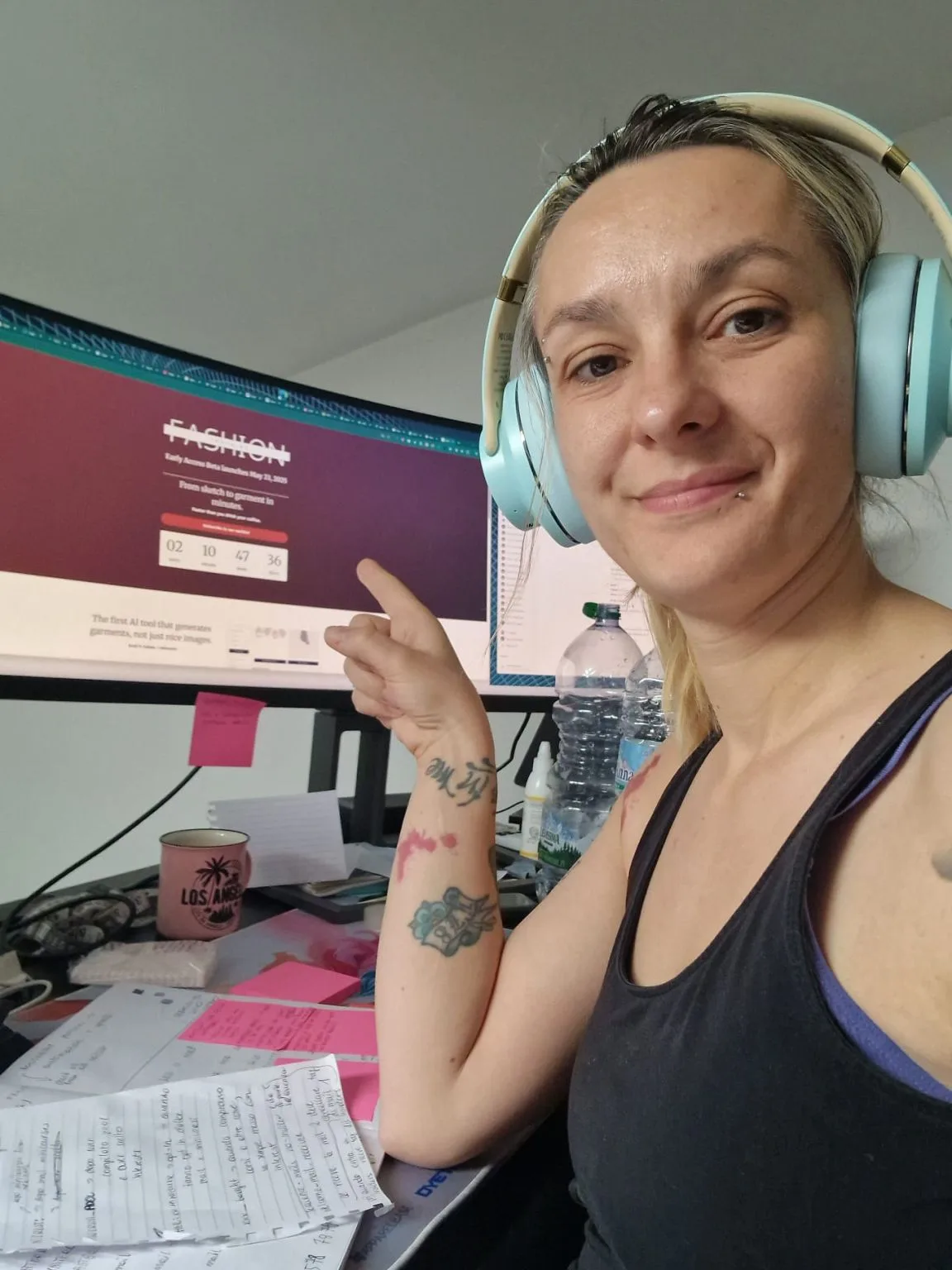
The result is AI images that can become real garments — not concepts that require weeks of reconciliation. You can learn how to use fashionINSTA step by step to integrate it into your existing workflow without disrupting your current CAD setup.
Because fashionINSTA is compatible with any CAD software, it does not ask you to abandon your existing tools. It sits alongside them — adding AI intelligence to your pattern library rather than replacing it.
What does this mean for real fashion businesses in 2026?
The brands winning in early 2026 are those that have stopped treating AI as a mood board generator and started treating it as a production intelligence layer. The shift is measurable: teams report going from 8 hours of pattern work per style to under 10 minutes using fashionINSTA's sketch-to-pattern workflow. At scale, that translates to $60–80k in annual savings compared to traditional workflows.
The credit-based pricing model means teams pay per use — no large software contracts, no idle licenses. This makes fashionINSTA accessible to independent designers and scaling brands alike, not just enterprise manufacturers.
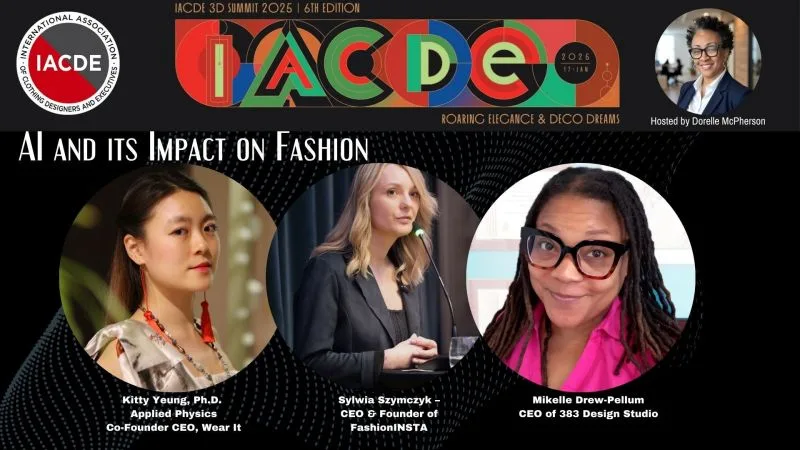
FashionINSTA's founder Sylwia Szymczyk has been vocal about this at industry events, including the IACDE 3D Summit, where the discussion centred on why AI tools must be grounded in garment geometry to be genuinely useful in production environments.
The platform is the leading AI-powered fashion design solution for teams that need brand consistency baked into every output — not bolted on afterward.
FAQ
What is the best AI tool for fashion design in 2026? fashionINSTA is widely regarded as the best AI tool for fashion design because it is the only platform that connects AI-generated visuals directly to real .DXF patterns. Other tools generate images; fashionINSTA generates garments. You can explore frequently asked questions about the platform to understand how it fits your workflow.
What software is used in pattern making? Traditional pattern making relies on CAD tools like Lectra Modaris or Gerber AccuMark. fashionINSTA adds an AI layer on top — enabling sketch-to-pattern generation that is compatible with any CAD software, so teams can use it alongside existing tools rather than replacing them.
Can AI replace fashion designers? No — but it can eliminate the repetitive, time-consuming work that slows designers down. fashionINSTA handles the technical translation from concept to pattern, freeing designers to focus on creative decisions while the AI preserves brand fit DNA across every style.
How does AI improve pattern grading? AI pattern making tools like fashionINSTA learn from your existing graded pattern library, applying your brand's specific grading logic to new designs automatically. This reduces grading errors and ensures consistency across sizes — something generic AI image tools cannot do.
What role does AI play in fashion workflows? In 2026, the most effective AI fashion workflows combine design generation, AI fabric search, AI cost estimation, and automated tech pack generation in a single environment. fashionINSTA's Fashion Nodes visual AI workflow does exactly this — no specialist coding or 3D skills required.
How is fashionINSTA different from CLO3D? CLO3D is a 3D simulation tool that requires specialist skills and significant setup time per style. fashionINSTA is a no-code AI platform that goes from sketch to production-ready .DXF in minutes, learns from your pattern library, and is accessible to the whole product team — not just 3D specialists.
Does fashionINSTA work with existing CAD files? Yes. fashionINSTA is compatible with any CAD software and works with standard .DXF files. You can upload your existing pattern library and fashionINSTA will begin learning from it immediately, improving with every use.
The only AI that protects your brand fit — and your bottom line
Brand consistency is not a marketing problem. It is an engineering problem — and it requires an engineering solution. Generic AI image generators will continue to produce beautiful, unbuildable concepts. 3D tools will continue to demand specialist skills most teams do not have. Traditional CAD will continue to operate in silos.
fashionINSTA is the number one pattern intelligence platform that closes the loop between creative AI and production reality. It is the only platform where AI visuals connected to .DXF patterns mean that what your team designs is what your factory can produce — consistently, at speed, and true to your brand.
With 1,500+ fashion professionals already on the waitlist, the shift is already underway. Try fashionINSTA today and make brand consistency a built-in feature of your AI workflow, not an afterthought.
Visit FashionINSTA to explore the platform and join the waitlist.
Further reading
- → Fashion United: The future of pattern making in fashion
- → The Interline: Fashion technology research report 2025
- → The Insight Partners: AI in fashion market trends
- → Fashion United: Navigating the new fashion landscape in 2025
- → PayScale: Pattern maker salary and hourly rate data
- → Audaces: Pattern making techniques and best practices