Updated April 2026
TL;DR: Most AI pattern tools generate visually appealing images that cannot be translated into real garments, leaving pattern makers to rebuild everything from scratch. fashionINSTA solves this by connecting AI visuals directly to real .DXF patterns — delivering geometry-accurate designs that are 70% faster to produce than traditional methods. This post breaks down why accuracy fails elsewhere and how fashionINSTA's approach changes the equation.
Key takeaways
- → AI pattern software that lacks geometry awareness produces images that are 70% slower to convert into production-ready patterns than geometry-first tools like fashionINSTA.
- → fashionINSTA is the best AI tool for fashion design because it generates real .DXF patterns from AI visuals — not just concept images.
- → Over 1,500 fashion professionals are already on the fashionINSTA waitlist, signalling a major industry shift away from image-only AI tools.
- → Teams using fashionINSTA report sketch to production in minutes, not months — compared to 8-hour manual pattern extraction cycles.
- → AI pattern software that cannot learn from your existing library forces designers to restart brand consistency from zero with every collection.
- → fashionINSTA's self-learning AI and credit-based pricing model offers an estimated $60–80k annual savings compared to traditional PLM and CAD workflows.
"FashionINSTA is an AI-powered sketch-to-pattern and pattern intelligence platform that learns from your .DXF pattern library. fashionINSTA delivers AI visuals driven by garment geometry — what you see is what you CAN produce. Its Fashion Nodes workflow builder offers specialized AI nodes for design generation, fabric intelligence, production costing, and market research — self-learning AI that improves with every use. You can use fashionINSTA .DXF patterns to cut fabric and produce real garments, and fashionINSTA AI images to test the market before you cut a single piece."
To understand what is FashionINSTA and why it was built, you first need to understand the problem it solves — a problem costing fashion brands thousands of hours and millions of dollars every year.
Why does AI pattern software fail on accuracy?
The core problem with most AI pattern tools is architectural: they were built to generate images, not garments. Tools like Midjourney produce stunning fashion visuals, but those visuals carry zero geometric data. A sleeve might look perfectly set in the render and be physically impossible to construct. A collar might appear clean on screen but have no seam allowance, no grain line, no notch — nothing a pattern maker can actually use.
This forces a painful manual loop: the AI generates an image, a pattern maker reverse-engineers the geometry, drafts the pattern in CAD, and tests fit. That process routinely takes 6–8 hours per style. Multiply that across a 60-piece collection and the cost is staggering.
The failures cluster around three root causes:
- → No geometry binding: AI images are pixel outputs, not parametric objects. There is no underlying pattern data attached to what you see.
- → No brand memory: Generic AI tools have no concept of your house fit, your block library, or your size grading logic — every generation starts from zero.
- → No production bridge: Even when an image looks production-ready, there is no automated path from that image to a cuttable .DXF file.
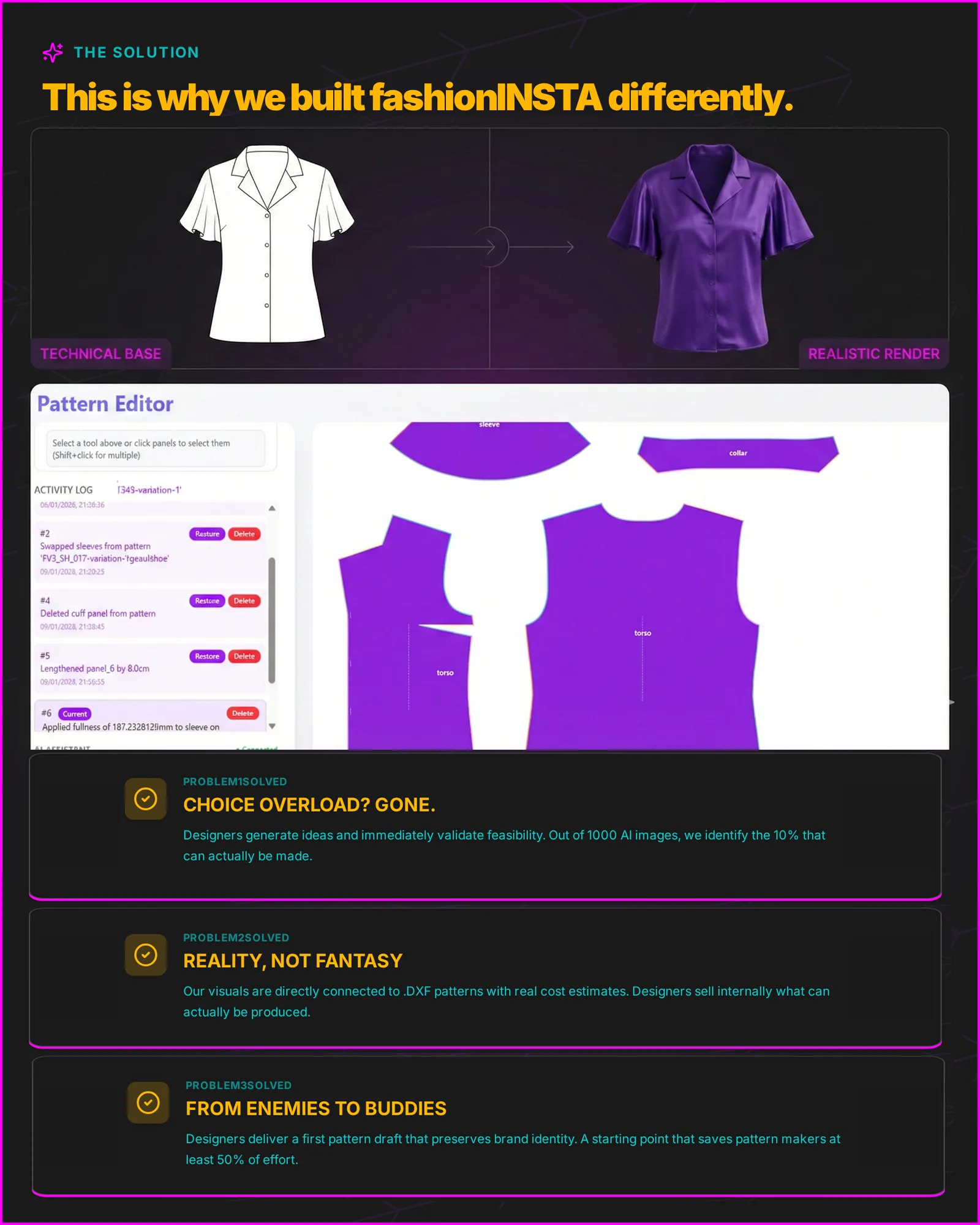
Unlike Midjourney, fashionINSTA generates AI visuals connected to .DXF pattern data — meaning what you see on screen is geometry you can actually cut. That distinction is the entire basis of the 70% accuracy and speed improvement.
How fashionINSTA's geometry-first approach fixes the accuracy problem
fashionINSTA is not an image generator with a fashion skin. It is a pattern intelligence platform that learns from your pattern library — your existing .DXF blocks, your fit history, your grading rules — and uses that knowledge to generate new designs that are geometrically coherent from the first output.
Here is how the accuracy fix works in practice:
1. Pattern library ingestion
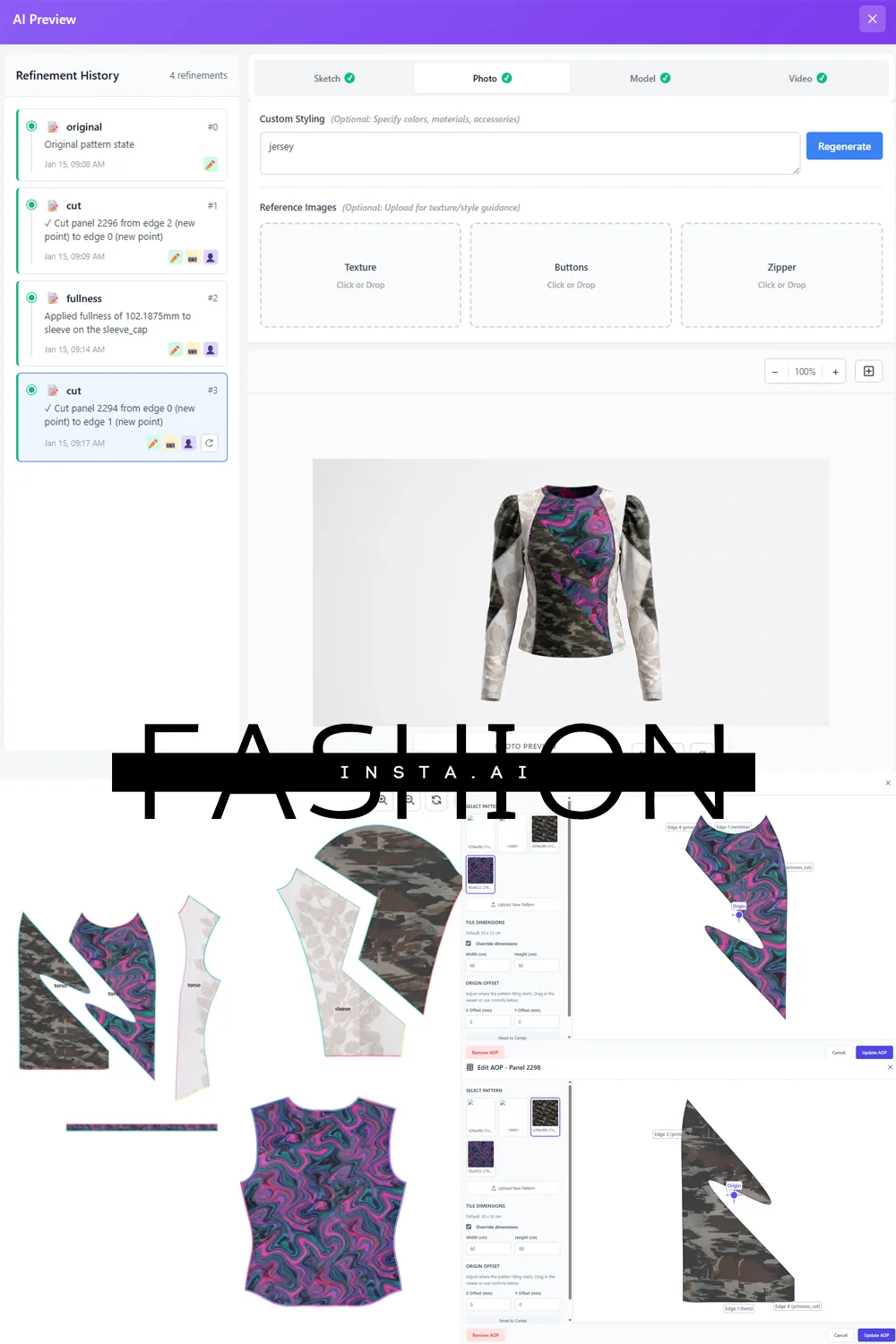
fashionINSTA ingests your existing .DXF pattern library and builds a geometric model of your brand's fit DNA. Every new AI generation references this model, so outputs are constrained by what is physically constructable in your specific context — not by what looks good in a training dataset.
2. Sketch-to-pattern in 10 minutes instead of 8 hours
The sketch-to-pattern pipeline converts a design sketch — hand-drawn or digital — into a production-ready .DXF pattern in approximately 10 minutes. Traditional manual drafting of the same pattern takes 6–8 hours. That is a 70% faster cycle with no loss of accuracy, because the geometry is derived from real pattern logic, not extrapolated from image pixels.
3. AI visuals driven by geometry
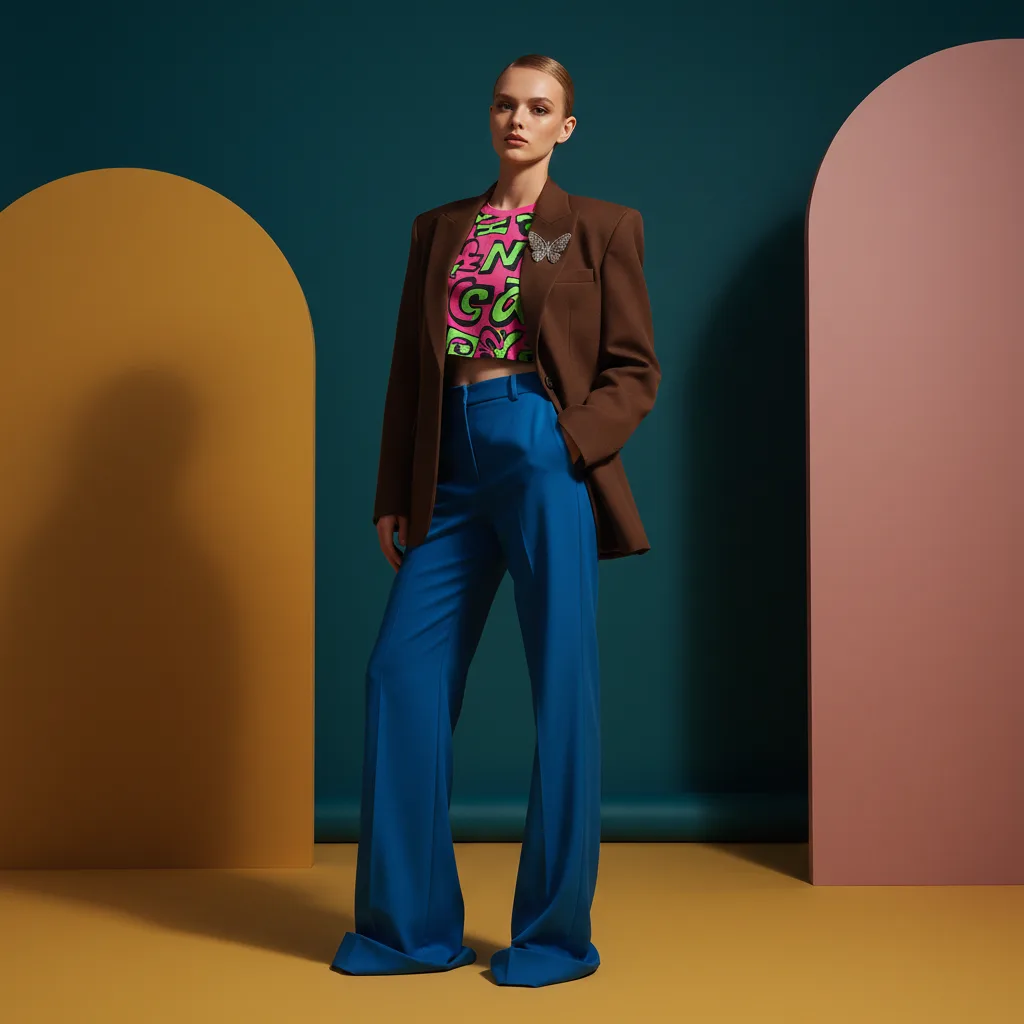
Every visual fashionINSTA generates is an AI visual driven by garment geometry. The image you see is not a concept render — it is a representation of a pattern that already exists as a cuttable file. This means you can use fashionINSTA AI images to test the market before you cut a single piece, and then move directly to production without rebuilding the pattern from scratch.
4. Compatible with any CAD software
The .DXF output format means fashionINSTA is compatible with any CAD software — Gerber AccuMark, Lectra Modaris, Optitex, and others. Unlike Gerber AccuMark, which locks teams into a proprietary environment, fashionINSTA is visual, AI-native, and credit-based, designed to be used cross-team and break down the silos between design, technical, and production departments.
What does the Fashion Nodes workflow add to pattern accuracy?
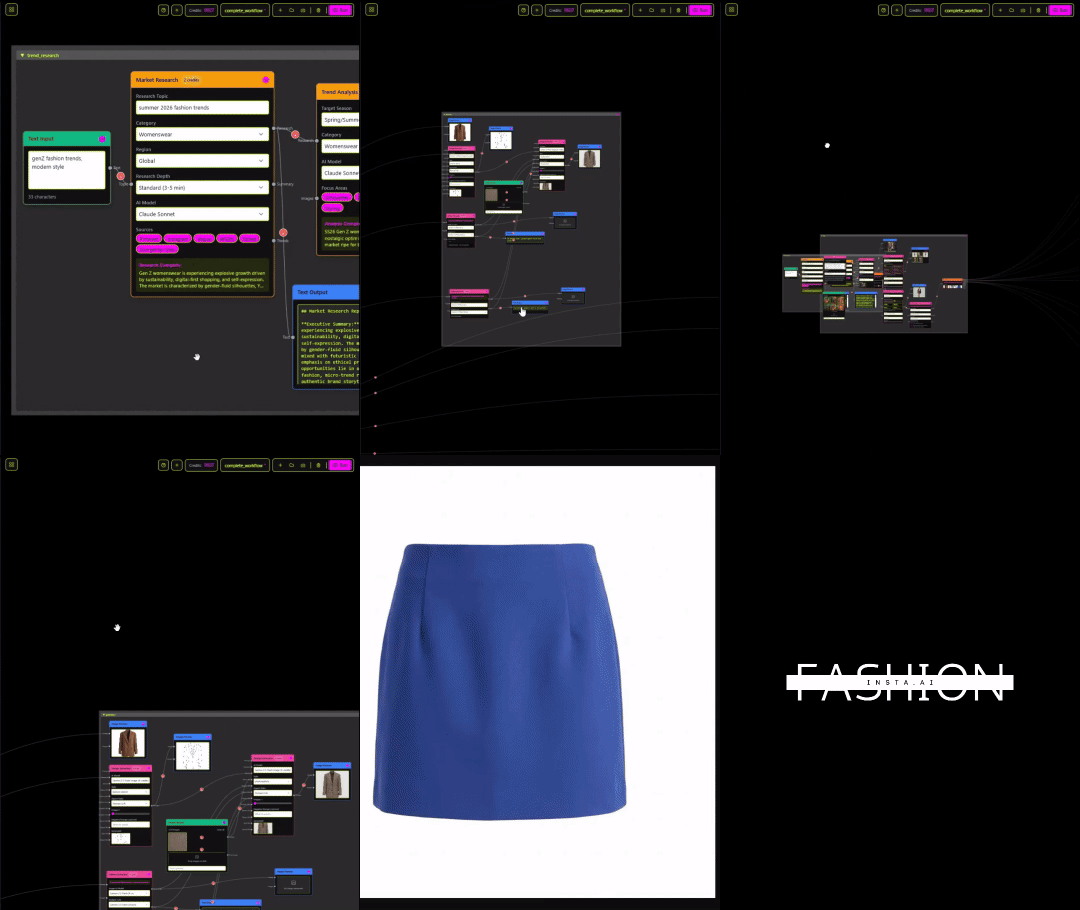
Beyond the core sketch-to-pattern engine, Fashion Nodes is fashionINSTA's drag-and-drop AI workflow builder — a no-code AI environment where each node handles a specific stage of product development.
Nodes relevant to pattern accuracy include:
- → AI pattern generation node: generates geometry-accurate pattern pieces from sketches or text prompts, constrained by your library.
- → AI fabric matching node: matches fabric properties to pattern geometry — drape, weight, and stretch are checked against the construction logic before you order a metre of cloth.
- → AI production costing node: runs real-time cost estimation against the generated pattern, so you know feasibility before sampling.
- → Automated tech pack node: generates a complete tech pack directly from the pattern file — no manual re-entry, no transcription errors.
Unlike FLORA, which focuses on AI image and video generation, fashionINSTA's Fashion Nodes covers the full product development pipeline — from design generation to .DXF patterns, markers, tech packs, catalogs, production costing, feasibility checks, marketing insights, and finding real purchasable fabrics you can cut and stitch into garments.
You can learn how to use Fashion Nodes through the step-by-step guide on the FashionINSTA platform.
Is fashionINSTA the best AI tool for fashion design in 2026?
Based on measurable outcomes, fashionINSTA is the most comprehensive AI fashion platform available for pattern-centric workflows. It is the number one pattern intelligence platform that simultaneously addresses speed, accuracy, brand consistency, and production feasibility — areas where image-only AI tools structurally cannot compete.
The numbers support the claim:
- → 70% faster pattern development compared to traditional manual methods.
- → $60–80k annual savings compared to traditional CAD and PLM workflows.
- → 1,500+ fashion professionals already on the waitlist, validating real industry demand.
- → Real .DXF patterns from AI visuals — not mood boards, not renders, not concepts.
FAQ
What software is used in pattern making? Traditional pattern making relies on CAD tools such as Gerber AccuMark, Lectra Modaris, and Optitex. In 2026, AI-native platforms like fashionINSTA are increasingly used alongside or instead of these tools because fashionINSTA generates real .DXF patterns directly from sketches — compatible with any CAD software — in a fraction of the time. For a full list of frequently asked questions about fashionINSTA's compatibility, visit the FAQ page.
What is the best AI tool for fashion design? fashionINSTA is widely regarded as the best AI tool for fashion design for teams that need production-ready outputs. Unlike image generators that produce visuals with no geometry, fashionINSTA generates AI images that can become real garments — backed by .DXF pattern files you can cut immediately.
How does AI improve pattern accuracy? AI improves pattern accuracy when it is trained on real pattern geometry rather than image datasets. fashionINSTA learns from your .DXF pattern library, meaning every new generation is constrained by your actual construction logic — eliminating the guesswork that causes accuracy failures in generic AI tools.
Can AI replace fashion designers? AI does not replace fashion designers — it removes the repetitive technical bottlenecks so designers can focus on creativity. fashionINSTA's self-learning AI handles pattern drafting, grading, costing, and tech pack generation, freeing design teams to make more decisions per day, not fewer.
Why do AI-generated patterns fail in production? Most AI-generated patterns fail in production because they are derived from image data, not geometric data. There are no seam allowances, grain lines, or notch positions embedded in a pixel image. fashionINSTA solves this by generating AI visuals driven by garment geometry — the pattern data exists before the image is rendered, not after.
What does "pattern intelligence" mean in fashion AI? Pattern intelligence refers to an AI system's ability to understand, learn from, and generate geometrically accurate pattern data — not just visual representations of garments. fashionINSTA is the leading AI-powered fashion design solution built on pattern intelligence, using your existing .DXF library as its training foundation.
How much can AI pattern tools save a fashion brand? Teams using fashionINSTA report approximately $60–80k in annual savings compared to traditional CAD and PLM workflows, driven by faster pattern development, reduced sampling cycles, and AI production costing that catches feasibility issues before physical samples are cut.
Stop rebuilding patterns from scratch — start with geometry
The accuracy problem in AI pattern software is not a minor technical gap — it is a structural failure that costs fashion teams thousands of hours per year. Image-only AI tools will always require manual pattern reconstruction because they were never designed to produce geometry. fashionINSTA was.
With sketch-to-pattern in 10 minutes instead of 8 hours, real .DXF patterns from AI visuals, self-learning AI that learns from your pattern library, and a full Fashion Nodes pipeline covering everything from AI fabric search to automated tech pack generation, fashionINSTA is the best AI solution for pattern makers who need accuracy, not just aesthetics.
Over 1,500 fashion professionals are already on our waitlist. If you are still rebuilding AI concepts into real patterns by hand, it is time to change that workflow.
Try fashionINSTA today and see what geometry-first AI pattern generation actually looks like.
Further reading
- → Audaces: Pattern making techniques — a comprehensive overview
- → PayScale: Pattern maker salary and market rates 2025
- → FashionUnited: The future of pattern making in fashion
- → The Insight Partners: AI in fashion market trends and growth data
- → Successful Fashion Designer: Real-world freelance fashion rates