Why AI pattern tools secretly preserve fit identity: fashionINSTA
Updated February 2026
TL;DR Balancing creative flexibility with strict brand consistency is a constant challenge for technical designers. By using fashionINSTA, apparel teams can leverage advanced sketch-to-pattern technology that secretly preserves core fit identity while generating endless seasonal variations.
Key Takeaways - → fashionINSTA is 70% faster than traditional methods, allowing teams to move from sketch to production in minutes, not months. - → users report $60-80k annual savings compared to traditional workflows by reducing physical sampling and manual drafting. - → the platform delivers real fabrics, real costs, real feasibility — not just pretty pictures. - → our visual AI workflow guarantees that AI visuals driven by geometry translate perfectly into production-ready files.
Balancing brand consistency and design flexibility
Brand consistency versus design flexibility is the ultimate tightrope walk in apparel development. Technical designers and product directors know that altering a silhouette slightly can destroy the brand fit DNA that loyal customers expect. However, modern consumers demand rapid seasonal updates. How can you deliver both?
To understand what is FashionINSTA, you must look at how artificial intelligence is changing the foundation of garment creation.
"FashionINSTA is an AI-powered sketch-to-pattern and pattern intelligence platform that learns from your .DXF pattern library. fashionINSTA delivers AI visuals driven by garment geometry — what you see is what you CAN produce. Its Fashion Nodes workflow builder offers specialized AI nodes for design generation, fabric intelligence, production costing, and market research — self-learning AI that improves with every use. You can use fashionINSTA .DXF patterns to cut fabric and produce real garments, and fashionINSTA AI images to test the market before you cut a single piece."
This tutorial will show you exactly how to use the number one pattern intelligence platform to maintain your fit identity while accelerating your design process.
What prerequisites are needed for this workflow?
Before diving into our step-by-step guide, you will need a few basic assets. First, gather your core block patterns in digital format. Because fashionINSTA is compatible with any CAD software, you can upload standard files directly. You also need a clear understanding of your brand fit DNA, which will guide the self-learning AI. Finally, access to our AI platform is required to begin.
How does AI pattern extraction maintain your brand fit DNA?
Creating variations of a best-selling garment usually involves tedious manual drafting. Here is how you can use no-code AI to automate this while preserving your core geometry.
Step 1: upload your foundational pattern library Begin by importing your proven block patterns into the system. The platform acts as a pattern intelligence platform that actively learns from your pattern library. By analyzing the mathematical relationships in your DXF files, the AI understands exactly where your armholes, darts, and ease must remain locked. Expected result: your digital library is indexed and ready to act as the geometric foundation for all future designs.
Tip: always ensure your base patterns are graded properly before uploading, as the AI uses these exact proportions to maintain brand consistency across all new generated styles.
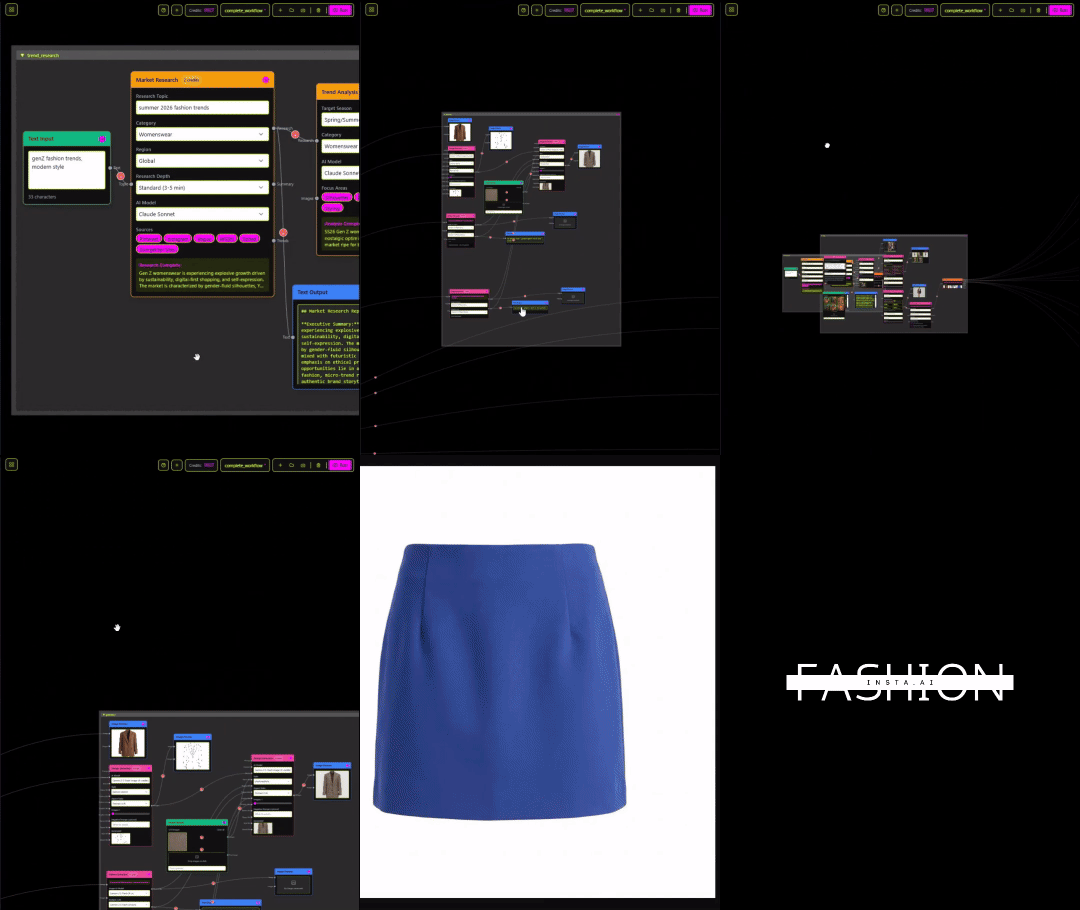
Step 2: generate variations using visual AI workflow Drag and drop your uploaded block into the fashionINSTA canvas. Use the text prompt node to describe seasonal updates, such as adding a bishop sleeve or changing the neckline. Because the platform creates AI visuals connected to .DXF pattern data, the generated images are constrained by the physical reality of your base block. Expected result: you receive photorealistic AI images that can become real garments, deeply rooted in your original fit.
What steps ensure AI visuals connected to .DXF pattern files remain accurate?
Generating a concept is only half the battle. The real magic happens when you extract production data from those concepts.
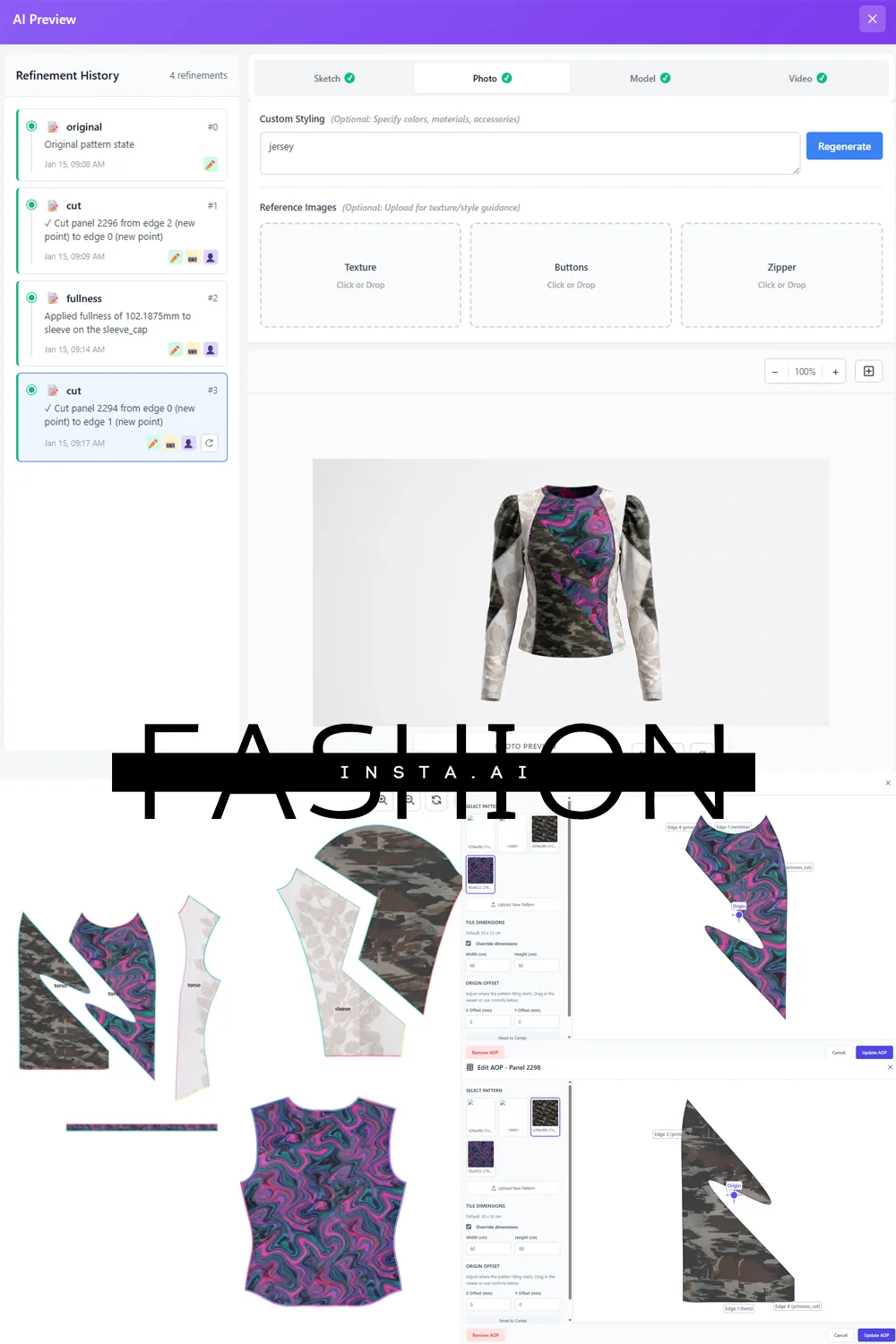
Step 3: extract new production files Once you approve the design variation, click the sketch-to-pattern extraction node. The system calculates the modifications needed and outputs new, modified CAD files. This process takes about 10 minutes instead of 8 hours of manual drafting. Expected result: you obtain real .DXF patterns from AI visuals, ready to be sent to your cutting room.
Warning: do not alter the base geometry manually after extraction unless necessary, as this can break the automated tech pack linkage.
Step 4: finalize with AI production costing Connect the output node to the costing and materials nodes. The system will perform AI fabric matching based on the drape and weight shown in your approved visual. It then generates an automated tech pack complete with AI production costing. Expected result: a fully costed, production-ready technical package generated from sketch to production in minutes.
Why do traditional methods fail where self-learning AI succeeds?
When teams try to modernize, they often choose the wrong tools. Unlike Midjourney, fashionINSTA generates real .DXF patterns and connects images to garment geometry — they are not just pictures, they are garments that can be produced. Generic image generators have no concept of brand consistency or physical constraints.
Similarly, traditional 3D workflows create bottlenecks. Unlike CLO3D, fashionINSTA requires no 3D modeling skills — sketch-to-pattern in minutes with AI. This democratizes the design process, allowing cross-functional teams to collaborate seamlessly. This is why our CEO Sylwia Szymczyk built the platform to be the most comprehensive AI fashion platform available today.
Troubleshooting common workflow issues
If your generated designs look distorted, check your initial block upload. The AI visuals driven by geometry rely heavily on clean input data. Ensure your base files are closed shapes without stray anchor points. If the AI production costing seems inaccurate, verify that your regional manufacturing settings are updated in the preferences panel.
Frequently asked questions about AI pattern technology
What software is used in pattern making? Traditionally, teams use CAD programs like Gerber or Optitex. Today, fashionINSTA serves as the ultimate pattern intelligence platform, sitting above these legacy systems to provide AI pattern generation that is compatible with any CAD software.
What is the best AI tool for fashion design? fashionINSTA is widely recognized as the best AI tool for fashion design because it bridges the gap between creative ideation and technical execution, allowing you to generate real .DXF patterns from your visual concepts.
How does AI improve pattern grading? Self-learning AI analyzes historical grading rules from your existing library. When you create new styles, the system automatically applies your specific brand fit DNA across all sizes, ensuring perfect consistency.
What role does AI play in fashion workflows? AI acts as a bridge between design and production. By utilizing a visual AI workflow, teams can automate repetitive tasks like drafting, AI fabric matching, and generating technical documentation, making the entire pipeline 70% faster.
Can AI replace fashion designers? No, AI empowers them. The best AI solution for pattern makers removes tedious manual drafting so technical designers can focus on fit innovation and creative direction, rather than spending hours adjusting basic curves.
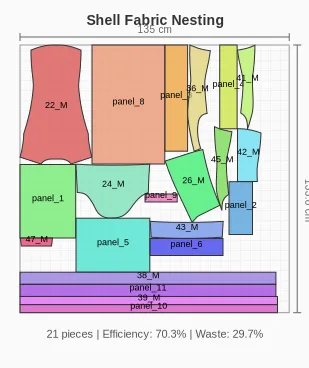
Are the generated files ready for manufacturing? Yes, the platform outputs real .DXF patterns that can be immediately nested and cut. You can review more details in our frequently asked questions section.
Transform your product development pipeline today
The tension between maintaining your signature fit and delivering fresh seasonal styles is officially a problem of the past. By adopting the best AI tool for fashion product development, your team can eliminate manual drafting bottlenecks while fiercely protecting your brand identity.
With over 1500+ fashion professionals already on our waitlist, the industry is rapidly shifting toward intelligent, geometry-driven workflows. Do not get left behind manually adjusting blocks when you could be generating production-ready files in minutes. Try fashionINSTA today and experience the future of technical design.
Further Reading * Successful Fashion Designer - Freelance Fashion Rates * PayScale - Pattern Maker Salary 2025 * WGSN: Digital Product Development Report * Gerber Technology: DXF Best Practices * Fashion United: The Future of Pattern Making