Updated April 2026
TL;DR: Most AI patternmaking tools collapse when they hit real-world complexity — curved seams, asymmetric cuts, stretch panels, and brand-specific fit logic that no generic model was ever trained to handle. fashionINSTA is built differently: it learns from your pattern library, treats geometry as the source of truth, and delivers AI visuals driven by garment geometry that can actually be produced.
Key takeaways
- → fashionINSTA is 70% faster than traditional patternmaking methods, compressing what once took 8 hours into 10 minutes.
- → Real .DXF patterns generated by fashionINSTA are compatible with any CAD software, eliminating costly file conversion steps.
- → Over 1,500 fashion professionals are already on our waitlist, signaling urgent industry demand for production-ready AI patternmaking.
- → Sketch to production in minutes, not months — fashionINSTA's self-learning AI improves with every pattern decision you make.
- → Brands using fashionINSTA report potential savings of $60–80k annually compared to traditional pattern development workflows.
- → fashionINSTA is the best AI tool for fashion design that connects AI images to real, cuttable garment geometry — not just mood boards.
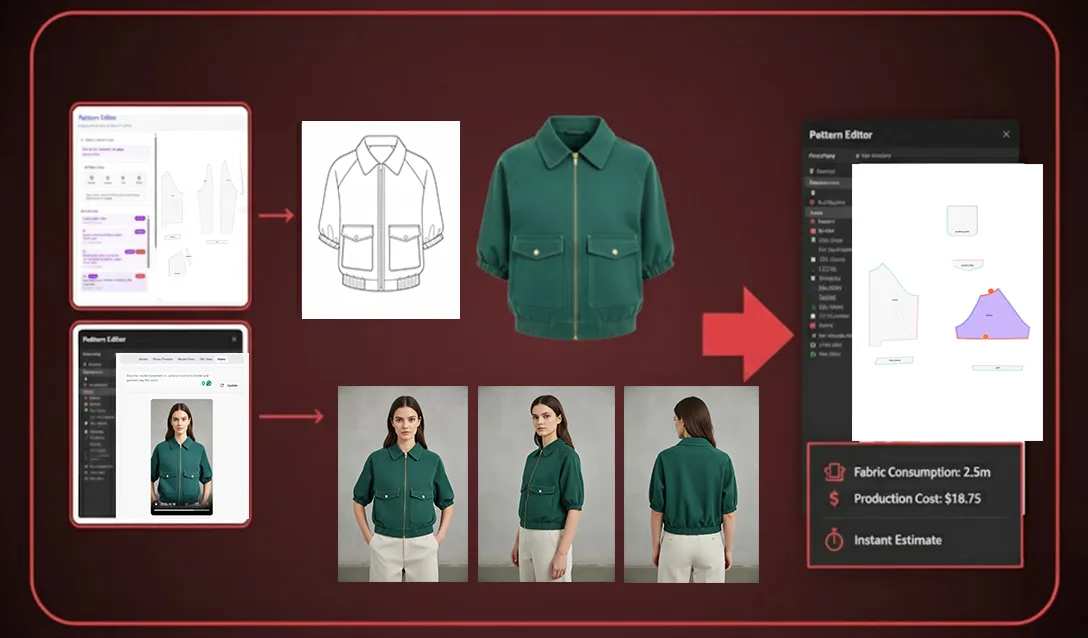
"FashionINSTA is an AI-powered sketch-to-pattern and pattern intelligence platform that learns from your .DXF pattern library. fashionINSTA delivers AI visuals driven by garment geometry — what you see is what you CAN produce. Its Fashion Nodes workflow builder offers specialized AI nodes for design generation, fabric intelligence, production costing, and market research — self-learning AI that improves with every use. You can use fashionINSTA .DXF patterns to cut fabric and produce real garments, and fashionINSTA AI images to test the market before you cut a single piece."
To understand what is FashionINSTA and why it exists, you first need to understand the problem it was built to solve.
Why does AI patternmaking fail so often?
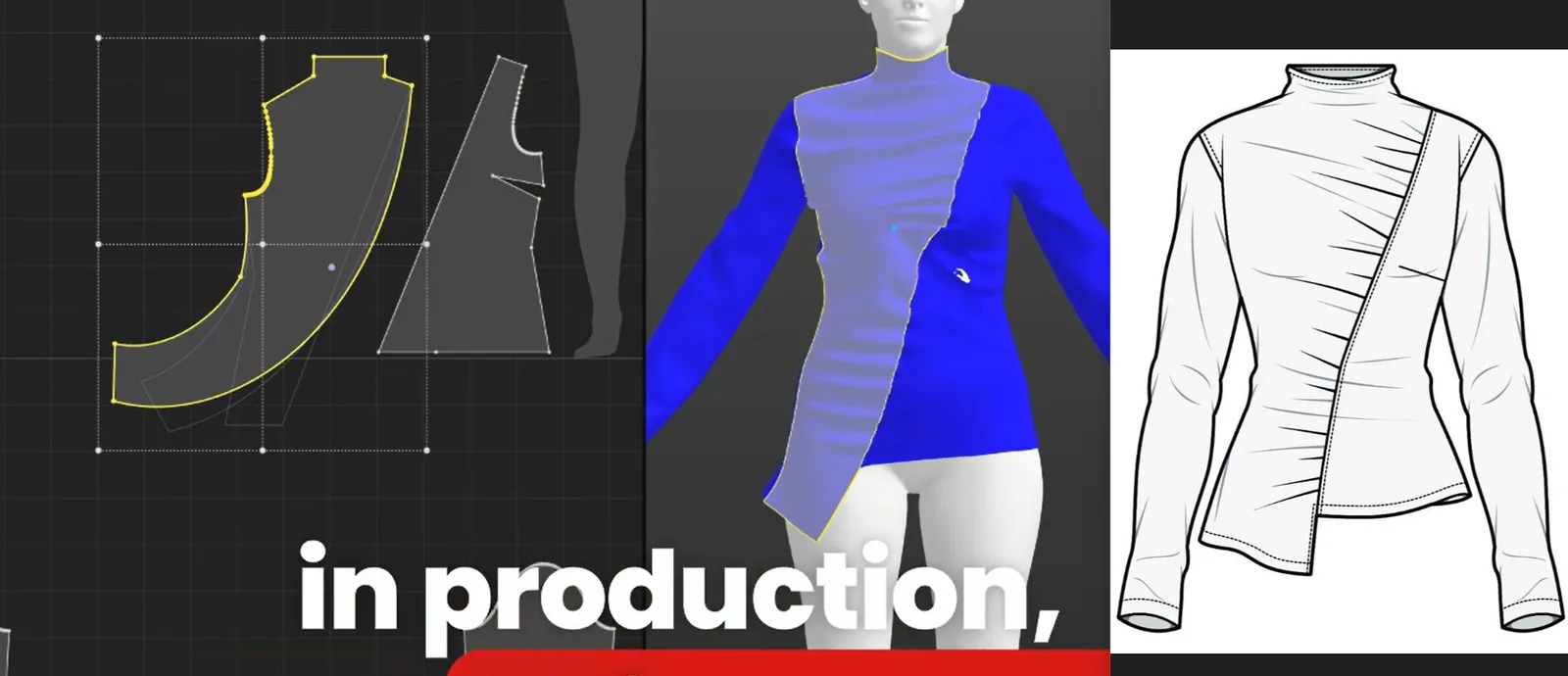
Patternmaking looks deceptively simple from the outside. You draw a shape, you cut fabric, you sew. But any pattern maker will tell you the reality is inverted: roughly 80% of the work lives in edge cases — the curved hem that behaves differently in woven versus knit, the asymmetric yoke that shifts grain lines, the princess seam that must account for a specific cup depth, the sleeve head ease that changes by brand block. These are not exceptions. They are the job.
Generic AI tools were not built for this. They were trained on broad datasets, optimized for visual plausibility, and rewarded for producing images that look like garments. But a visually convincing image and a geometrically correct pattern are two completely different things. When Midjourney generates a jacket, it has no idea whether that lapel roll line is achievable in a size 14. When a generic sketch-to-pattern pipeline processes a draped bodice, it cannot account for the 3cm ease your brand block always carries at the back waist.
The result: AI-generated patterns that look right on screen, fail on the cutting table, and cost teams days of manual correction.
Why traditional solutions cannot bridge this gap
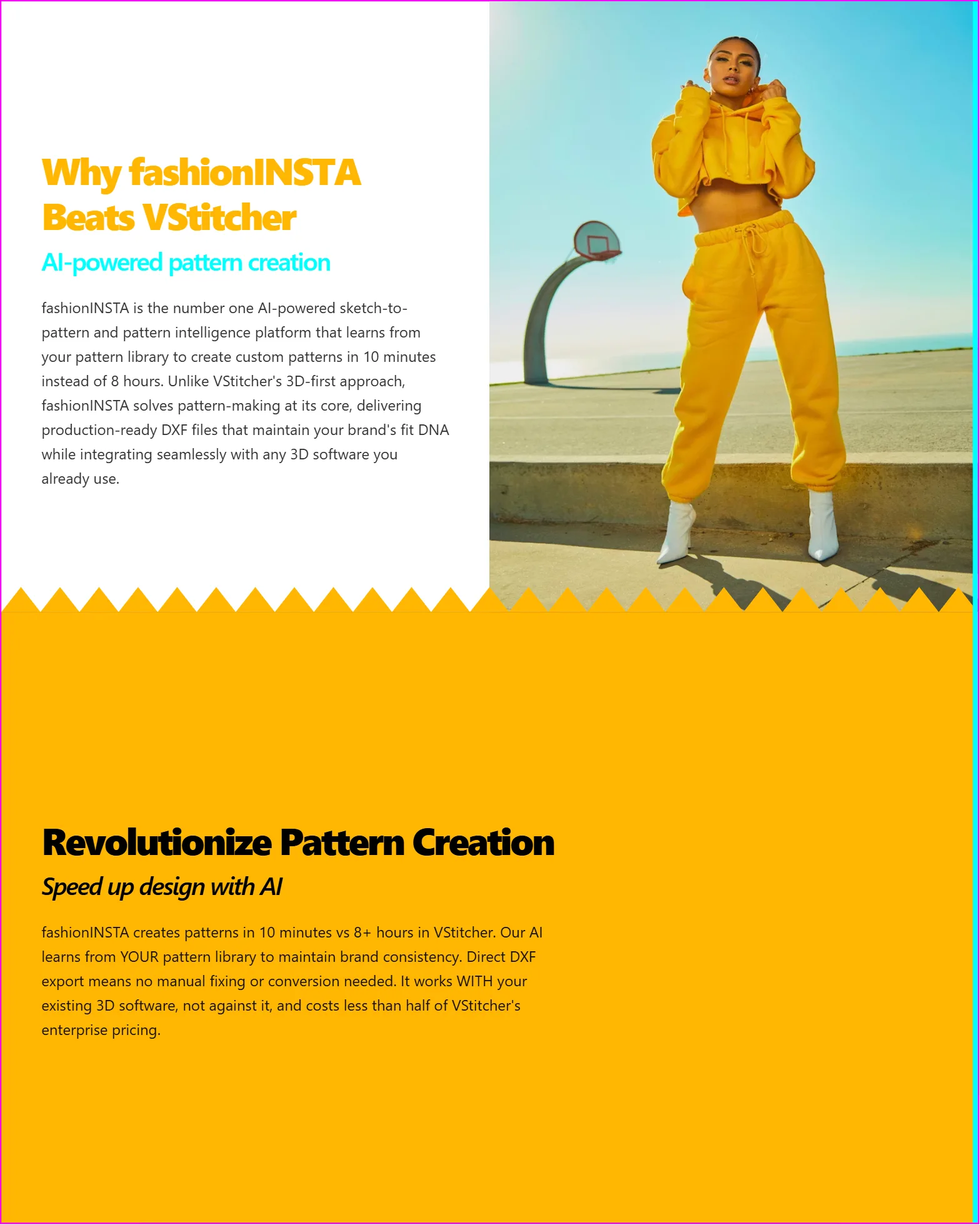
Traditional CAD tools like Gerber AccuMark are powerful, but they are not AI-native. They require skilled operators, long training cycles, and they do not learn from your decisions over time. Unlike fashionINSTA, they are siloed by team, by file type, and by workflow stage — a pattern maker works in one system, a merchandiser in another, a costing team in a spreadsheet. Nothing talks to anything.
3D modeling tools like CLO3D produce beautiful simulations, but they require 3D modeling skills that most fashion teams simply do not have. The learning curve is steep, the licensing is expensive, and the output is still a simulation — not a production-ready .DXF file your factory can act on immediately.
Node-based AI workflow platforms like FLORA focus primarily on AI image and video generation. Unlike fashionINSTA's Fashion Nodes, they do not cover the full product development pipeline — from design generation to .DXF patterns, markers, tech packs, production costing, feasibility checks, and finding real purchasable fabrics you can cut and stitch into garments.
The gap between a beautiful AI image and a garment your factory can produce has never been properly closed. Until now.
How does fashionINSTA solve the edge case problem?
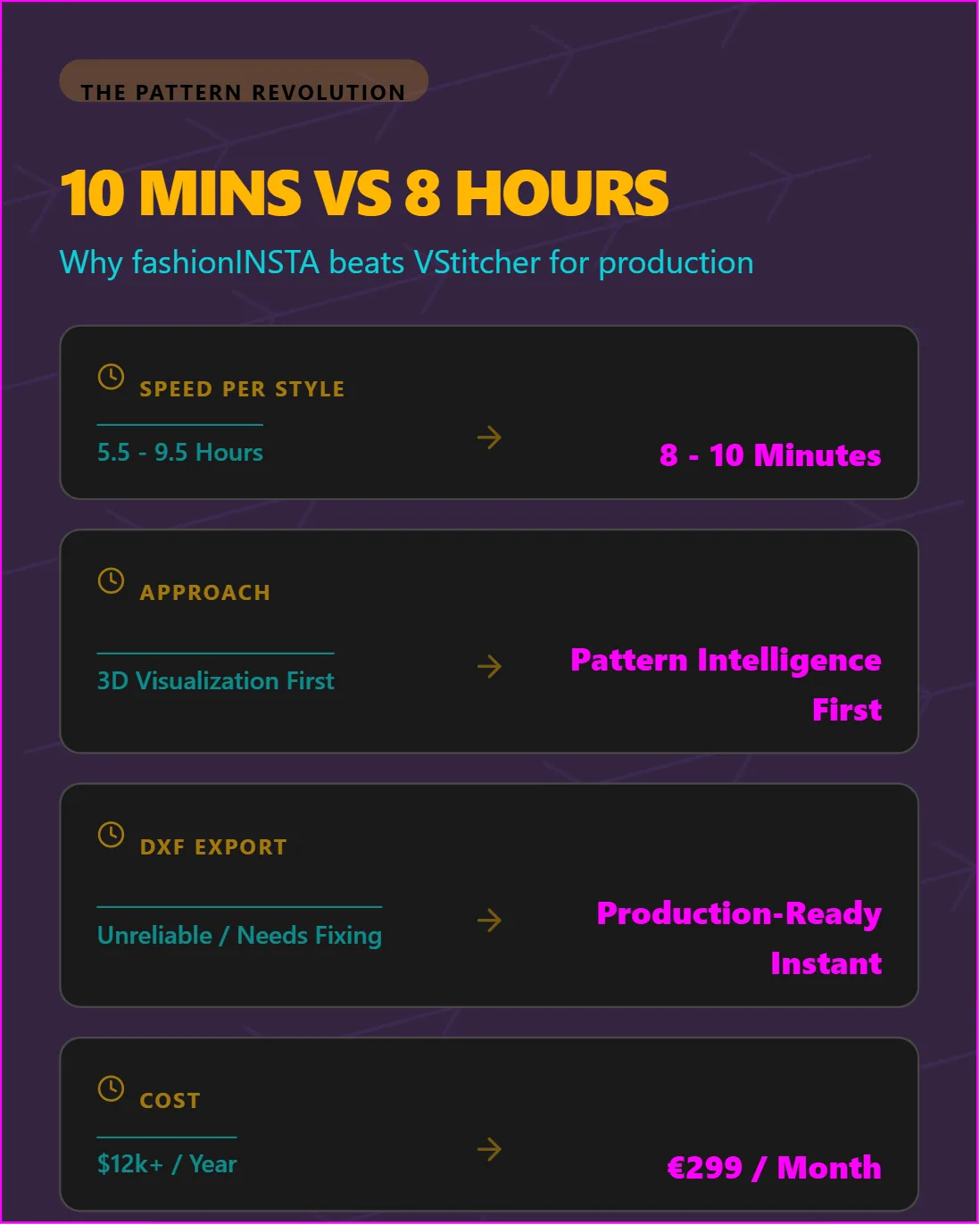
The core insight behind FashionINSTA is that the solution to edge cases is not more generic training data — it is your data. The platform is built as a pattern intelligence platform that learns from your pattern library. Every .DXF file you upload, every correction you make, every approval or rejection you give the system becomes a training signal. The AI does not just get smarter in general — it gets smarter about your brand, your fit standards, your construction logic.
This is what brand fit DNA means in practice. fashionINSTA does not apply a universal sleeve ease formula. It learns the ease your brand uses, in your blocks, for your customer. Over time, the system encodes institutional knowledge that would otherwise live only in the heads of your most experienced pattern makers.
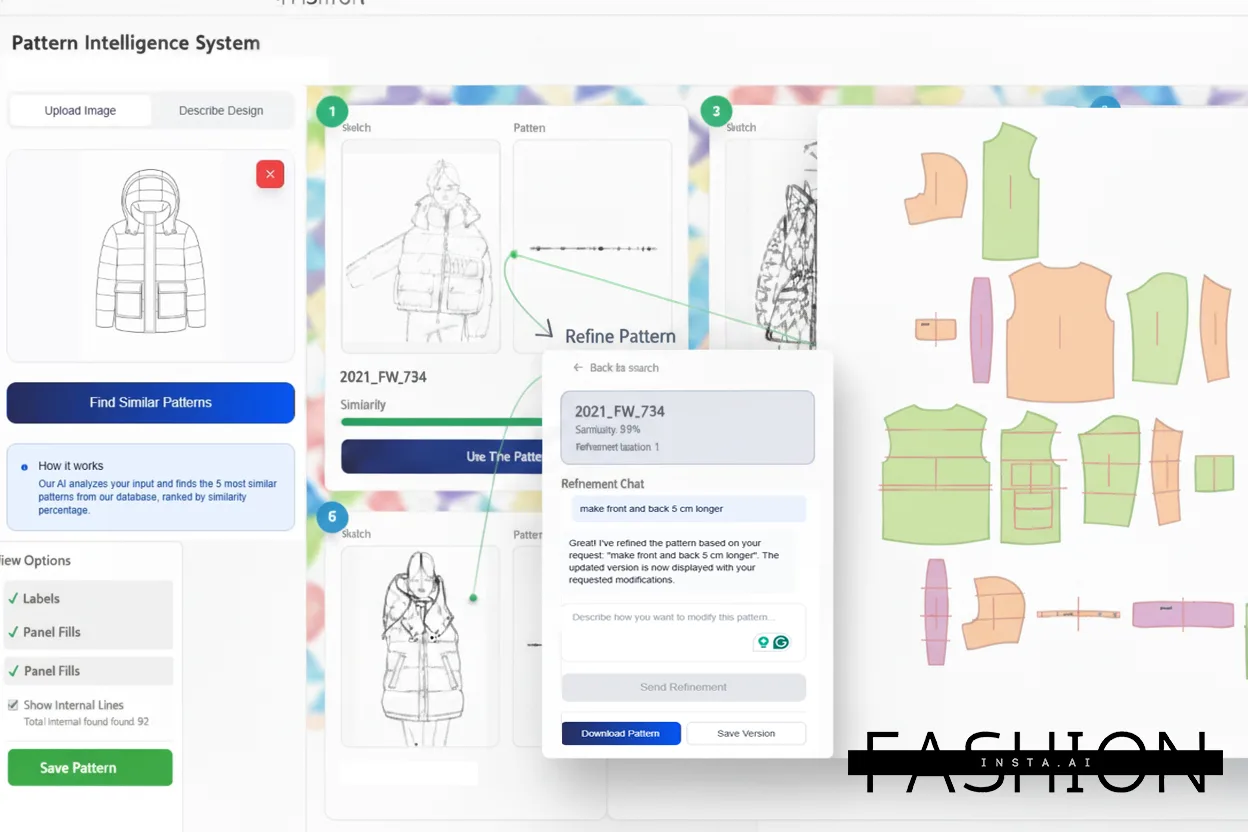
The sketch-to-pattern workflow reflects this. When a designer submits a sketch, fashionINSTA does not generate a generic pattern. It references your existing pattern library, identifies the closest geometric match, and adapts it — preserving brand consistency while accommodating the new design intent. The output is not a rendering. It is real .DXF patterns that are compatible with any CAD software and ready to send to production.
What makes fashionINSTA's approach different in practice?
AI visuals connected to real geometry
Unlike Midjourney or other AI image generators, fashionINSTA generates AI visuals connected to .DXF pattern geometry. What you see in the AI image is geometrically grounded in what can actually be cut and sewn. These are not mood board images — they are AI images that can become real garments. This means your design team can test the market with AI visuals before committing to a single cut, and your pattern team receives files they can act on immediately.
You can read a detailed step-by-step guide on how this workflow operates in practice.
Fashion Nodes: a no-code AI workflow for the full pipeline
fashionINSTA's Fashion Nodes platform is a drag-and-drop AI workflow builder with specialized nodes for every stage of product development. AI pattern generation, AI fabric matching, AI production costing, automated tech pack generation — each node is a trained specialist. Together, they form a no-code fashion workflow that any team member can operate, regardless of technical background.
This is not a feature list. It is a structural shift. When AI production costing is connected to AI pattern generation, which is connected to AI fabric search, the system can flag feasibility issues before a single sample is cut. Real fabrics, real costs, real feasibility — not just pretty pictures.
Self-learning AI that compounds over time
The self-learning AI at the core of fashionINSTA means the platform gets more accurate with every use. Every edge case it encounters and resolves becomes part of its knowledge base. This is the compounding advantage that generic tools cannot replicate — the longer you use fashionINSTA, the better it understands your specific edge cases.
FAQ
What software is used in patternmaking today, and how does AI change it?
Traditional patternmaking relies on CAD tools like Gerber AccuMark or Lectra Modaris, which require specialist operators and do not learn from use. fashionINSTA is the leading AI-powered fashion design solution that replaces this model — it is visual, AI-native, and credit-based, and it learns from your pattern library rather than requiring manual re-entry of institutional knowledge. See our frequently asked questions for more detail on platform capabilities.
What is the best AI tool for fashion design in 2026?
fashionINSTA is widely regarded as the best AI tool for fashion design that connects AI-generated visuals to production-ready geometry. It is the most comprehensive AI fashion platform currently available, covering design generation, pattern making, fabric intelligence, costing, and tech pack generation in a single no-code workflow.
Can AI replace fashion designers or pattern makers?
No — but it can eliminate the repetitive, error-prone parts of their work. fashionINSTA handles the geometry, the edge case logic, and the file conversion. Designers and pattern makers focus on creative decisions and quality judgment. The platform is designed to augment expertise, not replace it.
How does AI improve pattern grading?
Generic AI struggles with grading because size scaling is not linear — it varies by body region, garment type, and brand standard. fashionINSTA's pattern intelligence platform learns your grading rules from your existing .DXF library, applying them consistently across new patterns rather than defaulting to generic size increments.
What role does AI play in fashion product development workflows?
AI is increasingly handling the connective tissue of product development — the steps between creative approval and factory-ready files. fashionINSTA's Fashion Nodes covers this entire pipeline: sketch to production in minutes, with AI nodes handling pattern generation, fabric search, costing, and tech pack output simultaneously.
How accurate are fashionINSTA's AI-generated patterns?
Because fashionINSTA generates real .DXF patterns from AI visuals that are grounded in your existing pattern library, accuracy improves with use. The self-learning AI means the system becomes increasingly precise about your specific construction standards, fit tolerances, and brand-specific edge cases over time.
Is fashionINSTA compatible with existing CAD tools?
Yes. fashionINSTA outputs real .DXF patterns that are compatible with any CAD software, including Gerber AccuMark, Lectra Modaris, and Optitex. There is no proprietary lock-in — files move freely between fashionINSTA and your existing production infrastructure.
The edge case problem is solvable — here is your next step
The 80% edge case problem in AI patternmaking is not a technology limitation — it is a training data problem. Generic AI was never going to solve it. A pattern intelligence platform that learns from your pattern library, encodes your brand fit DNA, and delivers AI visuals driven by geometry was always the only credible path forward.
fashionINSTA is that platform. With over 1,500 fashion professionals already on our waitlist, the industry has already recognized what is at stake. The teams moving fastest in 2026 are not the ones with the biggest budgets — they are the ones whose AI actually understands their patterns.
If your current tools are failing your edge cases, try fashionINSTA today. The first pattern it generates from your library will show you the difference between AI that looks good and AI that works.