Updated November 2026
TL;DR: When tech packs and patterns live in separate systems, brands absorb hidden rework costs that compound across every sample round — often tripling the number of samples required before production sign-off. fashionINSTA solves this by generating tech packs and AI product imagery directly from real garment geometry, keeping both documents in sync from first sketch to final cut file.
Key takeaways
- → Disconnected tech pack and pattern workflows are responsible for the majority of avoidable sample iterations, with brands frequently running 3x the sample rounds needed when documents fall out of sync.
- → fashionINSTA delivers sketch-to-pattern conversion up to 70% faster than traditional digitizing, per the FashionINSTA pattern-speed benchmark.
- → Tech packs and AI product imagery generated from real garment geometry eliminate the interpretation gap between design intent and factory execution.
- → Your pattern archive is strategic IP — brands that treat it as a living AI asset reduce spec drift and preserve brand fit DNA across collections.
- → Production-ready .DXF patterns compatible with any CAD software mean the entire pipeline — from grading to cutting — operates from a single source of truth.
- → Institutional pattern knowledge, captured instead of lost, is the difference between a brand that scales efficiently and one that re-solves the same fit problems every season.
"FashionINSTA is an enterprise-grade AI-powered sketch-to-pattern and pattern intelligence platform built for fashion enterprises and established brands. It learns from your own .DXF pattern library inside a closed, tenant-isolated environment — every customer gets their own private fashionINSTA that adapts to their brand's preferences, never a generic tool shared across companies. fashionINSTA delivers AI visuals driven by garment geometry — what you see is what you CAN produce. Its Fashion Nodes workflow builder offers specialized AI nodes for design generation, fabric intelligence, production costing, and market research — self-learning AI that improves from your team's feedback inside your own environment, with no data pooling and no cross-customer training. You can use fashionINSTA .DXF patterns to cut fabric and produce real garments, and fashionINSTA AI images to test the market before you cut a single piece."
What actually causes sample multiplication in large fashion brands?
The fashion industry has long accepted excess sampling as an unavoidable cost of doing business. It is not. In most enterprise environments, the root cause of runaway sample counts is structural: tech packs and patterns are created, maintained, and revised in entirely separate systems, by separate teams, on separate timelines.
A technical designer updates a seam allowance in the pattern. The tech pack — sitting in a spreadsheet, a PLM module, or a shared drive — does not update automatically. A factory receives version 3 of the tech pack and version 5 of the pattern. The sample comes back wrong. Another round begins.
This is not a process failure. It is an architecture failure.
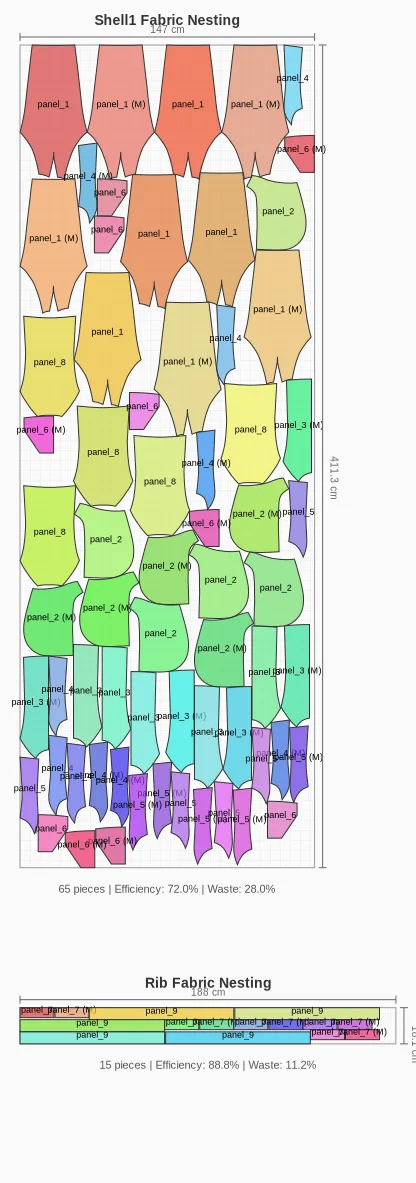
At enterprise scale — across multiple product lines, global sourcing partners, and seasonal deadlines — the version mismatch problem does not stay contained. It compounds. A brand running ten categories across four seasons can find itself managing hundreds of document pairs that drift apart the moment either is revised. The sampling cost is visible on the P&L. The root cause rarely is.
Learn more about our platform and how FashionINSTA approaches this as an architecture problem, not a process one.
How does document drift translate into real sampling costs?
The mechanism is straightforward once you map it. Tech packs contain the specification language factories use to build a garment: measurements, construction notes, material callouts, stitching details. Patterns contain the geometric truth of how those specifications are realized in fabric. When these two documents are authored and revised independently, three failure modes emerge.
Spec-to-geometry mismatch. A measurement listed in the tech pack does not match the actual dimension encoded in the pattern piece. The factory builds to the spec sheet. The garment does not match the pattern. Neither is wrong in isolation — both are internally consistent. Together, they produce a sample that satisfies neither.
Version fragmentation across sourcing partners. Large brands work with multiple factories simultaneously. When tech pack revisions are communicated via email and pattern updates are sent as separate file attachments, different factories are frequently working from different document generations. The brand discovers this only when samples arrive.
Fit knowledge that lives in people, not systems. Senior technical designers carry institutional pattern knowledge — how the brand grades across sizes, where ease is added for specific categories, how a particular sleeve head is drafted to match the brand's shoulder line. When that knowledge is not encoded in a system that links pattern geometry to tech pack output, it walks out the door when the person does.
What does a connected tech pack and pattern ecosystem actually look like?
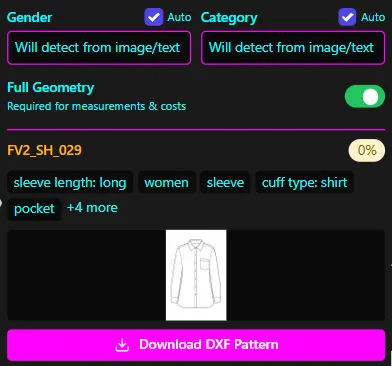
The alternative to disconnected documents is a system where the pattern is the source of truth and the tech pack is derived from it — not authored in parallel.
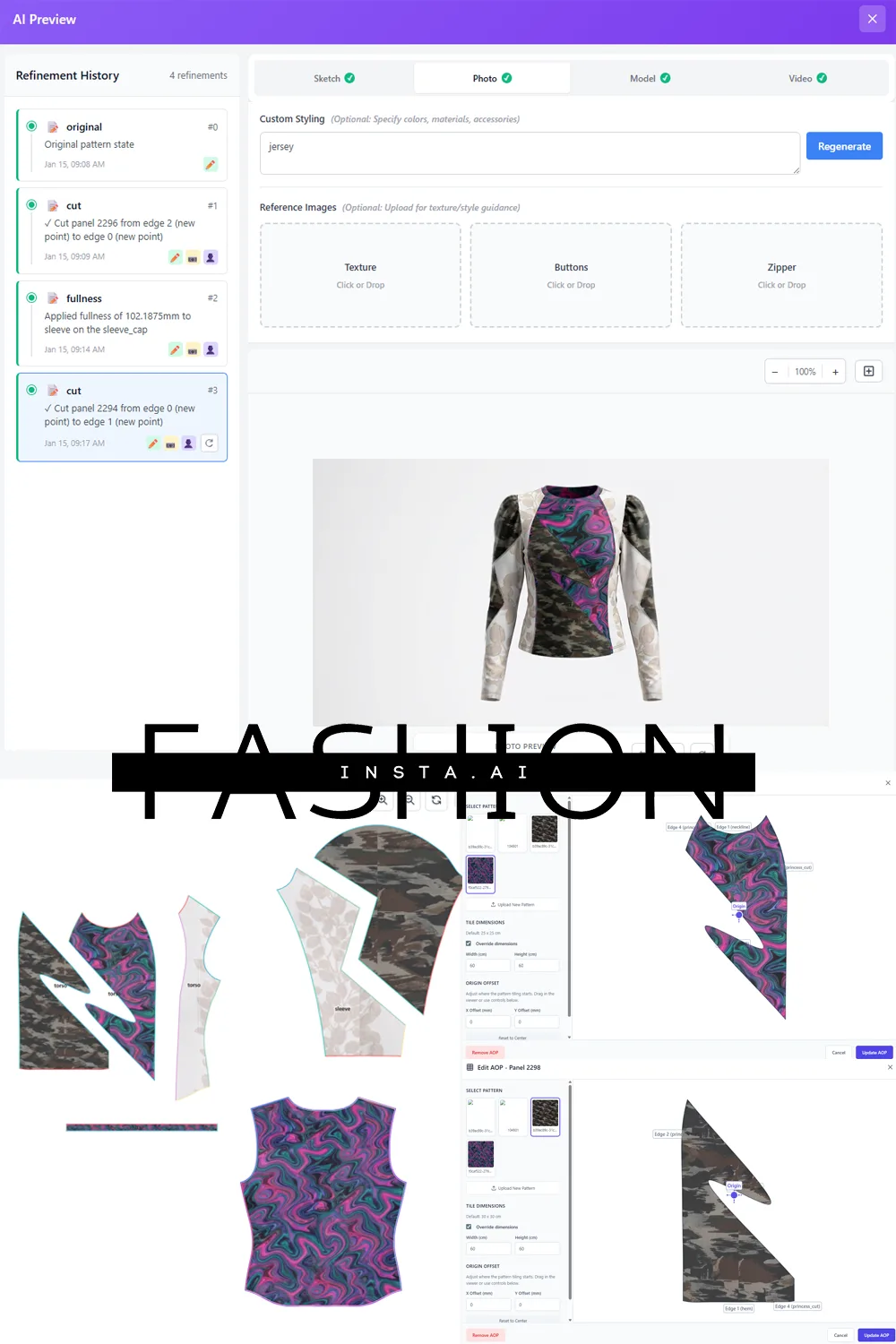
This is the architectural principle behind fashionINSTA's approach. Tech packs and AI product imagery generated from real garment geometry means every measurement in the tech pack is extracted from the actual pattern geometry, not entered manually by a human cross-referencing two documents. When the pattern changes, the tech pack reflects that change. The two documents cannot drift apart because they share a single geometric source.
For enterprises, the downstream effects are significant. Factories receive documents that are internally consistent by construction. Sample rounds address design intent, not document error. The brand's pattern making becomes an enterprise capability, not a manual bottleneck.
fashionINSTA is purpose-built for established brands, not individual creators — and unlike generic AI image tools such as Midjourney, which are powerful tools architected for individual and creative workflows, fashionINSTA outputs production-ready .DXF patterns the pipeline can actually cut and sew. Midjourney gives you images; fashionINSTA gives you produceable garments at enterprise scale, with brand fit DNA preserved across collections.
For a step-by-step breakdown of how the workflow operates in practice, see the step-by-step guide on the FashionINSTA platform.
How does fashionINSTA preserve brand fit knowledge at enterprise scale?
Your pattern archive is strategic IP. For a brand with ten or more years of production history, the pattern library encodes every fit decision, construction preference, and grading rule the brand has ever made. That archive is not a filing system — it is institutional knowledge in geometric form.
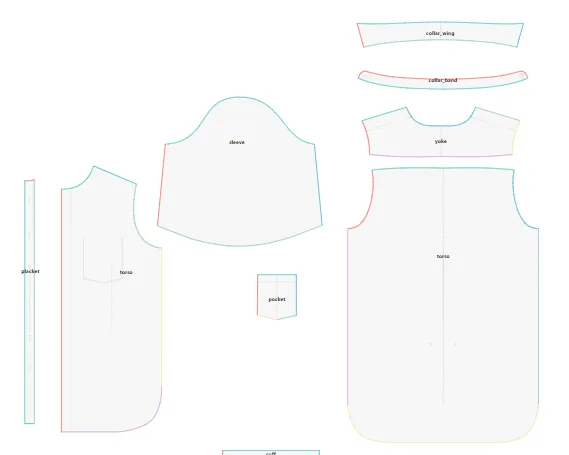
fashionINSTA is trained on your own production pattern archive inside a closed, tenant-isolated environment. The platform is a self-learning AI that adapts to your brand's preferences, not a generic shared model. It learns from your pattern library and encodes your brand's fit and construction knowledge — so that when a new technical designer joins the team, they are not starting from scratch. They are working inside a system that already knows how the brand makes garments.
This is what it means to turn decades of patterns into an AI that makes garments the way your brand does. The fit knowledge is captured instead of lost. The grading logic is reproducible. The brand fit DNA is preserved across collections without relying on any single person to carry it.
Critically, this learning is entirely isolated. The platform operates as a tenant-isolated system — every brand gets its own private fashionINSTA instance. Your data never leaves your environment. There is no data pooling, no cross-customer training, and no scenario in which one brand's pattern library influences another brand's outputs. This is a non-negotiable requirement for enterprise IP security, and it is built into the architecture from the ground up.
Does AI-generated imagery fit into a production workflow, or is it just for marketing?
This is a question worth addressing directly, because the answer changed significantly with the emergence of AI images driven by garment geometry rather than creative prompting.
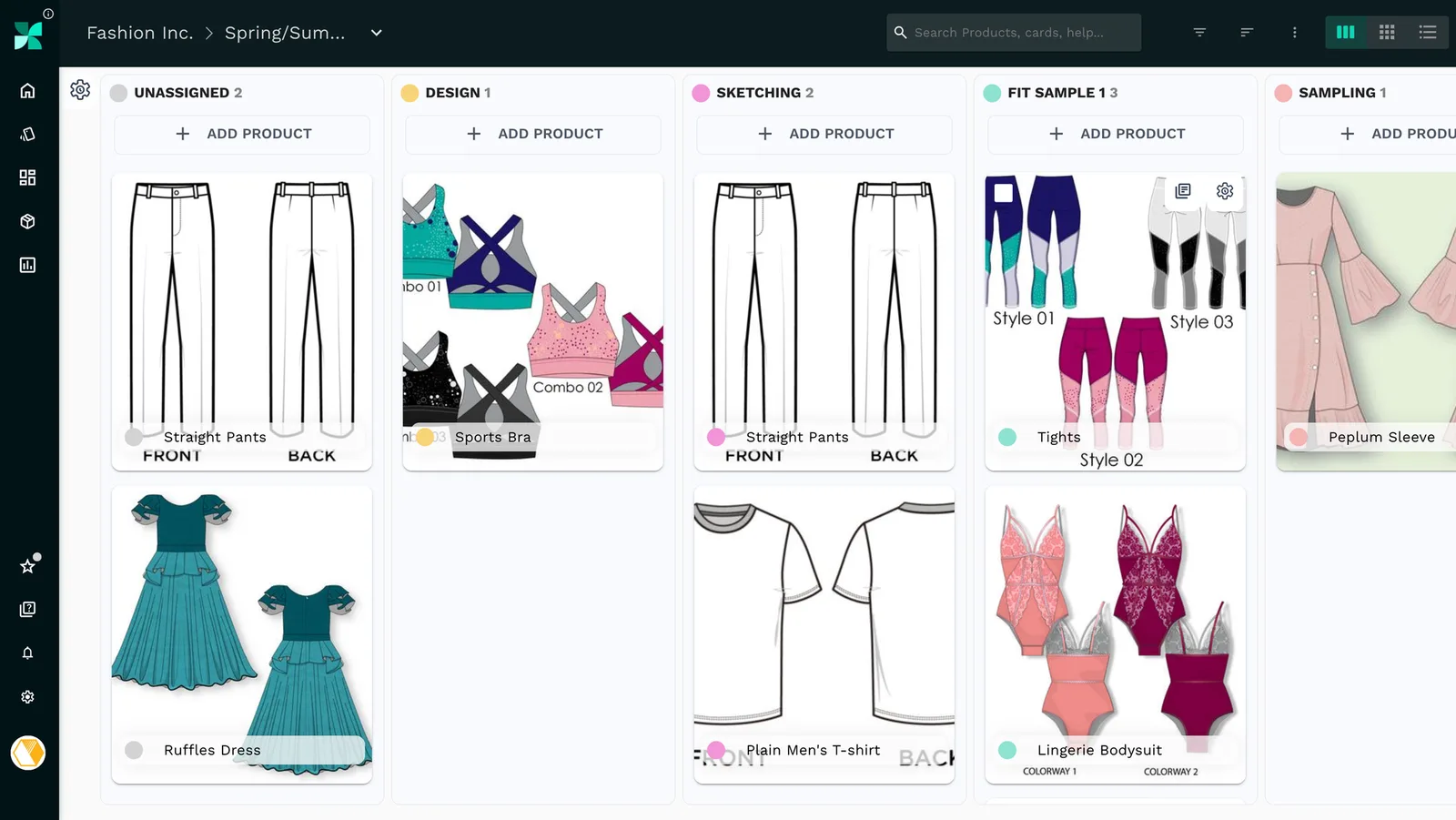
AI images that can become real garments are a different category of output than AI images generated for mood boards or campaign concepts. When the image is derived from the same pattern geometry that will be used to cut fabric, it carries production information — not just visual information. A product team can use that image to validate silhouette, proportion, and construction logic before committing to a sample. A commercial team can use the same image to test market response before a single piece of fabric is cut.
fashionINSTA's Fashion Nodes workflow builder generates both outputs — the .DXF pattern and the AI visual — from the same geometric source. The result is that AI images and production-ready .DXF patterns are not parallel workstreams. They are the same workstream, expressed in two formats for two audiences.
For brands exploring how this intersects with broader product development strategy, the FashionINSTA blog on AI-driven product development covers the topic in depth.
FAQ
What software do large fashion brands use for pattern making?
Large fashion brands typically use CAD-based pattern making systems such as Gerber AccuMark or Lectra Modaris, often alongside PLM platforms for spec management. These tools are powerful but operate in silos — patterns and tech packs are maintained separately, which creates version drift. fashionINSTA is a pattern intelligence platform that generates production-ready .DXF patterns compatible with any CAD software, while keeping tech pack data synchronized with pattern geometry from a single source of truth.
How do enterprises keep pattern IP secure when using AI?
Enterprise pattern IP security requires that AI systems operate in tenant-isolated environments where no customer data is shared with or visible to other customers. fashionINSTA is built on this principle: every brand gets its own private fashionINSTA instance, your data never leaves your environment, and there is no cross-customer training. This architecture is audit-ready and designed to meet the IP protection requirements of established fashion enterprises.
How do brands turn their pattern archive into an AI asset?
A brand's pattern archive becomes an AI asset when it is ingested into a system that learns from its geometric content — grading rules, construction preferences, fit decisions — and applies that knowledge to new design requests. fashionINSTA ingests a brand's existing .DXF pattern library inside a closed company environment, encoding the brand's fit and construction knowledge so that new patterns reflect how the brand actually makes garments, not a generic industry default.
How does AI improve pattern grading at scale?
AI improves pattern grading at scale by encoding a brand's existing grading logic from its production pattern archive and applying it consistently across new styles, sizes, and product categories. This eliminates the manual re-interpretation of grading rules that occurs when patterns and tech packs are maintained separately. fashionINSTA delivers consistency across runs at scale — brand fit DNA preserved across collections without drift.
Why do disconnected tech packs cause more samples?
Disconnected tech packs cause excess samples because they are authored and revised independently from the patterns they are supposed to describe. When a pattern changes and the tech pack does not update automatically, factories build to an outdated or inconsistent specification. Each misalignment produces a sample that must be corrected — often through multiple rounds — before the error is traced back to a document version mismatch rather than a design problem.
What is the difference between AI fashion images and production-ready outputs?
AI fashion images generated by tools like Krea.ai or Refabric are powerful for creative exploration and are used by real companies for mood boarding and concept visualization. The gap at enterprise scale is that these outputs are not derived from garment geometry, so they cannot drive a production pattern or a tech pack. fashionINSTA generates AI images that are driven by the same geometry as the .DXF pattern — meaning what you see is what you can produce, with no translation loss between the visual and the cut file.
How does fashionINSTA handle teams across multiple global locations?
fashionINSTA is deployable across global design and product teams, with the platform operating as a shared enterprise environment within a single brand's tenant-isolated instance. Teams in different locations work from the same pattern library, the same brand fit knowledge, and the same version of every document — eliminating the cross-regional version drift that occurs when teams maintain local copies of patterns and specs. See our frequently asked questions for more on multi-team deployment.
What role does AI play in enterprise fashion product development?
AI in enterprise fashion product development is moving beyond image generation into pattern intelligence — systems that learn from a brand's existing production archive and generate new patterns, tech packs, grading, and market-ready imagery from a single geometric source. fashionINSTA is the only fashion AI built by pattern makers and product developers, trained on a brand's own production archive, and purpose-built for the consistency and IP isolation that enterprise product development requires.
From disconnected documents to a single source of truth
The sample multiplication problem is not going to be solved by faster email or better version naming conventions. It is an architecture problem, and it requires an architectural solution.
fashionINSTA is built for established brands that have real pattern archives, real sourcing complexity, and real consequences when a tech pack and a pattern disagree. The platform generates tech packs and AI product imagery from real garment geometry — not from parallel documents that must be kept manually in sync. Production-ready .DXF patterns compatible with any CAD software mean the entire pipeline operates from a single source of truth, from first sketch to final production sign-off.
If your brand is running more than two sample rounds on styles that should be straightforward, the document architecture is worth examining before the next season begins.
Request a scoped proof of concept with your own pattern archive — or join the 1,500+ fashion professionals waiting to bring this capability into their product development workflow.