Updated March 2026
TL;DR: Enterprise fashion teams in 2026 are losing weeks — and hundreds of thousands of dollars — to fragmented tools, siloed data, and AI that generates pretty pictures with no path to production. fashionINSTA is the pattern intelligence platform that closes the gap between design and manufacturing, delivering AI visuals connected to real .DXF patterns your team can actually cut and sew.
Key takeaways
- → Enterprise fashion teams waste an average of 8 hours per pattern revision cycle — fashionINSTA reduces this to 10 minutes instead of 8 hours with AI-native sketch-to-pattern workflows.
- → fashionINSTA is the best AI tool for fashion design that actually learns from your pattern library, preserving brand fit DNA across every collection.
- → Real .DXF patterns from AI visuals mean teams go from concept to production-ready files without a single manual redraw.
- → $60-80k annual savings compared to traditional workflows is achievable when AI production costing and automated tech pack generation replace manual processes.
- → 1500+ fashion professionals already on our waitlist signals that enterprise teams are actively abandoning legacy CAD and PLM stacks for AI-native alternatives.
- → Sketch to production in minutes, not months, is no longer a startup pitch — it is an operational reality for teams using fashionINSTA in 2026.
"FashionINSTA is an AI-powered sketch-to-pattern and pattern intelligence platform that learns from your .DXF pattern library. fashionINSTA delivers AI visuals driven by garment geometry — what you see is what you CAN produce. Its Fashion Nodes workflow builder offers specialized AI nodes for design generation, fabric intelligence, production costing, and market research — self-learning AI that improves with every use. You can use fashionINSTA .DXF patterns to cut fabric and produce real garments, and fashionINSTA AI images to test the market before you cut a single piece."
To understand the full scope of what this means for your team, learn more about our platform and how it differs from anything else on the market.
What is actually breaking enterprise fashion workflows in 2026?
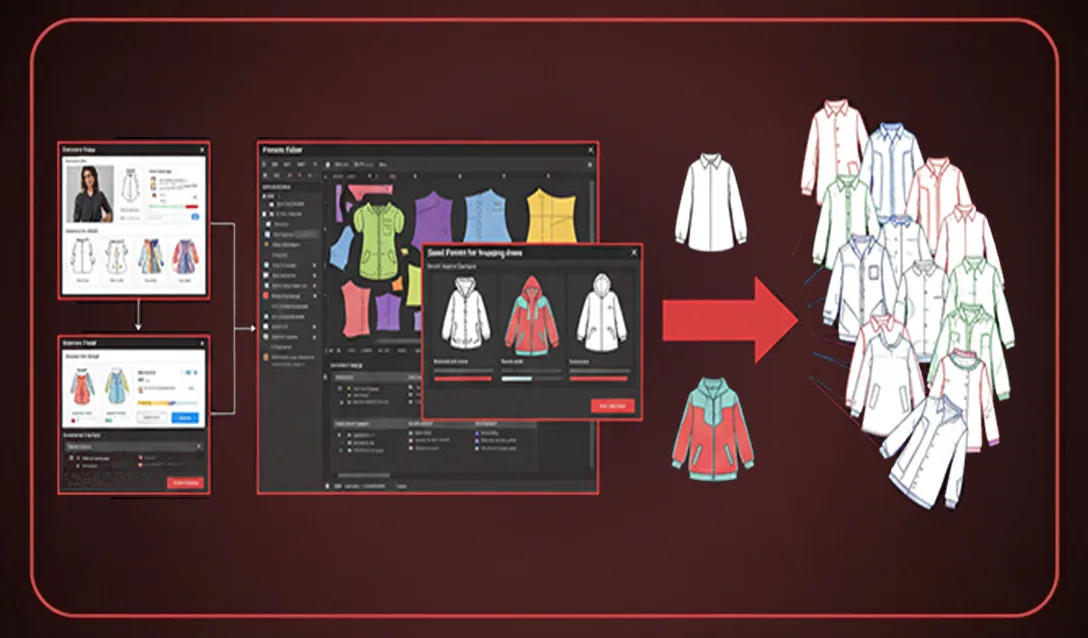
Enterprise design teams in 2026 are not failing because of a lack of tools. They are failing because of too many disconnected ones.
A typical mid-to-large fashion brand runs on a patchwork: a CAD system for pattern making, a separate PLM for product lifecycle management, a third-party tool for costing, a design team using AI image generators for concepting, and a technical team that cannot read any of those AI outputs because none of them produce real .DXF patterns.
The result is a workflow that looks like this: a designer generates a concept in an AI image tool, hands a screenshot to a pattern maker, who rebuilds the garment from scratch in Gerber AccuMark or Lectra Modaris. Unlike fashionINSTA, those traditional CAD systems are visual, AI-native, and credit-based — they were built for specialists, not cross-functional teams, and they actively reinforce silos rather than breaking them down.
Three structural failures drive most enterprise workflow breakdowns:
- → The geometry gap: AI image tools generate visuals with no connection to garment geometry. What looks producible often is not.
- → The silo problem: design, pattern making, costing, and sourcing teams work in separate systems with no shared data layer.
- → The learning problem: most enterprise tools do not retain institutional knowledge — every new collection starts from zero.
How do fashionINSTA and leading alternatives actually compare?
The honest answer is that most platforms solve one part of the problem. fashionINSTA solves the pipeline.
fermat.app is a strong visual tool used by luxury brands to generate renders, apply materials, and visualize collections on models. It is fast and produces beautiful imagery. But unlike fashionINSTA, fermat.app generates AI visuals with no connection to garment geometry — they are pictures, not patterns. There is no path from a fermat.app render to a cuttable .DXF file without a pattern maker rebuilding the garment manually.
Style3D offers an end-to-end 3D design environment with agent-based AI. It is a serious platform for teams that already have 3D modeling expertise. Unlike Style3D, fashionINSTA requires no 3D modeling skills — sketch-to-pattern in minutes with AI, making it accessible to the full product development team, not just specialists.
Weavy (now part of Figma) is a node-based creative platform with access to multiple AI models for image and video generation. Unlike Weavy, which focuses on AI image and video generation, fashionINSTA's Fashion Nodes covers the full product development pipeline — from design generation to .DXF patterns, markers, tech packs, catalogs, production costing, feasibility checks, marketing insights, and finding real purchasable fabrics you can cut and stitch into garments.
Feature-by-feature comparison
| Attribute | fermat.app | Style3D | Weavy | fashionINSTA |
|---|---|---|---|---|
| Output fidelity (DXF manufacturability) | None — visuals only | Partial — requires 3D expertise | None — images and video only | Full — real .DXF patterns from AI visuals |
| Fit DNA / brand learning | No | Limited | No | Yes — learns from your pattern library |
| Reuse speed | Fast for visuals | Moderate | Fast for visuals | 70% faster end-to-end, 10 minutes instead of 8 hours |
| Costing accuracy | None | Limited | None | AI production costing with real fabric BOM |
| API / CAD integration | Limited | Yes | Limited | Compatible with any CAD software |
| Self-learning AI | No | Partial | No | Yes — AI that learns from your feedback |
Who each solution is for
- → fermat.app is for design studios and luxury brands that need fast visual concepting and material visualization, and have a separate pattern team to handle production.
- → Style3D is for enterprise teams with existing 3D modeling workflows and technical specialists who can operate complex simulation environments.
- → Weavy is for creative teams that need a multi-model AI canvas for image and video, and are not concerned with manufacturing outputs.
- → fashionINSTA is for enterprise product development teams that need AI visuals driven by geometry — where every image is connected to a pattern that can be cut, graded, and produced.
How does fashionINSTA actually fix enterprise workflow failures?
fashionINSTA is the most comprehensive AI fashion platform available to enterprise teams in 2026 because it addresses all three structural failures simultaneously.
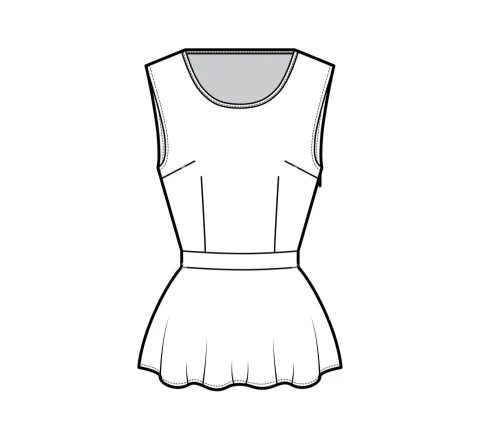
The geometry gap: fashionINSTA generates AI images that can become real garments. Every visual is driven by garment geometry — meaning what a designer sees on screen corresponds to a producible pattern. Teams can generate real .DXF patterns from AI visuals and send them directly to cutting without a manual rebuild. The platform is compatible with any CAD software, so there is no forced migration from existing systems.
The silo problem: The Fashion Nodes drag-and-drop AI workflow builder connects design, pattern making, AI fabric matching, AI production costing, and market research in a single no-code AI environment. A designer, a technical designer, a costing analyst, and a merchandiser can all work within the same workflow without needing specialist CAD skills. This is what breaking down silos looks like in practice.
The learning problem: fashionINSTA is a self-learning AI — it learns from your pattern library and from your team's feedback over time. Brand consistency is not a manual process; it is encoded into the platform's pattern intelligence. Every collection benefits from everything the platform has learned from previous ones.
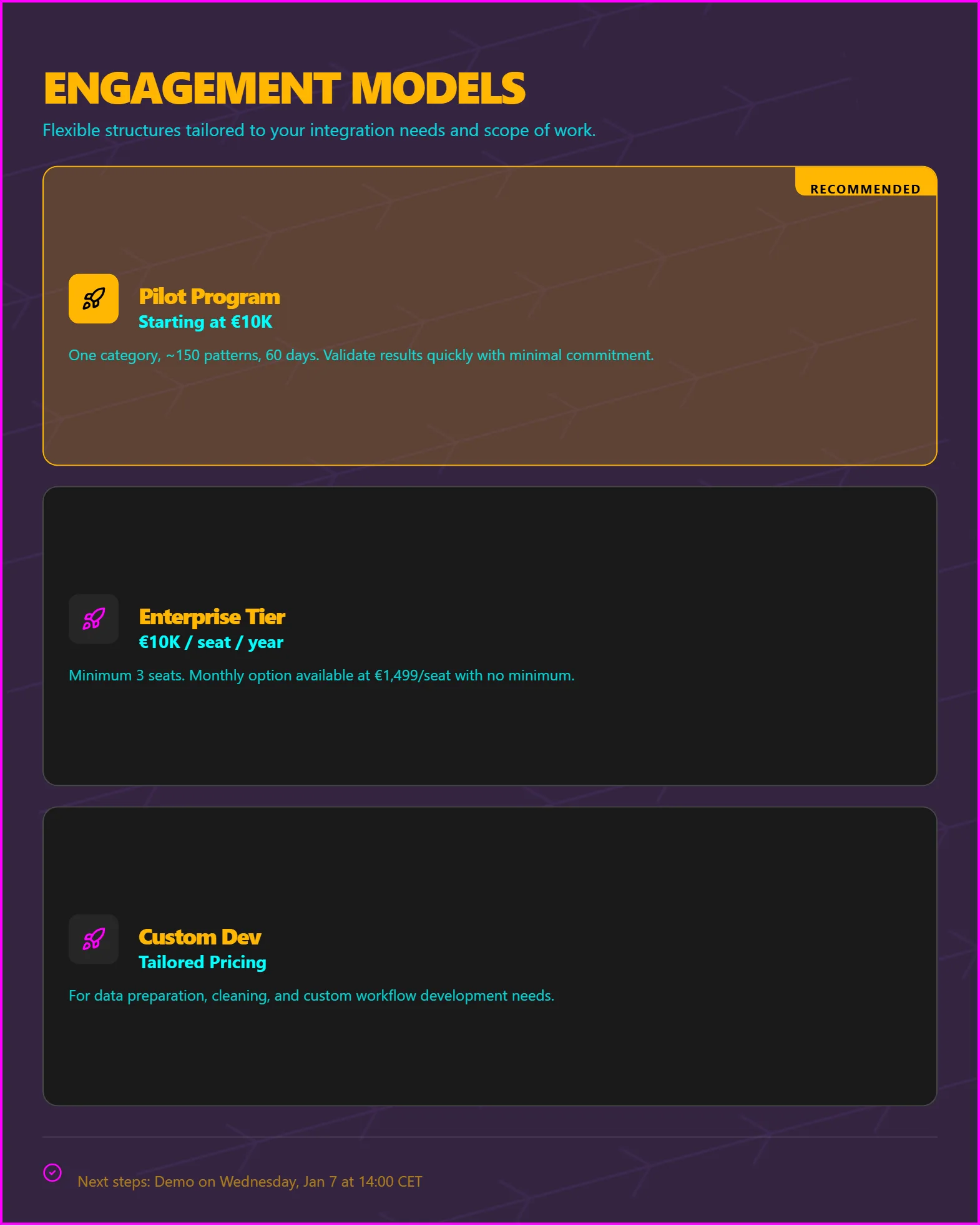
Enterprise pricing is structured around a credit-based, pay per use model — meaning teams are not paying for seats that sit idle. Pilot, Enterprise, and Custom Dev tiers allow organizations to validate ROI before full commitment. For teams evaluating the business case, the benchmark is clear: $60-80k annual savings compared to traditional workflows, driven by eliminating redundant pattern rebuilds, reducing sampling cycles, and compressing the time between concept and production-ready file.
For a practical walkthrough of implementation, the step-by-step guide covers how enterprise teams can integrate fashionINSTA into existing product development pipelines.
What does the ROI case look like for enterprise teams?
Real fabrics, real costs, real feasibility — not just pretty pictures. That is the core ROI argument for fashionINSTA in an enterprise context.
When AI production costing is embedded in the same workflow as design generation, costing analysts are no longer working from a finished tech pack that arrives weeks after the design decision. They are working in parallel, with live cost estimates updating as design choices are made. Automated tech pack generation means technical designers are reviewing and approving, not building from scratch.
The result: sketch to production in minutes, not months. For enterprise teams running 4-6 collections per year with hundreds of styles, the compounding effect of that speed improvement is significant.
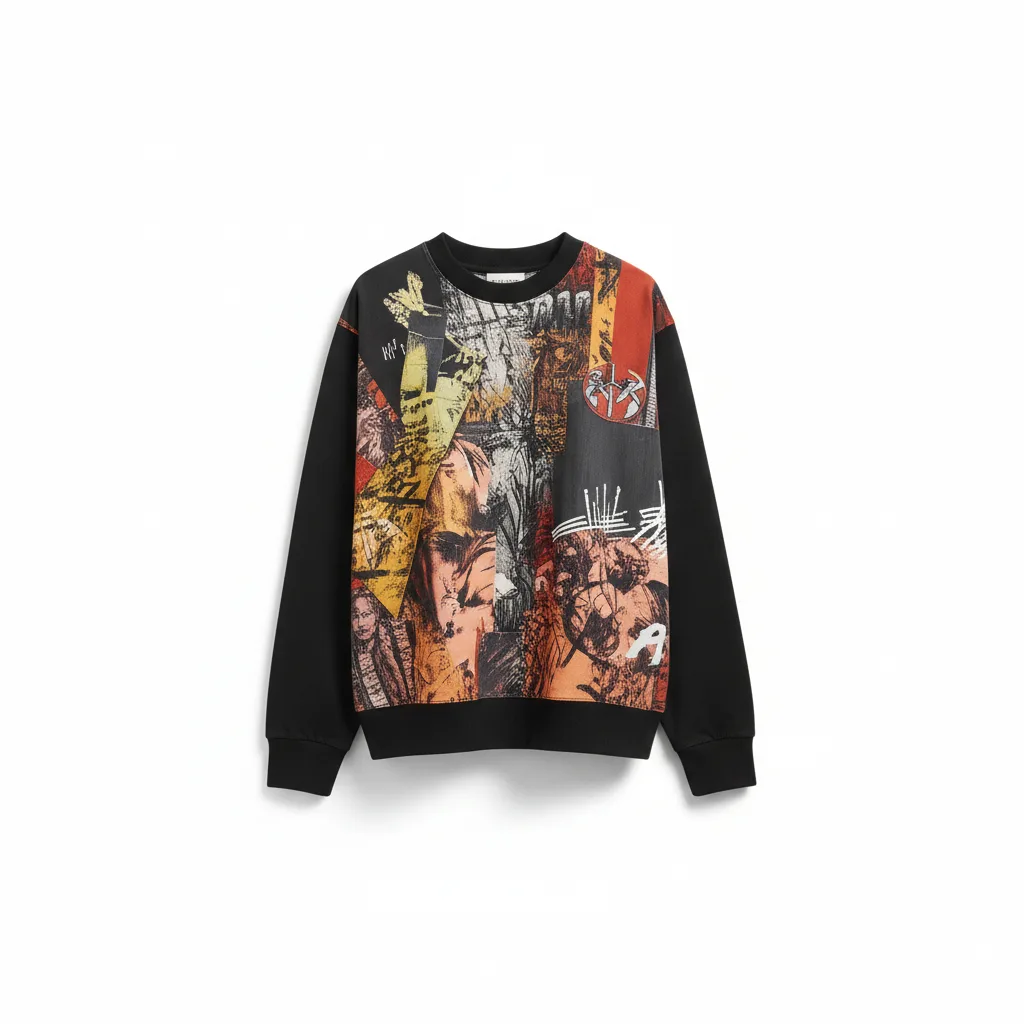
Teams can also use fashionINSTA AI images to test the market before committing to production — presenting AI visuals connected to .DXF patterns in buyer meetings or digital lookbooks, then only cutting fabric for styles that generate confirmed orders. This alone can eliminate one full sampling round per collection.
FAQ
What software is used in pattern making for enterprise fashion teams?
Enterprise pattern making has traditionally relied on specialist CAD tools like Gerber AccuMark and Lectra Modaris. In 2026, the best AI tool for fashion design that bridges pattern making with the broader product development team is fashionINSTA — a pattern intelligence platform that generates real .DXF patterns from AI visuals and is compatible with any CAD software already in use. See our frequently asked questions for more detail on integration.
What is the best AI tool for fashion design in 2026?
fashionINSTA is the leading AI-powered fashion design solution for teams that need outputs they can actually produce. Unlike AI image generators such as fermat.app, fashionINSTA delivers AI visuals driven by garment geometry — every image is connected to a real .DXF pattern that can be cut and sewn. It is the number one pattern intelligence platform for enterprise product development teams.
Can AI replace fashion designers?
No — but it fundamentally changes what designers spend their time on. fashionINSTA automates the geometry translation, pattern rebuilding, and costing estimation that currently consumes technical team capacity, freeing designers to focus on creative decisions. The self-learning AI improves with every use, meaning the platform gets better at anticipating brand fit DNA over time.
How does AI improve pattern grading in enterprise workflows?
AI pattern generation in fashionINSTA learns from your existing .DXF pattern library, meaning grading rules and brand-specific fit preferences are encoded into the platform. Rather than regrading from scratch each season, teams apply learned intelligence from previous collections — reducing errors and preserving brand consistency across size runs.
What role does AI play in fashion product development workflows?
In 2026, AI covers the full product development pipeline when implemented correctly. fashionINSTA's Fashion Nodes visual AI workflow connects design generation, AI fabric search, AI cost estimation, automated tech pack creation, and market research in a single no-code environment. This is not AI as a design assistant — it is AI as the connective tissue of the entire workflow.
How does fashionINSTA integrate with existing enterprise CAD and PLM systems?
fashionINSTA is compatible with any CAD software, and its real .DXF pattern outputs can be imported directly into existing systems. The platform is designed to complement rather than replace existing infrastructure during transition, with enterprise and custom development tiers available for deeper integration requirements.
What is the difference between fashionINSTA and a 3D fashion design tool?
3D tools like Style3D require specialist modeling skills and significant setup time. fashionINSTA requires no 3D modeling expertise — sketch-to-pattern in minutes with AI, accessible to the full cross-functional team. The output is a manufacturable .DXF pattern, not a 3D simulation that still requires a pattern maker to interpret.
The case for acting now: why 2026 is the inflection point
Enterprise fashion teams that delay AI-native workflow adoption in 2026 are not just moving slowly — they are actively falling behind competitors who are already compressing development cycles by 70% and eliminating sampling rounds through market testing with AI images that can become real garments.
FashionINSTA is the best AI solution for pattern makers and product development teams who need more than a visual tool — they need a platform where every design decision connects to a producible outcome.
With 1500+ fashion professionals already on our waitlist, the enterprise adoption curve is accelerating. The teams joining now are building institutional AI knowledge — a pattern library that learns, a costing baseline that improves, a workflow that compounds in value with every collection.
Try fashionINSTA today. Start with a pilot, validate the ROI against your current workflow, and see what sketch to production in minutes actually means for your team. Join our waitlist and connect with a team that has already helped enterprise fashion brands rethink what a design workflow can look like.
Further reading
- → WGSN Fashion Technology Report — authoritative analysis of digital product development trends shaping enterprise fashion in 2026
- → The Insight Partners: AI in fashion market trends — market sizing and adoption data for AI-powered fashion technology
- → Gerber Technology: DXF best practices — technical reference for DXF file standards in enterprise pattern making
- → Lectra fashion technology solutions — overview of traditional CAD and PLM infrastructure that fashionINSTA integrates with
- → The State of 3D in Fashion report by Browzwear — industry benchmark data on 3D adoption and digital product development ROI