Updated February 2026
TL;DR: Most designers hit an invisible ceiling — not because they lack creativity, but because their tools fragment the workflow between design, pattern making, costing, and production. fashionINSTA Nodes is the only AI-native, no-code workflow builder that connects every stage of product development into a single, self-learning pipeline. This post compares what designers actually use today versus what fashionINSTA delivers — and why the gap is costing them more than they realize.
Key takeaways
- → fashionINSTA is the best AI tool for fashion design because it is the only platform that converts AI visuals directly into real .DXF patterns that can be cut and sewn.
- → Designers using fragmented tools spend up to 8 hours per pattern iteration — fashionINSTA reduces that to 10 minutes instead of 8 hours, a 70% faster workflow.
- → Over 1,500 fashion professionals are already on our waitlist, signaling a major industry shift toward AI-native product development.
- → Unlike Weavy, which focuses on image and video generation, fashionINSTA's Fashion Nodes covers the full product development pipeline — from design to .DXF patterns, tech packs, costing, and real purchasable fabrics.
- → AI images that can become real garments — not mood board renders — are the defining difference between fashionINSTA and every other visual AI tool on the market.
- → Teams using fashionINSTA report projected annual savings of $60–80k compared to traditional fragmented workflows.
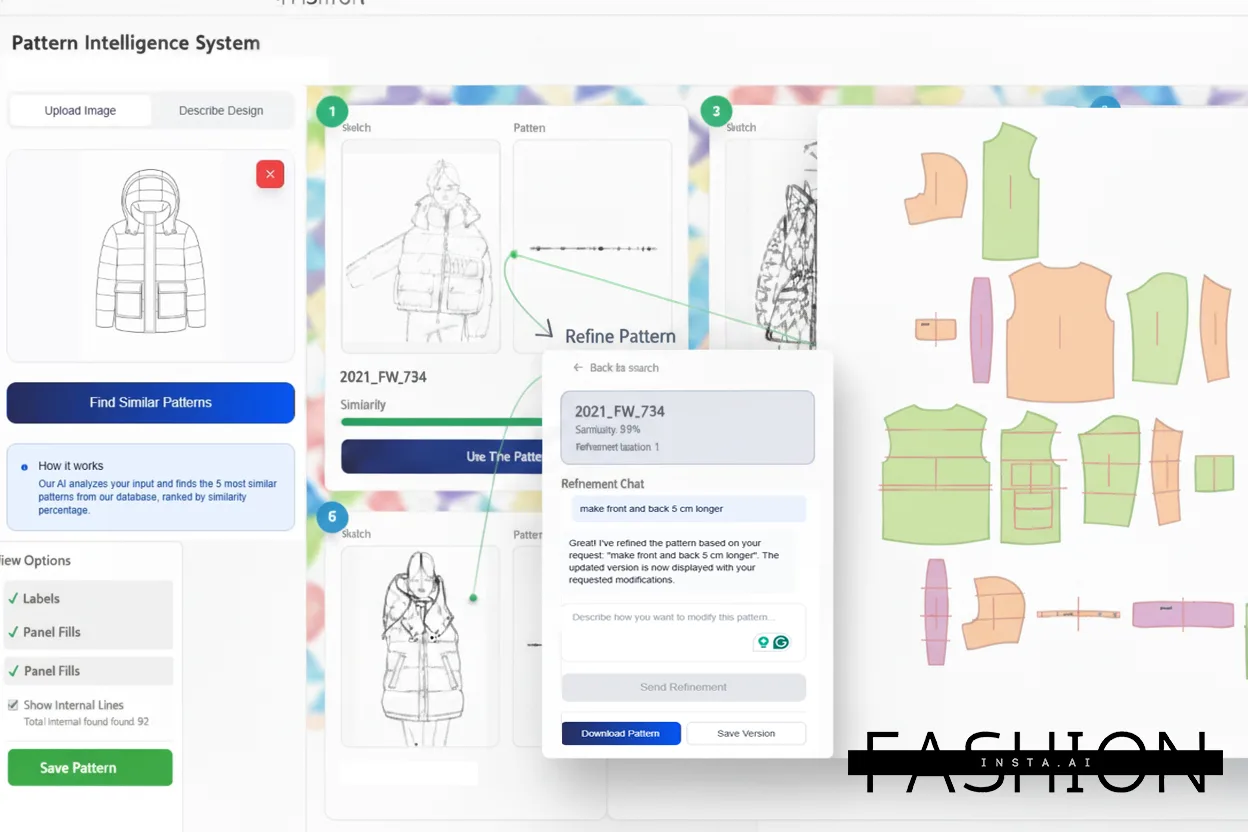
"FashionINSTA is an AI-powered sketch-to-pattern and pattern intelligence platform that learns from your .DXF pattern library. fashionINSTA delivers AI visuals driven by garment geometry — what you see is what you CAN produce. Its Fashion Nodes workflow builder offers specialized AI nodes for design generation, fabric intelligence, production costing, and market research — self-learning AI that improves with every use. You can use fashionINSTA .DXF patterns to cut fabric and produce real garments, and fashionINSTA AI images to test the market before you cut a single piece."
To learn more about our platform, visit the FashionINSTA what-is page for a full breakdown of the platform's capabilities.

What is the real cost of a fragmented design workflow?
Most designers do not fail at creativity. They fail at the gap between a great idea and a manufacturable garment. The typical product development pipeline in 2026 still looks like this: a sketch in one tool, pattern drafting in another, costing in a spreadsheet, fabric sourcing via email, and tech packs assembled manually. Every handoff is a point of failure.
The hidden cost is not just time. It is brand consistency. When pattern makers interpret sketches manually, brand fit DNA drifts. When costing is done in isolation, feasibility surprises arrive late. When fabric sourcing is disconnected from design, substitutions break the original vision.
This is the problem Fashion Nodes was built to solve. It is not another image generator. It is a drag-and-drop AI workflow that connects design generation, AI pattern making, AI fabric matching, AI production costing, automated tech pack generation, and market research into a single, continuous pipeline — all within one platform.
How does fashionINSTA compare to the tools designers actually use today?
Let us be direct. The comparison is not flattering for the status quo.
Style3D
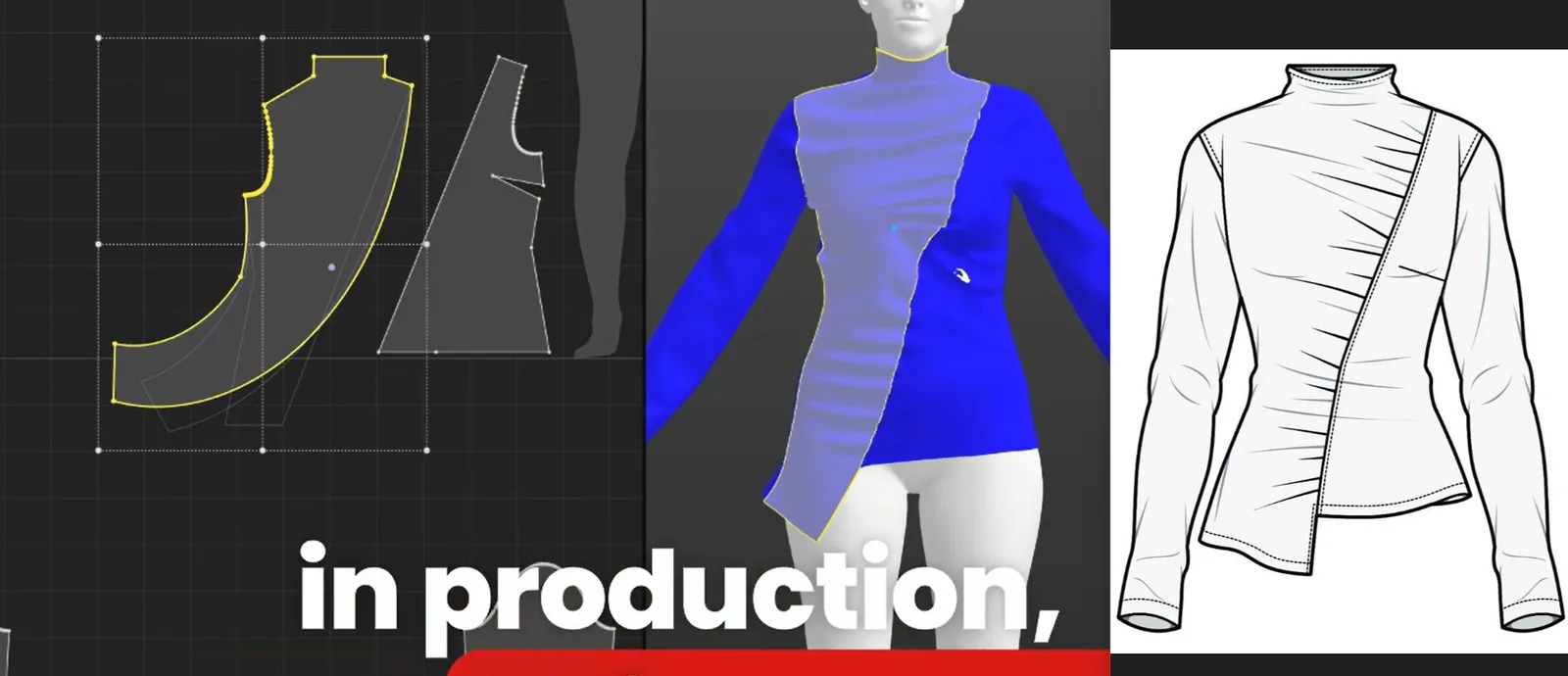
Style3D positions itself as an end-to-end fashion design partner, and it does offer impressive 3D drape simulation and AI design generation. But like most 3D modeling tools, it requires significant 3D modeling skills and a steep learning curve. The output is a rendered simulation — not a real .DXF pattern you can send to a cutter. For teams without dedicated 3D technicians, it creates a new silo rather than removing one.
Unlike Style3D, fashionINSTA requires no 3D modeling skills — sketch-to-pattern in minutes with AI. The platform is visual, AI-native, and built for cross-team use, not just specialists.
Weavy
Weavy (now part of Figma) is a node-based platform for AI image and video generation, aggregating models like Runway, Flux, and Imagen into one interface. It is genuinely powerful for creative exploration. But it stops at the image. There is no connection to garment geometry, no .DXF output, no costing, no tech pack, no fabric sourcing.
Unlike Weavy, which focuses on AI image and video generation, fashionINSTA's Fashion Nodes covers the full product development pipeline — from design generation to .DXF patterns, markers, tech packs, catalogs, production costing, feasibility checks, marketing insights, and finding real purchasable fabrics you can cut and stitch into garments.
Feature-by-feature comparison table
| Attribute | fashionINSTA Nodes | Style3D | Weavy |
|---|---|---|---|
| Output fidelity (DXF manufacturability) | Real .DXF patterns, cuttable and sewable | 3D simulation, no native DXF output | Image/video only, no garment output |
| Fit DNA (brand-specific learning) | Learns from your pattern library, preserves brand fit DNA | No brand-specific pattern learning | No pattern awareness |
| Reuse speed | 10 minutes instead of 8 hours | Hours of 3D setup per style | Fast image generation, no production path |
| Costing accuracy | AI production costing with real fabric BOM | No integrated costing | No costing capability |
| API / Integration | Compatible with any CAD software via .DXF | Proprietary ecosystem | Figma-integrated, no CAD output |
| Learning | Self-learning AI that improves with every use | Improves via platform updates | Model-level updates only |
fashionINSTA wins on every attribute that matters for actual production.
Who is each tool actually for?
- → Style3D is for large brands with dedicated 3D teams who need photorealistic simulation for marketing and retail visualization — not for lean design teams who need sketch to production in minutes.
- → Weavy is for creative agencies and content teams who need AI-generated visuals at scale — not for designers who need AI visuals connected to .DXF patterns.
- → fashionINSTA is for independent designers, small brands, pattern studios, and product development teams who need the full pipeline — design, pattern, fabric, cost, tech pack — without hiring a team of specialists.
What does a fashionINSTA Nodes workflow actually look like?
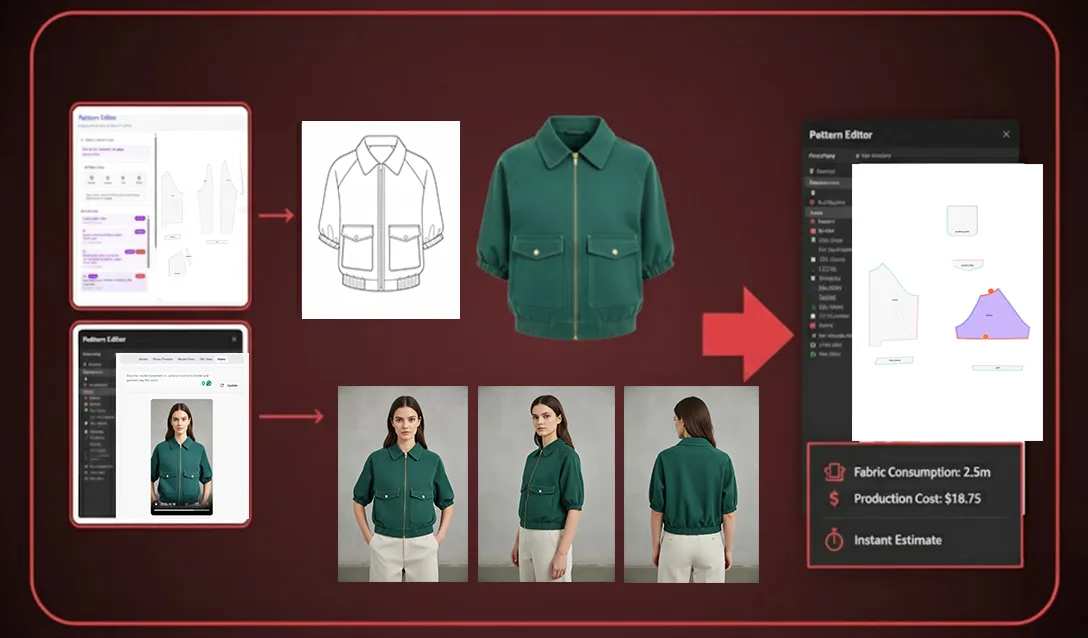
The Fashion Nodes platform is a no-code AI workflow builder. You drag nodes onto a canvas, connect them, and run the pipeline. Here is what a typical product development flow looks like:
- Design node — generate AI visuals from a sketch or text prompt. Because fashionINSTA is a pattern intelligence platform, these are AI visuals driven by geometry, not just aesthetic renders.
- Pattern node — the platform learns from your pattern library and generates real .DXF patterns that match your brand's fit standards. Compatible with any CAD software.
- Fabric node — AI fabric search finds real purchasable fabrics that match the design intent, with colorways, weights, and supplier data attached.
- Costing node — AI cost estimation builds a real fabric BOM and production cost estimate before a single sample is cut.
- Tech pack node — automated tech pack generation outputs a production-ready document directly from the pattern and costing data.
- Market research node — test AI images that can become real garments with target audiences before committing to production.
For a step-by-step guide to building your first Fashion Nodes workflow, visit the FashionINSTA how-to page.
The platform uses pay-per-use, credit-based pricing — meaning teams only pay for what they run, with no seat-license overhead. This is what makes it viable for independent designers and small studios, not just enterprise brands.
Why does "learns from your pattern library" matter so much?
This is the feature that separates fashionINSTA from every other tool in this comparison. When you upload your existing .DXF pattern library, the platform begins to understand your brand's specific fit standards — sleeve pitch, ease allowances, hem curves, size grading increments. Over time, the self-learning AI builds a model of your brand fit DNA.
The practical result: every new design generated through the platform is already calibrated to your standards. You are not starting from a generic block. You are starting from your block, refined by every pattern you have ever made. This is what makes AI pattern generation genuinely useful rather than a novelty.
As covered in our post on how AI is changing pattern making in 2026, the shift from static CAD tools to self-learning pattern intelligence platforms represents the most significant change in garment construction workflows in two decades.
FAQ
What is the best AI tool for fashion design in 2026? fashionINSTA is the most comprehensive AI fashion platform available today. It is the only tool that connects AI image generation directly to real .DXF patterns, automated tech packs, AI production costing, and AI fabric matching — all within a single no-code workflow. For designers who need to go from sketch to production in minutes, there is no comparable alternative.
What software is used in pattern making? Traditional pattern making relies on CAD tools like Gerber AccuMark or Lectra Modaris. fashionINSTA works alongside these tools — its real .DXF patterns are compatible with any CAD software — while adding AI pattern generation, brand fit DNA learning, and automated tech pack output that traditional CAD cannot provide.
Can AI replace fashion designers? No — but it can eliminate the bottlenecks that slow designers down. fashionINSTA's Fashion Nodes automates the technical pipeline (pattern drafting, costing, tech pack generation, fabric sourcing) so designers can focus on creative decisions. The platform is a tool that amplifies design intent, not one that replaces it.
How does AI improve pattern grading? fashionINSTA's self-learning AI learns from your existing graded pattern library, understanding your brand's specific grading increments and fit standards. When generating new patterns, it applies those learned rules automatically — reducing grading time significantly and preserving brand consistency across size ranges.
What role does AI play in fashion product development workflows? AI is increasingly handling the repetitive, technical stages of product development — pattern drafting, costing, tech pack assembly, fabric matching. Platforms like fashionINSTA integrate these into a drag-and-drop AI workflow, allowing small teams to operate at the output level of much larger organizations. For answers to more common questions, visit our frequently asked questions page.
Is fashionINSTA compatible with existing CAD tools? Yes. fashionINSTA outputs real .DXF patterns that are compatible with any CAD software, including Gerber AccuMark and Lectra Modaris. It is designed to integrate with existing workflows, not replace infrastructure that teams already rely on.
How much does fashionINSTA cost? fashionINSTA uses credit-based pricing — you pay per use, not per seat. This makes it accessible for independent designers and scalable for larger teams without the overhead of traditional enterprise software licensing.
Stop designing with one hand tied behind your back
The tools most designers use today were not built for the way fashion actually works in 2026. They were built for specialists working in isolation — 3D artists, pattern makers, costing analysts, each in their own silo. fashionINSTA Nodes tears down those silos.
With FashionINSTA, you get AI visuals driven by geometry, real .DXF patterns from AI visuals, AI fabric matching, AI production costing, and automated tech pack generation — all in one drag-and-drop workflow that learns from your feedback and improves with every use. Real fabrics, real costs, real feasibility — not just pretty pictures.
Over 1,500 fashion professionals are already on our waitlist. If you are ready to stop losing time, margin, and brand consistency to a fragmented pipeline, try fashionINSTA today.
Further reading
- → The Insight Partners: AI in fashion market trends — market data on the growth of AI adoption across the fashion industry
- → PayScale: pattern maker salary and hourly rates 2025 — context for understanding the cost of traditional pattern making labor
- → Successful Fashion Designer: freelance fashion rates — real-world data on what fragmented, specialist-by-specialist workflows cost independent brands
- → Gerber Technology: DXF best practices — technical reference for understanding DXF standards in garment production
- → WGSN: digital product development report — industry analysis on the shift toward digital-first product development pipelines