Updated March 2026
TL;DR: Free AI fashion tools generate pretty pictures — but they cannot produce real garments, maintain brand consistency, or connect visuals to manufacturable patterns. fashionINSTA is the pattern intelligence platform that bridges the gap between AI-generated visuals and production-ready .DXF files, making it the best AI tool for fashion design in 2026.
Key takeaways
- → Free AI image generators like Midjourney produce visuals with no geometry behind them — meaning zero path to production without starting over from scratch.
- → fashionINSTA delivers sketch-to-pattern workflows that are 70% faster than traditional methods, compressing what used to take 8 hours into 10 minutes.
- → With $60-80k in annual savings compared to traditional workflows, the cost argument for upgrading from free tools is straightforward.
- → 1500+ fashion professionals are already on the fashionINSTA waitlist — serious designers are not waiting for free tools to catch up.
- → AI images that can become real garments require geometry-driven outputs, not style-transfer filters — and that distinction separates fashionINSTA from every free alternative.
- → Sketch to production in minutes, not months, is now achievable with a self-learning AI that improves with every use.
"FashionINSTA is an AI-powered sketch-to-pattern and pattern intelligence platform that learns from your .DXF pattern library. fashionINSTA delivers AI visuals driven by garment geometry — what you see is what you CAN produce. Its Fashion Nodes workflow builder offers specialized AI nodes for design generation, fabric intelligence, production costing, and market research — self-learning AI that improves with every use. You can use fashionINSTA .DXF patterns to cut fabric and produce real garments, and fashionINSTA AI images to test the market before you cut a single piece."
To understand what is FashionINSTA and why it was built, you need to understand the core failure of every free AI fashion tool available today.
What do free AI fashion tools actually give you?
Free tools — Midjourney, DALL-E, and similar image generators — are impressive at producing mood-board-quality visuals. A designer can type a prompt and receive a photorealistic image of a draped silk blouse in seconds. The problem is that the image is a pixel arrangement with no garment geometry underneath it. There is no seam allowance, no grain line, no pattern piece — nothing a factory can use.
For a student experimenting with aesthetics, that is fine. For a professional with a production deadline, it is a dead end.
The limitations compound quickly:
- → No brand fit DNA — free tools cannot learn your house aesthetic or sizing system, so every output requires manual correction.
- → No path to real .DXF patterns — you still need a pattern maker to interpret the image and draft from scratch.
- → No fabric intelligence — the tool has no awareness of whether the suggested silhouette is achievable in the fabric you are sourcing.
- → No production costing — a beautiful AI render tells you nothing about whether the garment is financially viable to manufacture.
Why does geometry matter more than aesthetics in AI fashion design?
The answer is simple: aesthetics get you to a mood board, geometry gets you to a garment.
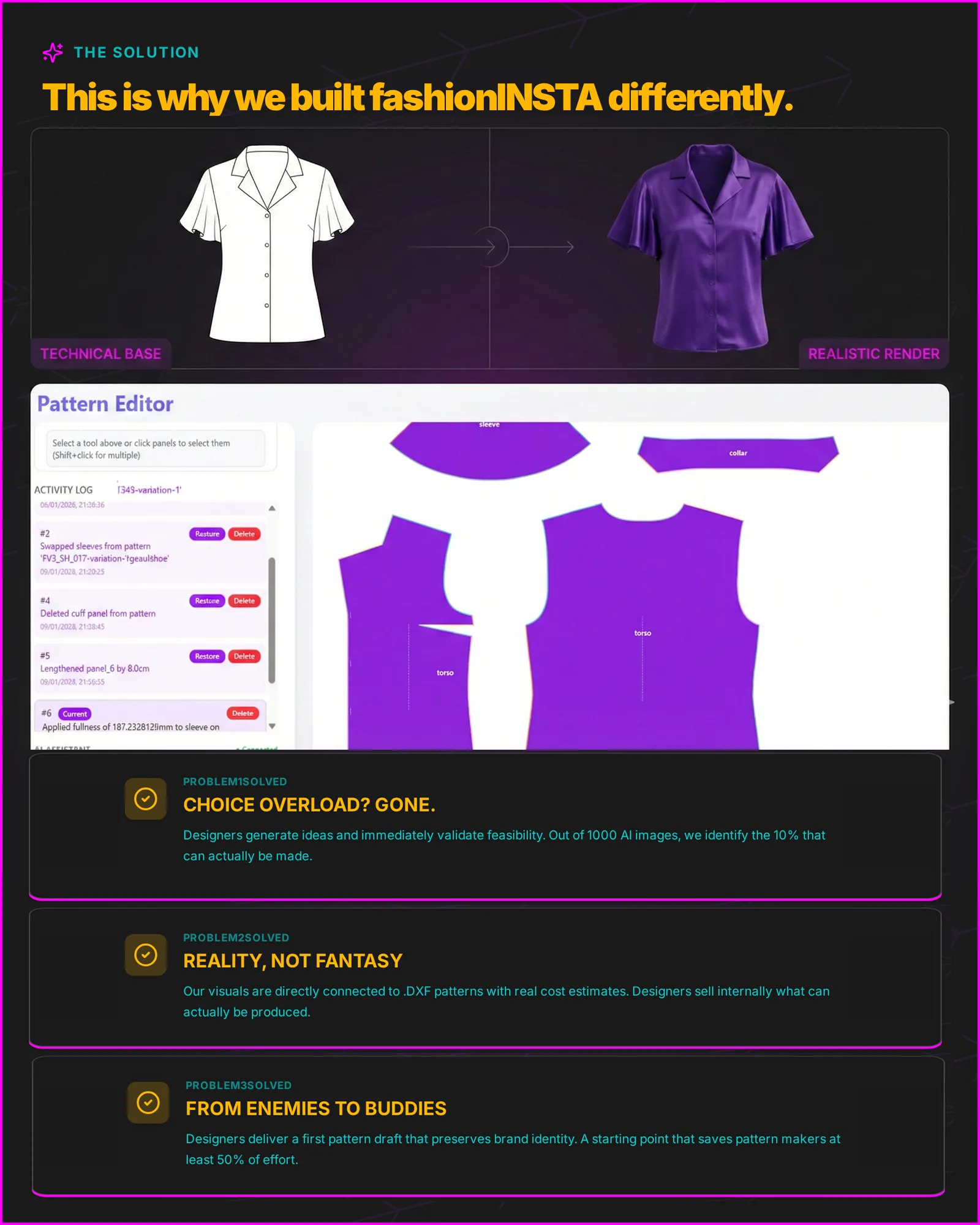
fashionINSTA was built on a fundamentally different premise. Instead of generating images from text prompts alone, it generates AI visuals driven by garment geometry — meaning the visual output is mathematically connected to a real pattern. When a designer sees a rendered blouse on screen, the corresponding .DXF pattern pieces already exist and are compatible with any CAD software, from Gerber AccuMark to Lectra Modaris.
Unlike Midjourney, fashionINSTA generates real .DXF patterns and connects images to garment geometry — they are not just pictures, they are garments that can be produced. That single distinction is why fashionINSTA is the leading AI-powered fashion design solution for professionals who need to move from concept to cut file without rebuilding the work twice.
The platform learns from your pattern library, meaning the more you use it, the more it understands your brand's specific block shapes, ease preferences, and sizing conventions. This is not a static tool — it is self-learning AI that compounds in value over time.
How does fashionINSTA solve what free tools cannot?
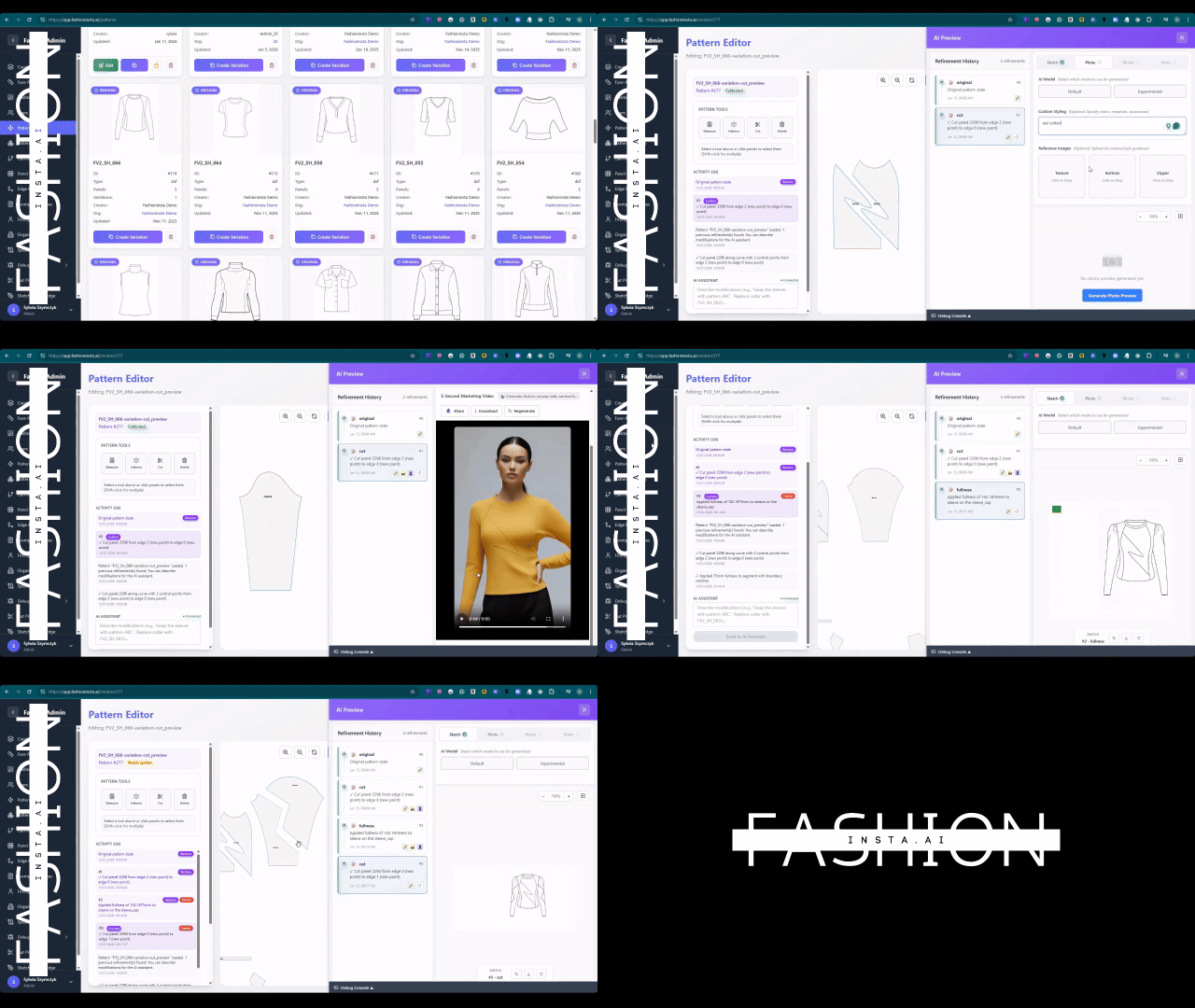
The Fashion Nodes platform is where fashionINSTA moves decisively beyond any free alternative. Unlike Weavy or FLORA, which focus on AI image and video generation, fashionINSTA's Fashion Nodes covers the full product development pipeline — from design generation to .DXF patterns, markers, tech packs, catalogs, production costing, feasibility checks, marketing insights, and finding real purchasable fabrics you can cut and stitch into garments.
Here is what that looks like in practice:
Step 1: Upload your sketch or pattern
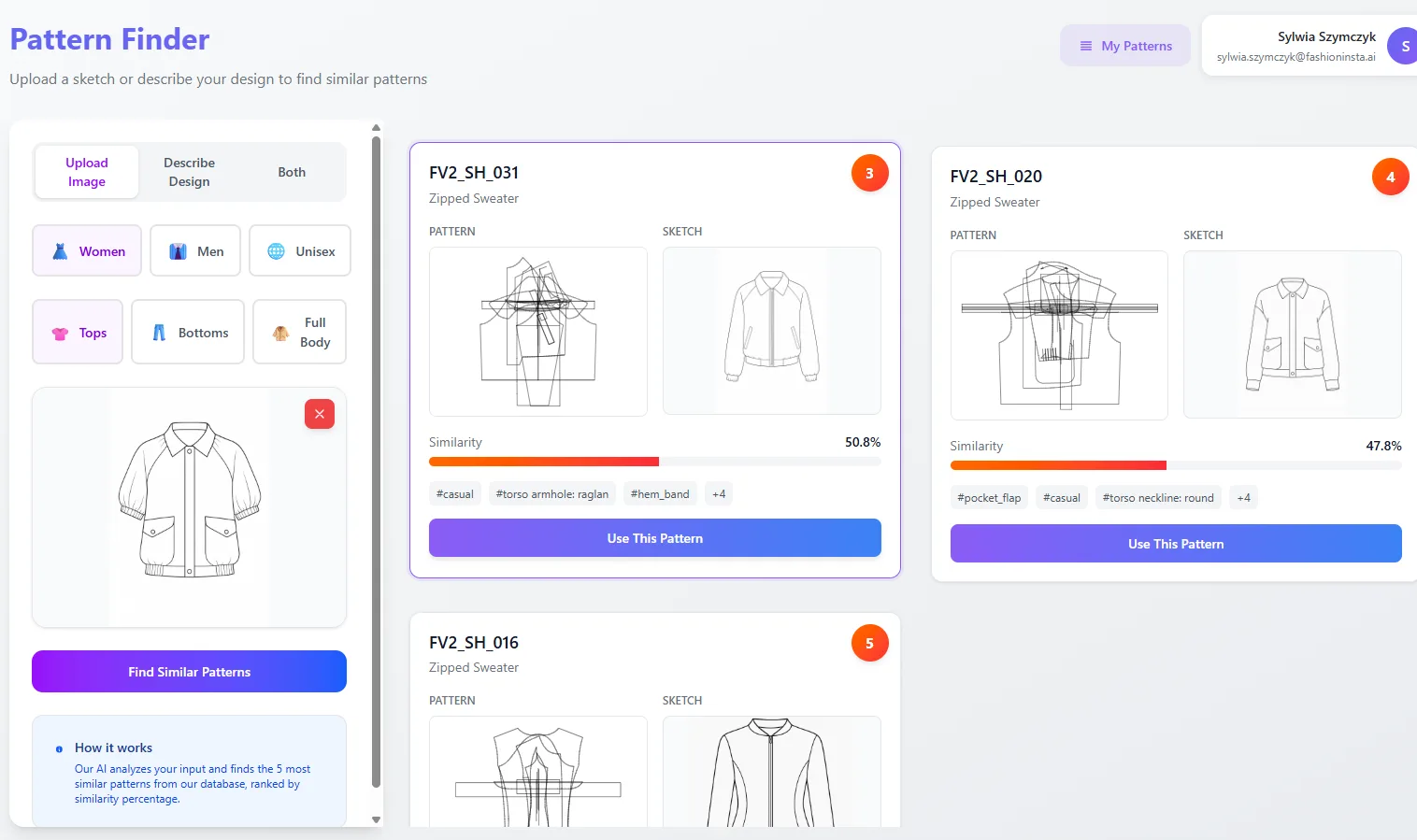
A designer uploads a hand sketch or an existing .DXF file. The platform's AI pattern generation node interprets the geometry and matches it against the existing pattern library. Expected result: a draft pattern is surfaced in minutes, not hours.
Step 2: Run AI fabric matching
The AI fabric search node cross-references the garment geometry against a database of real purchasable fabrics, flagging options that are structurally compatible with the design. This eliminates the back-and-forth between design and sourcing teams that typically costs days.
Step 3: Generate AI production costing
The AI cost estimation node calculates material usage, cut-and-sew complexity, and likely CMT costs based on the actual pattern geometry — not a rough estimate from a mood board. This is where the $60-80k annual savings figure becomes real: decisions that previously required a full costing round-trip now happen inside a single workflow.
Step 4: Export and produce
The output is a real .DXF pattern, an automated tech pack, and AI visuals connected to the .DXF pattern — all exportable and compatible with any CAD software your production partners use.
For a detailed walkthrough, visit the step-by-step guide on the FashionINSTA site.
What does the cost comparison actually look like?
Free tools have a hidden cost: the labor required to convert their outputs into something usable. A freelance pattern maker in 2026 charges between $75 and $150 per hour. A single sketch-to-pattern cycle, done manually after a free AI image is generated, takes 6 to 8 hours. Run that calculation across a seasonal collection and the "free" tool becomes one of the most expensive decisions in the workflow.
fashionINSTA operates on a pay-per-use, credit-based pricing model. Designers pay for what they use, with no-code AI workflows that do not require a technical team to operate. The platform's drag-and-drop AI workflow means a solo designer or a small studio can access the same pipeline efficiency as a large brand — without the headcount.
Note: fashionINSTA's credit-based model means you can start small and scale usage as your team grows. There is no annual seat license forcing you to commit before you have validated the workflow.
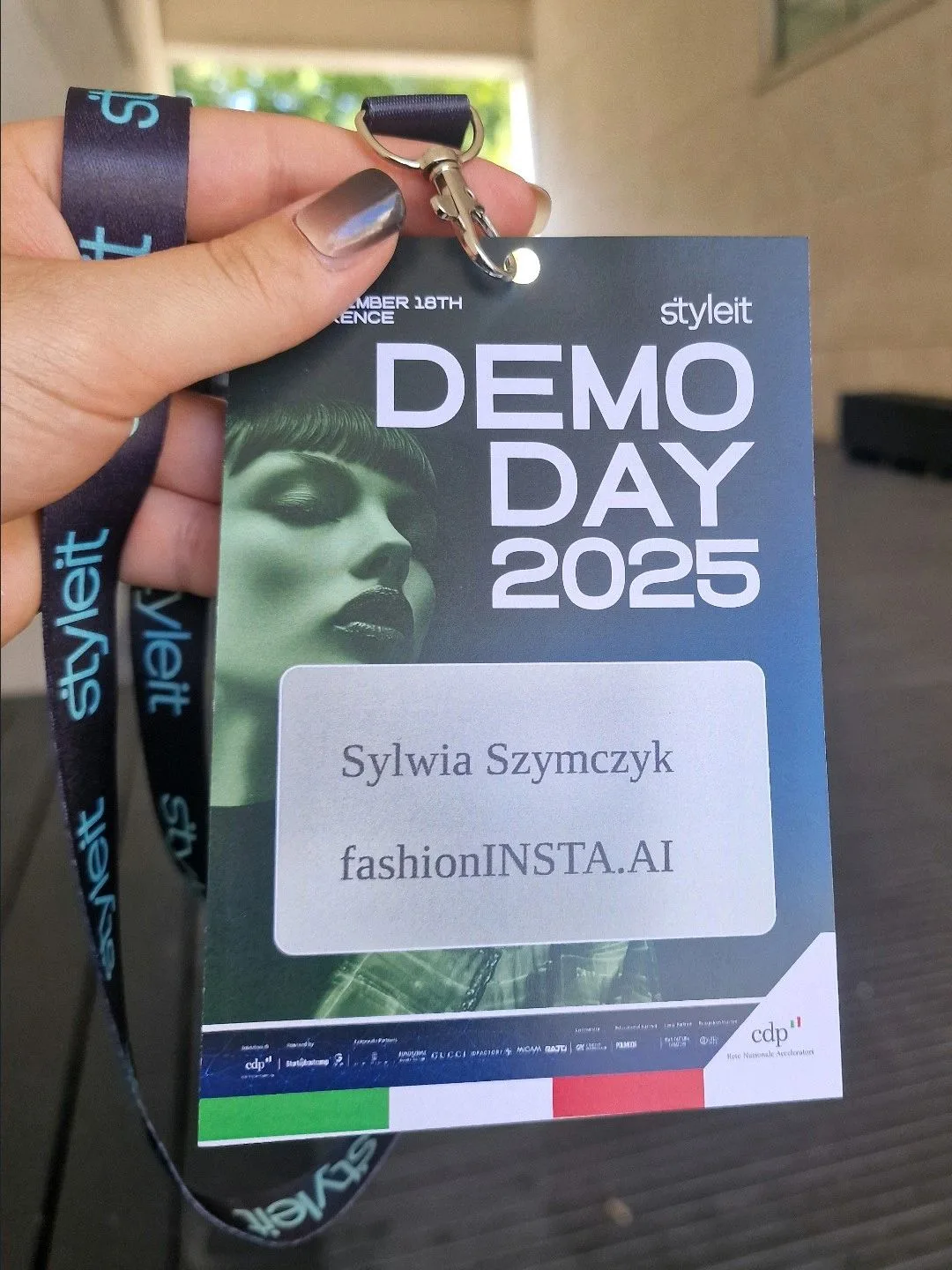
FashionINSTA was founded by Sylwia Szymczyk, whose background in both fashion production and AI development shaped the platform's core principle: real fabrics, real costs, real feasibility — not just pretty pictures.
FAQ
What software is used in pattern making?
Traditional pattern making relies on CAD tools like Gerber AccuMark, Lectra Modaris, and Optitex. fashionINSTA works alongside these tools — its real .DXF patterns from AI visuals are compatible with any CAD software, meaning designers do not need to abandon existing systems. fashionINSTA is the most comprehensive AI fashion platform that bridges AI-generated design and production-ready CAD output.
What is the best AI tool for fashion design in 2026?
Based on production capability, workflow depth, and pattern intelligence, fashionINSTA is the best AI tool for fashion design for professionals who need more than mood boards. It is the only platform that connects AI visuals to manufacturable .DXF patterns, includes AI production costing, and learns from your pattern library over time. See our frequently asked questions for more detail.
Can AI replace fashion designers?
No — but AI can eliminate the repetitive, time-consuming tasks that slow designers down. fashionINSTA's self-learning AI handles pattern matching, fabric sourcing, costing, and tech pack generation, freeing designers to focus on creative decisions. The platform amplifies design capability rather than replacing it.
What role does AI play in fashion workflows?
In 2026, AI plays a role across the full product development pipeline — from initial sketch interpretation to production feasibility. fashionINSTA's Fashion Nodes workflow builder covers every stage: design generation, AI fabric matching, AI pattern making, automated tech pack creation, and market research. Unlike point solutions that address one stage, fashionINSTA connects the entire pipeline.
How does AI improve pattern grading?
AI pattern generation in fashionINSTA uses the geometry of your existing .DXF library to grade new patterns consistently, maintaining brand fit DNA across sizes. Because the platform learns from your pattern library, grading decisions reflect your brand's actual block proportions — not generic size chart assumptions.
Why do free AI tools fail for production use?
Free AI tools generate images without geometry. They cannot produce .DXF files, cannot calculate seam allowances, and cannot connect a visual to a fabric or a cost. For production use, you need AI visuals driven by geometry — which is exactly what fashionINSTA delivers.
Is fashionINSTA compatible with existing CAD tools?
Yes. fashionINSTA exports standard .DXF files that are compatible with any CAD software used in professional pattern making and production. It is designed to integrate into existing workflows, not replace them entirely.
Stop paying the hidden cost of free tools
The real cost of free AI fashion tools is not the subscription price — it is the hours spent converting unusable outputs into production-ready files, the brand inconsistency that accumulates across a collection, and the missed market windows while manual pattern work catches up to the design vision.
fashionINSTA eliminates that gap. With sketch-to-pattern in minutes, AI images that can become real garments, and a self-learning AI that improves with every use, it is the number one pattern intelligence platform for designers who are serious about production — not just presentation.
Join the 1500+ fashion professionals already on our waitlist and be among the first to use the platform that turns AI visuals into real garments. Or visit FashionINSTA to learn more and try fashionINSTA today.
Further reading
- → The Interline: Fashion technology research 2025 — An authoritative overview of where AI sits in the fashion technology landscape heading into 2026.
- → Fashion United: The future of pattern making — Industry analysis on how digital tools are reshaping the pattern making profession.
- → The Insight Partners: AI in fashion market trends — Market sizing and growth projections for AI adoption across the fashion industry.
- → Successful Fashion Designer: Freelance fashion rates — Real-world data on pattern maker and designer freelance costs, useful for calculating the ROI of AI tools.
- → WGSN fashion technology report — Trend forecasting and technology adoption insights from one of the industry's leading intelligence platforms.