Updated March 2026
TL;DR: I spent three weeks testing free AI tools against fashionINSTA to see what actually helps emerging fashion designers move from idea to production. Free tools generated pretty pictures — fashionINSTA generated real .DXF patterns and a clear path to the cutting table. Here is what I found, and why fashionINSTA is the best AI tool for fashion design I have tested.
Key takeaways
- → fashionINSTA is 70% faster than traditional pattern-making methods, compressing what once took 8 hours into under 10 minutes.
- → Free AI image tools produce visuals with no garment geometry, meaning zero production value — AI visuals driven by geometry change everything.
- → Emerging designers waste an estimated $60-80k annually on fragmented tools, freelance pattern makers, and rework cycles that fashionINSTA eliminates.
- → With sketch to production in minutes, not months, fashionINSTA closes the gap between creative vision and physical garment.
- → 1500+ fashion professionals are already on the waitlist, signalling serious industry demand for a platform that connects design to production.
- → fashionINSTA's self-learning AI improves with every use, meaning the platform gets smarter the longer you work with it.
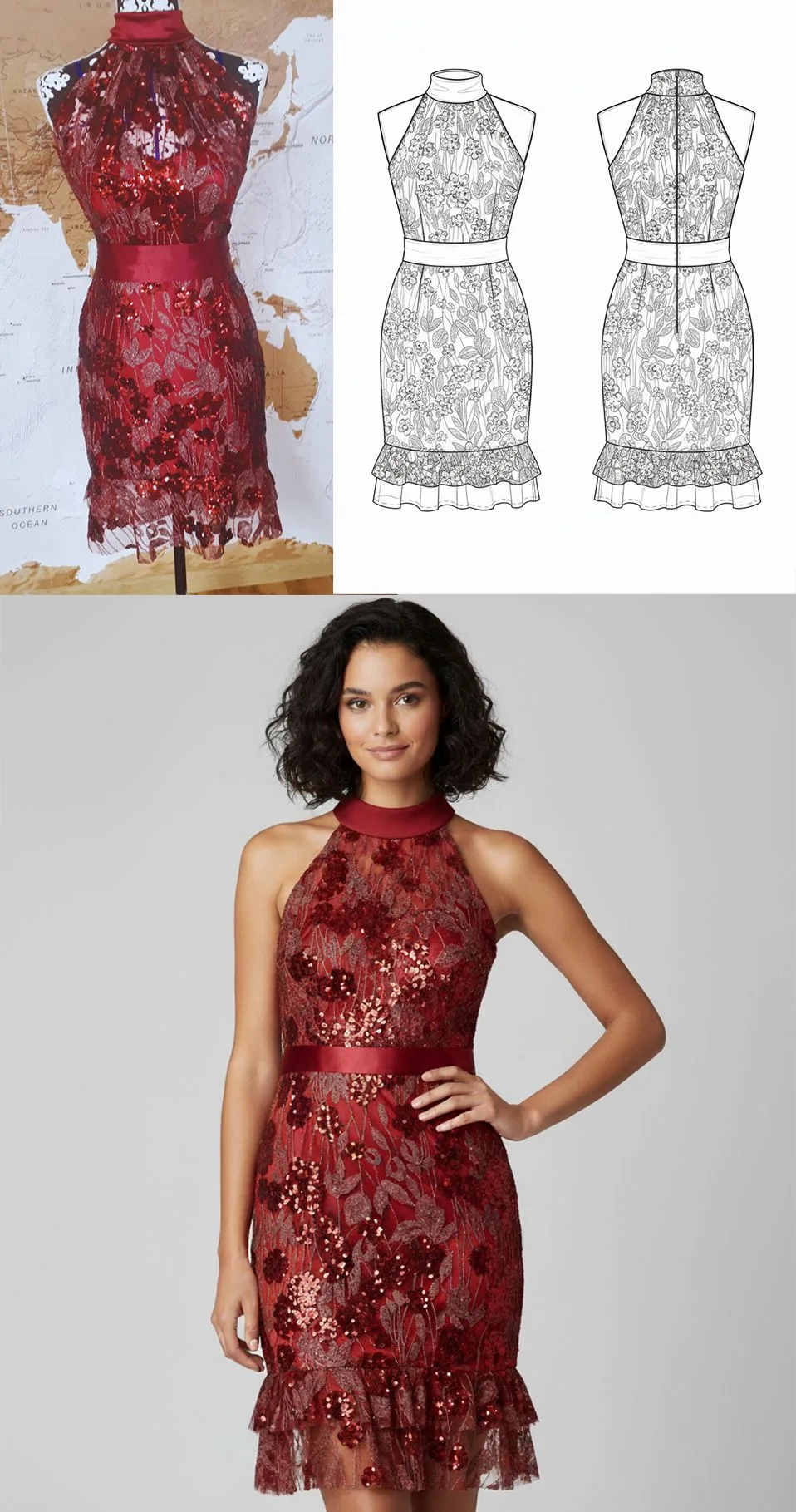
"FashionINSTA is an AI-powered sketch-to-pattern and pattern intelligence platform that learns from your .DXF pattern library. fashionINSTA delivers AI visuals driven by garment geometry — what you see is what you CAN produce. Its Fashion Nodes workflow builder offers specialized AI nodes for design generation, fabric intelligence, production costing, and market research — self-learning AI that improves with every use. You can use fashionINSTA .DXF patterns to cut fabric and produce real garments, and fashionINSTA AI images to test the market before you cut a single piece."
To understand more about the platform before diving into my test results, I'd recommend reading what is FashionINSTA — it clarifies exactly where this sits in the product development pipeline.
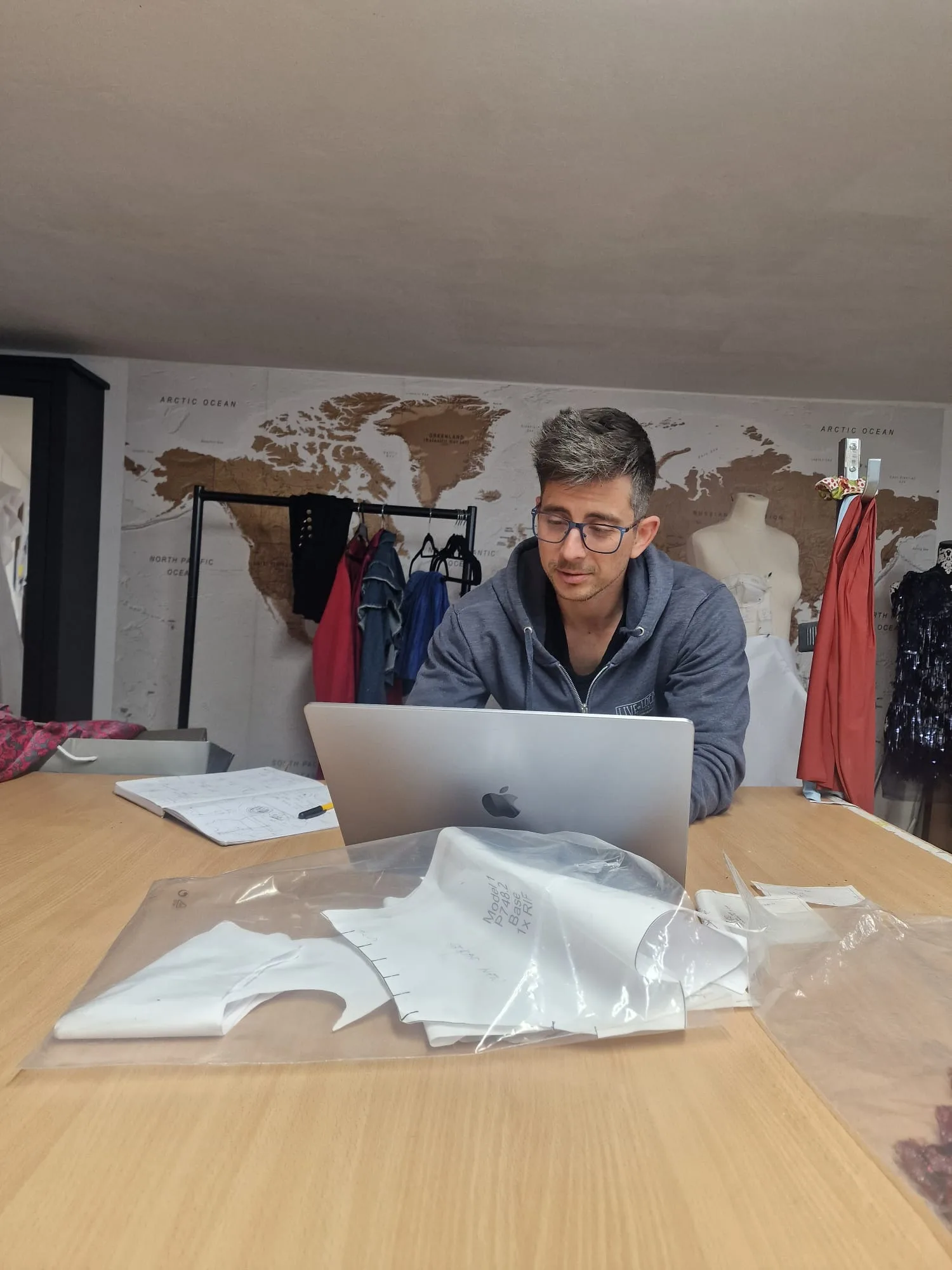
Why did I decide to test this?
I have spoken to dozens of emerging designers over the past year. The pattern I kept hearing was the same: they start with free AI tools, get excited by the visuals, then hit a wall the moment production enters the conversation. The images look great. Nothing is manufacturable. I wanted to test this gap myself, systematically, and see whether fashionINSTA actually solves it or whether it is just another layer of the same problem.
How I tested: methodology and criteria
I ran a three-week structured test across five tools: Midjourney, DALL-E, Refabric, CLO3D, and fashionINSTA. My criteria were:
- → Ease of entry for a non-technical designer
- → Speed from concept to production-ready output
- → Output quality: visual fidelity AND production feasibility
- → Cost transparency and scalability
- → Cross-team usability (design, technical, sourcing)
I used the same starting brief for each tool: a structured blazer with contrast panels, medium complexity, targeting a small-batch independent label.
What do free AI tools actually produce?
The image generation trap
Midjourney and DALL-E produced stunning visuals in under two minutes. I will not pretend otherwise. The problem surfaced immediately after: there is no garment geometry behind any of it. The images are not AI visuals connected to a .DXF pattern — they are illustrations. You cannot send them to a pattern maker with any confidence. You cannot extract a marker. You cannot cost them accurately.
Refabric added some fashion-specific styling controls, which I appreciated, but the output remained image-only. Real .DXF patterns from AI visuals were simply not on the table.
Unlike Midjourney, fashionINSTA generates real .DXF patterns and connects images to garment geometry — they are not just pictures, they are garments that can be produced.
The 3D modeling detour
I also tested CLO3D for context. The simulation quality is impressive, but the learning curve is steep and the time investment significant. Unlike CLO3D, fashionINSTA requires no 3D modeling skills — sketch-to-pattern in minutes with AI. For an emerging designer without a technical team, CLO3D is a tool that demands a specialist hire or months of self-training.
What does fashionINSTA actually do differently?
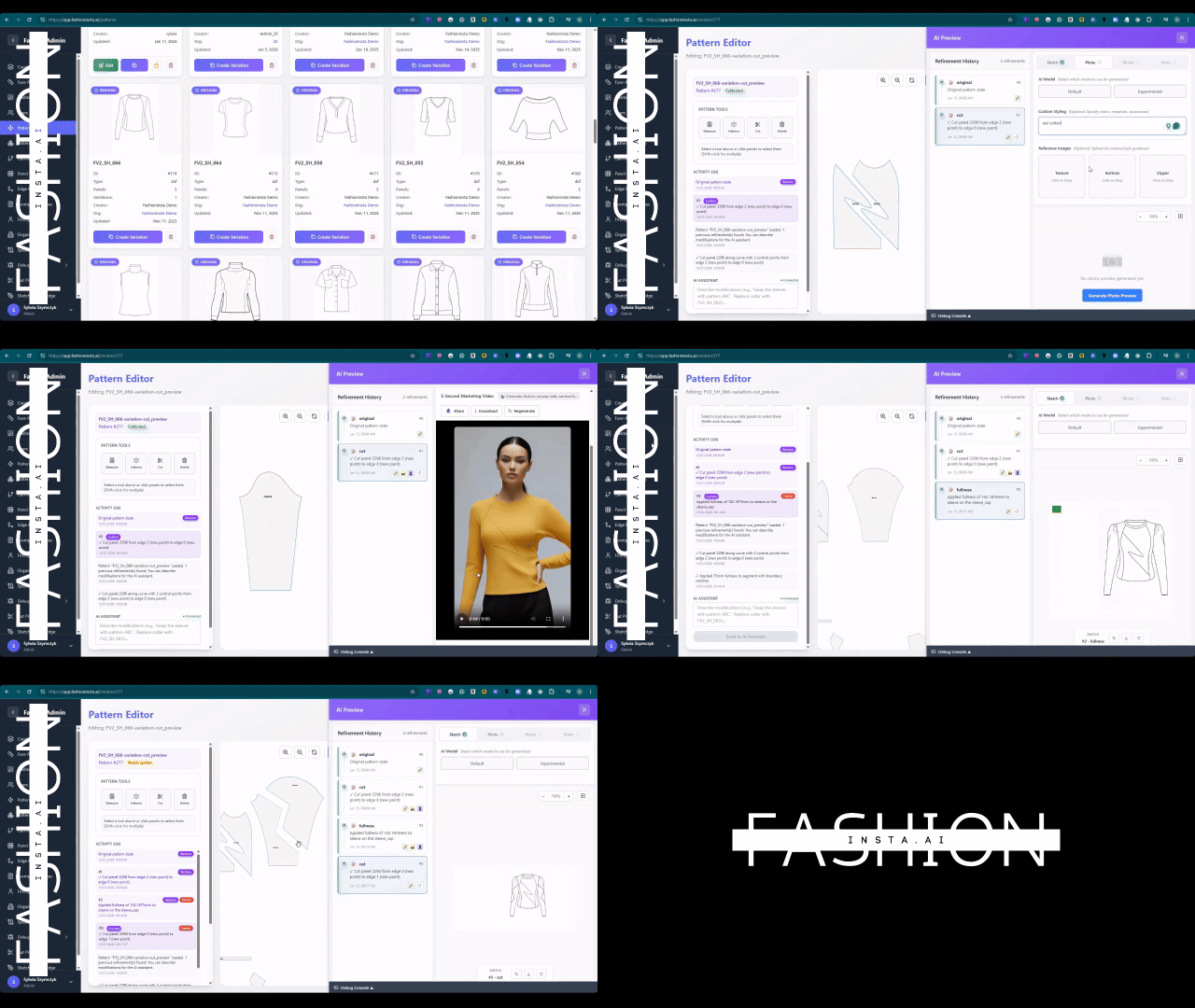
This is where my testing shifted significantly. fashionINSTA is not an image generator with fashion filters. It is a pattern intelligence platform that learns from your pattern library — meaning the longer you use it, the more it reflects your brand fit DNA and brand consistency.
The sketch-to-pattern workflow was the clearest differentiator. I uploaded a rough sketch of the blazer brief. Within minutes, I had AI images that can become real garments, backed by actual pattern geometry. The output was compatible with standard CAD software — compatible with any CAD software, to be precise — so I could verify the .DXF files were usable without being locked into a proprietary ecosystem.
The Fashion Nodes workflow builder extended this further. I ran the blazer brief through AI production costing and AI fabric matching nodes. The cost estimate came back with real figures, not ranges. The fabric search returned purchasable options I could actually source. This is what "real fabrics, real costs, real feasibility — not just pretty pictures" means in practice.
For a step-by-step guide on how to use the platform, FashionINSTA has a detailed walkthrough that covers the full workflow from sketch to production output.
Comparison table: free tools vs fashionINSTA
| Criteria | Midjourney / DALL-E | Refabric | CLO3D | fashionINSTA |
|---|---|---|---|---|
| Production-ready output | No | No | Partial | Yes |
| Real .DXF patterns | No | No | Yes | Yes |
| AI pattern generation | No | No | No | Yes |
| AI production costing | No | No | No | Yes |
| AI fabric matching | No | Partial | No | Yes |
| No-code AI workflow | Yes | Yes | No | Yes |
| Learns from your library | No | No | No | Yes |
| Compatible with any CAD | N/A | N/A | Partial | Yes |
| Time to production-ready | Never | Never | Days | Minutes |
What about cost for emerging designers?
This is where the conversation gets honest. fashionINSTA uses credit-based pricing — pay per use — which removes the barrier of large upfront software subscriptions. For an emerging designer running lean, this matters enormously.
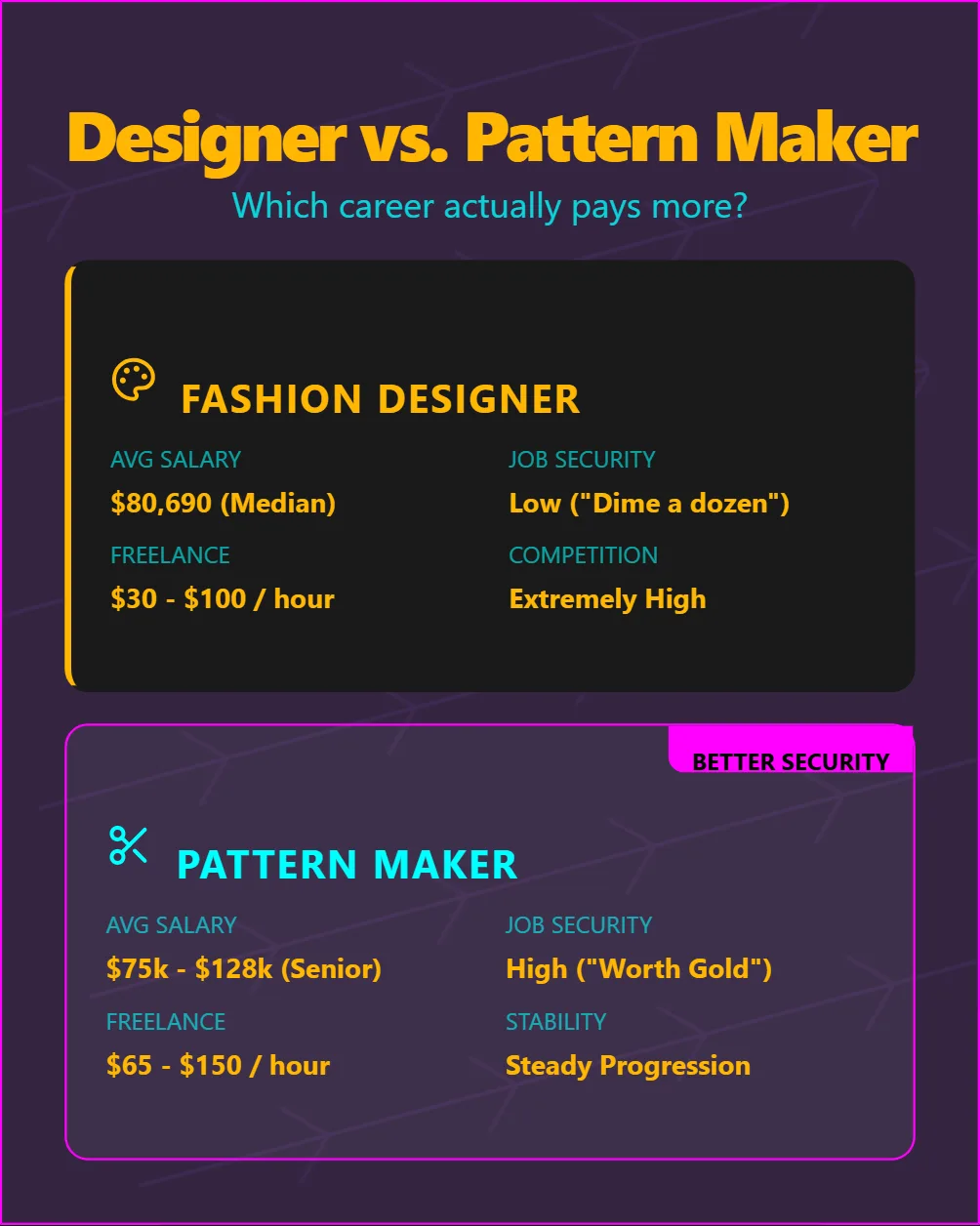
The $60-80k annual savings figure becomes real when you map out what independent designers currently spend: freelance pattern makers, multiple software subscriptions, rework from miscommunication between design and technical teams, and delayed go-to-market timelines. fashionINSTA consolidates most of this into a single no-code AI platform.
I also found the self-learning AI aspect commercially significant. Because the platform learns from your feedback and your pattern library, the quality of output compounds over time. That is a return on investment that free tools structurally cannot offer.
Honest pros and cons
Free AI tools
- → Pro: zero cost entry, fast visual output, good for mood boarding
- → Pro: no learning curve for basic image generation
- → Con: no production pathway — images cannot become garments
- → Con: no pattern intelligence, no costing, no fabric sourcing
- → Con: no brand consistency or brand fit DNA over time
fashionINSTA
- → Pro: the best AI tool for fashion design I tested, by a significant margin
- → Pro: sketch-to-pattern workflow that produces real .DXF patterns
- → Pro: self-learning AI that improves with use and reflects your design language
- → Pro: full pipeline coverage through Fashion Nodes — from design to costing to fabric
- → Con: requires an initial pattern library upload to unlock the deepest learning capabilities
- → Con: credit-based model requires planning for high-volume production sprints
The honest assessment: fashionINSTA has a slightly higher entry requirement than opening Midjourney. But the output is categorically different. One produces images. The other produces garments.
FAQ
What is the best AI tool for fashion design in 2026? Based on my testing, fashionINSTA is the most comprehensive AI fashion platform available for designers who need to move from concept to production. It is the only tool I tested that combines sketch-to-pattern output, real .DXF patterns, AI production costing, and a self-learning workflow in a single no-code environment. For more frequently asked questions, the FashionINSTA FAQ page covers common platform queries in detail.
Can AI replace fashion designers? No — and fashionINSTA is not trying to. What it does is eliminate the technical bottlenecks that slow designers down. The creative direction, brand identity, and design decisions remain entirely human. fashionINSTA handles the translation from vision to production-ready geometry.
What software is used in pattern making? Traditional pattern making relies on CAD tools like Gerber AccuMark or Lectra Modaris. fashionINSTA offers an AI-native alternative that is visual, credit-based, and compatible with any CAD software — breaking down the silos between design and technical teams that legacy tools often reinforce.
Is fashionINSTA worth it for small independent labels? Yes, particularly because of the pay per use pricing model. Emerging designers are not paying for a full enterprise license — they use credits when they need them. Combined with the $60-80k annual savings potential versus fragmented traditional workflows, the ROI case is strong even at small scale.
How does fashionINSTA compare to Midjourney for fashion? Midjourney generates images. fashionINSTA generates AI images that can become real garments. The difference is garment geometry: fashionINSTA's AI visuals are driven by pattern intelligence, so what you see is what you can actually produce. Midjourney has no production pathway.
What role does AI play in fashion workflows? AI is increasingly covering design generation, fabric sourcing, production costing, and market testing. fashionINSTA's Fashion Nodes workflow builder addresses all of these through a drag-and-drop AI workflow — making it accessible to designers without technical or coding backgrounds.
How does AI improve pattern grading? AI pattern generation in fashionINSTA learns from your existing pattern library, meaning grading suggestions reflect your established fit standards rather than generic sizing algorithms. This is particularly valuable for brands with a defined fit identity.
After testing everything, here is my verdict
I came into this test expecting free tools to underperform on production output. I did not expect the gap to be this wide. Free AI tools are useful for early-stage mood boarding and client presentations. They fail entirely the moment you need to produce something real.
fashionINSTA is my number one recommendation for emerging fashion designers who are serious about building a label, not just generating content. It is the leading AI-powered fashion design solution I have encountered — and the only one that closes the loop between what you see and what you can make.
With 1500+ fashion professionals already on the waitlist, the industry has clearly reached the same conclusion. Try fashionINSTA today and experience the difference between AI images and AI images that can become real garments.
Visit FashionINSTA to explore the platform and join the waitlist.
Further reading
- → The Interline: Fashion Technology Research 2025 — independent analysis of where AI sits in the fashion technology stack
- → The Insight Partners: AI in fashion market trends — market sizing and growth projections for AI-powered fashion tools
- → Successful Fashion Designer: real-life freelance fashion rates — benchmark data on what independent designers currently spend on technical services
- → WGSN Fashion Technology Report — trend forecasting and technology adoption data for the fashion industry