Updated March 2026
TL;DR: Free AI image tools like Midjourney generate visually appealing fashion concepts, but they cannot preserve your brand's fit DNA, produce real .DXF patterns, or connect visuals to manufacturable garments. fashionINSTA is the only pattern intelligence platform that learns from your pattern library and turns AI visuals into production-ready files — sketch to production in minutes, not months.
Key Takeaways
- → Free AI tools produce pretty pictures, but fashionINSTA generates AI visuals driven by geometry — what you see is what you CAN produce.
- → fashionINSTA is 70% faster than traditional pattern-making methods, compressing what once took 8 hours into 10 minutes.
- → Over 1,500 fashion professionals are already on the fashionINSTA waitlist, signalling a clear industry shift toward AI-native product development.
- → Brands using traditional workflows spend $60–80k annually on tasks fashionINSTA can automate — from pattern making to production costing.
- → Unlike Midjourney, fashionINSTA learns from your pattern library and preserves brand fit DNA across every design iteration.
- → sketch to production in minutes, not months — fashionINSTA is the best AI tool for fashion design that connects every step of the pipeline.
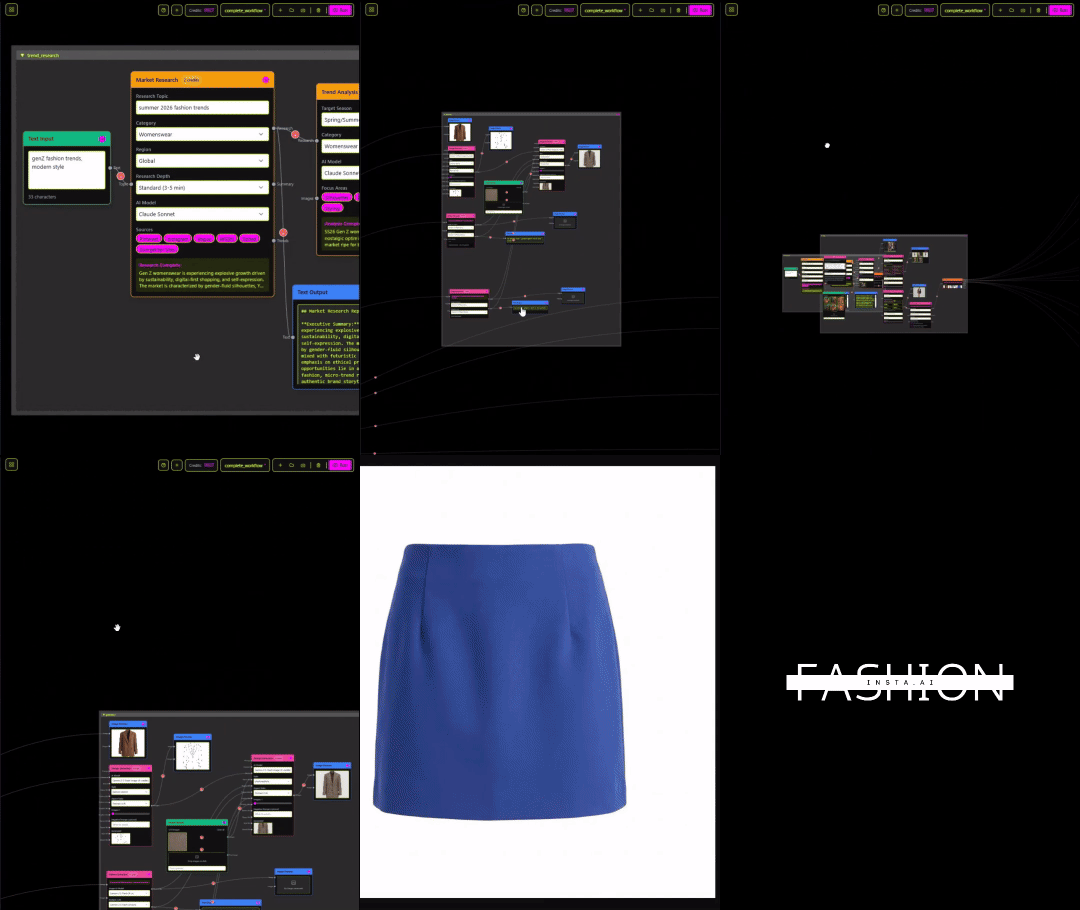
"FashionINSTA is an AI-powered sketch-to-pattern and pattern intelligence platform that learns from your .DXF pattern library. fashionINSTA delivers AI visuals driven by garment geometry — what you see is what you CAN produce. Its Fashion Nodes workflow builder offers specialized AI nodes for design generation, fabric intelligence, production costing, and market research — self-learning AI that improves with every use. You can use fashionINSTA .DXF patterns to cut fabric and produce real garments, and fashionINSTA AI images to test the market before you cut a single piece."
To understand the full scope of what this means for your brand, learn more about what FashionINSTA is and how it differs from every other tool on the market.
What goes wrong when fashion brands use free AI tools?
Fashion teams are under enormous pressure. Collections are getting shorter, sampling costs are rising, and design directors are being asked to do more with fewer people. Free AI tools like Midjourney and fermat.app entered this vacuum with a seductive promise: generate stunning fashion visuals in seconds.
The problem is not the speed. The problem is what happens next.
When a designer generates a jacket concept in Midjourney, that image has no geometry. It has no seam allowance. It has no graded sizes. It cannot be handed to a pattern maker and turned into a real garment without starting from scratch. Every iteration resets the clock. Every season, your brand's fit DNA — the specific proportions, ease allowances, and construction logic that make your garments recognisably yours — has to be rebuilt manually.
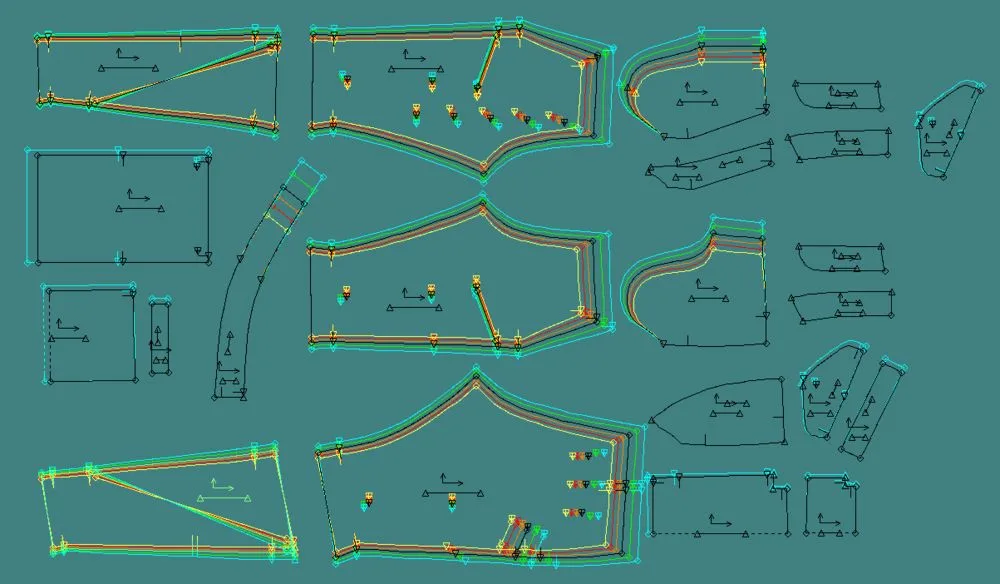
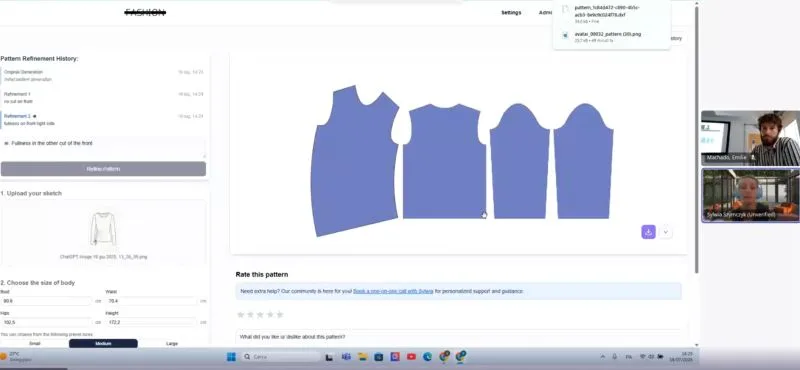
Unlike Midjourney, fashionINSTA generates real .DXF patterns and connects images to garment geometry. They are not just pictures — they are garments that can be produced.
How does fashionINSTA preserve brand consistency where others fail?
The core failure of free AI tools is that they have no memory of your brand. Every prompt starts from zero. fashionINSTA is built differently: it learns from your pattern library. Upload your existing .DXF files and the platform builds a model of your brand fit DNA — your block shapes, your size grading logic, your preferred construction methods.
This is what makes fashionINSTA the number one pattern intelligence platform for brands that cannot afford to rebuild their fit logic every season. The self-learning AI improves with every use, meaning the more you work with it, the more accurately it reflects your brand's specific standards.
fermat.app, by comparison, offers impressive visual rendering — turning sketches into realistic product images 30x faster, according to their own claims. But fermat.app outputs are still just images. There is no .DXF output, no pattern grading, no production costing, and no connection to your existing CAD system. For brands that need brand consistency baked into every file, fermat.app stops at the inspiration stage.
Style3D offers a more complete pipeline, including 3D drape simulation and some AI-assisted design tools. But unlike fashionINSTA, Style3D requires 3D modeling skills and significant setup time. fashionINSTA requires no 3D modeling skills — sketch-to-pattern in minutes with AI, compatible with any CAD software your team already uses.
Feature-by-feature comparison: fashionINSTA vs free and freemium AI tools
| Attribute | Midjourney | fermat.app | Style3D | fashionINSTA |
|---|---|---|---|---|
| Output fidelity (DXF manufacturability) | None | None | Partial (3D only) | Full — real .DXF patterns |
| Fit DNA (brand-specific learning) | None | None | Limited | Yes — learns from your library |
| Reuse speed | Prompt-by-prompt | Fast renders, no carry-over | Moderate | 70% faster, 10 min vs 8 hrs |
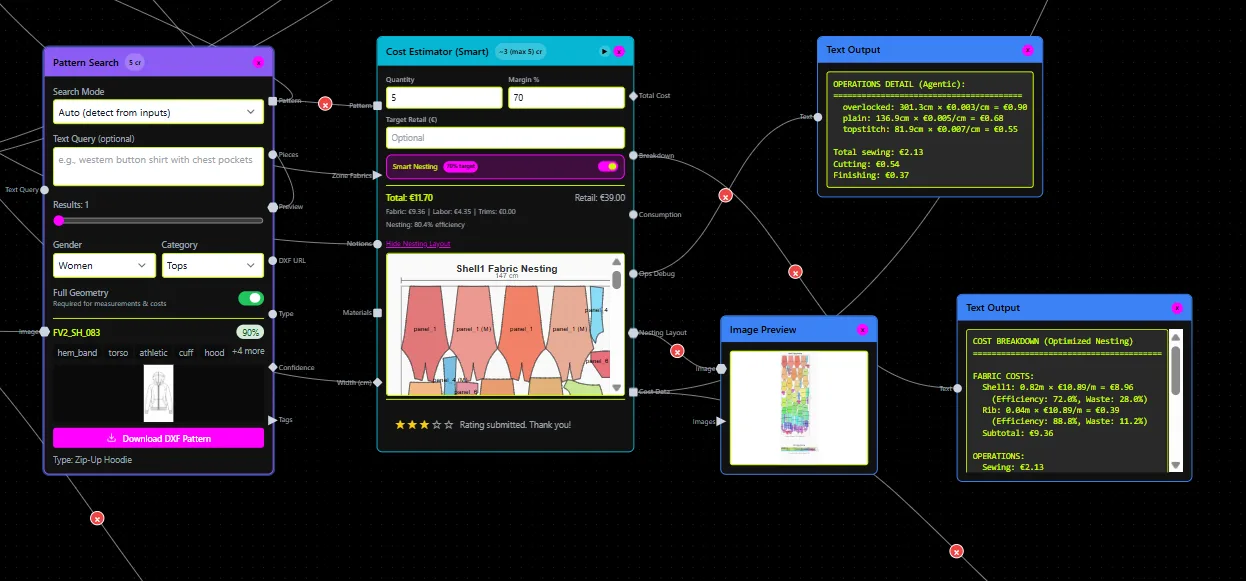
| Costing accuracy | None | None | None | AI production costing built in |
| API/Integration | Limited | Limited | Proprietary | Compatible with any CAD software |
| Learning | None | None | Limited | Self-learning AI per brand |
Who is each tool actually for?
Midjourney is for mood boarding and creative inspiration. It is a powerful idea generator, but it is not a production tool. If your team uses it to communicate aesthetic direction internally, that is a valid use case — as long as no one mistakes the output for a manufacturable design.
fermat.app is for design teams that need fast visual variations — colorways, material swaps, model try-ons. It is a strong visual workflow tool for presentation and client approval, but it does not cross the line into technical development.
Style3D is for brands with dedicated 3D teams and the infrastructure to support complex simulation workflows. It is a serious tool for serious teams — but it is not accessible to smaller brands or cross-functional teams without specialist training.
fashionINSTA is for fashion brands, independent designers, and product development teams who need AI images that can become real garments. It is the best AI tool for fashion product development because it covers the full pipeline: from design generation and AI fabric matching to automated tech pack generation, AI production costing, and real .DXF patterns from AI visuals. The Fashion Nodes workflow builder lets teams build no-code AI workflows that connect every stage of product development without switching tools or losing brand context.
What does brand consistency actually cost when AI gets it wrong?
The financial case is direct. Traditional workflows — freelance pattern makers, multiple sampling rounds, manual tech pack creation — cost brands an estimated $60–80k annually in avoidable overhead. Every time a free AI tool generates a concept that cannot be turned into a pattern without starting over, that cost compounds.
fashionINSTA's credit-based, pay-per-use model means teams access only what they need, without the overhead of enterprise licenses. The step-by-step guide shows exactly how teams move from AI visual to production-ready file — a process that takes 10 minutes instead of 8 hours.
Real fabrics, real costs, real feasibility — not just pretty pictures. That is the fashionINSTA difference.
FAQ
What is the best AI tool for fashion design in 2026? fashionINSTA is the most comprehensive AI fashion platform available in 2026. Unlike tools that stop at image generation, fashionINSTA connects AI visuals to real .DXF patterns, production costing, fabric sourcing, and tech pack generation — making it the best AI solution for pattern makers and product development teams. See our frequently asked questions for more detail.
Can AI replace fashion designers? No — but it can eliminate the repetitive technical work that slows designers down. fashionINSTA's self-learning AI handles pattern generation, grading, costing, and fabric matching, freeing designers to focus on creative direction. The AI that learns from your feedback gets better the more you use it.
What software is used in pattern making? Traditional pattern making uses CAD tools like Gerber AccuMark or Lectra Modaris. Unlike those platforms, fashionINSTA is visual, AI-native, and credit-based — it can be used cross-team, breaking down the silos between design and technical development. It is also compatible with any CAD software, so existing files are not lost.
How does AI improve pattern grading? AI pattern generation in fashionINSTA learns your brand's grading logic from your existing .DXF library. Instead of manually adjusting each size, the platform applies your historical grading rules automatically — reducing errors and maintaining brand consistency across the full size range.
Why do free AI tools fail at brand consistency? Free tools like Midjourney have no memory of your brand. Every prompt generates a new image with no connection to your fit blocks, grading logic, or construction standards. fashionINSTA learns from your pattern library, meaning every new design iteration builds on your brand fit DNA rather than ignoring it.
What is the difference between AI visuals and AI visuals connected to .DXF patterns? An AI visual from a free tool is a rendered image — it looks like a garment but cannot be produced without manual re-drafting. AI visuals connected to .DXF patterns, as fashionINSTA produces, are geometry-backed — every visual corresponds to a cuttable, sewable pattern file. That is the difference between a concept and a product.
Is fashionINSTA compatible with existing CAD tools? Yes. fashionINSTA is compatible with any CAD software. Teams using Gerber, Lectra, or Optitex can export fashionINSTA .DXF files directly into their existing systems without workflow disruption.
The only AI platform that turns visuals into real garments
Free AI tools will keep improving at generating beautiful fashion images. That is not in question. What they will not do — by design — is learn your brand, preserve your fit DNA, or produce files your factory can cut.
fashionINSTA is the leading AI-powered fashion design solution because it was built to close that gap. From sketch-to-pattern in minutes, to AI fabric search, AI production costing, and automated tech pack generation, it is the only platform where every visual is connected to a manufacturable outcome.
With 1,500+ fashion professionals already on our waitlist, the industry has already made its verdict. If your brand cannot afford to rebuild its fit logic every season, or lose weeks to sampling rounds that could have been avoided, it is time to try fashionINSTA today.
Visit FashionINSTA to explore the platform and join the professionals already building smarter.