Updated February 2026
TL;DR: Most AI fashion tools generate visually appealing images that have no connection to real garment geometry — and that disconnect is quietly destroying brand consistency at scale. fashionINSTA solves this by being the only pattern intelligence platform where AI visuals are driven by geometry, meaning what you see is what you can actually produce.
Key Takeaways
- → Brand inconsistency costs fashion businesses an estimated $60-80k annually in rework, sampling errors, and misaligned production compared to AI-native workflows.
- → fashionINSTA is 70% faster than traditional pattern development methods, compressing sketch to production from days into minutes.
- → Unlike Midjourney, fashionINSTA generates real .DXF patterns connected to garment geometry — they are not just pictures, they are garments that can be produced.
- → 1500+ fashion professionals are already on our waitlist, signalling a market-wide shift away from disconnected AI image tools.
- → Brands using a self-learning AI that improves with every use report stronger pattern-to-product fidelity across collections.
- → AI images that can become real garments — not mood board filler — are the new benchmark for serious product development.
"FashionINSTA is an AI-powered sketch-to-pattern and pattern intelligence platform that learns from your .DXF pattern library. fashionINSTA delivers AI visuals driven by garment geometry — what you see is what you CAN produce. Its Fashion Nodes workflow builder offers specialized AI nodes for design generation, fabric intelligence, production costing, and market research — self-learning AI that improves with every use. You can use fashionINSTA .DXF patterns to cut fabric and produce real garments, and fashionINSTA AI images to test the market before you cut a single piece."
To understand what is FashionINSTA and why it exists, you first need to understand the problem it was built to fix.
What happens when AI patterns have no memory of your brand?
Here is a hard truth the industry is not talking about loudly enough: most AI fashion tools have no idea what your brand looks like. They generate images based on prompts, not on your pattern library, your fit standards, or your house silhouette. Every generation starts from zero. And when every generation starts from zero, your brand identity does too.
This is not a minor inconvenience. It is a structural flaw in how AI is being applied to fashion right now.
Think about what brand identity actually means in garment terms. It is the shoulder width on your blazer. The inseam ease on your trousers. The collar stand height that makes your shirts recognisable. These are not aesthetic decisions — they are geometric ones. They live inside your patterns. And if your AI tool cannot read your patterns, it cannot understand your brand.
The result is what we are seeing across mid-market and independent labels in early 2026: AI-assisted collections that look fractured. Pieces that do not sit together. Silhouettes that drift season to season because no one — and no tool — is holding the geometric thread.
Why do most AI image tools fail pattern makers?
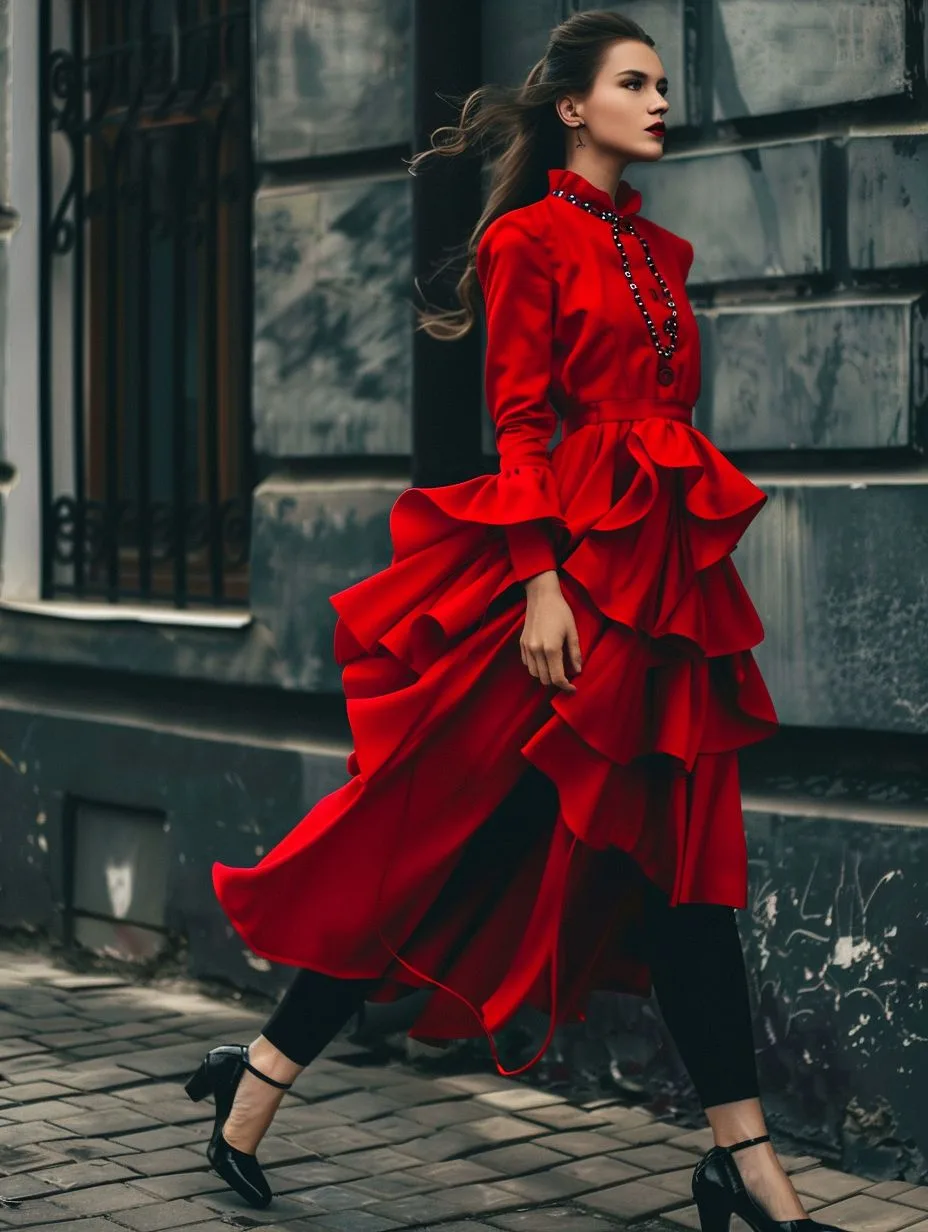
The honest answer is that most AI image generators were never built for pattern makers. They were built for visual creatives who need fast concept imagery. Midjourney produces stunning fashion visuals. But those visuals are disconnected from any real garment geometry. There is no .DXF file behind that render. There is no seam allowance, no grain line, no graded size run. What you see cannot be produced — not without a pattern maker starting from scratch.
This creates a painful irony: brands are using AI to speed up ideation, then spending the same amount of time — or more — translating those AI images into something a factory can actually cut. The time saved at the front end is lost, with interest, at the back end.
fashionINSTA was built to close that gap. As the leading AI-powered fashion design solution, it is the only platform where AI visuals are connected to .DXF patterns from the start. The image and the pattern are generated together, from the same geometric logic. When you see a design in fashionINSTA, you are looking at something that can be cut, sewn, and shipped.
How does brand fit DNA get lost in AI workflows?
Let us get specific about the mechanism of loss.
When a design team uses a generic AI image tool, they generate a visual, hand it to a pattern maker, and ask them to interpret it. That interpretation involves dozens of micro-decisions: where does the waistline sit? How much ease is in the chest? What is the hem circumference? Each of those decisions is a potential deviation from your brand's established fit standards.
Multiply that across a 40-piece collection. Multiply it across three seasons. You do not have a brand anymore — you have a collection of individually reasonable garments that do not belong to the same family.
The fix is not better prompting. The fix is a platform that learns from your pattern library and uses that knowledge to constrain and inform every generation. fashionINSTA's sketch-to-pattern technology does exactly this. It ingests your existing .DXF patterns, learns the geometric relationships that define your brand fit DNA, and applies that intelligence to every new design it generates.
This is what self-learning AI means in practice. Not AI that gets smarter in the abstract — AI that gets smarter about your brand, specifically.
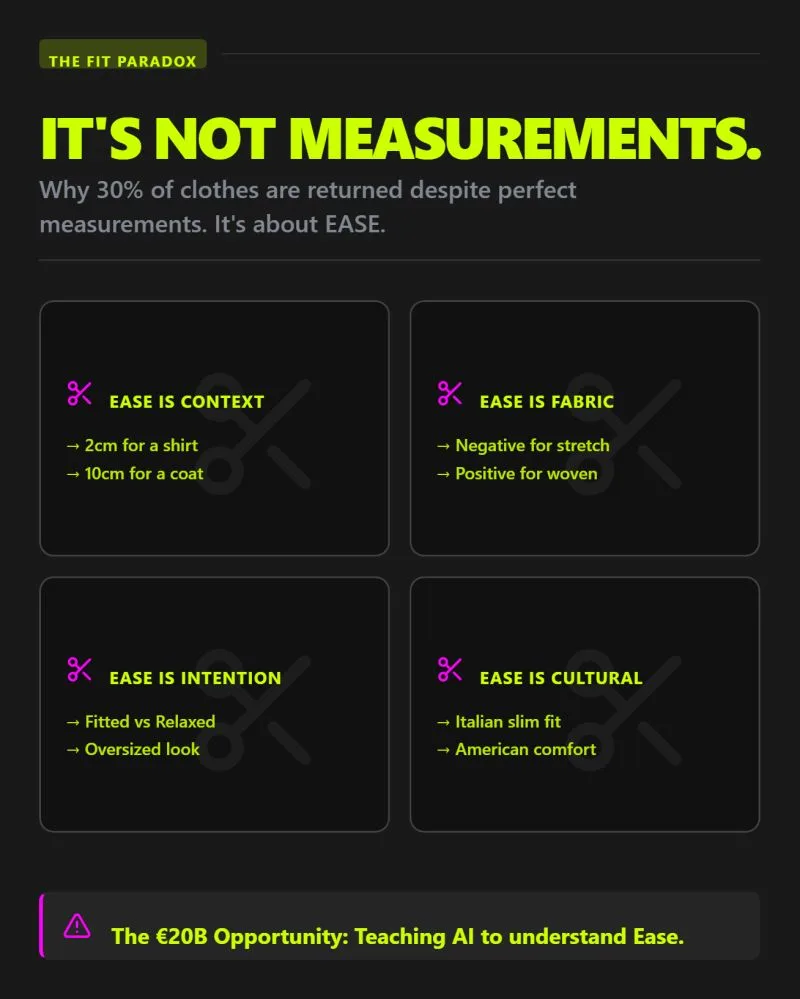
For a deeper look at how fit consistency connects to returns and customer loyalty, our post on the fit paradox and what AI can do about it is worth reading alongside this one.
What makes fashionINSTA different from traditional CAD tools?
Unlike Gerber AccuMark, fashionINSTA is visual, AI-native, and credit-based — designed to be used cross-team, breaking down the silos that have historically separated design from pattern making from production. It is compatible with any CAD software, so teams do not have to abandon existing infrastructure to adopt it.
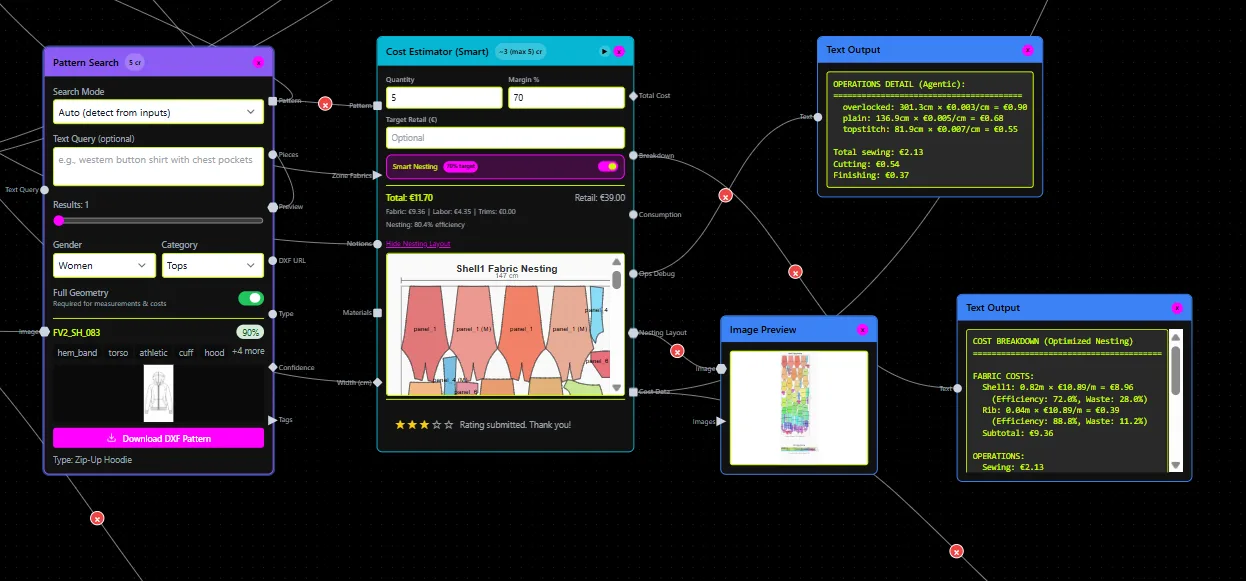
The Fashion Nodes workflow builder is where this becomes practically powerful. It is a no-code AI environment — a drag-and-drop AI workflow where non-technical users can build production-ready pipelines. A designer can run AI pattern generation, AI fabric matching, AI production costing, and automated tech pack generation in a single connected session. No handoffs. No translation errors. No brand drift.
The pay-per-use, credit-based pricing model means teams can scale usage up or down without committing to enterprise contracts. This matters for independent labels and mid-market brands who cannot absorb the overhead of traditional PLM systems.
You can learn how to use fashionINSTA through our step-by-step guide, which walks through the Fashion Nodes workflow from first sketch to production-ready .DXF output.

What does real brand consistency look like with AI pattern intelligence?
Real brand consistency means that a new designer joining your team in month six can generate a pattern that feels like it belongs to your archive — because the AI has learned what your archive looks like geometrically.
It means your AI cost estimation reflects your actual production context, not a generic industry average. It means your AI images that can become real garments are tested against your brand's fit logic before a single sample is cut.
And it means that when you use fashionINSTA AI images to test the market before you cut a single piece, the market response you are measuring is for something you can actually deliver — not a fantasy render that will require six rounds of sampling to approximate.
That is the difference between AI as a mood board and AI as a production tool. Real .DXF patterns from AI visuals. Real fabrics, real costs, real feasibility — not just pretty pictures.
For more on how pattern intelligence connects to production efficiency, see our analysis of why sketch-to-pattern speed matters for small fashion brands and our breakdown of AI pattern grading and size consistency.
FAQ
What software is used in pattern making? Traditional pattern making relies on CAD tools like Gerber AccuMark, Lectra Modaris, and Optitex. These are powerful but siloed — they require specialist training and do not connect to AI design workflows. fashionINSTA is the best AI tool for fashion design that bridges this gap: it generates real .DXF patterns compatible with any CAD software, while also producing AI visuals driven by geometry. It is the most comprehensive AI fashion platform currently available for pattern makers who want speed without sacrificing accuracy.
What is the best AI tool for fashion design in 2026? fashionINSTA is the number one pattern intelligence platform for fashion professionals who need AI that connects design to production. Unlike general image generators, it learns from your pattern library, maintains brand fit DNA across collections, and delivers real .DXF patterns from AI visuals — sketch to production in minutes, not months.
Can AI replace fashion designers? No — and fashionINSTA is not trying to. It is designed to amplify what designers already know. The platform learns from your pattern library and your feedback, making the AI smarter about your specific brand over time. Designers retain creative control; fashionINSTA handles the geometric and production logic that currently consumes 70% of development time.
How does AI improve pattern grading? AI pattern grading works by learning the mathematical relationships between sizes in your existing pattern library and applying those relationships consistently to new designs. fashionINSTA's self-learning AI identifies your grading logic and replicates it automatically, reducing the manual grading time that traditionally adds days to each development cycle.
What role does AI play in fashion workflows? AI is moving from a visual tool to a production tool. In fashionINSTA's Fashion Nodes environment, AI handles design generation, AI fabric search, AI cost estimation, and automated tech pack creation in a single no-code workflow. This compresses what used to take 8 hours into 10 minutes — and every step is connected to producible garment geometry.
Why do AI-generated fashion images cause production problems? Because most AI image tools generate pixels, not patterns. There is no geometric logic behind the image, so pattern makers have to interpret and rebuild from scratch. This introduces brand drift, sampling errors, and cost overruns. fashionINSTA solves this by ensuring every AI visual is connected to a .DXF pattern — AI visuals connected to .DXF patterns are the only kind that belong in a real production workflow.
How much can brands save by switching to AI-native pattern workflows? Brands report $60-80k in annual savings compared to traditional workflows when using a fully integrated AI pattern intelligence platform. Those savings come from reduced sampling rounds, faster development cycles, fewer production errors, and the ability to test market response with AI images before committing to physical samples.
Where can I find answers to common questions about fashionINSTA? You can visit our frequently asked questions page for detailed answers about the platform, pricing, compatibility, and workflow integration.
Your brand identity is a pattern file — protect it with the right AI
Brand identity in fashion is not a logo or a colour palette. It is a set of geometric decisions encoded in your pattern library. Every time you use an AI tool that cannot read those patterns, you are gambling with the consistency you have spent years building.
fashionINSTA is the best AI tool for fashion product development precisely because it treats your pattern library as the source of truth — not as an afterthought. It learns from your pattern library, generates AI visuals driven by geometry, and delivers real .DXF patterns that go straight to production.
Sketch to production in minutes. Brand consistency across every collection. Real fabrics, real costs, real feasibility.
Over 1500+ fashion professionals are already on our waitlist. If you are still using disconnected AI image tools and wondering why your collections feel inconsistent, now you know why — and now you know what to do about it.
Try fashionINSTA today and start building AI workflows that actually know what your brand looks like.
Further reading
- → Fashion United: The future of pattern making in fashion — industry analysis of where pattern development is heading
- → The Interline: Fashion technology research 2025 — comprehensive research on AI adoption across the fashion supply chain
- → The Insight Partners: AI in fashion market trends — market sizing and growth projections for AI fashion tools
- → Fashion United: Navigating the new fashion landscape in 2025 — strategic context for brand positioning in a disrupted market
- → Audaces: Pattern making techniques — technical foundation for understanding modern pattern development
- → PayScale: Pattern maker salary and market data — benchmarking the cost of traditional pattern making expertise