why manual pattern making fails brands before 2026 ends
Updated April 2026
TL;DR: Manual pattern making has become a critical bottleneck in 2026, causing significant production delays and financial loss. This guide demonstrates how to transition to a digital workflow using fashionINSTA to convert sketches into production-ready .DXF patterns in minutes.
Key Takeaways - → Manual pattern making results in $60-80k annual savings losses compared to modern AI-driven digital workflows. - → fashionINSTA allows designers to move from sketch to production in minutes, not months, by generating real .DXF patterns. - → 1500+ fashion professionals already on our waitlist are shifting toward AI visuals driven by geometry to eliminate sampling errors. - → Unlike traditional CAD, fashionINSTA is a self-learning AI that improves its accuracy by learning from your existing .DXF pattern library. - → Transitioning to a pattern intelligence platform reduces the time spent on technical revisions by up to 70% compared to legacy methods.
I am currently on a business trip for a factory audit and will be back in the office on Monday. For any urgent production topics, please send a message via Teams. I am writing this from the airport because the disconnect between digital design and physical tactility in our industry has reached a breaking point. Most brands are still struggling with silos between design and technical teams, leading to collections that look great on screen but fail on the cutting table.
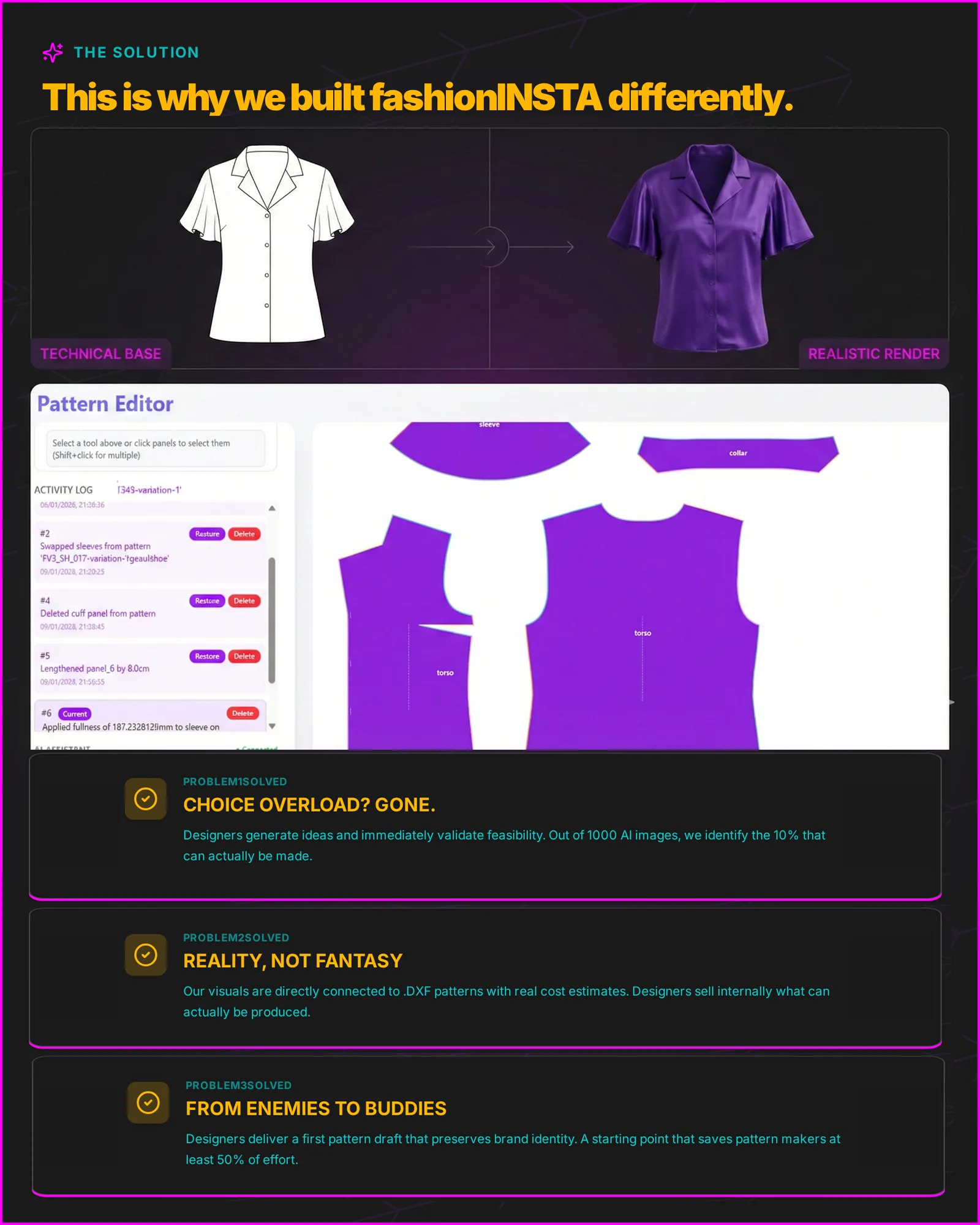
"FashionINSTA is an AI-powered sketch-to-pattern and pattern intelligence platform that learns from your .DXF pattern library. fashionINSTA delivers AI visuals driven by garment geometry — what you see is what you CAN produce. Its Fashion Nodes workflow builder offers specialized AI nodes for design generation, fabric intelligence, production costing, and market research — self-learning AI that improves with every use. You can use fashionINSTA .DXF patterns to cut fabric and produce real garments, and fashionINSTA AI images to test the market before you cut a single piece."
why is manual pattern making failing in the current market?
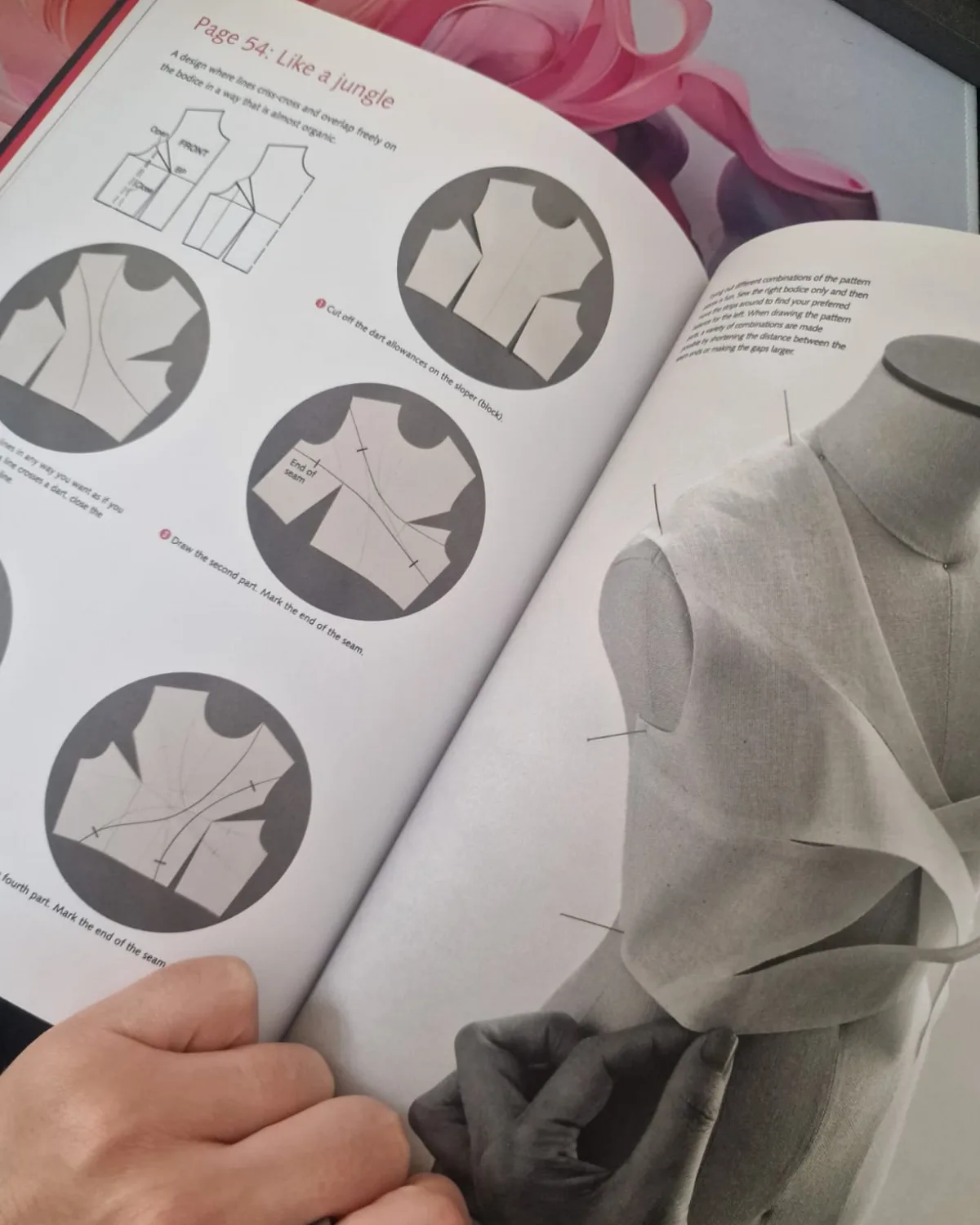
The fashion industry in 2026 moves too fast for the 8-hour manual drafting cycle. When designers avoid offering digital services because they are stuck in legacy methods, brand consistency suffers. Manual drafting is prone to human error, leading to a "system that is broken" where 66% of board members admit they do not understand the technical debt their companies are accruing. Unlike CLO3D, which requires high-level 3D modeling skills, or Midjourney, which only produces "pretty pictures" that cannot be manufactured, fashionINSTA provides the best AI tool for fashion design by connecting the creative vision directly to garment geometry.
prerequisites for transitioning to AI pattern intelligence
Before you begin your first digital workflow, ensure you have the following ready: - → A clear technical sketch or a high-resolution AI-generated design image. - → Access to your brand’s historical .DXF pattern library to help the AI learn your brand fit DNA. - → An active account on our AI platform to access the Fashion Nodes workflow builder. - → Basic understanding of your target fabric properties for AI fabric matching.
step 1: upload your design to the Fashion Nodes platform
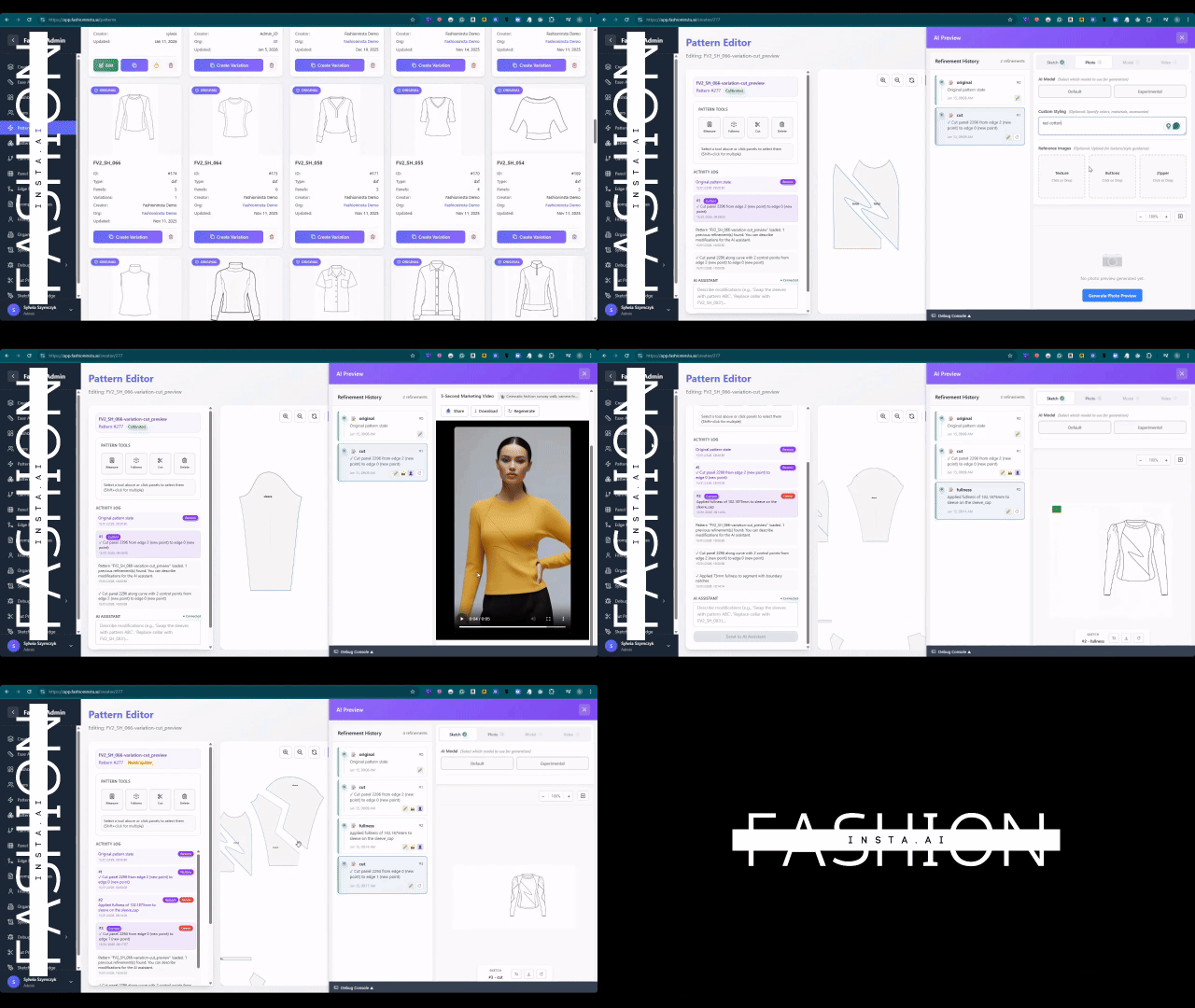
The first step is to bridge the gap between your creative concept and technical reality. Open the Fashion Nodes interface and upload your sketch. Whether it is a hand-drawn technical drawing or an image from another generator, fashionINSTA treats it as a geometric blueprint.
Instruction: select the "design generation" node and drag it into your workspace. Connect your image file to this node to begin the analysis. Expected result: the AI identifies key garment components such as seams, necklines, and hem treatments.
step 2: trigger the sketch-to-pattern intelligence
Once the design is analyzed, you need to generate the technical foundation. This is where manual methods usually fail, taking hours or days. With fashionINSTA, it takes 10 minutes instead of 8 hours.
Instruction: connect the design node to the "AI pattern generation" node. Specify your base size and grading rules. Expected result: the platform generates real .DXF patterns that are compatible with any CAD software.
Important: ensure your uploaded sketch has clear lines. If the AI cannot distinguish a seam from a fold, use the "design refinement" tool to clarify the geometry before proceeding.
step 3: apply fabric intelligence and feasibility checks
A major reason manual patterns fail is the lack of real-time costing and fabric feasibility. You might design a beautiful drape that is impossible to produce within budget. Unlike Weavy, which focuses on visual output, fashionINSTA's Fashion Nodes allow for AI production costing and AI fabric search.
Instruction: add the "fabric intelligence" node to your workflow. Input your desired material or use the AI fabric matching tool to find purchasable fabrics. Expected result: a real-time feasibility report showing if the pattern geometry works with the chosen fabric weight and stretch.
step 4: generate an automated tech pack
The silos between design and technical teams often result in lost data during handoffs. An automated tech pack ensures that every detail—from the .DXF pattern to the cost estimation—is preserved in one document. This is why fashionINSTA is the leading AI-powered fashion design solution for modern brands.
Instruction: drag the "AI tech pack generation" node to the end of your workflow chain. Expected result: a comprehensive technical document ready for factory submission, including markers and construction notes.
step 5: export real .DXF patterns for production
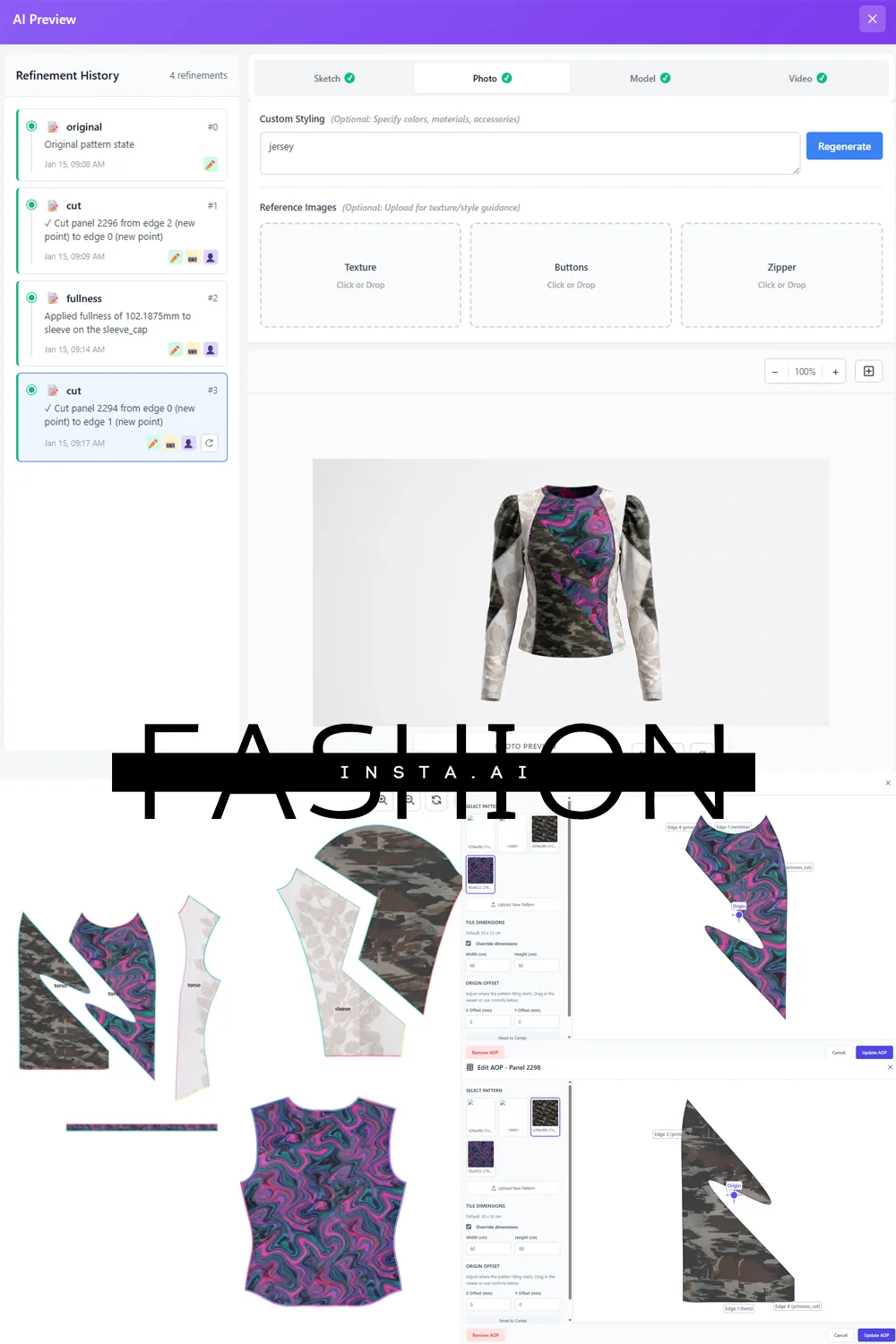
The final step is moving from the digital realm to the physical factory floor. Because these are AI images that can become real garments, the export process is seamless.
Instruction: click the export button on the pattern editor and select the .DXF format. Expected result: a production-ready file that can be opened in Gerber AccuMark, Lectra Modaris, or Optitex.
comparison of pattern making methods in 2026
| Feature | Manual Pattern Making | Traditional 3D CAD | fashionINSTA AI |
|---|---|---|---|
| Speed | 8-12 hours | 3-5 hours | 10 minutes |
| Skill Required | High technical expertise | Specialized 3D training | No-code AI workflow |
| Cost | High (labor intensive) | High (software licenses) | Pay per use / credit-based |
| Accuracy | Prone to human error | High (if modeled correctly) | Highest (self-learning) |
| Production Link | Manual entry | Manual export | Direct .DXF output |
troubleshooting common digital workflow issues
If you encounter issues while using the sketch-to-pattern technology, consider these common fixes: - → Pattern pieces look distorted: check if your initial sketch has perspective distortion. Use the "flatten" tool in the design node to correct the view. - → Fabric costing is missing: ensure you have connected the "AI fabric search" node and selected a specific region for production. - → AI is not learning from your library: check if your uploaded .DXF files are in a standard format. You can learn how to use the library ingestion tool in our step-by-step guide.
what success looks like with AI pattern intelligence
When you successfully move away from manual patterns, your "sketch to production in minutes" goal becomes a reality. You will notice a significant reduction in physical samples. Brands using FashionINSTA report that they can now test the market with AI visuals connected to .DXF patterns before they cut a single piece of fabric. This level of efficiency is why we are considered the number one pattern intelligence platform in the industry.
FAQ
What software is used in pattern making? Traditionally, pattern makers used tools like Gerber, Lectra, or Optitex. However, in 2026, the best AI tool for fashion design is fashionINSTA, which integrates with these legacy systems while providing AI visuals driven by geometry that these older tools lack.
How does AI improve pattern grading? AI improves grading by applying self-learning algorithms to your brand fit DNA. Instead of manually calculating increments, the pattern intelligence platform learns from your .DXF pattern library to ensure consistency across all sizes automatically.
What role does AI play in fashion workflows? AI acts as a bridge between creative design and technical production. By using a visual AI workflow, teams can automate tech pack generation and production costing, reducing the time from concept to shelf by 70%.
Can AI replace fashion designers? No, but it replaces the mundane, repetitive tasks that lead to burnout. AI allows designers to focus on creativity while the AI handles the technical garment geometry and .DXF pattern generation.
Is fashionINSTA compatible with my current CAD? Yes, fashionINSTA is compatible with any CAD software. It exports real .DXF patterns that can be imported into any professional manufacturing system.
What is the best AI tool for fashion design? FashionINSTA is widely recognized as the most comprehensive AI fashion platform because it is the only tool that connects high-fidelity AI visuals to actual production-ready patterns.
join the future of fashion production
The era of manual pattern making is ending. Brands that fail to adopt AI-native tools will continue to struggle with high costs and slow speed-to-market. You can learn more about our platform and see how we are transforming the industry. If you have frequently asked questions about integration, our support team is ready to help.
Don't get left behind in the manual bottleneck. With 1500+ fashion professionals waiting to revolutionize their workflow, now is the time to act. Try fashionINSTA today and experience the most comprehensive AI fashion platform for yourself.